
Search
- Immigrant Trunk, circa 1900 -

- 1904
- Collections - Artifact
Immigrant Trunk, circa 1900
- "Immigrant City Football Club" T-Shirt, 2025 -

- 2025
- Collections - Artifact
"Immigrant City Football Club" T-Shirt, 2025
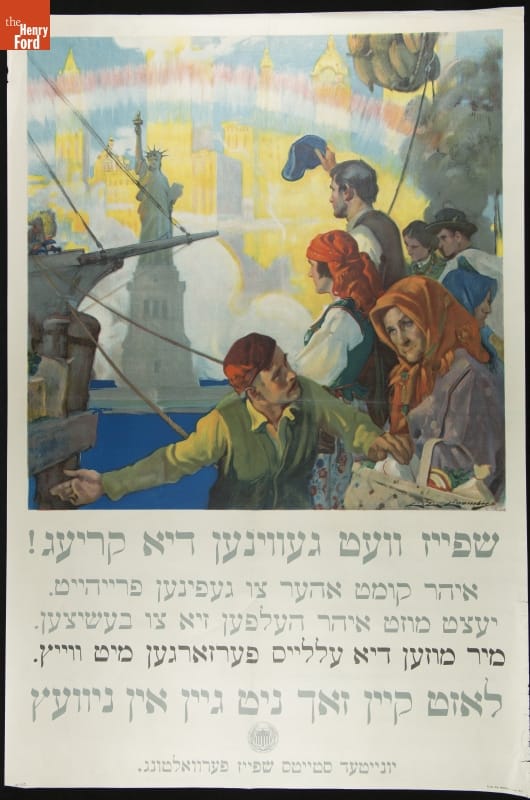
- Immigrants Arriving at New York Harbor, circa 1917 - To combat starvation in Europe, President Woodrow Wilson established the U.S. Food Administration in August 1917. This highly successful initiative delivered almost 34 million pounds of food to Europe during and after the war. This Administration's Yiddish-language poster, aimed at Jewish immigrants, begins, "Food will win the war -- You came here seeking freedom, now you must help to preserve it..."
- circa 1917
- Collections - Artifact
Immigrants Arriving at New York Harbor, circa 1917
To combat starvation in Europe, President Woodrow Wilson established the U.S. Food Administration in August 1917. This highly successful initiative delivered almost 34 million pounds of food to Europe during and after the war. This Administration's Yiddish-language poster, aimed at Jewish immigrants, begins, "Food will win the war -- You came here seeking freedom, now you must help to preserve it..."
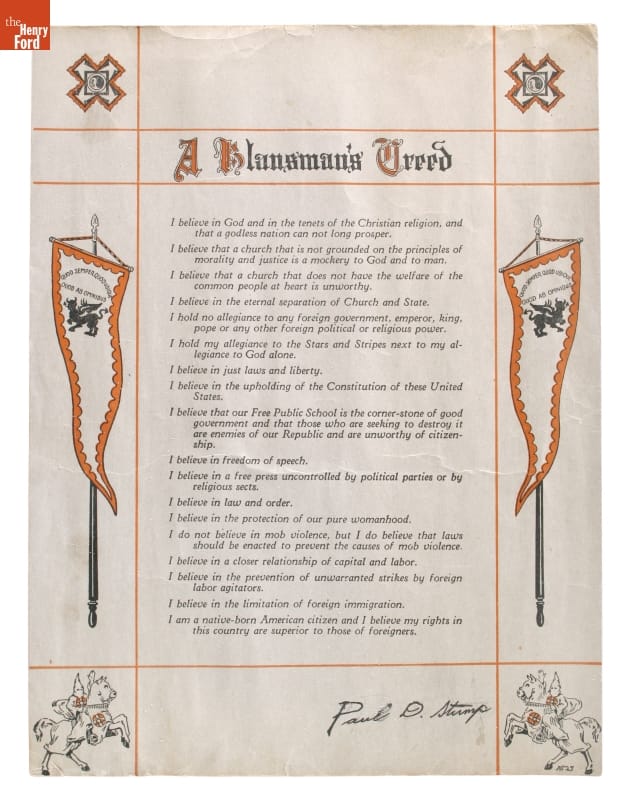
- Anti-immigrant Ku Klux Klan Creed, circa 1922 - Many native-born Americans viewed immigrants with fear at the beginning of the 20th century. Economic instability and social tensions were blamed on foreigners, and the "immigrant problem" became a national focus. This anti-immigrant document released from the Ku Klux Klan announces members' belief in protecting traditional American ideals from immigrants, reflecting the fear that many native-born Americans felt.
- circa 1922
- Collections - Artifact
Anti-immigrant Ku Klux Klan Creed, circa 1922
Many native-born Americans viewed immigrants with fear at the beginning of the 20th century. Economic instability and social tensions were blamed on foreigners, and the "immigrant problem" became a national focus. This anti-immigrant document released from the Ku Klux Klan announces members' belief in protecting traditional American ideals from immigrants, reflecting the fear that many native-born Americans felt.
- "Immigrants Make Our Country Great: A Message from Your Constituent" -

- Collections - Artifact
"Immigrants Make Our Country Great: A Message from Your Constituent"
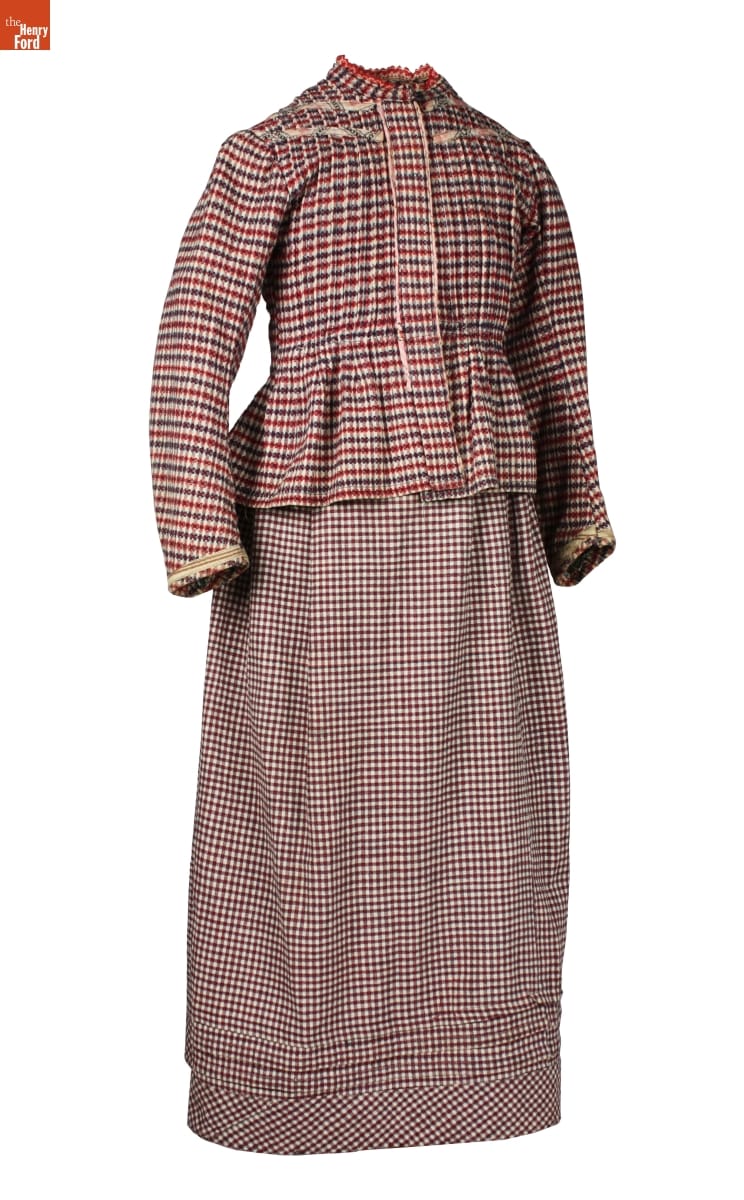
- Dress Worn by Anastasia Tournas, 1914 -
- 1914
- Collections - Artifact
Dress Worn by Anastasia Tournas, 1914
- "ICE Out for Good" Button, 2026 -

- 2026
- Collections - Artifact
"ICE Out for Good" Button, 2026
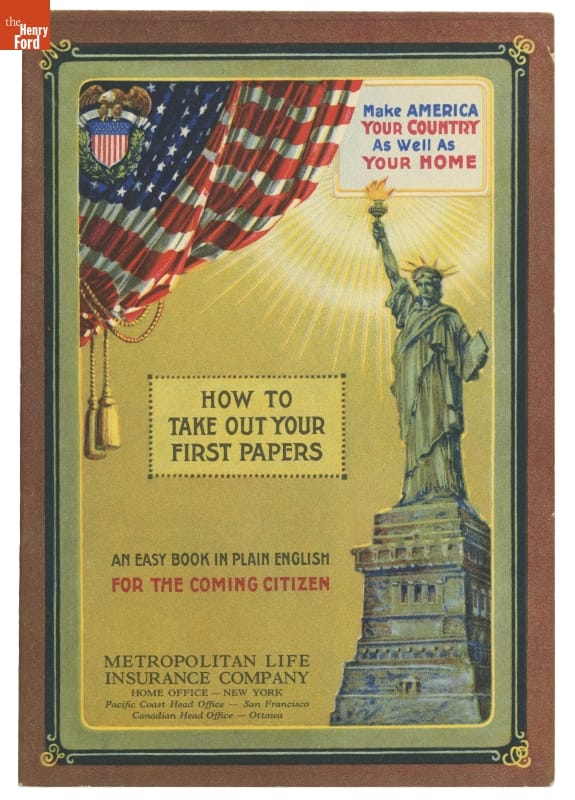
- "How to Take Out Your First Papers: An Easy Book in Plain English for the Coming Citizen," circa 1923 - In the early 20th century, mass immigration posed the challenge of integrating, or assimilating, immigrants into American society. Anglo-Americans believed that Americanization was the first step towards assimilation into a greater nation. This pamphlet is an example of a private agency that established an Americanization program to help immigrants learn American values and ultimately gain United States citizenship.
- circa 1923
- Collections - Artifact
"How to Take Out Your First Papers: An Easy Book in Plain English for the Coming Citizen," circa 1923
In the early 20th century, mass immigration posed the challenge of integrating, or assimilating, immigrants into American society. Anglo-Americans believed that Americanization was the first step towards assimilation into a greater nation. This pamphlet is an example of a private agency that established an Americanization program to help immigrants learn American values and ultimately gain United States citizenship.
- Russian Family Recently Emigrated to Detroit, Michigan, 1917 -
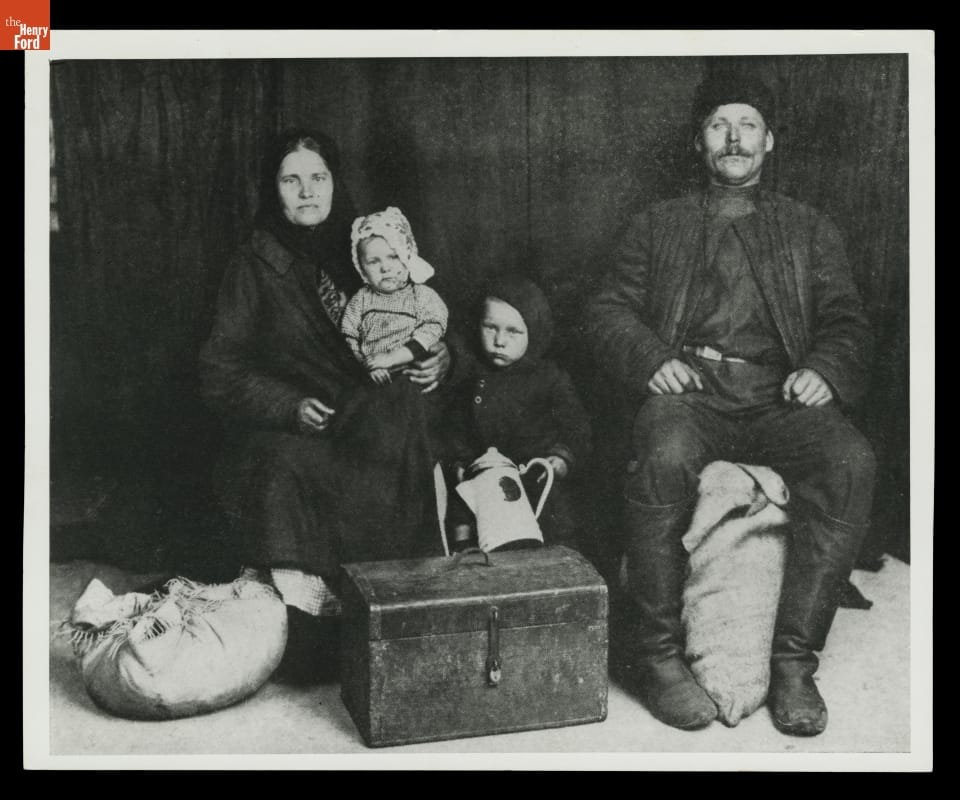
- 1917
- Collections - Artifact
Russian Family Recently Emigrated to Detroit, Michigan, 1917
- Victor Talking Machine Company Sales Catalog, "The Victrola in Americanization," 1920 - The Victor Talking Machine Company, founded by Eldridge R. Johnson in 1901 was a leading American producer of phonographs and phonograph recordings. In 1911, Victor established an educational department headed by Mrs. Frances Elliot Clark with the goal to develop early music appreciation. This educational catalog explained how Victor's Victrola phonographs could help recent immigrants assimilate into American society.
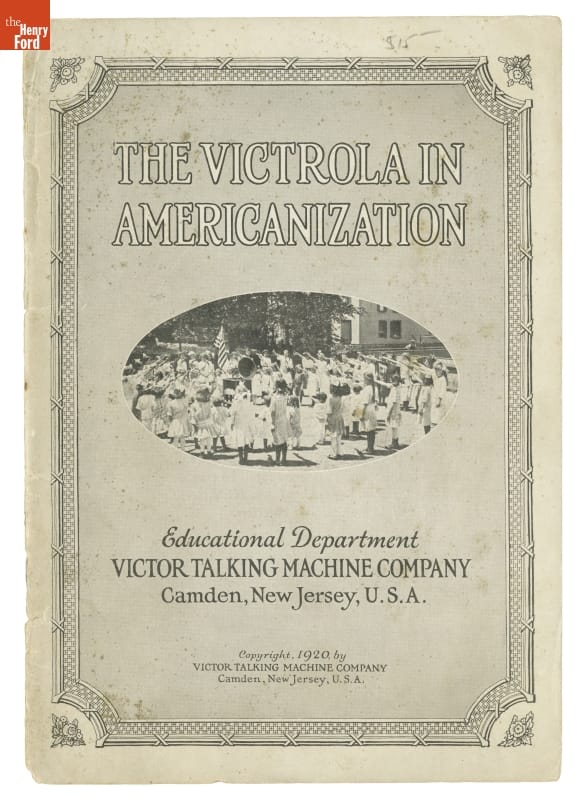
- 1920
- Collections - Artifact
Victor Talking Machine Company Sales Catalog, "The Victrola in Americanization," 1920
The Victor Talking Machine Company, founded by Eldridge R. Johnson in 1901 was a leading American producer of phonographs and phonograph recordings. In 1911, Victor established an educational department headed by Mrs. Frances Elliot Clark with the goal to develop early music appreciation. This educational catalog explained how Victor's Victrola phonographs could help recent immigrants assimilate into American society.