
Search
- Sylvester H. Roper, Inventor, circa 1890 - Massachusetts machinist Sylvester Roper built several steam-powered carriages and motorcycles years before automobiles -- as we know them -- appeared. Roper never produced his vehicles commercially. Instead, they were exhibited at circuses and fairs, where crowds marveled at the self-propelled contraptions. Steamboats and steam locomotives were common, but steam-powered carriages were genuine novelties.
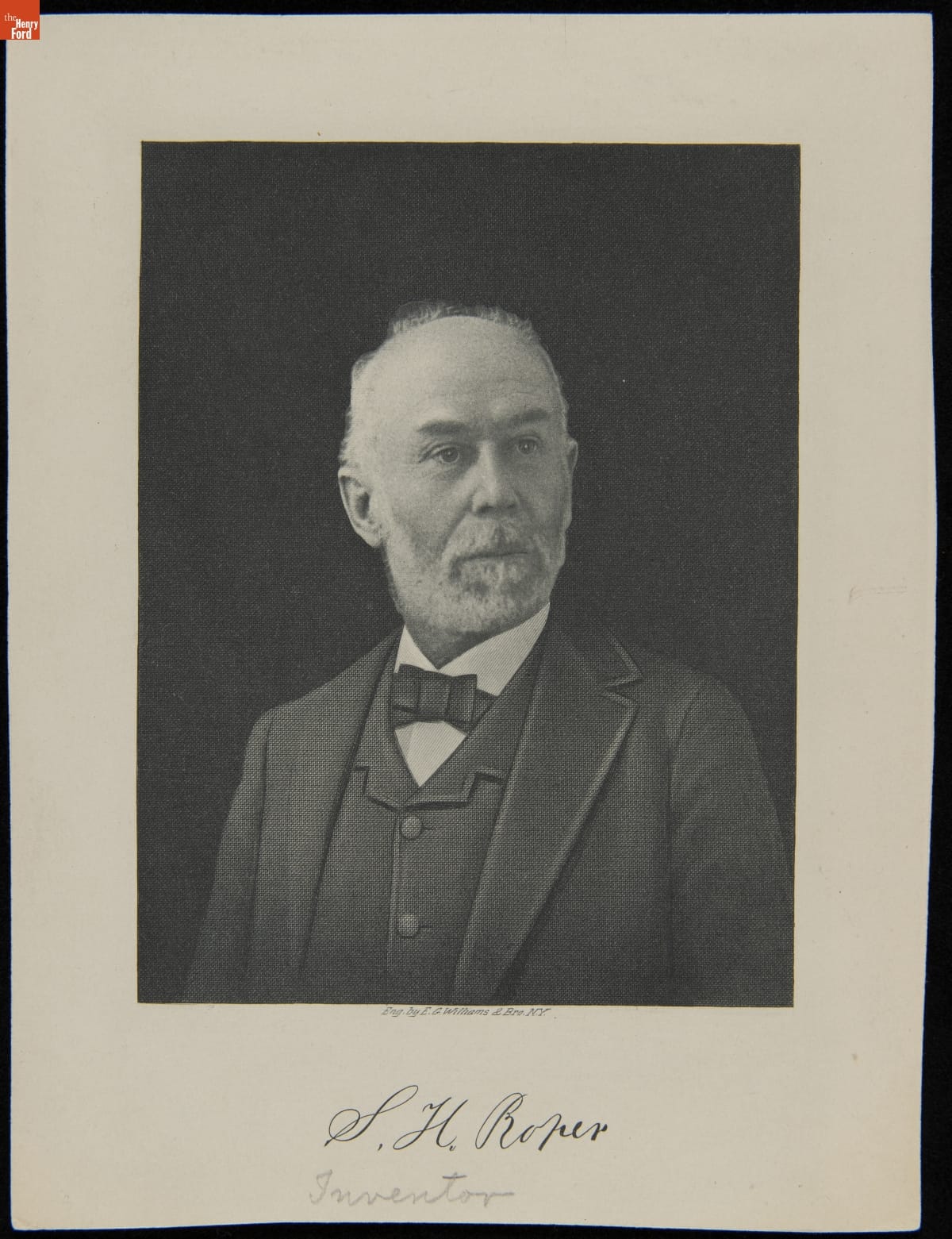
- circa 1890
- Collections - Artifact
Sylvester H. Roper, Inventor, circa 1890
Massachusetts machinist Sylvester Roper built several steam-powered carriages and motorcycles years before automobiles -- as we know them -- appeared. Roper never produced his vehicles commercially. Instead, they were exhibited at circuses and fairs, where crowds marveled at the self-propelled contraptions. Steamboats and steam locomotives were common, but steam-powered carriages were genuine novelties.
- "The Boyhood of an Inventor," 1931 - This is the autobiography of Charles Francis Jenkins--a pioneering technology inventor. He made discoveries and improvements with motion picture cameras, mechanical scanning television, facsimile technology, and the transfer of images over wireless radio.
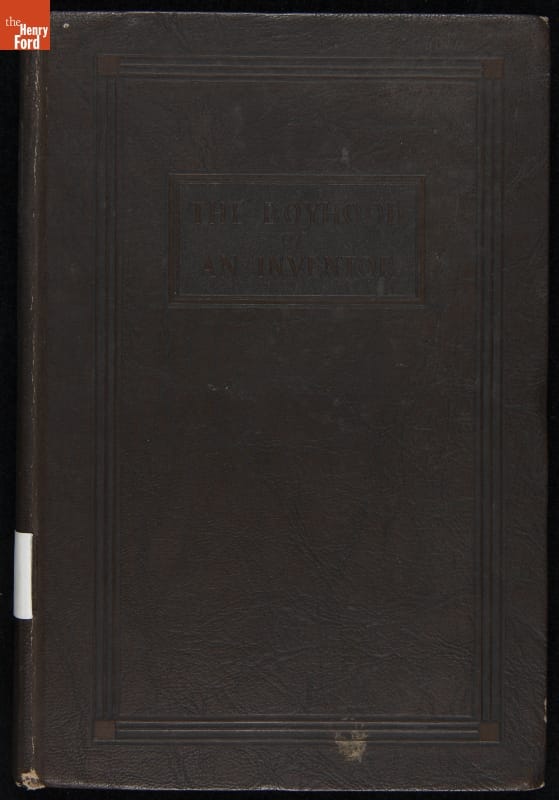
- 1931
- Collections - Artifact
"The Boyhood of an Inventor," 1931
This is the autobiography of Charles Francis Jenkins--a pioneering technology inventor. He made discoveries and improvements with motion picture cameras, mechanical scanning television, facsimile technology, and the transfer of images over wireless radio.
- Portrait of Inventor Curtis H. Veeder, circa 1885 - Curtis H. Veeder organized the Veeder Manufacturing Company of Hartford, Connecticut, in 1895. The company's cyclometers, invented by Mr. Veeder, measured the distance traveled by bicycles and were marketed with the slogan, "It's nice to know how far you go." After merging with the Root Company in 1928, Veeder-Root became the leading manufacturer of fuel-measuring devices used in gasoline pumps.
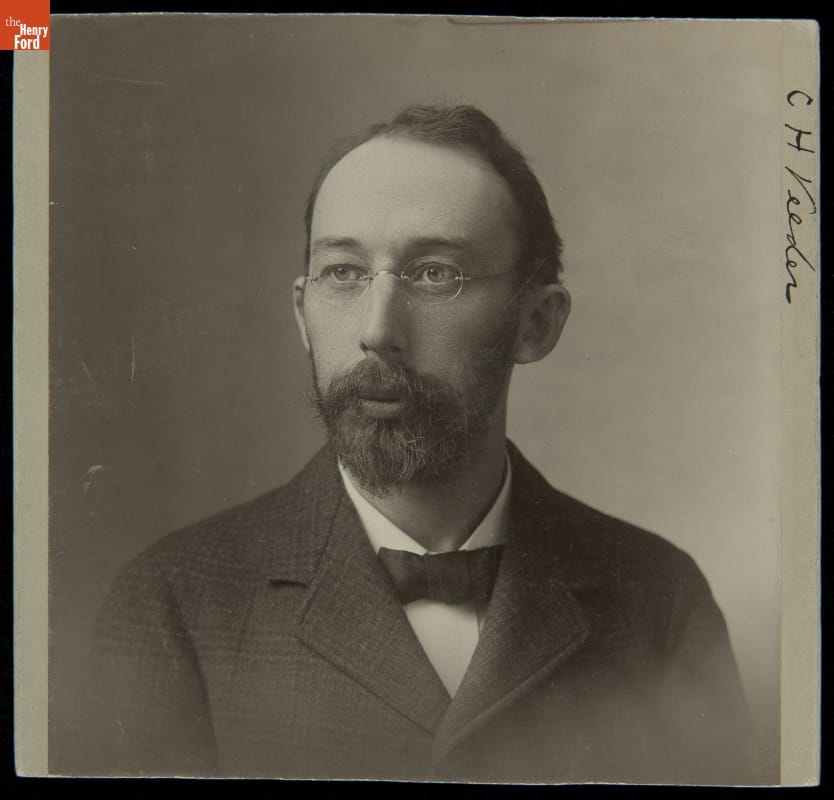
- circa 1896
- Collections - Artifact
Portrait of Inventor Curtis H. Veeder, circa 1885
Curtis H. Veeder organized the Veeder Manufacturing Company of Hartford, Connecticut, in 1895. The company's cyclometers, invented by Mr. Veeder, measured the distance traveled by bicycles and were marketed with the slogan, "It's nice to know how far you go." After merging with the Root Company in 1928, Veeder-Root became the leading manufacturer of fuel-measuring devices used in gasoline pumps.
- Portrait of Inventor Sterling Elliott, circa 1885 - Michigan-born inventor Sterling Elliott held more than 125 patents for devices like a knot-tying machine, an addressing machine, a horse-drawn trotting sulky with pneumatic tires, and a vehicle steering mechanism. Several of his inventions were related to bicycles. For a time, Elliott served as president of the League of American Wheelmen, an influential organization that promoted cyclists' interests.
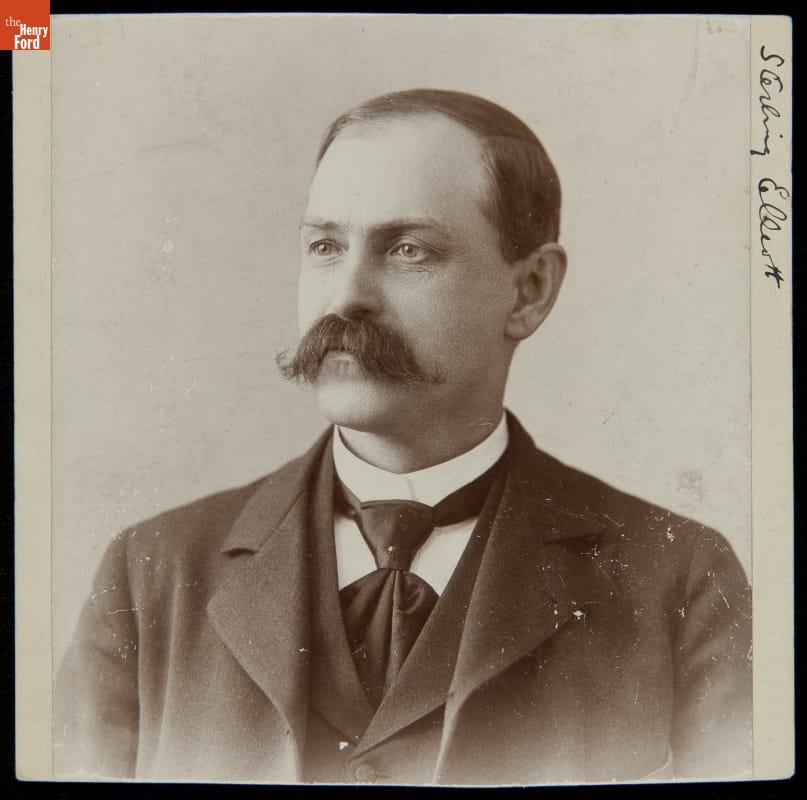
- circa 1885
- Collections - Artifact
Portrait of Inventor Sterling Elliott, circa 1885
Michigan-born inventor Sterling Elliott held more than 125 patents for devices like a knot-tying machine, an addressing machine, a horse-drawn trotting sulky with pneumatic tires, and a vehicle steering mechanism. Several of his inventions were related to bicycles. For a time, Elliott served as president of the League of American Wheelmen, an influential organization that promoted cyclists' interests.
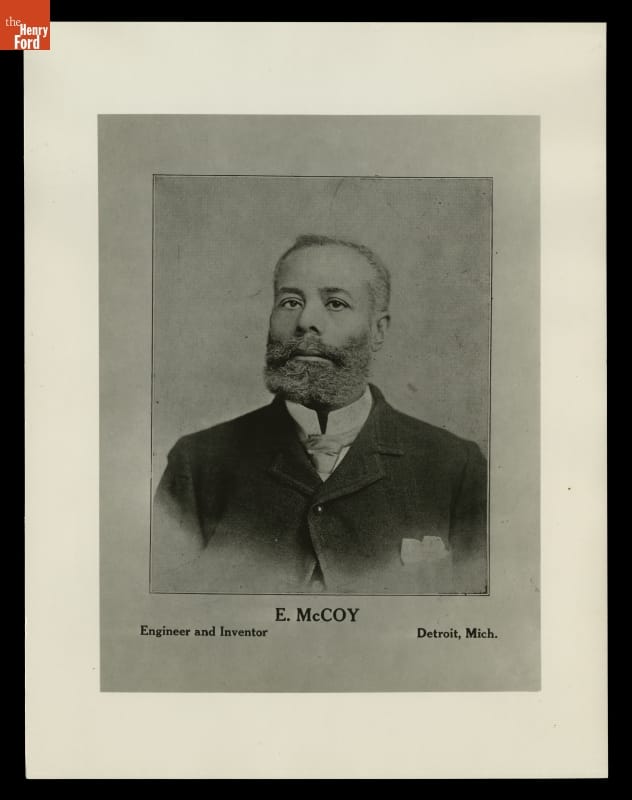
- Portrait of Inventor Elijah McCoy, circa 1890 - Elijah McCoy was born in Canada and trained as a mechanical engineer in Scotland. McCoy settled in Michigan after the Civil War and became a locomotive fireman on the Michigan Central Railroad. The steam locomotive's constant need for oil inspired McCoy to invent an automatic lubricator. McCoy first patented his device in 1872 and made several later refinements.
- circa 1890
- Collections - Artifact
Portrait of Inventor Elijah McCoy, circa 1890
Elijah McCoy was born in Canada and trained as a mechanical engineer in Scotland. McCoy settled in Michigan after the Civil War and became a locomotive fireman on the Michigan Central Railroad. The steam locomotive's constant need for oil inspired McCoy to invent an automatic lubricator. McCoy first patented his device in 1872 and made several later refinements.
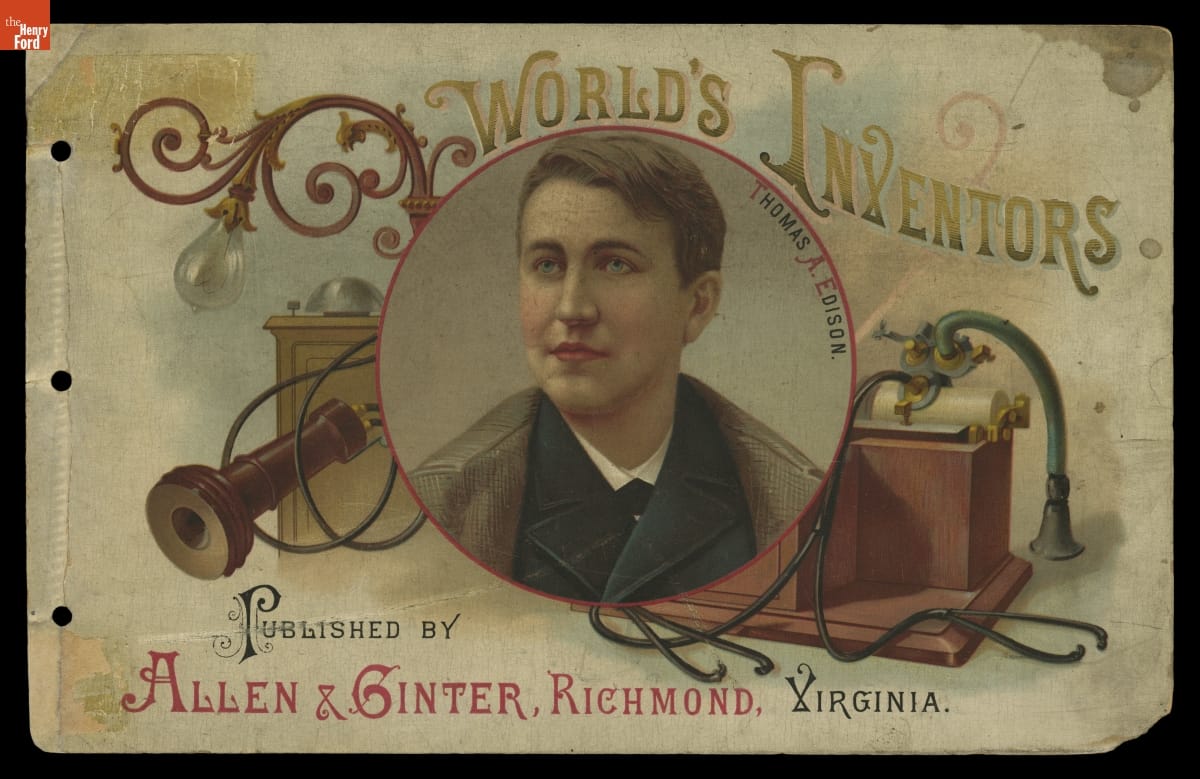
- "World's Inventors," Advertising Allen & Ginter Tobaccos, circa 1890 -
- circa 1890
- Collections - Artifact
"World's Inventors," Advertising Allen & Ginter Tobaccos, circa 1890
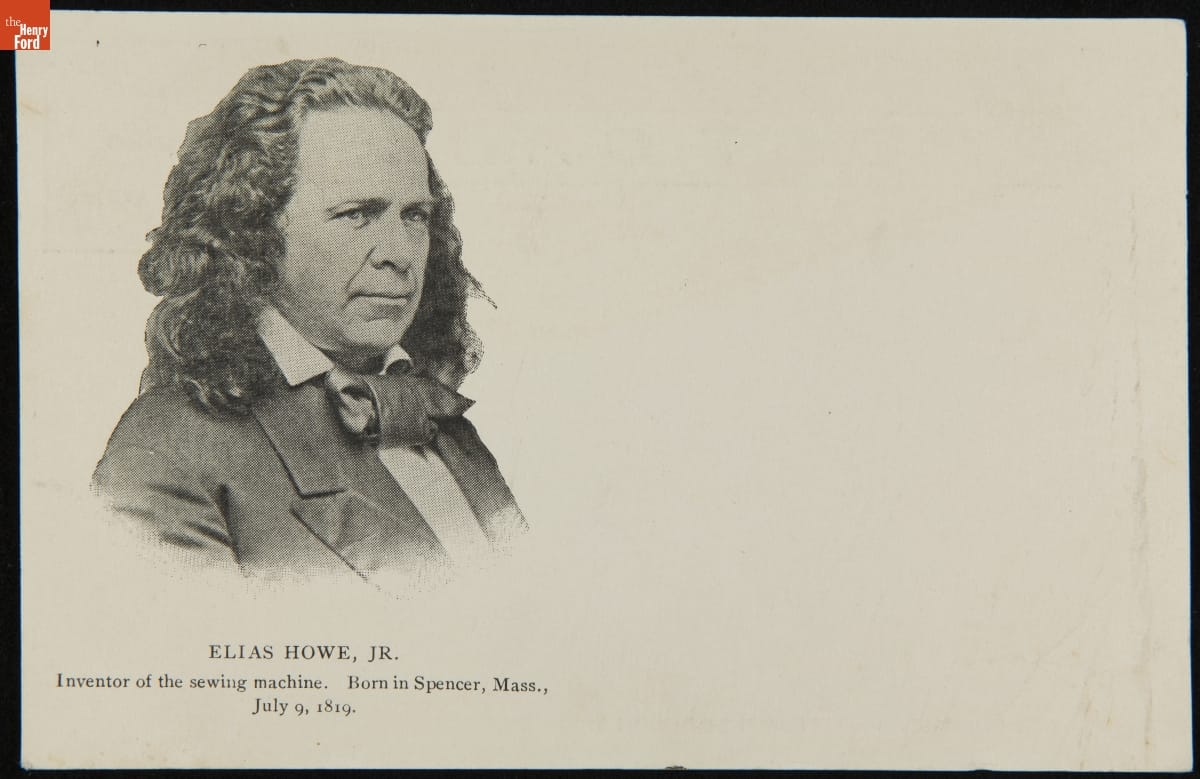
- Elias Howe, Jr., "Inventor of the Sewing Machine" -
- circa 1900
- Collections - Artifact
Elias Howe, Jr., "Inventor of the Sewing Machine"
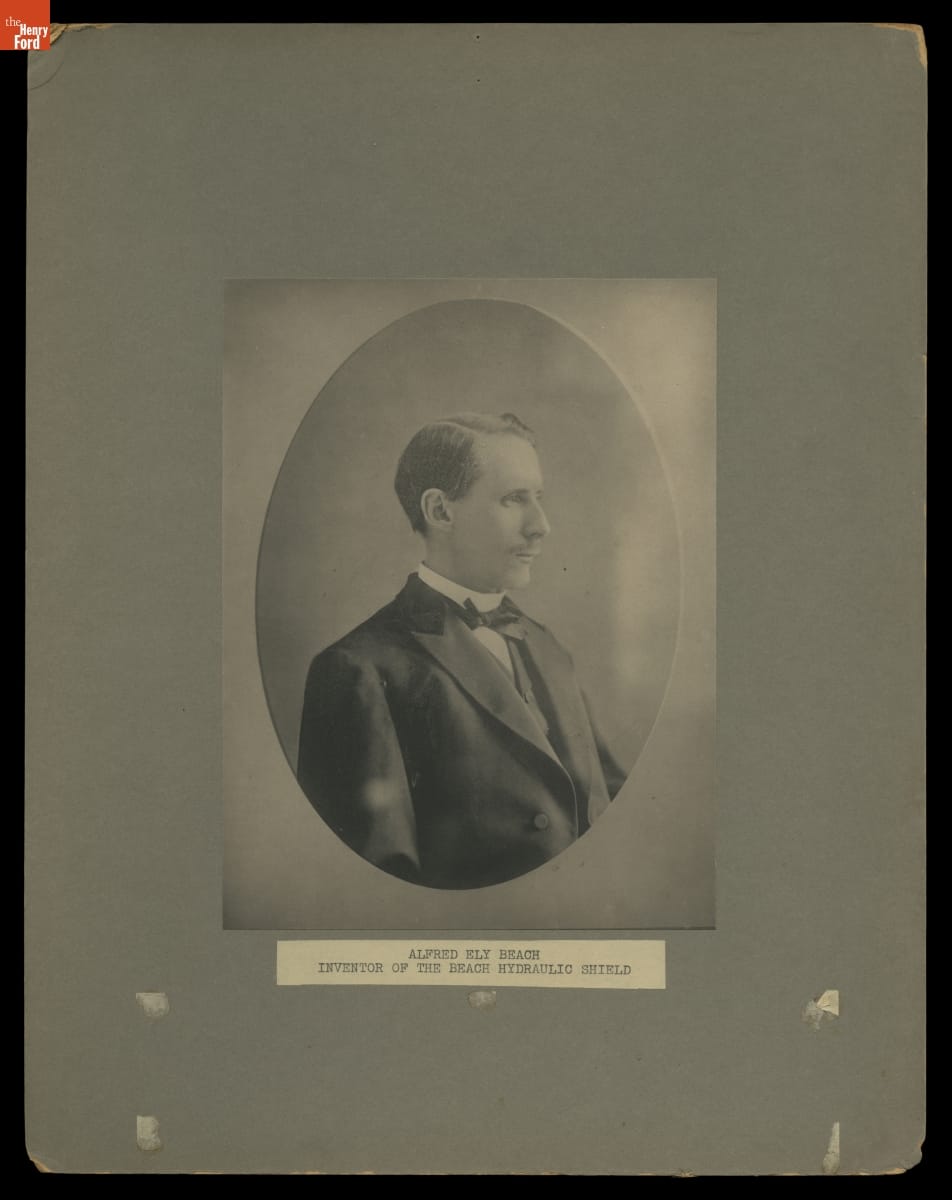
- Alfred Ely Beach, Inventor of the Beach Hydraulic Shield - Alfred Ely Beach (1826-1896), American inventor and publisher, constructed New York City’s first subway. The 312-foot-long experiment, constructed in 1870, ran under Broadway, with a single station near city hall. Beach also devised a cylindrical tunneling shield to protect workers as they dug the tunnel. Pneumatic power propelled the subway’s cars. The line was abandoned in 1873.
- Collections - Artifact
Alfred Ely Beach, Inventor of the Beach Hydraulic Shield
Alfred Ely Beach (1826-1896), American inventor and publisher, constructed New York City’s first subway. The 312-foot-long experiment, constructed in 1870, ran under Broadway, with a single station near city hall. Beach also devised a cylindrical tunneling shield to protect workers as they dug the tunnel. Pneumatic power propelled the subway’s cars. The line was abandoned in 1873.
- "Is America Good Inventors?" Clip from Interview with Steve Wozniak, August 18, 2008 - American computer engineer Stephen Wozniak co-founded Apple Computer (now Apple Inc.) with Steve Jobs in 1976. Wozniak's inventions and machines--he created the Apple 1 and Apple II computers--contributed greatly to the personal computer revolution of the 1970s and 80s. In 2008, staff from The Henry Ford interviewed Wozniak at the Computer History Museum in California as part of the Collecting Innovation Today Oral History Project.

- August 18, 2008
- Collections - Artifact
"Is America Good Inventors?" Clip from Interview with Steve Wozniak, August 18, 2008
American computer engineer Stephen Wozniak co-founded Apple Computer (now Apple Inc.) with Steve Jobs in 1976. Wozniak's inventions and machines--he created the Apple 1 and Apple II computers--contributed greatly to the personal computer revolution of the 1970s and 80s. In 2008, staff from The Henry Ford interviewed Wozniak at the Computer History Museum in California as part of the Collecting Innovation Today Oral History Project.
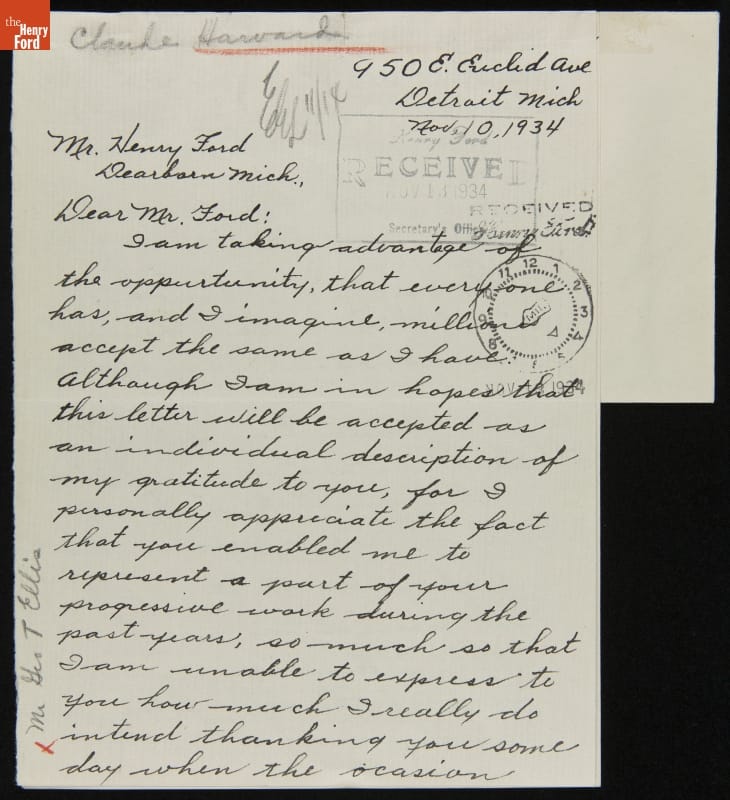
- Letter from Claude Harvard to Henry Ford Introducing Inventor George Ellis, 1934 -
- 02 October 1934-10 November 1934
- Collections - Artifact
Letter from Claude Harvard to Henry Ford Introducing Inventor George Ellis, 1934