
Search
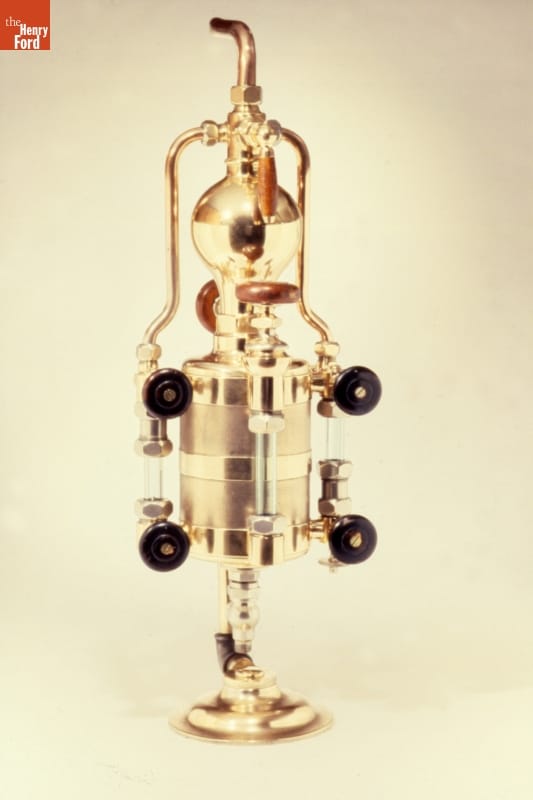
- Hydrostatic Lubricator for Locomotives, circa 1920 - Inventor Elijah McCoy developed a mechanical lubricator to oil the many moving parts on a steam locomotive. McCoy's device automatically deposited measured amounts of oil, reducing the need for crews to oil parts manually. This model, from about 1920, is an improved version of McCoy's original design patented in 1872.
- circa 1920
- Collections - Artifact
Hydrostatic Lubricator for Locomotives, circa 1920
Inventor Elijah McCoy developed a mechanical lubricator to oil the many moving parts on a steam locomotive. McCoy's device automatically deposited measured amounts of oil, reducing the need for crews to oil parts manually. This model, from about 1920, is an improved version of McCoy's original design patented in 1872.
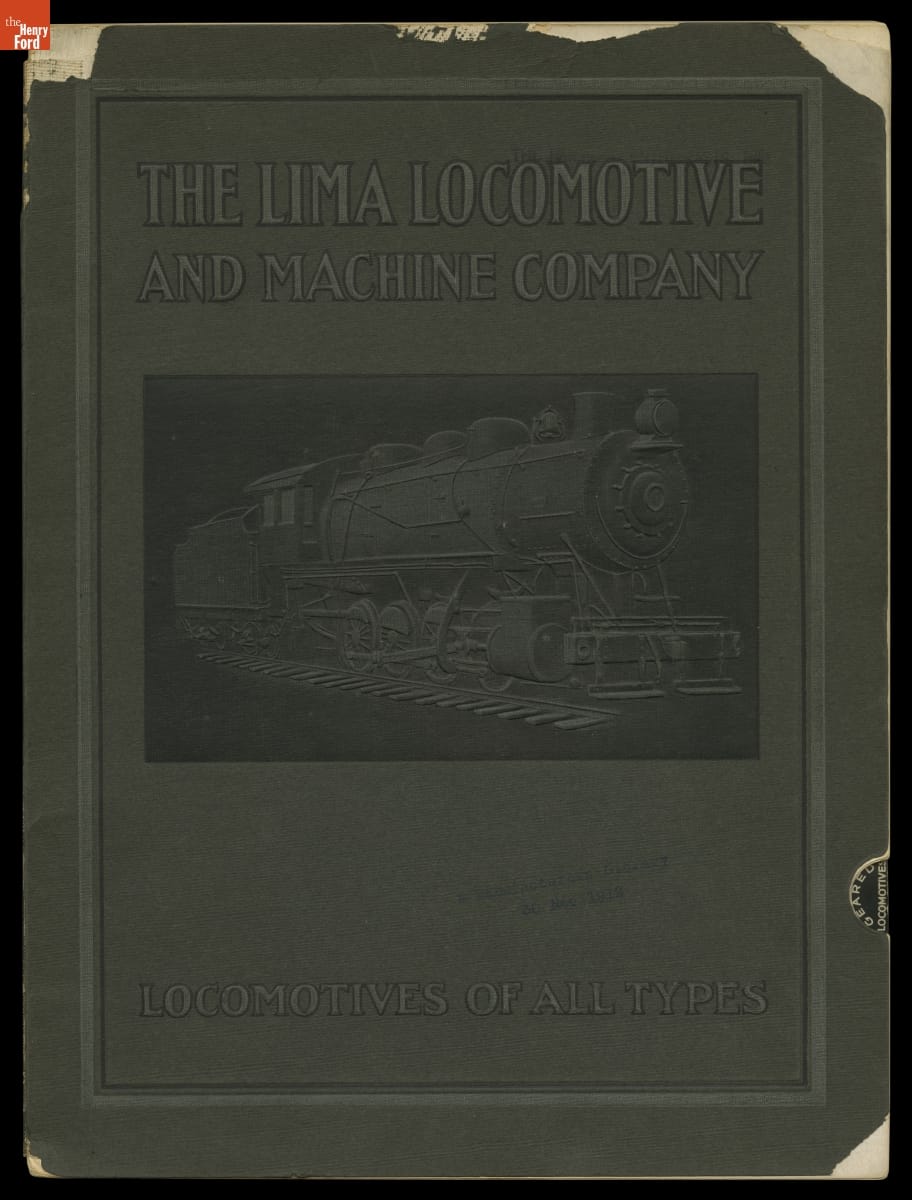
- Lima Locomotives: Catalog Number 16, 1911 - Ohio-based Lima Locomotive Works built a full range of steam and diesel-electric railroad locomotives from 1877-1951. This catalog featured one of Lima's signature products: Shay locomotives. Named for inventor Ephraim Shay, the Shay locomotive had a geared drivetrain that allowed it to negotiate tighter curves and climb steeper grades than conventional engines -- ideal for industrial railroads.
- 1911
- Collections - Artifact
Lima Locomotives: Catalog Number 16, 1911
Ohio-based Lima Locomotive Works built a full range of steam and diesel-electric railroad locomotives from 1877-1951. This catalog featured one of Lima's signature products: Shay locomotives. Named for inventor Ephraim Shay, the Shay locomotive had a geared drivetrain that allowed it to negotiate tighter curves and climb steeper grades than conventional engines -- ideal for industrial railroads.
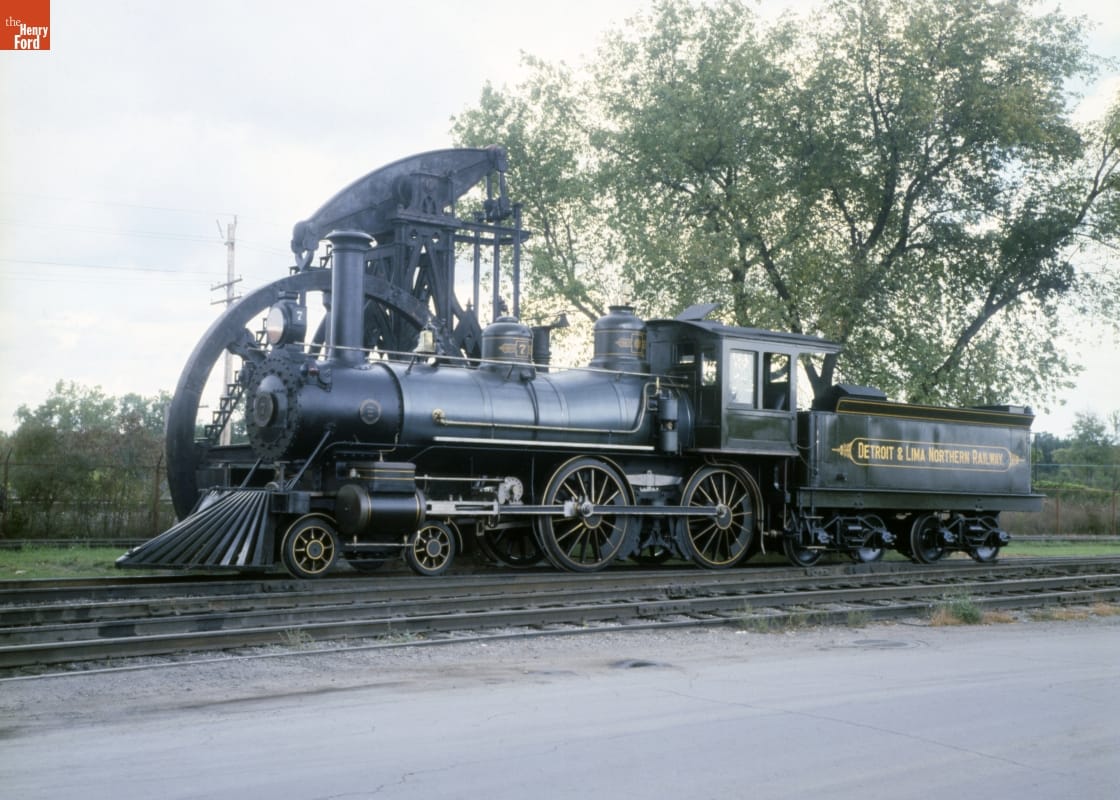
- Baldwin Locomotive Works Steam Locomotive, 1897 - This locomotive pulled passenger trains on the Detroit & Lima Northern Railway, a predecessor of the Detroit, Toledo & Ironton Railroad. After Henry Ford purchased the DT&I in 1920, this engine was the first modified under his extensive plan for improvements to the line. Ford adopted the locomotive as his favorite and donated it to The Henry Ford in 1930.
- 1897
- Collections - Artifact
Baldwin Locomotive Works Steam Locomotive, 1897
This locomotive pulled passenger trains on the Detroit & Lima Northern Railway, a predecessor of the Detroit, Toledo & Ironton Railroad. After Henry Ford purchased the DT&I in 1920, this engine was the first modified under his extensive plan for improvements to the line. Ford adopted the locomotive as his favorite and donated it to The Henry Ford in 1930.
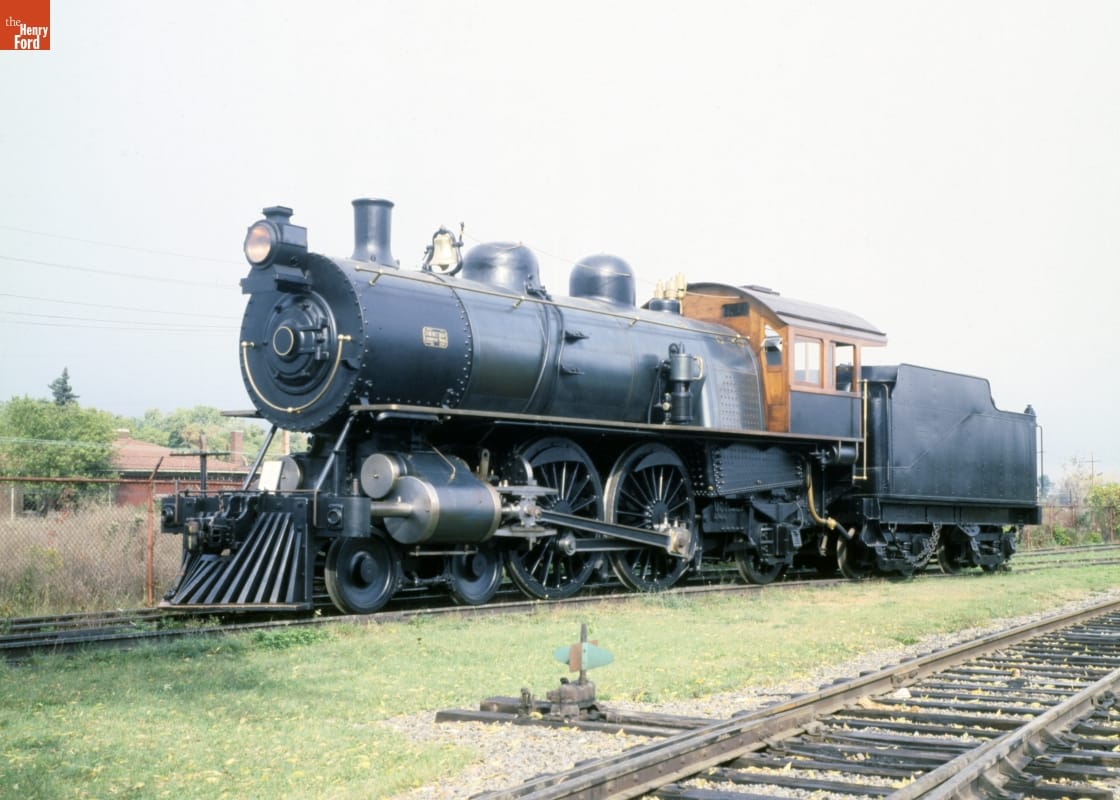
- American Locomotive Company Steam Locomotive, 1902 - The American Locomotive Company of Schenectady, New York, built this locomotive in 1902. It is a 4-4-2 Atlantic type, with four leading wheels, four driving wheels, and two trailing wheels. The Atlantic was designed to pull light wooden passenger cars at high speeds. This locomotive operated on the Michigan Central Railroad's Detroit-Chicago line until heavier steel cars made it obsolete.
- 1902
- Collections - Artifact
American Locomotive Company Steam Locomotive, 1902
The American Locomotive Company of Schenectady, New York, built this locomotive in 1902. It is a 4-4-2 Atlantic type, with four leading wheels, four driving wheels, and two trailing wheels. The Atlantic was designed to pull light wooden passenger cars at high speeds. This locomotive operated on the Michigan Central Railroad's Detroit-Chicago line until heavier steel cars made it obsolete.
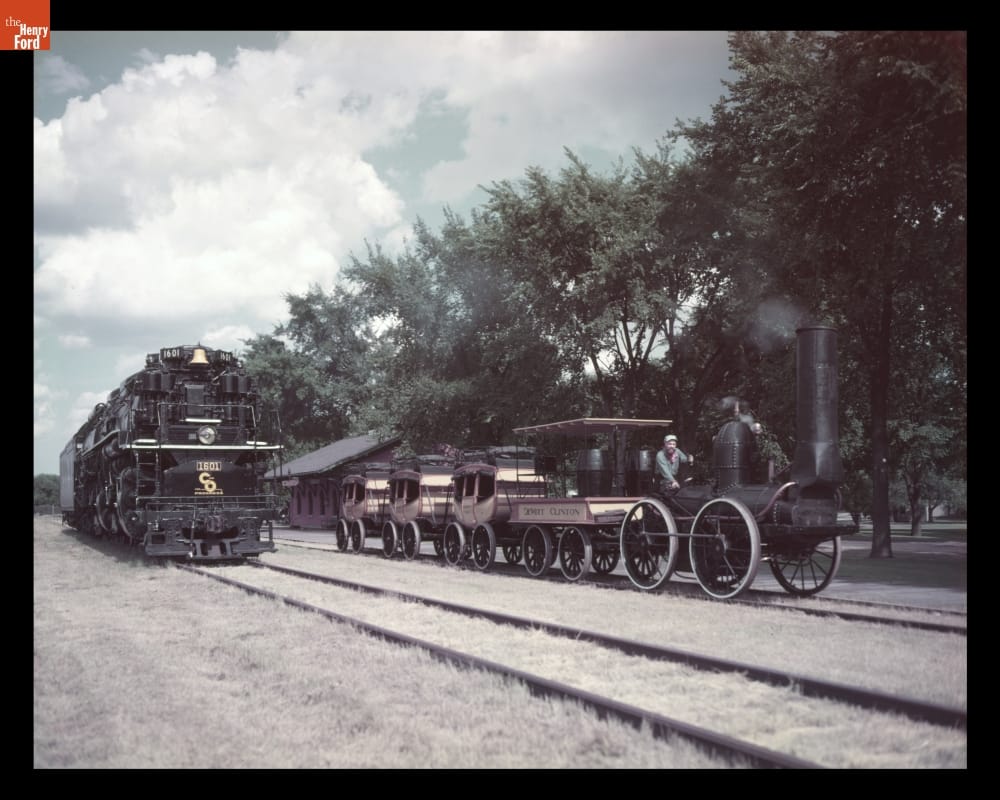
- "Allegheny" and "DeWitt Clinton" Locomotives in Greenfield Village, 1956 - More than a century of steam locomotive development separated the 1831 <EM>DeWitt Clinton</EM> (represented by the 1893 replica at right) from the 1941 Allegheny. But each locomotive was built in the same basic pattern: a horizontal boiler mounted atop driving wheels, with those driving wheels connected directly to the cylinders.
- July 01, 1956
- Collections - Artifact
"Allegheny" and "DeWitt Clinton" Locomotives in Greenfield Village, 1956
More than a century of steam locomotive development separated the 1831 DeWitt Clinton (represented by the 1893 replica at right) from the 1941 Allegheny. But each locomotive was built in the same basic pattern: a horizontal boiler mounted atop driving wheels, with those driving wheels connected directly to the cylinders.
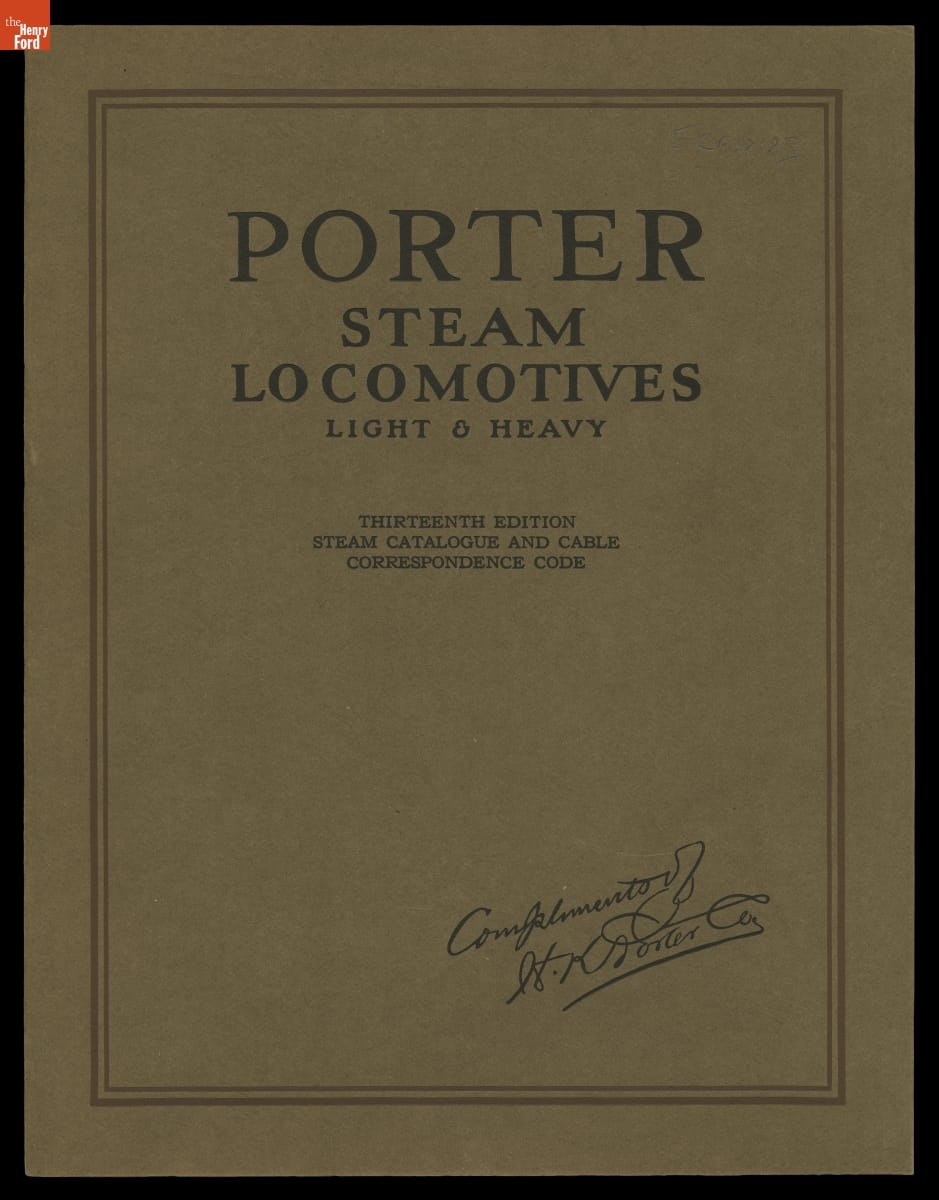
- Porter Steam Locomotives Light and Heavy, circa 1918 - Founded in 1866, the H.K. Porter Company of Pittsburgh, Pennsylvania, built light industrial locomotives. These smaller engines were used in mines, mills, factories, construction sites, agricultural operations, and other specialized applications. Porter manufactured more than 8,000 steam, gasoline, and diesel-powered locomotives before exiting the business in 1950.
- circa 1918
- Collections - Artifact
Porter Steam Locomotives Light and Heavy, circa 1918
Founded in 1866, the H.K. Porter Company of Pittsburgh, Pennsylvania, built light industrial locomotives. These smaller engines were used in mines, mills, factories, construction sites, agricultural operations, and other specialized applications. Porter manufactured more than 8,000 steam, gasoline, and diesel-powered locomotives before exiting the business in 1950.
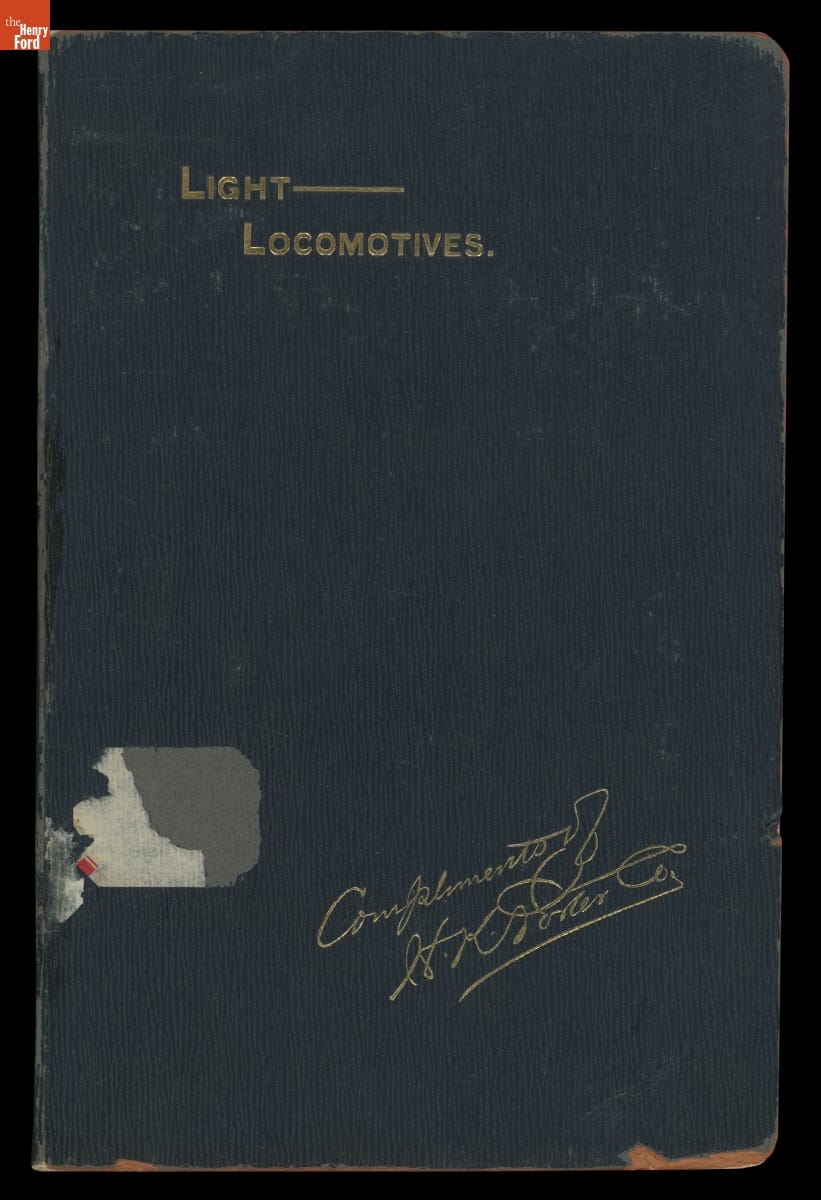
- H.K. Porter Company Catalog, "Light Locomotives," circa 1900 - Founded in 1866, the H.K. Porter Company of Pittsburgh, Pennsylvania, built light industrial locomotives. These smaller engines were used in mines, mills, factories, construction sites, agricultural operations, and other specialized applications. Porter manufactured more than 8,000 steam, gasoline, and diesel-powered locomotives before exiting the business in 1950.
- circa 1900
- Collections - Artifact
H.K. Porter Company Catalog, "Light Locomotives," circa 1900
Founded in 1866, the H.K. Porter Company of Pittsburgh, Pennsylvania, built light industrial locomotives. These smaller engines were used in mines, mills, factories, construction sites, agricultural operations, and other specialized applications. Porter manufactured more than 8,000 steam, gasoline, and diesel-powered locomotives before exiting the business in 1950.
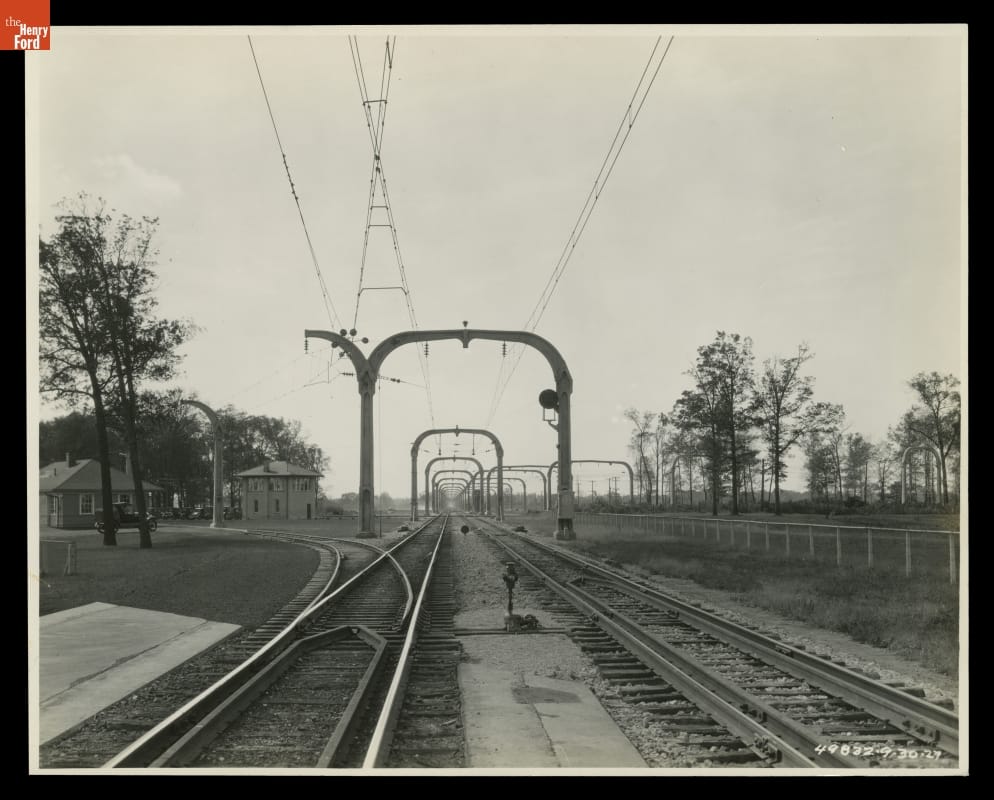
- Tracks Used by Detroit, Toledo & Ironton Railroad Electric Locomotives, 1927 - Under Henry Ford's ownership, the Detroit, Toledo & Ironton Railroad built a 15-mile branch from Flat Rock, Michigan, to Ford's Rouge plant in Dearborn. Electricity generated at the Rouge powered the line via overhead wires. The Rouge also cast the concrete arches supporting the wires. Electric operation ended in 1930, but many of the arches -- expensive to remove -- remained in place.
- September 30, 1927
- Collections - Artifact
Tracks Used by Detroit, Toledo & Ironton Railroad Electric Locomotives, 1927
Under Henry Ford's ownership, the Detroit, Toledo & Ironton Railroad built a 15-mile branch from Flat Rock, Michigan, to Ford's Rouge plant in Dearborn. Electricity generated at the Rouge powered the line via overhead wires. The Rouge also cast the concrete arches supporting the wires. Electric operation ended in 1930, but many of the arches -- expensive to remove -- remained in place.
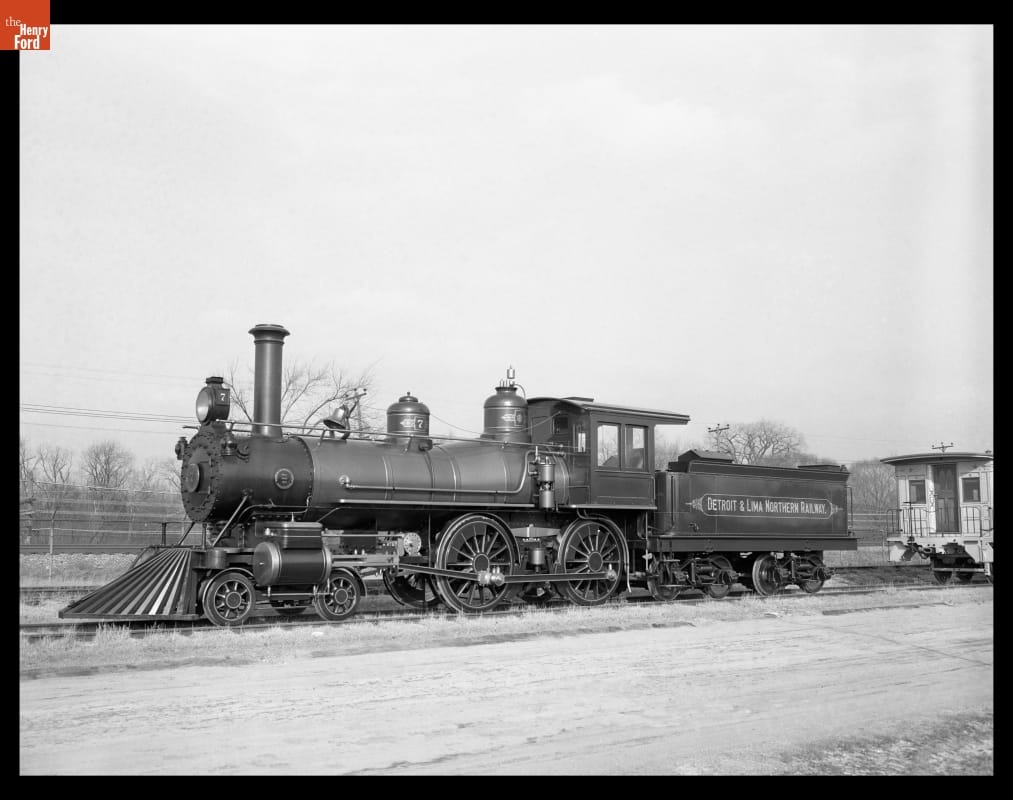
- 1897 Baldwin Locomotive Works Steam Locomotive, December 1955 - This 4-4-0 American-type locomotive pulled passenger trains on the Detroit & Lima Northern Railway, a predecessor of the Detroit, Toledo & Ironton Railroad. The 4-4-0, with four leading wheels, four driving wheels, and no trailing wheels, was a popular design on 19th-century U.S. railroads. Its small size and light weight were well suited to rough track.
- December 13, 1955
- Collections - Artifact
1897 Baldwin Locomotive Works Steam Locomotive, December 1955
This 4-4-0 American-type locomotive pulled passenger trains on the Detroit & Lima Northern Railway, a predecessor of the Detroit, Toledo & Ironton Railroad. The 4-4-0, with four leading wheels, four driving wheels, and no trailing wheels, was a popular design on 19th-century U.S. railroads. Its small size and light weight were well suited to rough track.
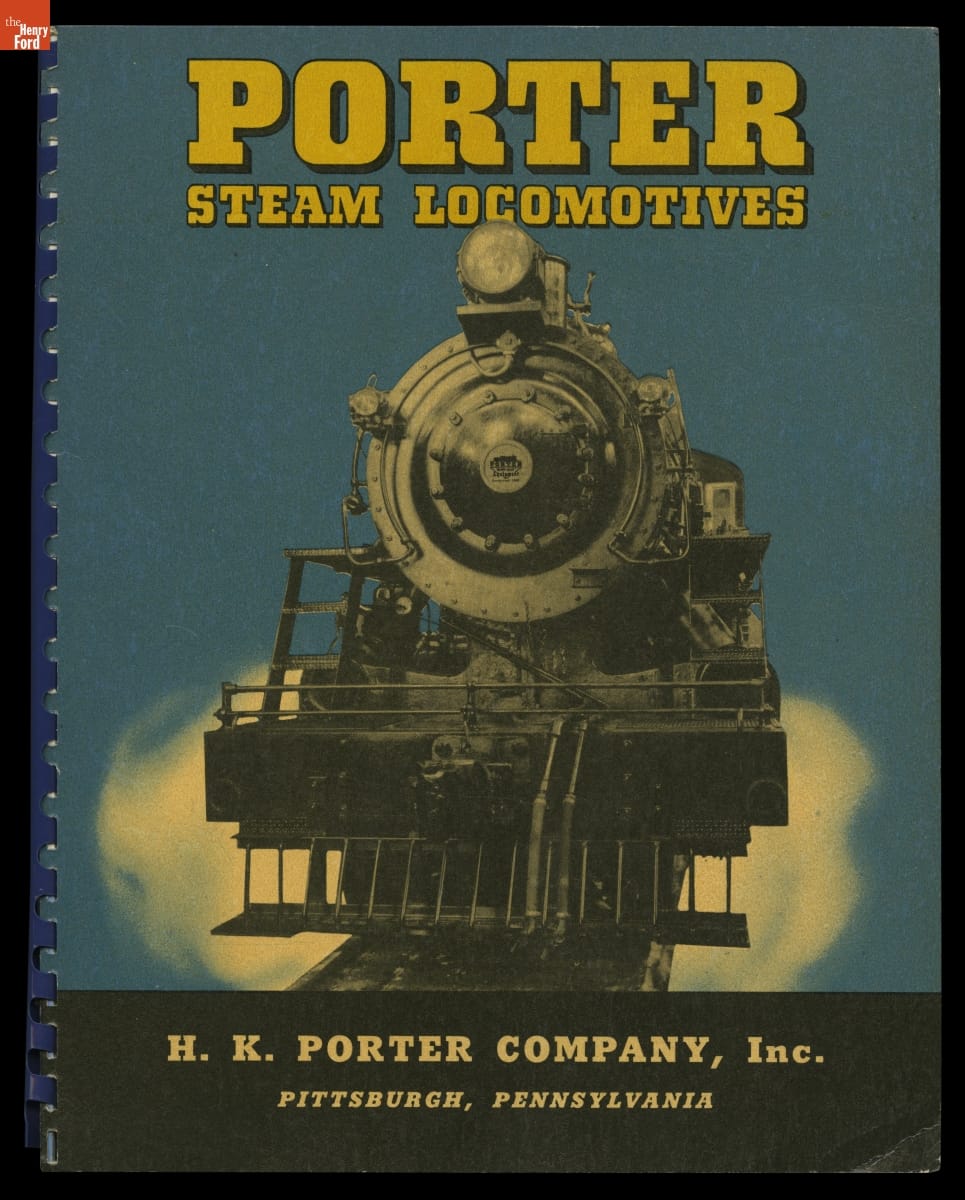
- H.K. Porter Company Catalog, "Porter Steam Locomotives," 1943 - Founded in 1866, the H.K. Porter Company of Pittsburgh, Pennsylvania, built light industrial locomotives. These smaller engines were used in mines, mills, factories, construction sites, agricultural operations, and other specialized applications. Porter manufactured more than 8,000 steam, gasoline, and diesel-powered locomotives before exiting the business in 1950.
- 1943
- Collections - Artifact
H.K. Porter Company Catalog, "Porter Steam Locomotives," 1943
Founded in 1866, the H.K. Porter Company of Pittsburgh, Pennsylvania, built light industrial locomotives. These smaller engines were used in mines, mills, factories, construction sites, agricultural operations, and other specialized applications. Porter manufactured more than 8,000 steam, gasoline, and diesel-powered locomotives before exiting the business in 1950.