
Search
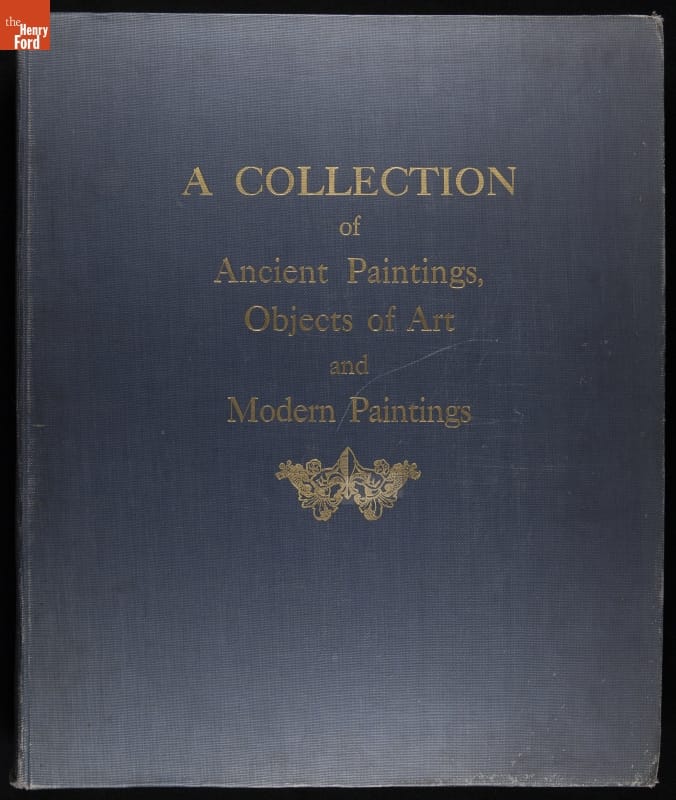
- "A Collection of Ancient Paintings, Objects of Art and Modern Paintings," 1925 -
- 1925
- Collections - Artifact
"A Collection of Ancient Paintings, Objects of Art and Modern Paintings," 1925
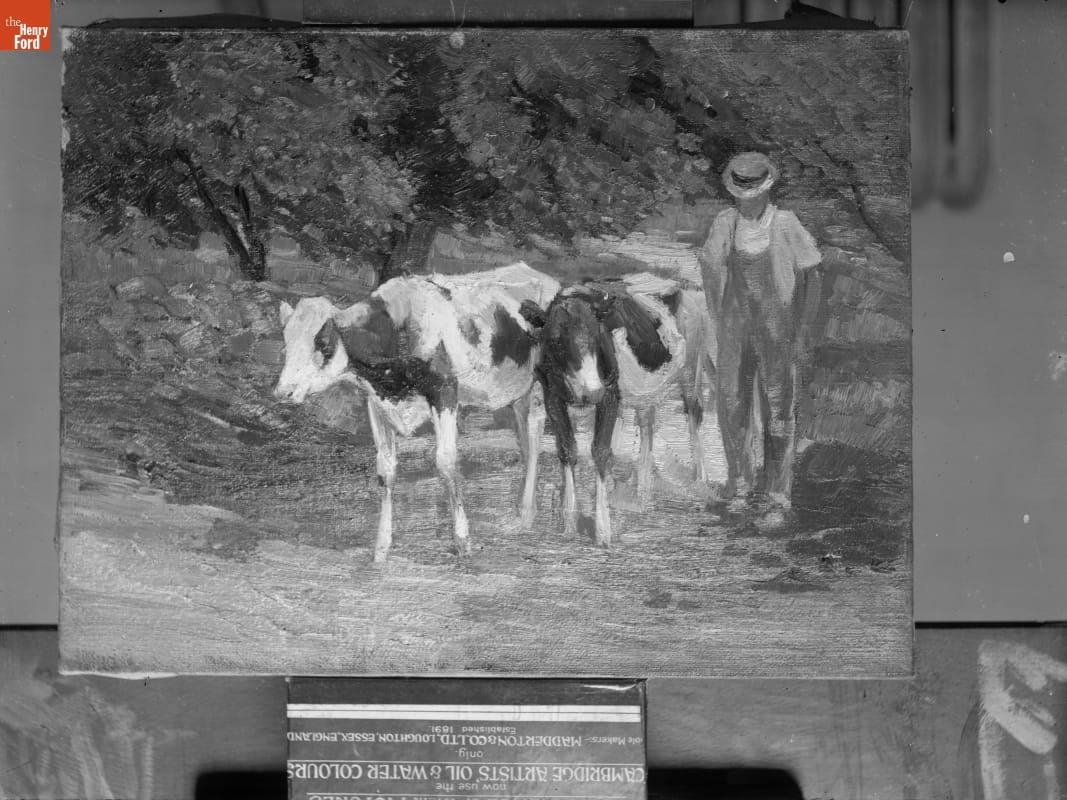
- Paintings, Cows (Max Hermann), 1890-1915 - In 1890, Jenny Young Chandler, 25 years old and recently widowed, began working for the <EM>New York Herald</EM>. As a photojournalist and feature writer, Chandler captured life in Brooklyn, New York, and vicinity. She also documented collections of private individuals and museums -- some of which were featured in magazine articles for collectors. By 1922, the time of her death, she had produced over 800 glass plate negatives.
- 1890-1915
- Collections - Artifact
Paintings, Cows (Max Hermann), 1890-1915
In 1890, Jenny Young Chandler, 25 years old and recently widowed, began working for the New York Herald. As a photojournalist and feature writer, Chandler captured life in Brooklyn, New York, and vicinity. She also documented collections of private individuals and museums -- some of which were featured in magazine articles for collectors. By 1922, the time of her death, she had produced over 800 glass plate negatives.
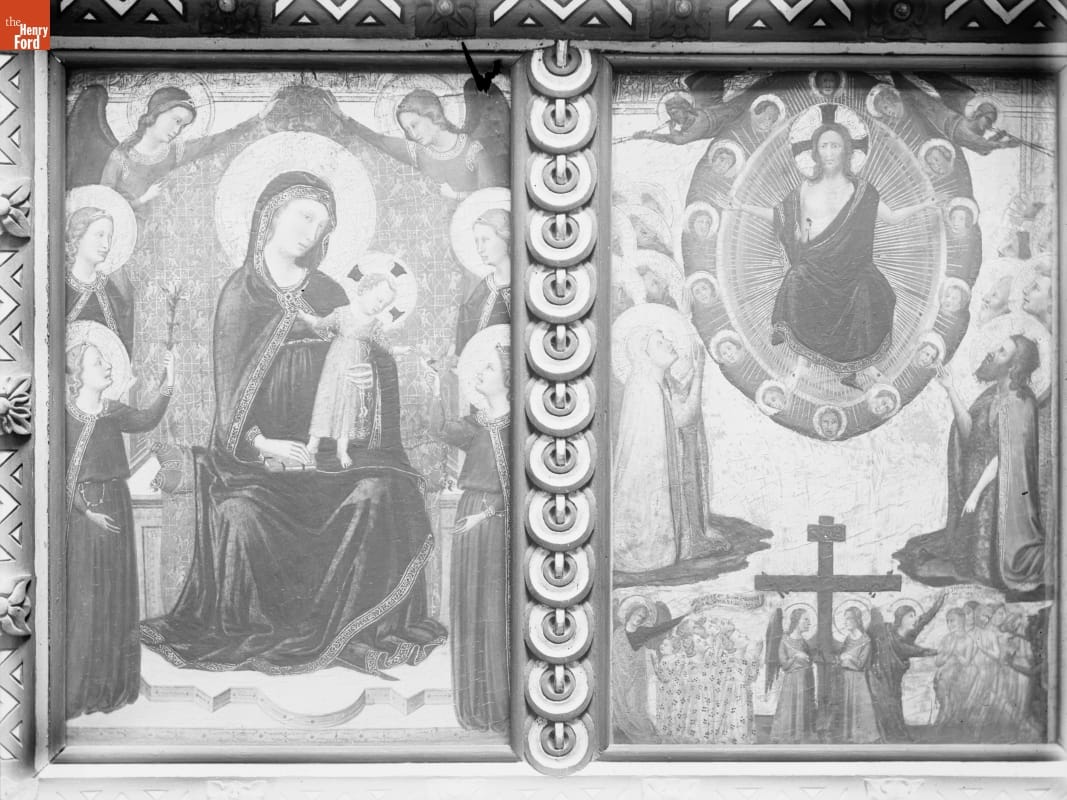
- Paintings of Resurrection and Madonna and Child, 1890-1915 - In 1890, Jenny Young Chandler, 25 years old and recently widowed, began working for the <EM>New York Herald</EM>. As a photojournalist and feature writer, Chandler captured life in Brooklyn, New York, and vicinity. She also documented collections of private individuals and museums -- some of which were featured in magazine articles for collectors. By 1922, the time of her death, she had produced over 800 glass plate negatives.
- 1890-1915
- Collections - Artifact
Paintings of Resurrection and Madonna and Child, 1890-1915
In 1890, Jenny Young Chandler, 25 years old and recently widowed, began working for the New York Herald. As a photojournalist and feature writer, Chandler captured life in Brooklyn, New York, and vicinity. She also documented collections of private individuals and museums -- some of which were featured in magazine articles for collectors. By 1922, the time of her death, she had produced over 800 glass plate negatives.
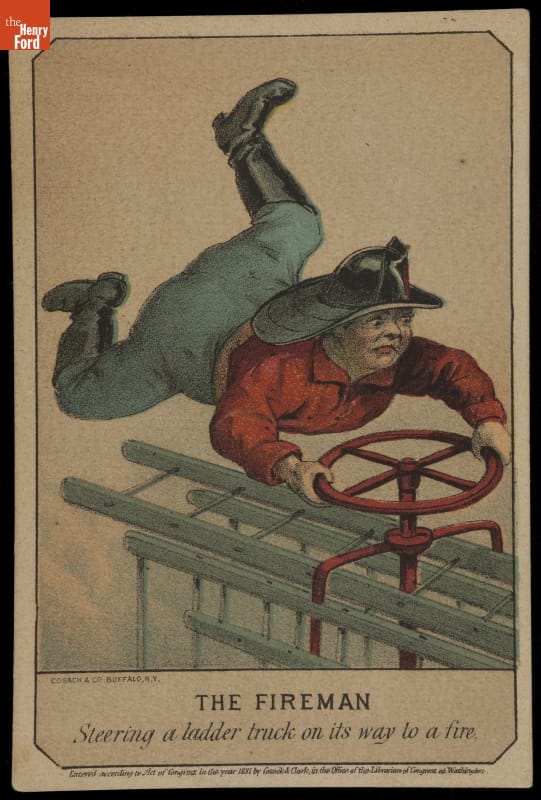
- Trade Card for Alfred Urbansky, Agent for Oil Paintings, 1887 - In the last third of the nineteenth century, an unprecedented variety of consumer goods and services flooded the American market. Advertisers, armed with new methods of color printing, bombarded potential customers with trade cards. Americans enjoyed and often saved the vibrant little advertisements found in product packages or distributed by local merchants. Many survive as historical records of commercialism in the United States.
- 1887
- Collections - Artifact
Trade Card for Alfred Urbansky, Agent for Oil Paintings, 1887
In the last third of the nineteenth century, an unprecedented variety of consumer goods and services flooded the American market. Advertisers, armed with new methods of color printing, bombarded potential customers with trade cards. Americans enjoyed and often saved the vibrant little advertisements found in product packages or distributed by local merchants. Many survive as historical records of commercialism in the United States.
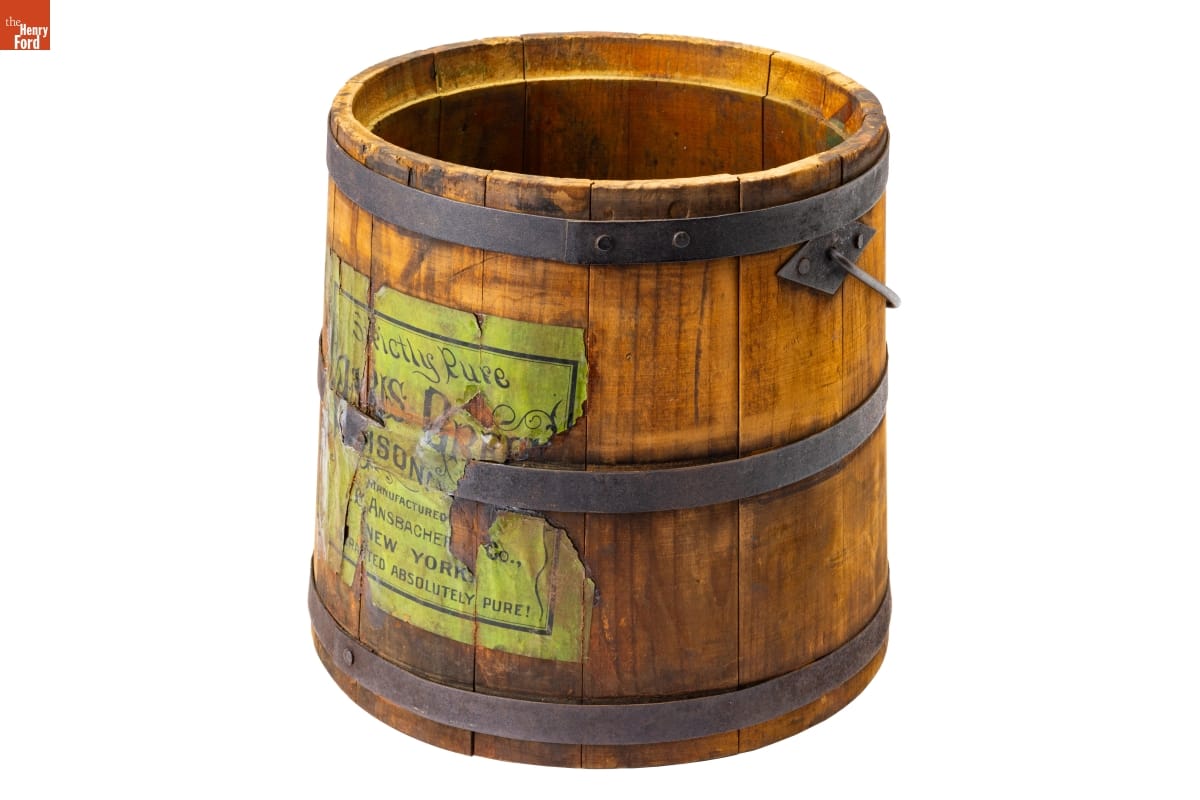
- Paint Bucket -
- Collections - Artifact
Paint Bucket
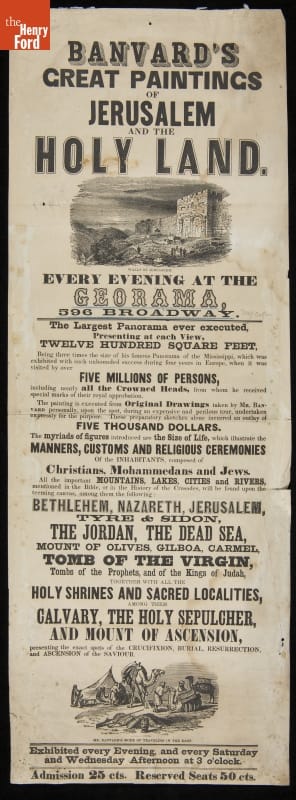
- "Banvard's Great Paintings of Jerusalem and the Holy Land," 1853-1854 - John Banvard entertained hundreds of thousands of mid-nineteenth-century Americans with his panorama of the Holy Land. This massive mural -- painted after his trip to the Near East -- depicted historic and religious scenes of Jerusalem and Palestine. For two years, from 1852-1854, audiences in New York City's Georama Theater marveled as each tableau on the canvas scrolled past.
- 1853-1854
- Collections - Artifact
"Banvard's Great Paintings of Jerusalem and the Holy Land," 1853-1854
John Banvard entertained hundreds of thousands of mid-nineteenth-century Americans with his panorama of the Holy Land. This massive mural -- painted after his trip to the Near East -- depicted historic and religious scenes of Jerusalem and Palestine. For two years, from 1852-1854, audiences in New York City's Georama Theater marveled as each tableau on the canvas scrolled past.
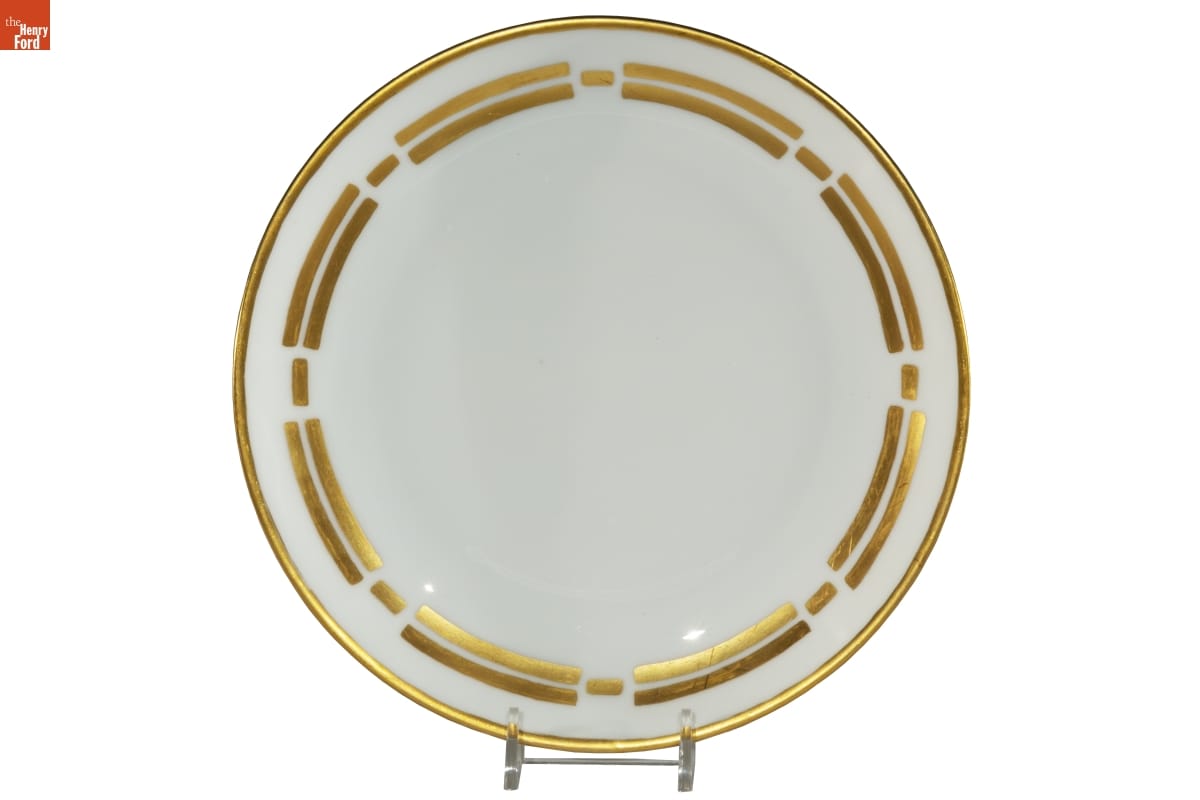
- Paint Pattern Practice Plate, Painted by Helen Gardner, 1911 - China painting was an important pastime for many American women. They painted over the glaze of fired, undecorated pieces of white porcelain called "blanks." In preparation for her 1912 wedding to Leon Gardner, recent college graduate Helen Marie Eichele purchased a set of blank china and decorated it with the help of some friends. This plate features one of the patterns she practiced.
- 1911
- Collections - Artifact
Paint Pattern Practice Plate, Painted by Helen Gardner, 1911
China painting was an important pastime for many American women. They painted over the glaze of fired, undecorated pieces of white porcelain called "blanks." In preparation for her 1912 wedding to Leon Gardner, recent college graduate Helen Marie Eichele purchased a set of blank china and decorated it with the help of some friends. This plate features one of the patterns she practiced.
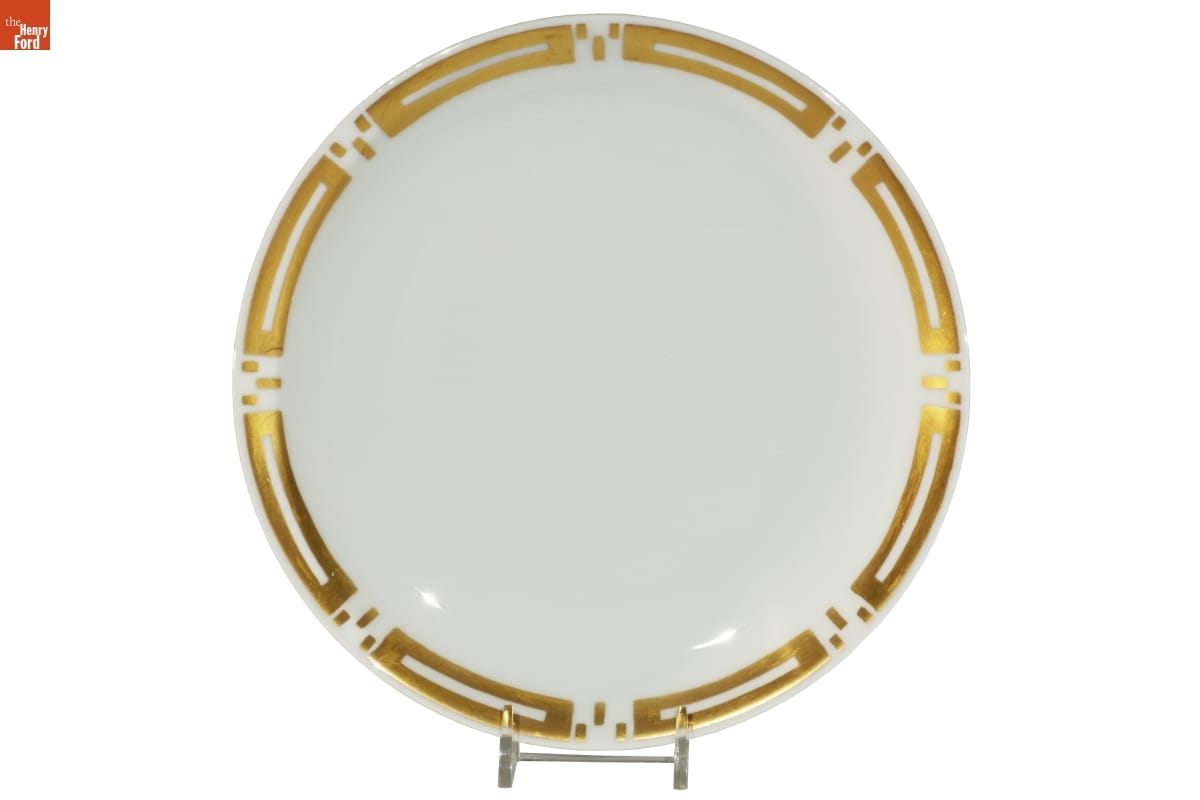
- Paint Pattern Practice Plate, Painted by Helen Gardner, 1911 - China painting was an important pastime for many American women. They painted over the glaze of fired, undecorated pieces of white porcelain called "blanks." In preparation for her 1912 wedding to Leon Gardner, recent college graduate Helen Marie Eichele purchased a set of blank china and decorated it with the help of some friends. This plate features one of the patterns she practiced.
- 1911
- Collections - Artifact
Paint Pattern Practice Plate, Painted by Helen Gardner, 1911
China painting was an important pastime for many American women. They painted over the glaze of fired, undecorated pieces of white porcelain called "blanks." In preparation for her 1912 wedding to Leon Gardner, recent college graduate Helen Marie Eichele purchased a set of blank china and decorated it with the help of some friends. This plate features one of the patterns she practiced.
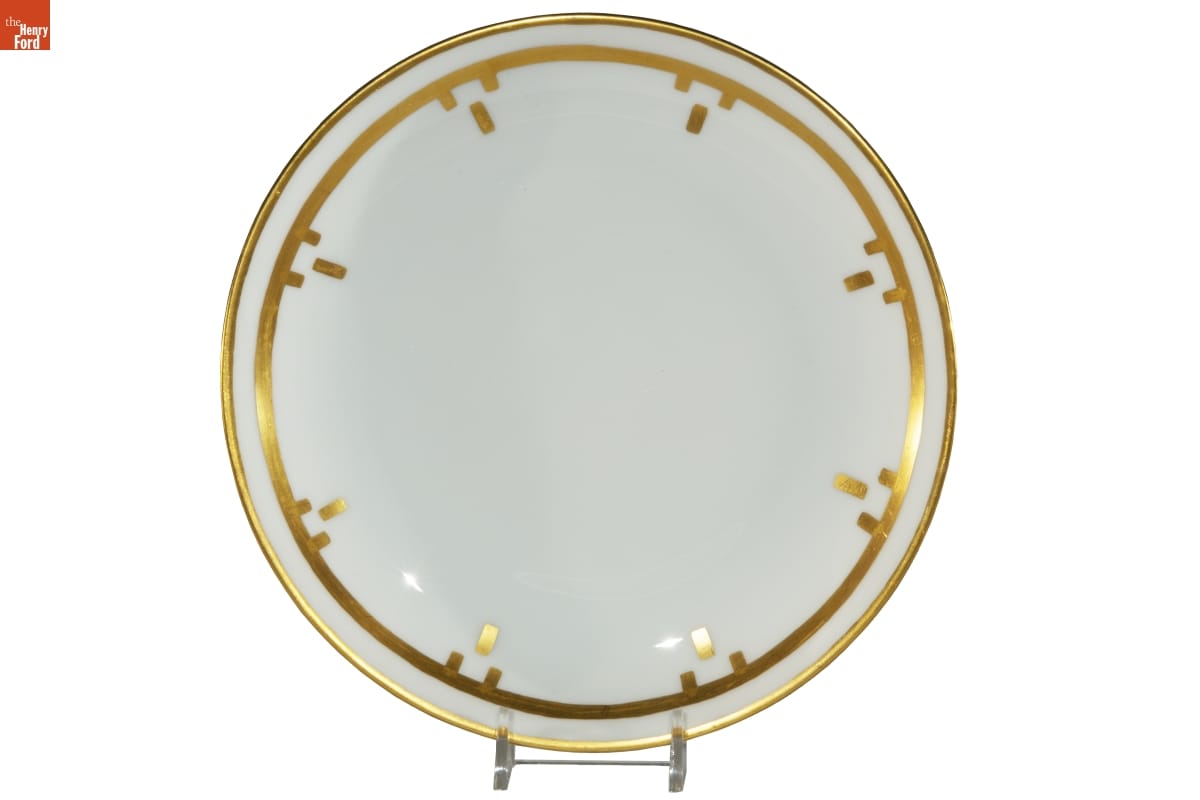
- Paint Pattern Practice Plate, Painted by Helen Gardner, 1911 - China painting was an important pastime for many American women. They painted over the glaze of fired, undecorated pieces of white porcelain called "blanks." In preparation for her 1912 wedding to Leon Gardner, recent college graduate Helen Marie Eichele purchased a set of blank china and decorated it with the help of some friends. This plate features one of the patterns she practiced.
- 1911
- Collections - Artifact
Paint Pattern Practice Plate, Painted by Helen Gardner, 1911
China painting was an important pastime for many American women. They painted over the glaze of fired, undecorated pieces of white porcelain called "blanks." In preparation for her 1912 wedding to Leon Gardner, recent college graduate Helen Marie Eichele purchased a set of blank china and decorated it with the help of some friends. This plate features one of the patterns she practiced.
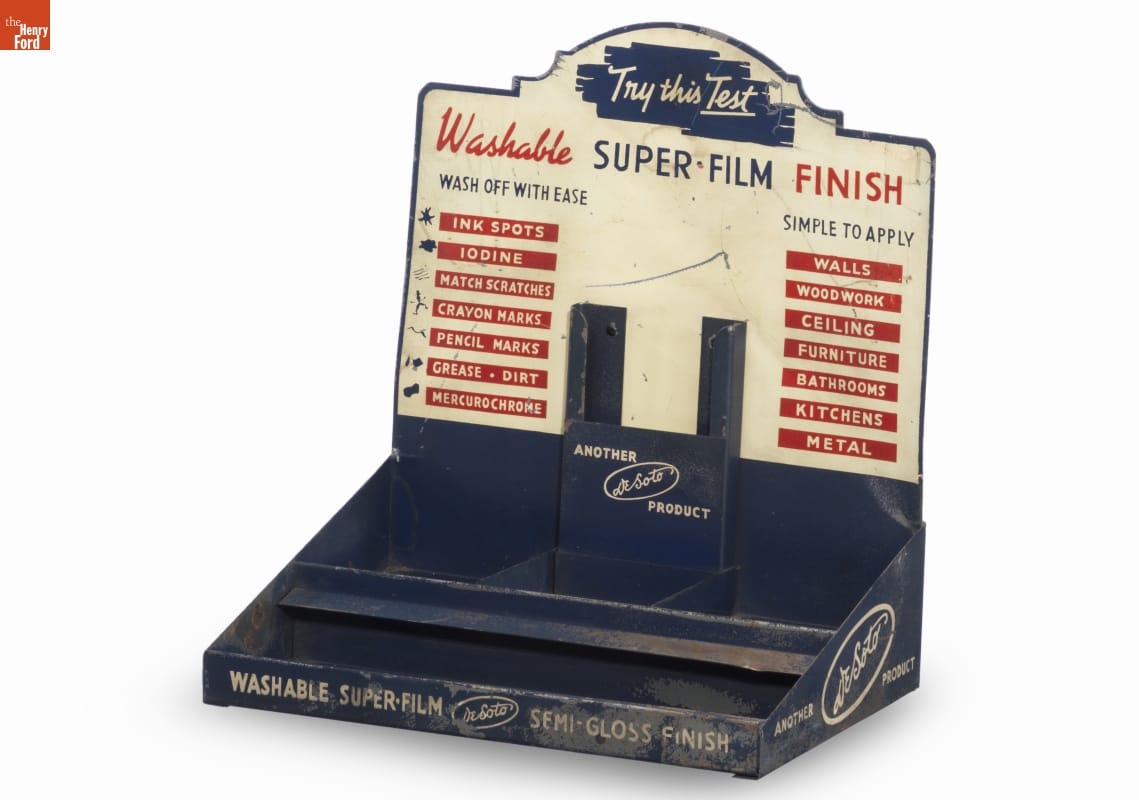
- DeSoto Paint Display - Paint and chemical company DeSoto was formed in 1910 in Des Plaines, Illinois, as a subsidiary of Sears, Roebuck and Company. DeSoto's paint operation began to lose money in the late 1980s, and the company sold its paint division to Sherwin-Williams. The sale allowed DeSoto to focus on its profitable industrial chemical products.
- Collections - Artifact
DeSoto Paint Display
Paint and chemical company DeSoto was formed in 1910 in Des Plaines, Illinois, as a subsidiary of Sears, Roebuck and Company. DeSoto's paint operation began to lose money in the late 1980s, and the company sold its paint division to Sherwin-Williams. The sale allowed DeSoto to focus on its profitable industrial chemical products.