
Search
- Trade Card for Parker's Tonic and Hair Balsam, Hiscox & Co., circa 1885 - In the last third of the nineteenth century, an unprecedented variety of consumer goods and services flooded the American market. Advertisers, armed with new methods of color printing, bombarded potential customers with trade cards. Americans enjoyed and often saved the vibrant little advertisements found in product packages or distributed by local merchants. Many survive as historical records of commercialism in the United States.

- circa 1885
- Collections - Artifact
Trade Card for Parker's Tonic and Hair Balsam, Hiscox & Co., circa 1885
In the last third of the nineteenth century, an unprecedented variety of consumer goods and services flooded the American market. Advertisers, armed with new methods of color printing, bombarded potential customers with trade cards. Americans enjoyed and often saved the vibrant little advertisements found in product packages or distributed by local merchants. Many survive as historical records of commercialism in the United States.
- J. & E. Parker's Union Coffee Mill, circa 1860 -

- circa 1860
- Collections - Artifact
J. & E. Parker's Union Coffee Mill, circa 1860
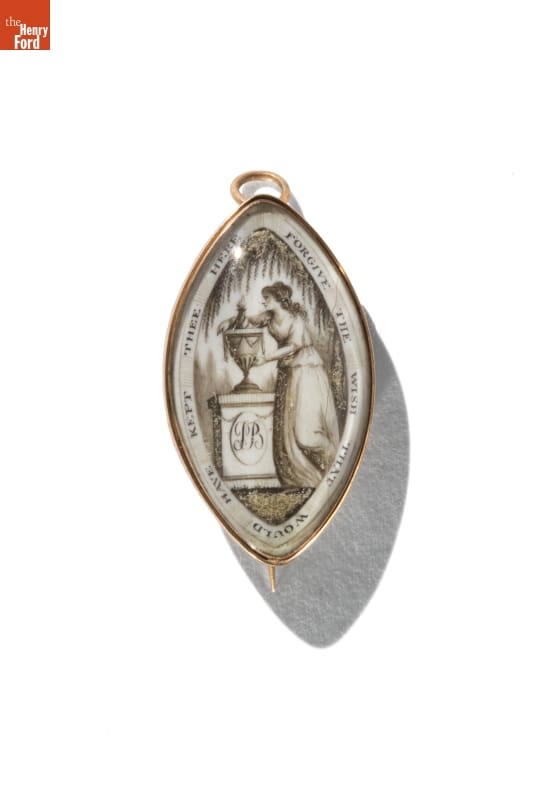
- Mourning Pendant for Percival Barker, 1786 - Before the 20th century, death came early and often. One way people coped was to wear jewelry as memorials to their loved ones. Over the centuries, mourning jewelry followed the prevailing fashions. Shortly after independence, Americans favored illuminated, miniature brooches and pendants painted on ivory. These featured shapes derived from classical design, symbols such as urns and weeping women dressed as ancient Romans.
- June 26, 1786
- Collections - Artifact
Mourning Pendant for Percival Barker, 1786
Before the 20th century, death came early and often. One way people coped was to wear jewelry as memorials to their loved ones. Over the centuries, mourning jewelry followed the prevailing fashions. Shortly after independence, Americans favored illuminated, miniature brooches and pendants painted on ivory. These featured shapes derived from classical design, symbols such as urns and weeping women dressed as ancient Romans.
- Parker's Combined Book Holder, Writing Desk and Tablet, circa 1870 -

- circa 1870
- Collections - Artifact
Parker's Combined Book Holder, Writing Desk and Tablet, circa 1870
- Hallmark "A Christmas Story: Mr. Parker's Prize" Christmas Ornament, 2006 - Already known for greeting cards, Hallmark introduced a line of Christmas ornaments in 1973. The company's annual release of an increasing array of ornaments revolutionized Christmas decorating, appealing to customers' interest in marking memories and milestones as well as expressing one's personality and unique tastes.

- 2006
- Collections - Artifact
Hallmark "A Christmas Story: Mr. Parker's Prize" Christmas Ornament, 2006
Already known for greeting cards, Hallmark introduced a line of Christmas ornaments in 1973. The company's annual release of an increasing array of ornaments revolutionized Christmas decorating, appealing to customers' interest in marking memories and milestones as well as expressing one's personality and unique tastes.
- Parker-Davis Campaign Button, 1904 - The Democrats nominated New Yorker Alton B. Parker for president in 1904. Parker never distinguished his political views from those of his Republican opponent during the campaign. This did not bode well for the virtually unknown Democratic candidate. Parker and his running mate, Henry Davis, lost to Theodore Roosevelt, the popular and energetic incumbent.
- 1904
- Collections - Artifact
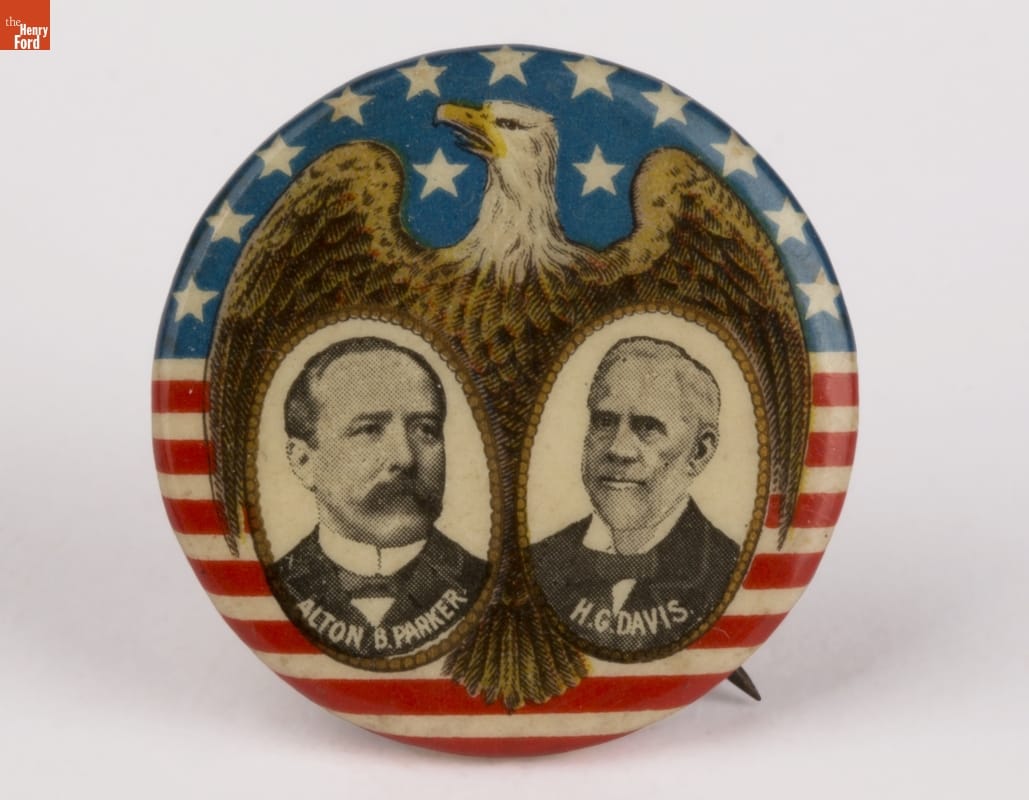
Parker-Davis Campaign Button, 1904
The Democrats nominated New Yorker Alton B. Parker for president in 1904. Parker never distinguished his political views from those of his Republican opponent during the campaign. This did not bode well for the virtually unknown Democratic candidate. Parker and his running mate, Henry Davis, lost to Theodore Roosevelt, the popular and energetic incumbent.
- Parker-Davis Campaign Button, 1904 - The Democrats nominated New Yorker Alton B. Parker for president in 1904. Parker never distinguished his political views from those of his Republican opponent during the campaign. This did not bode well for the virtually unknown Democratic candidate. Parker and his running mate, Henry Davis, lost to Theodore Roosevelt, the popular and energetic incumbent.
- 1904
- Collections - Artifact
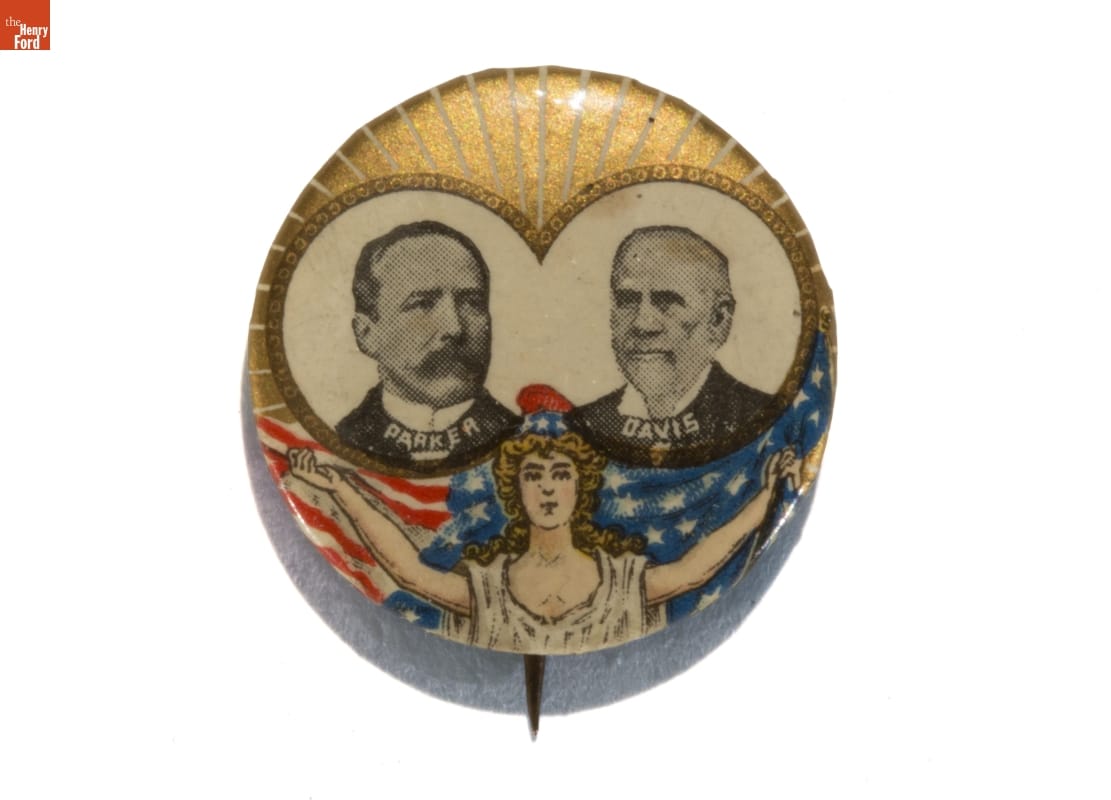
Parker-Davis Campaign Button, 1904
The Democrats nominated New Yorker Alton B. Parker for president in 1904. Parker never distinguished his political views from those of his Republican opponent during the campaign. This did not bode well for the virtually unknown Democratic candidate. Parker and his running mate, Henry Davis, lost to Theodore Roosevelt, the popular and energetic incumbent.
- Donna Parker at Cherrydale, 1957 -

- 1957
- Collections - Artifact
Donna Parker at Cherrydale, 1957
- Parker-Davis Campaign Button, 1904 - The Democrats nominated New Yorker Alton B. Parker for president in 1904. Parker never distinguished his political views from those of his Republican opponent during the campaign. This did not bode well for the virtually unknown Democratic candidate. Parker and his running mate, Henry Davis, lost to Theodore Roosevelt, the popular and energetic incumbent.
- 1904
- Collections - Artifact
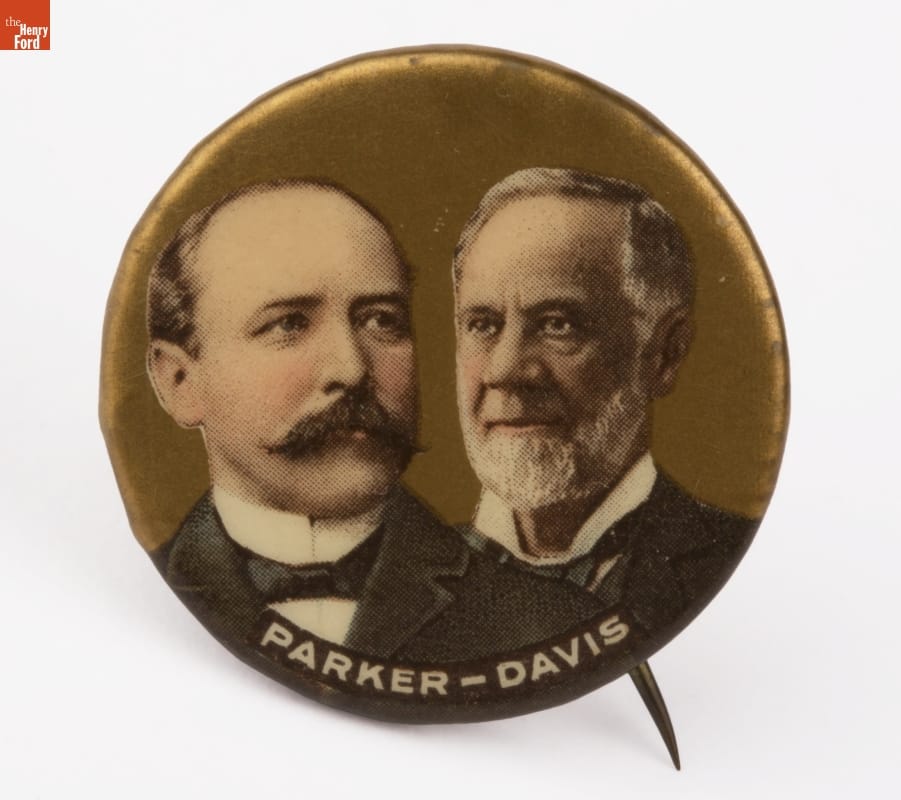
Parker-Davis Campaign Button, 1904
The Democrats nominated New Yorker Alton B. Parker for president in 1904. Parker never distinguished his political views from those of his Republican opponent during the campaign. This did not bode well for the virtually unknown Democratic candidate. Parker and his running mate, Henry Davis, lost to Theodore Roosevelt, the popular and energetic incumbent.
- Trade Card for Hiscox & Co., "Parker's Tonic Brings the Bloom of Health," circa 1900 - In the last third of the nineteenth century, an unprecedented variety of consumer goods and services flooded the American market. Advertisers, armed with new methods of color printing, bombarded potential customers with trade cards. Americans enjoyed and often saved the vibrant little advertisements found in product packages or distributed by local merchants. Many survive as historical records of commercialism in the United States.
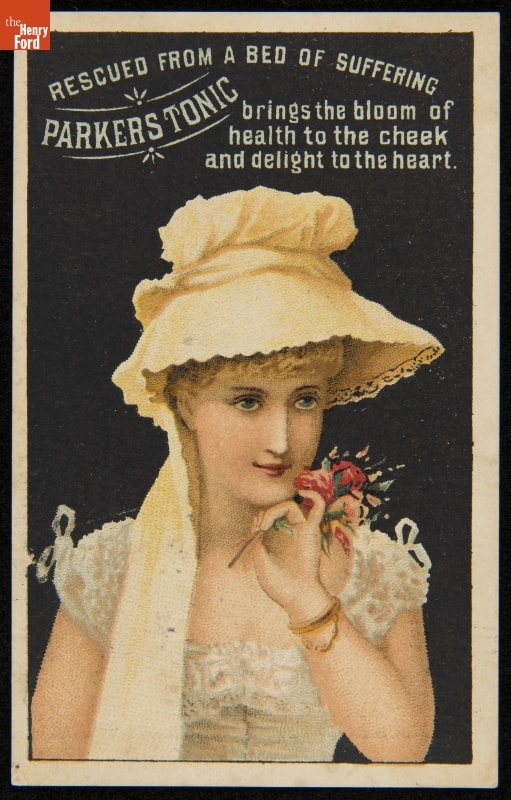
- circa 1900
- Collections - Artifact
Trade Card for Hiscox & Co., "Parker's Tonic Brings the Bloom of Health," circa 1900
In the last third of the nineteenth century, an unprecedented variety of consumer goods and services flooded the American market. Advertisers, armed with new methods of color printing, bombarded potential customers with trade cards. Americans enjoyed and often saved the vibrant little advertisements found in product packages or distributed by local merchants. Many survive as historical records of commercialism in the United States.