
Search
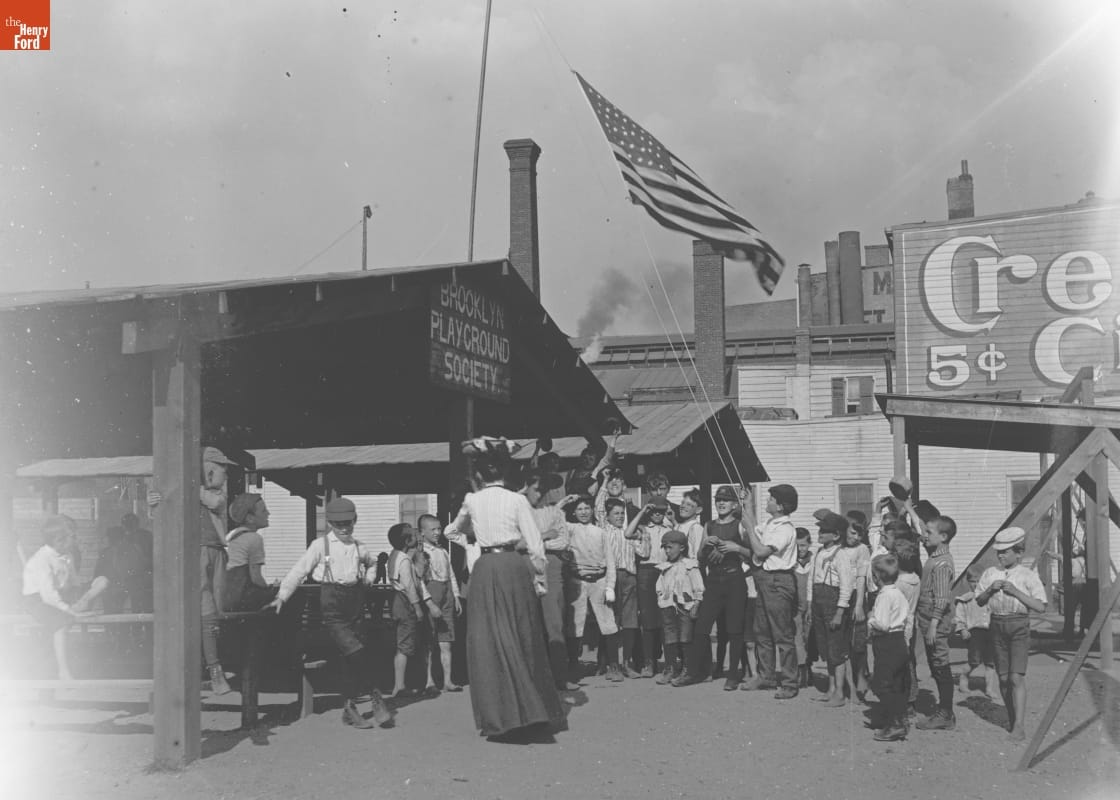
- Brooklyn Playground Society, 1890-1915 - In 1890, Jenny Young Chandler, 25 years old and recently widowed, began working for the <EM>New York Herald</EM>. As a photojournalist and feature writer, Chandler captured life in Brooklyn, New York, and vicinity. By 1922, the time of her death, she had produced over 800 glass plate negatives. Her sensitive, insightful photographs depict people from all walks of life and the world in which they lived.
- 1890-1915
- Collections - Artifact
Brooklyn Playground Society, 1890-1915
In 1890, Jenny Young Chandler, 25 years old and recently widowed, began working for the New York Herald. As a photojournalist and feature writer, Chandler captured life in Brooklyn, New York, and vicinity. By 1922, the time of her death, she had produced over 800 glass plate negatives. Her sensitive, insightful photographs depict people from all walks of life and the world in which they lived.
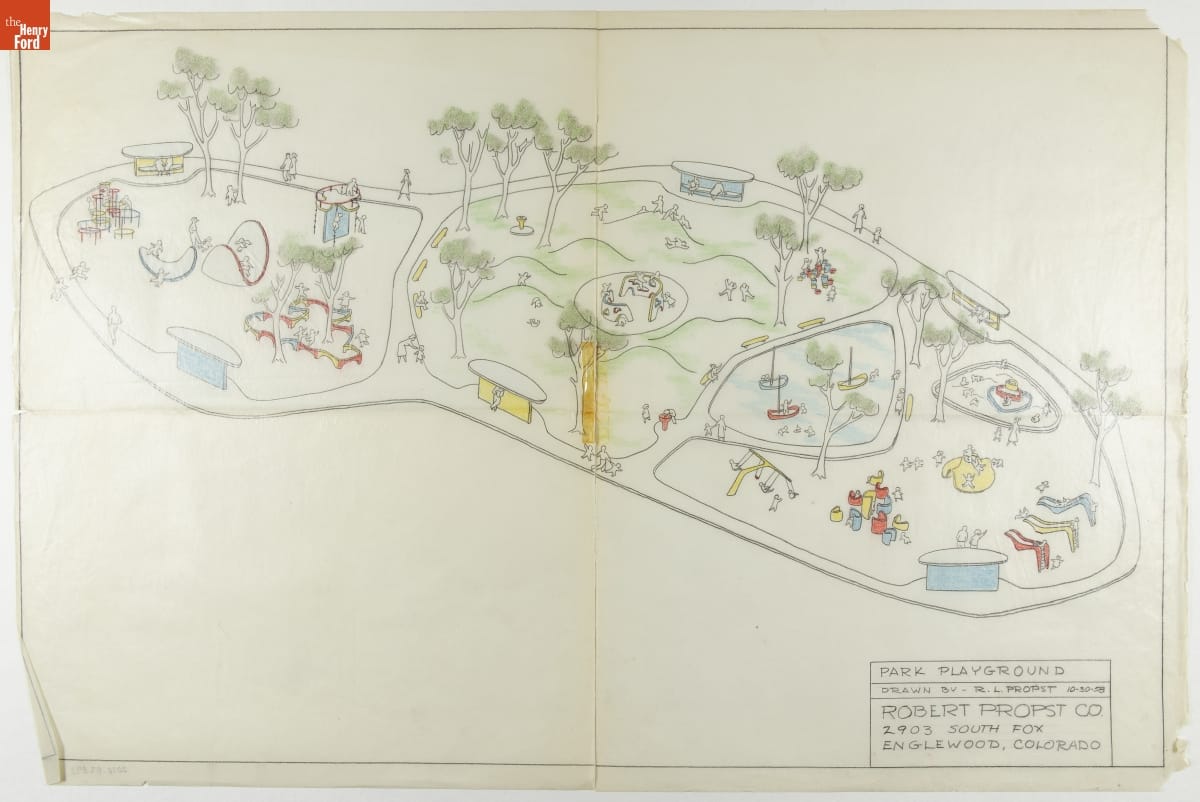
- Drawing, "Park Playground," October 30, 1958 -
- October 30, 1958
- Collections - Artifact
Drawing, "Park Playground," October 30, 1958
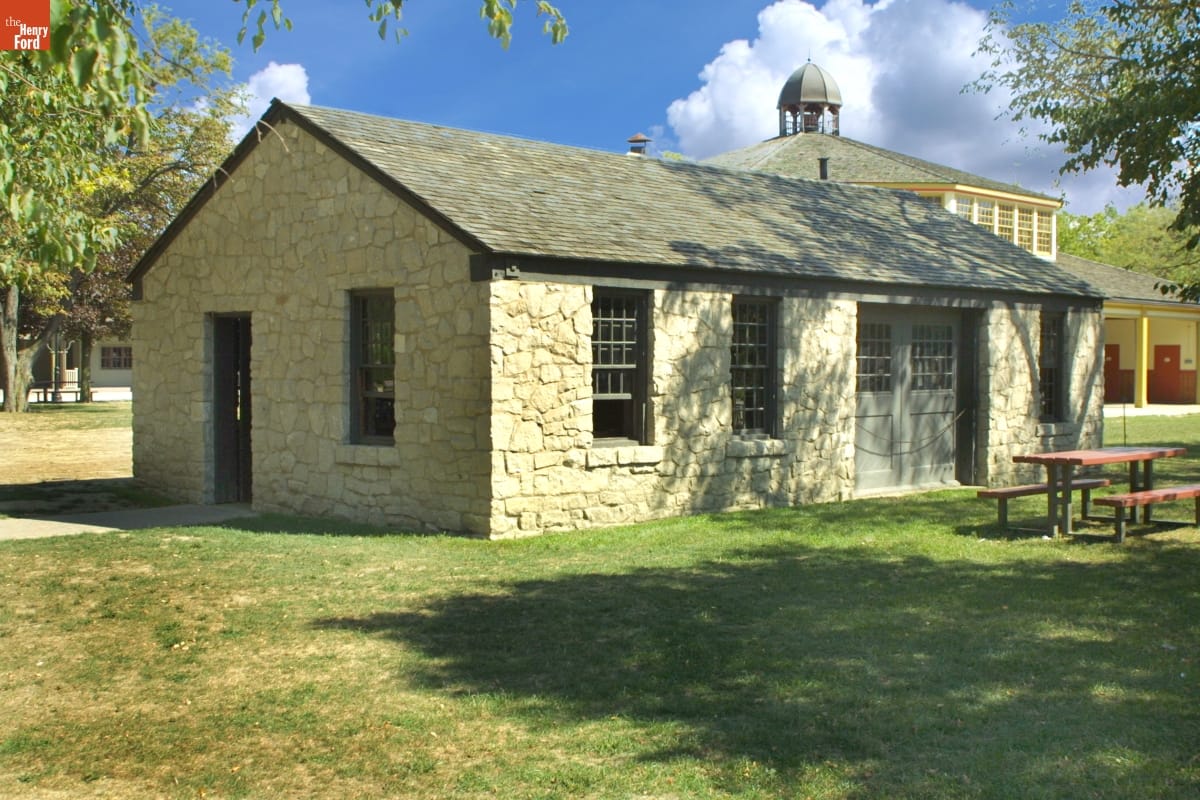
- Blacksmith Shop (Village Playground Entrance Building) -
- 1929
- Collections - Artifact
Blacksmith Shop (Village Playground Entrance Building)
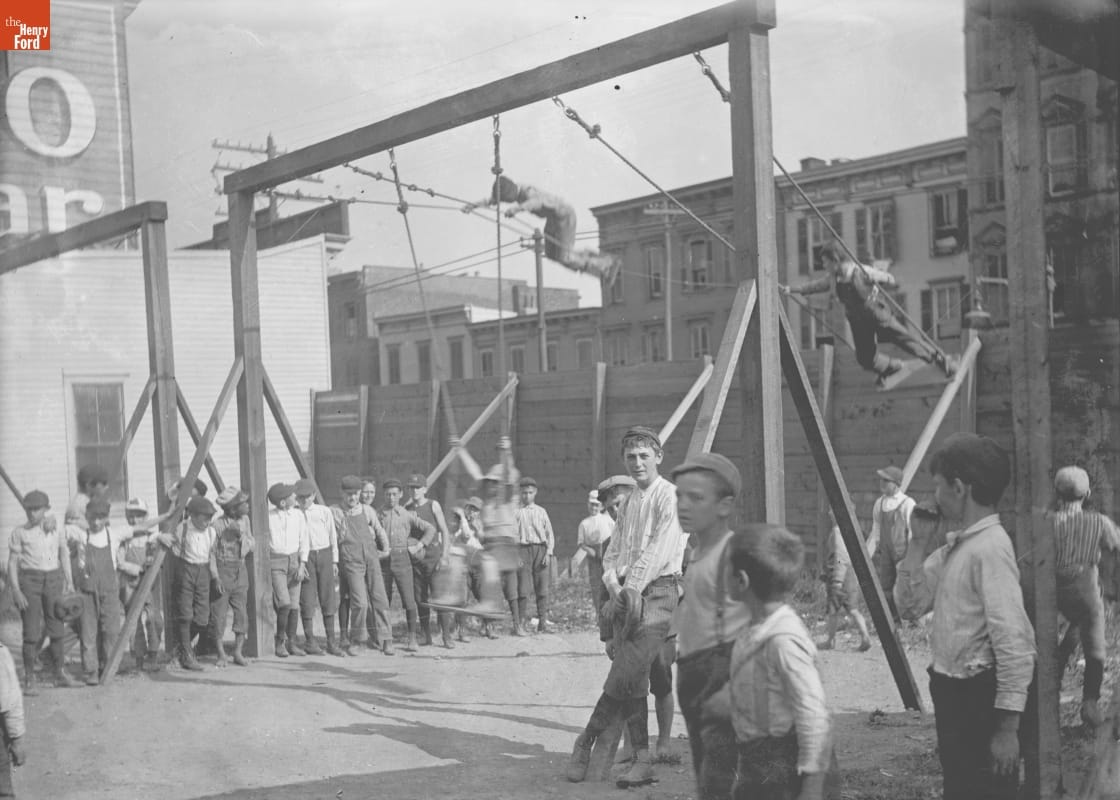
- Brooklyn Playground Society on the Swing Set, circa 1900 - In 1890, Jenny Young Chandler, 25 years old and recently widowed, began working for the <EM>New York Herald</EM>. As a photojournalist and feature writer, Chandler captured life in Brooklyn, New York, and vicinity. By 1922, the time of her death, she had produced over 800 glass plate negatives. Her sensitive, insightful photographs depict people from all walks of life and the world in which they lived.
- 1890-1915
- Collections - Artifact
Brooklyn Playground Society on the Swing Set, circa 1900
In 1890, Jenny Young Chandler, 25 years old and recently widowed, began working for the New York Herald. As a photojournalist and feature writer, Chandler captured life in Brooklyn, New York, and vicinity. By 1922, the time of her death, she had produced over 800 glass plate negatives. Her sensitive, insightful photographs depict people from all walks of life and the world in which they lived.
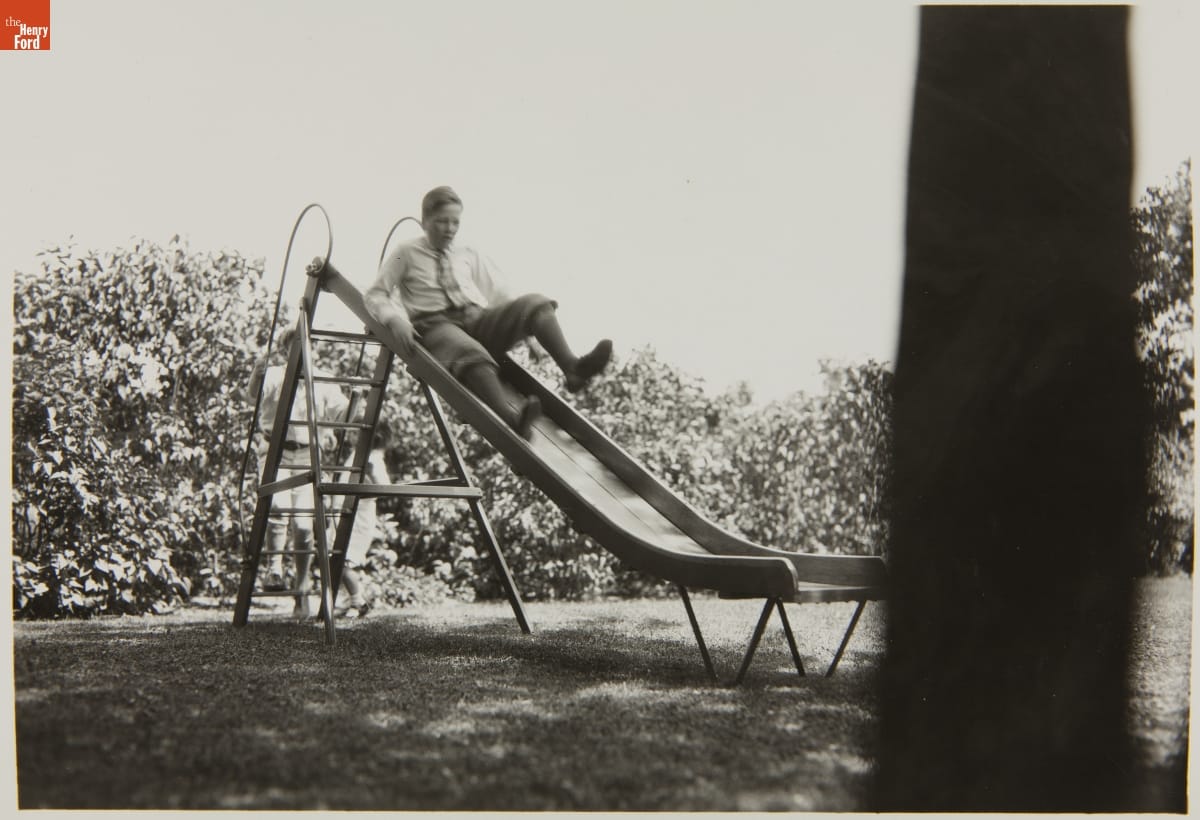
- Henry Ford II on Playground Slide, June 1929 -
- June 22, 1929
- Collections - Artifact
Henry Ford II on Playground Slide, June 1929
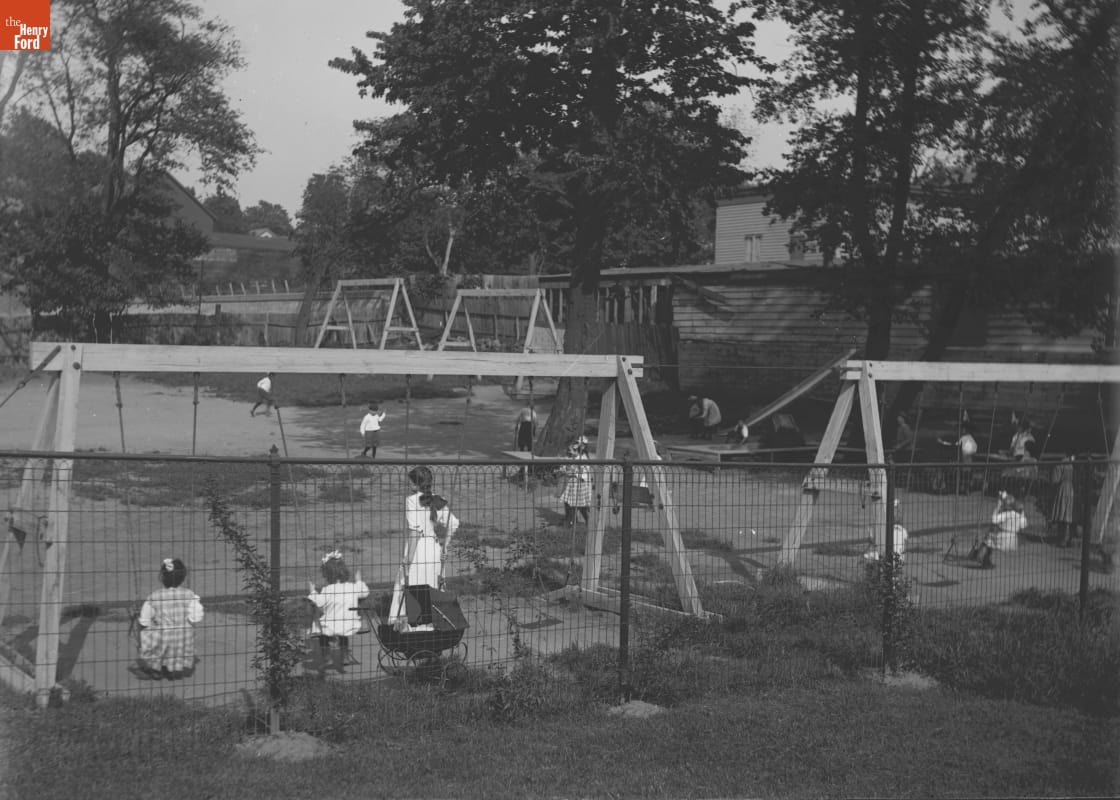
- Children in Playground, Flushing, New York, 1890-1915 - In 1890, Jenny Young Chandler, 25 years old and recently widowed, began working for the <EM>New York Herald</EM>. As a photojournalist and feature writer, Chandler captured life in Brooklyn, New York, and vicinity. By 1922, the time of her death, she had produced over 800 glass plate negatives. Her sensitive, insightful photographs depict people from all walks of life and the world in which they lived.
- 1890-1915
- Collections - Artifact
Children in Playground, Flushing, New York, 1890-1915
In 1890, Jenny Young Chandler, 25 years old and recently widowed, began working for the New York Herald. As a photojournalist and feature writer, Chandler captured life in Brooklyn, New York, and vicinity. By 1922, the time of her death, she had produced over 800 glass plate negatives. Her sensitive, insightful photographs depict people from all walks of life and the world in which they lived.
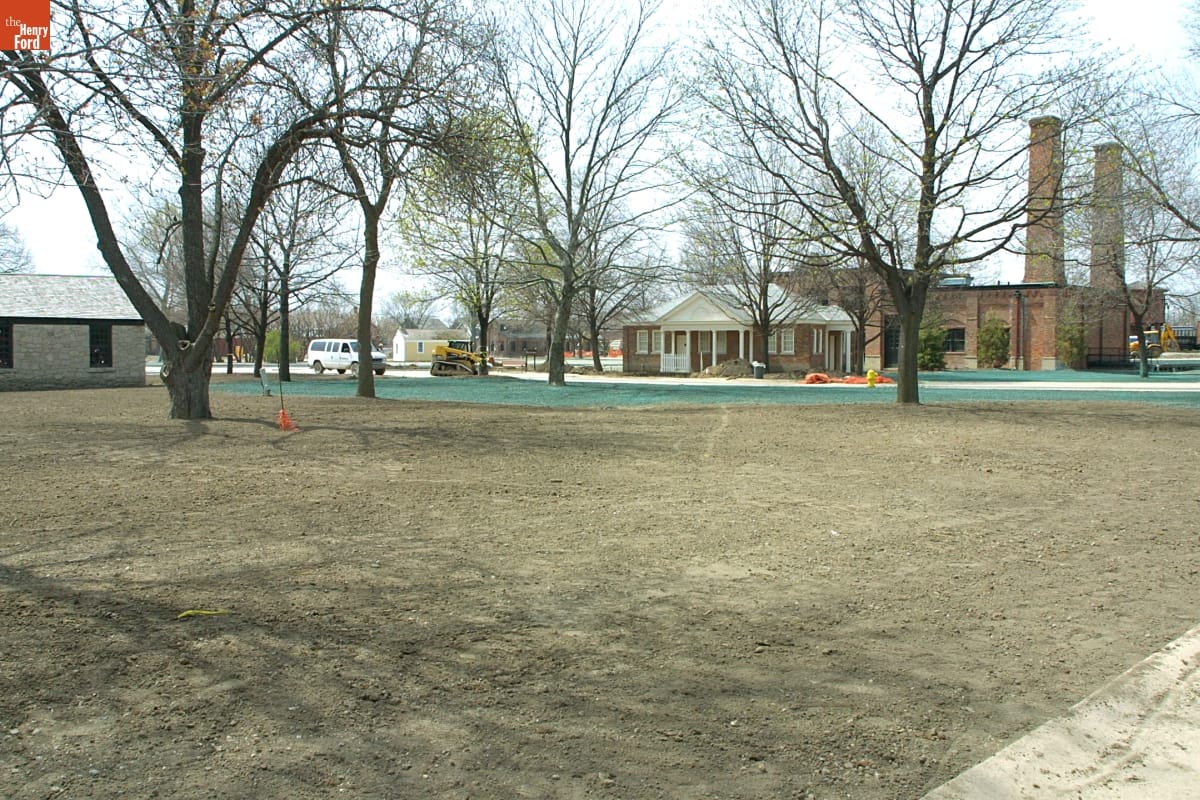
- Future "Village Playground" Site, Greenfield Village Restoration Project, April 2003 - By 2000, Greenfield Village began showing its age. Buildings and crumbling infrastructure desperately needed repair. Museum planners envisioned a revitalized village. They created themed "Historic Districts" by relocating and refurbishing the historic structures. Workers repaved streets and upgraded water, sewer, electric, and gas lines. In June 2003, nine months after restoration began, visitors passed through a new entrance into a reborn Greenfield Village.
- April 01, 2003
- Collections - Artifact
Future "Village Playground" Site, Greenfield Village Restoration Project, April 2003
By 2000, Greenfield Village began showing its age. Buildings and crumbling infrastructure desperately needed repair. Museum planners envisioned a revitalized village. They created themed "Historic Districts" by relocating and refurbishing the historic structures. Workers repaved streets and upgraded water, sewer, electric, and gas lines. In June 2003, nine months after restoration began, visitors passed through a new entrance into a reborn Greenfield Village.
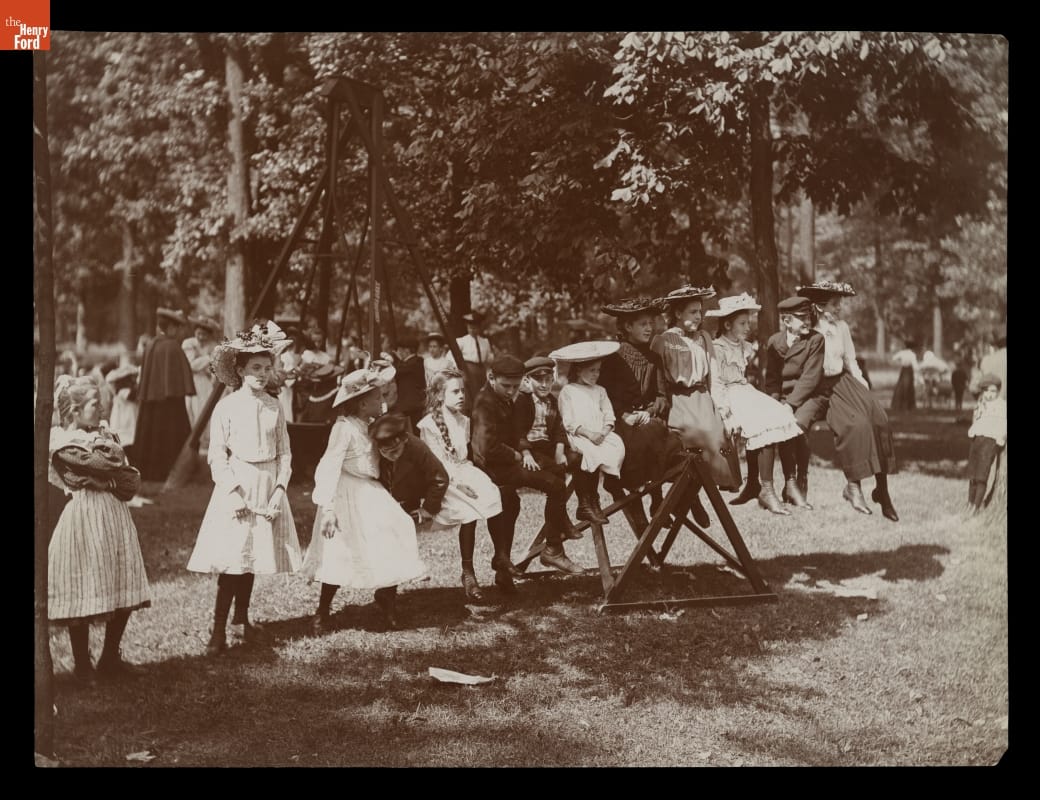
- Children's Playground, Belle Isle Park, Detroit, Michigan, circa 1905 - Belle Isle is the largest municipal island park in the United States. Fredrick Law Olmsted, the father of landscape architecture, designed portions of the park. The City of Detroit opened Belle Isle to the public in 1880; over 260,000 people visited the park in the summer of 1882, proving its immediate popularity. It has remained among Michigan's most visited parks.
- circa 1905
- Collections - Artifact
Children's Playground, Belle Isle Park, Detroit, Michigan, circa 1905
Belle Isle is the largest municipal island park in the United States. Fredrick Law Olmsted, the father of landscape architecture, designed portions of the park. The City of Detroit opened Belle Isle to the public in 1880; over 260,000 people visited the park in the summer of 1882, proving its immediate popularity. It has remained among Michigan's most visited parks.
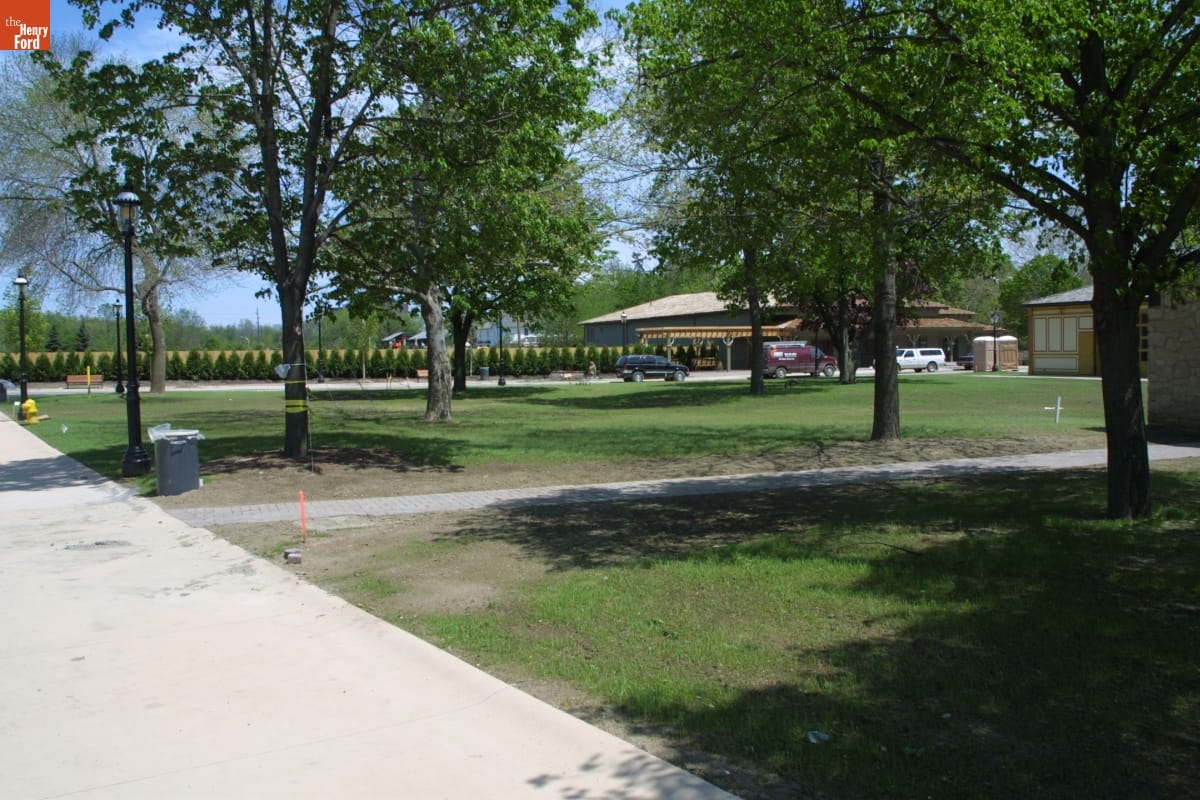
- Site of the Future Village Playground, Greenfield Village Restoration Project, May 2003 - By 2000, Greenfield Village began showing its age. Buildings and crumbling infrastructure desperately needed repair. Museum planners envisioned a revitalized village. They created themed "Historic Districts" by relocating and refurbishing the historic structures. Workers repaved streets and upgraded water, sewer, electric, and gas lines. In June 2003, nine months after restoration began, visitors passed through a new entrance into a reborn Greenfield Village.
- May 01, 2003
- Collections - Artifact
Site of the Future Village Playground, Greenfield Village Restoration Project, May 2003
By 2000, Greenfield Village began showing its age. Buildings and crumbling infrastructure desperately needed repair. Museum planners envisioned a revitalized village. They created themed "Historic Districts" by relocating and refurbishing the historic structures. Workers repaved streets and upgraded water, sewer, electric, and gas lines. In June 2003, nine months after restoration began, visitors passed through a new entrance into a reborn Greenfield Village.
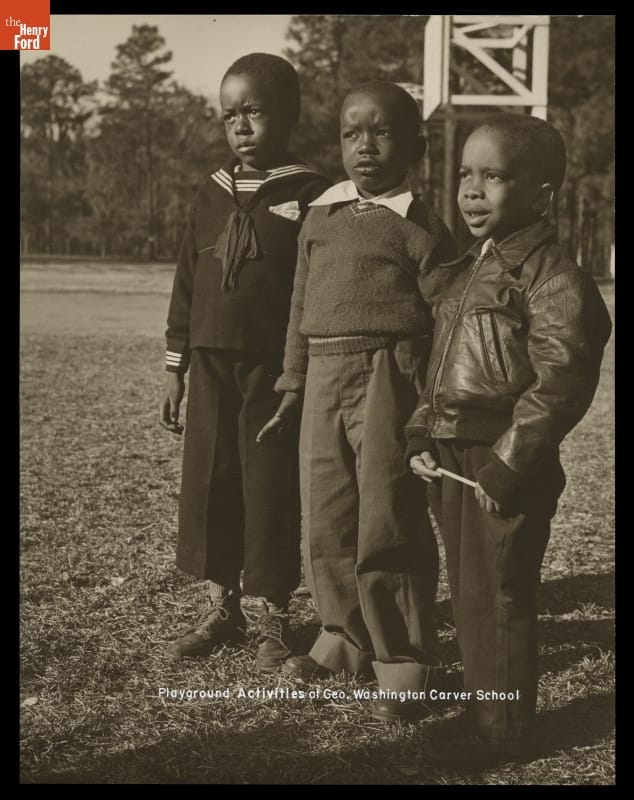
- Playground Activities at George Washington Carver School, Richmond Hill, Georgia, circa 1947 - Henry Ford purchased vast amounts of land around present-day Richmond Hill, Georgia, beginning in the 1920s. After acquiring the property, Ford became interested in the economic and civic improvement of the area. In 1939, Ford built a school for African-American children -- one of many local projects. He named the school in honor of his friend and famed educator and agricultural scientist George Washington Carver.
- circa 1947
- Collections - Artifact
Playground Activities at George Washington Carver School, Richmond Hill, Georgia, circa 1947
Henry Ford purchased vast amounts of land around present-day Richmond Hill, Georgia, beginning in the 1920s. After acquiring the property, Ford became interested in the economic and civic improvement of the area. In 1939, Ford built a school for African-American children -- one of many local projects. He named the school in honor of his friend and famed educator and agricultural scientist George Washington Carver.