
Search
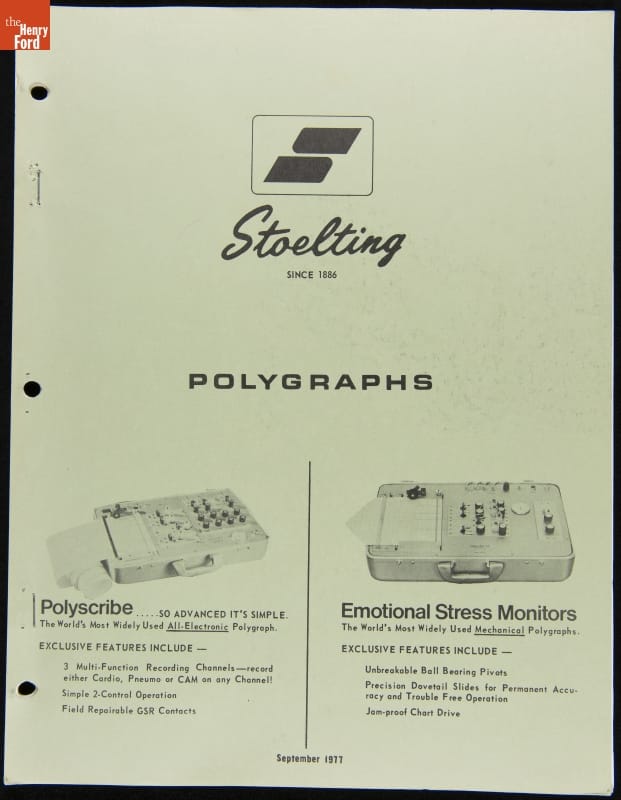
- Stoelting Company Polygraph Catalog, September 1977 - Polygraphs are more popularly known as "lie detector" machines. They measure a person's pulse, breathing rate, perspiration, and blood pressure. Polygraphs convert this data into electronic signals; inking arms output this information onto paper charts. Trained examiners interpret the results, to determine guilt or innocence. The polygraph has been called out as unethical and legally inadmissible in some cases.
- September 01, 1977
- Collections - Artifact
Stoelting Company Polygraph Catalog, September 1977
Polygraphs are more popularly known as "lie detector" machines. They measure a person's pulse, breathing rate, perspiration, and blood pressure. Polygraphs convert this data into electronic signals; inking arms output this information onto paper charts. Trained examiners interpret the results, to determine guilt or innocence. The polygraph has been called out as unethical and legally inadmissible in some cases.
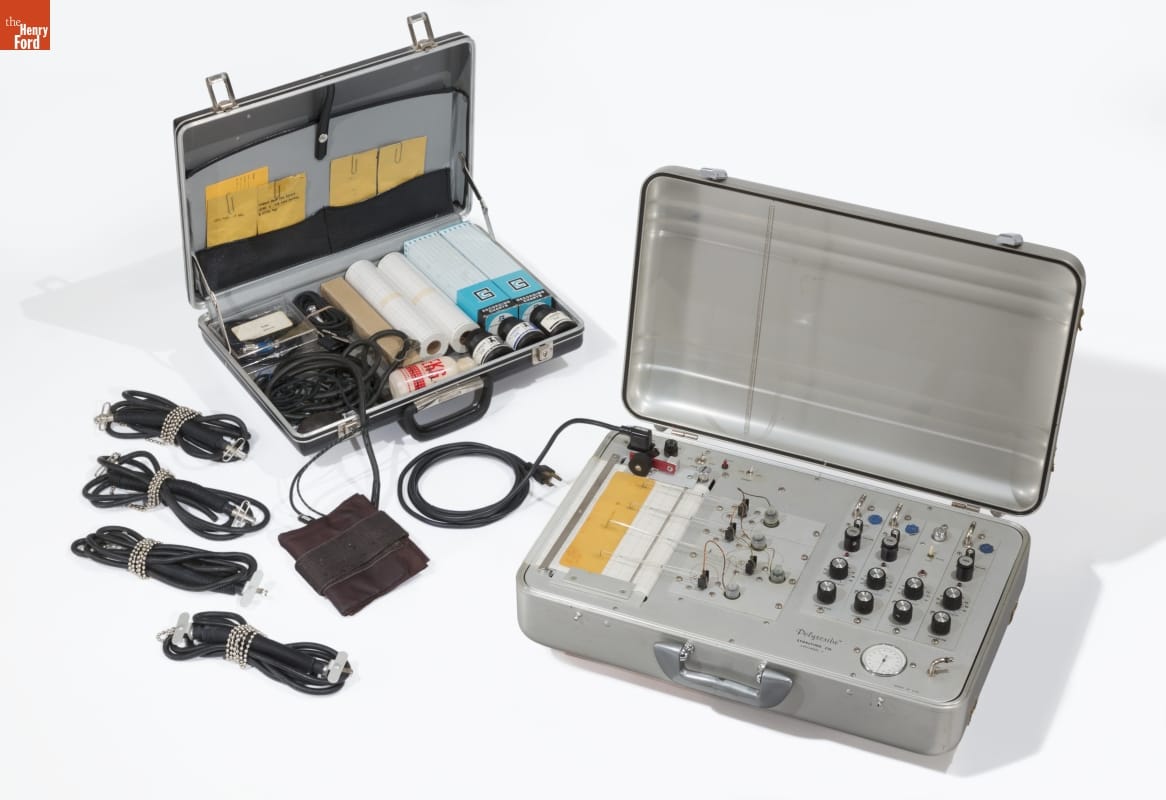
- Polyscribe Model 22770 Polygraph Machine and Accessories Kit, 1974-1977 - Polygraphs are more popularly known as "lie detector" machines. They measure a person's pulse, breathing rate, perspiration, and blood pressure. Polygraphs convert this data into electronic signals; inking arms output this information onto paper charts. Trained examiners interpret the results, to determine guilt or innocence. The polygraph has been called out as unethical and legally inadmissible in some cases.
- 1974-1977
- Collections - Artifact
Polyscribe Model 22770 Polygraph Machine and Accessories Kit, 1974-1977
Polygraphs are more popularly known as "lie detector" machines. They measure a person's pulse, breathing rate, perspiration, and blood pressure. Polygraphs convert this data into electronic signals; inking arms output this information onto paper charts. Trained examiners interpret the results, to determine guilt or innocence. The polygraph has been called out as unethical and legally inadmissible in some cases.
- "The Polygraph Story: Dedicated to Man's Right to Verify the Truth," circa 1974 - Polygraphs are more popularly known as "lie detector" machines. They measure a person's pulse, breathing rate, perspiration, and blood pressure. Polygraphs convert this data into electronic signals; inking arms output this information onto paper charts. Trained examiners interpret the results, to determine guilt or innocence. The polygraph has been called out as unethical and legally inadmissible in some cases.
- circa 1974
- Collections - Artifact
"The Polygraph Story: Dedicated to Man's Right to Verify the Truth," circa 1974
Polygraphs are more popularly known as "lie detector" machines. They measure a person's pulse, breathing rate, perspiration, and blood pressure. Polygraphs convert this data into electronic signals; inking arms output this information onto paper charts. Trained examiners interpret the results, to determine guilt or innocence. The polygraph has been called out as unethical and legally inadmissible in some cases.
- Stoelting Company Operating Manual for the Polyscribe Model 22770, circa 1976 - Polygraphs are more popularly known as "lie detector" machines. They measure a person's pulse, breathing rate, perspiration, and blood pressure. Polygraphs convert this data into electronic signals; inking arms output this information onto paper charts. Trained examiners interpret the results, to determine guilt or innocence. The polygraph has been called out as unethical and legally inadmissible in some cases.
- circa 1976
- Collections - Artifact
Stoelting Company Operating Manual for the Polyscribe Model 22770, circa 1976
Polygraphs are more popularly known as "lie detector" machines. They measure a person's pulse, breathing rate, perspiration, and blood pressure. Polygraphs convert this data into electronic signals; inking arms output this information onto paper charts. Trained examiners interpret the results, to determine guilt or innocence. The polygraph has been called out as unethical and legally inadmissible in some cases.
- Detection - From millions of artifacts in The Henry Ford’s collections, our experts choose three and reveal the surprisingly curious connections between them. In the featured video below, discover how a radio telemetry device, a polygraph, and a detective camera relate to one another.

- January 18, 2018
- Collections - Video
Detection
From millions of artifacts in The Henry Ford’s collections, our experts choose three and reveal the surprisingly curious connections between them. In the featured video below, discover how a radio telemetry device, a polygraph, and a detective camera relate to one another.
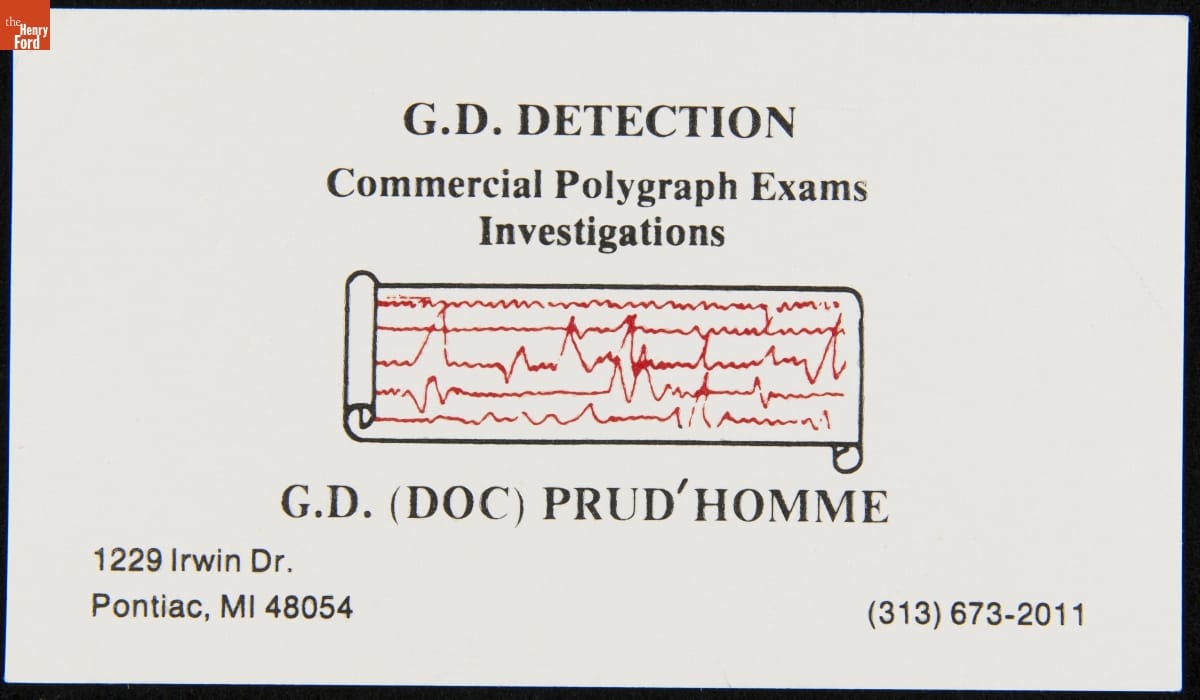
- Business Card for "G.D. Detection," 1974-1990 - "Doc" Prud'homme is the former owner and chief examiner of Polygraph Specialists Company. Polygraphs are more popularly known as "lie detector" machines. Prud'homme trained to use these devices while stationed in Vietnam. Upon returning to Michigan, he established his own business. The mobility of the polygraph machine allowed him to administer tests throughout the Metro-Detroit area.
- 1974-1990
- Collections - Artifact
Business Card for "G.D. Detection," 1974-1990
"Doc" Prud'homme is the former owner and chief examiner of Polygraph Specialists Company. Polygraphs are more popularly known as "lie detector" machines. Prud'homme trained to use these devices while stationed in Vietnam. Upon returning to Michigan, he established his own business. The mobility of the polygraph machine allowed him to administer tests throughout the Metro-Detroit area.
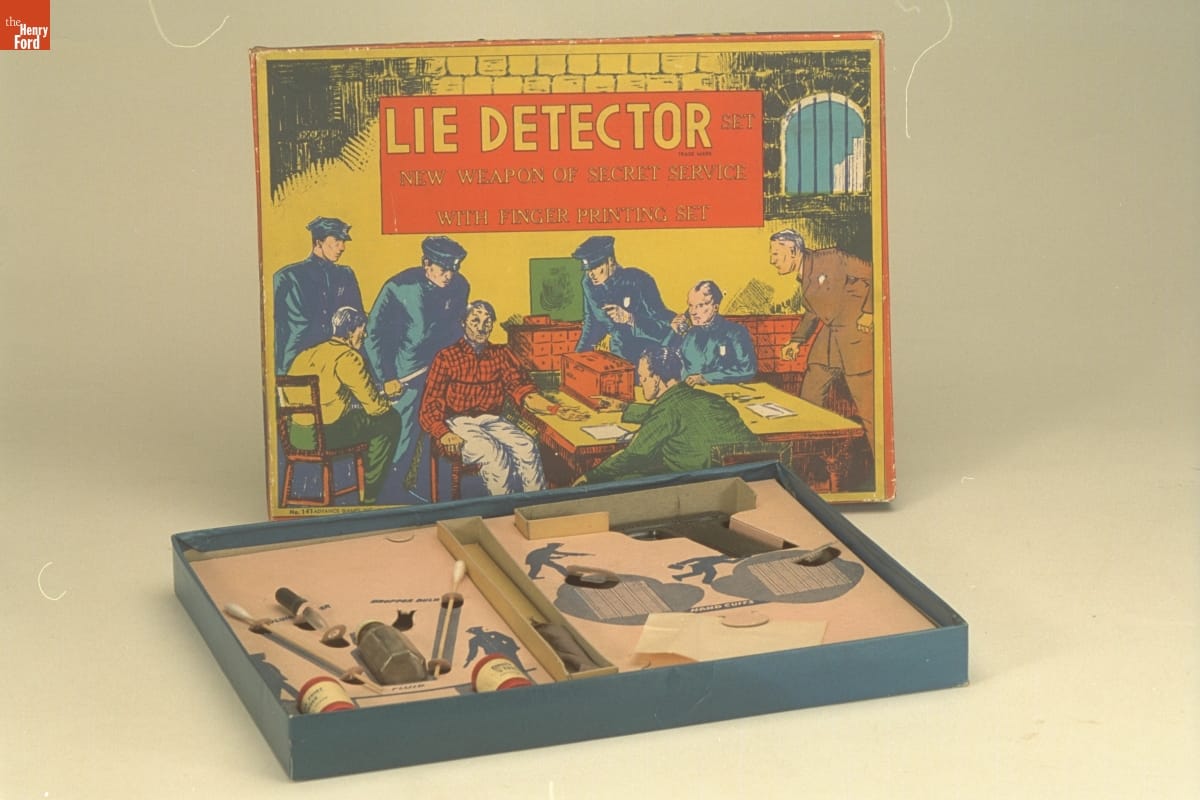
- Toy Lie Detector Set, Used by James Greenhoe, 1937-1946 -
- 1937-1946
- Collections - Artifact
Toy Lie Detector Set, Used by James Greenhoe, 1937-1946
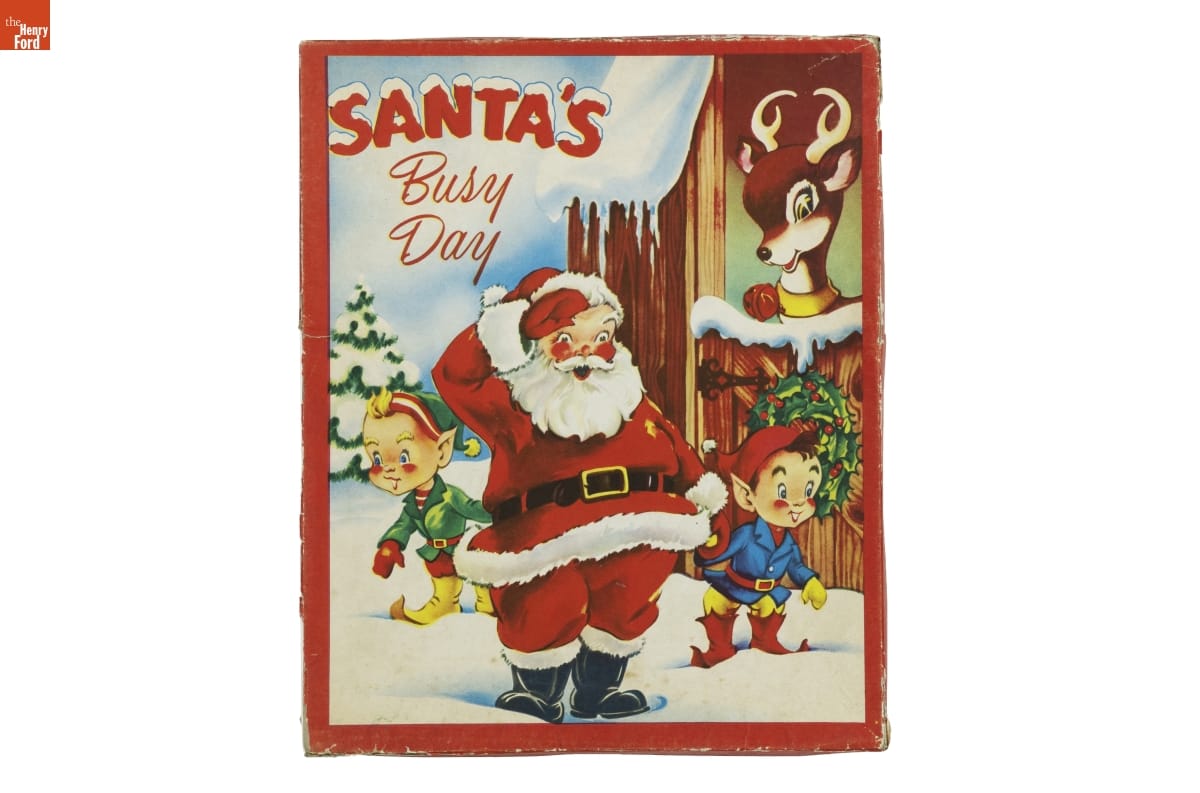
- Children's Pop-Up Book, "Santa's Busy Day," 1953 - <em>Santa's Busy Day</em> follows jolly St. Nick as he looks for Blitzen, a lost reindeer. The book asks children to help Santa with his search. Readers turn pages to discover images that move and pop up; or find things to do--move cutouts of Santa's reindeer or color a picture of Blitzen. Books like this entertained young kids and encouraged them to enjoy reading.
- 1953
- Collections - Artifact
Children's Pop-Up Book, "Santa's Busy Day," 1953
Santa's Busy Day follows jolly St. Nick as he looks for Blitzen, a lost reindeer. The book asks children to help Santa with his search. Readers turn pages to discover images that move and pop up; or find things to do--move cutouts of Santa's reindeer or color a picture of Blitzen. Books like this entertained young kids and encouraged them to enjoy reading.
- Advertising Poster, "For Your Summer Vacation, World's Fair, New York," 1939-1940 - This poster encouraged travelers to choose the 1939-40 New York World's Fair as a vacation destination. According to the poster, not only would you see the fair, but you would also "see the world."

- 1939-1940
- Collections - Artifact
Advertising Poster, "For Your Summer Vacation, World's Fair, New York," 1939-1940
This poster encouraged travelers to choose the 1939-40 New York World's Fair as a vacation destination. According to the poster, not only would you see the fair, but you would also "see the world."
- Advertising Poster, "Go By All Means: World's Fair in New York," 1940 -

- 1940
- Collections - Artifact
Advertising Poster, "Go By All Means: World's Fair in New York," 1940