
Search
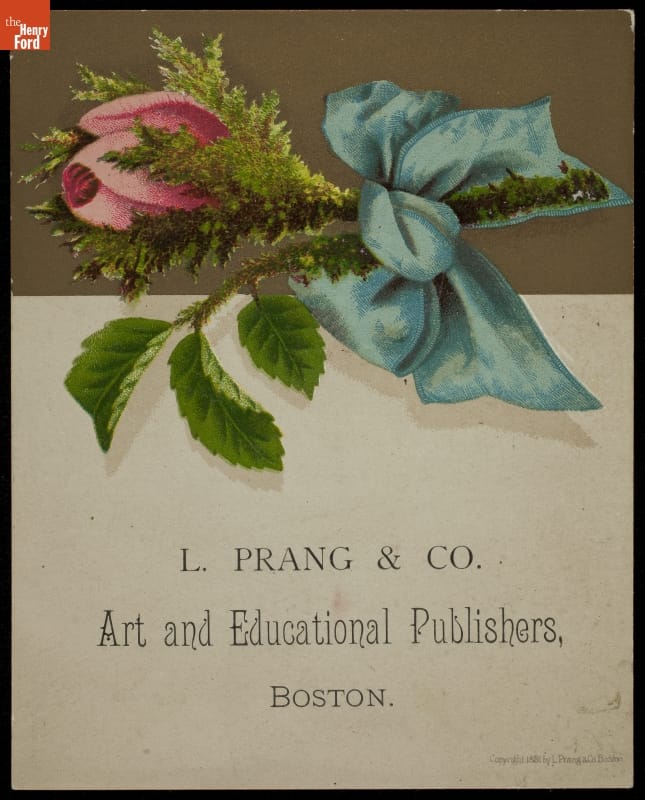
- Trade Card for Prang's Art and Educational Publications, L. Prang & Co., 1881 - In the last third of the nineteenth century, an unprecedented variety of consumer goods and services flooded the American market. Advertisers, armed with new methods of color printing, bombarded potential customers with trade cards. Americans enjoyed and often saved the vibrant little advertisements found in product packages or distributed by local merchants. Many survive as historical records of commercialism in the United States.
- 1881
- Collections - Artifact
Trade Card for Prang's Art and Educational Publications, L. Prang & Co., 1881
In the last third of the nineteenth century, an unprecedented variety of consumer goods and services flooded the American market. Advertisers, armed with new methods of color printing, bombarded potential customers with trade cards. Americans enjoyed and often saved the vibrant little advertisements found in product packages or distributed by local merchants. Many survive as historical records of commercialism in the United States.
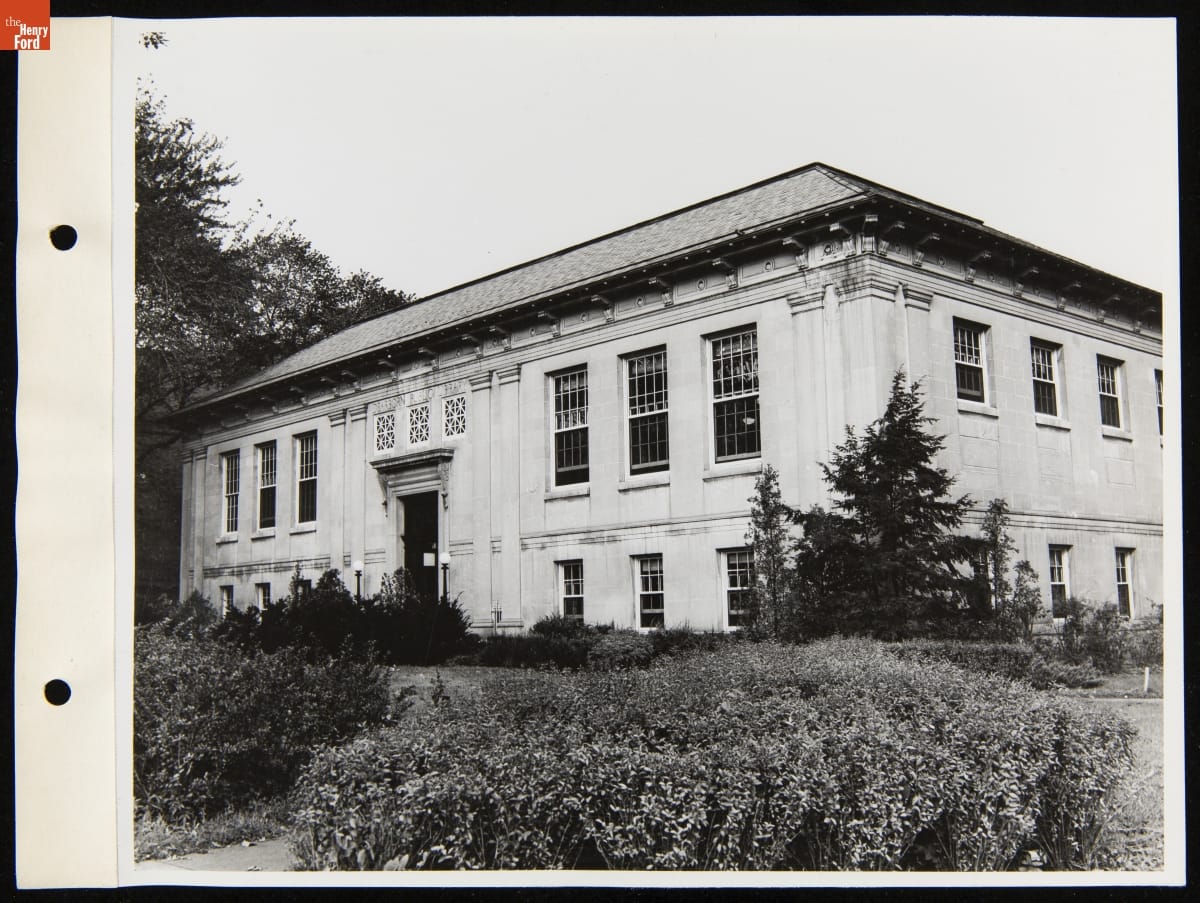
- Dearborn Public Library, September 1945 - Until the 20th century, most book collections were not available to everyday Americans. The concept of free public libraries, often established through the support of wealthy philanthropists, gained traction in the early 1900s. Women of the local garden club funded a public library for Dearborn, Michigan, in 1919. Member Clara Ford (wife of Henry Ford) donated the land for this building, completed in 1924.
- September 21, 1945
- Collections - Artifact
Dearborn Public Library, September 1945
Until the 20th century, most book collections were not available to everyday Americans. The concept of free public libraries, often established through the support of wealthy philanthropists, gained traction in the early 1900s. Women of the local garden club funded a public library for Dearborn, Michigan, in 1919. Member Clara Ford (wife of Henry Ford) donated the land for this building, completed in 1924.
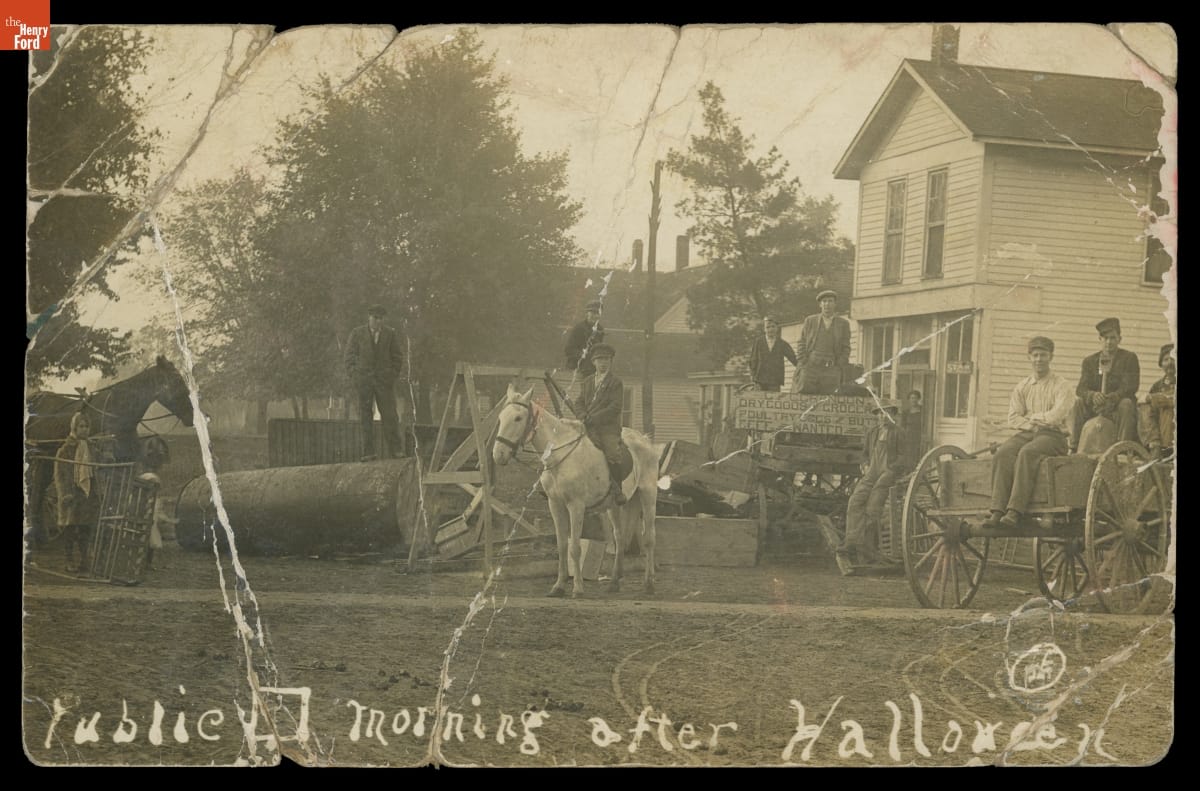
- Public Square Morning after Halloween, 1912 - Anonymous mischief had long been an expected part of Halloween. After all, it was the night the spirits were out! Pranks and practical jokes of all sorts were popular--especially among young men and boys. Most pranks were just annoying. Other pranks were more destructive--especially in urban areas--leading communities to begin hosting children's parties by the 1920s to discourage vandalism.
- 1912
- Collections - Artifact
Public Square Morning after Halloween, 1912
Anonymous mischief had long been an expected part of Halloween. After all, it was the night the spirits were out! Pranks and practical jokes of all sorts were popular--especially among young men and boys. Most pranks were just annoying. Other pranks were more destructive--especially in urban areas--leading communities to begin hosting children's parties by the 1920s to discourage vandalism.
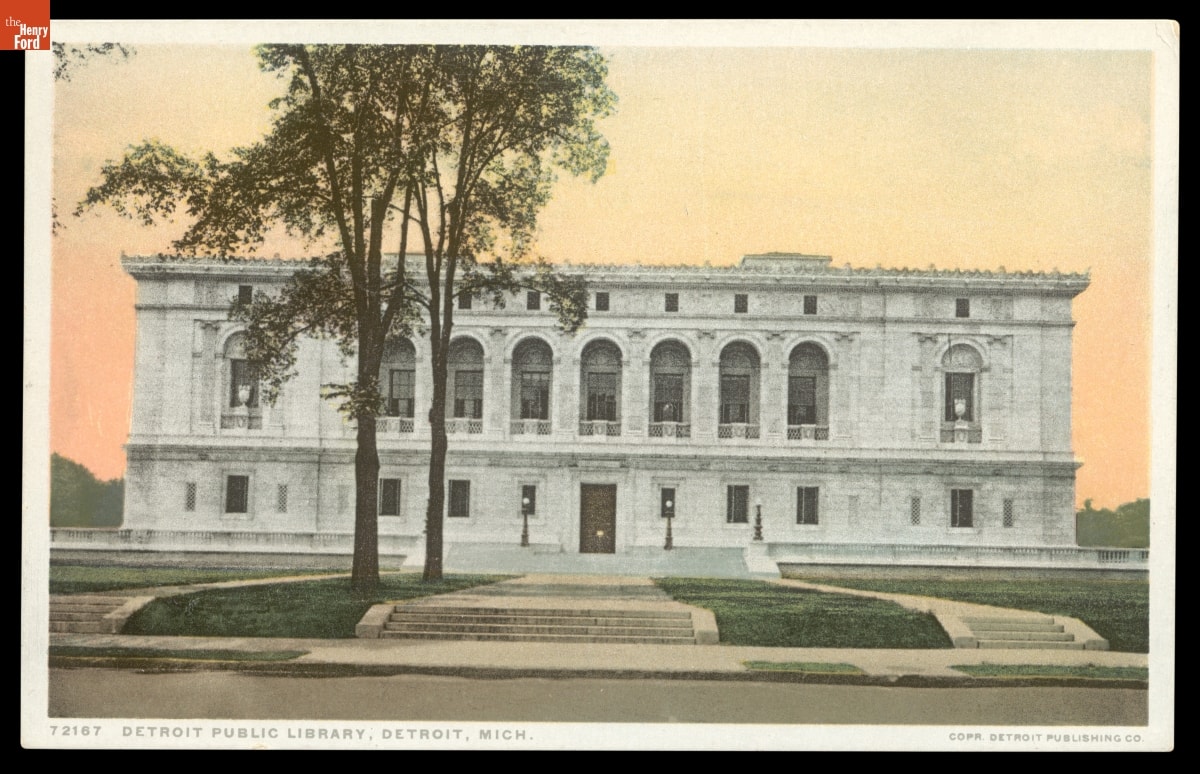
- Detroit Public Library, Detroit, Michigan - In the early 1900s, the city of Detroit constructed a new public library to serve its growing population. The city's old library building had undergone several additions. But it had nowhere to expand. Construction began on the new Cass Gilbert-designed building in 1912. Delays ensued due to World War I. The Italian Renaissance Style building finally opened in 1921.
- circa 1921
- Collections - Artifact
Detroit Public Library, Detroit, Michigan
In the early 1900s, the city of Detroit constructed a new public library to serve its growing population. The city's old library building had undergone several additions. But it had nowhere to expand. Construction began on the new Cass Gilbert-designed building in 1912. Delays ensued due to World War I. The Italian Renaissance Style building finally opened in 1921.
- Detroit Public Library, circa 1910 - Until the 20th century, most book collections were not available to everyday Americans. They were either privately owned, accessible only by paid subscription, or stored away haphazardly. For communities with dedicated public library buildings (often among the most imposing structures in town), they were sources of civic pride. Built to house the Detroit, Michigan, library, this structure opened in 1877.
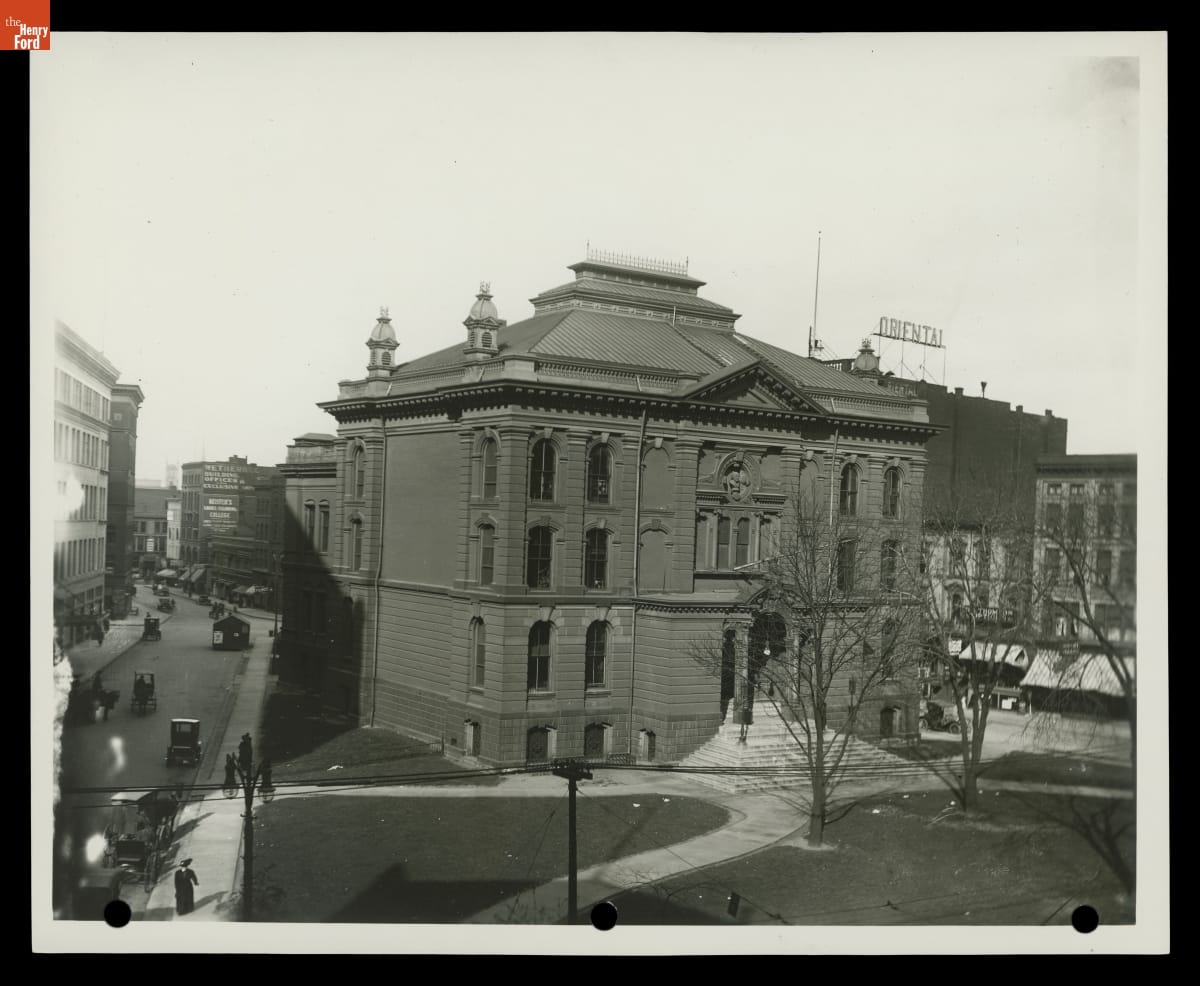
- circa 1910
- Collections - Artifact
Detroit Public Library, circa 1910
Until the 20th century, most book collections were not available to everyday Americans. They were either privately owned, accessible only by paid subscription, or stored away haphazardly. For communities with dedicated public library buildings (often among the most imposing structures in town), they were sources of civic pride. Built to house the Detroit, Michigan, library, this structure opened in 1877.
- "The Public Universal Friend," Linocut, circa 2020 - Public Universal Friend (1752-1819) defied societal expectations as a genderless Quaker minister. Although assigned female at birth, the Friend assumed their new identity following a 1776 religious epiphany and began preaching across the northeast United States. In 2019, 200 years after the Friend’s death, their life story was spread across social media, and they became emblematic of early American LBGTQIA+ history.
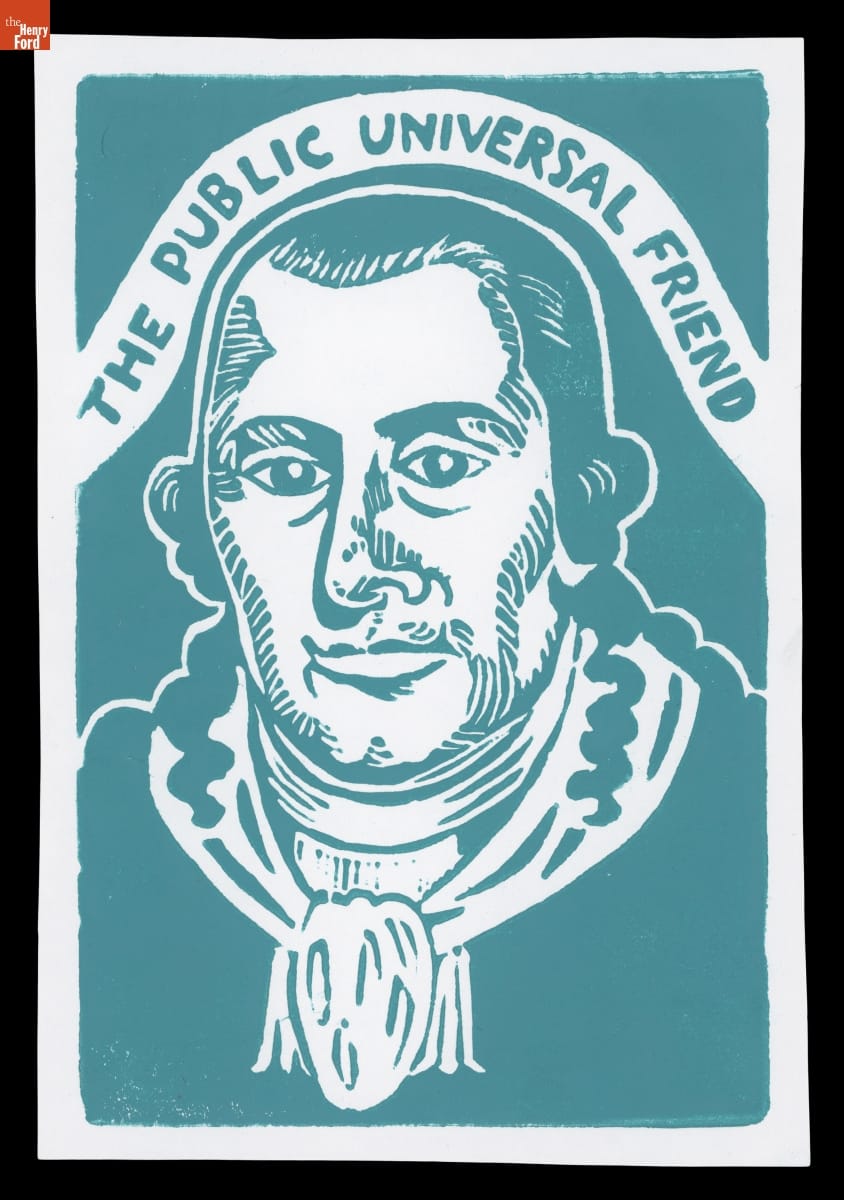
- circa 2020
- Collections - Artifact
"The Public Universal Friend," Linocut, circa 2020
Public Universal Friend (1752-1819) defied societal expectations as a genderless Quaker minister. Although assigned female at birth, the Friend assumed their new identity following a 1776 religious epiphany and began preaching across the northeast United States. In 2019, 200 years after the Friend’s death, their life story was spread across social media, and they became emblematic of early American LBGTQIA+ history.
- "The Public Universal Friend," Linocut, circa 2020 - Public Universal Friend (1752-1819) defied societal expectations as a genderless Quaker minister. Although assigned female at birth, the Friend assumed their new identity following a 1776 religious epiphany and began preaching across the northeast United States. In 2019, 200 years after the Friend’s death, their life story was spread across social media, and they became emblematic of early American LBGTQIA+ history.
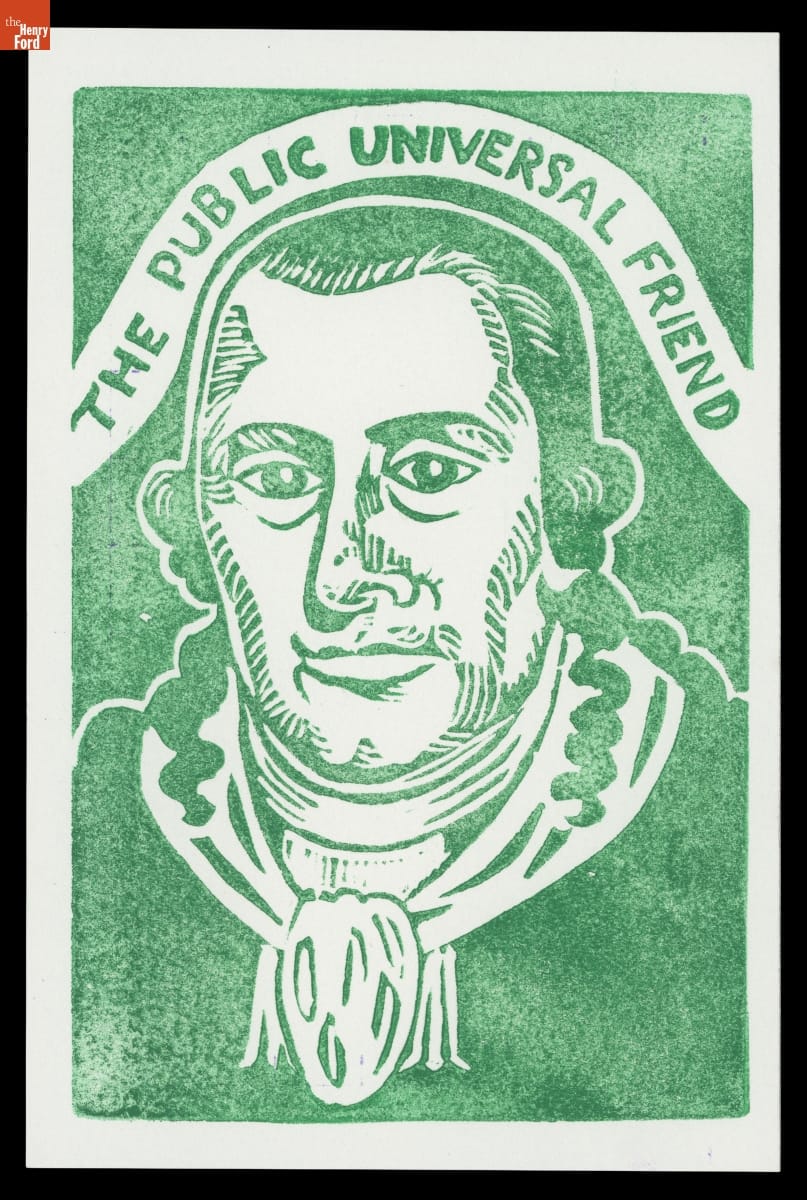
- circa 2020
- Collections - Artifact
"The Public Universal Friend," Linocut, circa 2020
Public Universal Friend (1752-1819) defied societal expectations as a genderless Quaker minister. Although assigned female at birth, the Friend assumed their new identity following a 1776 religious epiphany and began preaching across the northeast United States. In 2019, 200 years after the Friend’s death, their life story was spread across social media, and they became emblematic of early American LBGTQIA+ history.
- Publicity Stunt, "The World's Largest Magnavox," 1922 -
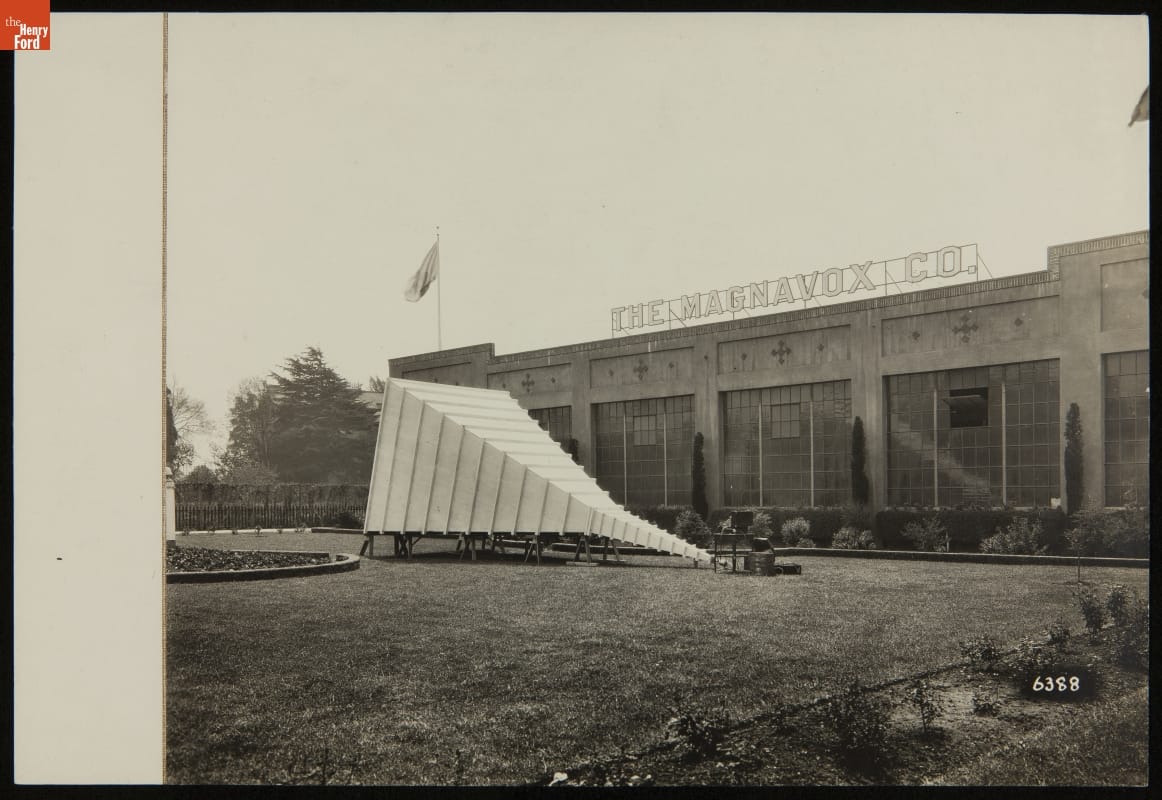
- 1922
- Collections - Artifact
Publicity Stunt, "The World's Largest Magnavox," 1922
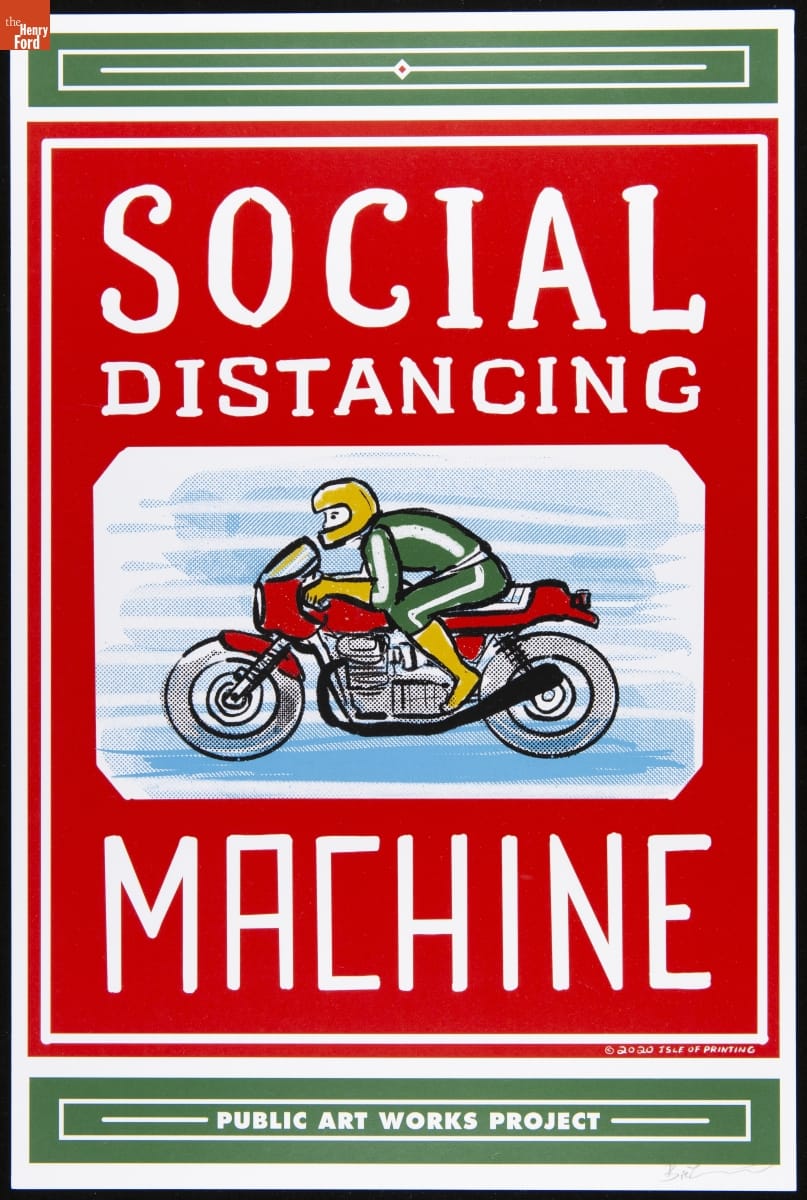
- Public Service Poster, "Social Distance Machine," 2020 -
- 2020
- Collections - Artifact
Public Service Poster, "Social Distance Machine," 2020
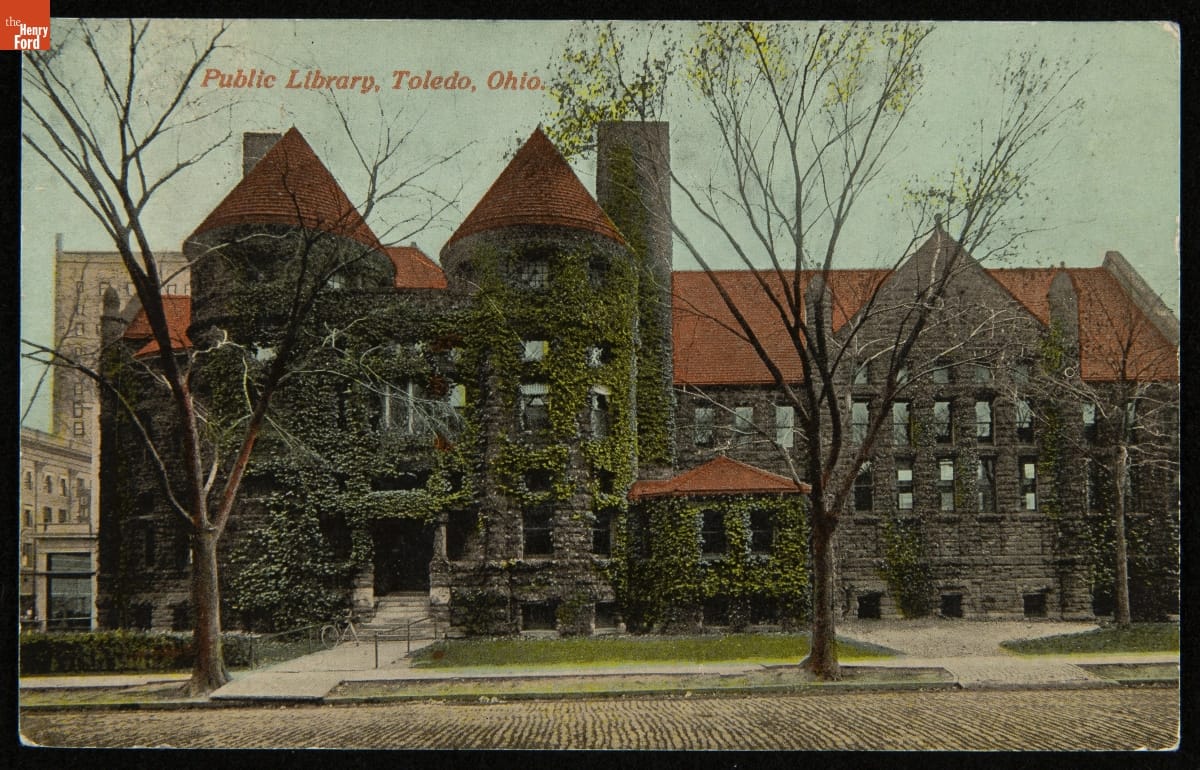
- Postcard, "Public Library, Toledo, Ohio," circa 1910 - Until the 20th century, most book collections were not available to everyday Americans. They were either privately owned, accessible only by paid subscription, or stored away haphazardly. In communities with dedicated public library buildings (often among the most imposing structures in town), they were sources of civic pride. This building housed the Lucas County (Ohio) library from its opening in 1890 until 1940.
- circa 1910
- Collections - Artifact
Postcard, "Public Library, Toledo, Ohio," circa 1910
Until the 20th century, most book collections were not available to everyday Americans. They were either privately owned, accessible only by paid subscription, or stored away haphazardly. In communities with dedicated public library buildings (often among the most imposing structures in town), they were sources of civic pride. This building housed the Lucas County (Ohio) library from its opening in 1890 until 1940.