
Search
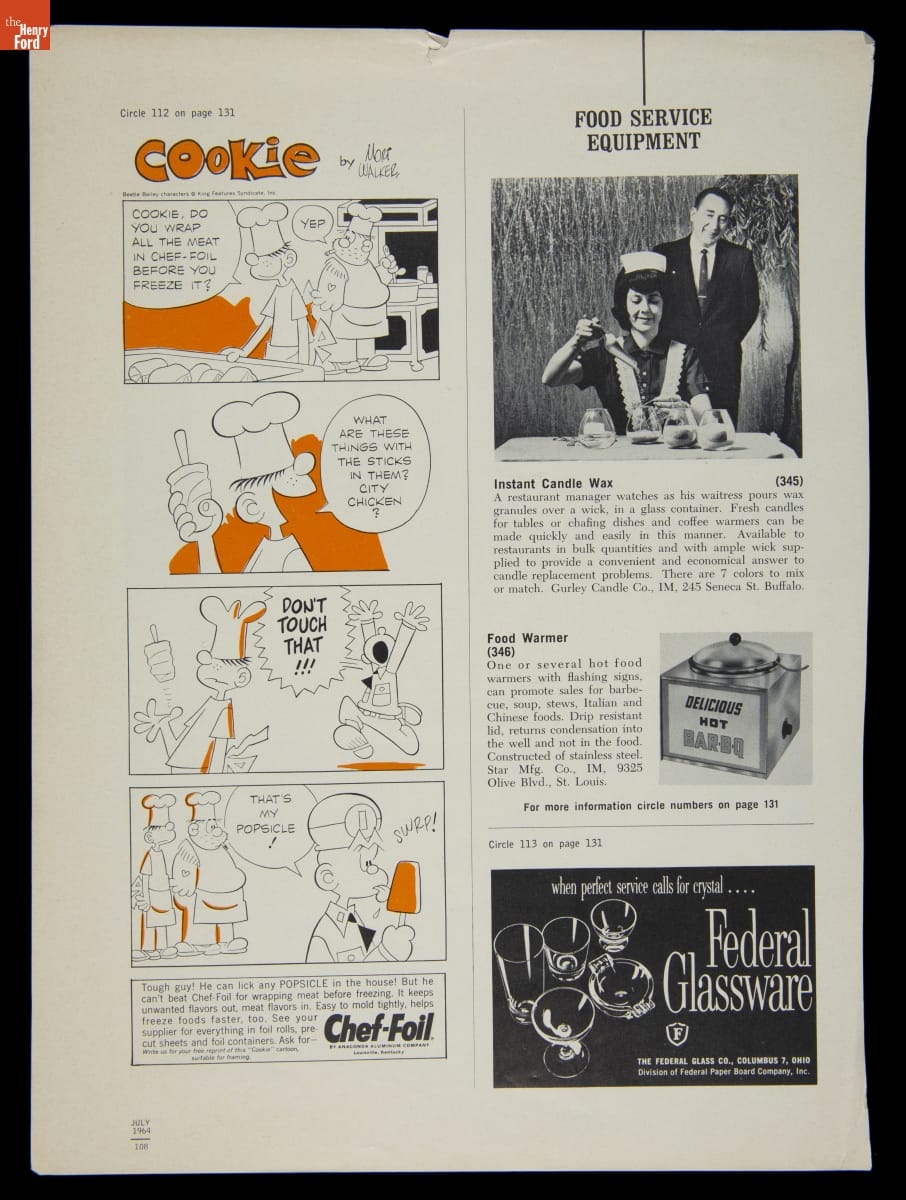
- Page from "Restaurants & Institutions" Trade Publication, July 1964 -
- July 01, 1964
- Collections - Artifact
Page from "Restaurants & Institutions" Trade Publication, July 1964
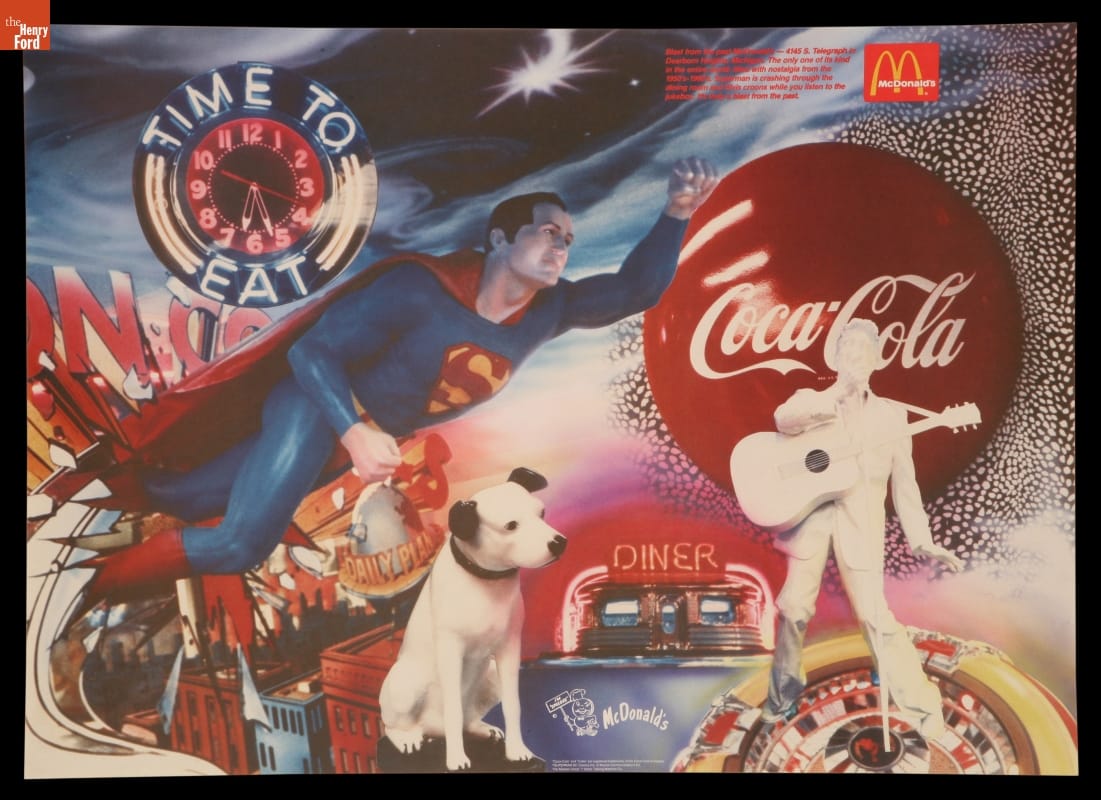
- Advertising Poster for McDonald's Restaurants, "Time to Eat," 1989 -
- 1989
- Collections - Artifact
Advertising Poster for McDonald's Restaurants, "Time to Eat," 1989
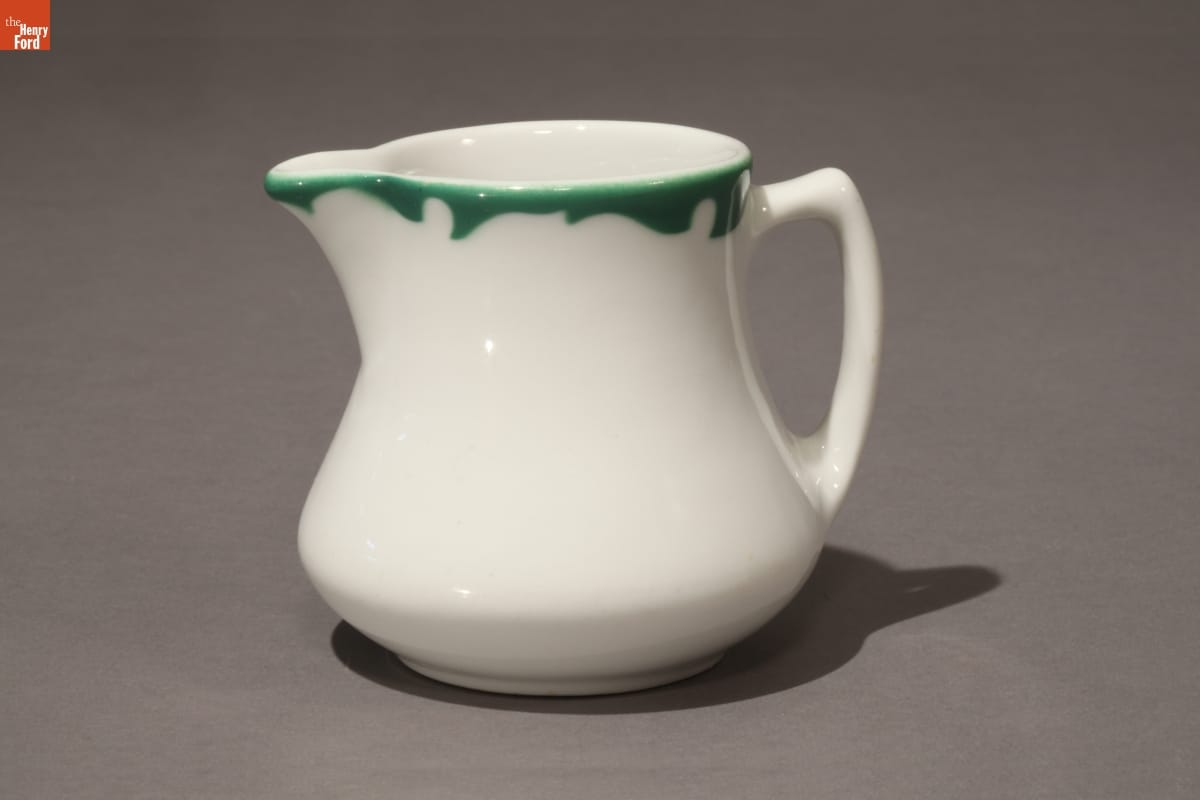
- Restaurant Ware Creamer, 1964 - As more Americans hit the roads in the early and mid-1900s they needed a reliable place to stop and eat. Roadside diners promised quick, informal dining at reasonable prices. Proprietors served meals on clean, strong, yet visually pleasing china. This creamer with its colorful green border was made by the Shenango China Company of New Castle, Pennsylvania.
- 1964
- Collections - Artifact
Restaurant Ware Creamer, 1964
As more Americans hit the roads in the early and mid-1900s they needed a reliable place to stop and eat. Roadside diners promised quick, informal dining at reasonable prices. Proprietors served meals on clean, strong, yet visually pleasing china. This creamer with its colorful green border was made by the Shenango China Company of New Castle, Pennsylvania.
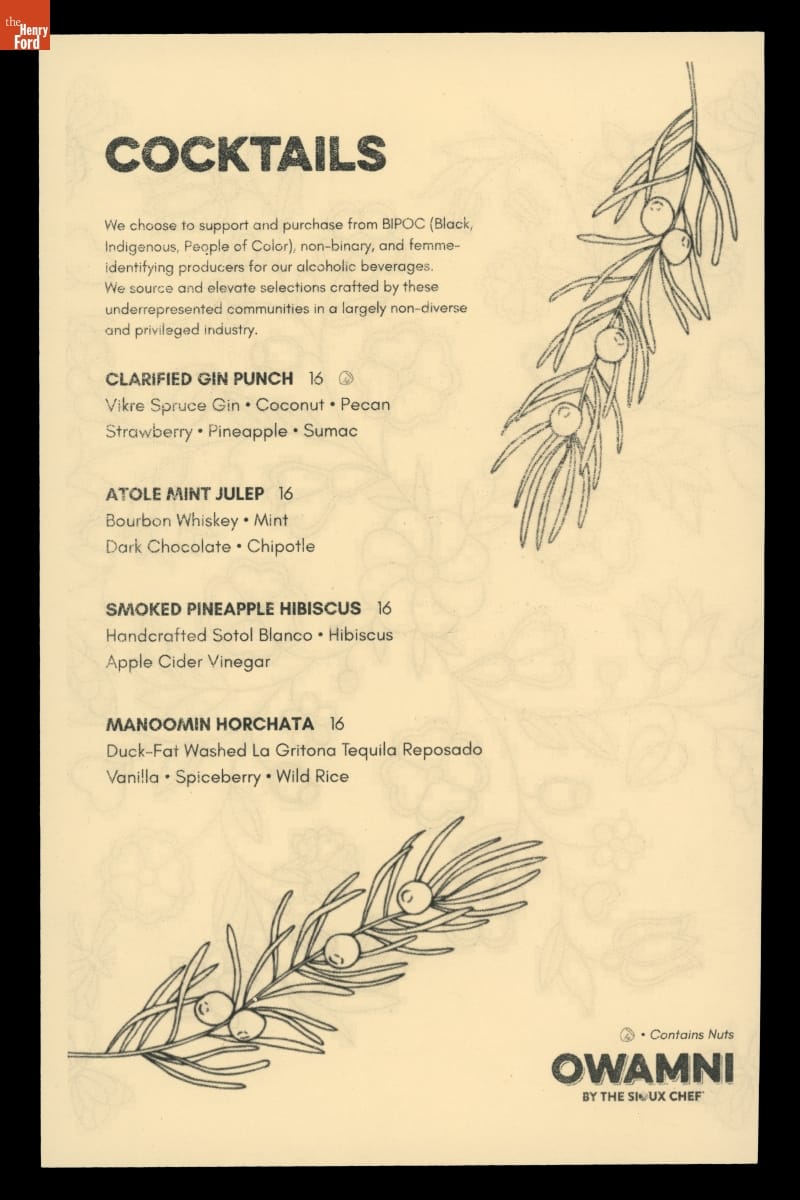
- Owamni Restaurant Cocktails Menu, 2025 - <body>Sean Sherman, a member of the Oglala Lakota nation, found success as an executive chef, and channeled that into advocacy for indigenous foodways as The Sioux Chef. He earned several James Beard awards for his leadership, for his first cookbook, <i>The Sioux Chef's Indigenous Kitchen</i> (2017) and for the restaurant Owamni, owned by the not-for-profit North American Traditional Indigenous Food Systems (NATIFS). </body>
- 2025
- Collections - Artifact
Owamni Restaurant Cocktails Menu, 2025
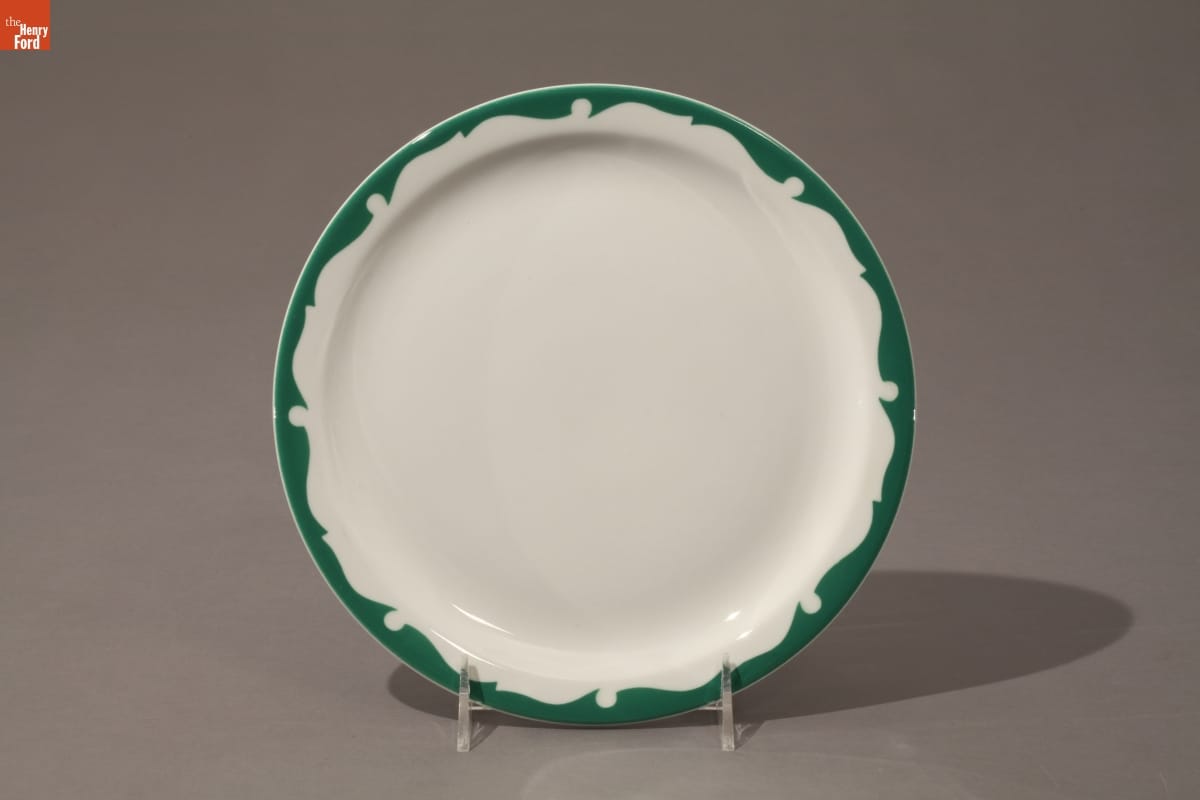
Sean Sherman, a member of the Oglala Lakota nation, found success as an executive chef, and channeled that into advocacy for indigenous foodways as The Sioux Chef. He earned several James Beard awards for his leadership, for his first cookbook, The Sioux Chef's Indigenous Kitchen (2017) and for the restaurant Owamni, owned by the not-for-profit North American Traditional Indigenous Food Systems (NATIFS). - Restaurant Luncheon Plate, 1959 - As more Americans hit the roads in the early and mid-1900s, they needed a reliable place to stop and eat. Roadside diners promised quick, informal dining at reasonable prices. Proprietors served meals on clean, strong, yet visually pleasing china. This plate, with its colorful green border, was made by the Shenango China Company of New Castle, Pennsylvania.
- 1959
- Collections - Artifact
Restaurant Luncheon Plate, 1959
As more Americans hit the roads in the early and mid-1900s, they needed a reliable place to stop and eat. Roadside diners promised quick, informal dining at reasonable prices. Proprietors served meals on clean, strong, yet visually pleasing china. This plate, with its colorful green border, was made by the Shenango China Company of New Castle, Pennsylvania.
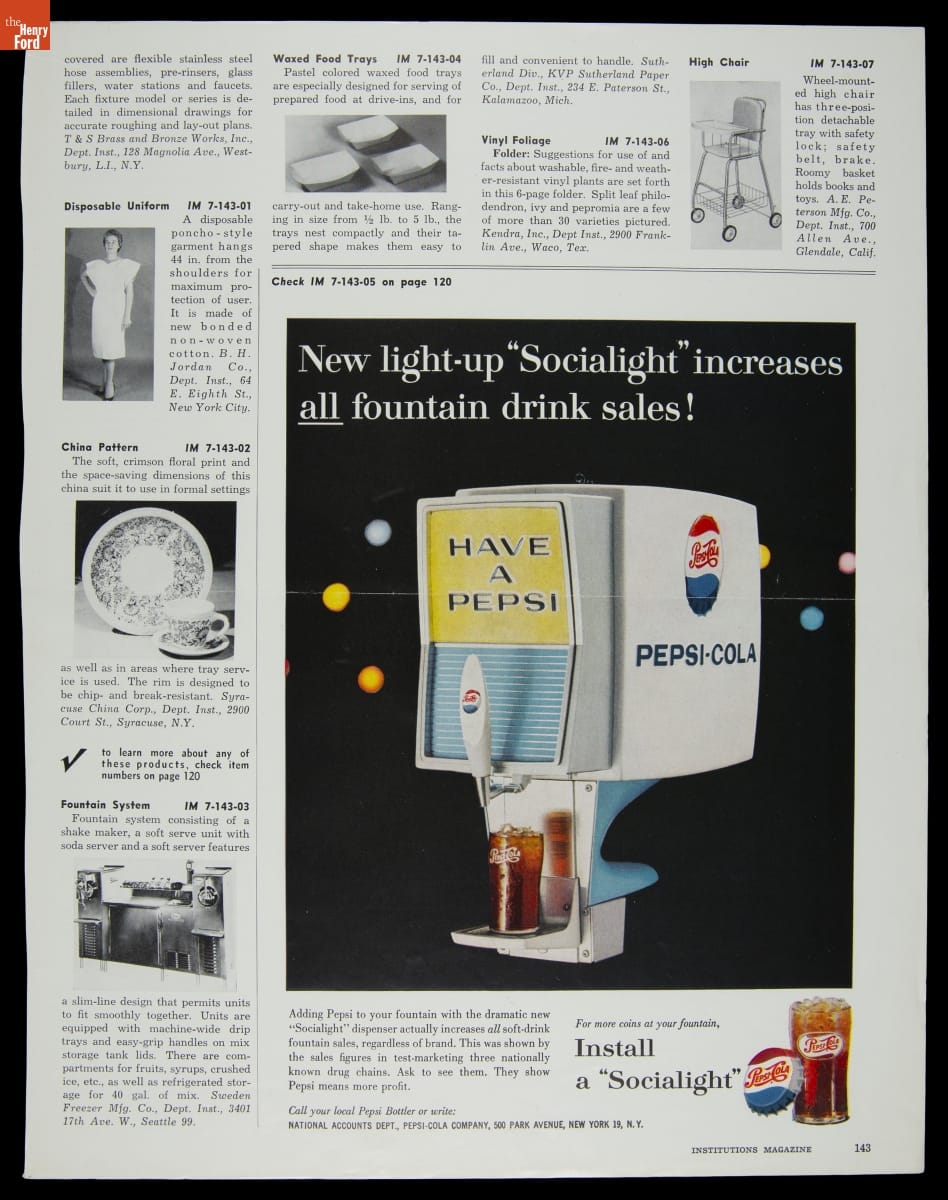
- Page from "Restaurants & Institutions" Trade Publication, July 1960 -
- July 01, 1960
- Collections - Artifact
Page from "Restaurants & Institutions" Trade Publication, July 1960
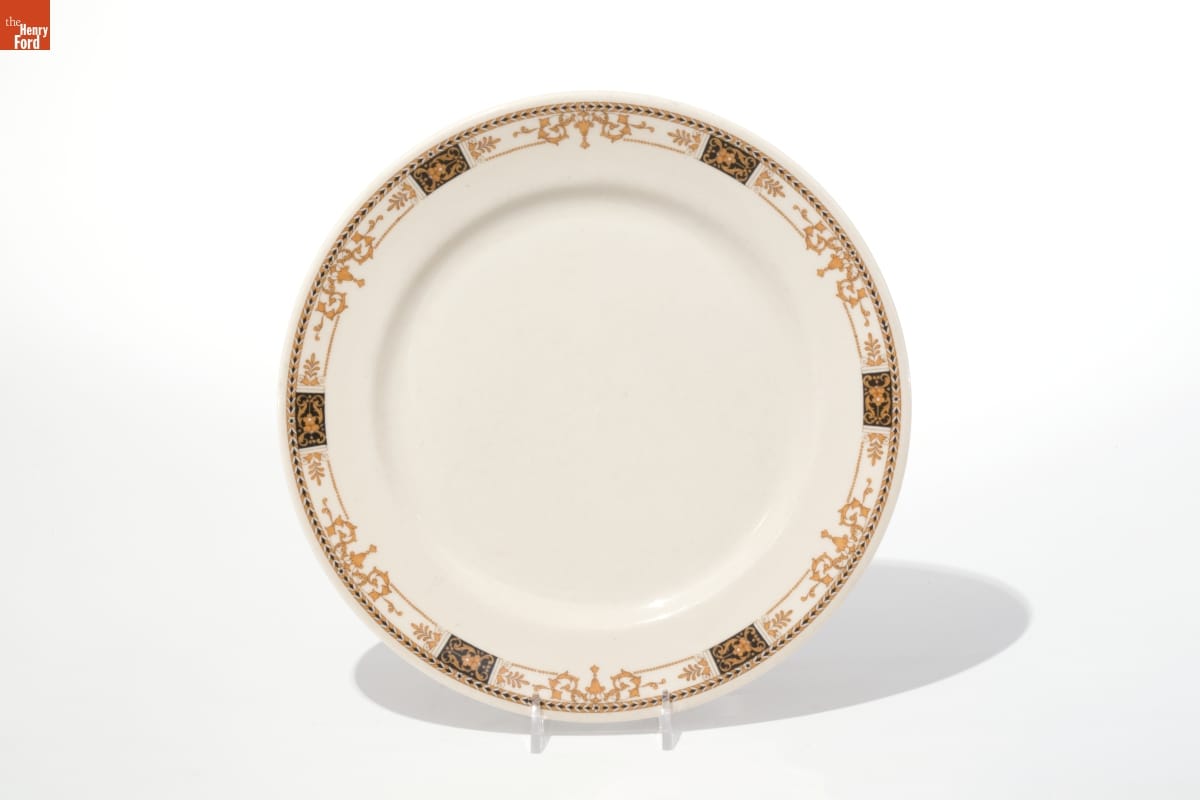
- Luncheon Plate Made for Fred Harvey Restaurants, 1956 - Fred Harvey is credited with creating the first restaurant chain in the United States. Harvey established restaurants at station stops along the Santa Fe Railway beginning in the 1870s. As rail travel declined, his company marketed dining services to new areas -- along highways and in airports. This plate is typical of the restaurant's dinnerware used from the 1950s to 1970s.
- March 01, 1956
- Collections - Artifact
Luncheon Plate Made for Fred Harvey Restaurants, 1956
Fred Harvey is credited with creating the first restaurant chain in the United States. Harvey established restaurants at station stops along the Santa Fe Railway beginning in the 1870s. As rail travel declined, his company marketed dining services to new areas -- along highways and in airports. This plate is typical of the restaurant's dinnerware used from the 1950s to 1970s.
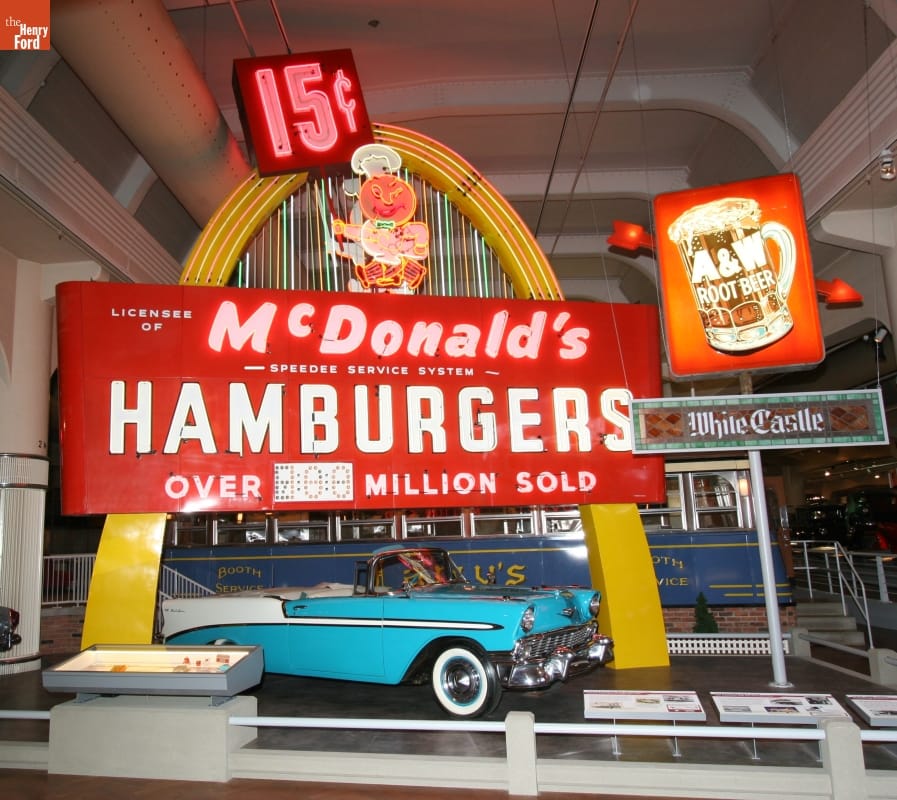
- McDonald's Restaurant Sign, 1960 - In 1948, the McDonald brothers transformed their Southern California drive-in restaurant with their radical new "Speedee Service System"--assembly-line production of a limited menu at drastically reduced prices. Richard McDonald created this sign design in 1952. In 1955, milkshake machine salesman Ray Kroc franchised the McDonald's concept--prompting numerous imitators and ultimately turning America into a "fast food nation."
- 1960
- Collections - Artifact
McDonald's Restaurant Sign, 1960
In 1948, the McDonald brothers transformed their Southern California drive-in restaurant with their radical new "Speedee Service System"--assembly-line production of a limited menu at drastically reduced prices. Richard McDonald created this sign design in 1952. In 1955, milkshake machine salesman Ray Kroc franchised the McDonald's concept--prompting numerous imitators and ultimately turning America into a "fast food nation."
- F&T Restaurant Menu -
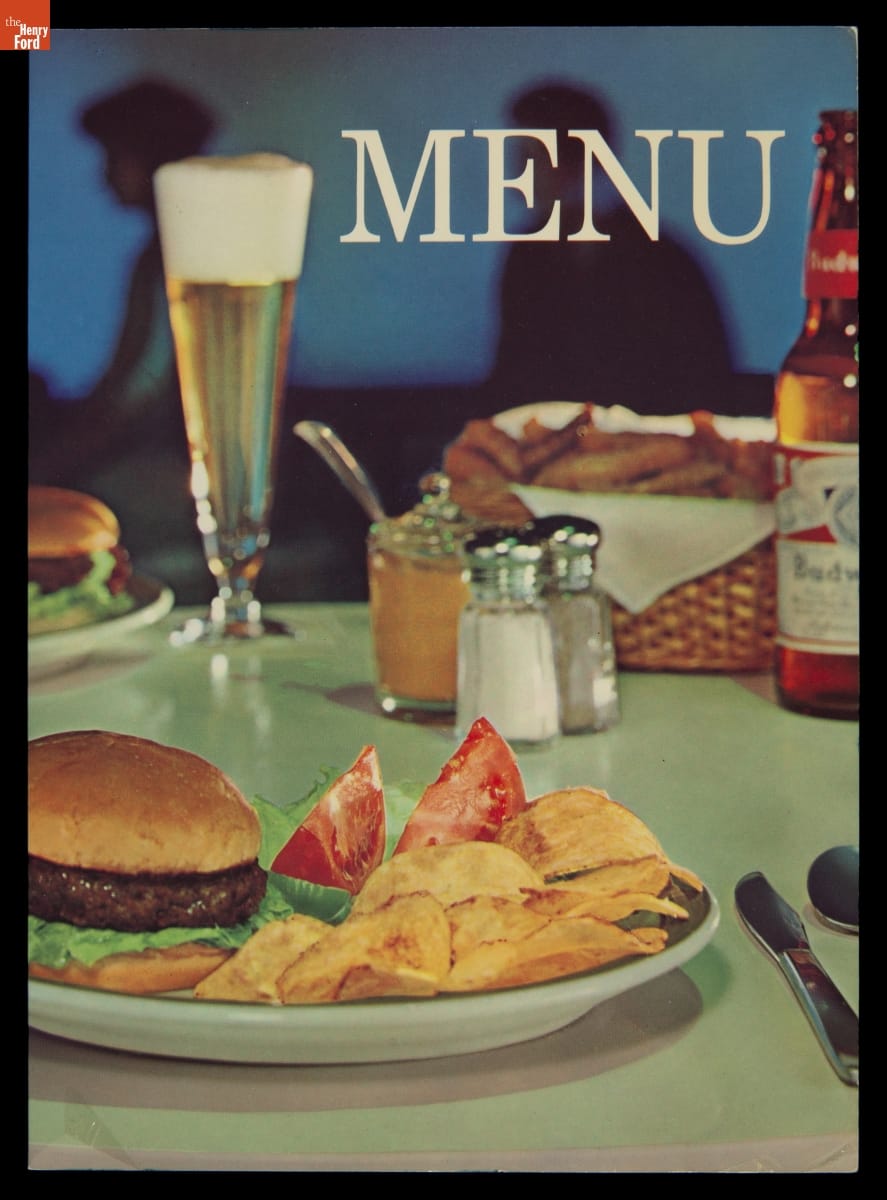
- 1924-1986
- Collections - Artifact
F&T Restaurant Menu
- McDonald's and Howard Johnson's Restaurants, Des Plains, Illinois, circa 1965 - As motorists sped down American roads during the mid-1900s, many wanted quick and inexpensive meals. This photograph shows two options available to a driver passing through Des Plains, Illinois, in about 1965. A sit-down restaurant, Howard Johnson's on the left, or a newer fast-food chain, McDonald's on the right.
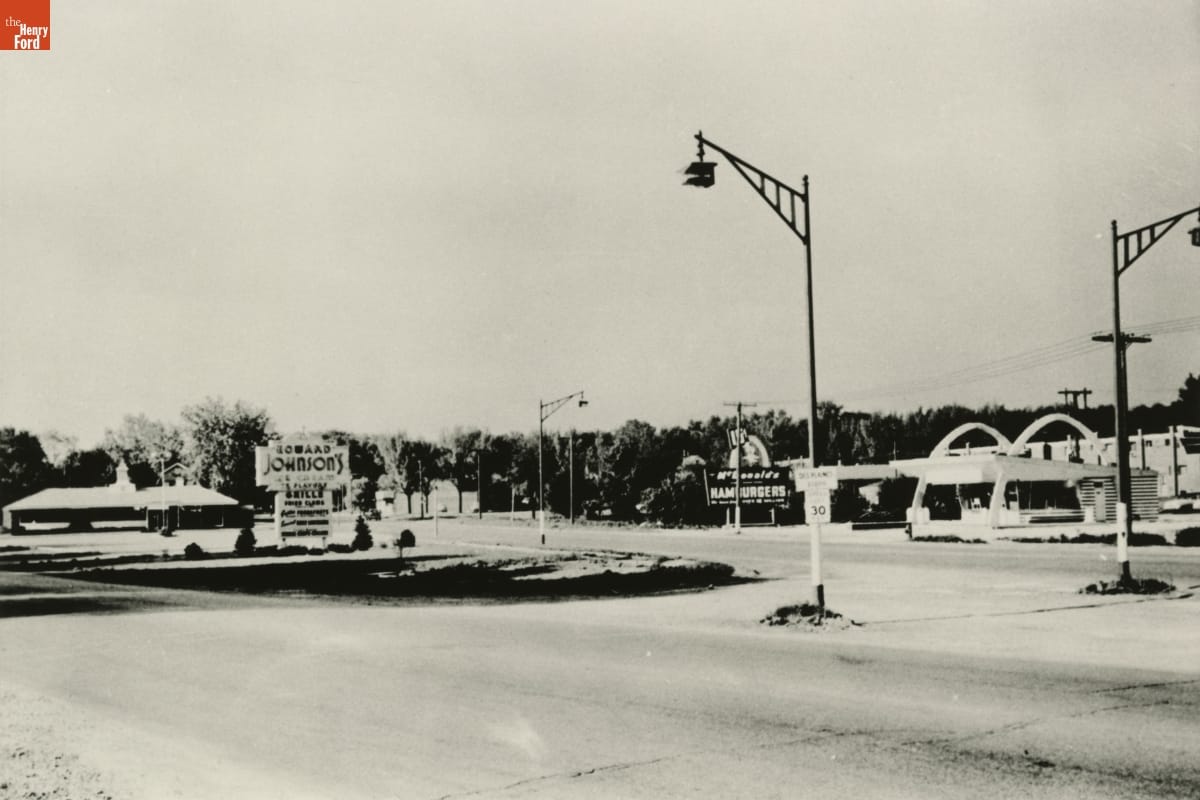
- circa 1965
- Collections - Artifact
McDonald's and Howard Johnson's Restaurants, Des Plains, Illinois, circa 1965
As motorists sped down American roads during the mid-1900s, many wanted quick and inexpensive meals. This photograph shows two options available to a driver passing through Des Plains, Illinois, in about 1965. A sit-down restaurant, Howard Johnson's on the left, or a newer fast-food chain, McDonald's on the right.