
Search
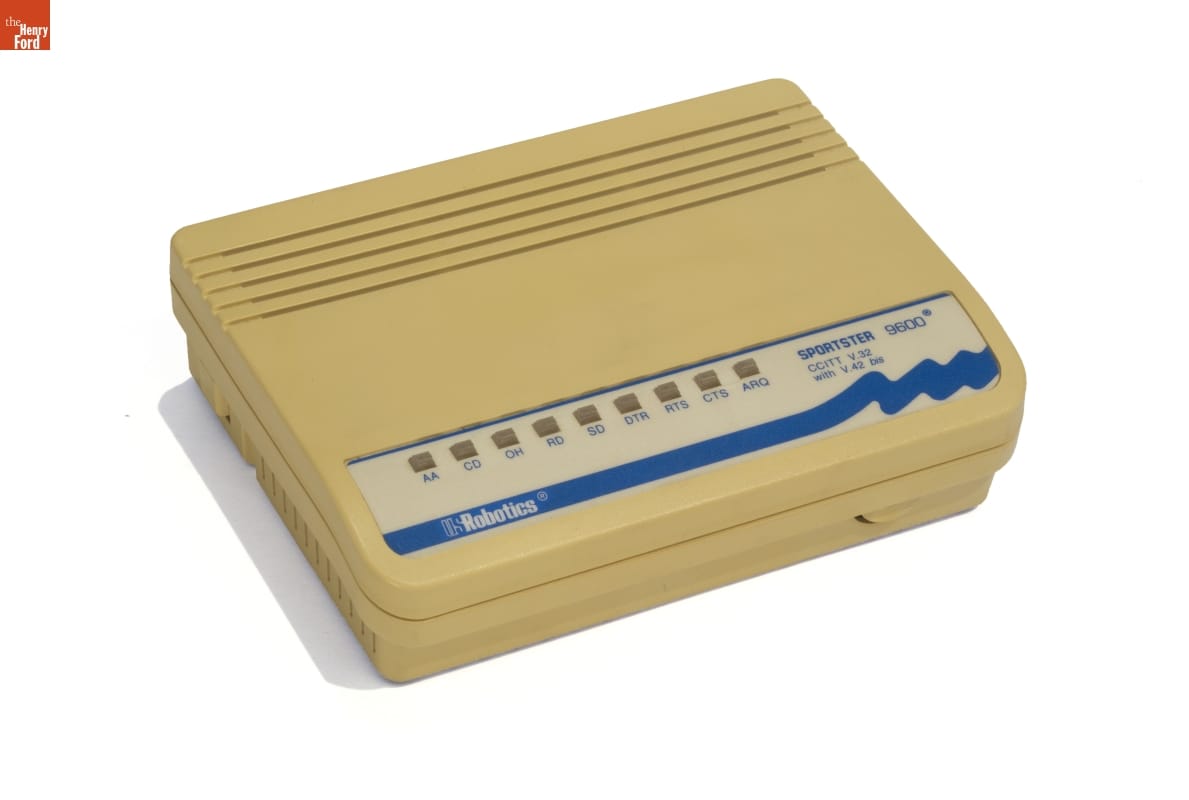
- Sportster 96 Fax Modem, U.S. Robotics, Inc., 1996 - Modems transmit computer data over telephone lines. They MODulate computer data into sound, and DEModulate it back into translated digital data. Modems held an important role in the home computer revolution. People used them to access information-sharing Bulletin Board Systems, later supplanted by the Internet. Despite abundant wireless Internet availability, "dial-up" modems are popular where DSL and cable services are unavailable.
- 1991
- Collections - Artifact
Sportster 96 Fax Modem, U.S. Robotics, Inc., 1996
Modems transmit computer data over telephone lines. They MODulate computer data into sound, and DEModulate it back into translated digital data. Modems held an important role in the home computer revolution. People used them to access information-sharing Bulletin Board Systems, later supplanted by the Internet. Despite abundant wireless Internet availability, "dial-up" modems are popular where DSL and cable services are unavailable.
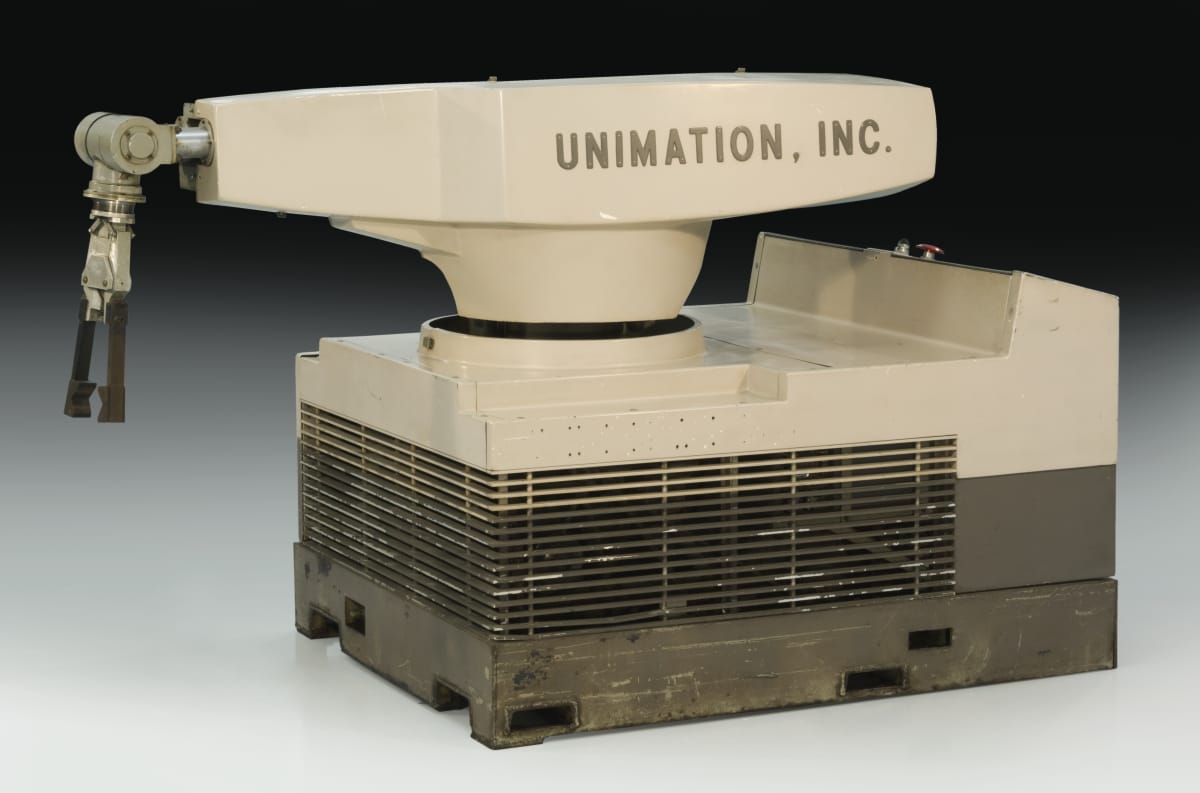
- Robot, First Unimate Robot Ever Installed on an Assembly Line, 1961 - Unimate robots were the world's first successful industrial robots. The units, designed by Unimation Inc., could perform tasks in manufacturing facilities that were difficult, dangerous, or monotonous for human workers. This is the first Unimate ever used on an assembly line. It was installed at the General Motors plant in Trenton, New Jersey, in 1961 to unload a die-casting press.
- 1961
- Collections - Artifact
Robot, First Unimate Robot Ever Installed on an Assembly Line, 1961
Unimate robots were the world's first successful industrial robots. The units, designed by Unimation Inc., could perform tasks in manufacturing facilities that were difficult, dangerous, or monotonous for human workers. This is the first Unimate ever used on an assembly line. It was installed at the General Motors plant in Trenton, New Jersey, in 1961 to unload a die-casting press.
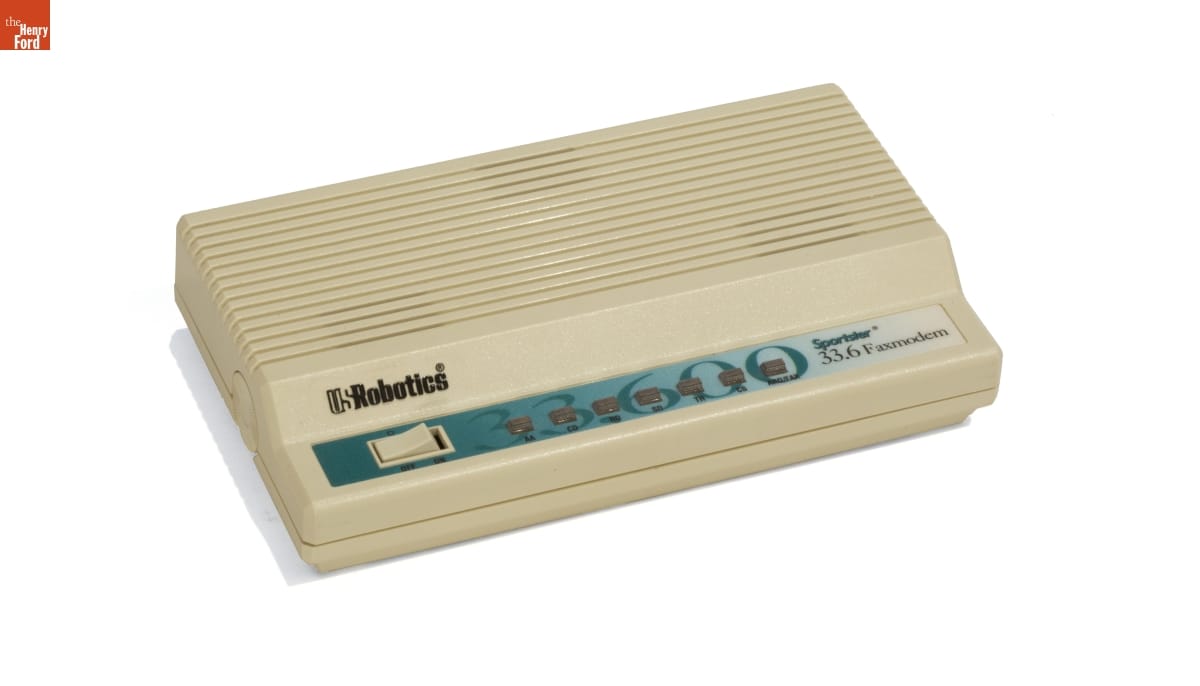
- Sportster 33.6 External Fax Modem, U.S. Robotics, Inc., 1995 - Modems transmit computer data over telephone lines. They MODulate computer data into sound, and DEModulate it back into translated digital data. Modems held an important role in the home computer revolution. People used them to access information-sharing Bulletin Board Systems, later supplanted by the Internet. Despite abundant wireless Internet availability, "dial-up" modems are popular where DSL and cable services are unavailable.
- 1995
- Collections - Artifact
Sportster 33.6 External Fax Modem, U.S. Robotics, Inc., 1995
Modems transmit computer data over telephone lines. They MODulate computer data into sound, and DEModulate it back into translated digital data. Modems held an important role in the home computer revolution. People used them to access information-sharing Bulletin Board Systems, later supplanted by the Internet. Despite abundant wireless Internet availability, "dial-up" modems are popular where DSL and cable services are unavailable.
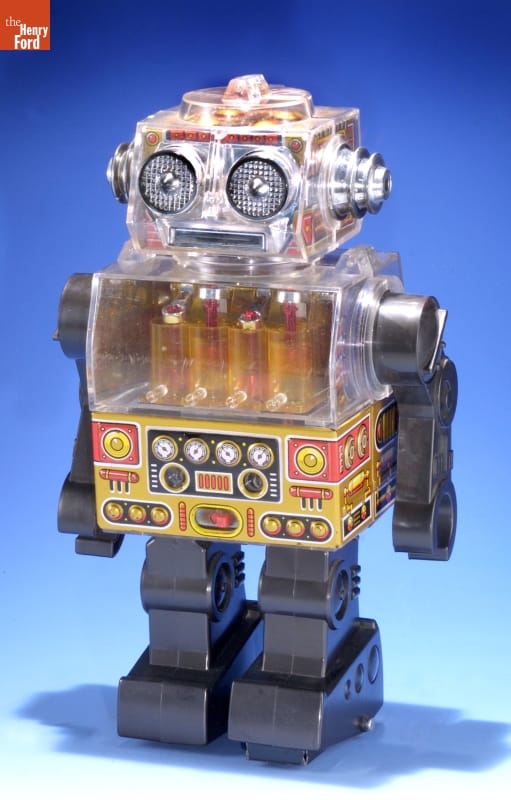
- Toy Robot, 1955-1965 - Battery-operated robots were among the most popular of the futuristic toys of the 1960s. This robot has pistons in his chest that move up and down as the robot walks.
- 1955-1965
- Collections - Artifact
Toy Robot, 1955-1965
Battery-operated robots were among the most popular of the futuristic toys of the 1960s. This robot has pistons in his chest that move up and down as the robot walks.
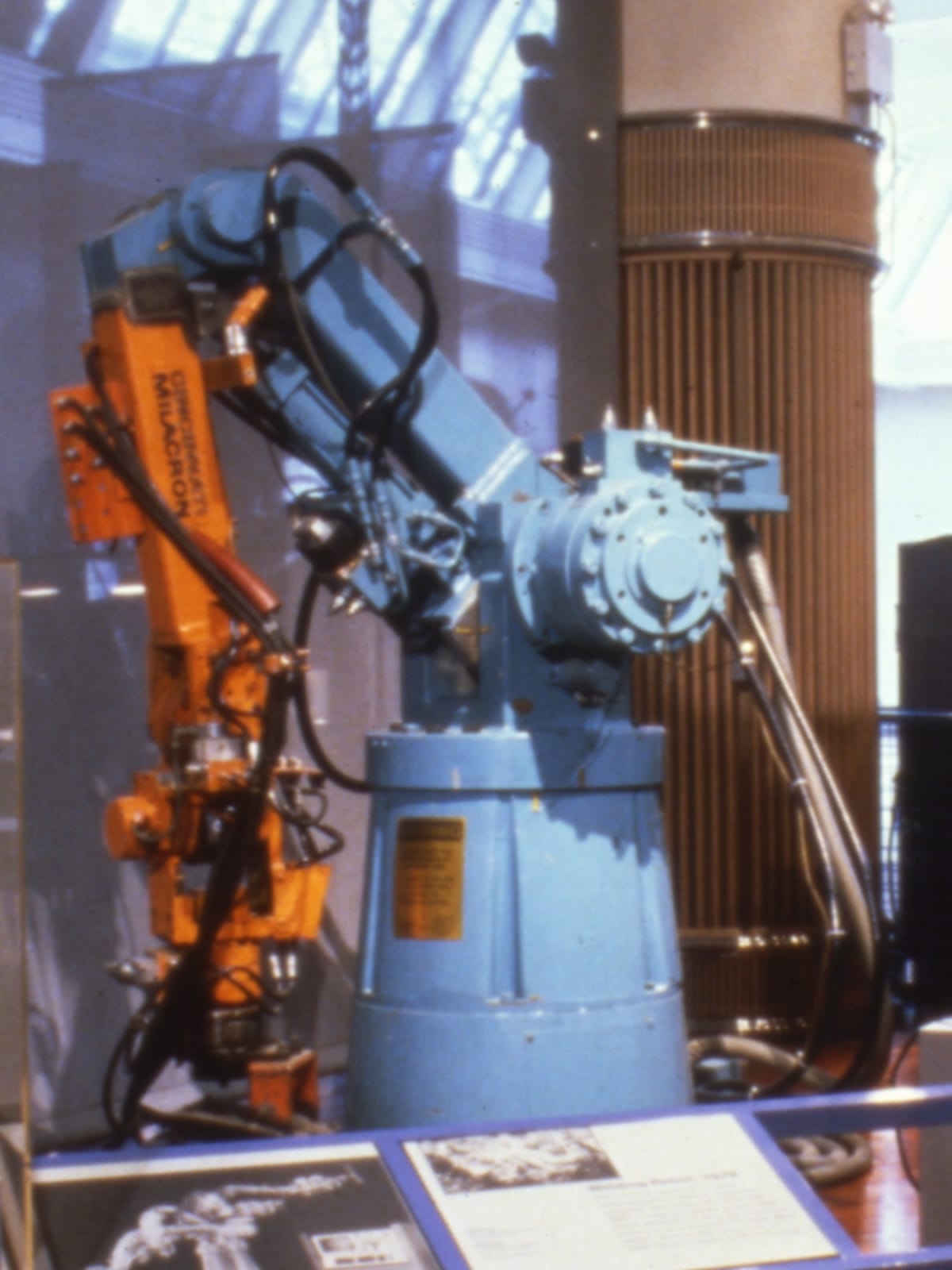
- Hydraulic Robot, 1978-1980 -
- 1978-1980
- Collections - Artifact
Hydraulic Robot, 1978-1980
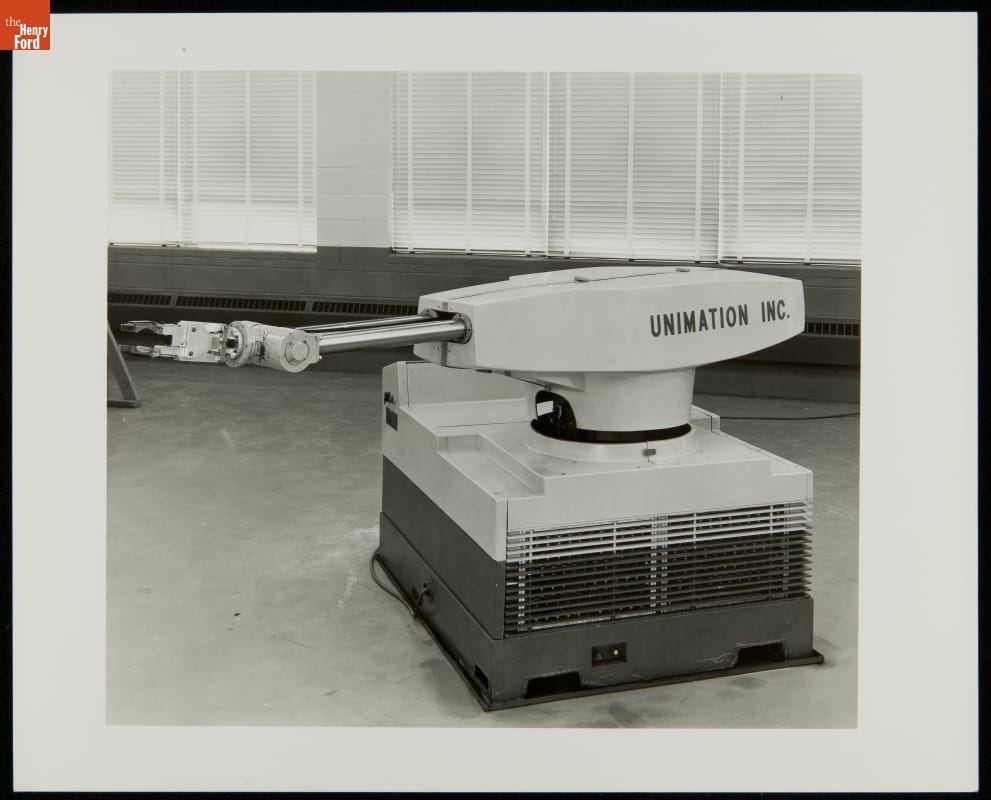
- Unimate Industrial Robot, 1962-1967 - George Devol revolutionized manufacturing with his invention of the Unimate -- the world's first industrial robot. These rugged programmable units were designed to perform repetitive, arduous and hazardous tasks. The first Unimate was installed in a General Motors plant in 1961. This photograph, part of a larger archival collection documenting Devol's work, illustrates the functions and uses of his innovative idea.
- 1962-1967
- Collections - Artifact
Unimate Industrial Robot, 1962-1967
George Devol revolutionized manufacturing with his invention of the Unimate -- the world's first industrial robot. These rugged programmable units were designed to perform repetitive, arduous and hazardous tasks. The first Unimate was installed in a General Motors plant in 1961. This photograph, part of a larger archival collection documenting Devol's work, illustrates the functions and uses of his innovative idea.
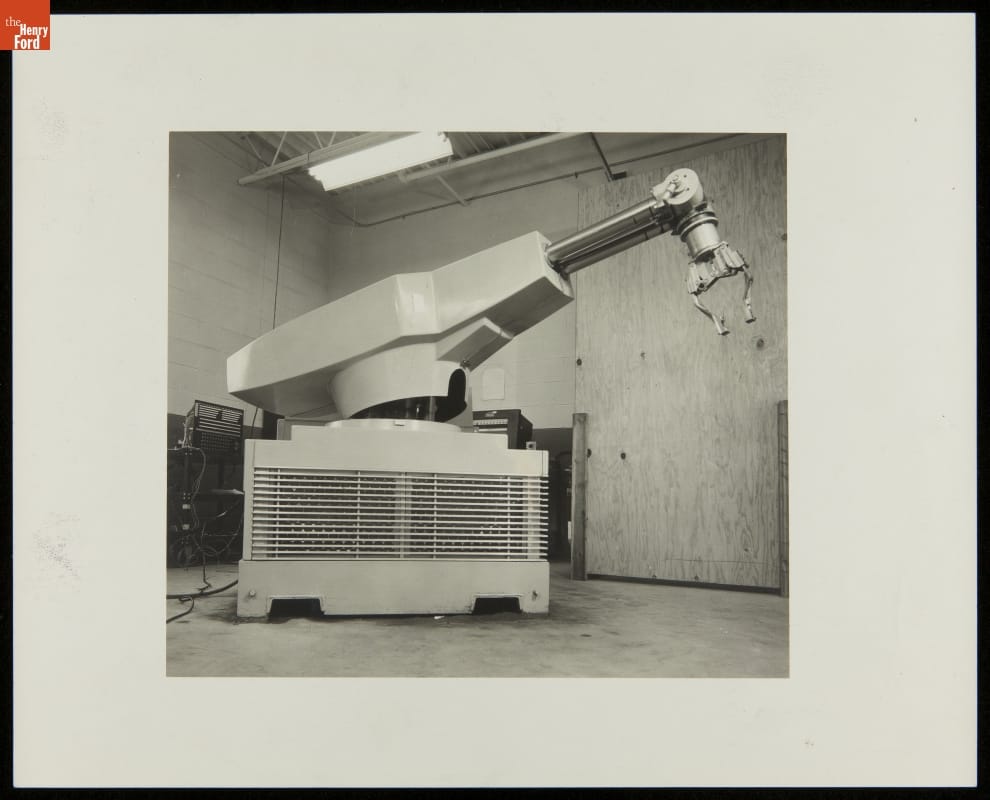
- Unimate Industrial Robot, 1962-1967 - George Devol revolutionized manufacturing with his invention of the Unimate -- the world's first industrial robot. These rugged programmable units were designed to perform repetitive, arduous and hazardous tasks. The first Unimate was installed in a General Motors plant in 1961. This photograph, part of a larger archival collection documenting Devol's work, illustrates the functions and uses of his innovative idea.
- 1962-1967
- Collections - Artifact
Unimate Industrial Robot, 1962-1967
George Devol revolutionized manufacturing with his invention of the Unimate -- the world's first industrial robot. These rugged programmable units were designed to perform repetitive, arduous and hazardous tasks. The first Unimate was installed in a General Motors plant in 1961. This photograph, part of a larger archival collection documenting Devol's work, illustrates the functions and uses of his innovative idea.
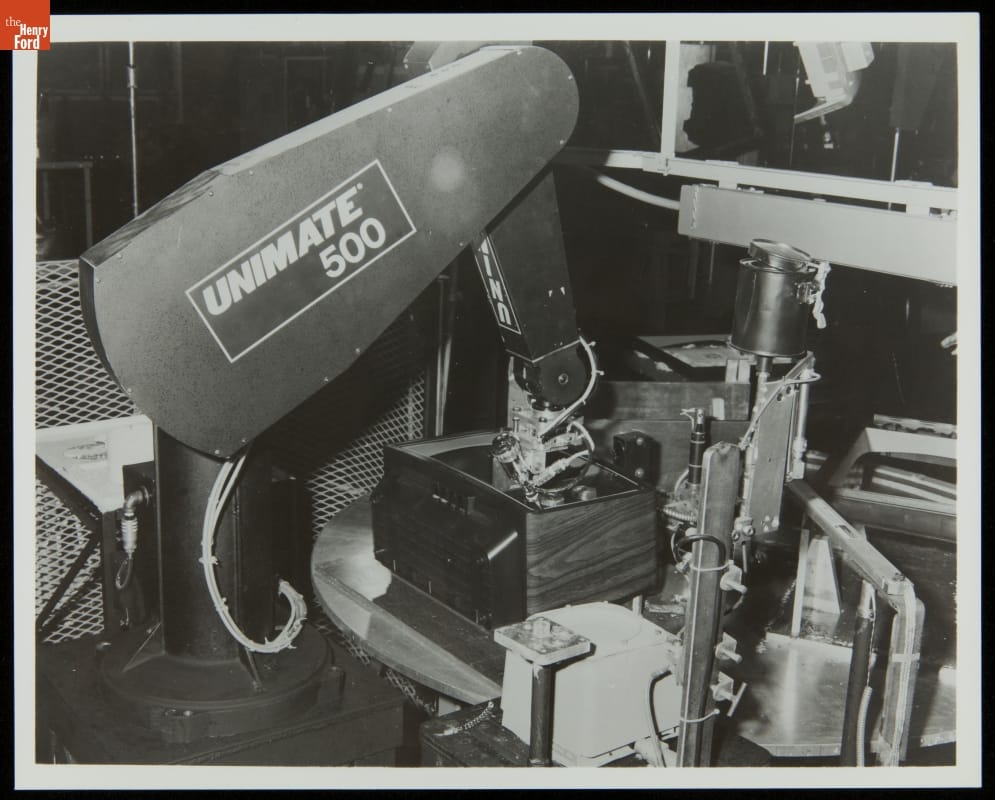
- Unimate 500 Industrial Robot, 1977-1983 - George Devol revolutionized manufacturing with his invention of the Unimate -- the world's first industrial robot. These rugged programmable units were designed to perform repetitive, arduous and hazardous tasks. The first Unimate was installed in a General Motors plant in 1961. This photograph, part of a larger archival collection documenting Devol's work, illustrates the functions and uses of his innovative idea.
- 1977-1983
- Collections - Artifact
Unimate 500 Industrial Robot, 1977-1983
George Devol revolutionized manufacturing with his invention of the Unimate -- the world's first industrial robot. These rugged programmable units were designed to perform repetitive, arduous and hazardous tasks. The first Unimate was installed in a General Motors plant in 1961. This photograph, part of a larger archival collection documenting Devol's work, illustrates the functions and uses of his innovative idea.
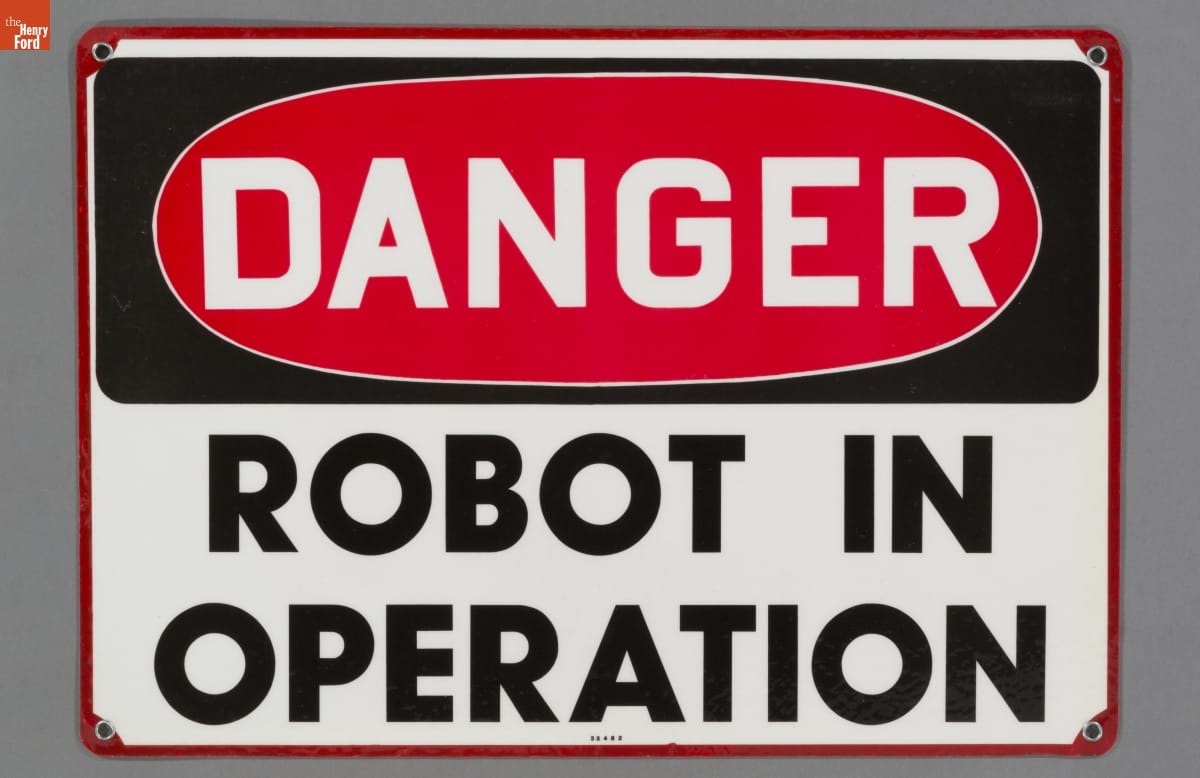
- Danger Robot in Operation Sign, 1992 - A safe workplace benefits both employees and employers. Warning signs alert workers of possible dangers that may cause harm -- and help prevent accidents and loss of valuable worktime. Signs, like this one from the 1990s, remind readers to pay attention when working around equipment that may pose hazards.
- 1992
- Collections - Artifact
Danger Robot in Operation Sign, 1992
A safe workplace benefits both employees and employers. Warning signs alert workers of possible dangers that may cause harm -- and help prevent accidents and loss of valuable worktime. Signs, like this one from the 1990s, remind readers to pay attention when working around equipment that may pose hazards.
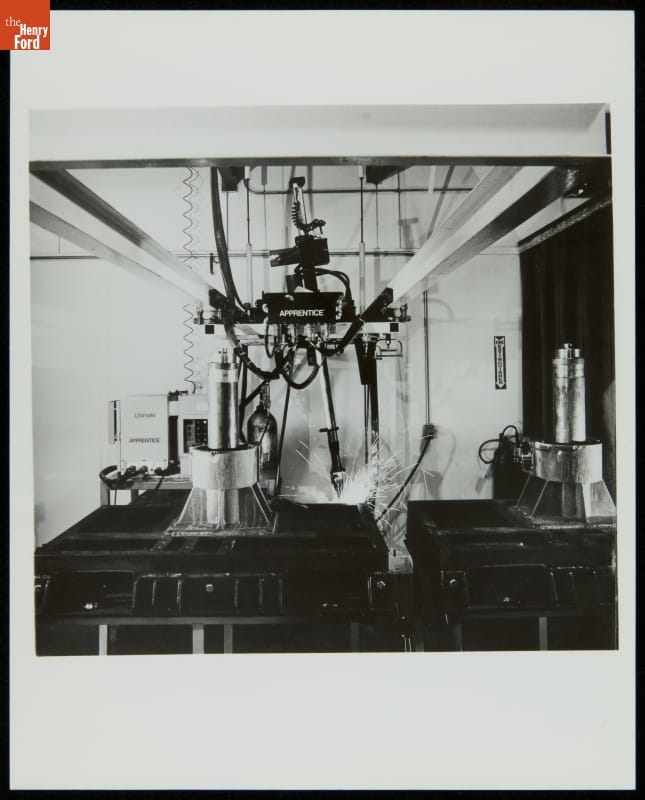
- Apprentice Robot Welding, circa 1980 - George Devol revolutionized manufacturing with his invention of the Unimate -- the world's first industrial robot. These rugged programmable units were designed to perform repetitive, arduous and hazardous tasks. The first Unimate was installed in a General Motors plant in 1961. This photograph, part of a larger archival collection documenting Devol's work, illustrates the functions and uses of his innovative idea.
- circa 1980
- Collections - Artifact
Apprentice Robot Welding, circa 1980
George Devol revolutionized manufacturing with his invention of the Unimate -- the world's first industrial robot. These rugged programmable units were designed to perform repetitive, arduous and hazardous tasks. The first Unimate was installed in a General Motors plant in 1961. This photograph, part of a larger archival collection documenting Devol's work, illustrates the functions and uses of his innovative idea.