
Search
- J.F. Harcourt Company Grain Drill, circa 1880 -
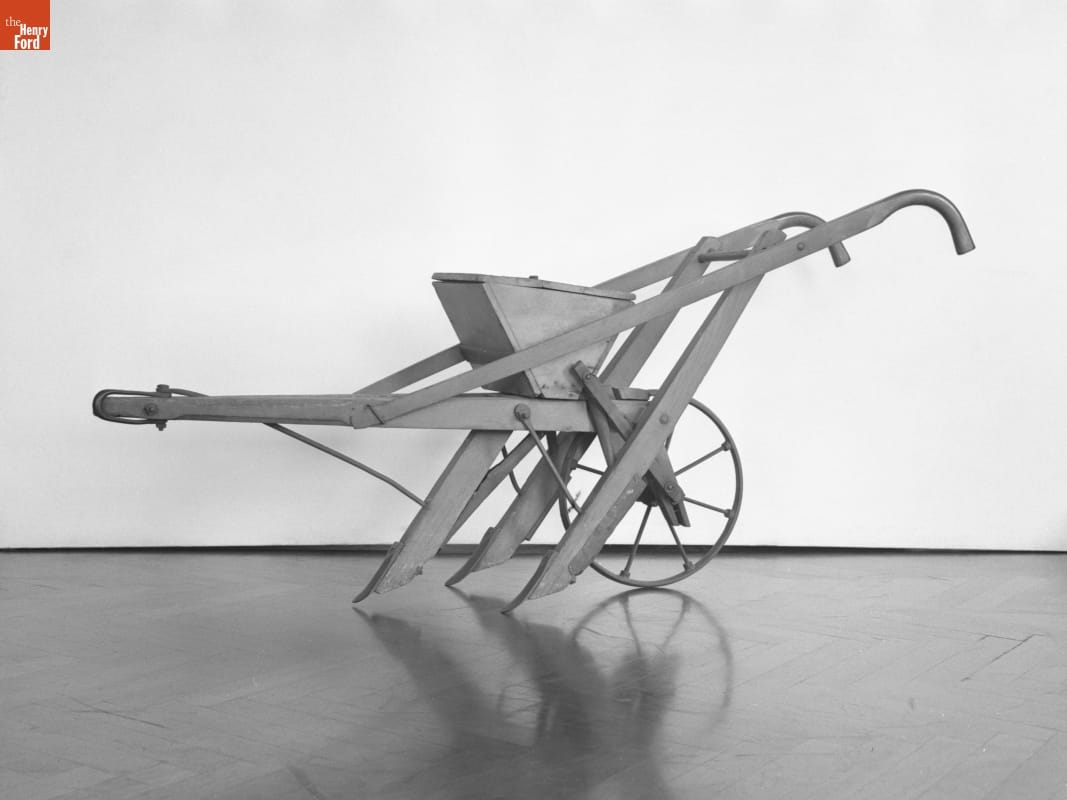
- circa 1880
- Collections - Artifact
J.F. Harcourt Company Grain Drill, circa 1880
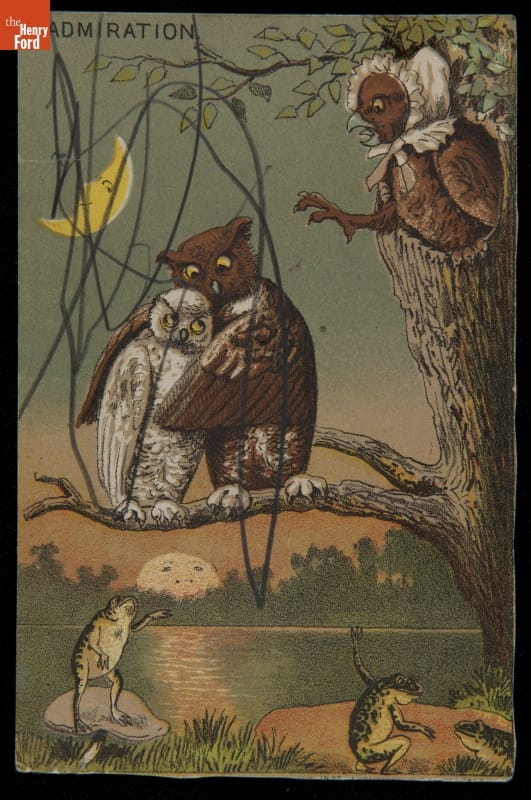
- Trade Card for the "Farmer's Favorite" Grain Seed Drill, Bickford & Huffman, 1886 - In the last third of the nineteenth century, an unprecedented variety of consumer goods and services flooded the American market. Advertisers, armed with new methods of color printing, bombarded potential customers with trade cards. Americans enjoyed and often saved the vibrant little advertisements found in product packages or distributed by local merchants. Many survive as historical records of commercialism in the United States.
- 1886
- Collections - Artifact
Trade Card for the "Farmer's Favorite" Grain Seed Drill, Bickford & Huffman, 1886
In the last third of the nineteenth century, an unprecedented variety of consumer goods and services flooded the American market. Advertisers, armed with new methods of color printing, bombarded potential customers with trade cards. Americans enjoyed and often saved the vibrant little advertisements found in product packages or distributed by local merchants. Many survive as historical records of commercialism in the United States.
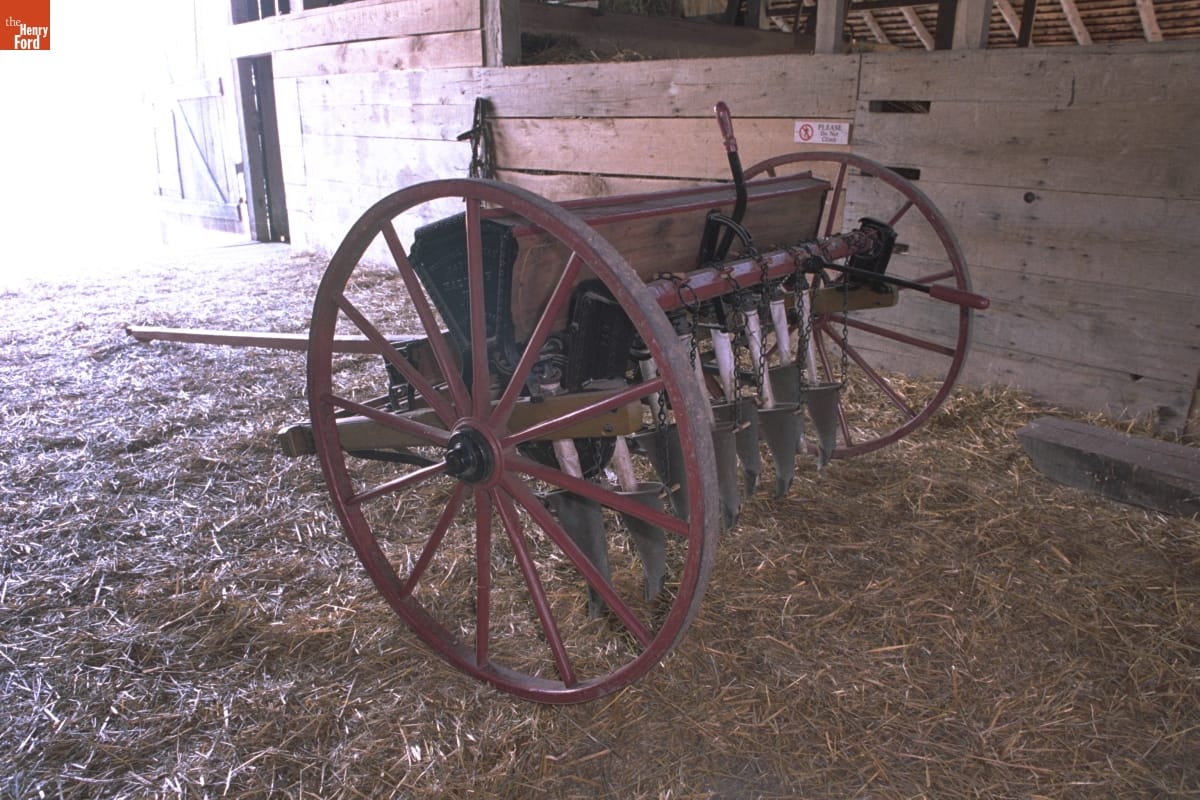
- Bickford & Huffman Grain Drill, circa 1890 - Lyman Bickford and Henry Huffman began making agricultural machinery in 1842. They manufactured a grain drill in 1849 that became the "Farmers' Favorite." Dependable and affordable, this drill set a standard for the industry. Patents for "double force" seed distribution and changeable speed gearing increased the drill's utility. Farmers could use it to plant seeds and spread fertilizer at the same time.
- circa 1890
- Collections - Artifact
Bickford & Huffman Grain Drill, circa 1890
Lyman Bickford and Henry Huffman began making agricultural machinery in 1842. They manufactured a grain drill in 1849 that became the "Farmers' Favorite." Dependable and affordable, this drill set a standard for the industry. Patents for "double force" seed distribution and changeable speed gearing increased the drill's utility. Farmers could use it to plant seeds and spread fertilizer at the same time.
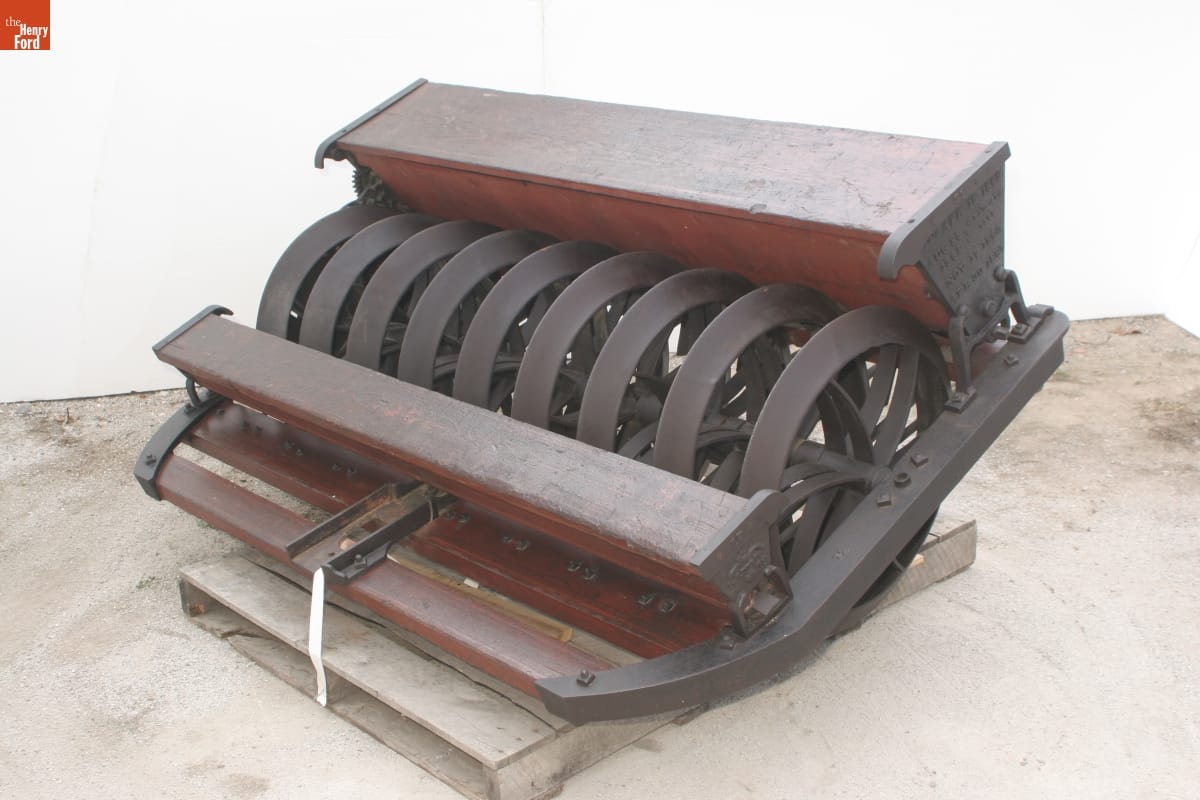
- Grain Drill, circa 1890 - The grain drill was superior to hand sowing because it distributed seed uniformly at a controlled depth and covered it properly. Less seed per acre was used, but higher yields resulted. Early drills required an even seedbed to be effective. This improved drill, patented 1863 by P.D. Beckwith, used heavy cast iron wheels to both smooth and plant the seedbed.
- circa 1890
- Collections - Artifact
Grain Drill, circa 1890
The grain drill was superior to hand sowing because it distributed seed uniformly at a controlled depth and covered it properly. Less seed per acre was used, but higher yields resulted. Early drills required an even seedbed to be effective. This improved drill, patented 1863 by P.D. Beckwith, used heavy cast iron wheels to both smooth and plant the seedbed.
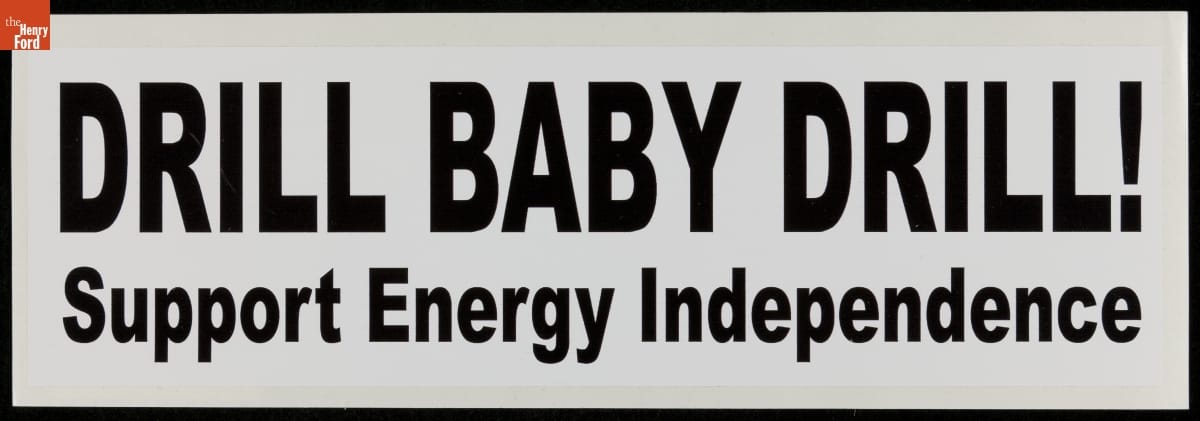
- "Drill Baby Drill! Support Energy Independence" Bumper Sticker, 2011 - Critics of America's dependence on foreign oil suggested we drive less, develop alternative fuels, or drill in protected domestic wilderness areas, as this bumper sticker suggests.
- 2011
- Collections - Artifact
"Drill Baby Drill! Support Energy Independence" Bumper Sticker, 2011
Critics of America's dependence on foreign oil suggested we drive less, develop alternative fuels, or drill in protected domestic wilderness areas, as this bumper sticker suggests.
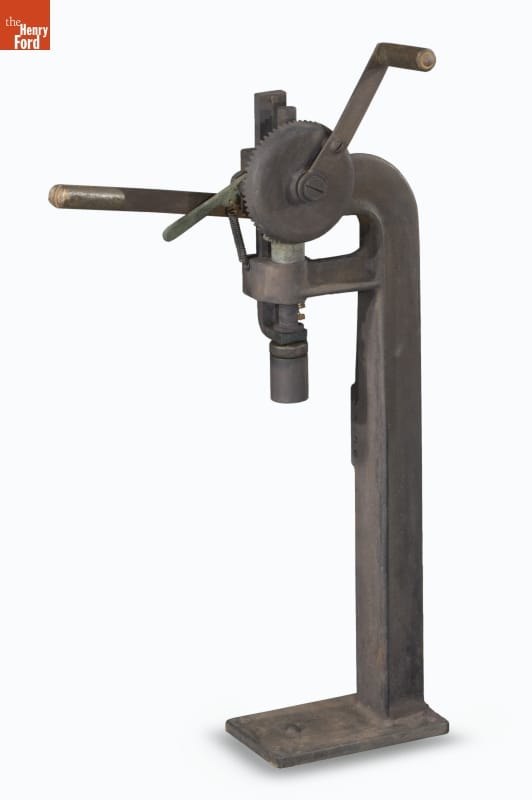
- Hand Drill Press -
- Collections - Artifact
Hand Drill Press
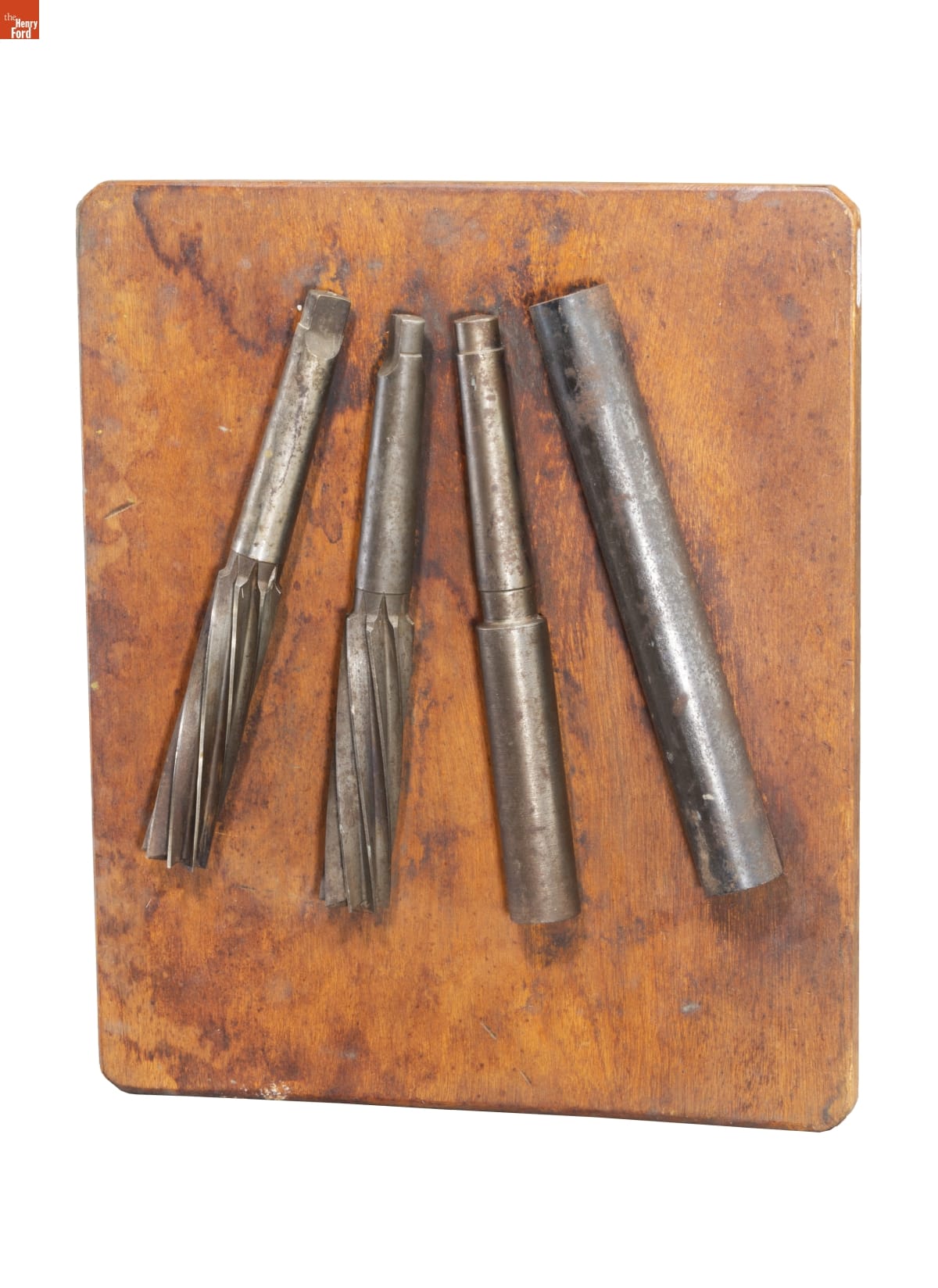
- Display of Drill Bits -
- Collections - Artifact
Display of Drill Bits
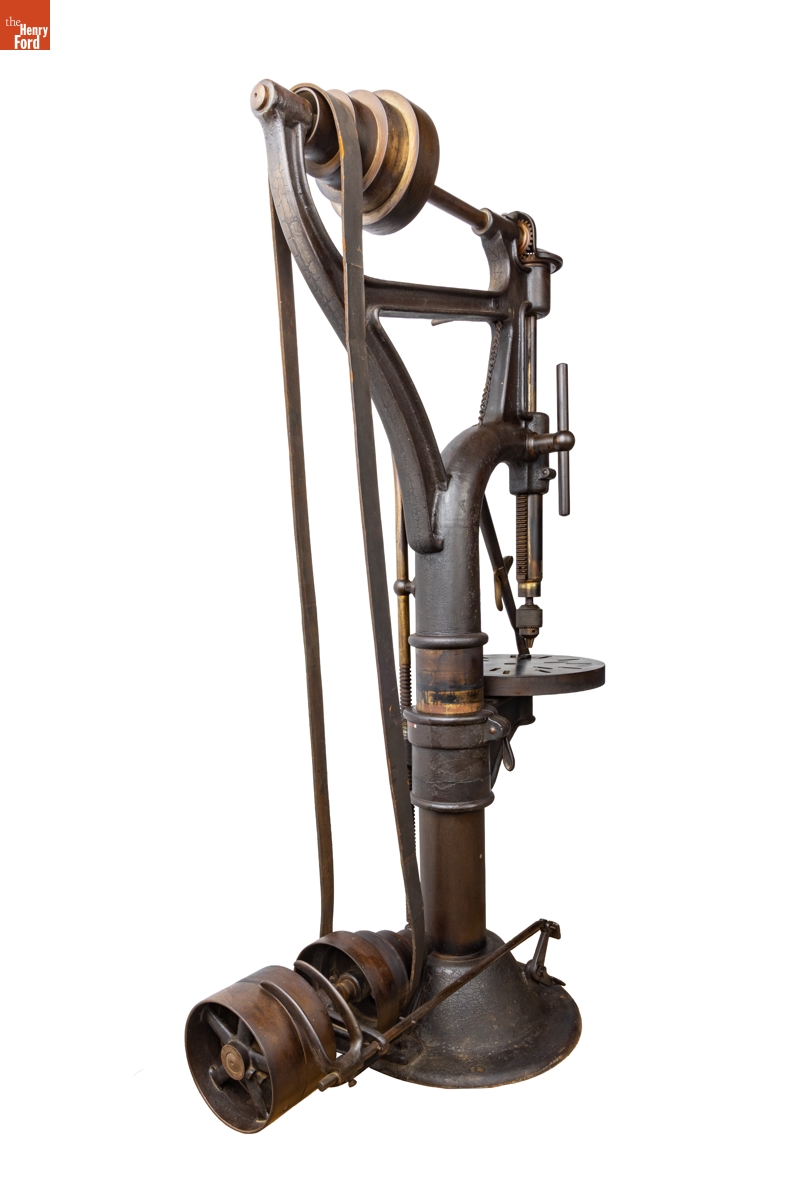
- Drill Press, circa 1885 - Brothers William Fletcher and John Barnes of Rockford, Illinois, established the W.F. & John Barnes Company in 1869. They incorporated the business fifteen years later. The company manufactured various woodworking and metalworking tools and began specializing in drill presses about 1890. Drill presses provide power, versatility, and accuracy in controlled drilling operations. Babcock-Wilcox bought out the company in the early 1960s.
- circa 1885
- Collections - Artifact
Drill Press, circa 1885
Brothers William Fletcher and John Barnes of Rockford, Illinois, established the W.F. & John Barnes Company in 1869. They incorporated the business fifteen years later. The company manufactured various woodworking and metalworking tools and began specializing in drill presses about 1890. Drill presses provide power, versatility, and accuracy in controlled drilling operations. Babcock-Wilcox bought out the company in the early 1960s.
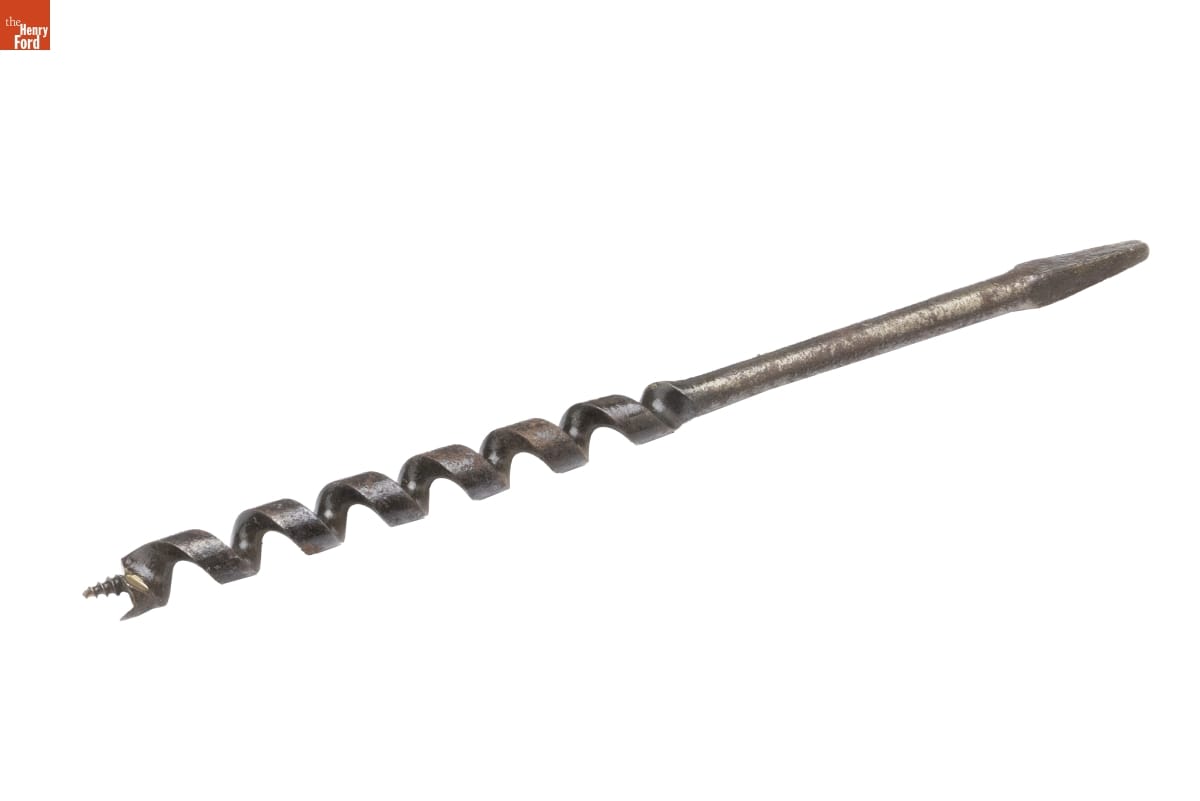
- Auger Drill Bit, 1891-1916 - Woodworkers and carpenters bore holes in wood with augers. The Ford Auger Bit Company of Holyoke, Massachusetts, made this single lip auger bit. The company manufactured auger bits from the 1890s into the 1910s before being bought out by the Millers Falls Company in 1916.
- 1891-1916
- Collections - Artifact
Auger Drill Bit, 1891-1916
Woodworkers and carpenters bore holes in wood with augers. The Ford Auger Bit Company of Holyoke, Massachusetts, made this single lip auger bit. The company manufactured auger bits from the 1890s into the 1910s before being bought out by the Millers Falls Company in 1916.
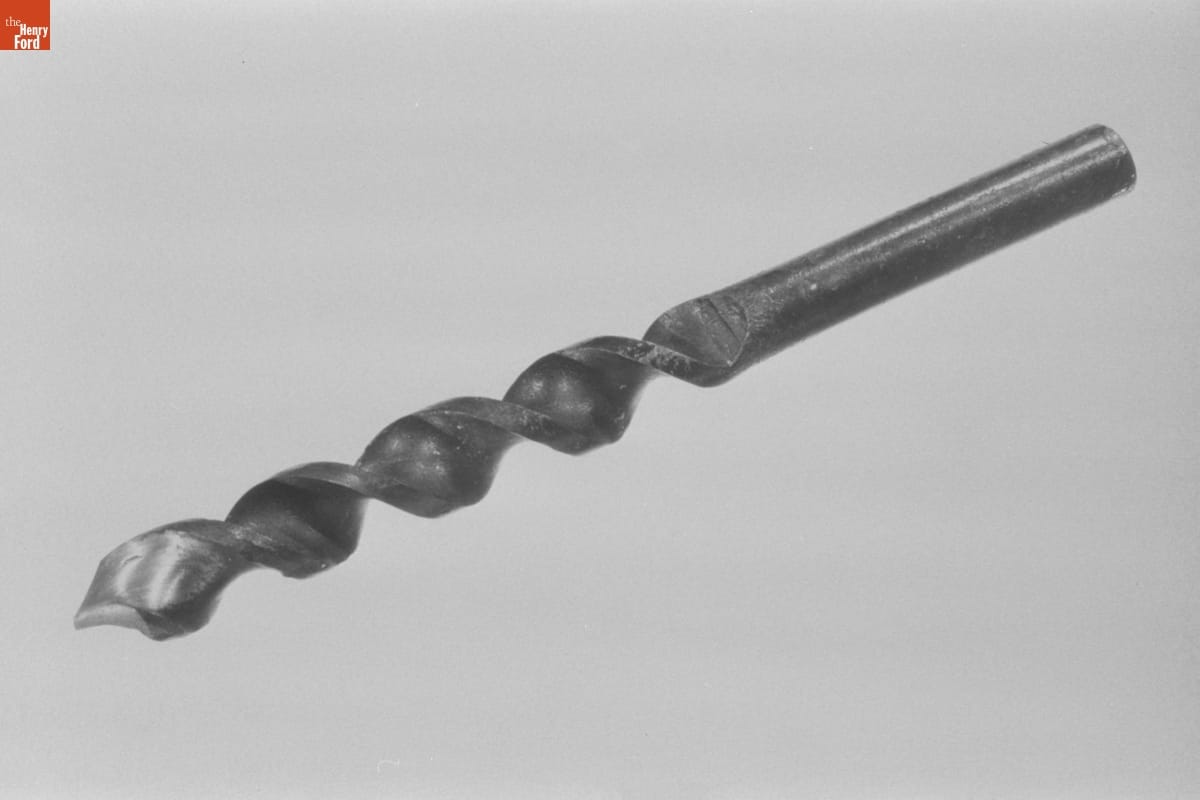
- Twist Drill Bit, 1864-1931 - Stephen A. Morse invented a better way to drill holes in wood. In 1863, Morse patented a twist drill bit (a bit with two parallel spiral grooves, producing a straight cutting edge.) His design advancements improved the hole-drilling process. Morse's company, established in 1864, still makes drill bits and other cutting tools.
- 1864-1931
- Collections - Artifact
Twist Drill Bit, 1864-1931
Stephen A. Morse invented a better way to drill holes in wood. In 1863, Morse patented a twist drill bit (a bit with two parallel spiral grooves, producing a straight cutting edge.) His design advancements improved the hole-drilling process. Morse's company, established in 1864, still makes drill bits and other cutting tools.