
Search
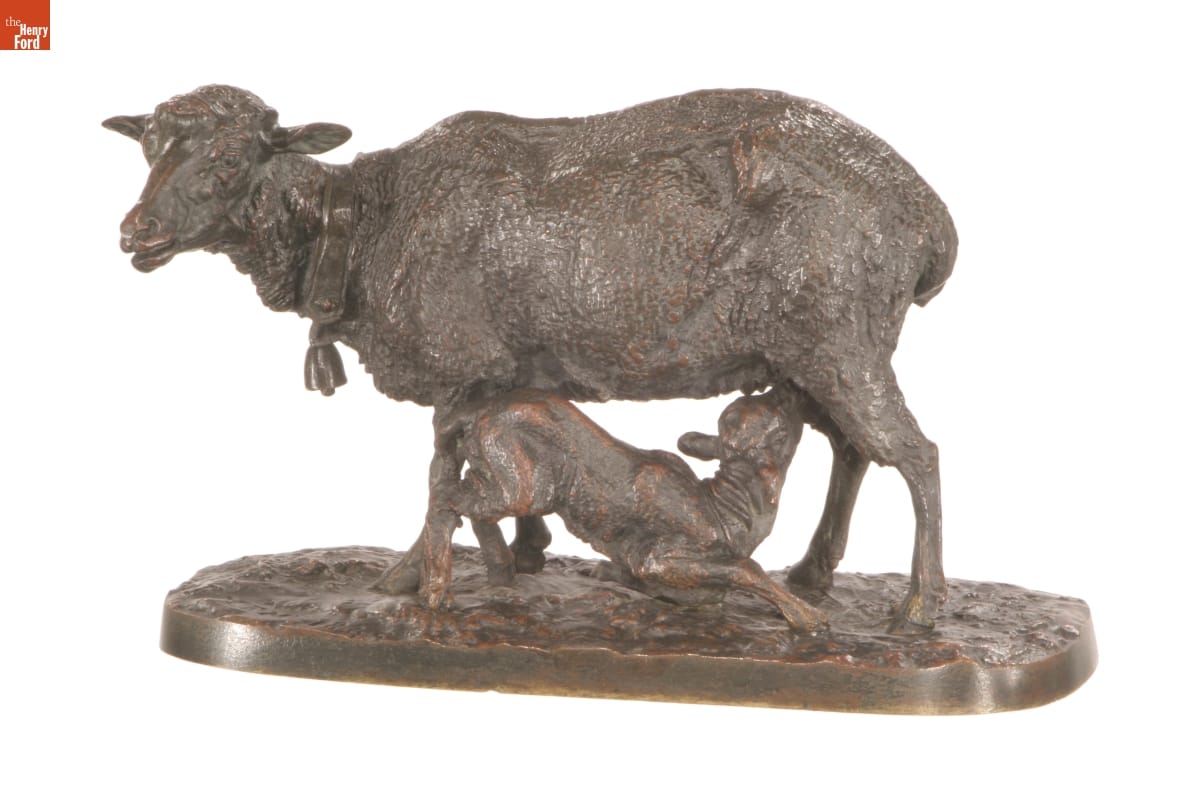
- Sheep Figurine, 1845 - Pierre-Jules Mene (1810-1879) was a prolific and successful sculptor of animals during the nineteenth century. Mene specialized in small bronze figures of domestic animals -- horses, cows, sheep, and goats. His works were well-liked and fashionable, decorating many homes, especially those of the growing middle class.
- 1845
- Collections - Artifact
Sheep Figurine, 1845
Pierre-Jules Mene (1810-1879) was a prolific and successful sculptor of animals during the nineteenth century. Mene specialized in small bronze figures of domestic animals -- horses, cows, sheep, and goats. His works were well-liked and fashionable, decorating many homes, especially those of the growing middle class.
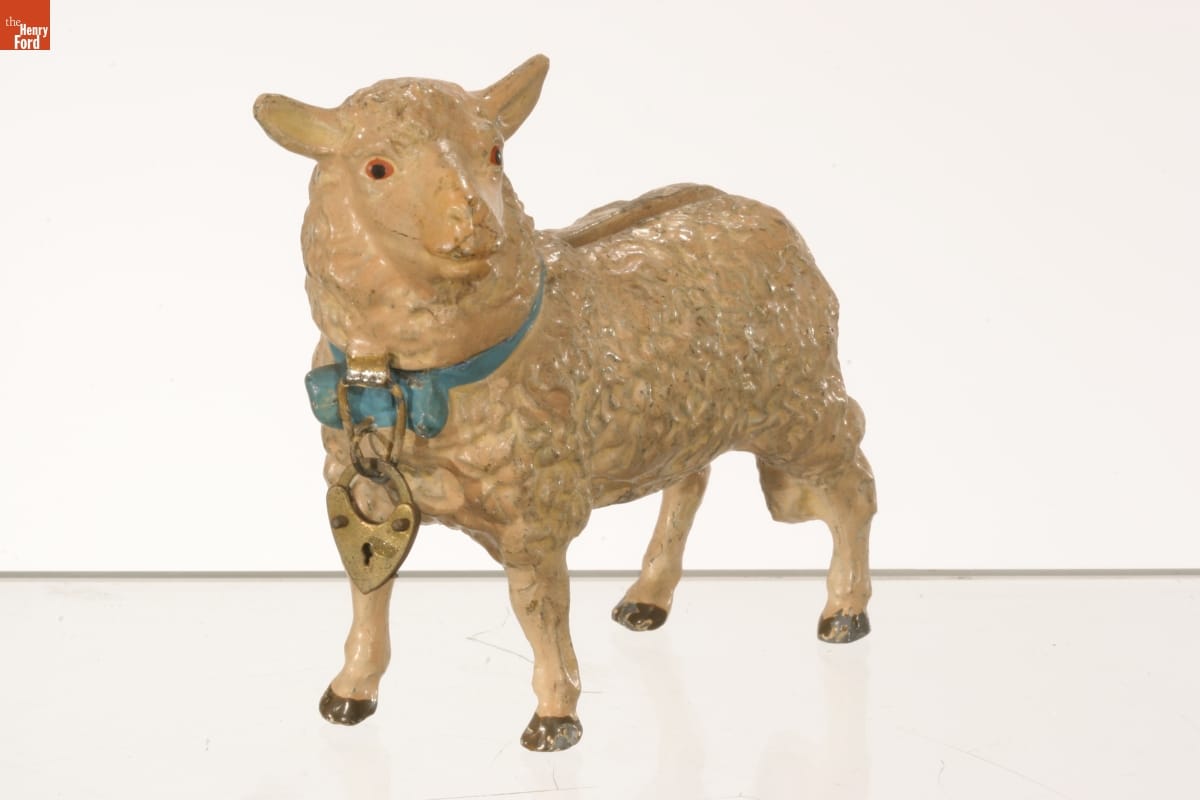
- Sheep Bank, 1900-1930 - In the late-19th and early-20th centuries, several manufacturers marketed cast-iron toy banks to parents as a way to encourage thrift in children. Some banks used mechanical actions to deposit a coin, while others, like this one, just had a slot where the coin was dropped. These simple banks came in a variety of shapes that delighted children of all ages.
- 1900-1930
- Collections - Artifact
Sheep Bank, 1900-1930
In the late-19th and early-20th centuries, several manufacturers marketed cast-iron toy banks to parents as a way to encourage thrift in children. Some banks used mechanical actions to deposit a coin, while others, like this one, just had a slot where the coin was dropped. These simple banks came in a variety of shapes that delighted children of all ages.
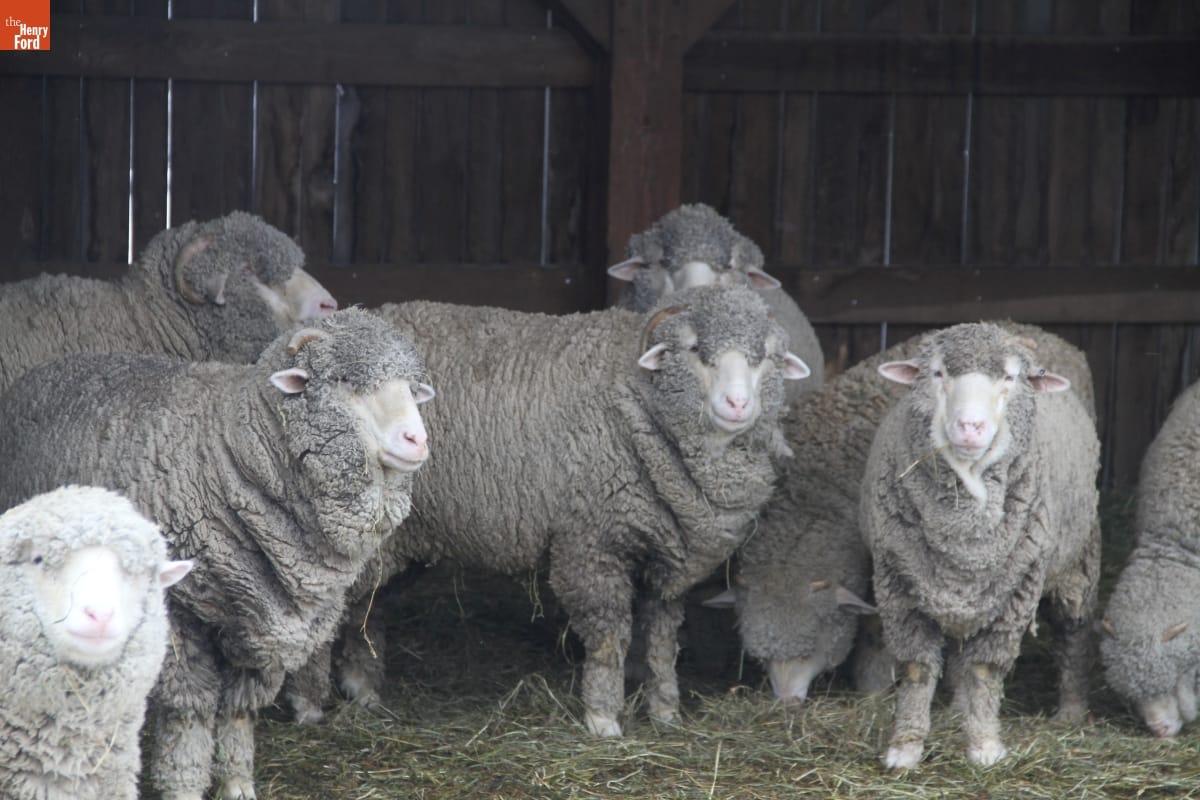
- Sheep - Sheep supply two items essential for human survival, wool for clothing and meat for food. This makes them a farm asset, but protecting sheep requires vigilance. Sheep are social animals with an instinct to move together as a flock. Shepherds use dogs to help protect their flock and herd animals from pens to pasture and back. The close bond conjures visions of a bucolic rural past, emphasizing human-animal relationships.
- February 07, 2025
- Collections - Set
Sheep
Sheep supply two items essential for human survival, wool for clothing and meat for food. This makes them a farm asset, but protecting sheep requires vigilance. Sheep are social animals with an instinct to move together as a flock. Shepherds use dogs to help protect their flock and herd animals from pens to pasture and back. The close bond conjures visions of a bucolic rural past, emphasizing human-animal relationships.
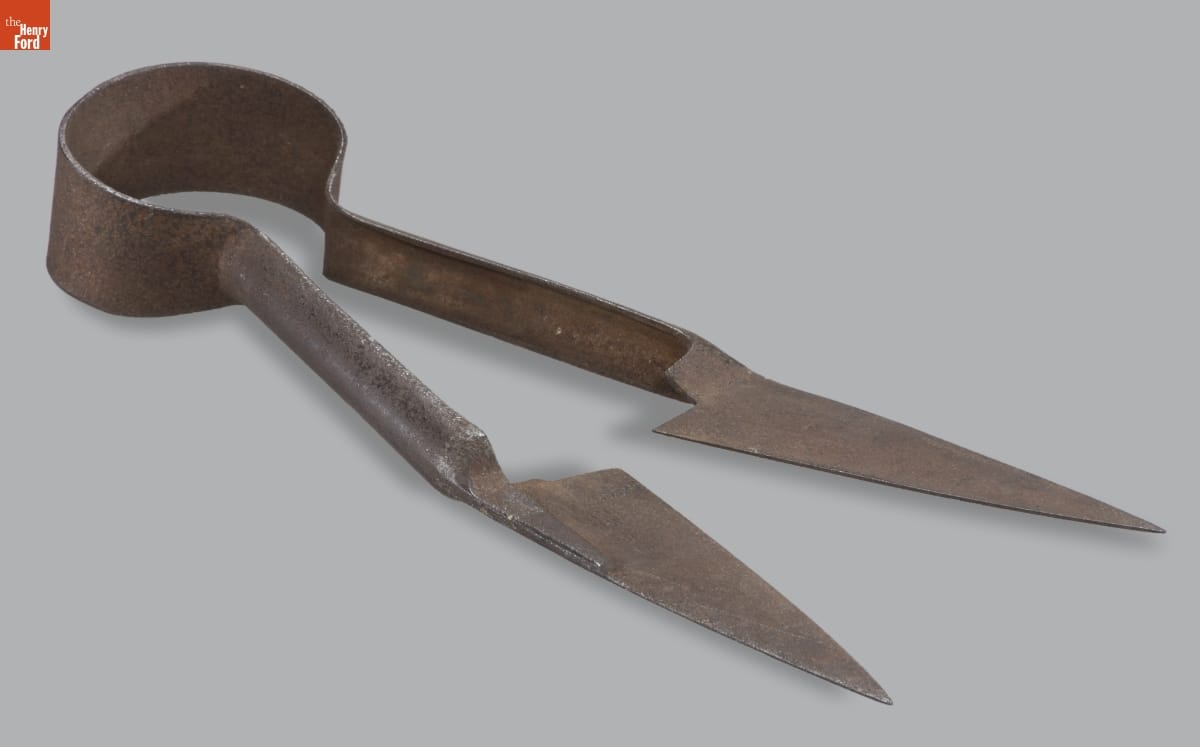
- Wilkinson Sheep Shears, circa 1900 -
- circa 1900
- Collections - Artifact
Wilkinson Sheep Shears, circa 1900
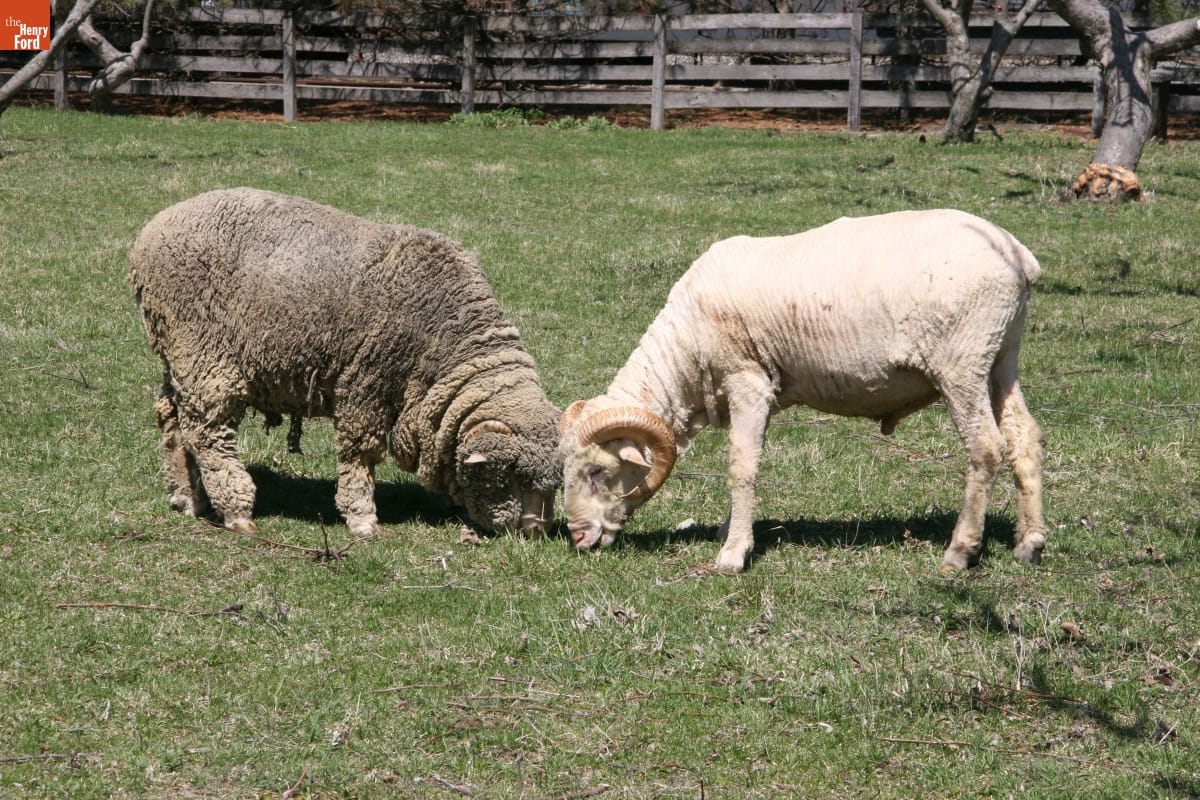
- Merino Sheep in Greenfield Village during Sheep-Shearing Season, April 2008 - Nineteenth-century wool producers preferred wrinkled Merino sheep. More skin yielded more wool, which shearers carefully cut away using blade shears. Ultimately, electrically powered mechanical shears became more practical. Shearers operating these much faster tools had difficulty navigating around wrinkles, and farmers began breeding out the now undesirable trait. The Merino sheep at Greenfield Village have been selectively bred back to resemble their wrinkly ancestors.
- April 15, 2008
- Collections - Artifact
Merino Sheep in Greenfield Village during Sheep-Shearing Season, April 2008
Nineteenth-century wool producers preferred wrinkled Merino sheep. More skin yielded more wool, which shearers carefully cut away using blade shears. Ultimately, electrically powered mechanical shears became more practical. Shearers operating these much faster tools had difficulty navigating around wrinkles, and farmers began breeding out the now undesirable trait. The Merino sheep at Greenfield Village have been selectively bred back to resemble their wrinkly ancestors.
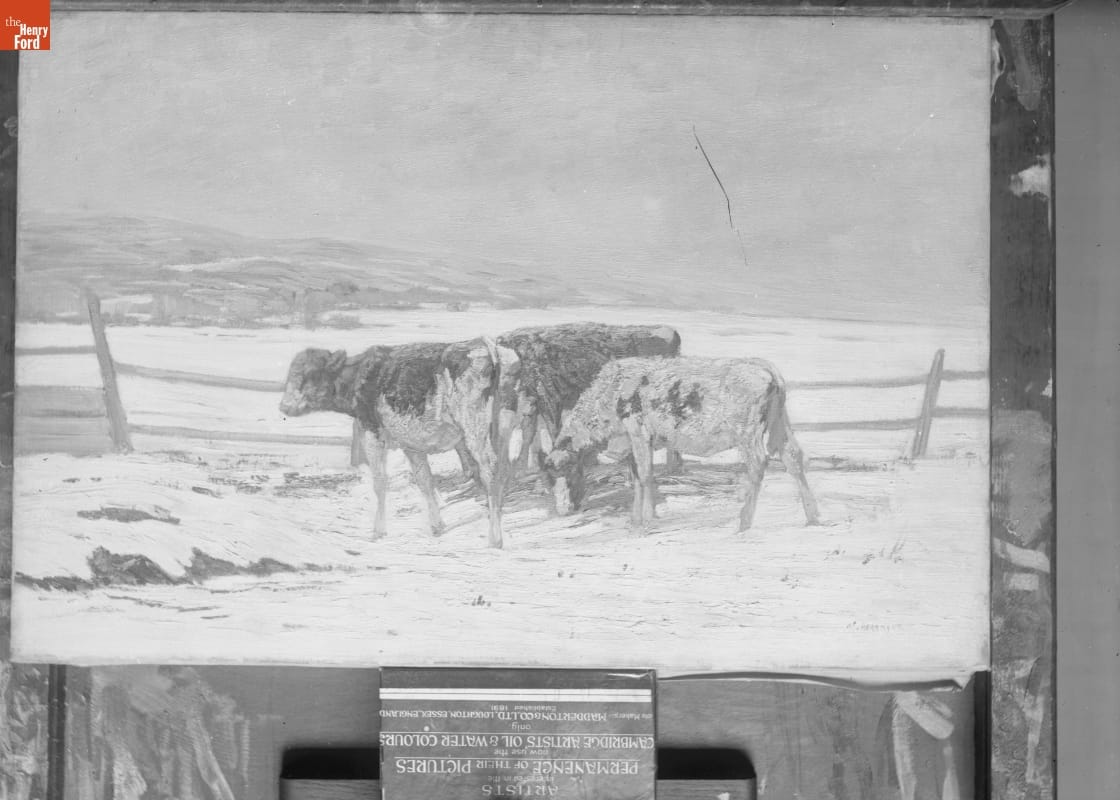
- Painting, Sheep (Max Hermann), 1890-1915 - In 1890, Jenny Young Chandler, 25 years old and recently widowed, began working for the <EM>New York Herald</EM>. As a photojournalist and feature writer, Chandler captured life in Brooklyn, New York, and vicinity. She also documented collections of private individuals and museums -- some of which were featured in magazine articles for collectors. By 1922, the time of her death, she had produced over 800 glass plate negatives.
- 1890-1915
- Collections - Artifact
Painting, Sheep (Max Hermann), 1890-1915
In 1890, Jenny Young Chandler, 25 years old and recently widowed, began working for the New York Herald. As a photojournalist and feature writer, Chandler captured life in Brooklyn, New York, and vicinity. She also documented collections of private individuals and museums -- some of which were featured in magazine articles for collectors. By 1922, the time of her death, she had produced over 800 glass plate negatives.
- Sheep-Shearing Chair, 1875-1885 -
- 1875-1885
- Collections - Artifact
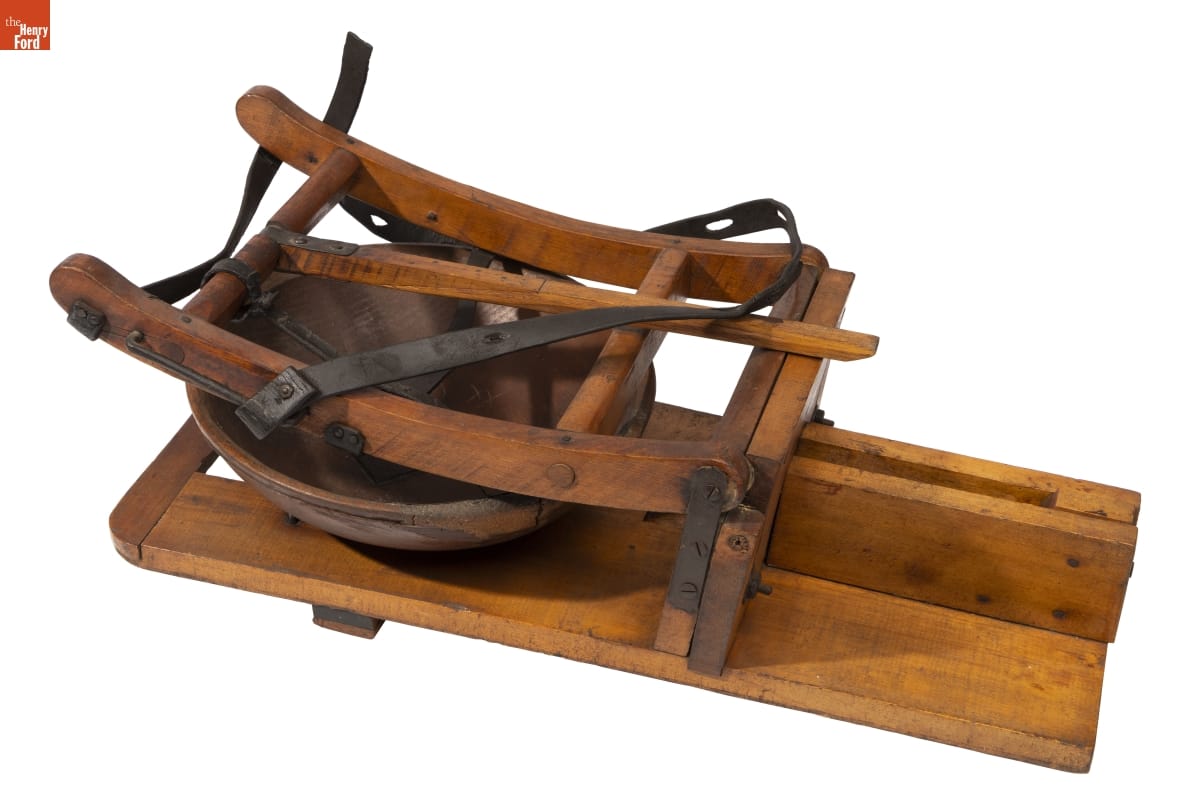
Sheep-Shearing Chair, 1875-1885
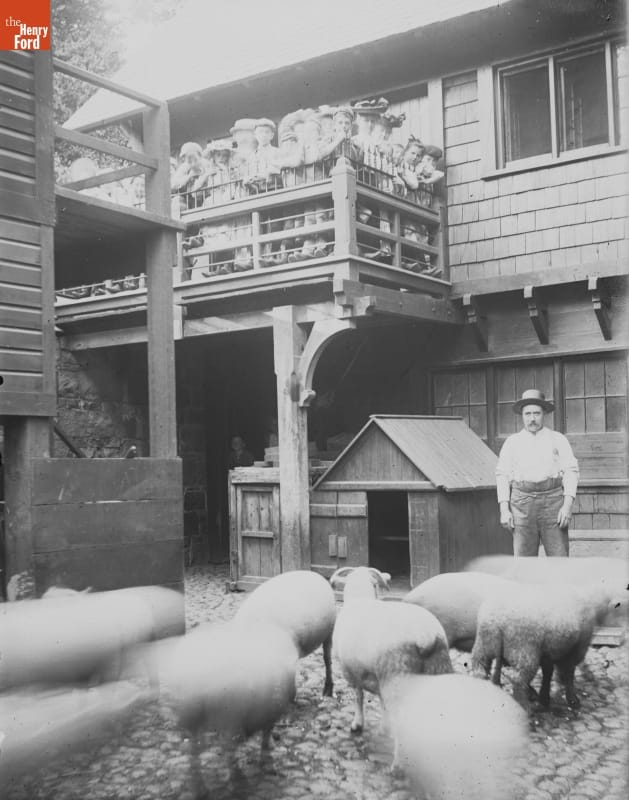
- Prospect Park, Children Watching Sheep, 1890-1915 - In 1890, Jenny Young Chandler, 25 years old and recently widowed, began working for the <EM>New York Herald</EM>. As a photojournalist and feature writer, Chandler captured life in Brooklyn, New York, and vicinity. By 1922, the time of her death, she had produced over 800 glass plate negatives. Her sensitive, insightful photographs depict people from all walks of life and the world in which they lived.
- 1890-1915
- Collections - Artifact
Prospect Park, Children Watching Sheep, 1890-1915
In 1890, Jenny Young Chandler, 25 years old and recently widowed, began working for the New York Herald. As a photojournalist and feature writer, Chandler captured life in Brooklyn, New York, and vicinity. By 1922, the time of her death, she had produced over 800 glass plate negatives. Her sensitive, insightful photographs depict people from all walks of life and the world in which they lived.
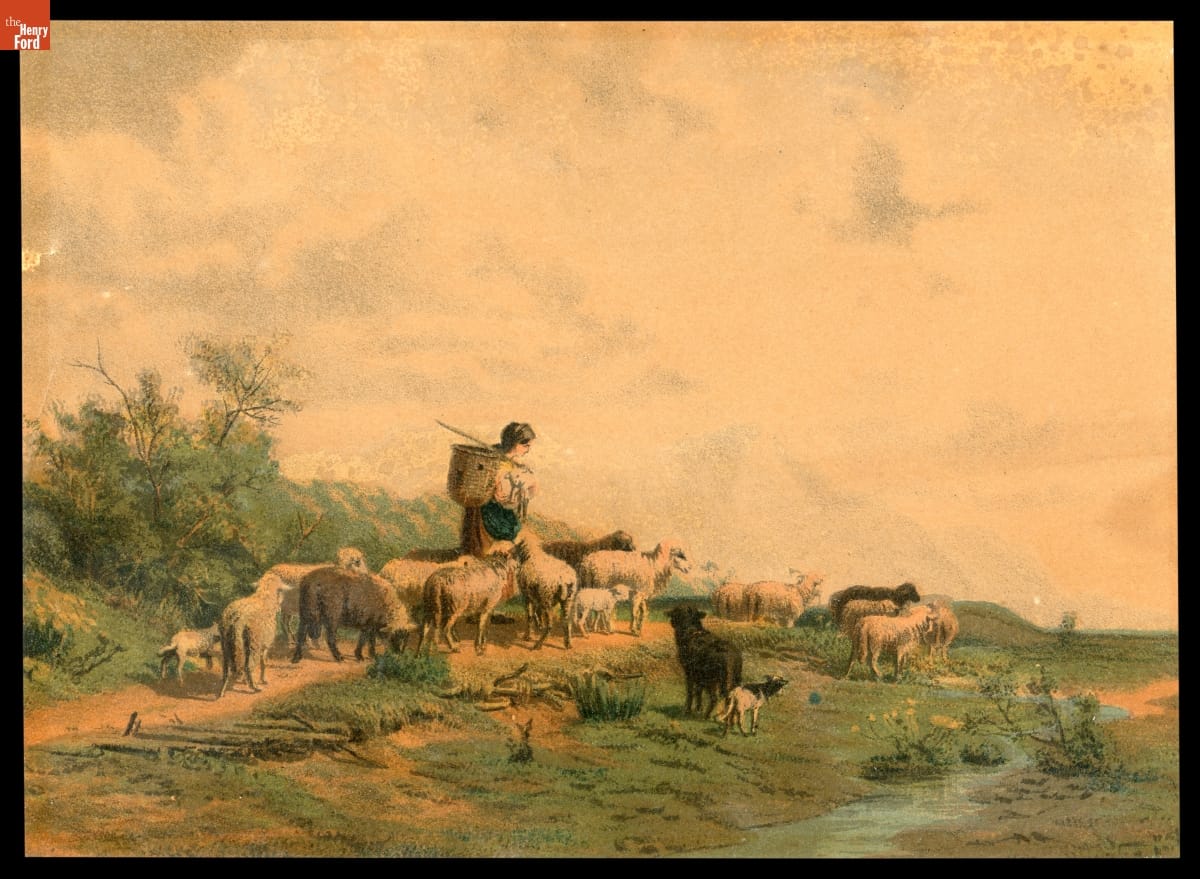
- "Shepherd and Flock of Sheep," circa 1880 -
- circa 1880
- Collections - Artifact
"Shepherd and Flock of Sheep," circa 1880
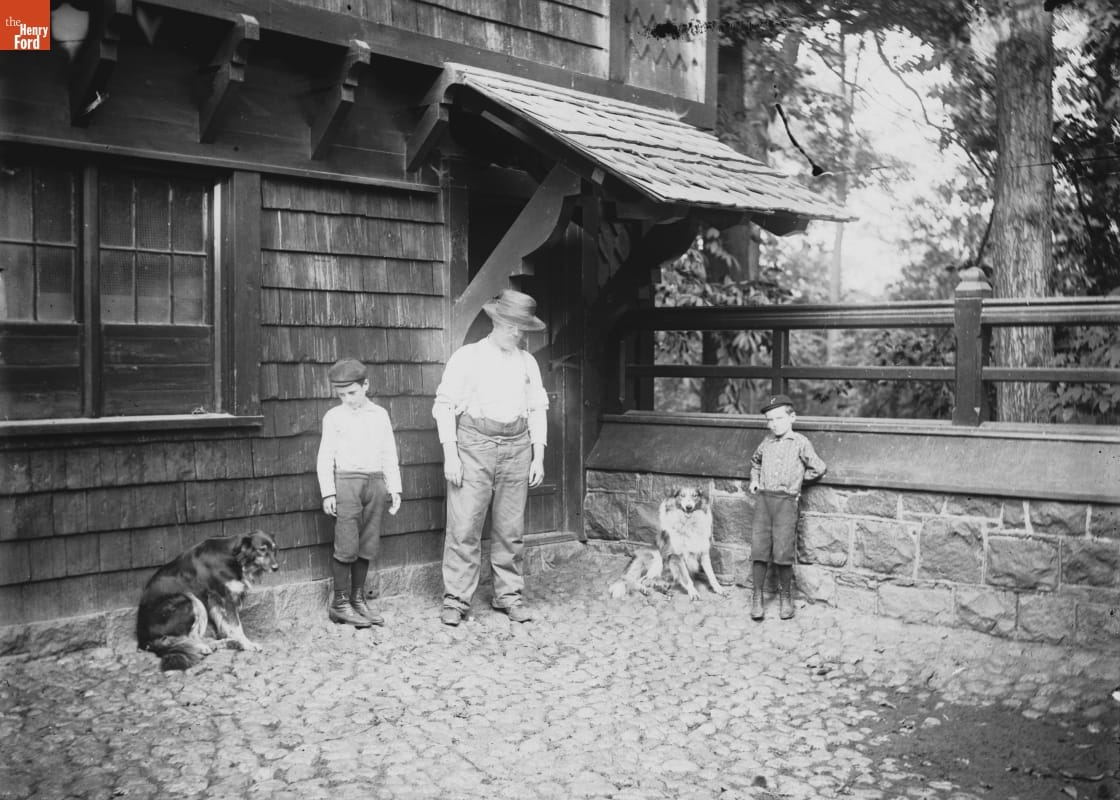
- Prospect Park, Guardians of the Sheep, 1890-1915 - In 1890, Jenny Young Chandler, 25 years old and recently widowed, began working for the <EM>New York Herald</EM>. As a photojournalist and feature writer, Chandler captured life in Brooklyn, New York, and vicinity. By 1922, the time of her death, she had produced over 800 glass plate negatives. Her sensitive, insightful photographs depict people from all walks of life and the world in which they lived.
- 1890-1915
- Collections - Artifact
Prospect Park, Guardians of the Sheep, 1890-1915
In 1890, Jenny Young Chandler, 25 years old and recently widowed, began working for the New York Herald. As a photojournalist and feature writer, Chandler captured life in Brooklyn, New York, and vicinity. By 1922, the time of her death, she had produced over 800 glass plate negatives. Her sensitive, insightful photographs depict people from all walks of life and the world in which they lived.