
Search
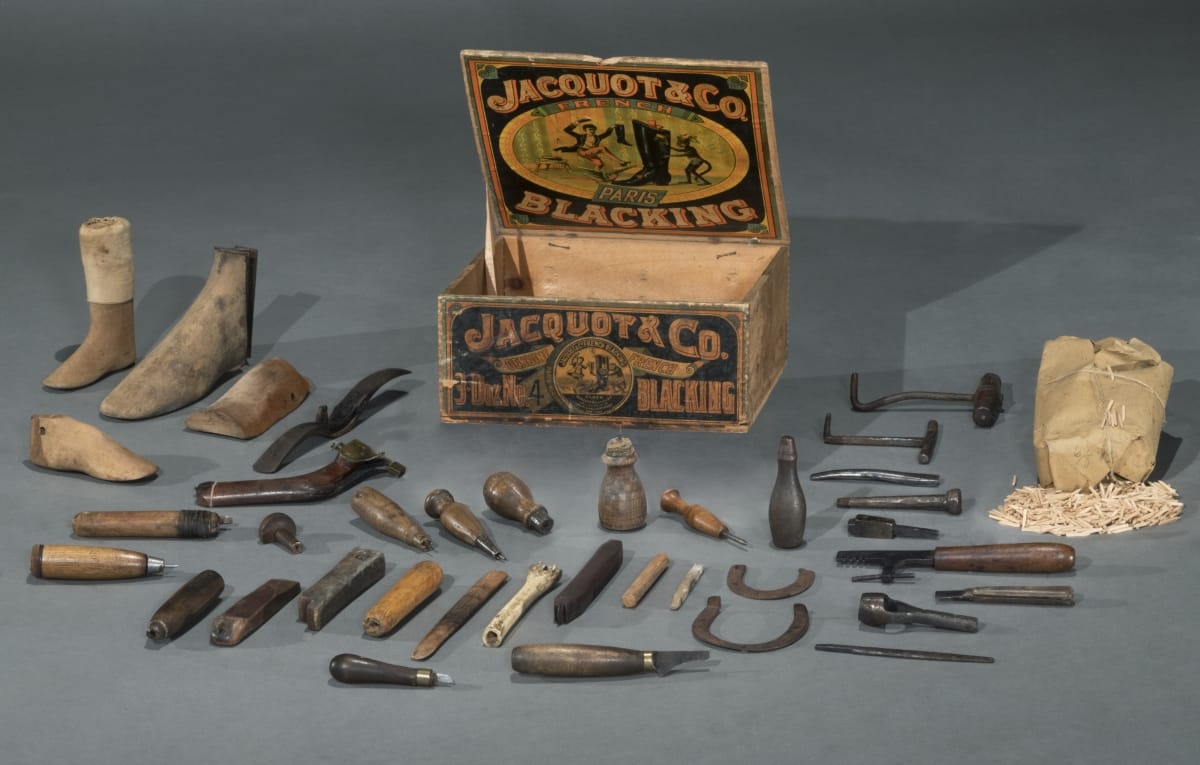
- Jacquot & Co. French Blacking Box with Shoemaker's Tools, 1875-1900 -
- 1875-1900
- Collections - Artifact
Jacquot & Co. French Blacking Box with Shoemaker's Tools, 1875-1900
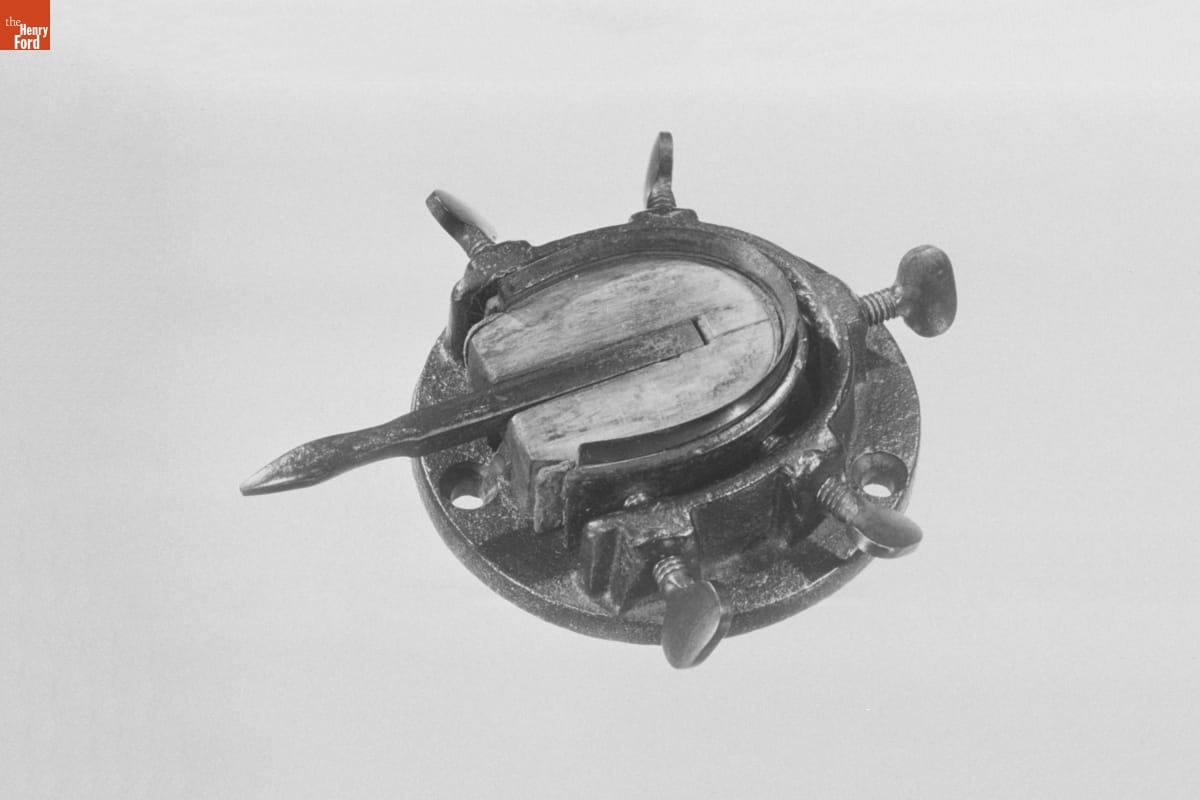
- Shoemaking Vise, 1880-1920 - Late-nineteenth and early-twentieth-century shoemakers turned pieces of leather into footwear. These craftspeople used a wide range of specialized tools to measure, cut, shape, stitch, trim, finish, and decorate their handiwork. Their tools included a variety of knives, hammers, punches, clamps, awls, and polishers and burnishers. Though these tools seem highly specialized, shoemakers were always adapting, using whatever tools were at hand to make shoes.
- 1880-1920
- Collections - Artifact
Shoemaking Vise, 1880-1920
Late-nineteenth and early-twentieth-century shoemakers turned pieces of leather into footwear. These craftspeople used a wide range of specialized tools to measure, cut, shape, stitch, trim, finish, and decorate their handiwork. Their tools included a variety of knives, hammers, punches, clamps, awls, and polishers and burnishers. Though these tools seem highly specialized, shoemakers were always adapting, using whatever tools were at hand to make shoes.
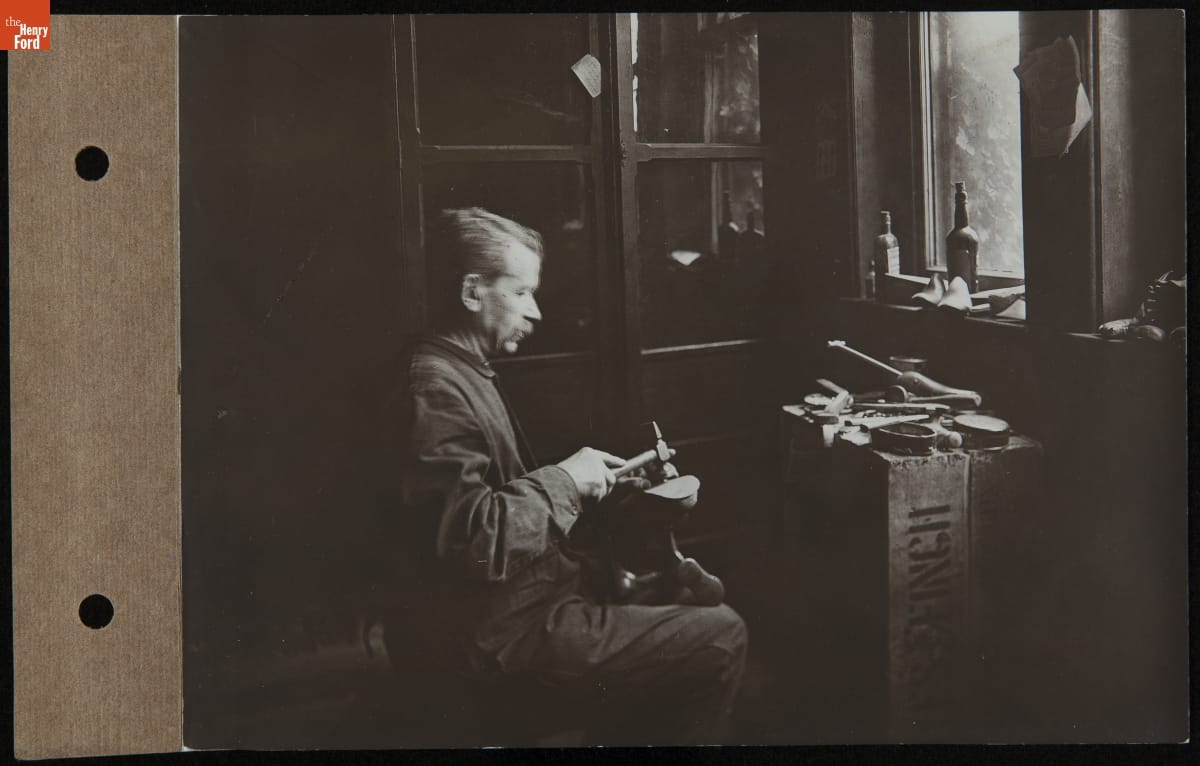
- Belgian Shoemaker, Oughtrington Hall, circa 1915 - Percival Perry, chairman of Ford Motor Company Limited (Ford of Britain) during World War I, relayed the plight of Belgian refugees to Henry and Clara Ford. With their authority, Perry leased Oughtrington Hall to accommodate a select group of Belgian refugees. The renovated mansion on the 30-acre estate became a temporary respite where the displaced found food, shelter, education, and work.
- 1915
- Collections - Artifact
Belgian Shoemaker, Oughtrington Hall, circa 1915
Percival Perry, chairman of Ford Motor Company Limited (Ford of Britain) during World War I, relayed the plight of Belgian refugees to Henry and Clara Ford. With their authority, Perry leased Oughtrington Hall to accommodate a select group of Belgian refugees. The renovated mansion on the 30-acre estate became a temporary respite where the displaced found food, shelter, education, and work.
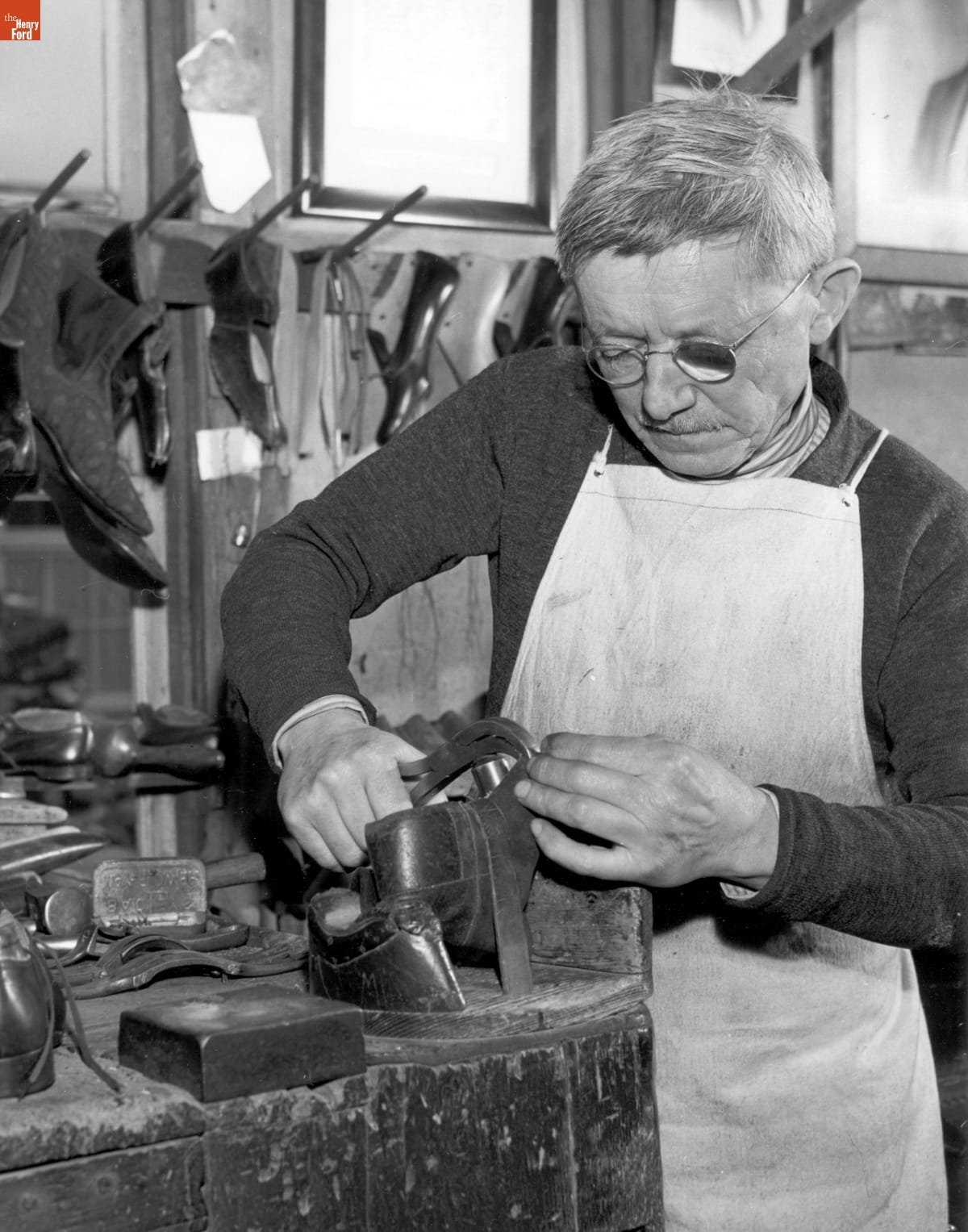
- Shoemaker Working in Greenfield Village, March 1941 -
- March 07, 1941
- Collections - Artifact
Shoemaker Working in Greenfield Village, March 1941
- The Shoemaker, Oughtrington Hall, 1914-1918 - Percival Perry, chairman of Ford Motor Company Limited (Ford of Britain) during World War I, relayed the plight of Belgian refugees to Henry and Clara Ford. With their authority, Perry leased Oughtrington Hall to accommodate a select group of Belgian refugees. The renovated mansion on the 30-acre estate became a temporary respite where the displaced found food, shelter, education, and work.
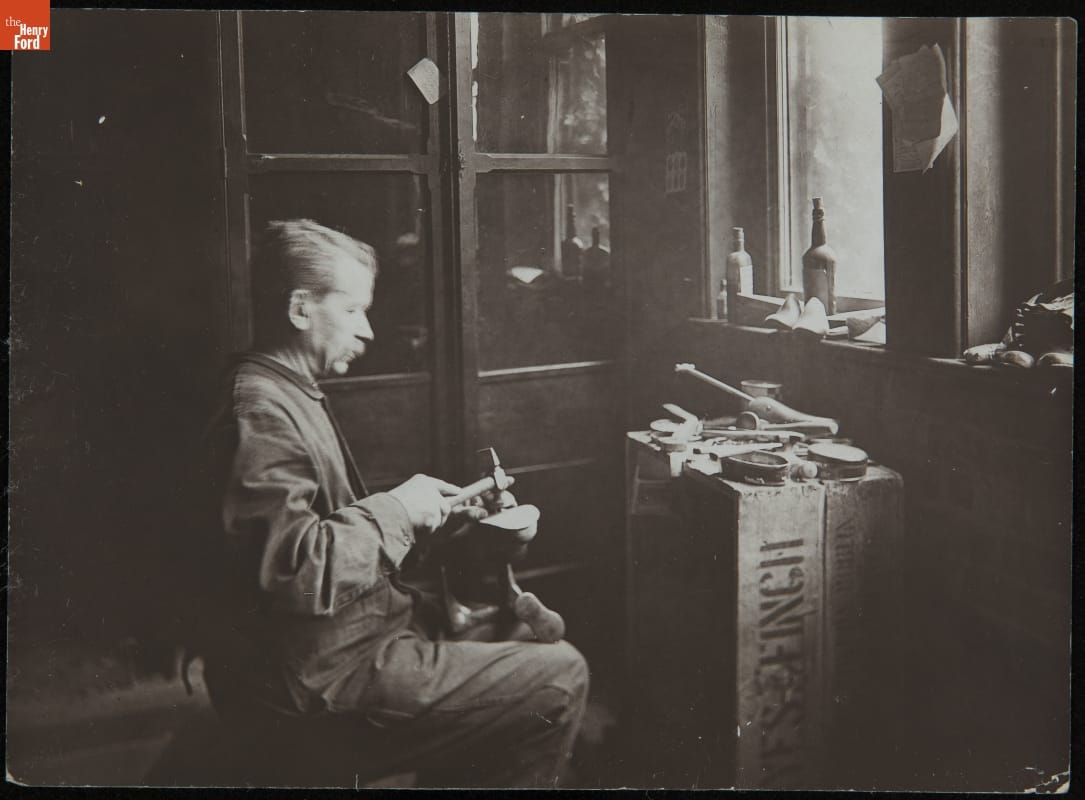
- 1915
- Collections - Artifact
The Shoemaker, Oughtrington Hall, 1914-1918
Percival Perry, chairman of Ford Motor Company Limited (Ford of Britain) during World War I, relayed the plight of Belgian refugees to Henry and Clara Ford. With their authority, Perry leased Oughtrington Hall to accommodate a select group of Belgian refugees. The renovated mansion on the 30-acre estate became a temporary respite where the displaced found food, shelter, education, and work.
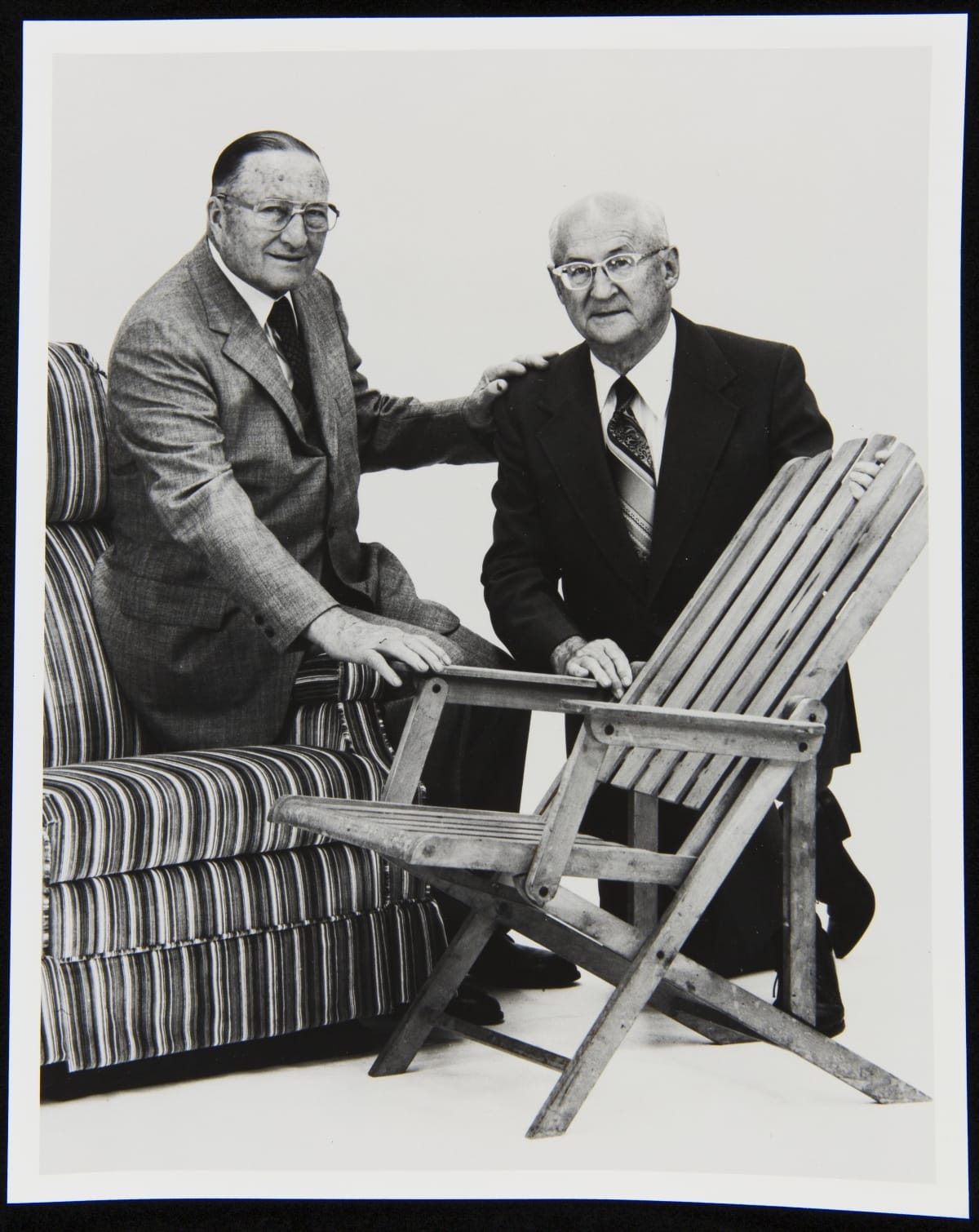
- Edward Knabusch and Edwin Shoemaker, circa 1970 - Cousins and business partners Edwin Shoemaker and Edward Knabusch established a successful furniture company through a combination of invention and marketing. The "La-Z-Boy" reclining chair technology they developed--and the creative ways they advertised it to customers--came to define the cousins' business.
- circa 1970
- Collections - Artifact
Edward Knabusch and Edwin Shoemaker, circa 1970
Cousins and business partners Edwin Shoemaker and Edward Knabusch established a successful furniture company through a combination of invention and marketing. The "La-Z-Boy" reclining chair technology they developed--and the creative ways they advertised it to customers--came to define the cousins' business.
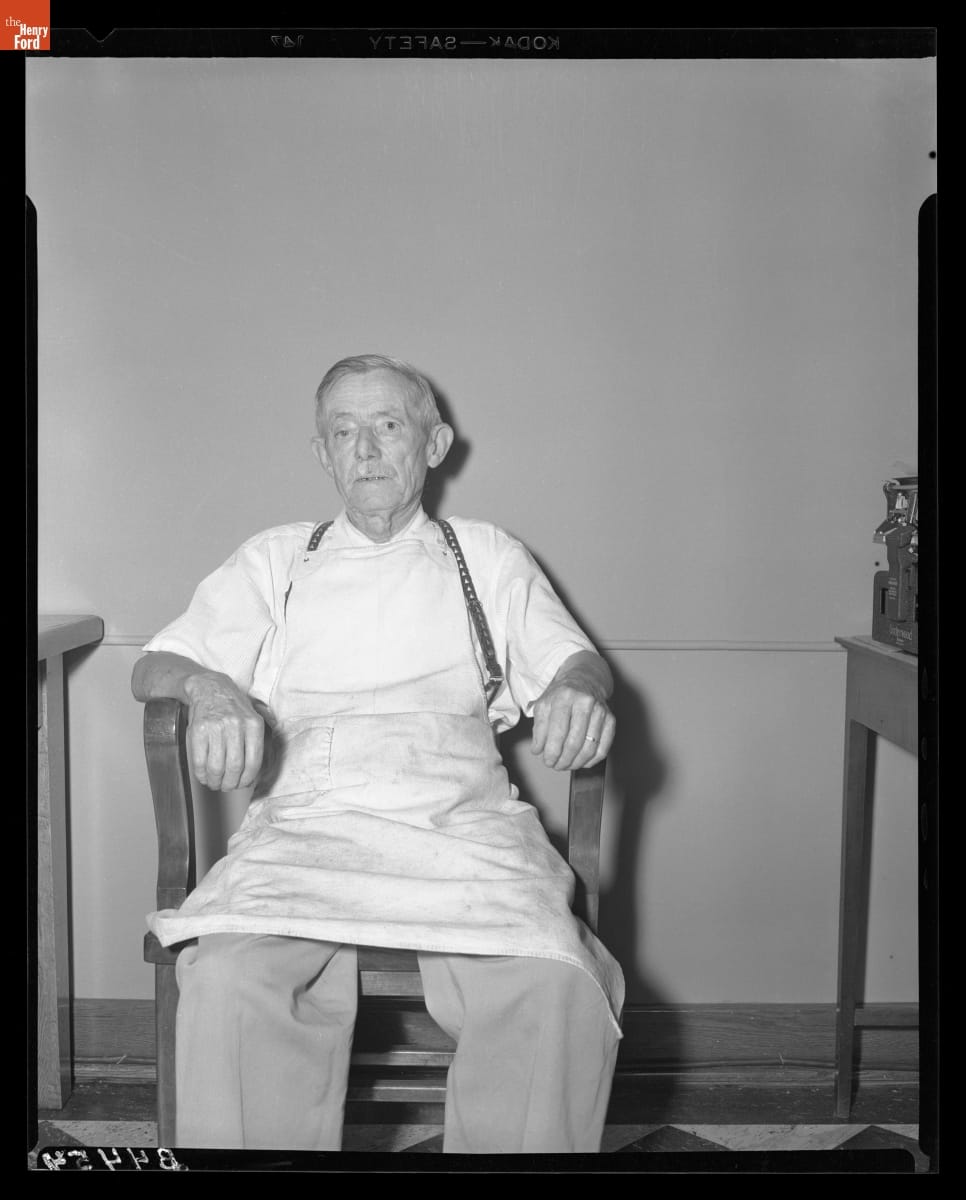
- Portrait of Frank Zarembski, Greenfield Village Shoemaker, 1951 -
- 1951
- Collections - Artifact
Portrait of Frank Zarembski, Greenfield Village Shoemaker, 1951
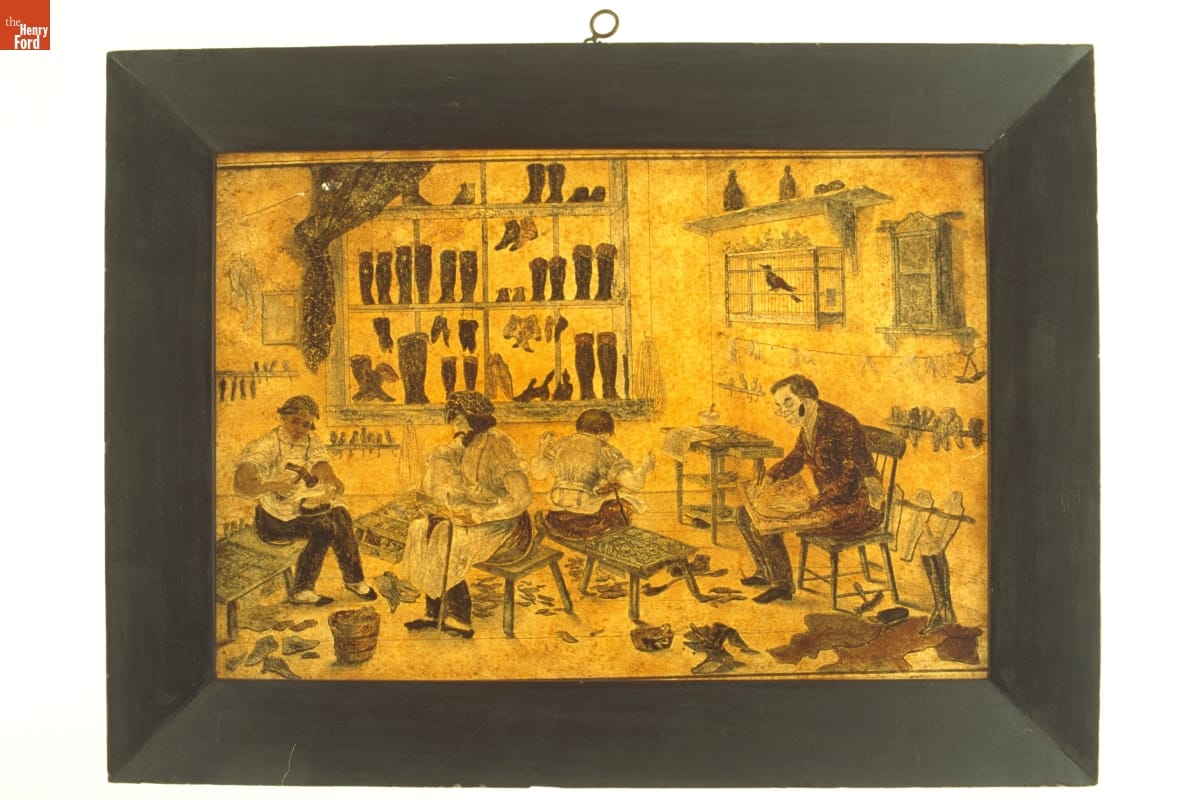
- Mezzotint Glass Colored Print, "The Shoemakers," circa 1855 -
- circa 1855
- Collections - Artifact
Mezzotint Glass Colored Print, "The Shoemakers," circa 1855
- Reynolds Brothers Shoe Last, 1870-1900 - Shoemakers in the late 19th and early 20th centuries molded pieces of leather around a wooden foot-like form, known as a last, to create a shoe. Some lasts had a removeable block, which made it easy to extract the wood form from the shoe. Others, like this one, had a hole in the end where a hook could be inserted to pull the last out.
- 1870-1900
- Collections - Artifact
Reynolds Brothers Shoe Last, 1870-1900
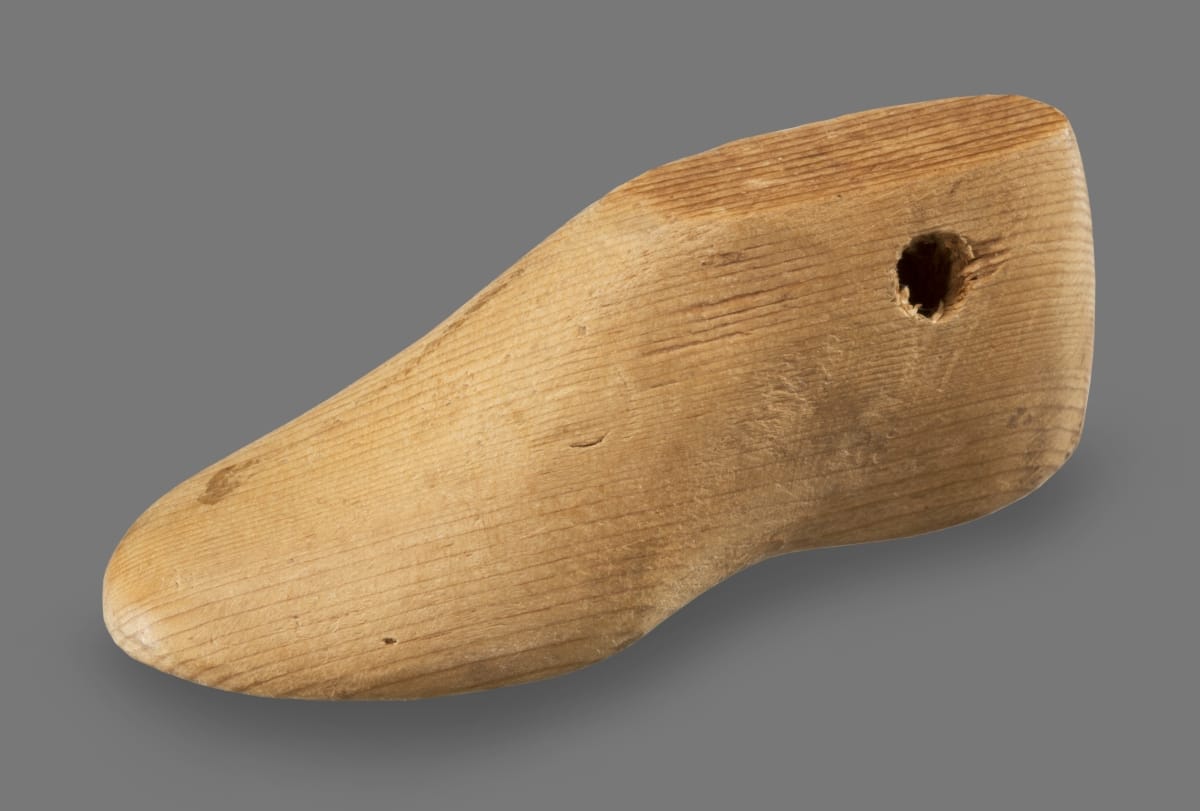
Shoemakers in the late 19th and early 20th centuries molded pieces of leather around a wooden foot-like form, known as a last, to create a shoe. Some lasts had a removeable block, which made it easy to extract the wood form from the shoe. Others, like this one, had a hole in the end where a hook could be inserted to pull the last out.
- Shoe Last - Shoemakers in the late 19th and early 20th centuries molded pieces of leather around a wooden foot-like form, known as a last, to create a shoe. Some lasts had a removeable block, which made it easy to extract the wood form from the shoe. Others had a hole in the end where a hook could be inserted to pull the last out. Some had both.
- Collections - Artifact
Shoe Last
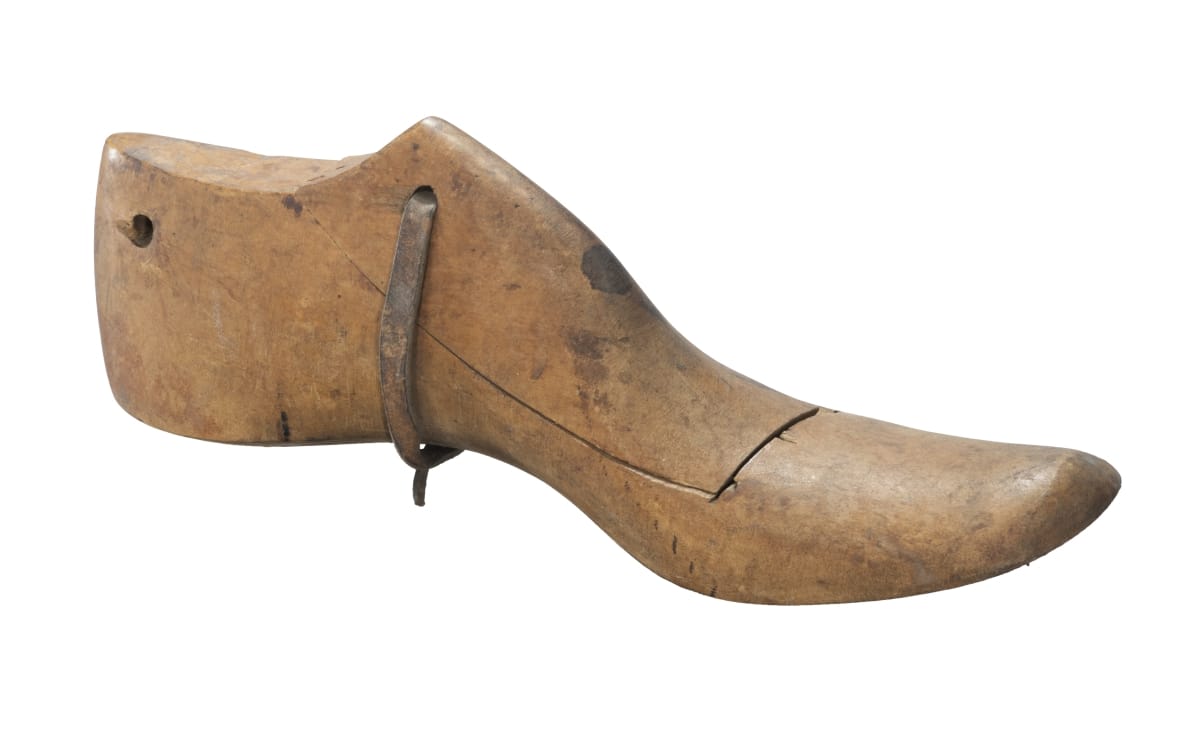
Shoemakers in the late 19th and early 20th centuries molded pieces of leather around a wooden foot-like form, known as a last, to create a shoe. Some lasts had a removeable block, which made it easy to extract the wood form from the shoe. Others had a hole in the end where a hook could be inserted to pull the last out. Some had both.