
Search
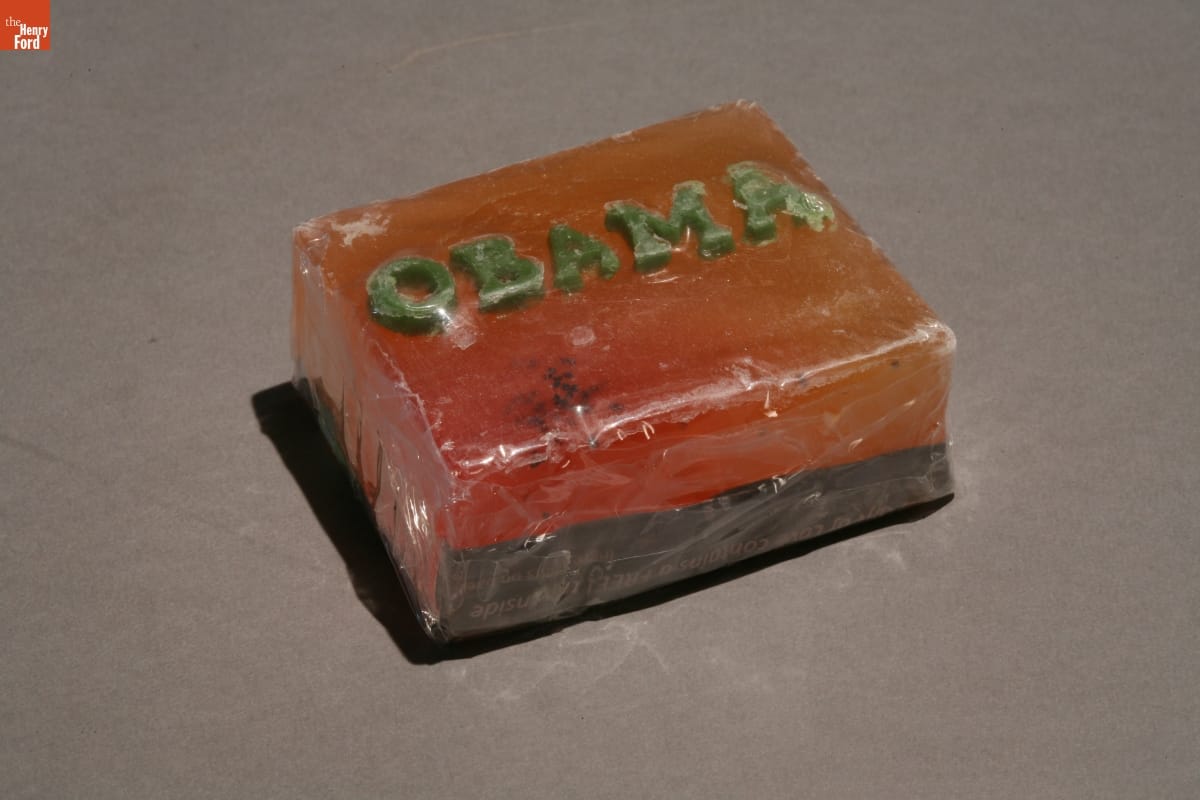
- "Obama" Soap, 2009 - On January 20th, 2009, more than one million Americans came to Washington, D.C., to witness the inauguration of Barack Obama, America's first African American president. Souvenir vendors sold a wide range of materials to commemorate this historic event. Along with more traditional mementos -- buttons, ribbons and mugs -- vendors offered some non-traditional items like this bar of soap.
- 2009
- Collections - Artifact
"Obama" Soap, 2009
On January 20th, 2009, more than one million Americans came to Washington, D.C., to witness the inauguration of Barack Obama, America's first African American president. Souvenir vendors sold a wide range of materials to commemorate this historic event. Along with more traditional mementos -- buttons, ribbons and mugs -- vendors offered some non-traditional items like this bar of soap.
- Soap Dish, 2000 - Starting in the early 1980s--and already established as an internationally recognized architect--Michael Graves began to pursue a parallel career as a product designer. Over the following three and a half decades he and his collaborators designed everything from humble household goods to limited edition luxury items for clients as diverse as Steuben, Alessi, Target, J. C. Penney, and Disney.

- 2000
- Collections - Artifact
Soap Dish, 2000
Starting in the early 1980s--and already established as an internationally recognized architect--Michael Graves began to pursue a parallel career as a product designer. Over the following three and a half decades he and his collaborators designed everything from humble household goods to limited edition luxury items for clients as diverse as Steuben, Alessi, Target, J. C. Penney, and Disney.
- Ivory Soap, 1943 -
- 1943
- Collections - Artifact
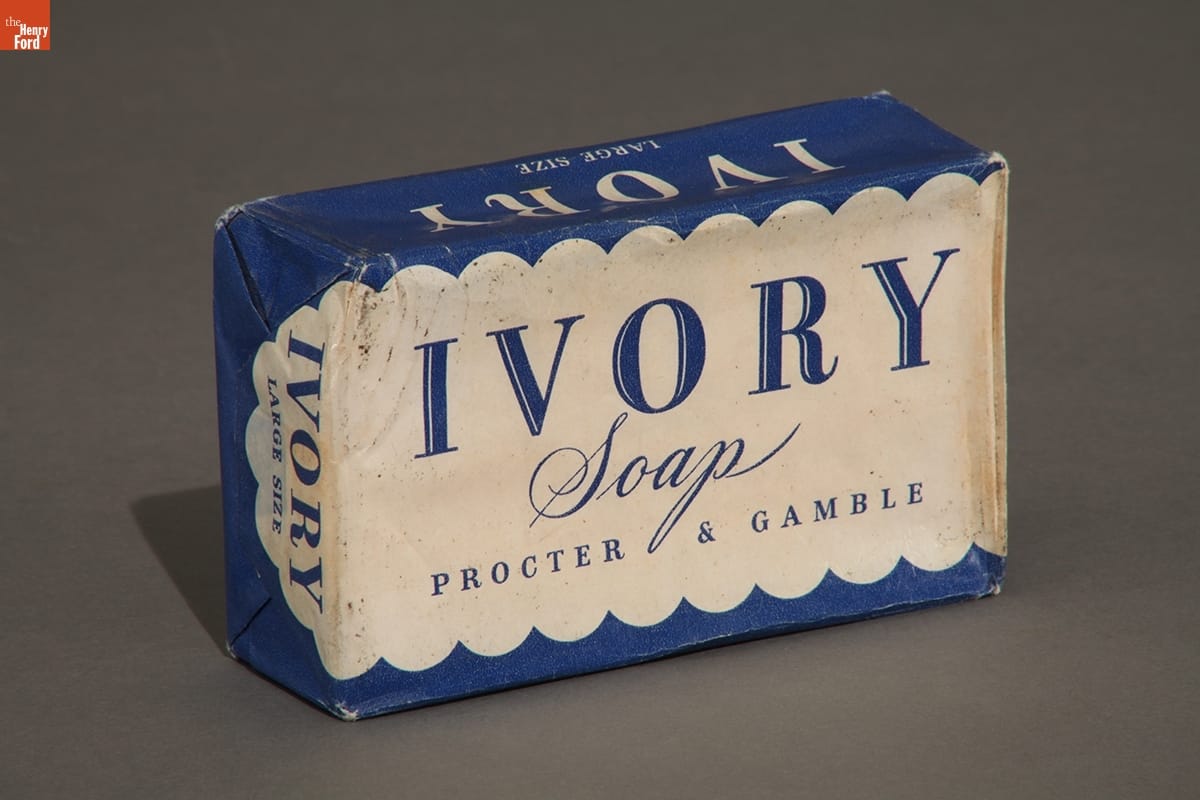
Ivory Soap, 1943
- Pullman Travel Soap - From its founding in 1867 until its demise a century later, the Pullman Company's name was synonymous with first-class travel on American railroads. Pullman not only built sleeping cars, it also operated them under contract with host railroads to ensure quality service. But Pullman's well-heeled passengers were the first to embrace air travel once it became a viable alternative.
- Collections - Artifact
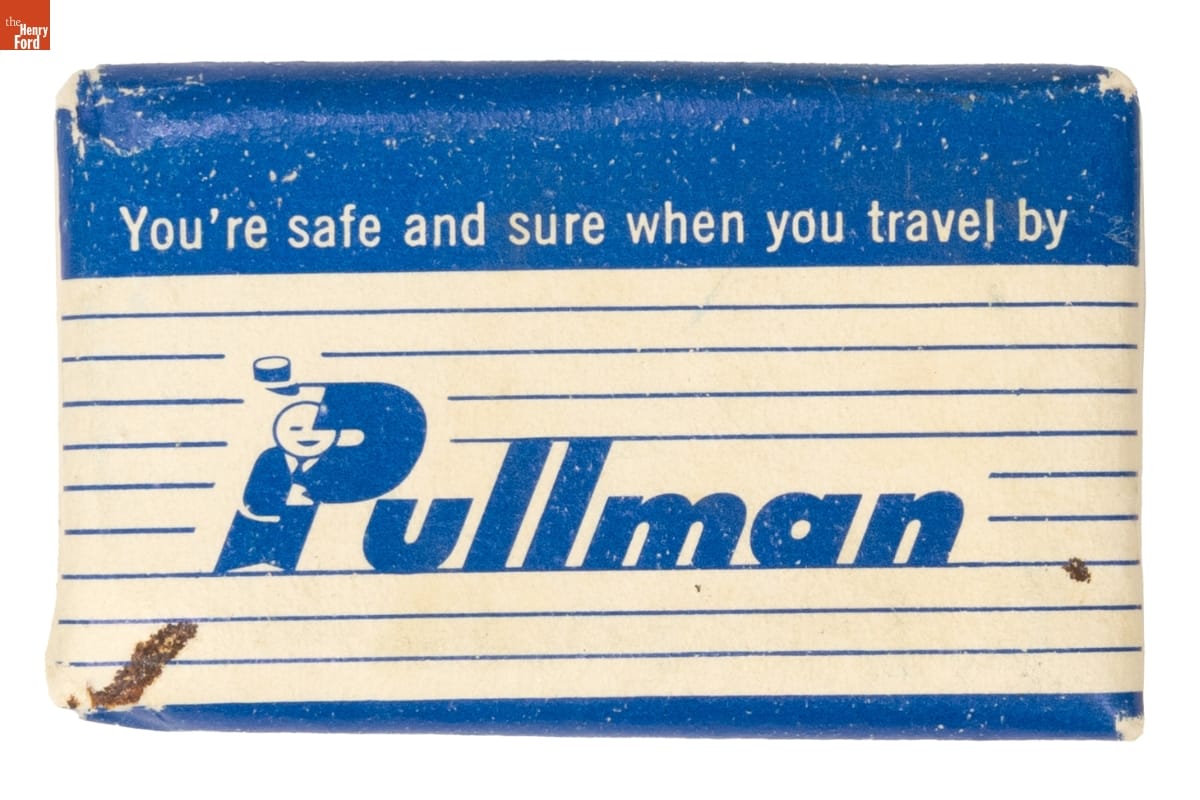
Pullman Travel Soap
From its founding in 1867 until its demise a century later, the Pullman Company's name was synonymous with first-class travel on American railroads. Pullman not only built sleeping cars, it also operated them under contract with host railroads to ensure quality service. But Pullman's well-heeled passengers were the first to embrace air travel once it became a viable alternative.
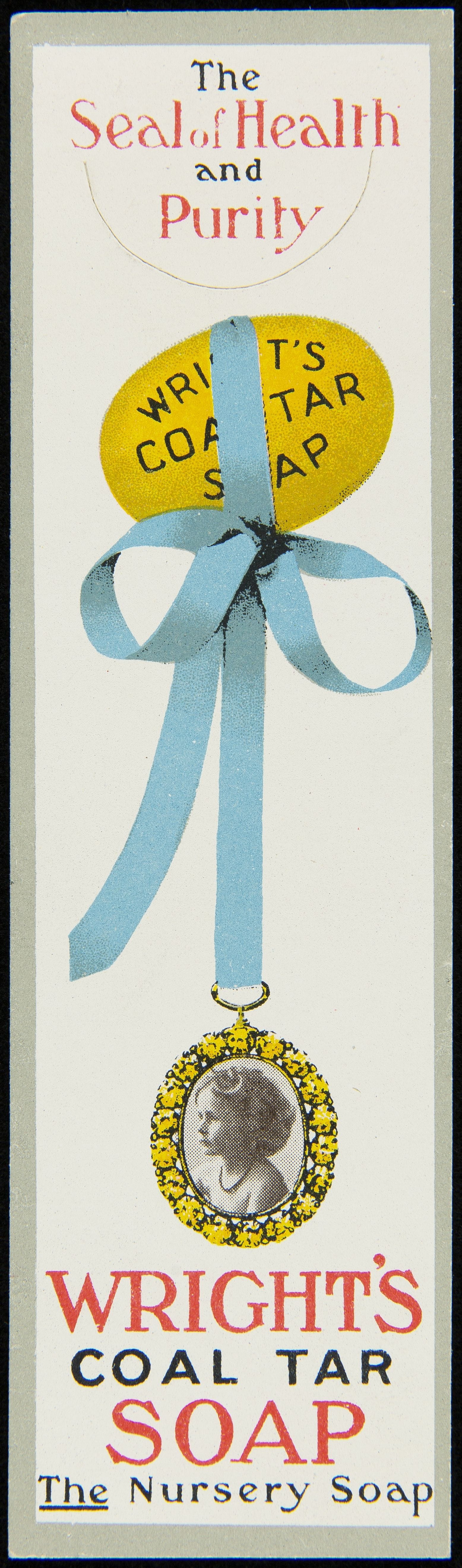
- Trade Card for Nursery Soap, Wright's Coal Tar Soap, circa 1900 - In the last third of the nineteenth century, an unprecedented variety of consumer goods flooded the American market. Some enterprising advertisers sought to distinguish their products from the competition, distributing trade cards that doubled as a bookmark. Americans enjoyed and often saved the popular little advertisements, which survive as historical records of consumerism in the United States.
- circa 1900
- Collections - Artifact
Trade Card for Nursery Soap, Wright's Coal Tar Soap, circa 1900
In the last third of the nineteenth century, an unprecedented variety of consumer goods flooded the American market. Some enterprising advertisers sought to distinguish their products from the competition, distributing trade cards that doubled as a bookmark. Americans enjoyed and often saved the popular little advertisements, which survive as historical records of consumerism in the United States.
- Automatic Soap Flakes with Big Jack Laundry Soap, circa 1950 -
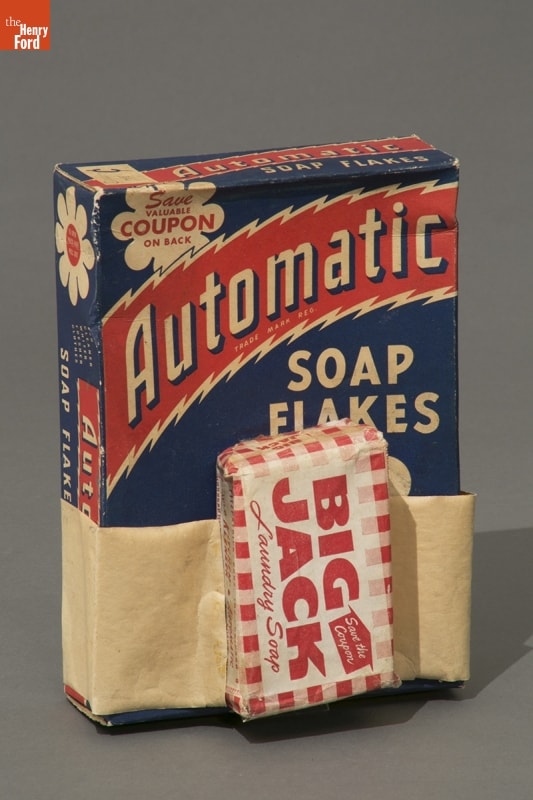
- circa 1950
- Collections - Artifact
Automatic Soap Flakes with Big Jack Laundry Soap, circa 1950
- Trade Card for Concordia Soap, Grand Rapids Soap Works, 1870-1885 - In the last third of the nineteenth century, an unprecedented variety of consumer goods and services flooded the American market. Advertisers, armed with new methods of color printing, bombarded potential customers with trade cards. Americans enjoyed and often saved the vibrant little advertisements found in product packages or distributed by local merchants. Many survive as historical records of commercialism in the United States.
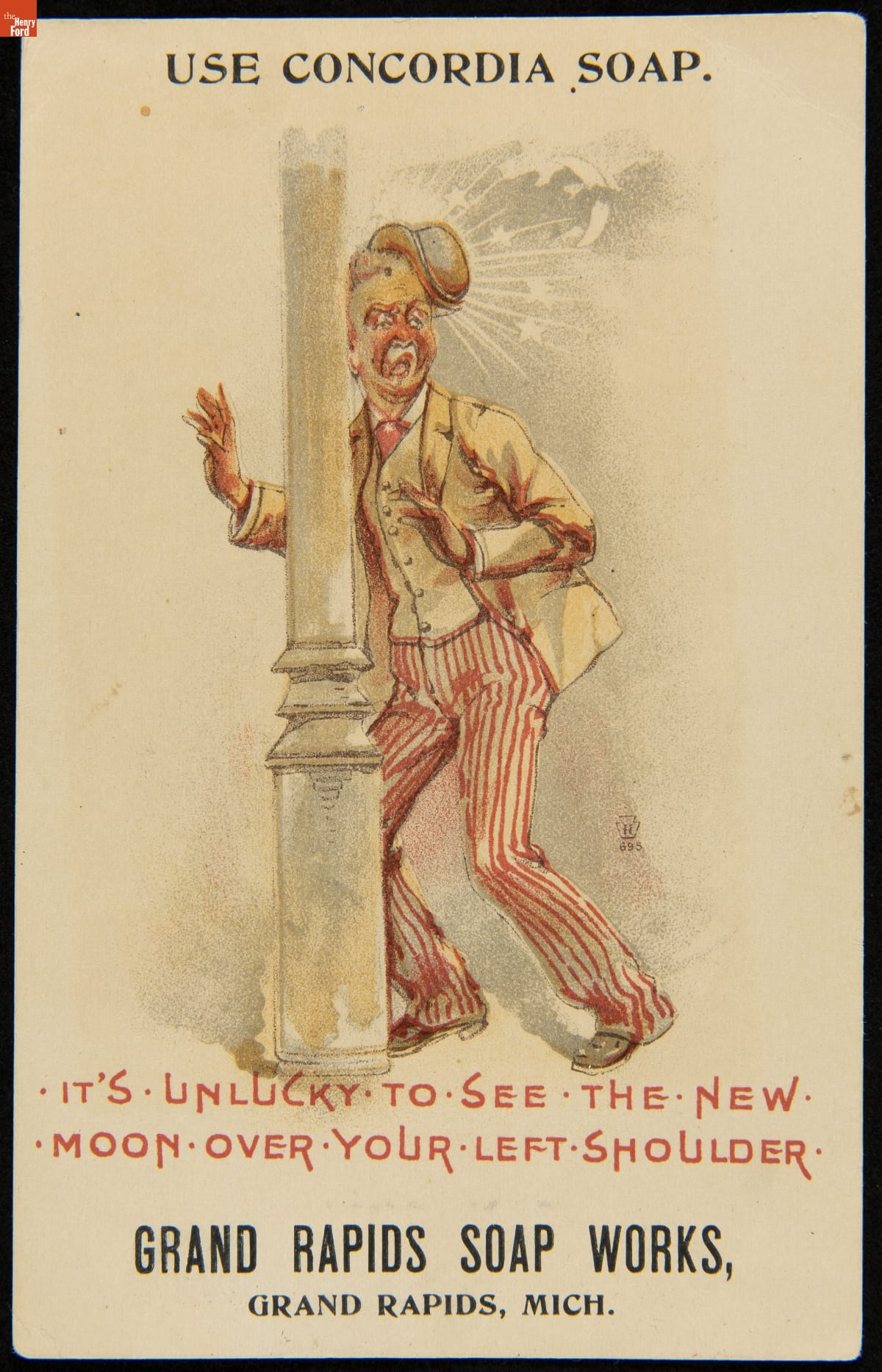
- 1870-1885
- Collections - Artifact
Trade Card for Concordia Soap, Grand Rapids Soap Works, 1870-1885
In the last third of the nineteenth century, an unprecedented variety of consumer goods and services flooded the American market. Advertisers, armed with new methods of color printing, bombarded potential customers with trade cards. Americans enjoyed and often saved the vibrant little advertisements found in product packages or distributed by local merchants. Many survive as historical records of commercialism in the United States.
- Trade Card for Queen Anne Soap, Detroit Soap Company, 1881-1900 - In the last third of the nineteenth century, an unprecedented variety of consumer goods and services flooded the American market. Advertisers, armed with new methods of color printing, bombarded potential customers with trade cards. Americans enjoyed and often saved the vibrant little advertisements found in product packages or distributed by local merchants. Many survive as historical records of commercialism in the United States.
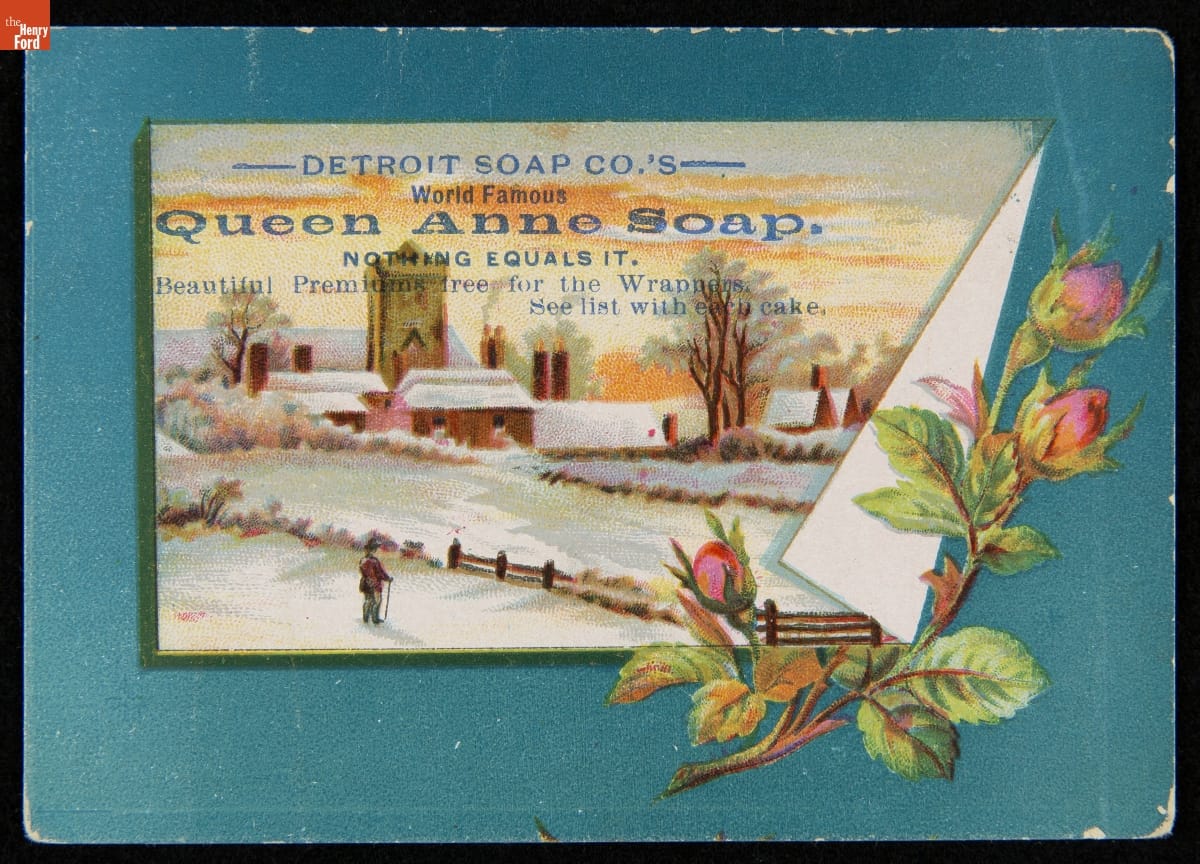
- 1881-1900
- Collections - Artifact
Trade Card for Queen Anne Soap, Detroit Soap Company, 1881-1900
In the last third of the nineteenth century, an unprecedented variety of consumer goods and services flooded the American market. Advertisers, armed with new methods of color printing, bombarded potential customers with trade cards. Americans enjoyed and often saved the vibrant little advertisements found in product packages or distributed by local merchants. Many survive as historical records of commercialism in the United States.
- Trade Card for Queen Anne Soap, Detroit Soap Company, 1881-1900 - In the last third of the nineteenth century, an unprecedented variety of consumer goods and services flooded the American market. Advertisers, armed with new methods of color printing, bombarded potential customers with trade cards. Americans enjoyed and often saved the vibrant little advertisements found in product packages or distributed by local merchants. Many survive as historical records of commercialism in the United States.
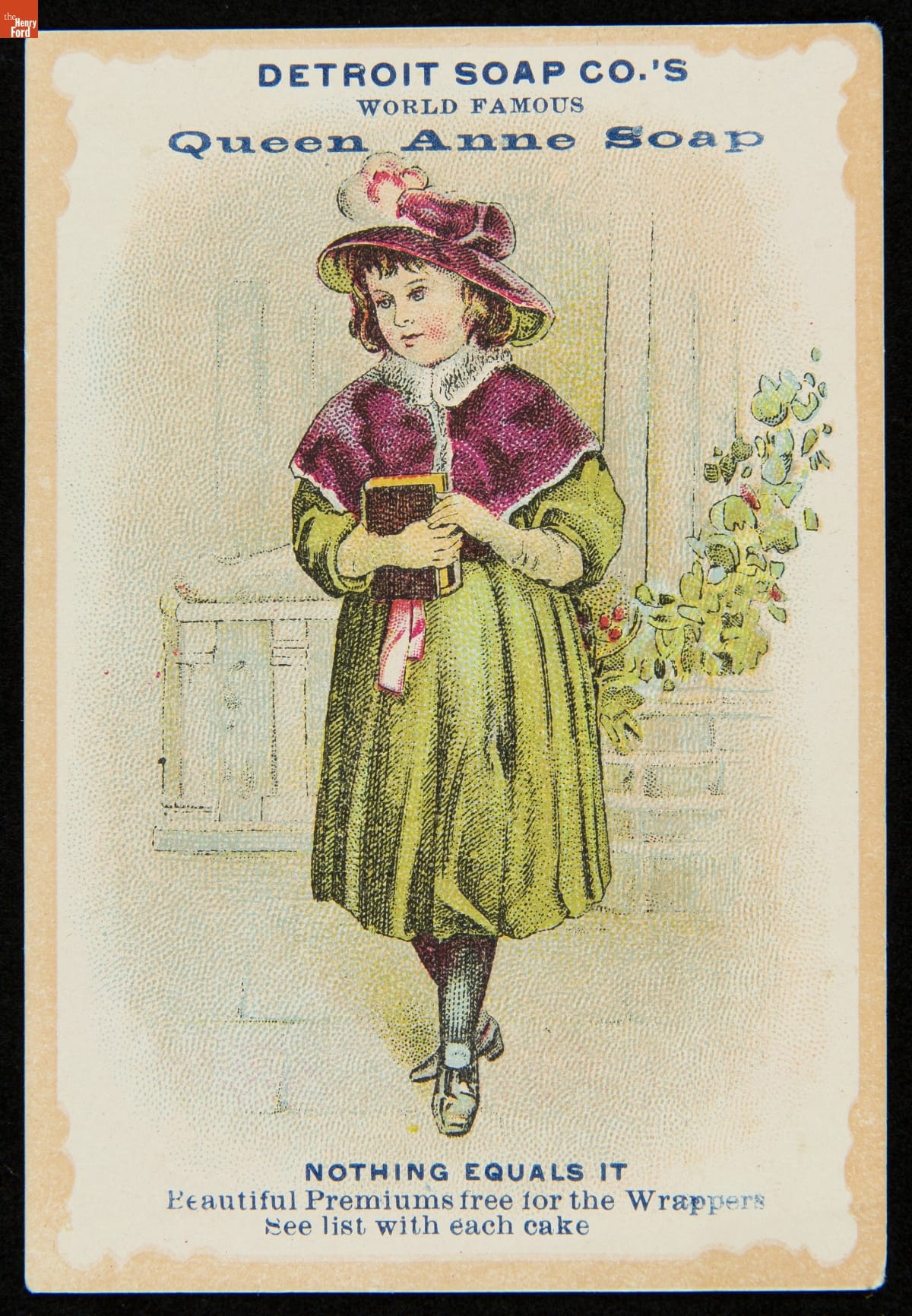
- 1881-1900
- Collections - Artifact
Trade Card for Queen Anne Soap, Detroit Soap Company, 1881-1900
In the last third of the nineteenth century, an unprecedented variety of consumer goods and services flooded the American market. Advertisers, armed with new methods of color printing, bombarded potential customers with trade cards. Americans enjoyed and often saved the vibrant little advertisements found in product packages or distributed by local merchants. Many survive as historical records of commercialism in the United States.
- Fairy Soap, 1915-1930 -
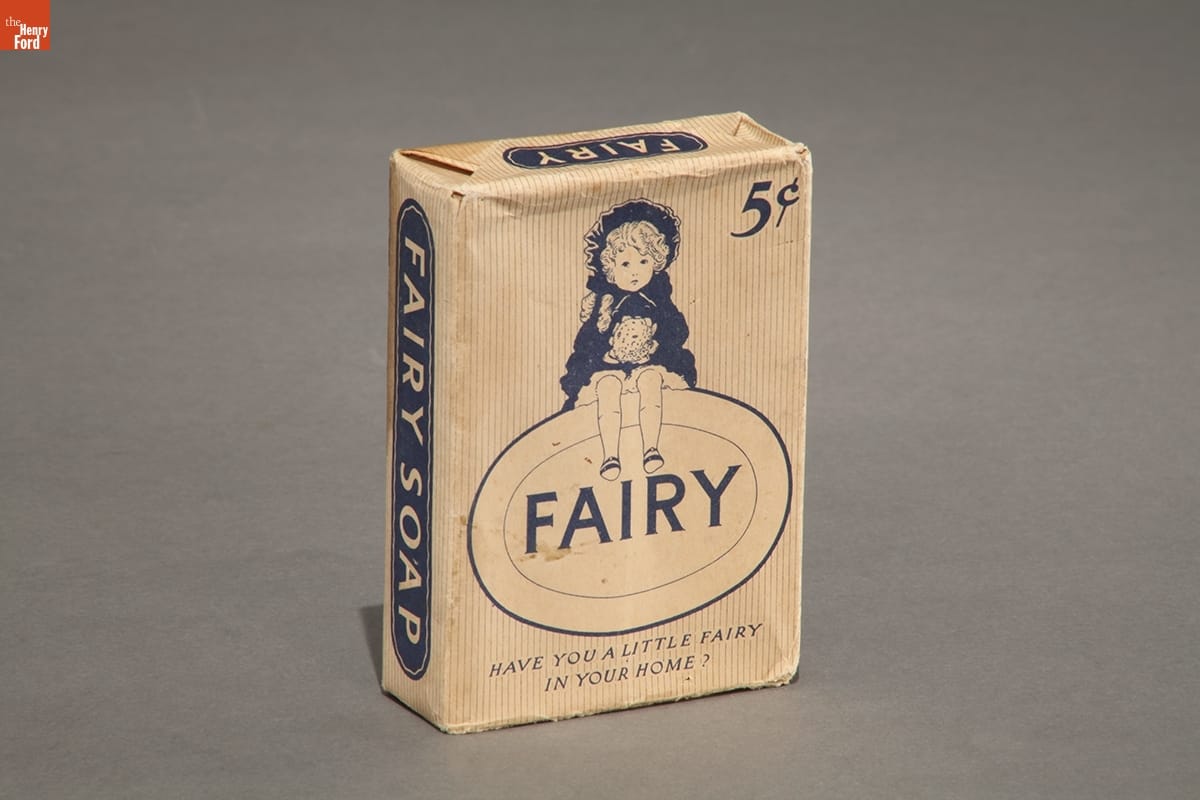
- 1915-1930
- Collections - Artifact
Fairy Soap, 1915-1930