
Search
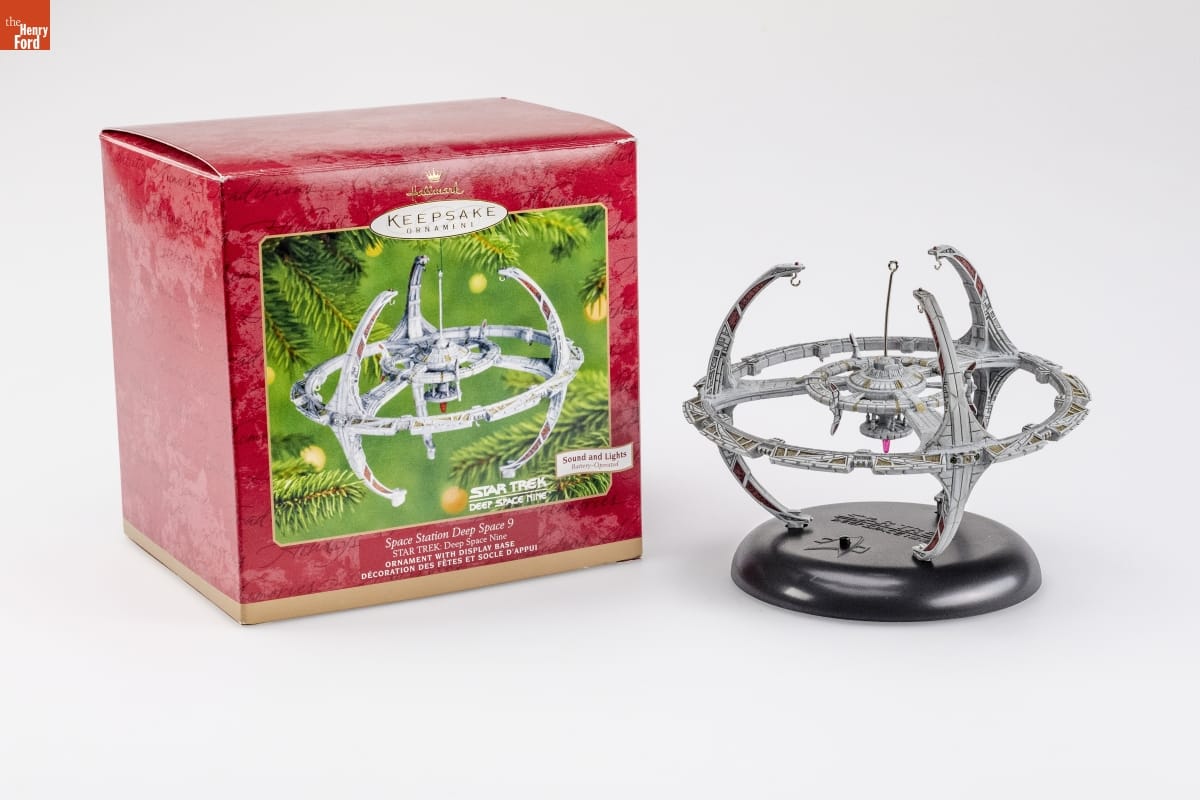
- Hallmark "STAR TREK Deep Space Nine: Space Station Deep Space 9" Christmas Ornament, 2001 - Already known for greeting cards, Hallmark introduced a line of Christmas ornaments in 1973. The company's annual release of an increasing array of ornaments revolutionized Christmas decorating, appealing to customers' interest in marking memories and milestones as well as expressing one's personality and unique tastes.
- 2001
- Collections - Artifact
Hallmark "STAR TREK Deep Space Nine: Space Station Deep Space 9" Christmas Ornament, 2001
Already known for greeting cards, Hallmark introduced a line of Christmas ornaments in 1973. The company's annual release of an increasing array of ornaments revolutionized Christmas decorating, appealing to customers' interest in marking memories and milestones as well as expressing one's personality and unique tastes.
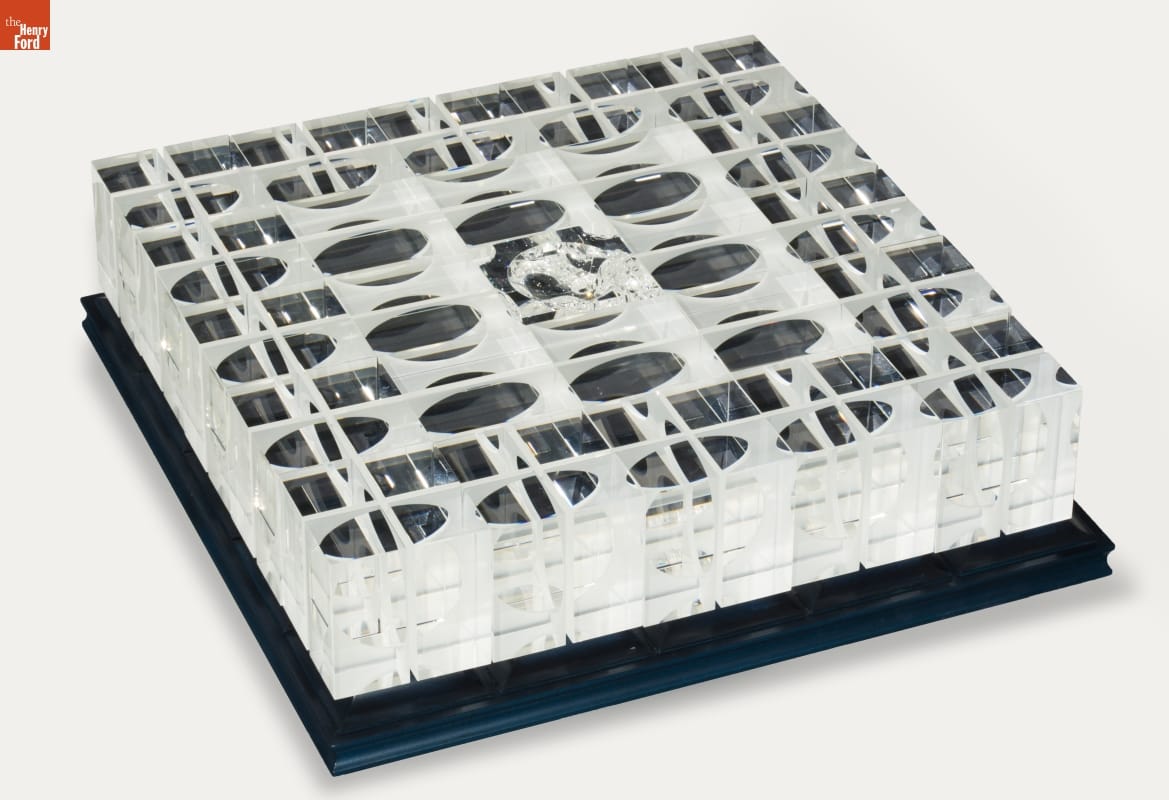
- "Interworld Space" by Eric Hilton, 1999 - Scottish artist Eric Hilton's passion is in the creative process -- the molding, etching, cutting, sandblasting and the polishing of each work. He describes his process like painting -- he gradually builds and rebuilds each piece as he constructs or designs it. He relates that objects like "Interworld Space" are literally "a place to get lost in" much like a maze.
- 1999
- Collections - Artifact
"Interworld Space" by Eric Hilton, 1999
Scottish artist Eric Hilton's passion is in the creative process -- the molding, etching, cutting, sandblasting and the polishing of each work. He describes his process like painting -- he gradually builds and rebuilds each piece as he constructs or designs it. He relates that objects like "Interworld Space" are literally "a place to get lost in" much like a maze.
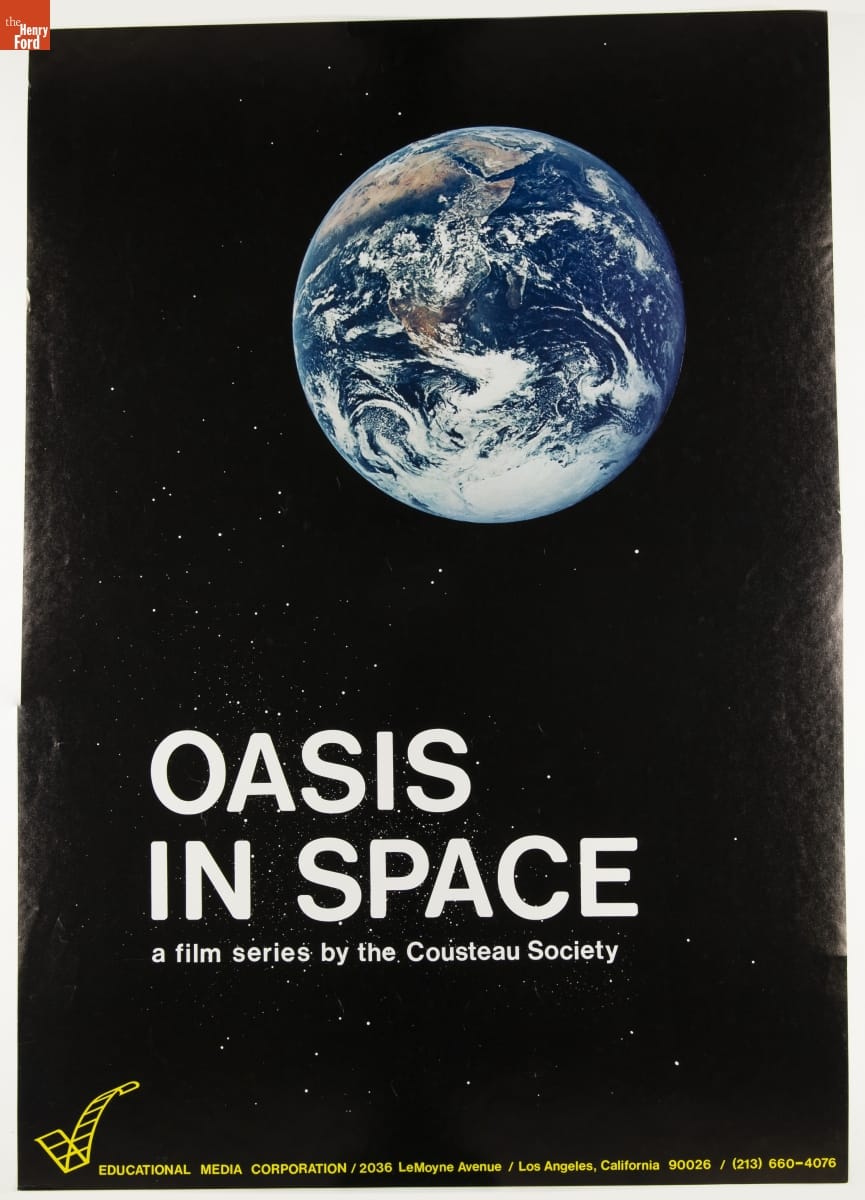
- Poster, "Oasis in Space," circa 1975 - Lillian Schwartz is a pioneer of computer-generated art. From 1969-2002, she was a "resident visitor" at Bell Laboratories, producing groundbreaking films, videos, and multimedia works. The Schwartz Collection spans Lillian's childhood into her late career, documenting an expansive mindset, mastery over traditional and experimental mediums alike--and above all--an ability to create inspirational connections between science, art, and technology.
- circa 1975
- Collections - Artifact
Poster, "Oasis in Space," circa 1975
Lillian Schwartz is a pioneer of computer-generated art. From 1969-2002, she was a "resident visitor" at Bell Laboratories, producing groundbreaking films, videos, and multimedia works. The Schwartz Collection spans Lillian's childhood into her late career, documenting an expansive mindset, mastery over traditional and experimental mediums alike--and above all--an ability to create inspirational connections between science, art, and technology.
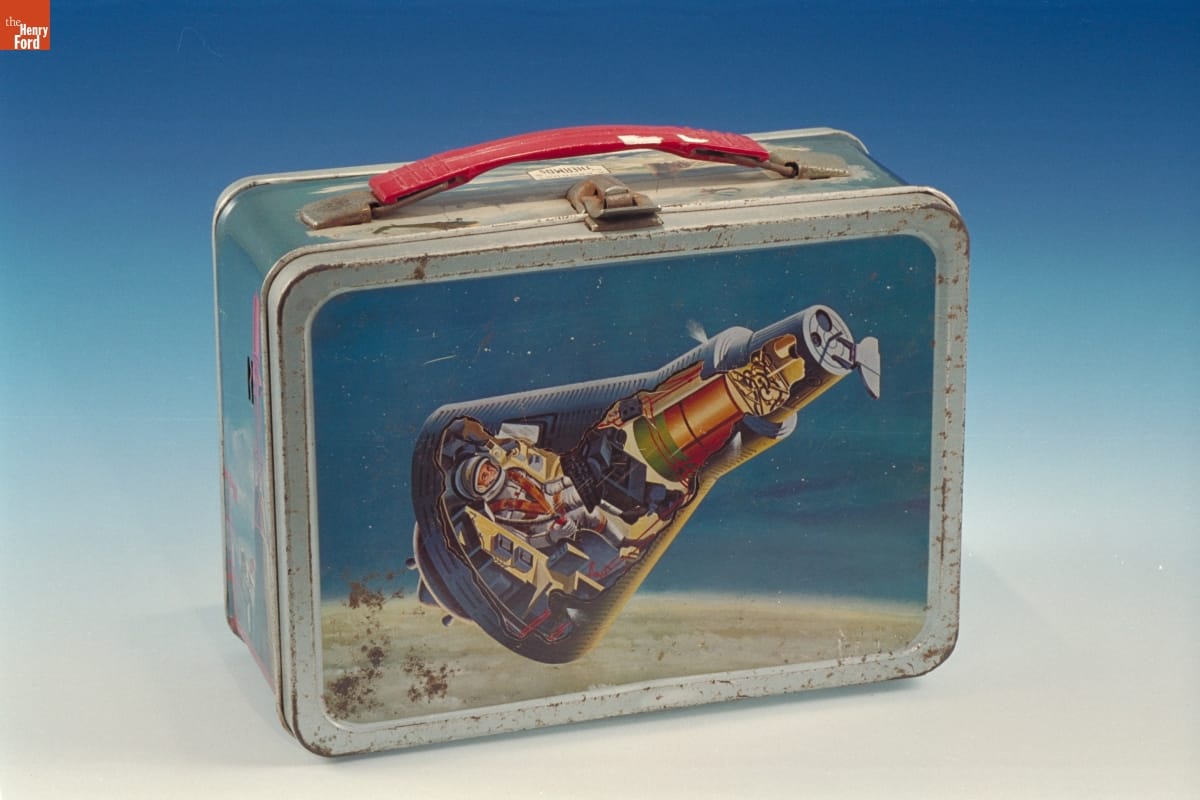
- Lunchbox with Space Theme, 1963 - The first pictorial lunchboxes, introduced in 1950, featured Hopalong Cassidy. Since then, generations of children have proudly sported pictorial images of their favorite interests on the sides of their school lunchboxes. The 1960s were an age of space exploration, beginning with the Soviet Union's launch of Sputnik in 1957 through the landing of Apollo 11 on the moon in 1969.
- 1963
- Collections - Artifact
Lunchbox with Space Theme, 1963
The first pictorial lunchboxes, introduced in 1950, featured Hopalong Cassidy. Since then, generations of children have proudly sported pictorial images of their favorite interests on the sides of their school lunchboxes. The 1960s were an age of space exploration, beginning with the Soviet Union's launch of Sputnik in 1957 through the landing of Apollo 11 on the moon in 1969.
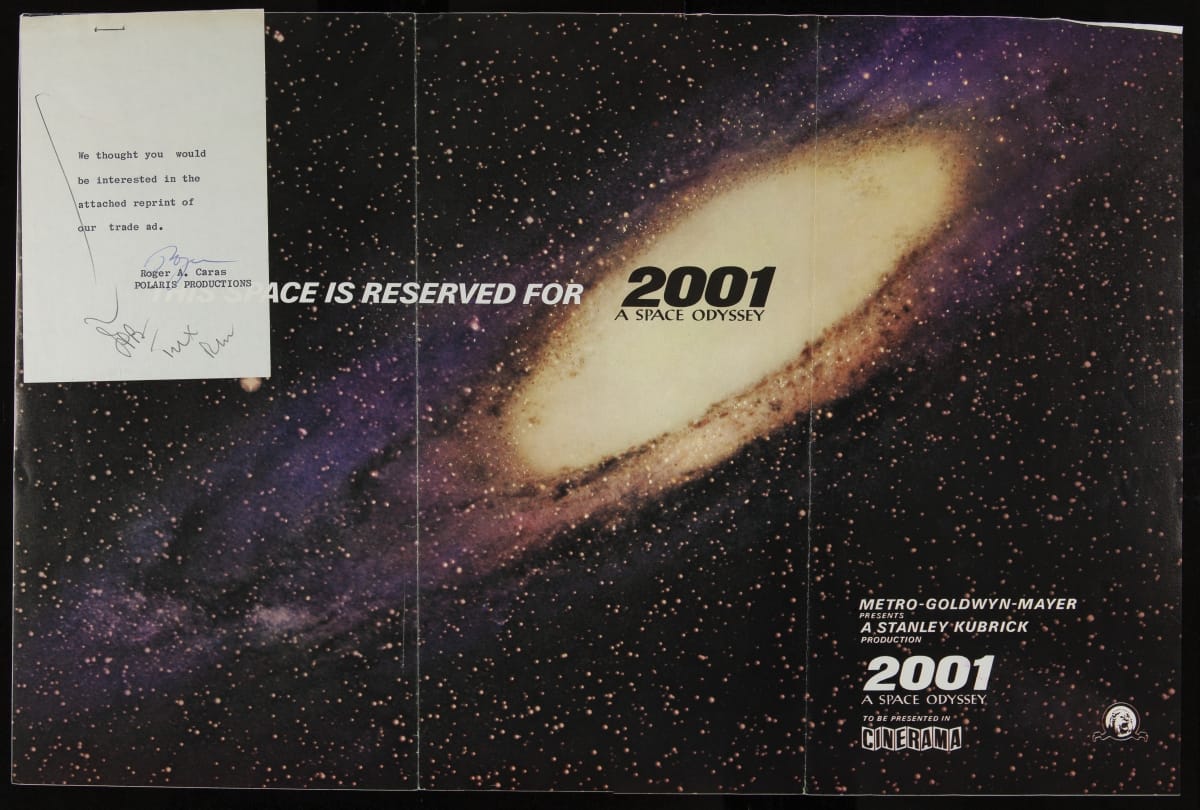
- This Space is Reserved for 2001: A Space Odyssey, September 1965 -
- September 01, 1965
- Collections - Artifact
This Space is Reserved for 2001: A Space Odyssey, September 1965
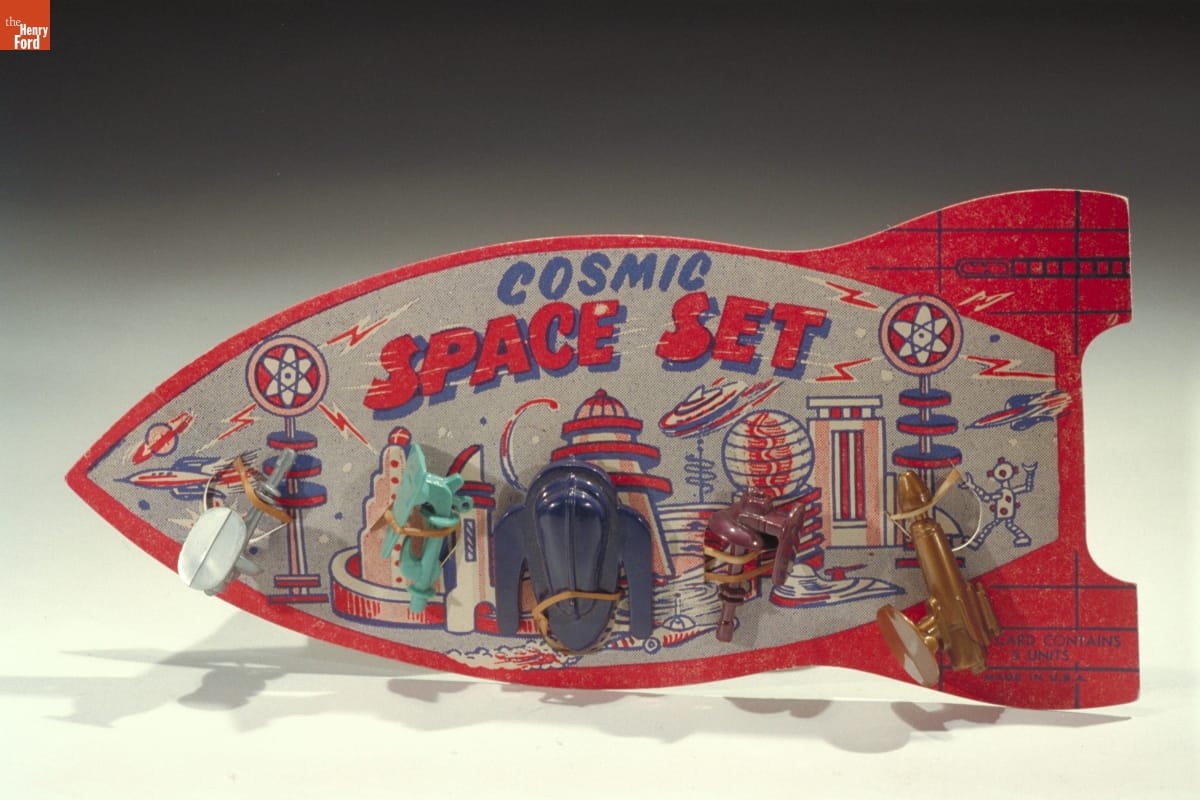
- Cosmic Space Set, 1950-1955 - Science fiction movies, radio shows and comics let children dream of rocketing to outer space before it was even possible. Toy companies tapped into this fantasy and produce a number of space-related playthings. This inexpensive play set from the early 1950s includes a spaceship and scientific instruments and weapons.
- 1950-1955
- Collections - Artifact
Cosmic Space Set, 1950-1955
Science fiction movies, radio shows and comics let children dream of rocketing to outer space before it was even possible. Toy companies tapped into this fantasy and produce a number of space-related playthings. This inexpensive play set from the early 1950s includes a spaceship and scientific instruments and weapons.
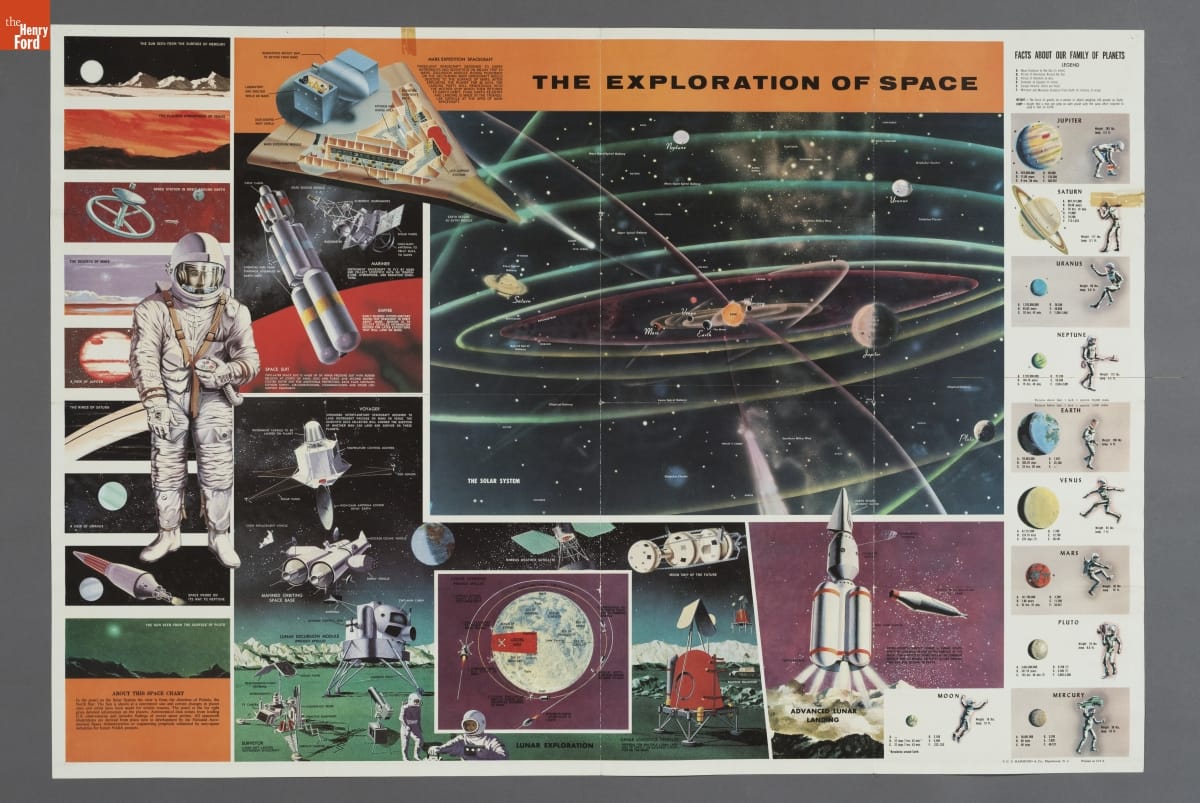
- The Exploration of Space, 1965 - Humans have long been interested in space -- observing the night skies and pondering the movement of the Sun, Moon, and stars. Many Americans viewed outer space through a fantastical and futuristic lens until the launch of a Soviet satellite in 1957. This space map from the early years of the Space Race depicts a more realistic view of the solar system and space exploration.
- 1965
- Collections - Artifact
The Exploration of Space, 1965
Humans have long been interested in space -- observing the night skies and pondering the movement of the Sun, Moon, and stars. Many Americans viewed outer space through a fantastical and futuristic lens until the launch of a Soviet satellite in 1957. This space map from the early years of the Space Race depicts a more realistic view of the solar system and space exploration.
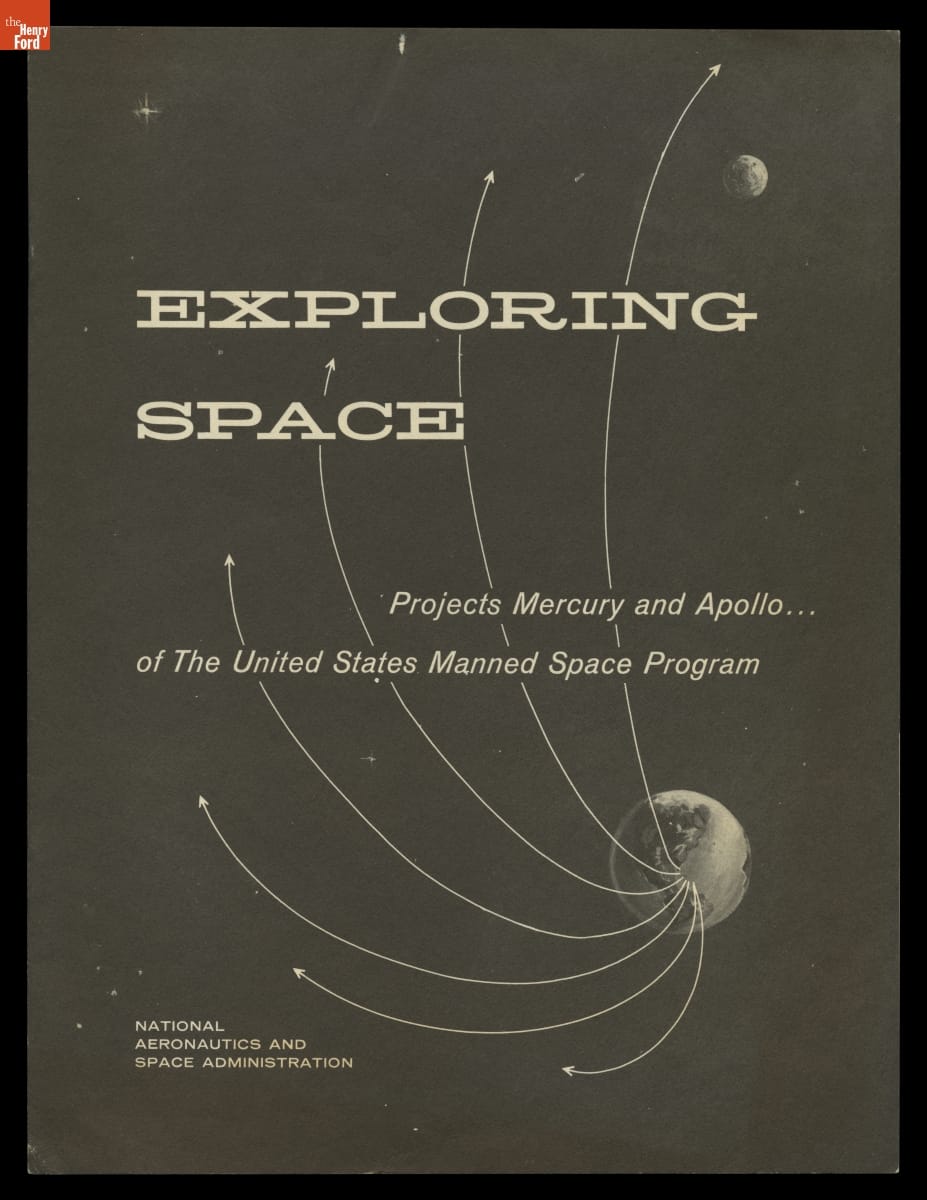
- Brochure, "Exploring Space: Projects Mercury and Apollo of the United States Manned Space Program," 1961 -
- 1961
- Collections - Artifact
Brochure, "Exploring Space: Projects Mercury and Apollo of the United States Manned Space Program," 1961
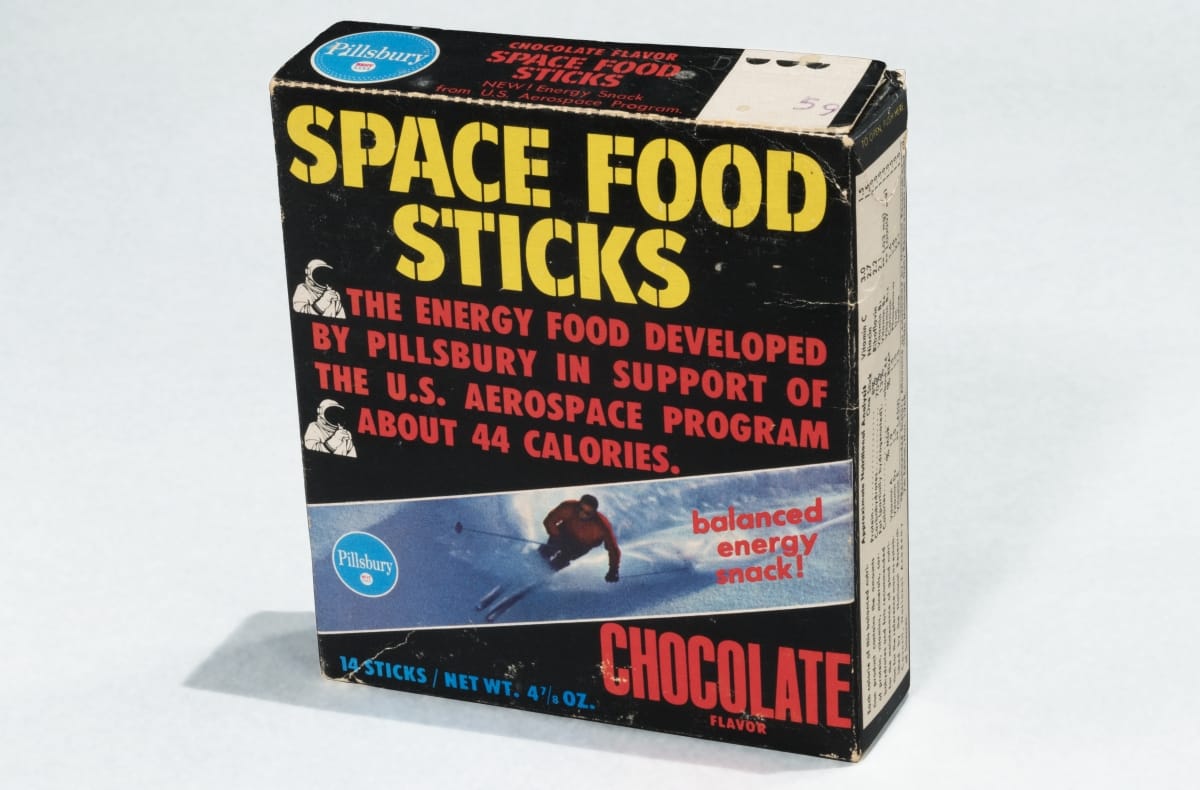
- Pillsbury Space Food Sticks, 1969-1971 - In the 1960s, NASA contracted with Pillsbury to develop a high-energy snack for American astronauts. The food would need to fit through the small, airtight opening in the astronauts' helmets. A team at Pillsbury, led by Howard Baumann, developed a rod-shaped energy bar. Capitalizing on the popularity of the Apollo space mission, Pillsbury marketed and sold Space Food Sticks to the public.
- 1969-1971
- Collections - Artifact
Pillsbury Space Food Sticks, 1969-1971
In the 1960s, NASA contracted with Pillsbury to develop a high-energy snack for American astronauts. The food would need to fit through the small, airtight opening in the astronauts' helmets. A team at Pillsbury, led by Howard Baumann, developed a rod-shaped energy bar. Capitalizing on the popularity of the Apollo space mission, Pillsbury marketed and sold Space Food Sticks to the public.
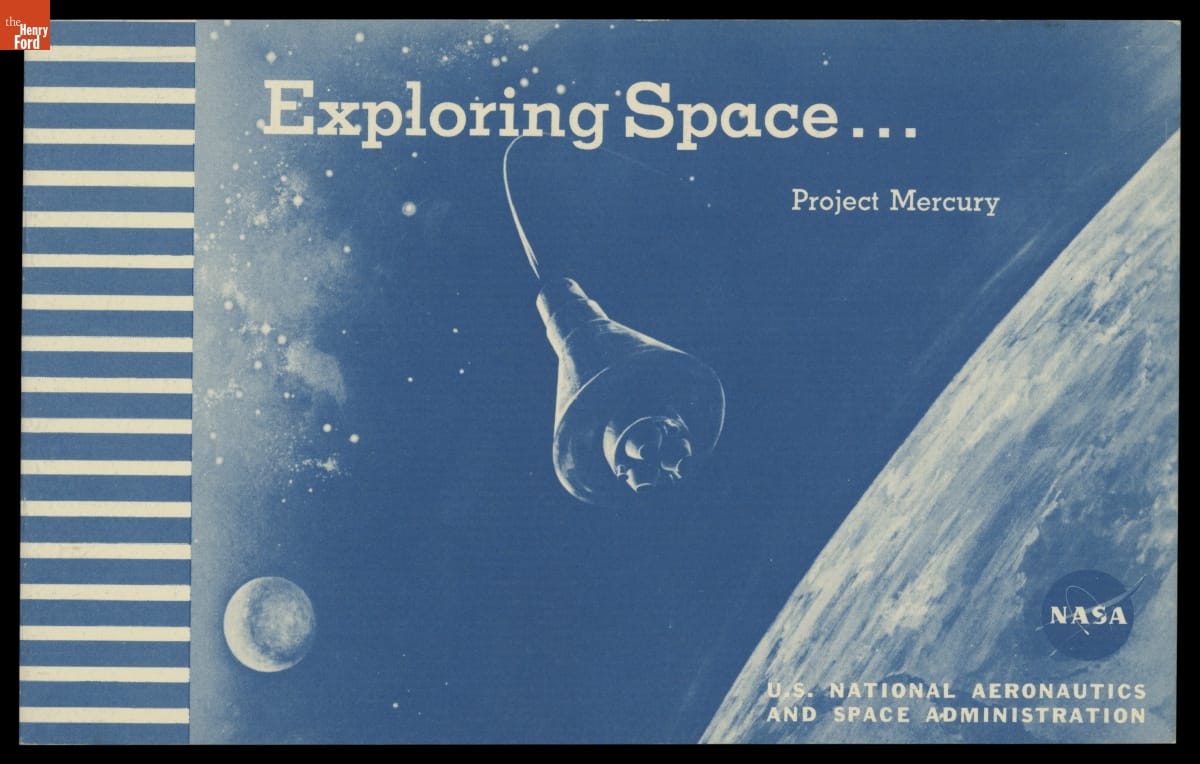
- Brochure, "Exploring Space... Project Mercury," 1961 - The National Aeronautics and Space Administration developed Project Mercury in 1958 to send a manned spacecraft into orbit. This brochure, published in early 1961, explained NASA's progress toward achieving that goal. Later, in May 1961, NASA would launch its first manned capsule. And in 1962, John Glenn orbited the Earth. Project Mercury ended in 1963 after six successful crewed missions.
- 1961
- Collections - Artifact
Brochure, "Exploring Space... Project Mercury," 1961
The National Aeronautics and Space Administration developed Project Mercury in 1958 to send a manned spacecraft into orbit. This brochure, published in early 1961, explained NASA's progress toward achieving that goal. Later, in May 1961, NASA would launch its first manned capsule. And in 1962, John Glenn orbited the Earth. Project Mercury ended in 1963 after six successful crewed missions.