
Search
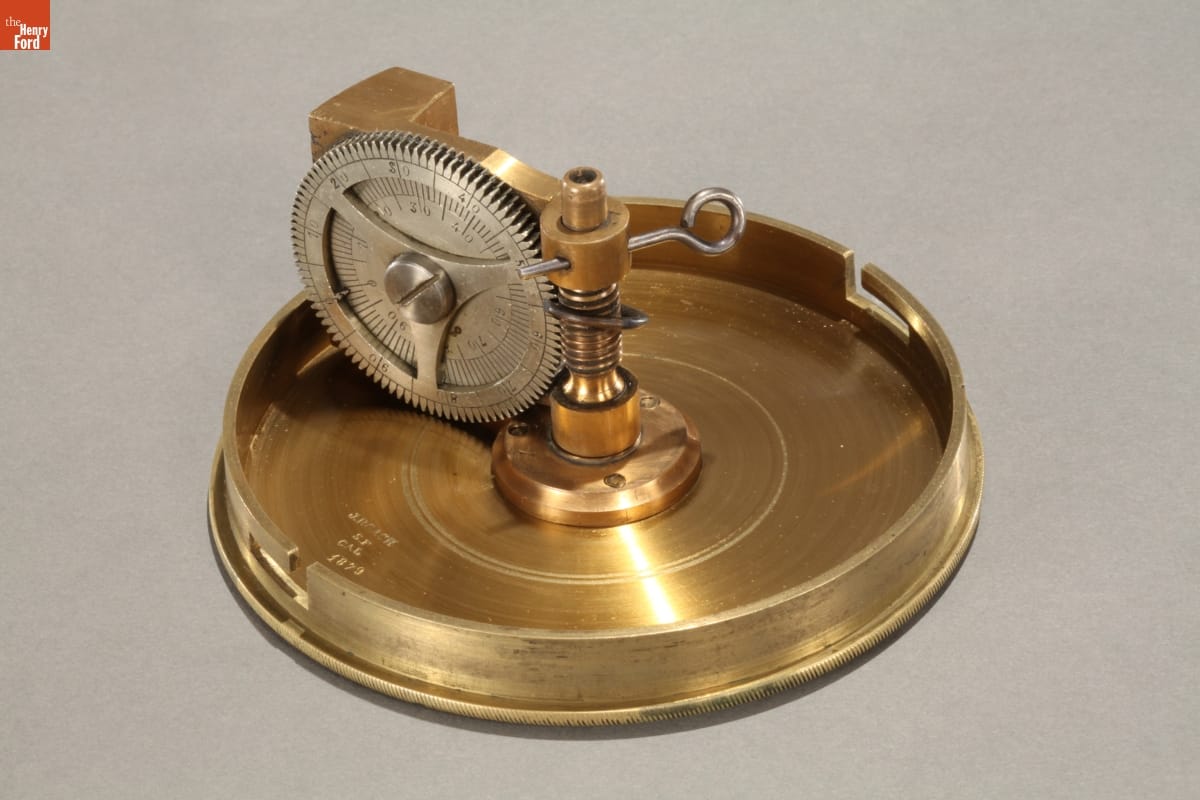
- Stagecoach Odometer, 1879 - This stagecoach odometer, built by San Francisco inventor John Roach in 1879, counted wheel revolutions to register the distance a coach traveled. Stagecoach lines used the information to calculate speed and how much to pay operators. The odometer was secured on the wheel hub and protected by a leather cover.
- 1879
- Collections - Artifact
Stagecoach Odometer, 1879
This stagecoach odometer, built by San Francisco inventor John Roach in 1879, counted wheel revolutions to register the distance a coach traveled. Stagecoach lines used the information to calculate speed and how much to pay operators. The odometer was secured on the wheel hub and protected by a leather cover.
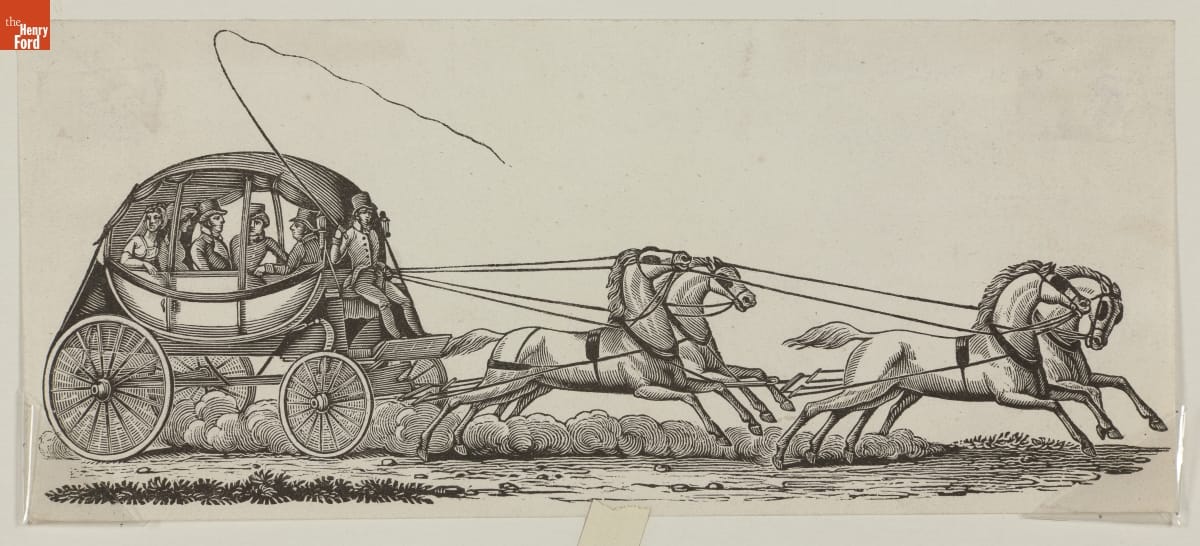
- Engraving, Stagecoach, 1825-1830 - Before railroads, long-distance travelers often rode in public coaches. They would jostle along rough country roads with mail, freight, and other passengers "in stages," stopping every few hours to change horses. This image depicting a loaded stagecoach in transit was drawn and engraved by Philadelphia artist Alexander Robb.
- 1825-1830
- Collections - Artifact
Engraving, Stagecoach, 1825-1830
Before railroads, long-distance travelers often rode in public coaches. They would jostle along rough country roads with mail, freight, and other passengers "in stages," stopping every few hours to change horses. This image depicting a loaded stagecoach in transit was drawn and engraved by Philadelphia artist Alexander Robb.
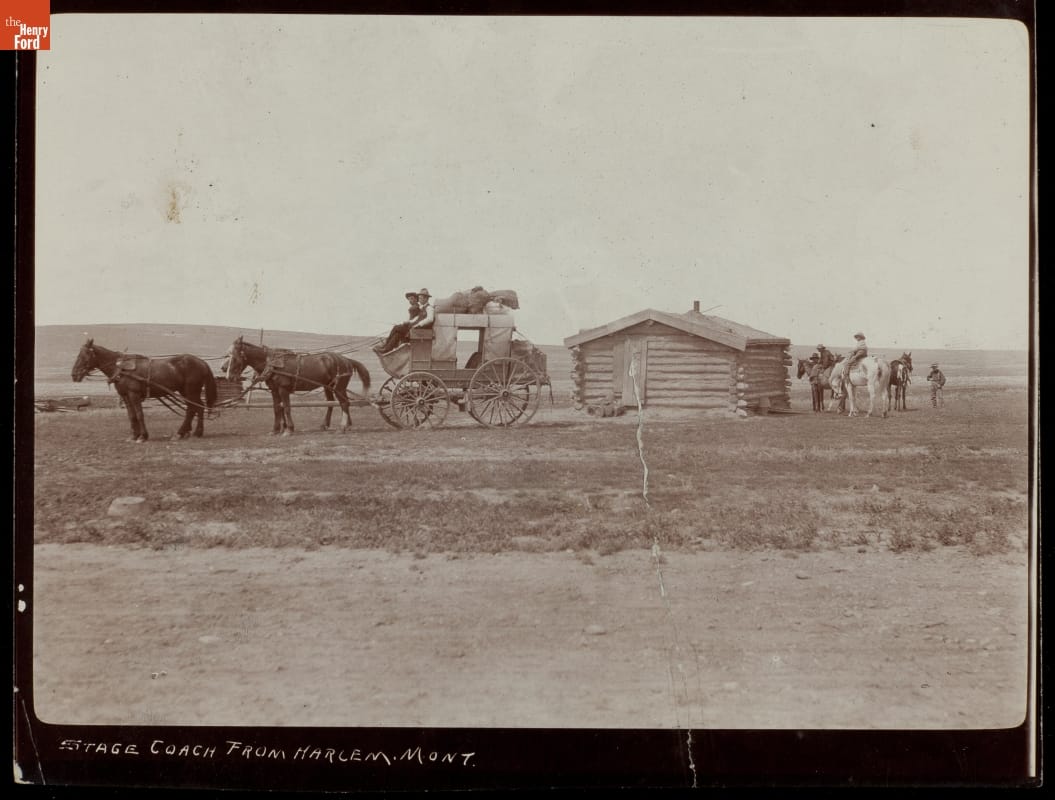
- Stagecoach, Harlem, Montana, circa 1900 - Discomfort, loneliness, and the ever-present danger of being robbed while jostling through the open West on a stagecoach can be easily imagined in this Detroit Publishing Company photograph of an outpost in northern Montana. But before railroads spanned the continent, many relied on stage lines for mail delivery and long-distance transportation.
- circa 1900
- Collections - Artifact
Stagecoach, Harlem, Montana, circa 1900
Discomfort, loneliness, and the ever-present danger of being robbed while jostling through the open West on a stagecoach can be easily imagined in this Detroit Publishing Company photograph of an outpost in northern Montana. But before railroads spanned the continent, many relied on stage lines for mail delivery and long-distance transportation.
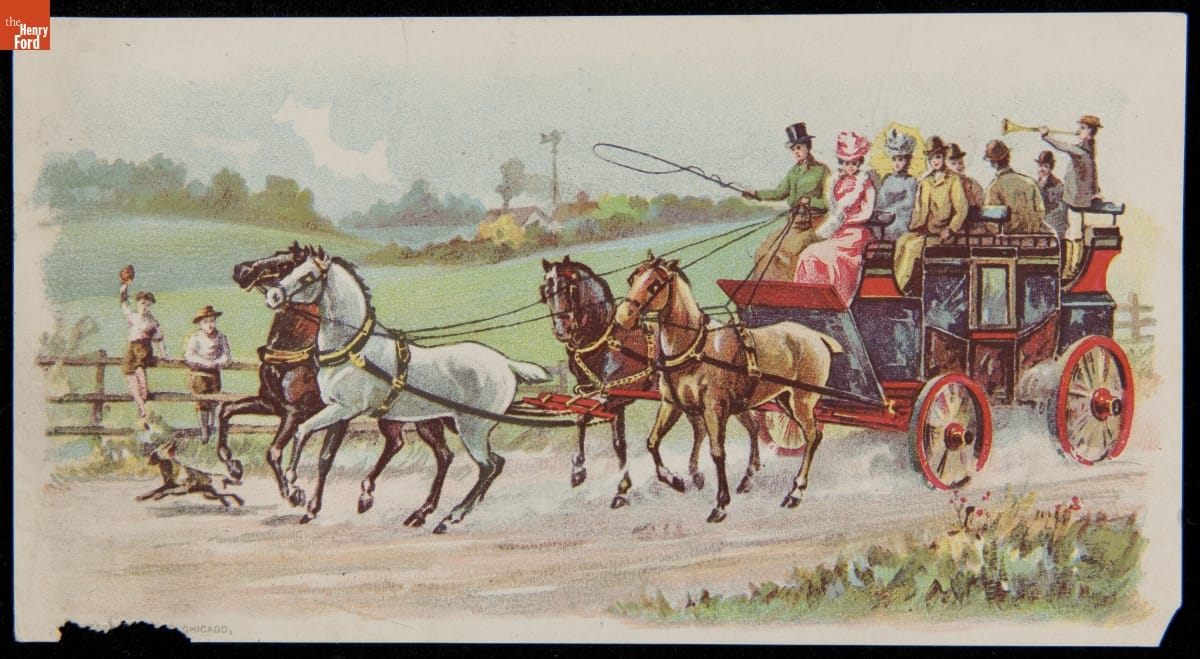
- Stagecoach Travel - In the last third of the nineteenth century, an unprecedented variety of consumer goods and services flooded the American market. Advertisers, armed with new methods of color printing, bombarded potential customers with trade cards. Americans enjoyed and often saved the vibrant little advertisements found in product packages or distributed by local merchants. Many survive as historical records of commercialism in the United States.
- May 26, 2015
- Collections - Set
Stagecoach Travel
In the last third of the nineteenth century, an unprecedented variety of consumer goods and services flooded the American market. Advertisers, armed with new methods of color printing, bombarded potential customers with trade cards. Americans enjoyed and often saved the vibrant little advertisements found in product packages or distributed by local merchants. Many survive as historical records of commercialism in the United States.
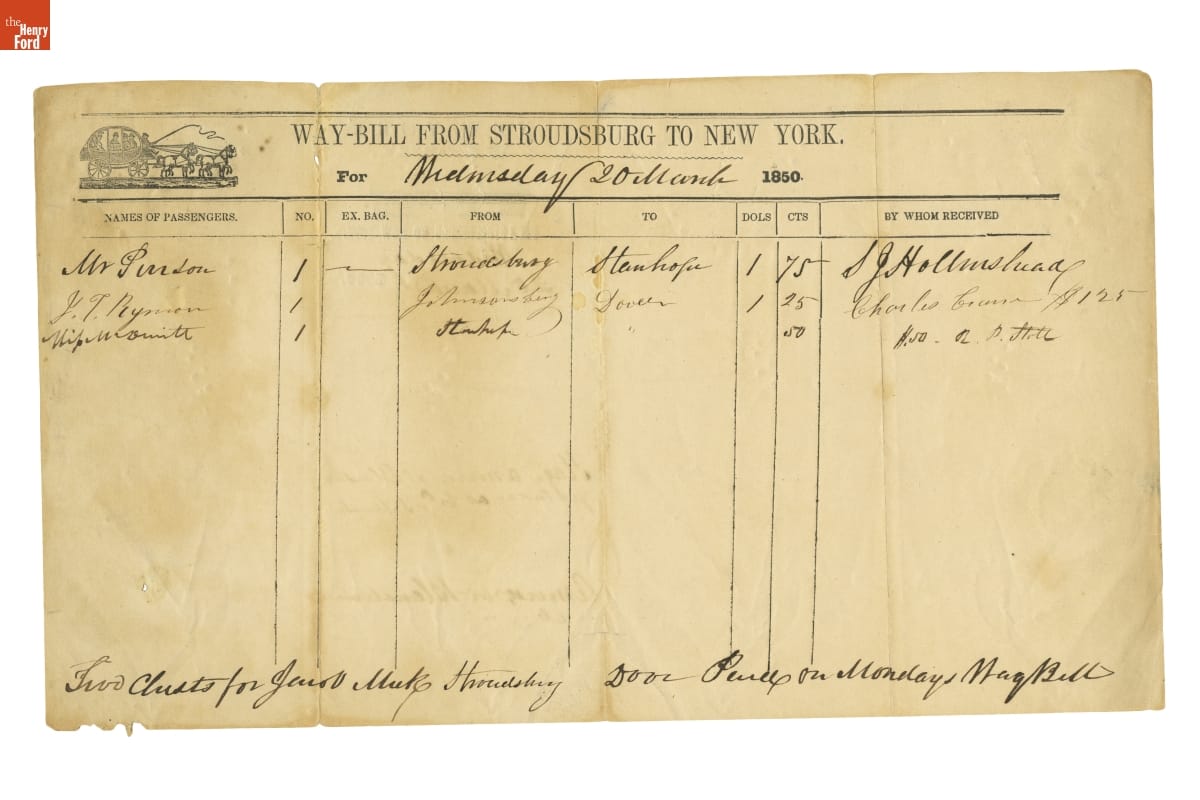
- Waybill for Stroudsburg-New York Line Stagecoach, 1850 - Waybills helped nineteenth-century stage lines keep track of fares and passengers. For each journey, company agents would fill out passenger names, destinations, number of seats and collected fares. Additional notes sometimes listed types of baggage or other special instructions. This waybill documents a trip from Stroudsburg to New York in March 1850.
- March 20, 1850
- Collections - Artifact
Waybill for Stroudsburg-New York Line Stagecoach, 1850
Waybills helped nineteenth-century stage lines keep track of fares and passengers. For each journey, company agents would fill out passenger names, destinations, number of seats and collected fares. Additional notes sometimes listed types of baggage or other special instructions. This waybill documents a trip from Stroudsburg to New York in March 1850.
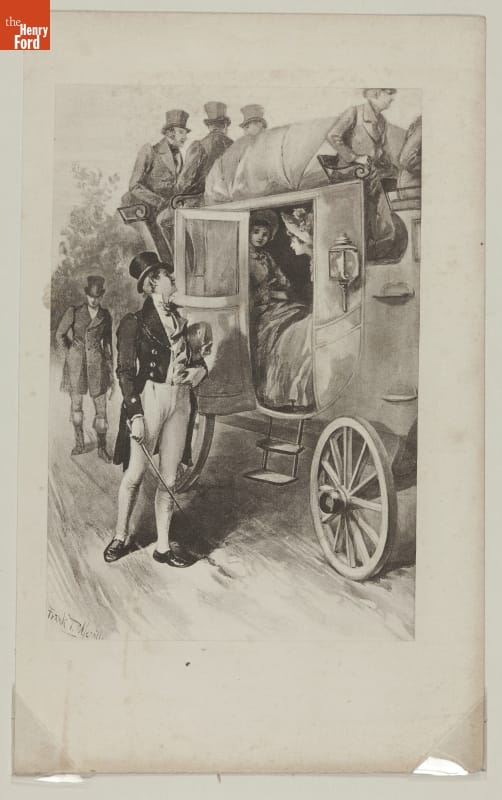
- Print Showing Stagecoach about to Start, 1810-1820 - Before railroads, long-distance travelers often purchased a ticket and climbed aboard a public coach. They would jostle along rough country roads with mail, freight, and other passengers "in stages," stopping every few hours to change horses.
- 1810-1820
- Collections - Artifact
Print Showing Stagecoach about to Start, 1810-1820
Before railroads, long-distance travelers often purchased a ticket and climbed aboard a public coach. They would jostle along rough country roads with mail, freight, and other passengers "in stages," stopping every few hours to change horses.
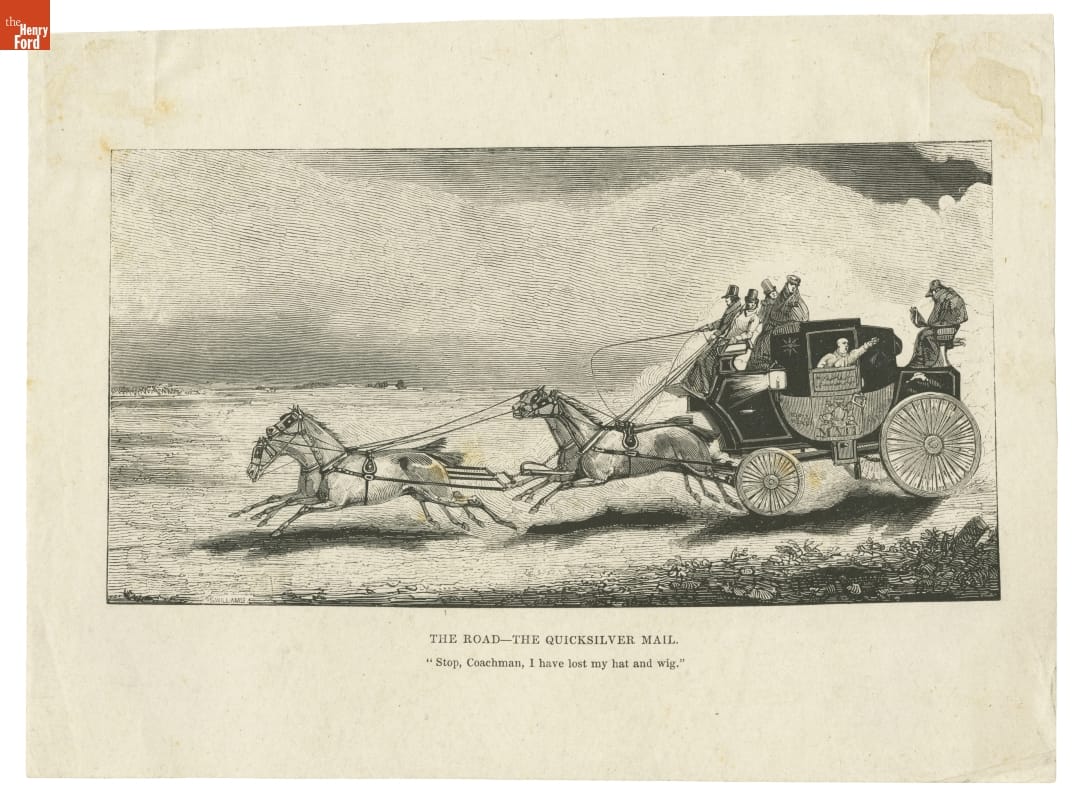
- "Quicksilver Mail," English Stagecoach, Wood Engraving, circa 1840 - Before railroads, long-distance travelers often purchased a ticket and climbed aboard a public coach. They would jostle along rough country roads with mail, freight, and other passengers "in stages," stopping every few hours to change horses.
- circa 1840
- Collections - Artifact
"Quicksilver Mail," English Stagecoach, Wood Engraving, circa 1840
Before railroads, long-distance travelers often purchased a ticket and climbed aboard a public coach. They would jostle along rough country roads with mail, freight, and other passengers "in stages," stopping every few hours to change horses.
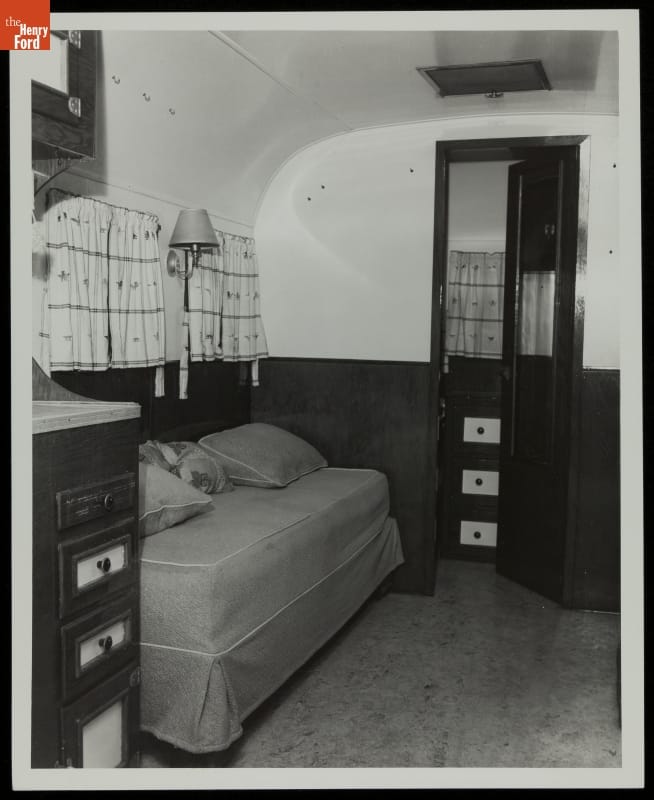
- Interior View of Charles Lindbergh's 1935 Stagecoach Trailer, 1958 - This photograph shows the interior of the trailer Henry Ford gave to his friend Charles Lindbergh in 1942. Charles and his wife Anne used it as a home on the road and as a spare room and study at home. Anne wrote <EM>The Steep Ascent</EM> here, and Charles wrote portions of his Pulitzer Prize-winning book <EM>The Spirit of St. Louis</EM>.
- October 24, 1958
- Collections - Artifact
Interior View of Charles Lindbergh's 1935 Stagecoach Trailer, 1958
This photograph shows the interior of the trailer Henry Ford gave to his friend Charles Lindbergh in 1942. Charles and his wife Anne used it as a home on the road and as a spare room and study at home. Anne wrote The Steep Ascent here, and Charles wrote portions of his Pulitzer Prize-winning book The Spirit of St. Louis.
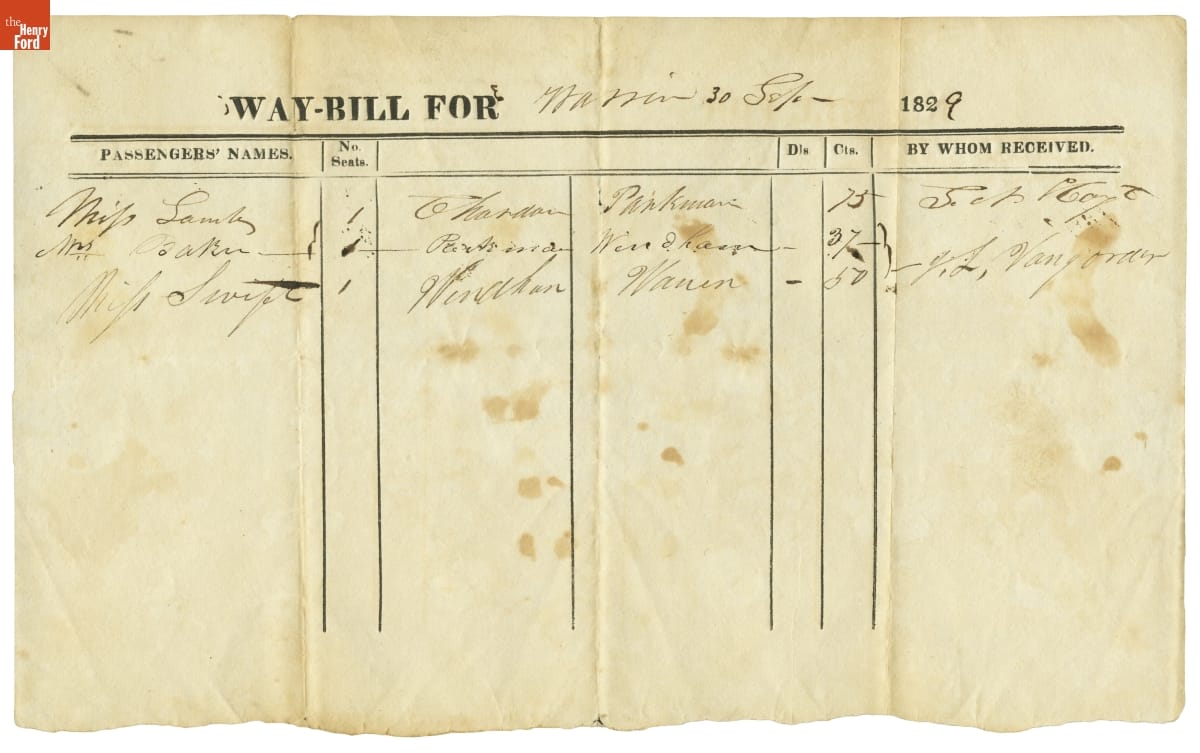
- Waybill for Stagecoach Travel from Fairport to Warren, Ohio, 1829 - Waybills helped nineteenth-century stage lines keep track of fares and passengers. For each journey, company agents would fill out passenger names, destinations, number of seats and collected fares. Additional notes sometimes listed types of baggage or other special instructions. This waybill documents a trip taken on September 30, 1829.
- September 30, 1829
- Collections - Artifact
Waybill for Stagecoach Travel from Fairport to Warren, Ohio, 1829
Waybills helped nineteenth-century stage lines keep track of fares and passengers. For each journey, company agents would fill out passenger names, destinations, number of seats and collected fares. Additional notes sometimes listed types of baggage or other special instructions. This waybill documents a trip taken on September 30, 1829.
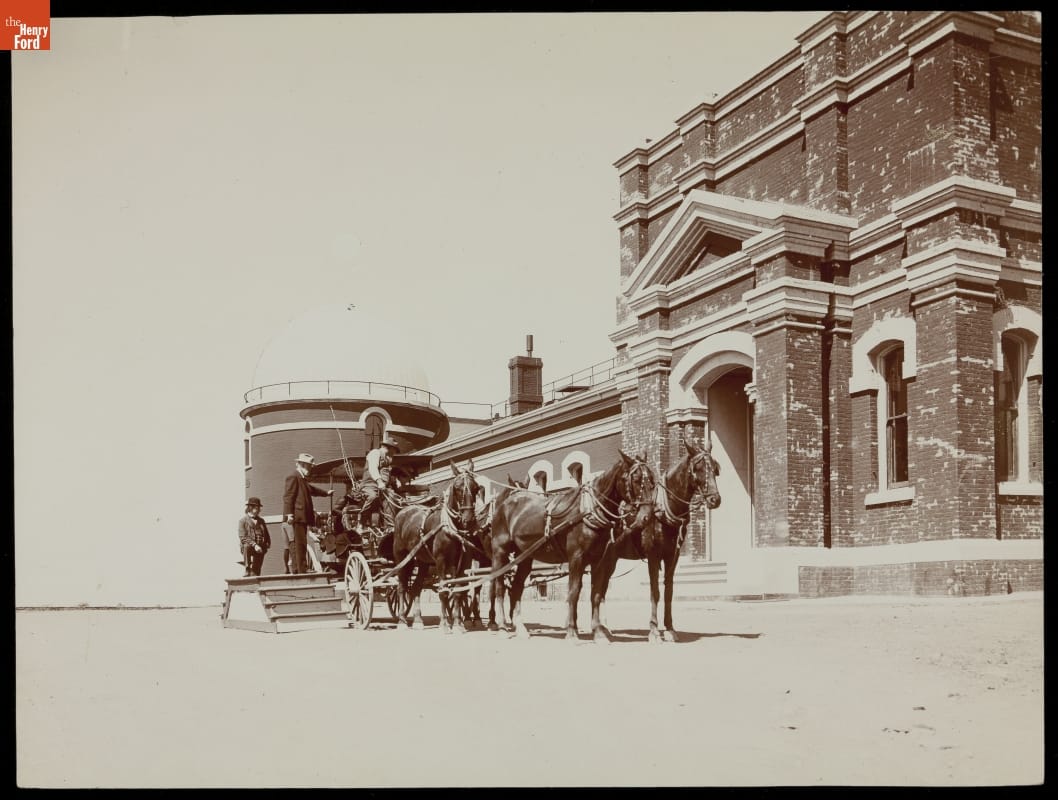
- Stagecoach at Lick Obervatory, Mount Hamilton, California, circa 1905 - Vacationing Americans at the turn of the twentieth century often set aside time to simply look at things -- stagecoach sightseeing excursions provided an opportunity to transcend the commonplace realities of life back home. This coaching party stopped at Lick Observatory atop Mount Hamilton, east of San Jose, to take in scenic views of California's Santa Clara Valley.
- circa 1905
- Collections - Artifact
Stagecoach at Lick Obervatory, Mount Hamilton, California, circa 1905
Vacationing Americans at the turn of the twentieth century often set aside time to simply look at things -- stagecoach sightseeing excursions provided an opportunity to transcend the commonplace realities of life back home. This coaching party stopped at Lick Observatory atop Mount Hamilton, east of San Jose, to take in scenic views of California's Santa Clara Valley.