
Search
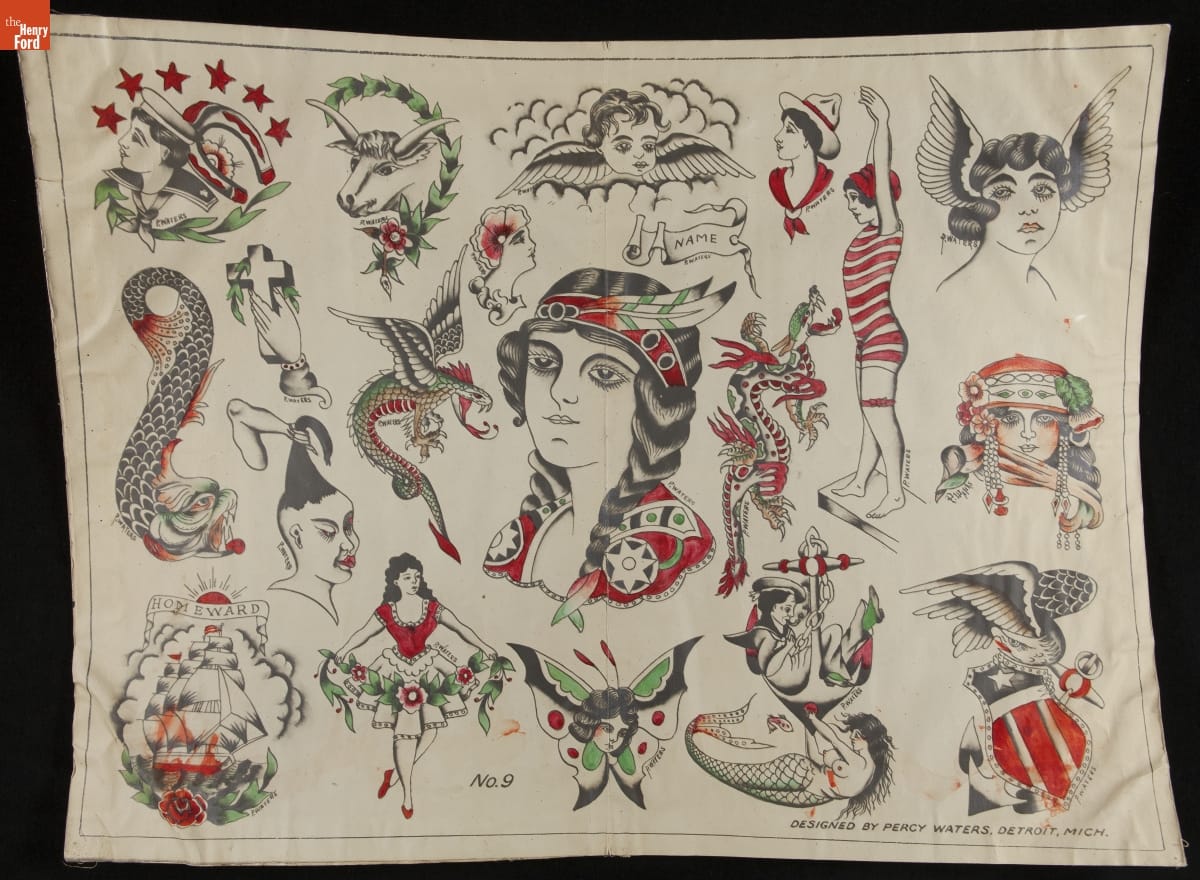
- Tattoo Flash, circa 1920 - Tattoos communicate stories. Their content ranges from deeply personal and traditional--to regrettable and frivolous. In the early 1900s, "Professor" Waters apprenticed as a tattoo artist in carnivals and New York's Bowery District. He ran a successful supply shop in Detroit (1918-1939), patenting the standard "two-coil" tattoo machine in 1929. Designs from his flash sheets continue to inspire tattooists today.
- circa 1920
- Collections - Artifact
Tattoo Flash, circa 1920
Tattoos communicate stories. Their content ranges from deeply personal and traditional--to regrettable and frivolous. In the early 1900s, "Professor" Waters apprenticed as a tattoo artist in carnivals and New York's Bowery District. He ran a successful supply shop in Detroit (1918-1939), patenting the standard "two-coil" tattoo machine in 1929. Designs from his flash sheets continue to inspire tattooists today.
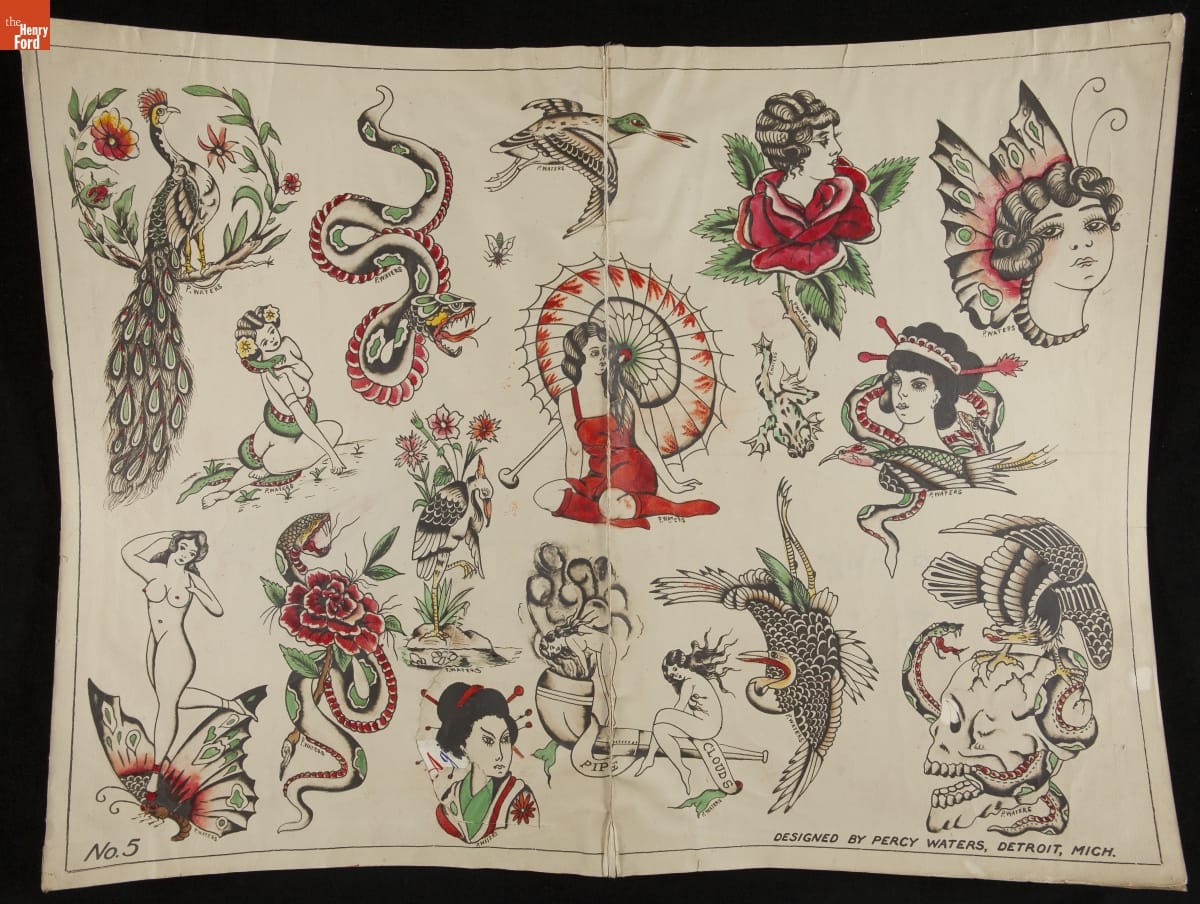
- Tattoo Flash, circa 1920 - Tattoos communicate stories. Their content ranges from deeply personal and traditional--to regrettable and frivolous. In the early 1900s, "Professor" Waters apprenticed as a tattoo artist in carnivals and New York's Bowery District. He ran a successful supply shop in Detroit (1918-1939), patenting the standard "two-coil" tattoo machine in 1929. Designs from his flash sheets continue to inspire tattooists today.
- circa 1920
- Collections - Artifact
Tattoo Flash, circa 1920
Tattoos communicate stories. Their content ranges from deeply personal and traditional--to regrettable and frivolous. In the early 1900s, "Professor" Waters apprenticed as a tattoo artist in carnivals and New York's Bowery District. He ran a successful supply shop in Detroit (1918-1939), patenting the standard "two-coil" tattoo machine in 1929. Designs from his flash sheets continue to inspire tattooists today.
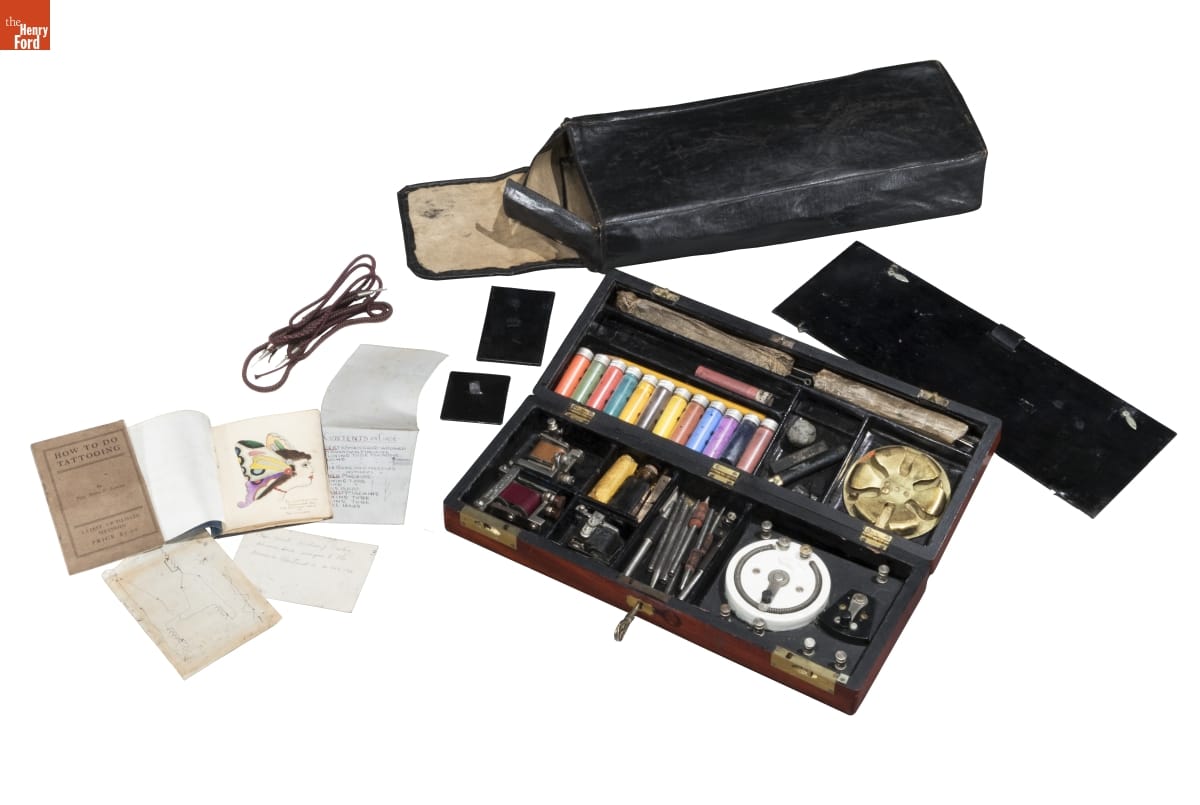
- Tattoo Kit, circa 1910 -
- circa 1910
- Collections - Artifact
Tattoo Kit, circa 1910
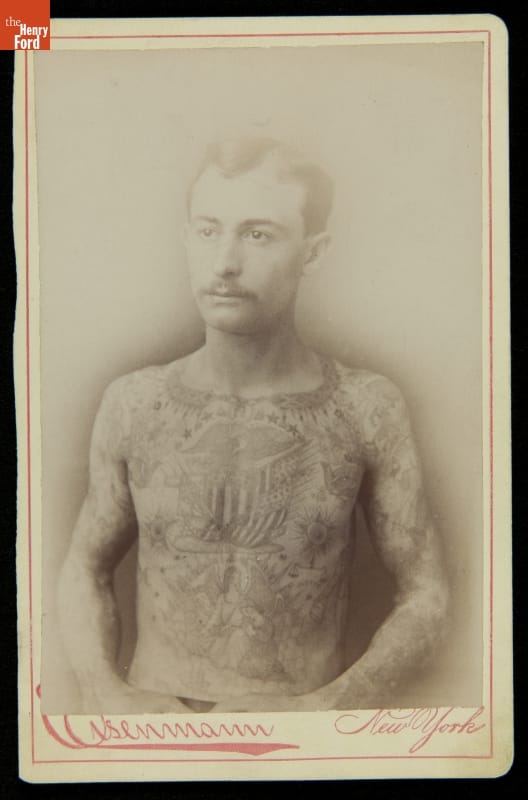
- Tattooed Man, circa 1885 - This unidentified "tattooed man" with patriotic tattoos was photographed by Charles Eisenmann in his Bowery district studio. Eisenmann captured the eclectic mix of people who frequented the Bowery, including circus performers like this -- a likely client of the area's infamous tattoo parlors. Eisenmann's images were reproduced for sale in the form of cabinet cards, popular among the middle class.
- circa 1885
- Collections - Artifact
Tattooed Man, circa 1885
This unidentified "tattooed man" with patriotic tattoos was photographed by Charles Eisenmann in his Bowery district studio. Eisenmann captured the eclectic mix of people who frequented the Bowery, including circus performers like this -- a likely client of the area's infamous tattoo parlors. Eisenmann's images were reproduced for sale in the form of cabinet cards, popular among the middle class.
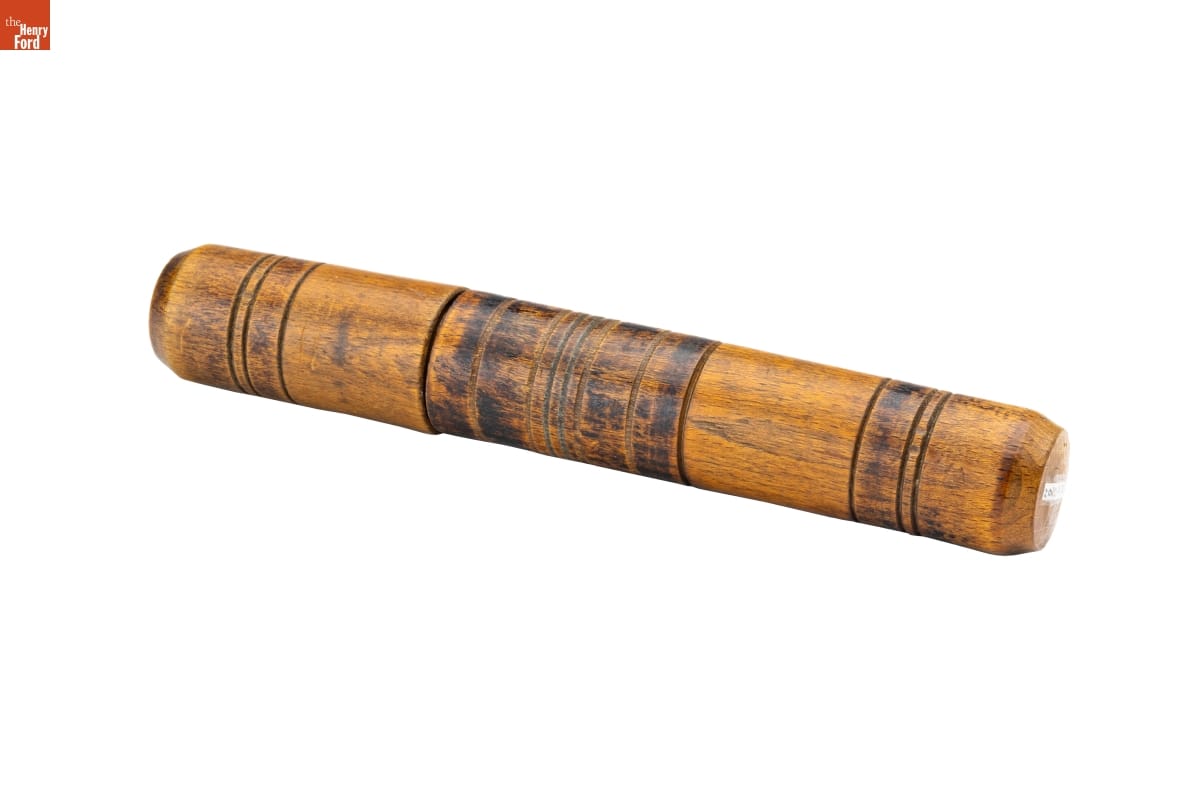
- Needle Case -
- Collections - Artifact
Needle Case
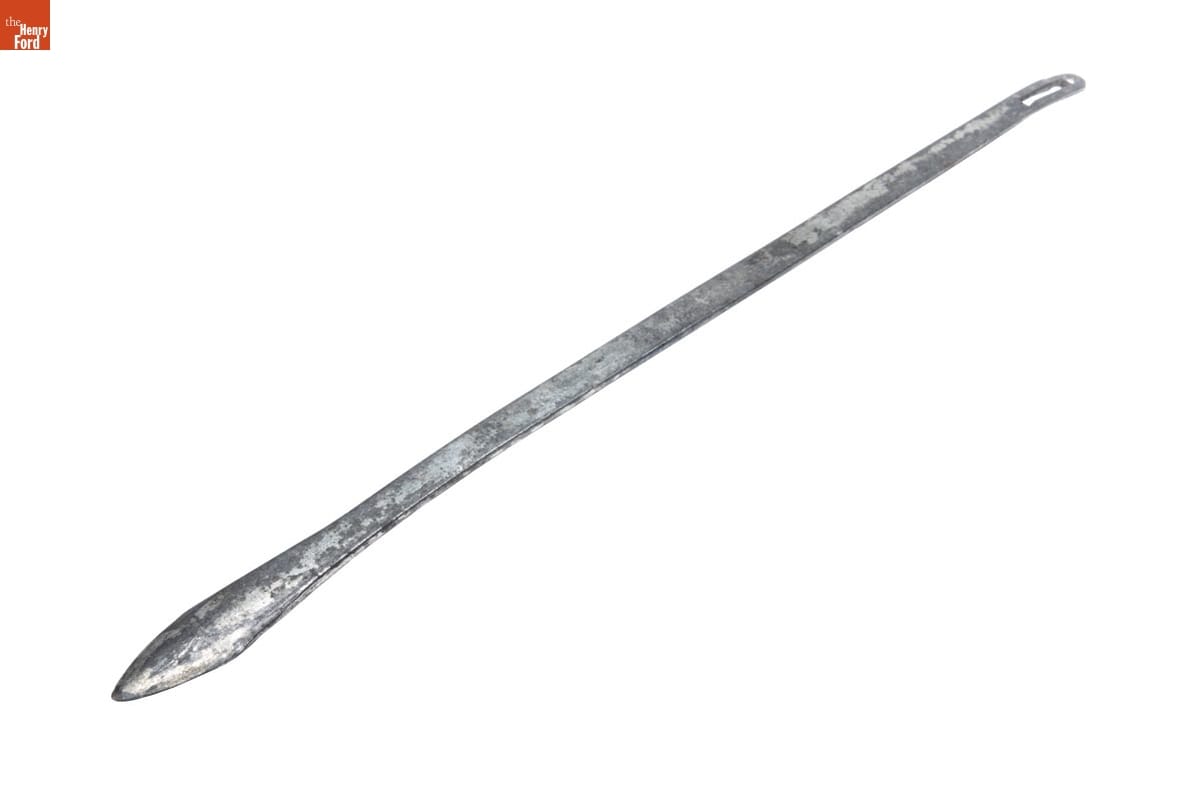
- Seton Needle - Veterinarians used a seton needle to insert a thread or cord (called a seton) beneath the skin around a wound or abscess to encourage drainage. F. Eugene Eads, a veterinarian from Grosse Point, Michigan, used this seton needle in his veterinary practice.
- Collections - Artifact
Seton Needle
Veterinarians used a seton needle to insert a thread or cord (called a seton) beneath the skin around a wound or abscess to encourage drainage. F. Eugene Eads, a veterinarian from Grosse Point, Michigan, used this seton needle in his veterinary practice.
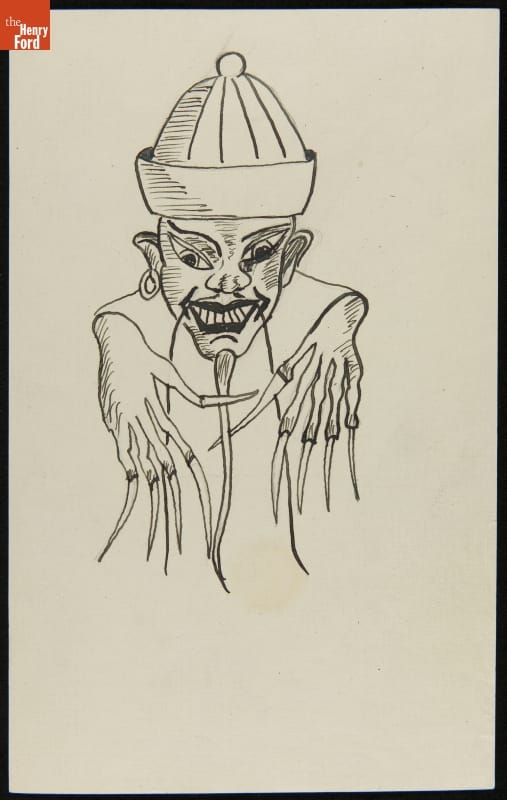
- Tattoo Sketch, 1915-1950 - Tattoos communicate stories. Their content ranges from deeply personal and traditional--to regrettable and frivolous. In the early 1900s, "Professor" Waters apprenticed as a tattoo artist in carnivals and New York's Bowery District. He ran a successful supply shop in Detroit (1918-1939), patenting the standard "two-coil" tattoo machine in 1929. Designs from his flash sheets continue to inspire tattooists today.
- 1915-1950
- Collections - Artifact
Tattoo Sketch, 1915-1950
Tattoos communicate stories. Their content ranges from deeply personal and traditional--to regrettable and frivolous. In the early 1900s, "Professor" Waters apprenticed as a tattoo artist in carnivals and New York's Bowery District. He ran a successful supply shop in Detroit (1918-1939), patenting the standard "two-coil" tattoo machine in 1929. Designs from his flash sheets continue to inspire tattooists today.
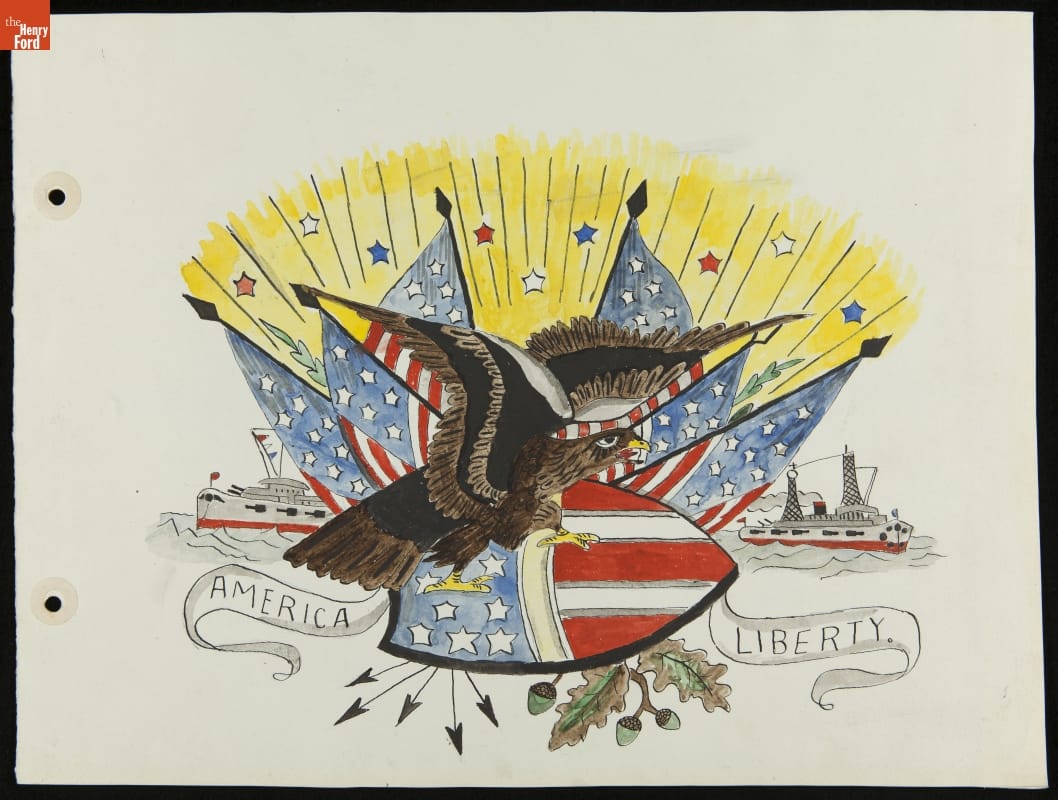
- Tattoo Flash, circa 1925 - Tattoos communicate stories. Their content ranges from deeply personal and traditional--to regrettable and frivolous. In the early 1900s, "Professor" Waters apprenticed as a tattoo artist in carnivals and New York's Bowery District. He ran a successful supply shop in Detroit (1918-1939), patenting the standard "two-coil" tattoo machine in 1929. Designs from his flash sheets continue to inspire tattooists today.
- circa 1925
- Collections - Artifact
Tattoo Flash, circa 1925
Tattoos communicate stories. Their content ranges from deeply personal and traditional--to regrettable and frivolous. In the early 1900s, "Professor" Waters apprenticed as a tattoo artist in carnivals and New York's Bowery District. He ran a successful supply shop in Detroit (1918-1939), patenting the standard "two-coil" tattoo machine in 1929. Designs from his flash sheets continue to inspire tattooists today.
- Tattoo Stencil, 1915-1950 - Tattoos communicate stories. Their content ranges from deeply personal and traditional--to regrettable and frivolous. In the early 1900s, "Professor" Waters apprenticed as a tattoo artist in carnivals and New York's Bowery District. He ran a successful supply shop in Detroit (1918-1939), patenting the standard "two-coil" tattoo machine in 1929. Designs from his flash sheets continue to inspire tattooists today.
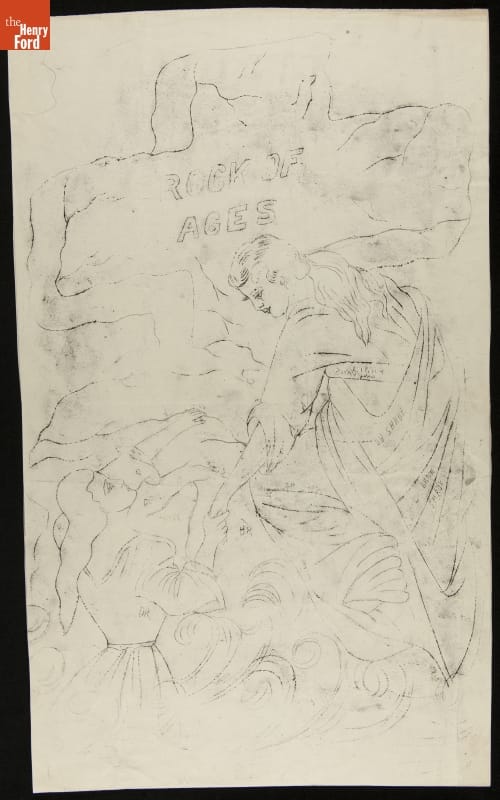
- 1915-1950
- Collections - Artifact
Tattoo Stencil, 1915-1950
Tattoos communicate stories. Their content ranges from deeply personal and traditional--to regrettable and frivolous. In the early 1900s, "Professor" Waters apprenticed as a tattoo artist in carnivals and New York's Bowery District. He ran a successful supply shop in Detroit (1918-1939), patenting the standard "two-coil" tattoo machine in 1929. Designs from his flash sheets continue to inspire tattooists today.
- Tattoo Sketch, 1915-1950 - Tattoos communicate stories. Their content ranges from deeply personal and traditional--to regrettable and frivolous. In the early 1900s, "Professor" Waters apprenticed as a tattoo artist in carnivals and New York's Bowery District. He ran a successful supply shop in Detroit (1918-1939), patenting the standard "two-coil" tattoo machine in 1929. Designs from his flash sheets continue to inspire tattooists today.
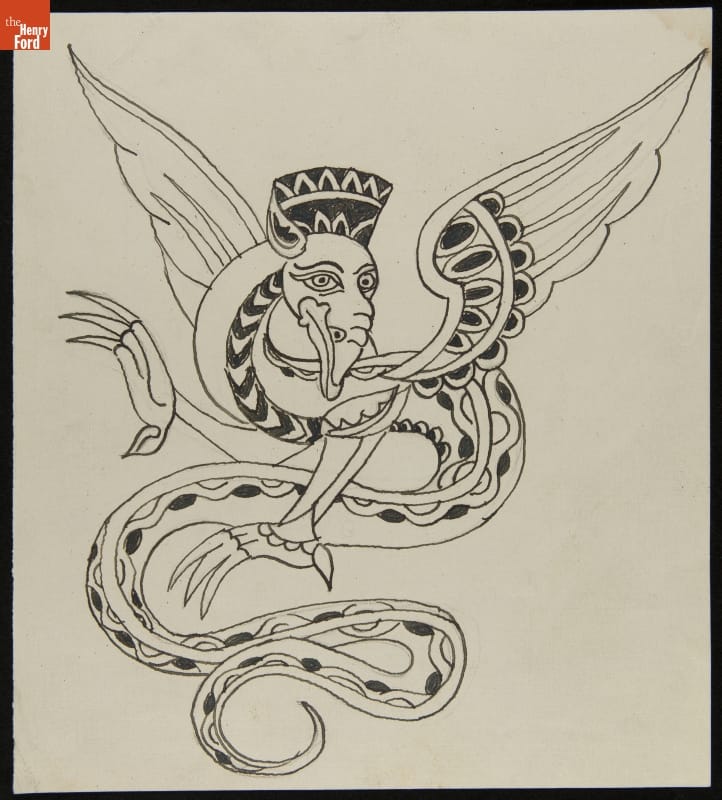
- 1915-1950
- Collections - Artifact
Tattoo Sketch, 1915-1950
Tattoos communicate stories. Their content ranges from deeply personal and traditional--to regrettable and frivolous. In the early 1900s, "Professor" Waters apprenticed as a tattoo artist in carnivals and New York's Bowery District. He ran a successful supply shop in Detroit (1918-1939), patenting the standard "two-coil" tattoo machine in 1929. Designs from his flash sheets continue to inspire tattooists today.