
Search
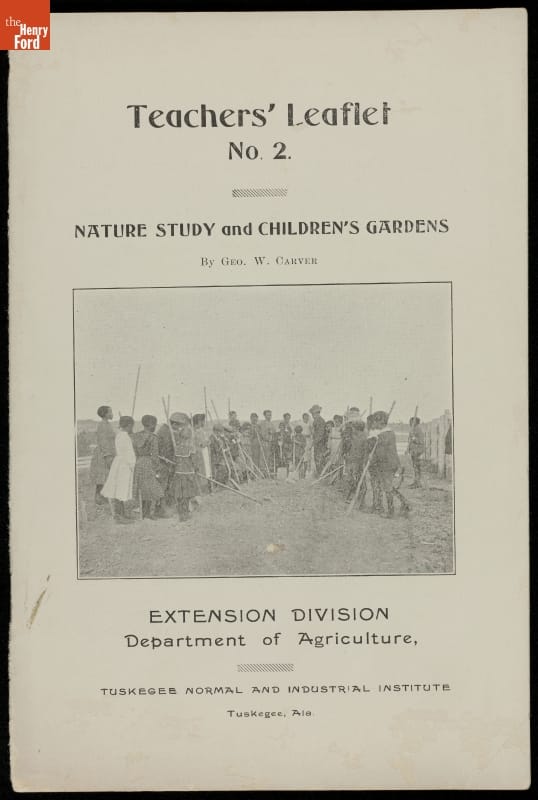
- Teacher's Leaflet No. 2, Nature Study and Children's Gardens, 1904 - Among George Washington Carver's contributions were the bulletins he issued from the Agricultural Experiment Station at the Tuskegee Institute. This pamphlet, written for teachers, treats the popular topic of "nature study," the early 20th century's version of environmental education. It was a guide for educators wanting to involve school children in gardening to help prepare them for successful farming careers. Carver's nature study bulletins emphasized both aesthetic and scientific understandings of nature and were popular across the country.
- 1904
- Collections - Artifact
Teacher's Leaflet No. 2, Nature Study and Children's Gardens, 1904
Among George Washington Carver's contributions were the bulletins he issued from the Agricultural Experiment Station at the Tuskegee Institute. This pamphlet, written for teachers, treats the popular topic of "nature study," the early 20th century's version of environmental education. It was a guide for educators wanting to involve school children in gardening to help prepare them for successful farming careers. Carver's nature study bulletins emphasized both aesthetic and scientific understandings of nature and were popular across the country.
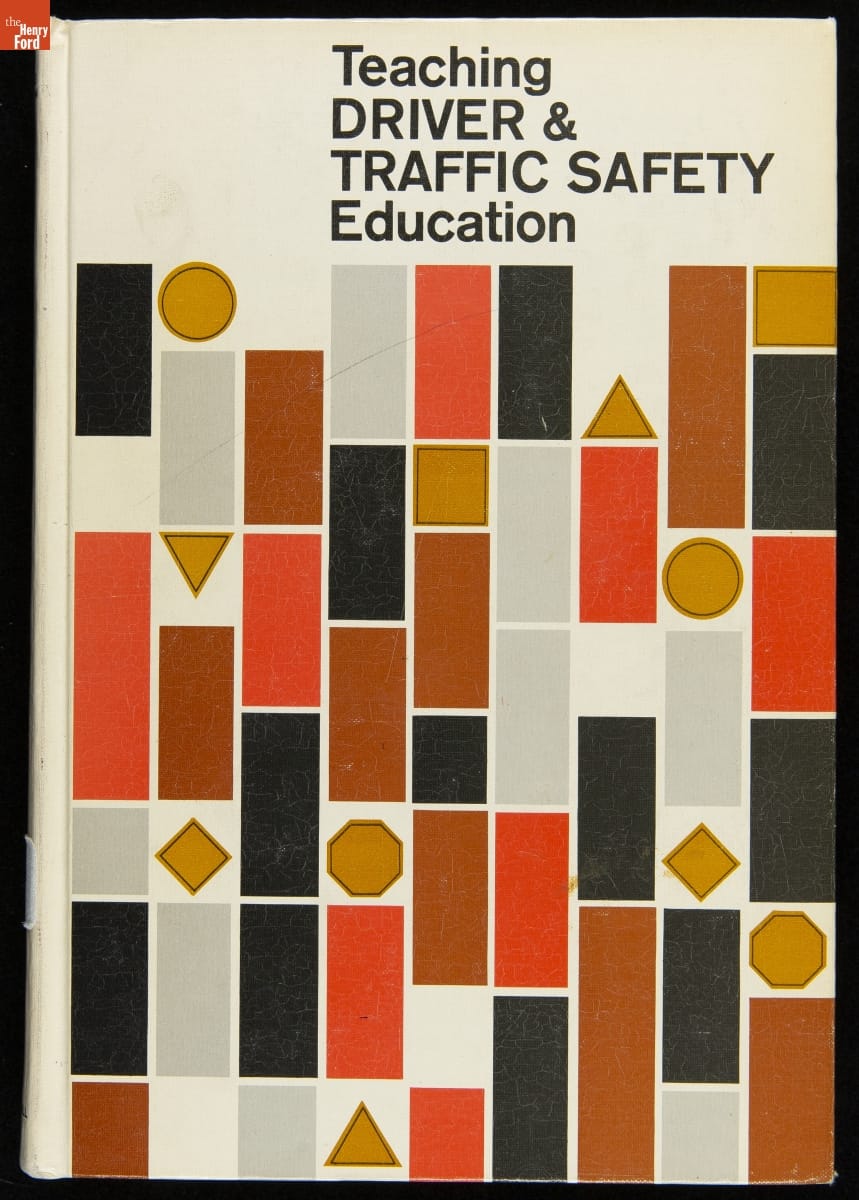
- Teaching Driver and Traffic Safety Education, circa 1965 - This textbook doesn't teach driver education -- it teaches how to teach driver education. It was produced by the American Automobile Association, which had moral and monetary interests in reducing auto accidents. Driver education was a standard part of American high schools from the 1930s through the 1990s, until public school budget and curriculum concerns shifted training to private schools.
- circa 1965
- Collections - Artifact
Teaching Driver and Traffic Safety Education, circa 1965
This textbook doesn't teach driver education -- it teaches how to teach driver education. It was produced by the American Automobile Association, which had moral and monetary interests in reducing auto accidents. Driver education was a standard part of American high schools from the 1930s through the 1990s, until public school budget and curriculum concerns shifted training to private schools.
- Students and Teachers outside a School, circa 1894 -
- circa 1894
- Collections - Artifact
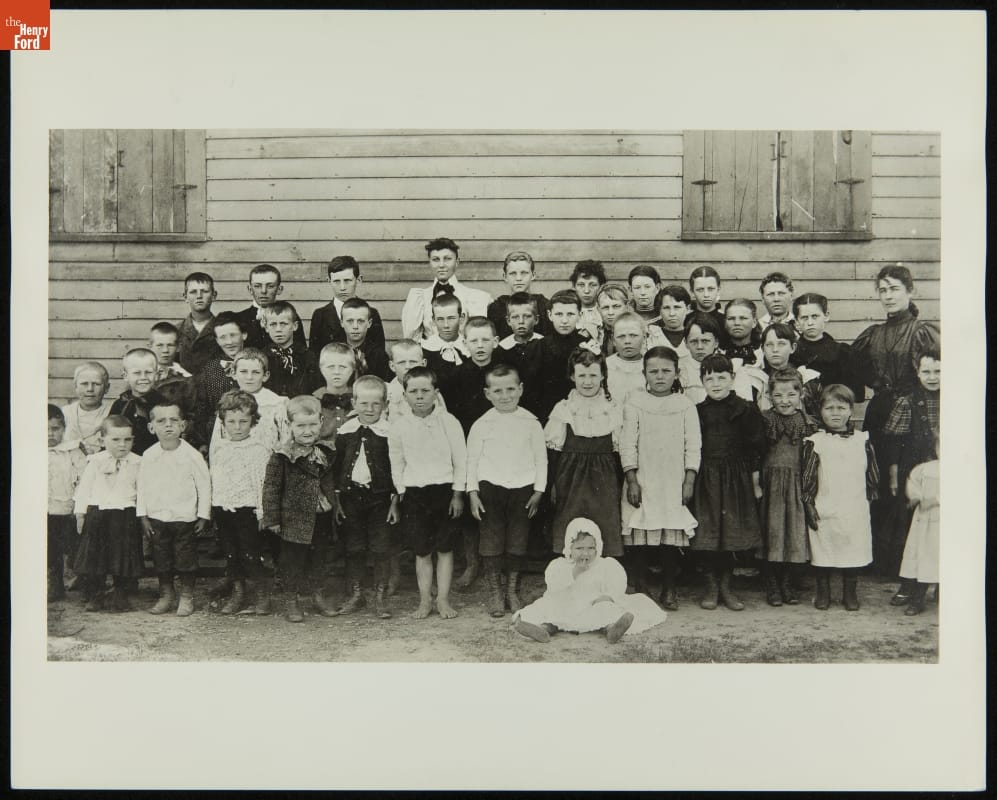
Students and Teachers outside a School, circa 1894
- "Teaching Black, an Evaluation of Methods and Resources," 1971 -
- 1971
- Collections - Artifact
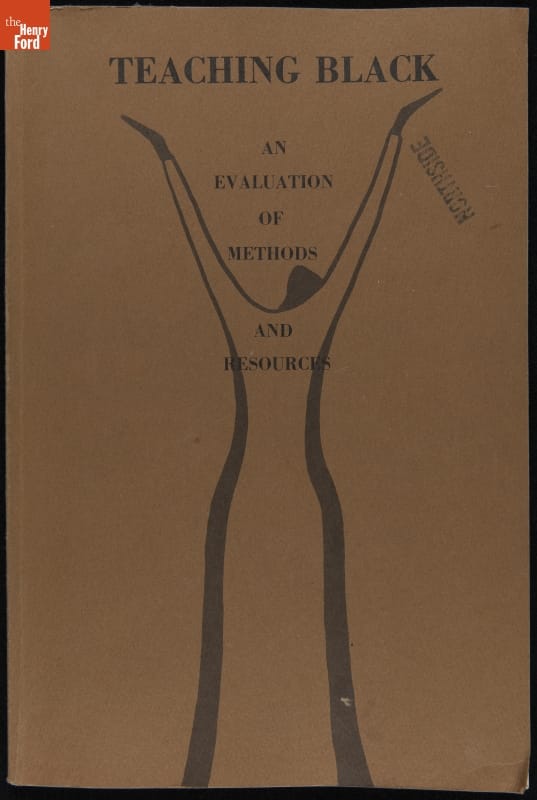
"Teaching Black, an Evaluation of Methods and Resources," 1971
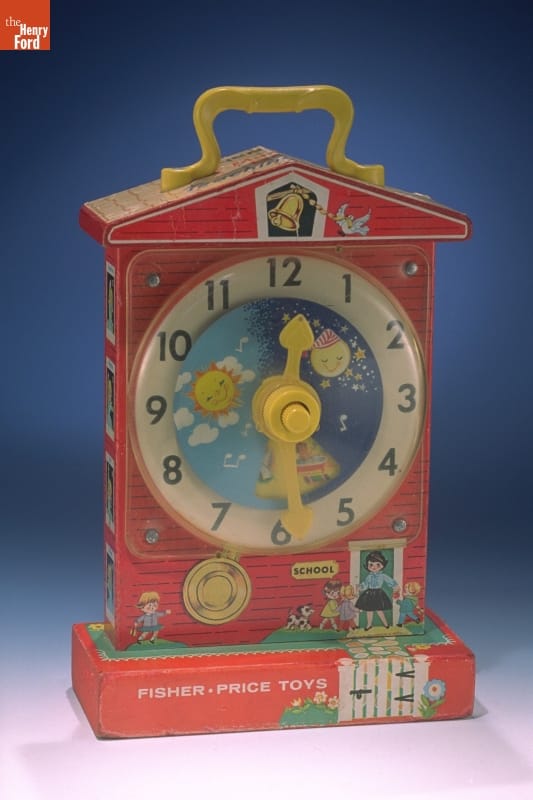
- Music Box Teaching Clock, 1968-1972 - Educational toys oriented toward young children taught concepts like learning letters and numbers as well as telling time. This music box teaching clock, manufactured by Fisher-Price, is shaped like a schoolhouse and has school-related images at top and bottom. There are twelve pictures of children's activities inside the clock dials, each pointing to different times of the day.
- 1968-1972
- Collections - Artifact
Music Box Teaching Clock, 1968-1972
Educational toys oriented toward young children taught concepts like learning letters and numbers as well as telling time. This music box teaching clock, manufactured by Fisher-Price, is shaped like a schoolhouse and has school-related images at top and bottom. There are twelve pictures of children's activities inside the clock dials, each pointing to different times of the day.
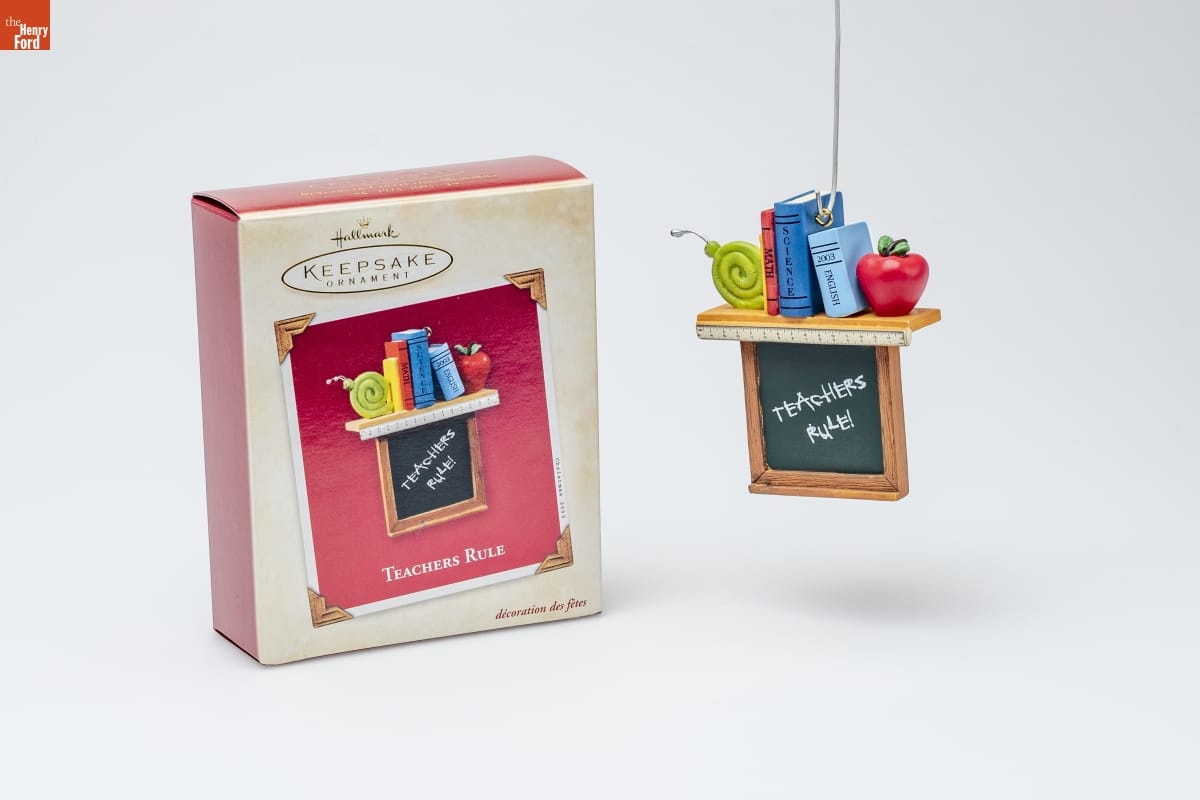
- Hallmark "Teachers Rule" Christmas Ornament, 2003 - Already known for greeting cards, Hallmark introduced a line of Christmas ornaments in 1973. The company's annual release of an increasing array of ornaments revolutionized Christmas decorating, appealing to customers' interest in marking memories and milestones as well as expressing one's personality and unique tastes.
- 2003
- Collections - Artifact
Hallmark "Teachers Rule" Christmas Ornament, 2003
Already known for greeting cards, Hallmark introduced a line of Christmas ornaments in 1973. The company's annual release of an increasing array of ornaments revolutionized Christmas decorating, appealing to customers' interest in marking memories and milestones as well as expressing one's personality and unique tastes.
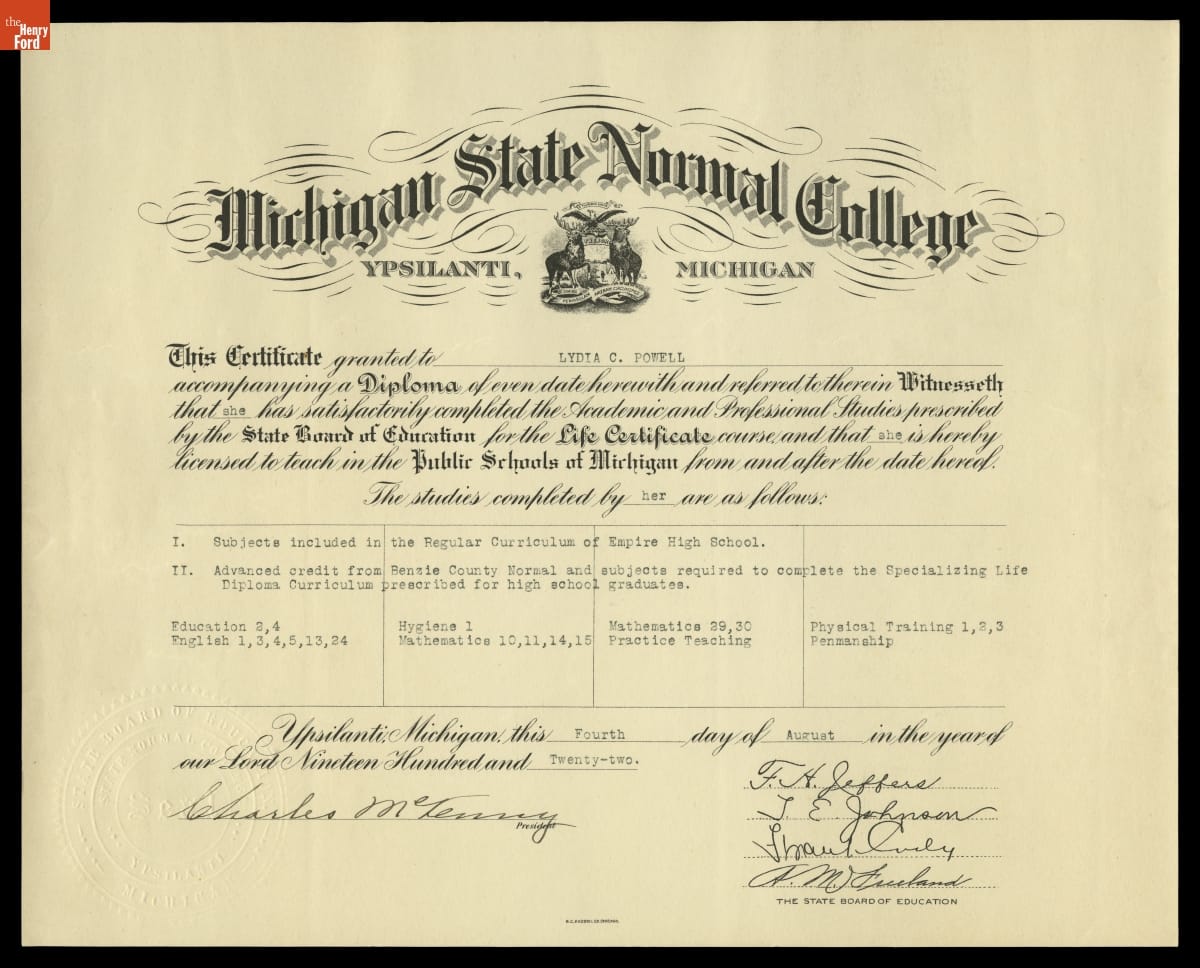
- Michigan State Normal College Certificate Granted to Lydia C. Powell, August 4, 1922 - Lydia Powell (1898-1991) graduated from high school in 1917. By the following year, all states had made school attendance compulsory for 8- to 14-year-olds. In 1925, mandatory attendance expanded to include children 16 years and under. After her high school graduation, Powell, a woman of limited means, completed courses and received degrees from several Michigan colleges, making teaching her passion and a lifelong career.
- August 04, 1922
- Collections - Artifact
Michigan State Normal College Certificate Granted to Lydia C. Powell, August 4, 1922
Lydia Powell (1898-1991) graduated from high school in 1917. By the following year, all states had made school attendance compulsory for 8- to 14-year-olds. In 1925, mandatory attendance expanded to include children 16 years and under. After her high school graduation, Powell, a woman of limited means, completed courses and received degrees from several Michigan colleges, making teaching her passion and a lifelong career.
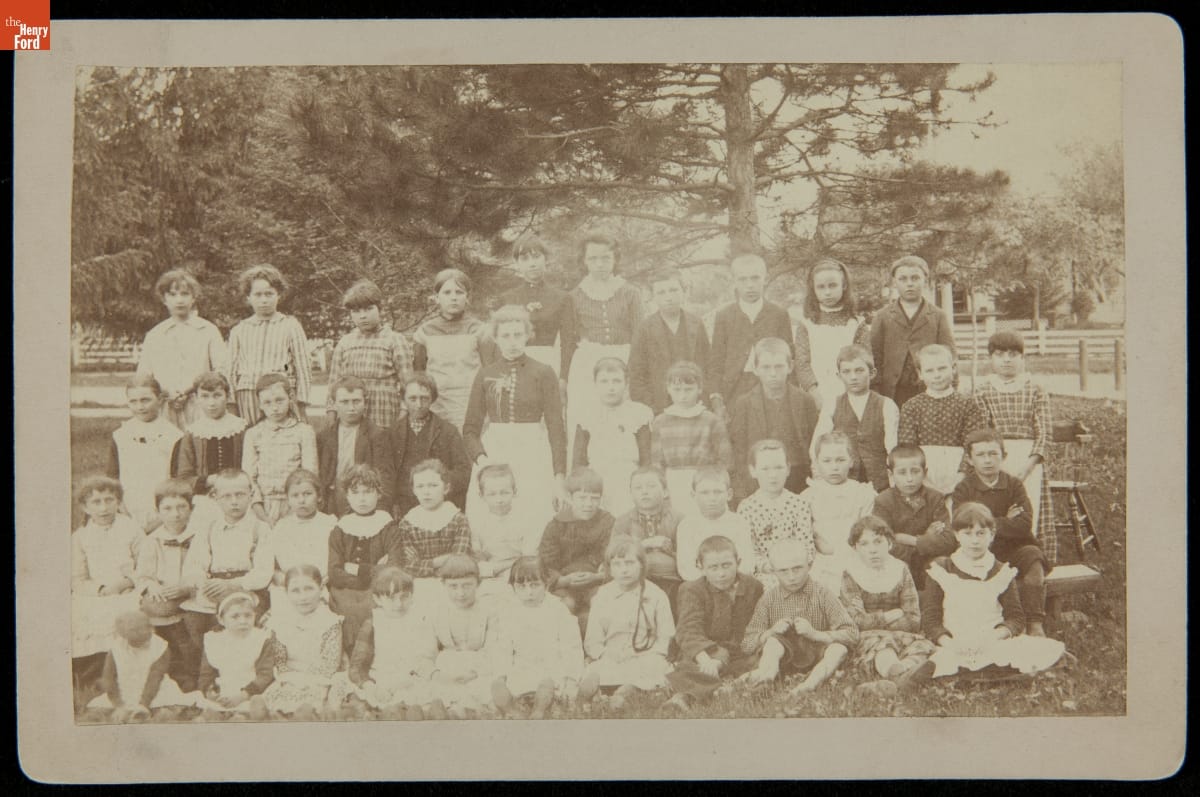
- Group of School Children and Teachers, Hillsdale, Michigan, circa 1890 - This cabinet card shows three teachers and 44 students posing outdoors, perhaps outside the school. This was not a one-room school; the students are approximately the same age. Hillsdale, Michigan, a busy railroad town, had a graded school system. The boys wear shirts, suspenders, and jackets; girls wear pinafores or aprons over their dresses. The teachers wear high-necked, long-sleeve dresses with aprons.
- circa 1890
- Collections - Artifact
Group of School Children and Teachers, Hillsdale, Michigan, circa 1890
This cabinet card shows three teachers and 44 students posing outdoors, perhaps outside the school. This was not a one-room school; the students are approximately the same age. Hillsdale, Michigan, a busy railroad town, had a graded school system. The boys wear shirts, suspenders, and jackets; girls wear pinafores or aprons over their dresses. The teachers wear high-necked, long-sleeve dresses with aprons.
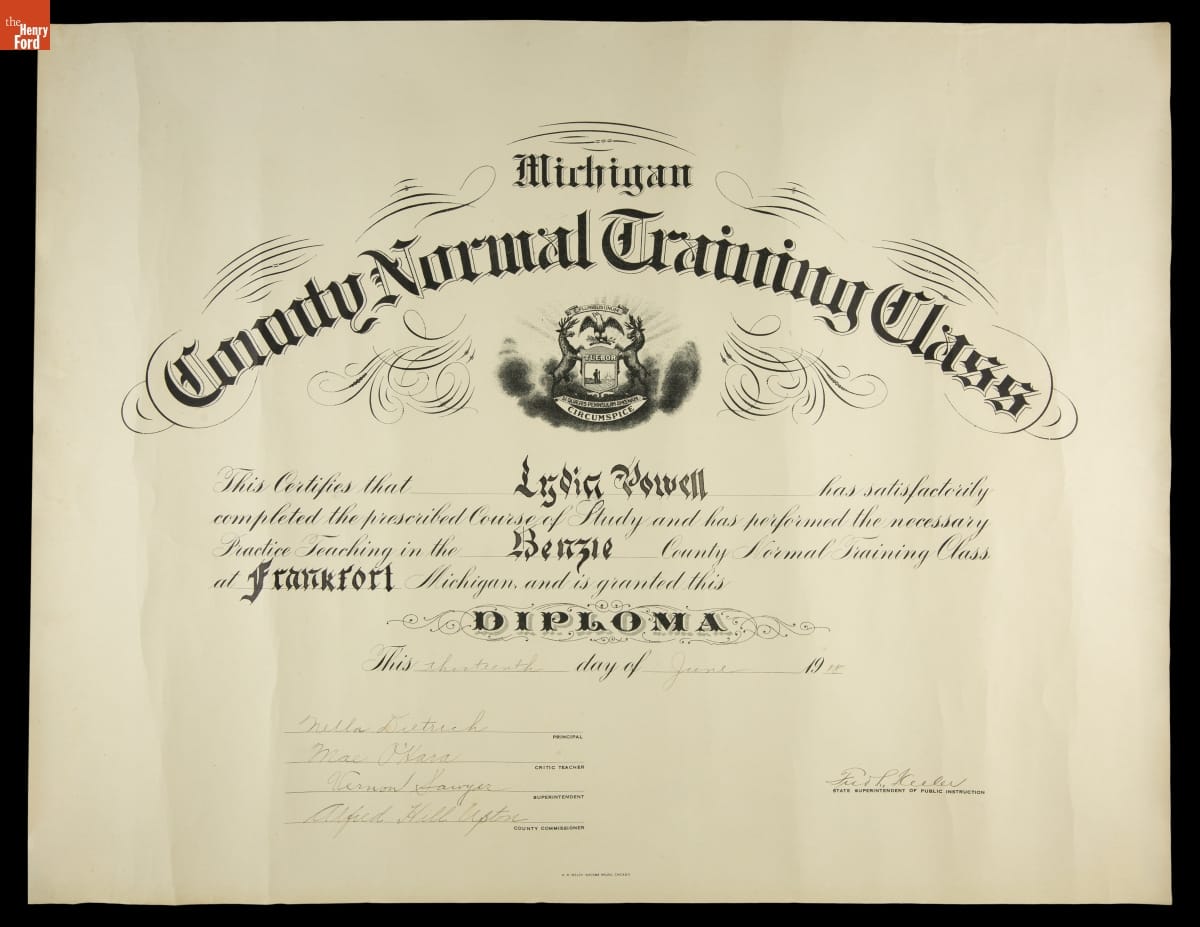
- Michigan County Normal Training Class Diploma Awarded to Lydia Powell, June 13, 1918 - Lydia Powell (1898-1991) graduated from high school in 1917. By the following year, all states had made school attendance compulsory for 8- to 14-year-olds. In 1925, mandatory attendance expanded to include children 16 years and under. After her high school graduation, Powell, a woman of limited means, completed courses and received degrees from several Michigan colleges, making teaching her passion and a lifelong career.
- June 13, 1918
- Collections - Artifact
Michigan County Normal Training Class Diploma Awarded to Lydia Powell, June 13, 1918
Lydia Powell (1898-1991) graduated from high school in 1917. By the following year, all states had made school attendance compulsory for 8- to 14-year-olds. In 1925, mandatory attendance expanded to include children 16 years and under. After her high school graduation, Powell, a woman of limited means, completed courses and received degrees from several Michigan colleges, making teaching her passion and a lifelong career.
- Teaching Community Technology Handbook, 2015 -
- 2015
- Collections - Artifact
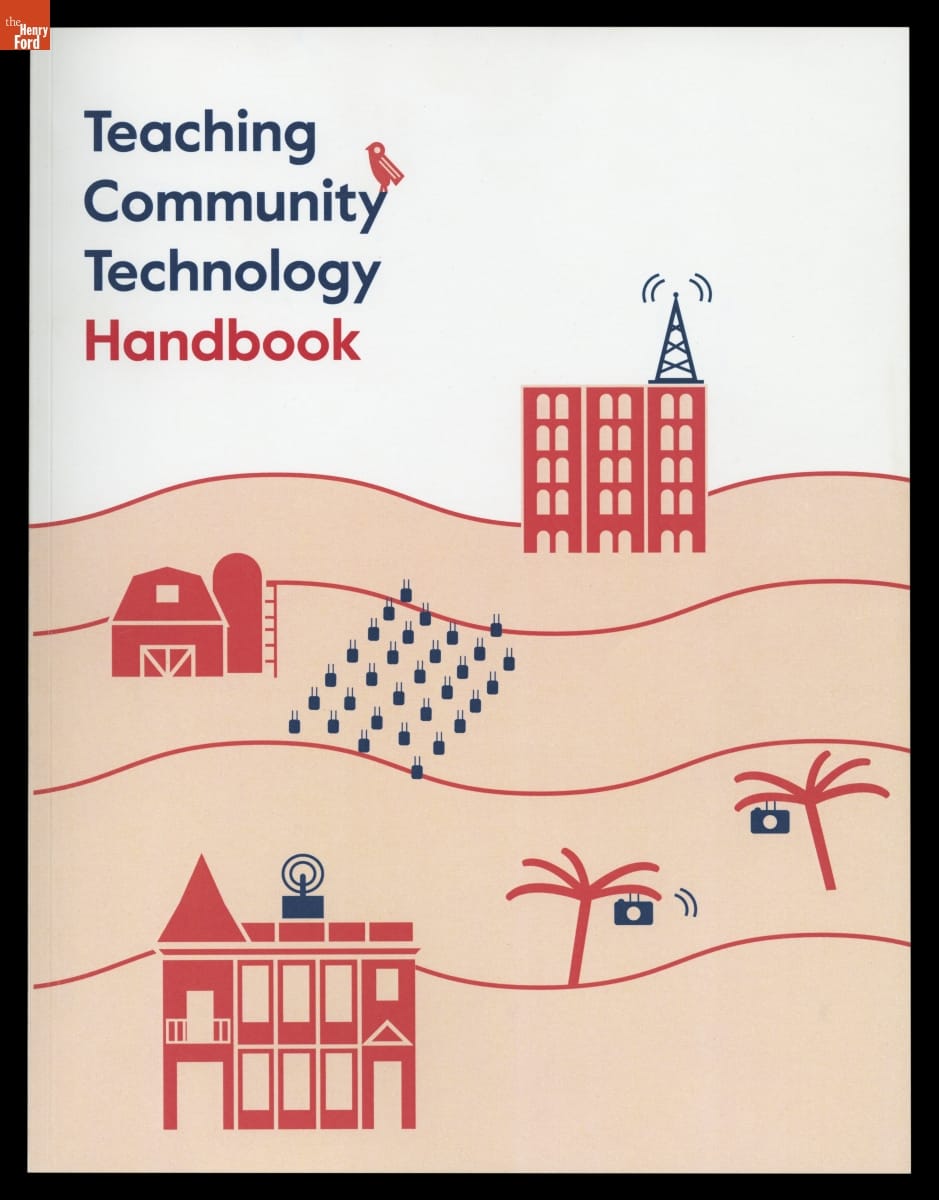
Teaching Community Technology Handbook, 2015