
Search
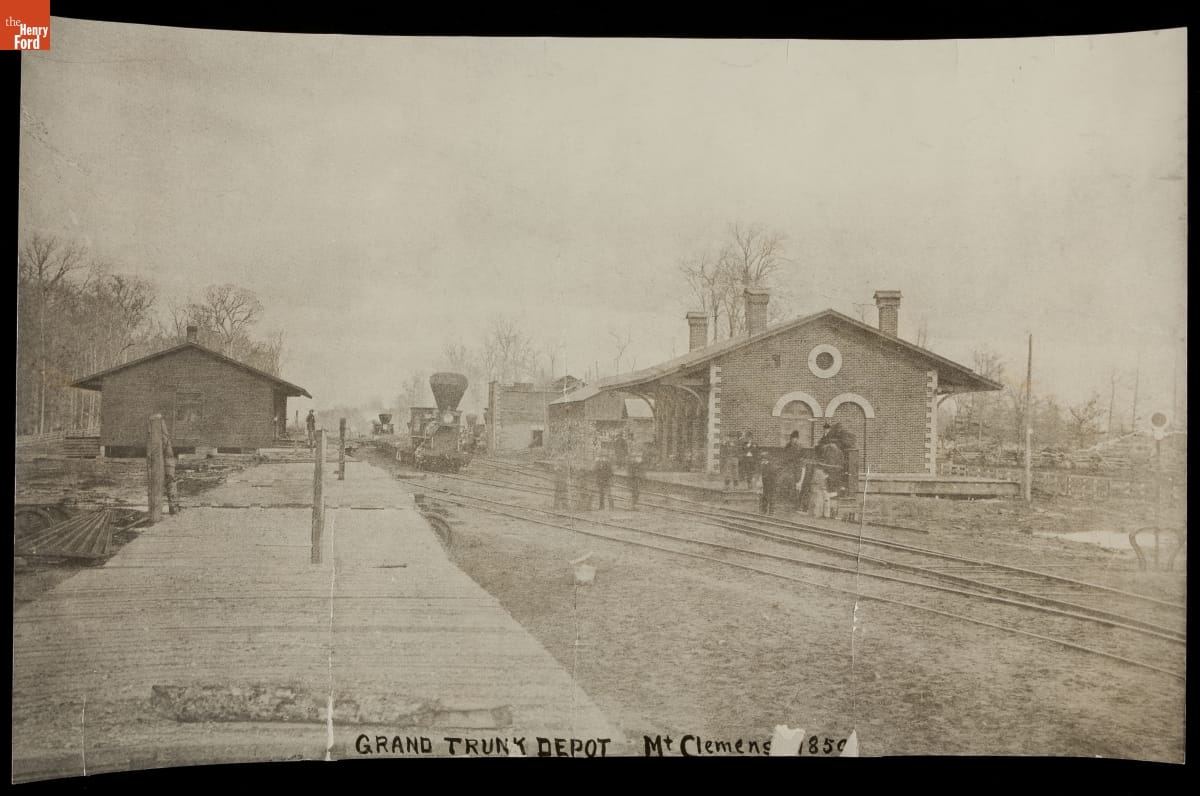
- Grand Trunk Depot Where Thomas Edison Learned Telegraphy, Mount Clemens, Michigan, 1859 - During a stop at this depot in 1862, a Grand Trunk Western Railroad newsboy and candy salesman rescued the son of station agent J.U. Mackenzie from an oncoming boxcar. In gratitude, Mackenzie taught him railroad telegraphy. The boy was Thomas Edison, who became a celebrated American inventor. Some of his early work was based on telegraph technology.
- 1859
- Collections - Artifact
Grand Trunk Depot Where Thomas Edison Learned Telegraphy, Mount Clemens, Michigan, 1859
During a stop at this depot in 1862, a Grand Trunk Western Railroad newsboy and candy salesman rescued the son of station agent J.U. Mackenzie from an oncoming boxcar. In gratitude, Mackenzie taught him railroad telegraphy. The boy was Thomas Edison, who became a celebrated American inventor. Some of his early work was based on telegraph technology.
- Morkrum Green Code Receiving Distributor, circa 1922 -
- circa 1922
- Collections - Artifact
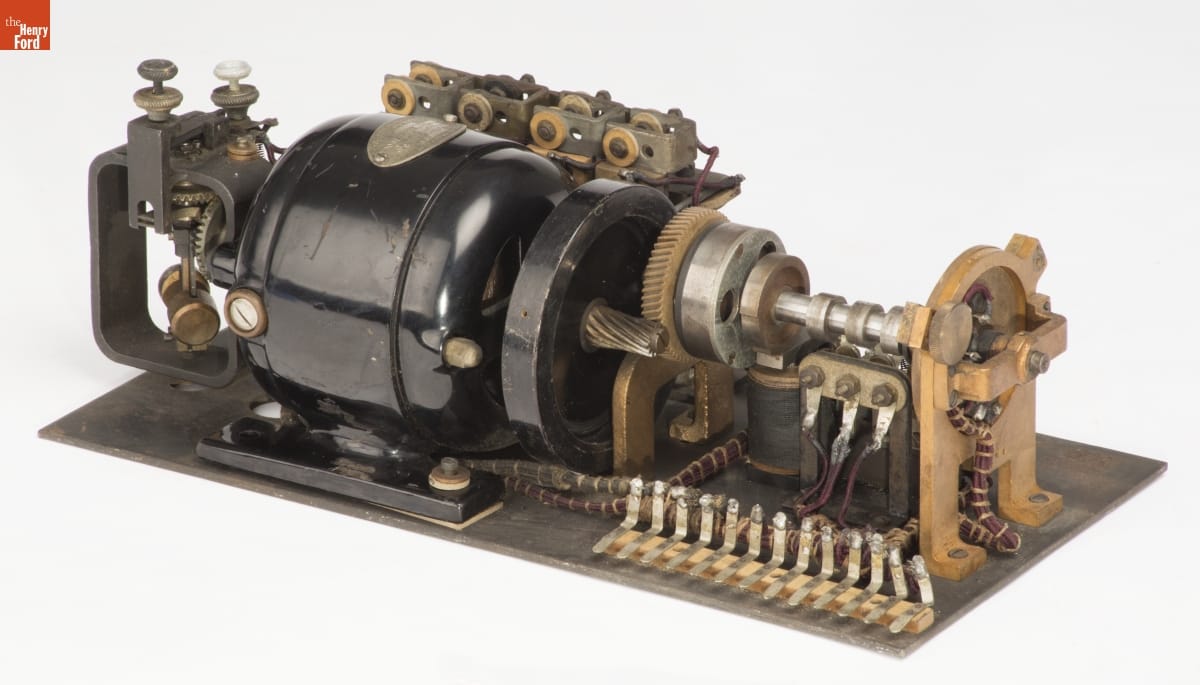
Morkrum Green Code Receiving Distributor, circa 1922
- Western Electric Multiplex Distributor and Tuning Fork, circa 1915 -
- circa 1915
- Collections - Artifact
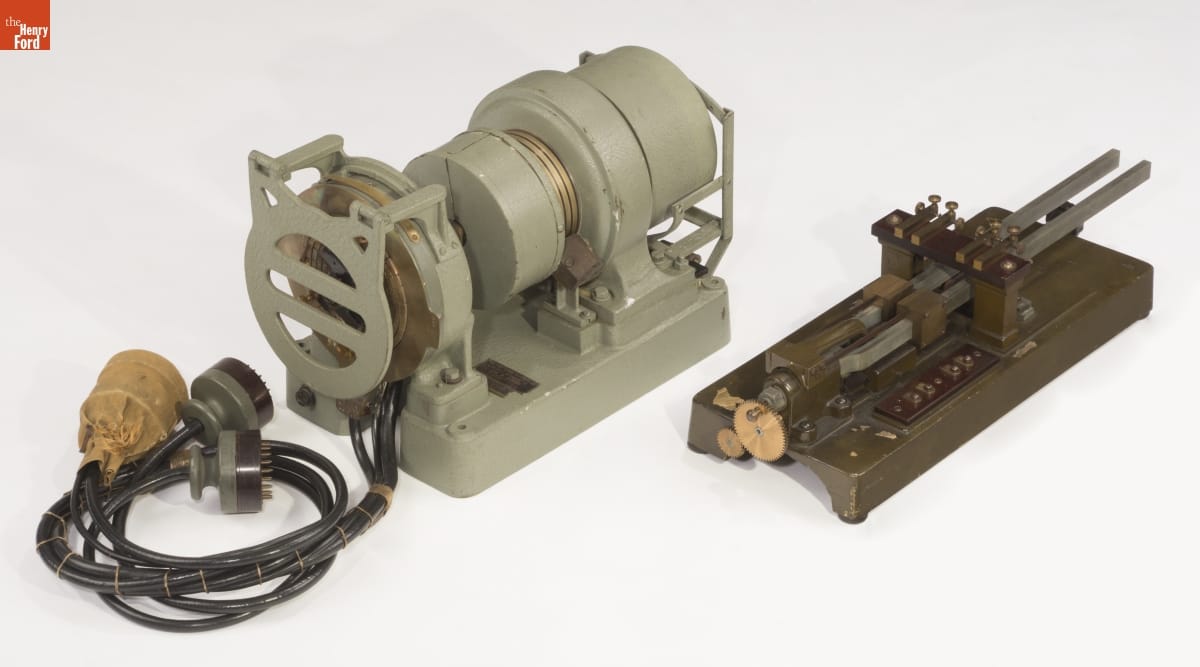
Western Electric Multiplex Distributor and Tuning Fork, circa 1915
- Wireless Telegraph Transformer, 1912-1918 -
- 1912-1918
- Collections - Artifact
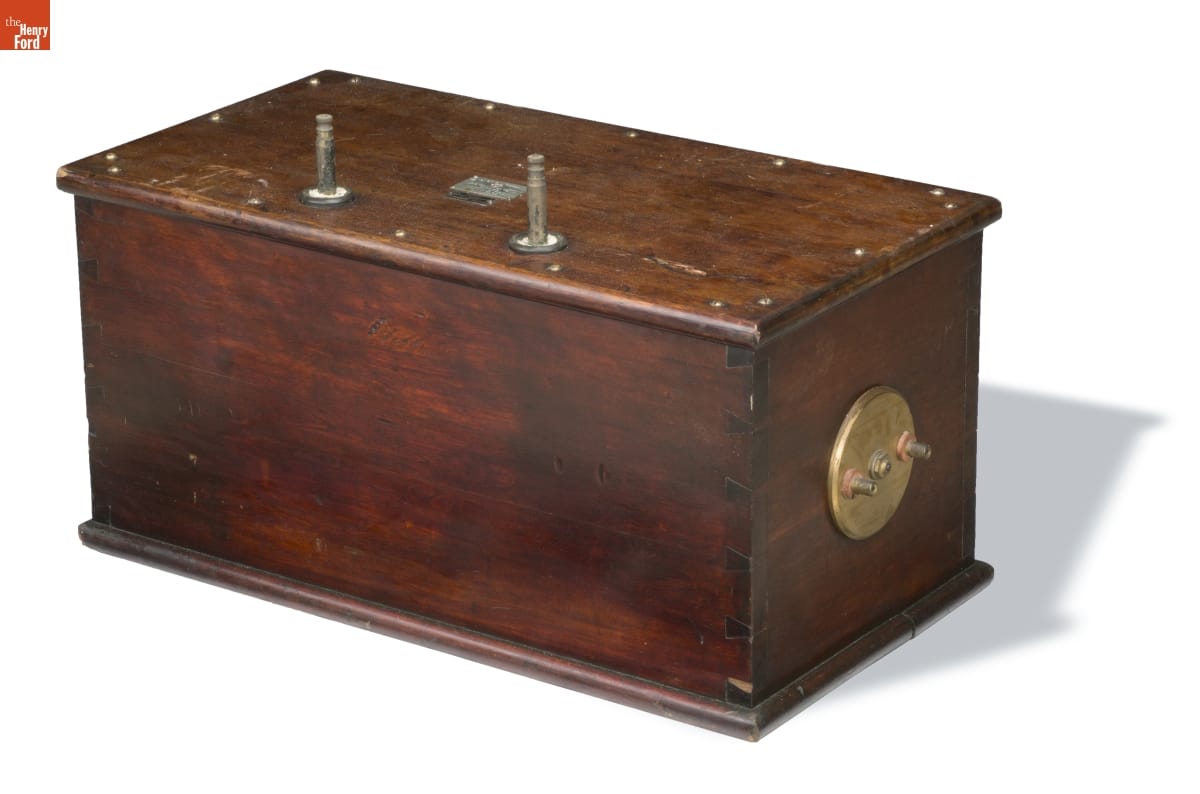
Wireless Telegraph Transformer, 1912-1918
- Murdock Send-Receive Wireless Telegraph Switch, 1915 -
- 1915
- Collections - Artifact
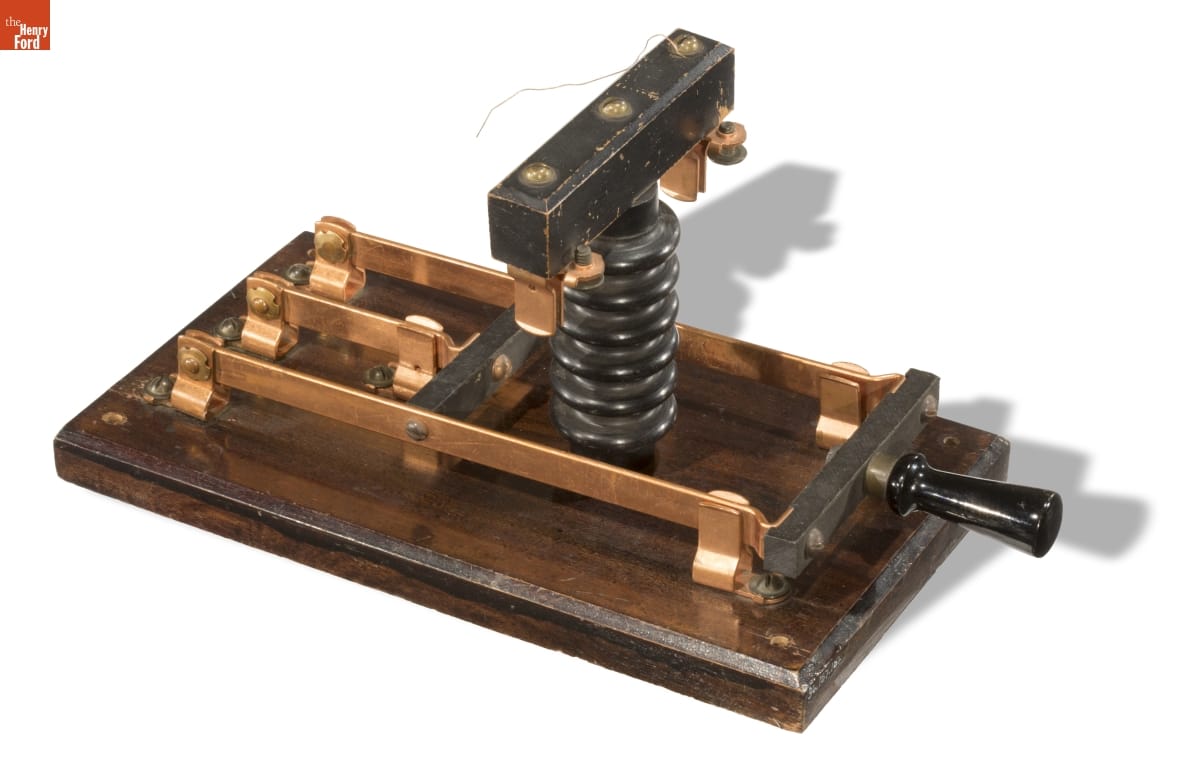
Murdock Send-Receive Wireless Telegraph Switch, 1915
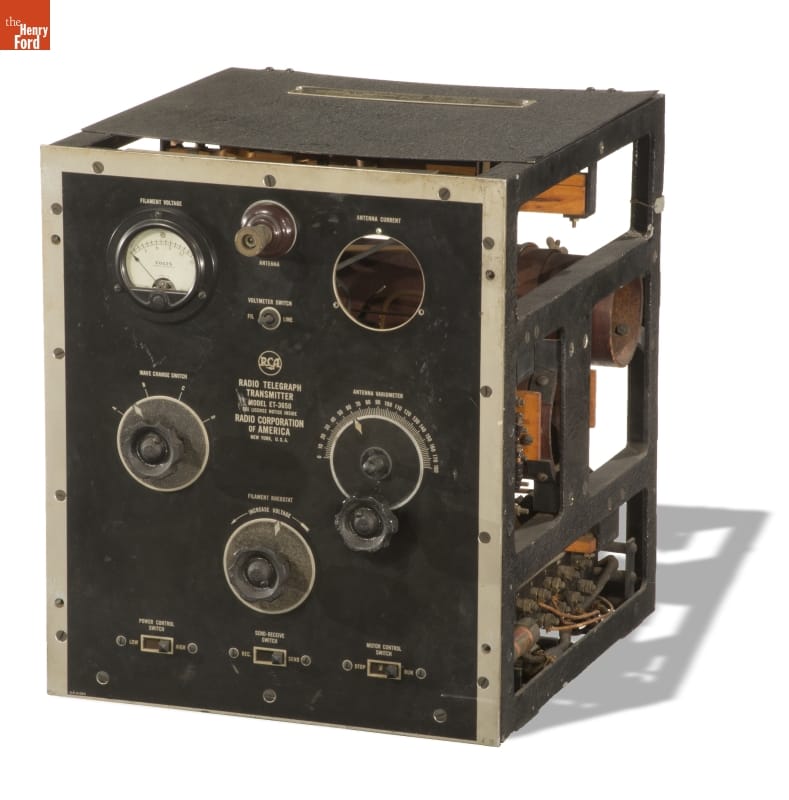
- RCA Radio Telegraph Transmitter, Model ET-3650, 1927-1935 - This equipment transmitted wireless telegraph messages, either from ships at sea to stations on shore, or vice-versa. It was used as technical equipment by trained radio experts--likely members of the US Navy. The ability to transmit and receive telegraphs through ship-to-shore communication opened up new worlds of maritime messaging, previously reliant on visual signaling (flags) and noise-making devices (foghorns).
- 1927-1935
- Collections - Artifact
RCA Radio Telegraph Transmitter, Model ET-3650, 1927-1935
This equipment transmitted wireless telegraph messages, either from ships at sea to stations on shore, or vice-versa. It was used as technical equipment by trained radio experts--likely members of the US Navy. The ability to transmit and receive telegraphs through ship-to-shore communication opened up new worlds of maritime messaging, previously reliant on visual signaling (flags) and noise-making devices (foghorns).
- Thomas Edison Patent Models -

- October 16, 2015
- Collections - Set
Thomas Edison Patent Models
- Cymometer, 1905-1936 -
- 1905-1936
- Collections - Artifact
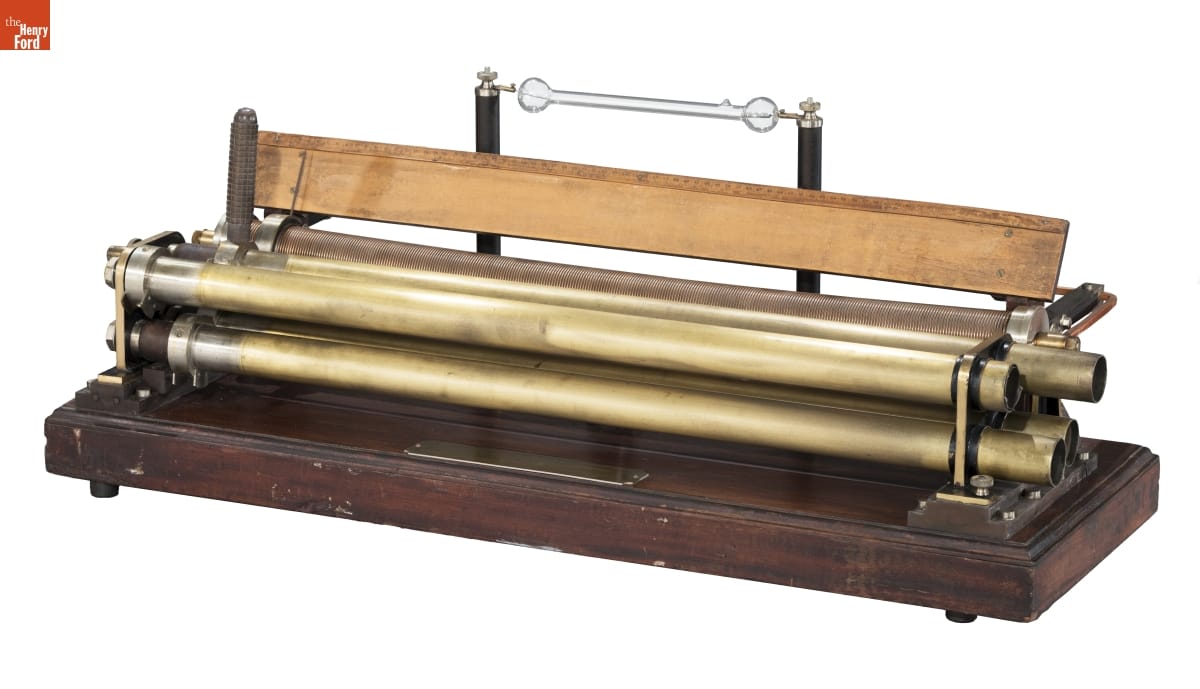
Cymometer, 1905-1936
- Sending out an SOS - On August 11, 1909, as his ship struggled off Cape Hatteras, telegraph operator Theodore Haubner had an urgent choice to make: How should he call for help? Learn how the first SOS signal was sent.

- February 07, 2012
- Collections - article
Sending out an SOS
On August 11, 1909, as his ship struggled off Cape Hatteras, telegraph operator Theodore Haubner had an urgent choice to make: How should he call for help? Learn how the first SOS signal was sent.
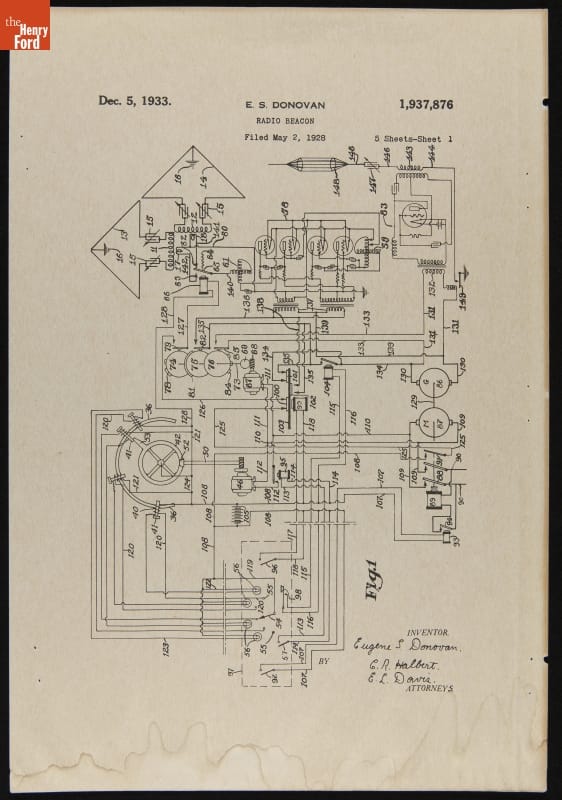
- The Patent Process - The radio beacon may be Henry Ford's most important contribution to aviation. Early pilots depended on landmarks, preventing reliable navigation in bad weather. Ford's engineers developed a radio beacon that simultaneously transmitted the Morse code letter "A" (dot-dash) in one direction and the letter "N" (dash-dot) in another. The pilot steered until the separate signals merged into a steady hum.
- November 08, 2016
- Collections - Set
The Patent Process
The radio beacon may be Henry Ford's most important contribution to aviation. Early pilots depended on landmarks, preventing reliable navigation in bad weather. Ford's engineers developed a radio beacon that simultaneously transmitted the Morse code letter "A" (dot-dash) in one direction and the letter "N" (dash-dot) in another. The pilot steered until the separate signals merged into a steady hum.