
Search
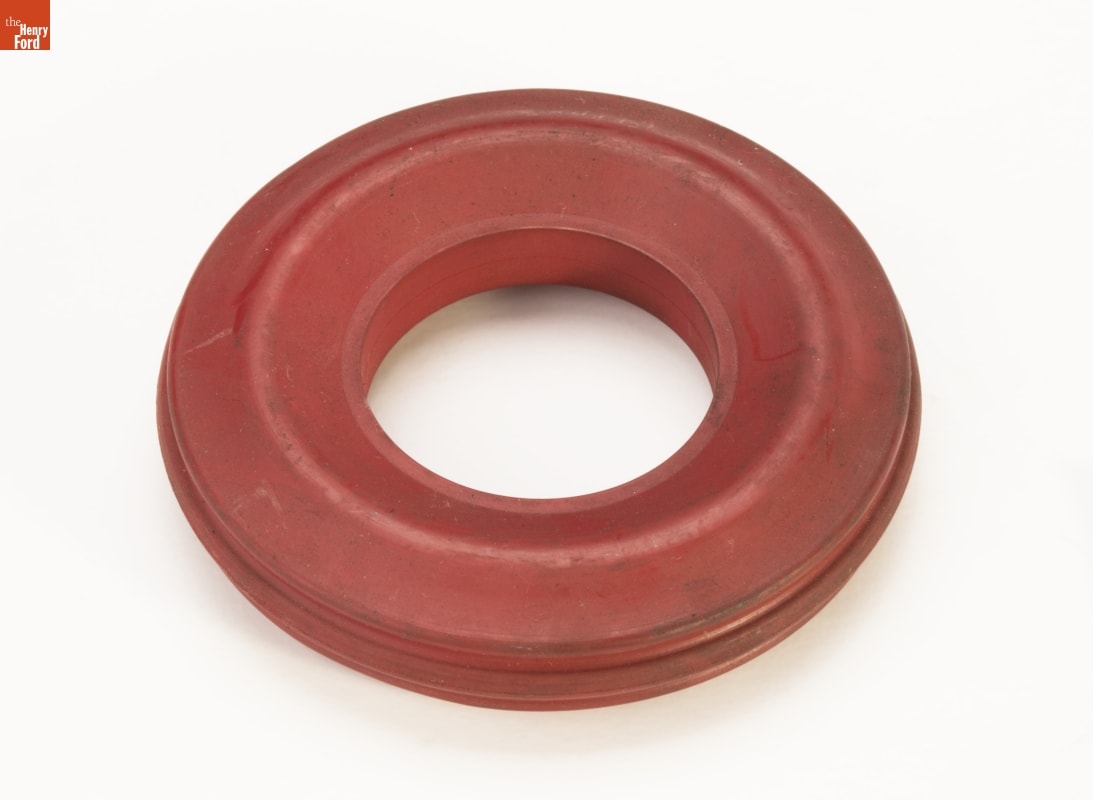
- Tether Car Tire, circa 1940 - Tether cars, gas-powered model race cars, were popular in the 1930s and 1940s. They were raced individually while tethered to a central pivot, or against each other on a scaled-down board track. This tether car tire was molded in solid, red rubber. Hollow tires were available as well.
- circa 1940
- Collections - Artifact
Tether Car Tire, circa 1940
Tether cars, gas-powered model race cars, were popular in the 1930s and 1940s. They were raced individually while tethered to a central pivot, or against each other on a scaled-down board track. This tether car tire was molded in solid, red rubber. Hollow tires were available as well.
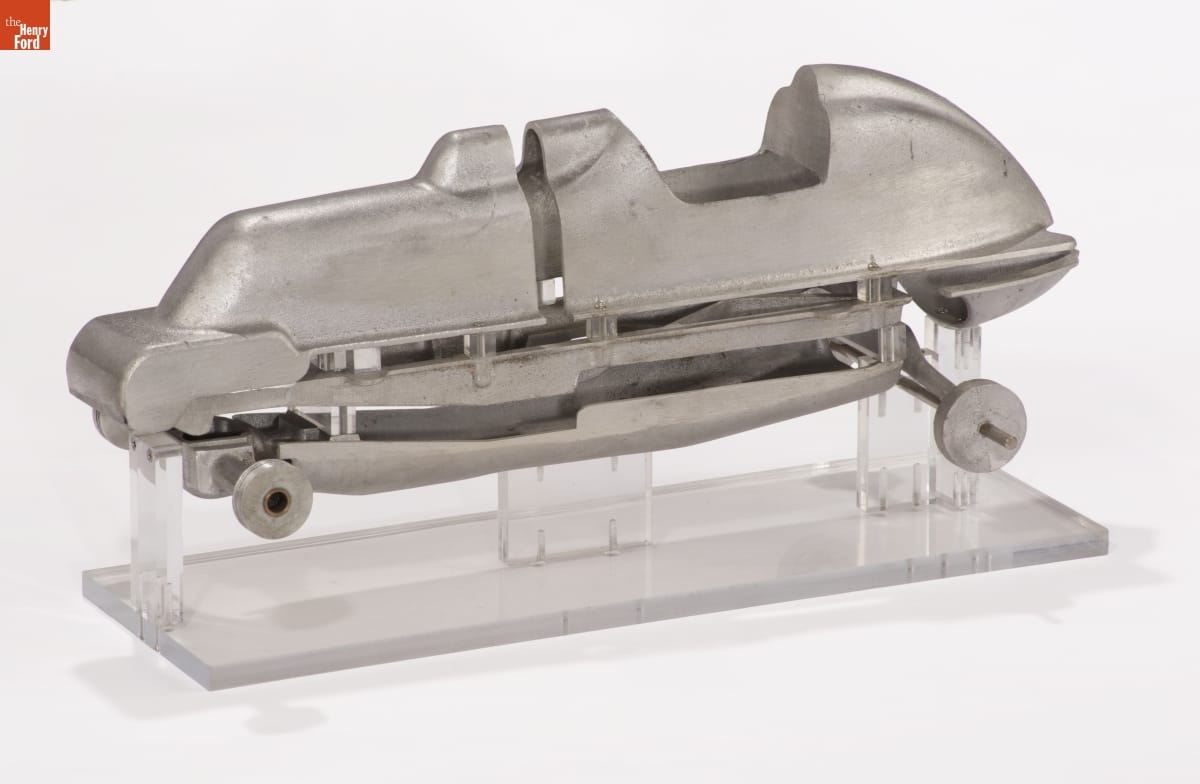
- Tether Car Cast Components, 1930-1950 - Tether cars, gas-powered model race cars, were popular in the 1930s and 1940s. They were raced individually while tethered to a central pivot, or against each other on a scaled-down board track. These metal components include a car body, a belly pan, axles, and wheel hubs.
- 1930-1950
- Collections - Artifact
Tether Car Cast Components, 1930-1950
Tether cars, gas-powered model race cars, were popular in the 1930s and 1940s. They were raced individually while tethered to a central pivot, or against each other on a scaled-down board track. These metal components include a car body, a belly pan, axles, and wheel hubs.
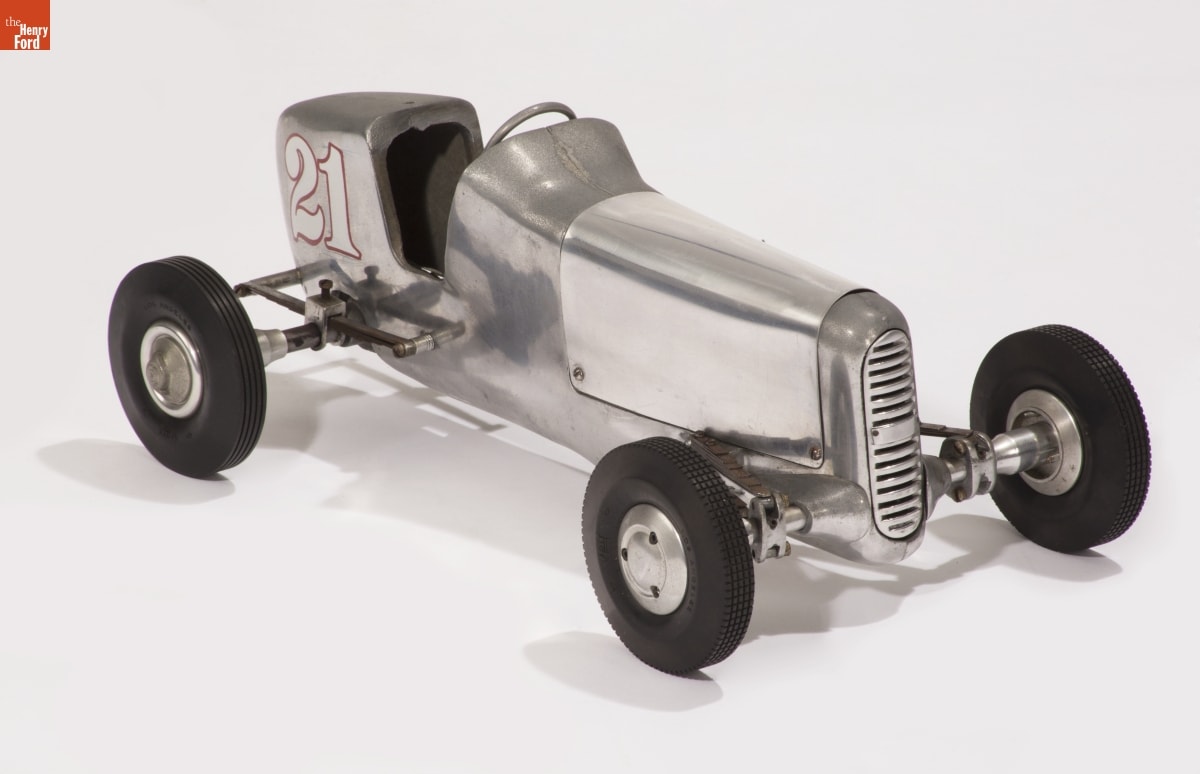
- Gas-Powered Racing Tether Car, 1940-1950 - Tether cars, gas-powered model race cars, were popular in the 1930s and 1940s. They were raced individually while tethered to a central pivot, or against each other on a scaled-down board track. Racers typically got their cars in one of four ways: designing and building from scratch, building from published plans, buying a model kit, or buying a fully assembled car.
- 1940-1950
- Collections - Artifact
Gas-Powered Racing Tether Car, 1940-1950
Tether cars, gas-powered model race cars, were popular in the 1930s and 1940s. They were raced individually while tethered to a central pivot, or against each other on a scaled-down board track. Racers typically got their cars in one of four ways: designing and building from scratch, building from published plans, buying a model kit, or buying a fully assembled car.
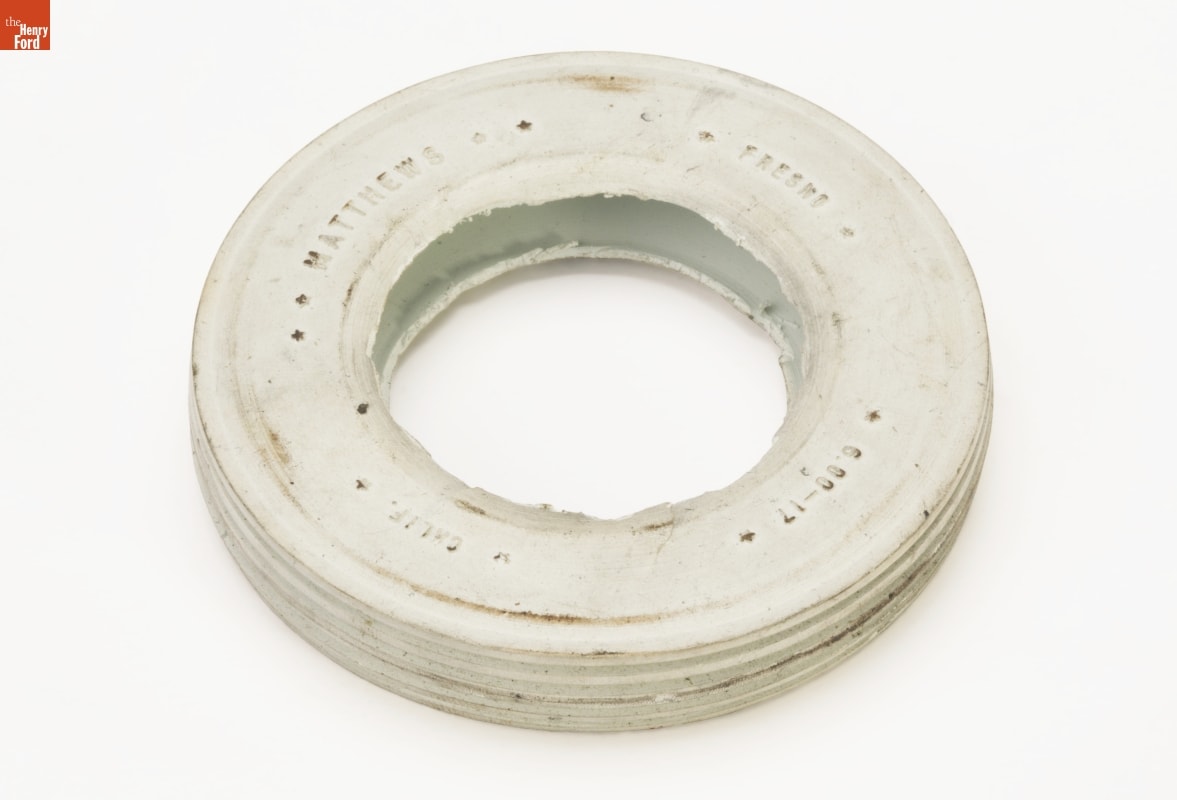
- Matthews Tether Car Tire, circa 1940 - Tether cars, gas-powered model race cars, were popular in the 1930s and 1940s. They were raced individually while tethered to a central pivot, or against each other on a scaled-down board track. This rubber tire was produced by the Matthews Foundry of Fresno, California. Matthews tether cars were successful in sales and on race tracks.
- circa 1940
- Collections - Artifact
Matthews Tether Car Tire, circa 1940
Tether cars, gas-powered model race cars, were popular in the 1930s and 1940s. They were raced individually while tethered to a central pivot, or against each other on a scaled-down board track. This rubber tire was produced by the Matthews Foundry of Fresno, California. Matthews tether cars were successful in sales and on race tracks.
- Dooling "F-Car" Gas-Powered Racing Tether Car, 1946 - Tether cars, gas-powered model race cars, were popular in the 1930s and 1940s. They were raced individually while tethered to a central pivot, or against each other on a scaled-down board track. Dooling Brothers, of Los Angeles, California, manufactured a complete line of open-cockpit and streamliner models. Company owners Tom, Harris and Russell Dooling were successful tether car racers themselves.
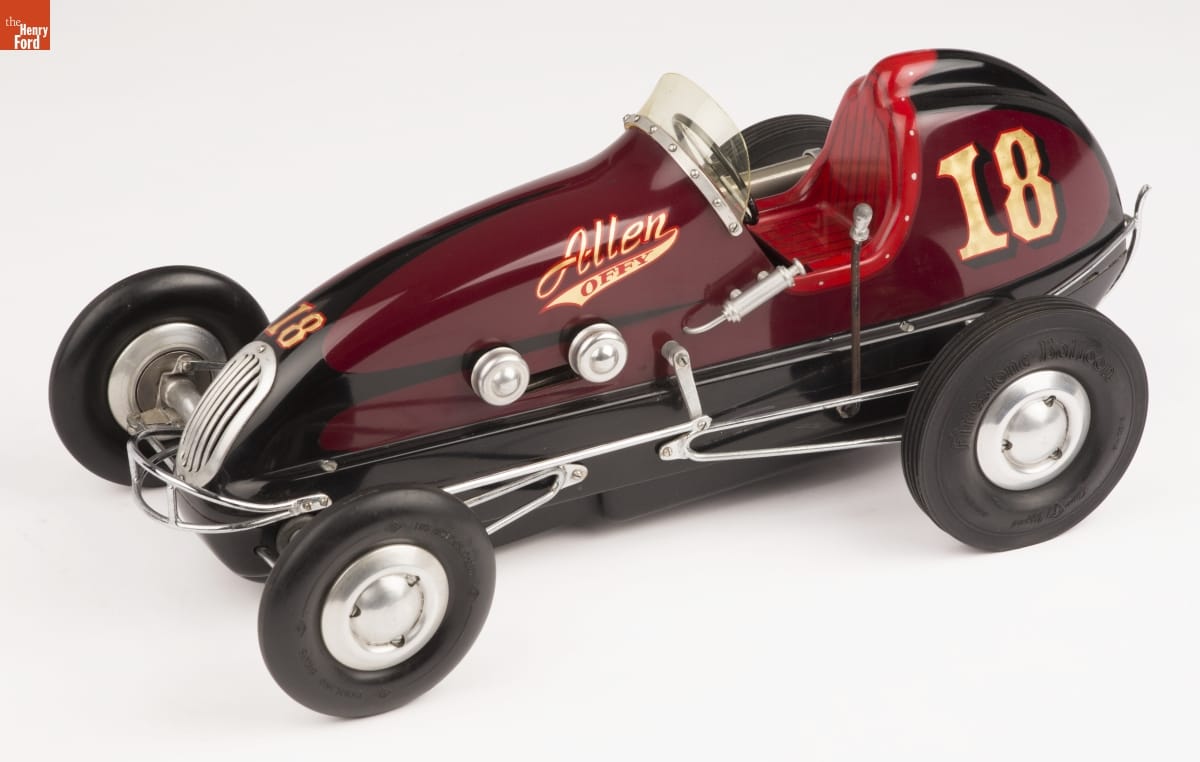
- 1946
- Collections - Artifact
Dooling "F-Car" Gas-Powered Racing Tether Car, 1946
Tether cars, gas-powered model race cars, were popular in the 1930s and 1940s. They were raced individually while tethered to a central pivot, or against each other on a scaled-down board track. Dooling Brothers, of Los Angeles, California, manufactured a complete line of open-cockpit and streamliner models. Company owners Tom, Harris and Russell Dooling were successful tether car racers themselves.
- "Satan" Gas-Powered Racing Tether Car, 1946 - Tether cars, gas-powered model race cars, were popular in the 1930s and 1940s. They were raced individually while tethered to a central pivot, or against each other on a scaled-down board track. "Satan" cars were made by Leland Seghetti and the Lee Model Manufacturing Company of Vallejo, California. This was Seghetti's personal tether car.
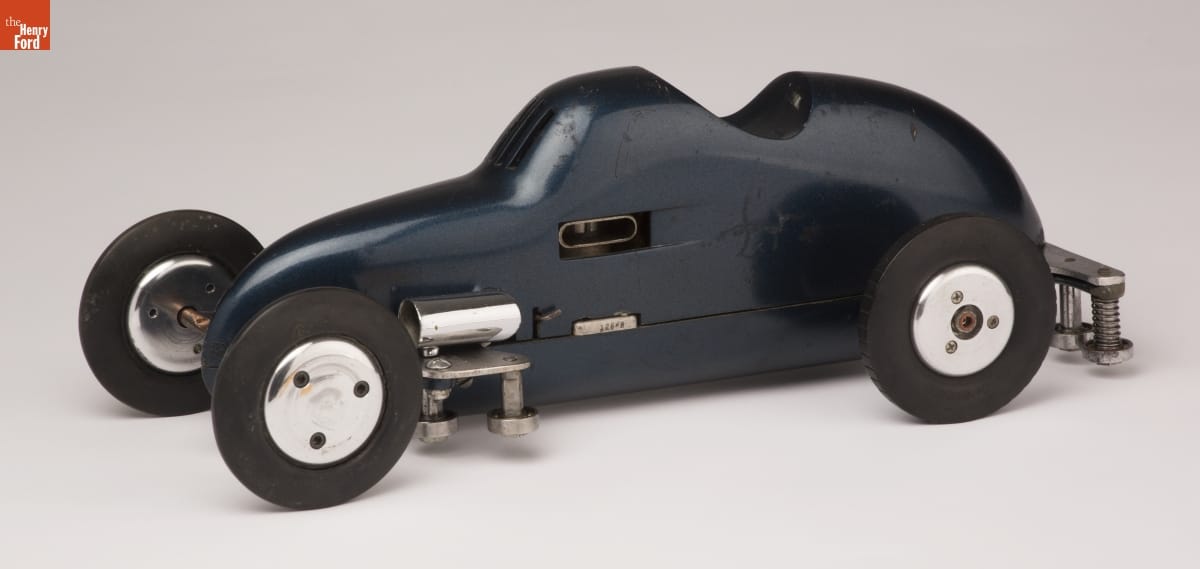
- 1946
- Collections - Artifact
"Satan" Gas-Powered Racing Tether Car, 1946
Tether cars, gas-powered model race cars, were popular in the 1930s and 1940s. They were raced individually while tethered to a central pivot, or against each other on a scaled-down board track. "Satan" cars were made by Leland Seghetti and the Lee Model Manufacturing Company of Vallejo, California. This was Seghetti's personal tether car.
- Gas-Powered Racing Tether Car, 1940-1950 - Tether cars, gas-powered model race cars, were popular in the 1930s and 1940s. They were raced individually while tethered to a central pivot, or against each other on a scaled-down board track. This model's tether-attachment tabs were cast directly into the bellypan on the car's left side.
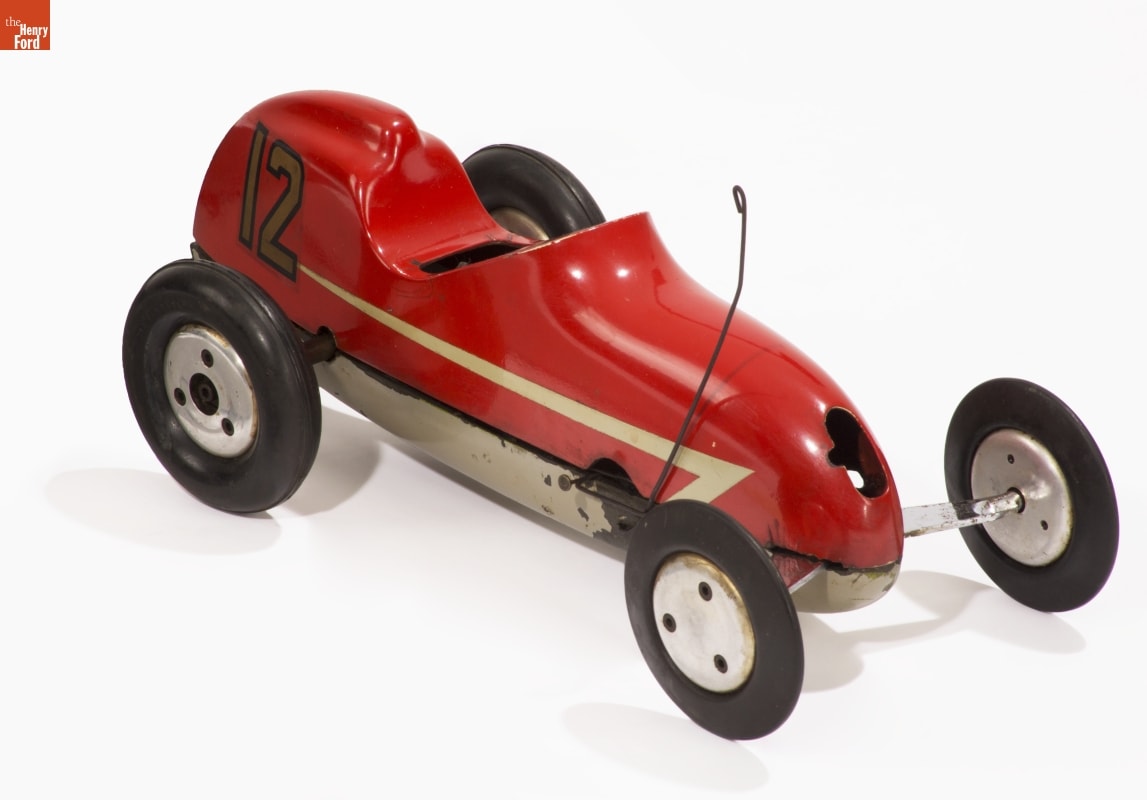
- 1940-1950
- Collections - Artifact
Gas-Powered Racing Tether Car, 1940-1950
Tether cars, gas-powered model race cars, were popular in the 1930s and 1940s. They were raced individually while tethered to a central pivot, or against each other on a scaled-down board track. This model's tether-attachment tabs were cast directly into the bellypan on the car's left side.
- Gas-Powered Racing Tether Car, 1940-1950 - Tether cars, gas-powered model race cars, were popular in the 1930s and 1940s. They were raced individually while tethered to a central pivot, or against each other on a scaled-down board track. The most elaborate models featured detailed cockpits with steering wheels and reproduction instrument clusters. Simpler models merely copied the basic shape of a full-size race car.
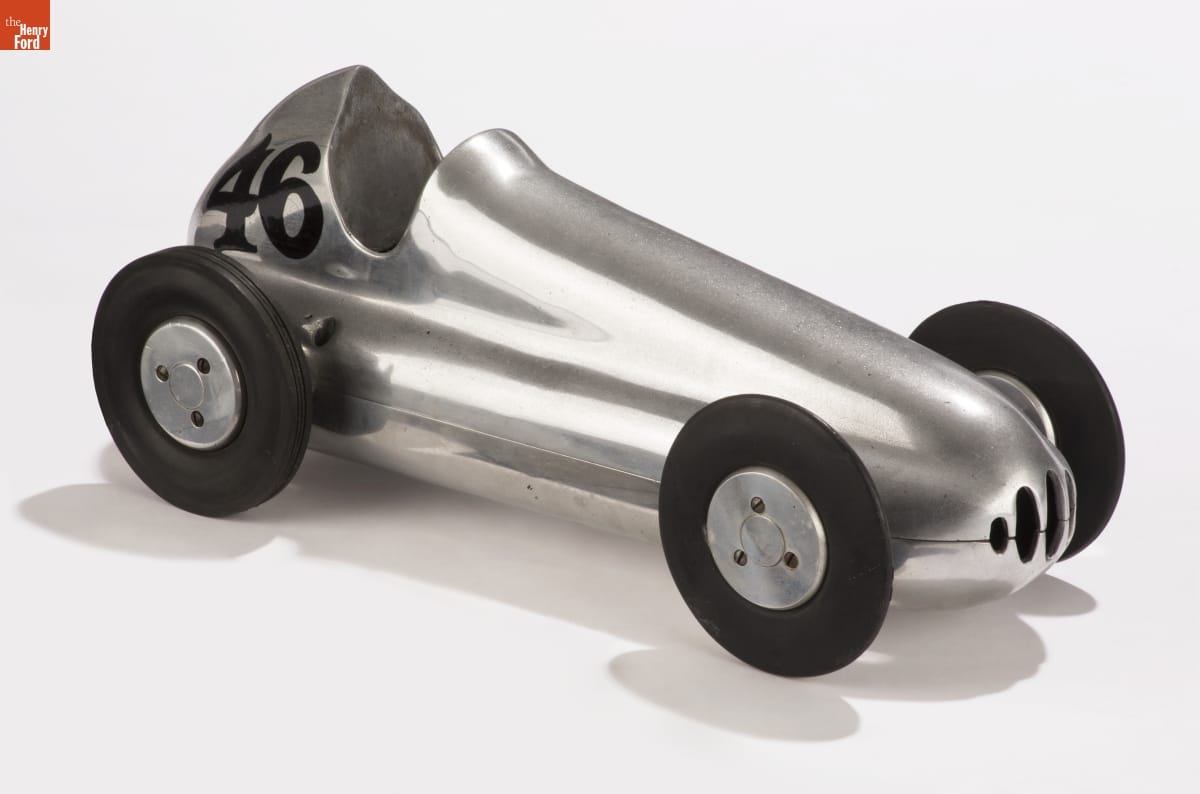
- 1940-1950
- Collections - Artifact
Gas-Powered Racing Tether Car, 1940-1950
Tether cars, gas-powered model race cars, were popular in the 1930s and 1940s. They were raced individually while tethered to a central pivot, or against each other on a scaled-down board track. The most elaborate models featured detailed cockpits with steering wheels and reproduction instrument clusters. Simpler models merely copied the basic shape of a full-size race car.
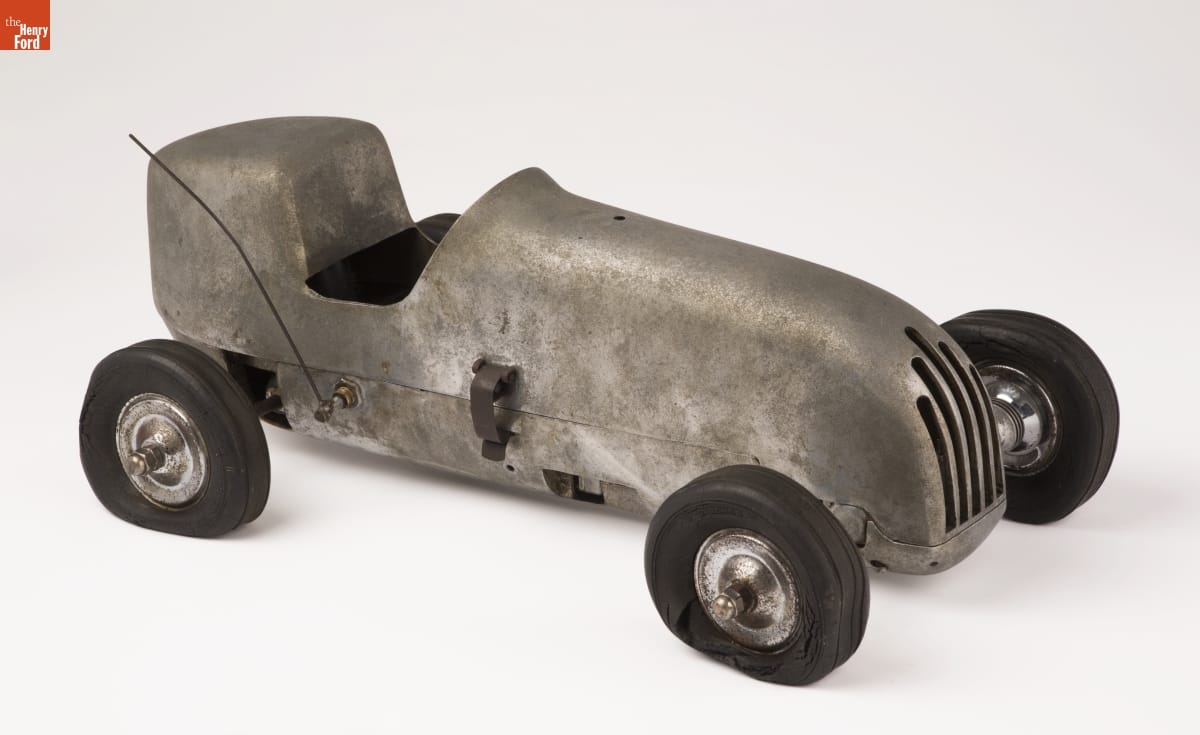
- Gas-Powered Racing Tether Car, circa 1938 - Tether cars, gas-powered model race cars, were popular in the 1930s and 1940s. They were raced individually while tethered to a central pivot, or against each other on a scaled-down board track. This model is an early cast prototype of an open-cockpit, Indianapolis-style car.
- circa 1938
- Collections - Artifact
Gas-Powered Racing Tether Car, circa 1938
Tether cars, gas-powered model race cars, were popular in the 1930s and 1940s. They were raced individually while tethered to a central pivot, or against each other on a scaled-down board track. This model is an early cast prototype of an open-cockpit, Indianapolis-style car.
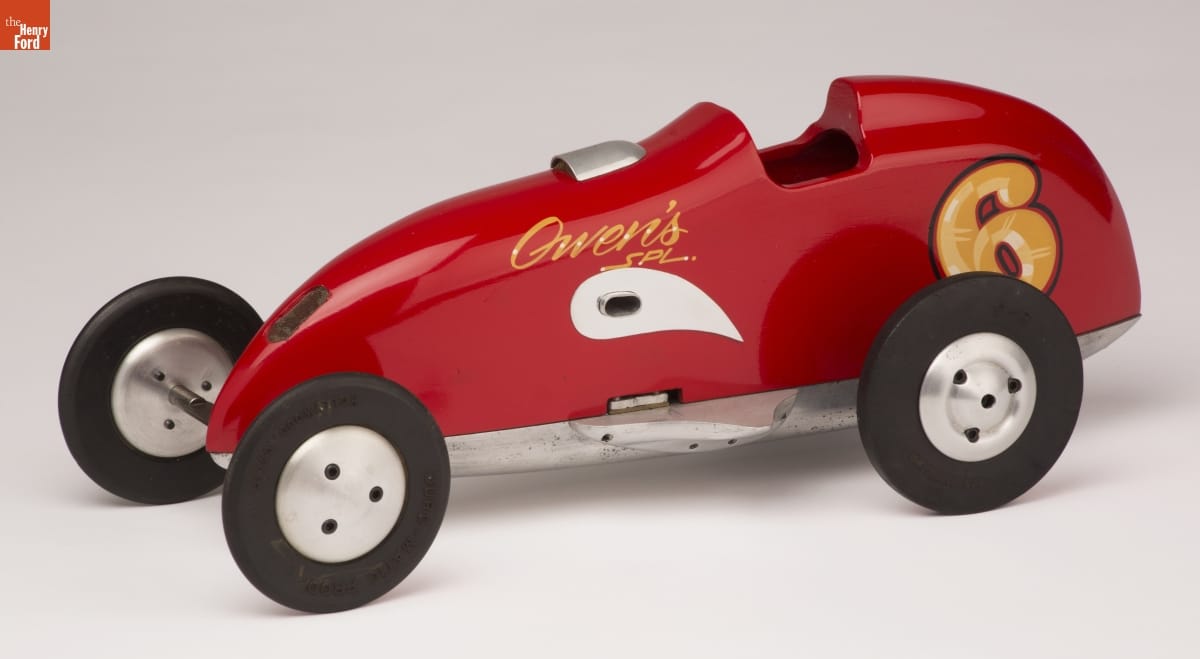
- Owen's Gas-Powered Racing Tether Car, 1950 - Tether cars, gas-powered model race cars, were popular in the 1930s and 1940s. They were raced individually while tethered to a central pivot, or against each other on a scaled-down board track. This "Owen's Special" consists of an aluminum body pan capped with a carved balsa wood top.
- 1950
- Collections - Artifact
Owen's Gas-Powered Racing Tether Car, 1950
Tether cars, gas-powered model race cars, were popular in the 1930s and 1940s. They were raced individually while tethered to a central pivot, or against each other on a scaled-down board track. This "Owen's Special" consists of an aluminum body pan capped with a carved balsa wood top.