
Search
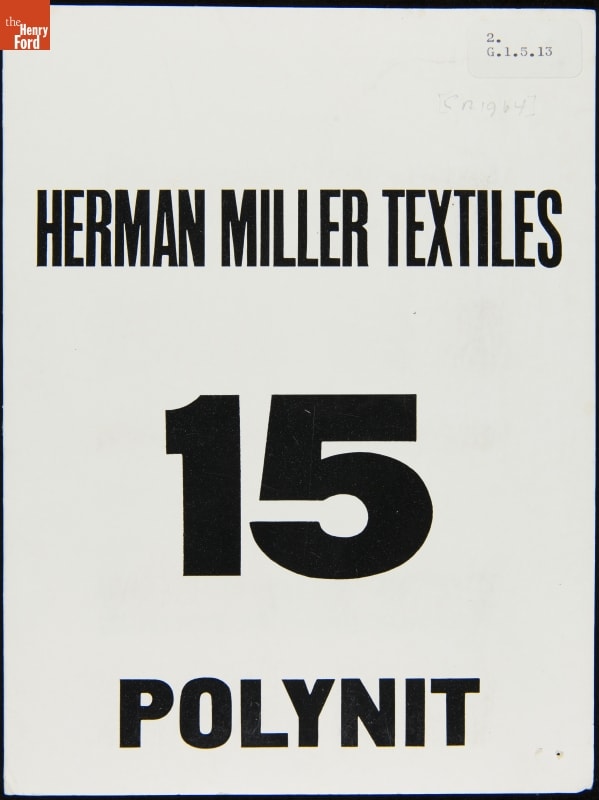
- Herman Miller Textiles Swatches, "15 Polynit," 1964 - Early modernist design was starkly minimal, but mid-century modern designer Alexander Girard's work challenged and expanded the movement. Girard humanized modernism through his colorful and whimsical textile, furniture, graphic, and interior designs. As the Director of Design in Herman Miller's Textile Division from 1952 until 1973, Girard designed over 300 textiles, often using bold color combinations and abstract patterns.
- 1964
- Collections - Artifact
Herman Miller Textiles Swatches, "15 Polynit," 1964
Early modernist design was starkly minimal, but mid-century modern designer Alexander Girard's work challenged and expanded the movement. Girard humanized modernism through his colorful and whimsical textile, furniture, graphic, and interior designs. As the Director of Design in Herman Miller's Textile Division from 1952 until 1973, Girard designed over 300 textiles, often using bold color combinations and abstract patterns.
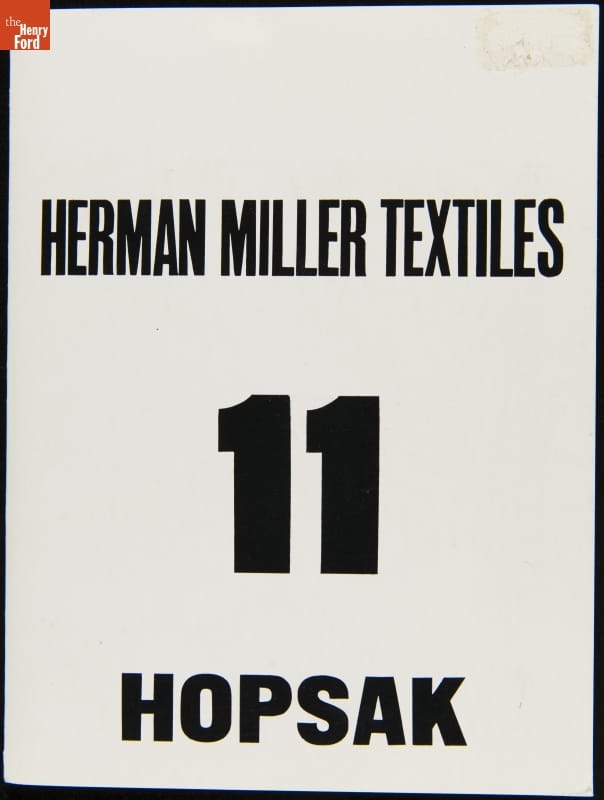
- Herman Miller Textiles Swatches, "11 Hopsak," 1964 - Early modernist design was starkly minimal, but mid-century modern designer Alexander Girard's work challenged and expanded the movement. Girard humanized modernism through his colorful and whimsical textile, furniture, graphic, and interior designs. As the Director of Design in Herman Miller's Textile Division from 1952 until 1973, Girard designed over 300 textiles, often using bold color combinations and abstract patterns.
- 1964
- Collections - Artifact
Herman Miller Textiles Swatches, "11 Hopsak," 1964
Early modernist design was starkly minimal, but mid-century modern designer Alexander Girard's work challenged and expanded the movement. Girard humanized modernism through his colorful and whimsical textile, furniture, graphic, and interior designs. As the Director of Design in Herman Miller's Textile Division from 1952 until 1973, Girard designed over 300 textiles, often using bold color combinations and abstract patterns.
- Herman Miller Textiles Swatch Card, "Naugahyde," 1966 -
- 1966
- Collections - Artifact
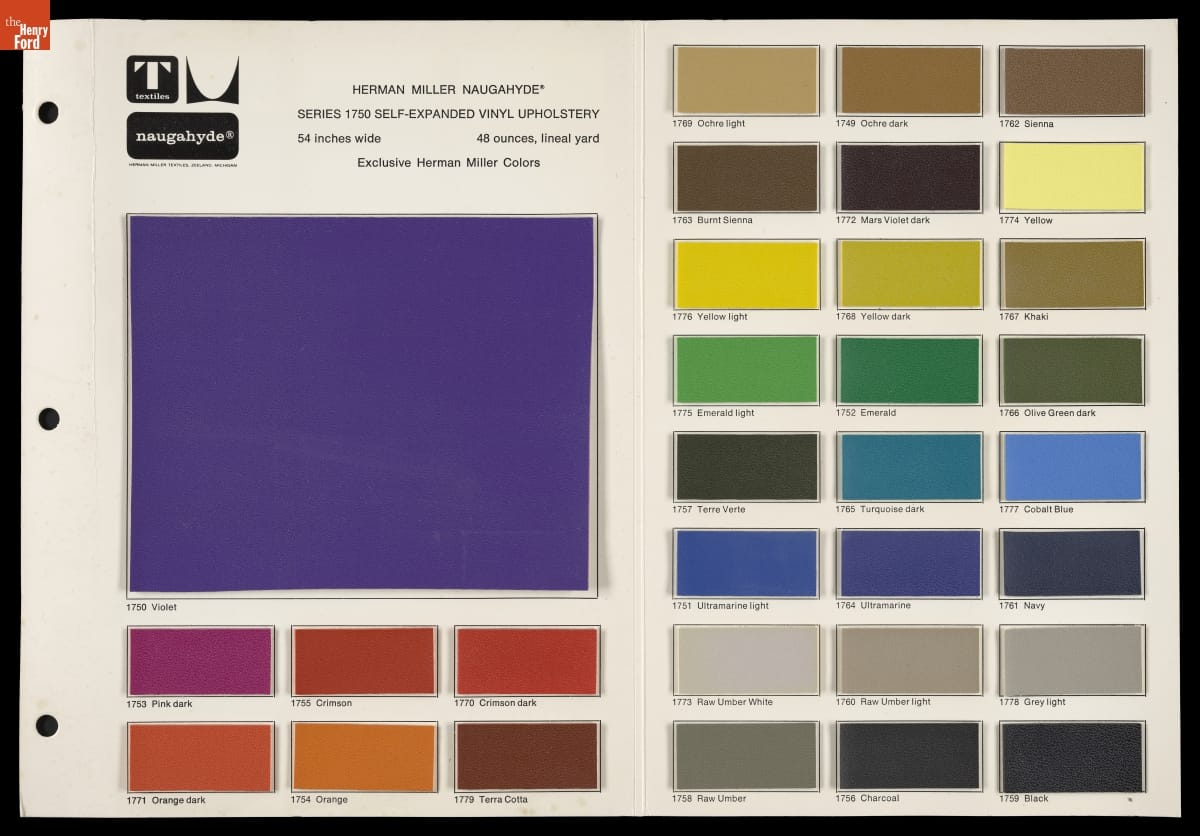
Herman Miller Textiles Swatch Card, "Naugahyde," 1966
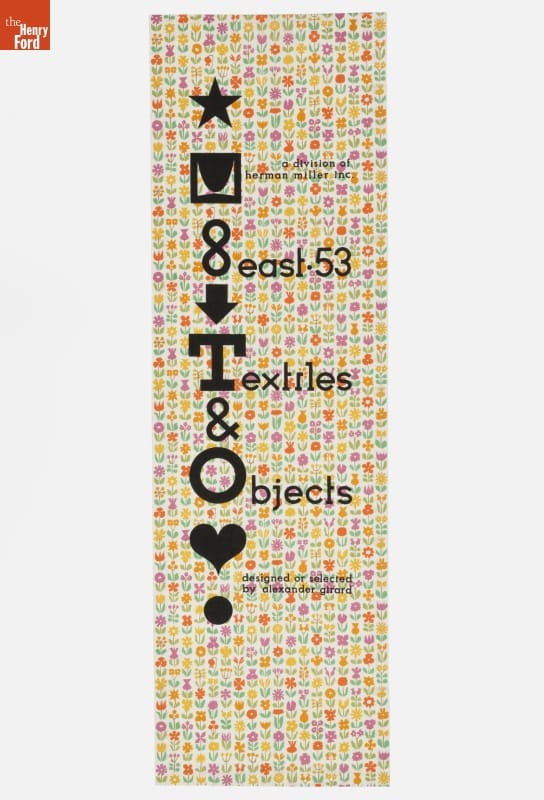
- "Textiles & Objects" Banner, Designed by Alexander Girard, 1961 - In 1961, Herman Miller opened the avant-garde "Textiles and Objects Shop" in New York City. Designer Alexander Girard conceived of the idea, designed the shop, and stocked it with textiles, furniture, handcrafted objects, and even folk art from around the world. This iconic banner -- with screen printed text on Girard's "April" textile -- hung in the storefront window.
- 1961-1963
- Collections - Artifact
"Textiles & Objects" Banner, Designed by Alexander Girard, 1961
In 1961, Herman Miller opened the avant-garde "Textiles and Objects Shop" in New York City. Designer Alexander Girard conceived of the idea, designed the shop, and stocked it with textiles, furniture, handcrafted objects, and even folk art from around the world. This iconic banner -- with screen printed text on Girard's "April" textile -- hung in the storefront window.
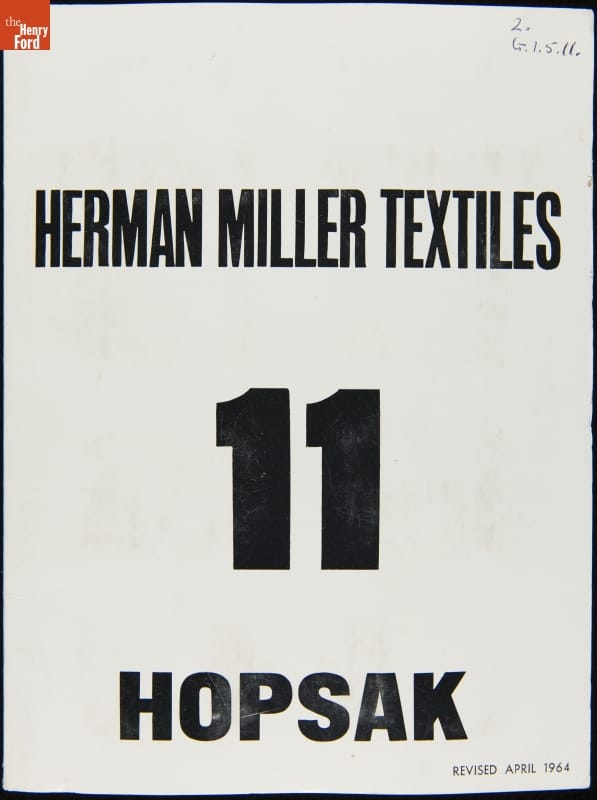
- Herman Miller Textiles Swatches, "11 Hopsak," 1964 - Early modernist design was starkly minimal, but mid-century modern designer Alexander Girard's work challenged and expanded the movement. Girard humanized modernism through his colorful and whimsical textile, furniture, graphic, and interior designs. As the Director of Design in Herman Miller's Textile Division from 1952 until 1973, Girard designed over 300 textiles, often using bold color combinations and abstract patterns.
- April 01, 1964
- Collections - Artifact
Herman Miller Textiles Swatches, "11 Hopsak," 1964
Early modernist design was starkly minimal, but mid-century modern designer Alexander Girard's work challenged and expanded the movement. Girard humanized modernism through his colorful and whimsical textile, furniture, graphic, and interior designs. As the Director of Design in Herman Miller's Textile Division from 1952 until 1973, Girard designed over 300 textiles, often using bold color combinations and abstract patterns.
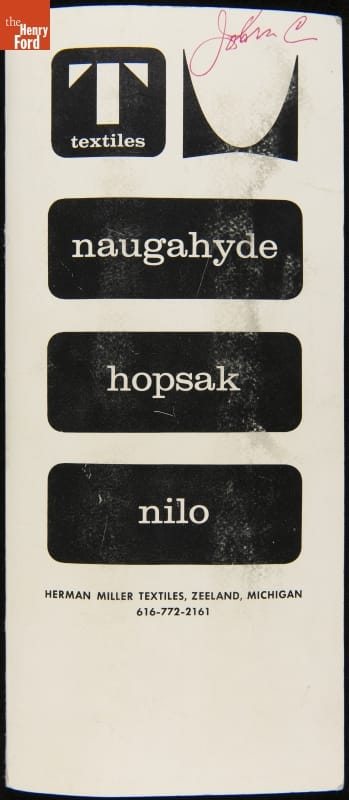
- Herman Miller Textiles Swatch Card, "Naughahyde, Hopsak, Nilo," 1968-1970 -
- 1968-1970
- Collections - Artifact
Herman Miller Textiles Swatch Card, "Naughahyde, Hopsak, Nilo," 1968-1970
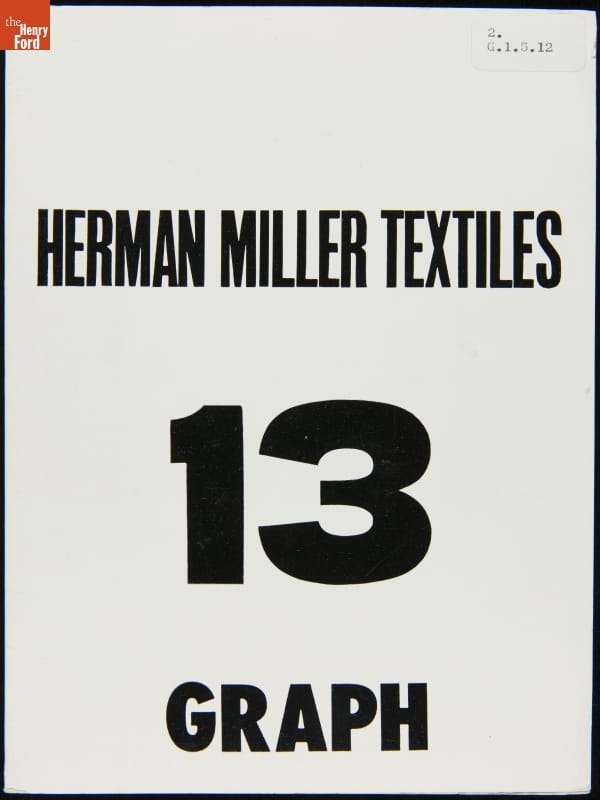
- Herman Miller Textiles Swatches, "13 Graph," 1964 - Early modernist design was starkly minimal, but mid-century modern designer Alexander Girard's work challenged and expanded the movement. Girard humanized modernism through his colorful and whimsical textile, furniture, graphic, and interior designs. As the Director of Design in Herman Miller's Textile Division from 1952 until 1973, Girard designed over 300 textiles, often using bold color combinations and abstract patterns.
- 1964
- Collections - Artifact
Herman Miller Textiles Swatches, "13 Graph," 1964
Early modernist design was starkly minimal, but mid-century modern designer Alexander Girard's work challenged and expanded the movement. Girard humanized modernism through his colorful and whimsical textile, furniture, graphic, and interior designs. As the Director of Design in Herman Miller's Textile Division from 1952 until 1973, Girard designed over 300 textiles, often using bold color combinations and abstract patterns.
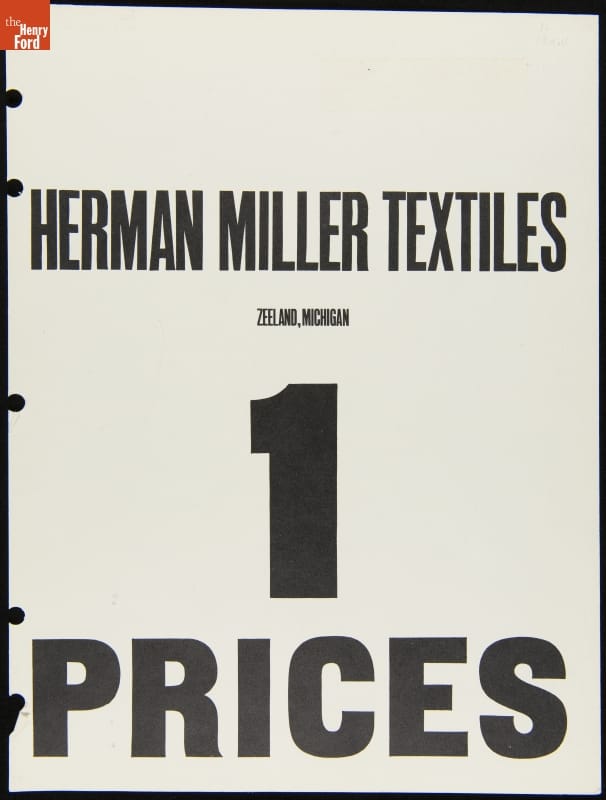
- Herman Miller Textiles, 1, Prices, July 1961 -
- July 01, 1961
- Collections - Artifact
Herman Miller Textiles, 1, Prices, July 1961
- Textile Equipment -
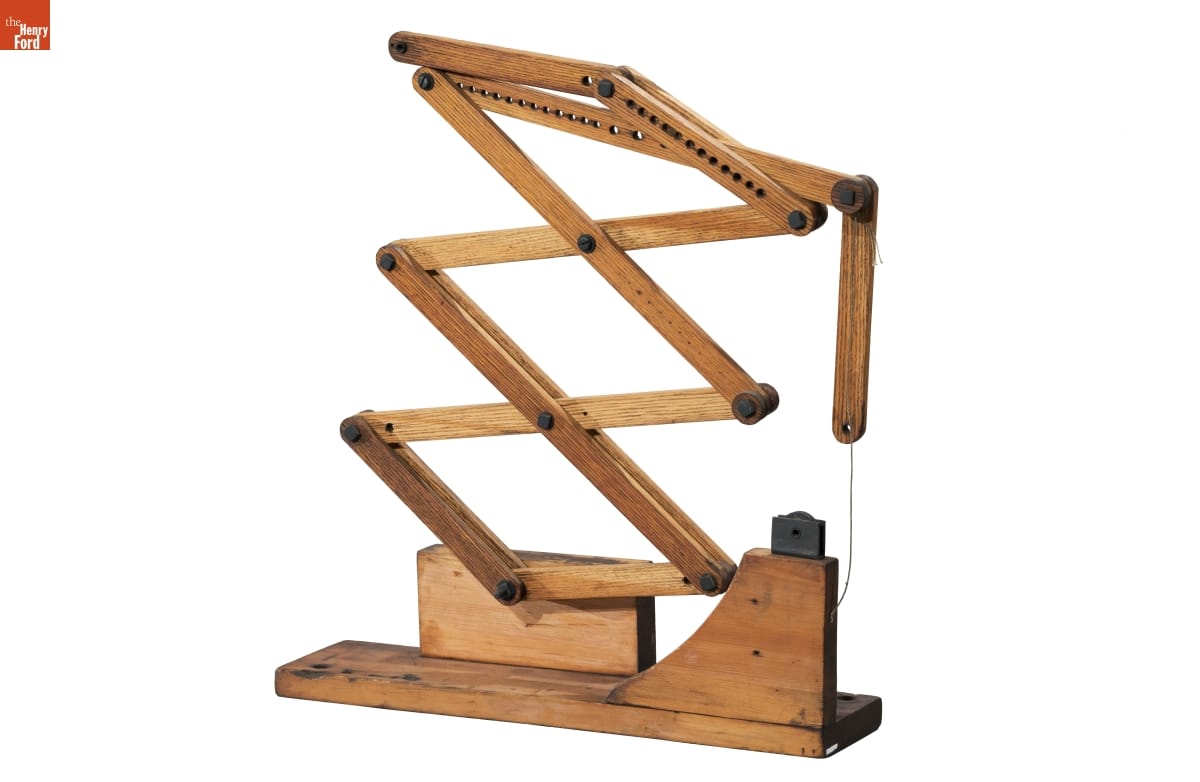
- Collections - Artifact
Textile Equipment
- Textile Equipment -
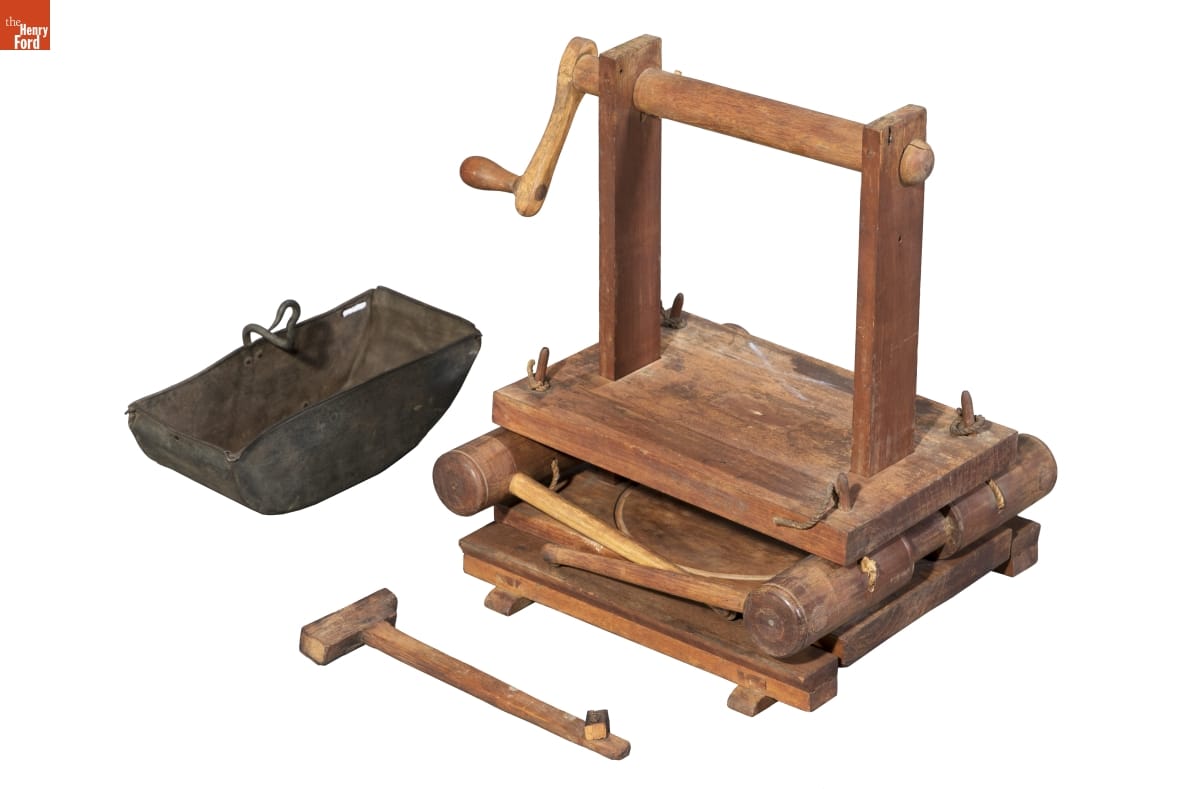
- Collections - Artifact
Textile Equipment