
Search
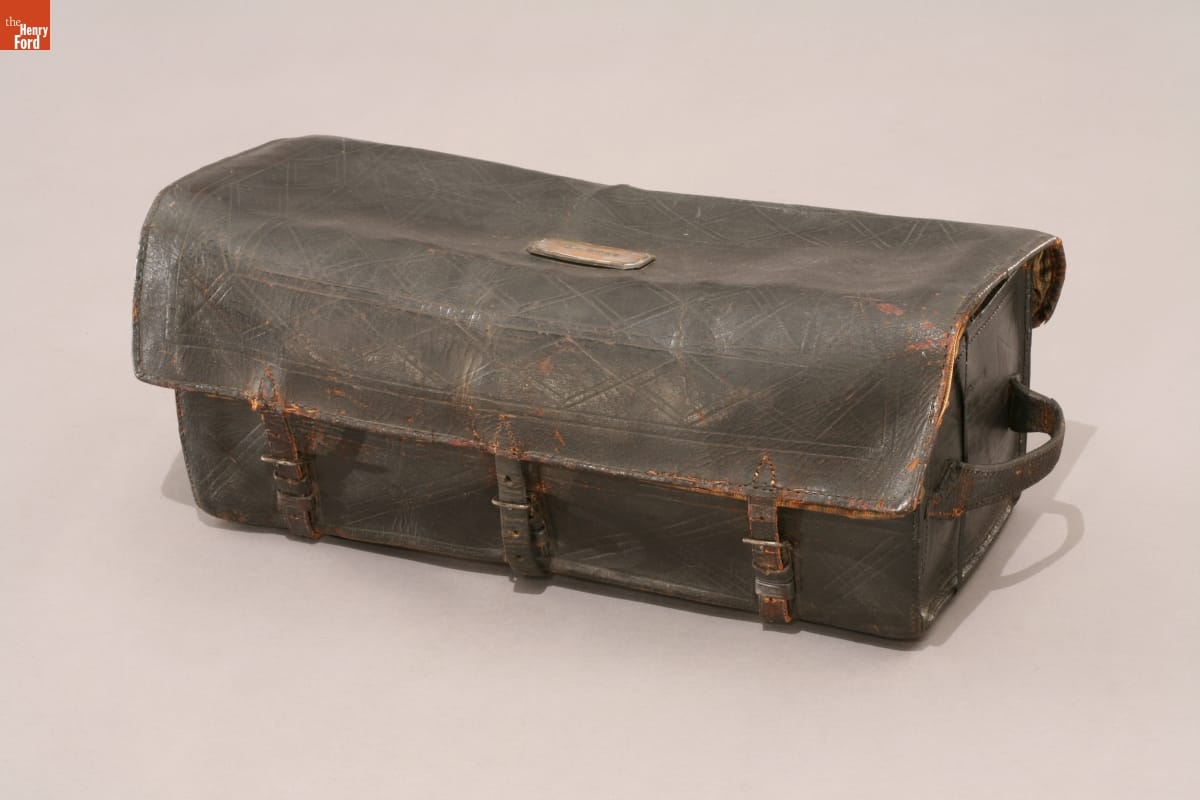
- Traveling Case, 1860-1900 -
- 1860-1900
- Collections - Artifact
Traveling Case, 1860-1900
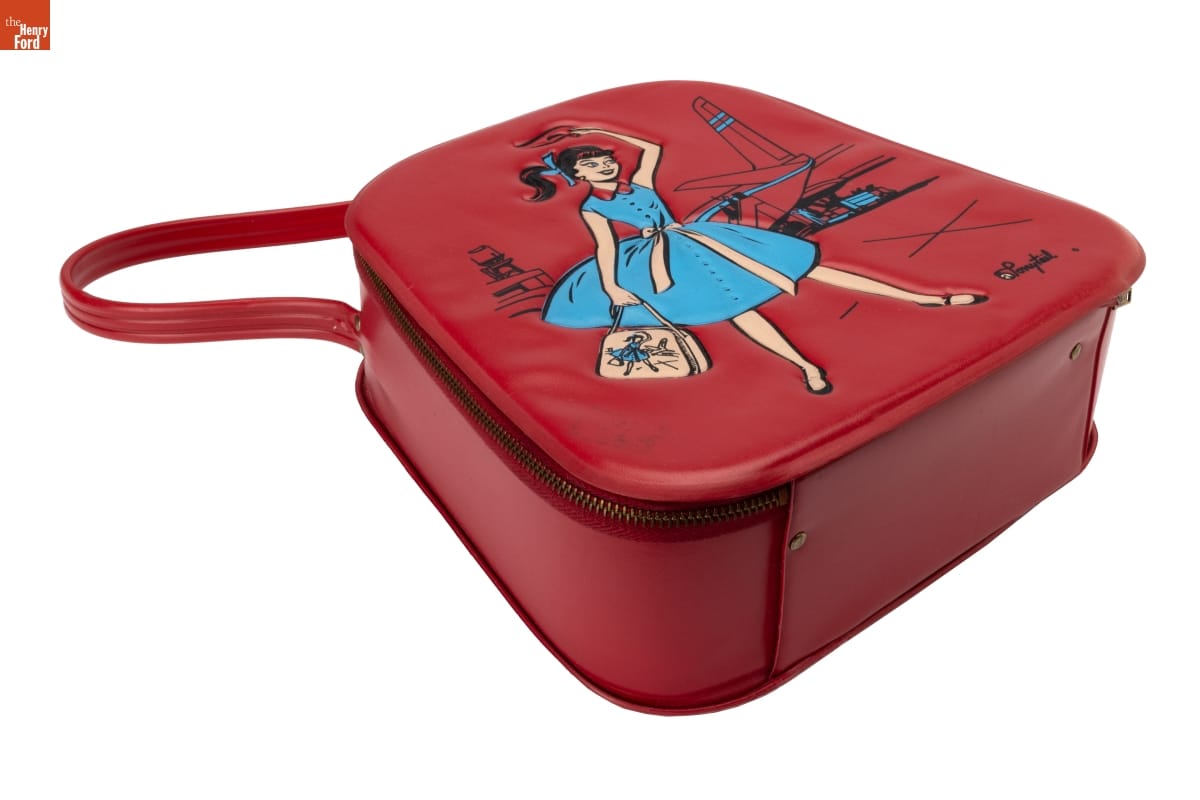
- Ponytail Traveling Bag, circa 1960 -
- circa 1960
- Collections - Artifact
Ponytail Traveling Bag, circa 1960
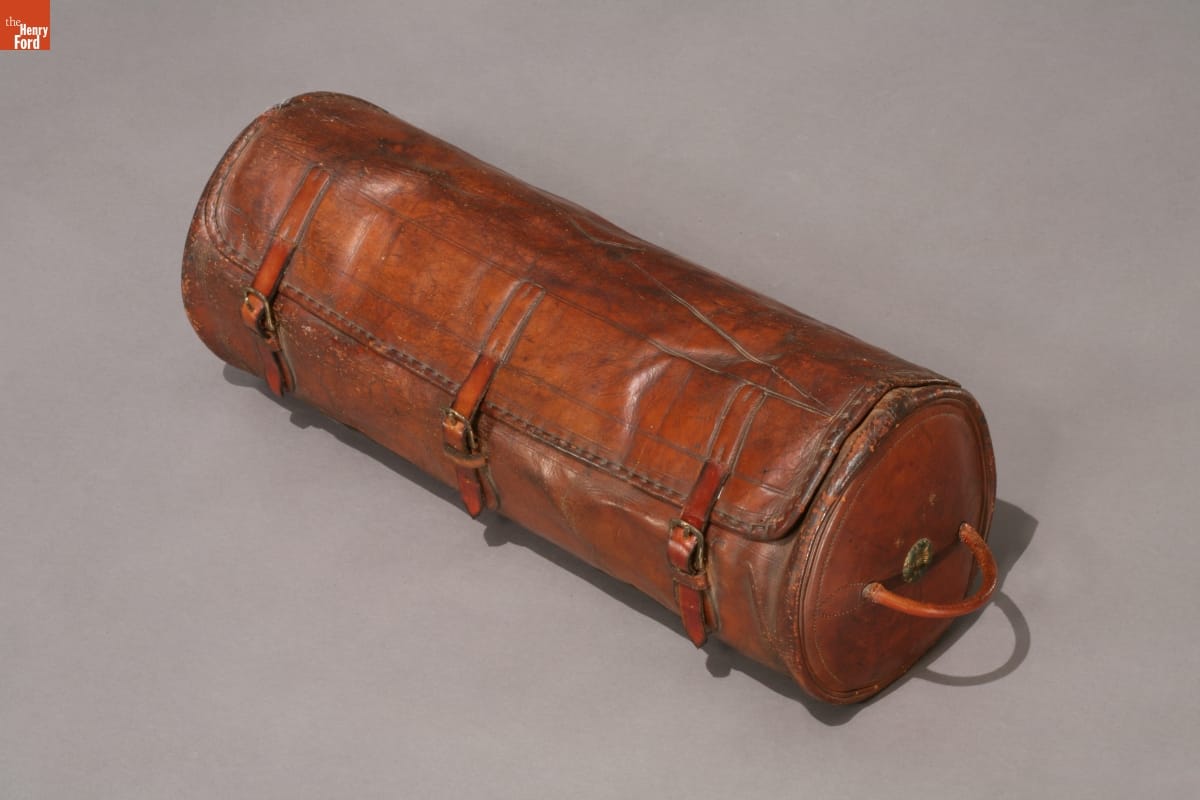
- Leather Traveling Bag, circa 1870 -
- circa 1870
- Collections - Artifact
Leather Traveling Bag, circa 1870
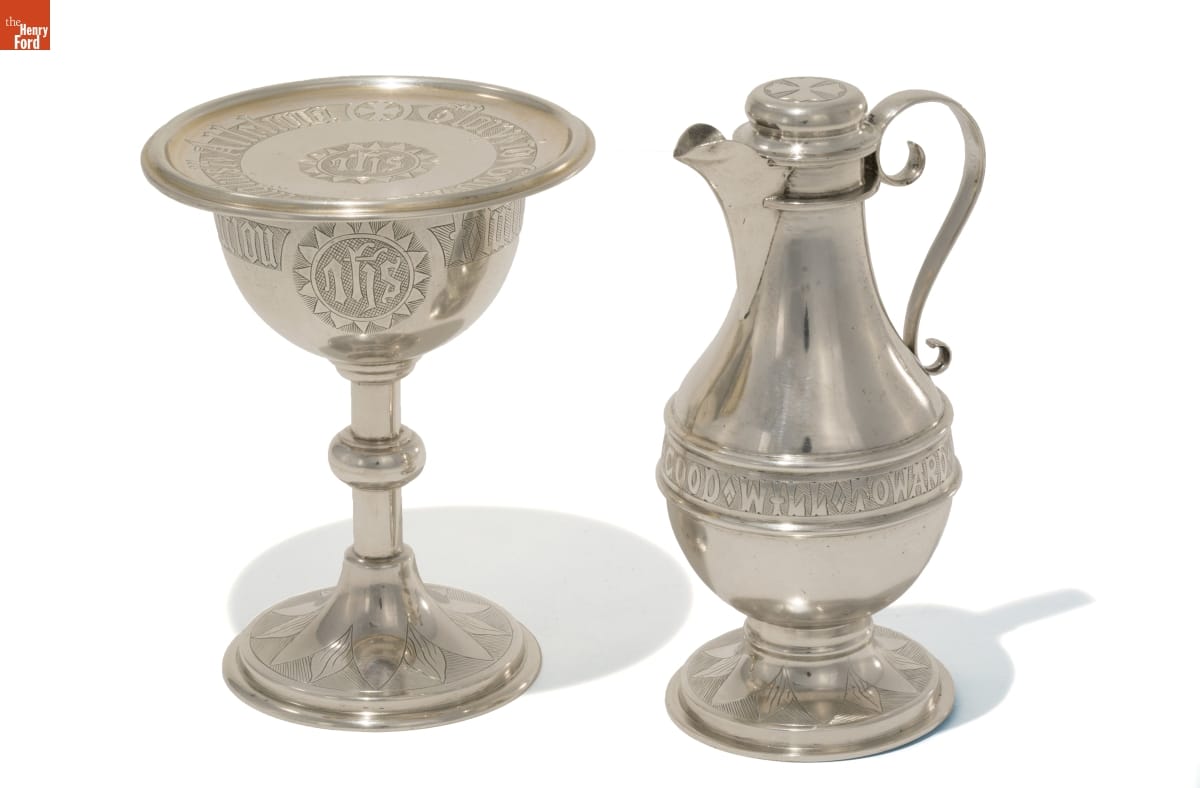
- Traveling Communion Set, 1840-1867 - Catholics and members of most Protestant denominations employ specific material for religious rituals. This mid-19th-century communion set consists of three distinctive objects: a paten (a round plate that holds the consecrated bread), an ewer that holds sacramental wine, and a chalice or cup (from which communicants drink the wine). Francis W. Cooper, a leading maker of ecclesiastical silver, created this set.
- 1840-1867
- Collections - Artifact
Traveling Communion Set, 1840-1867
Catholics and members of most Protestant denominations employ specific material for religious rituals. This mid-19th-century communion set consists of three distinctive objects: a paten (a round plate that holds the consecrated bread), an ewer that holds sacramental wine, and a chalice or cup (from which communicants drink the wine). Francis W. Cooper, a leading maker of ecclesiastical silver, created this set.
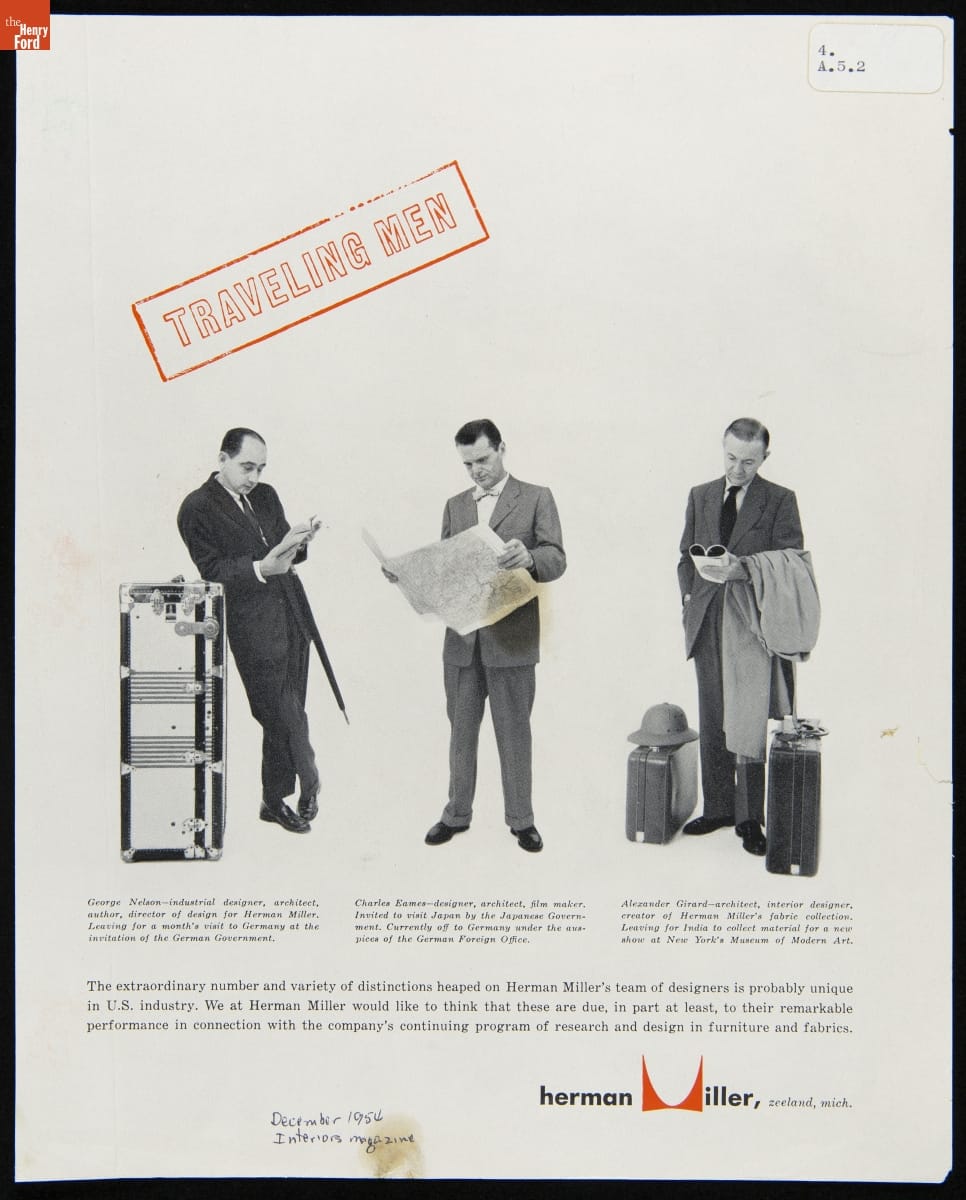
- "Traveling Men," Herman Miller Advertisement, 1954 -
- 1954
- Collections - Artifact
"Traveling Men," Herman Miller Advertisement, 1954
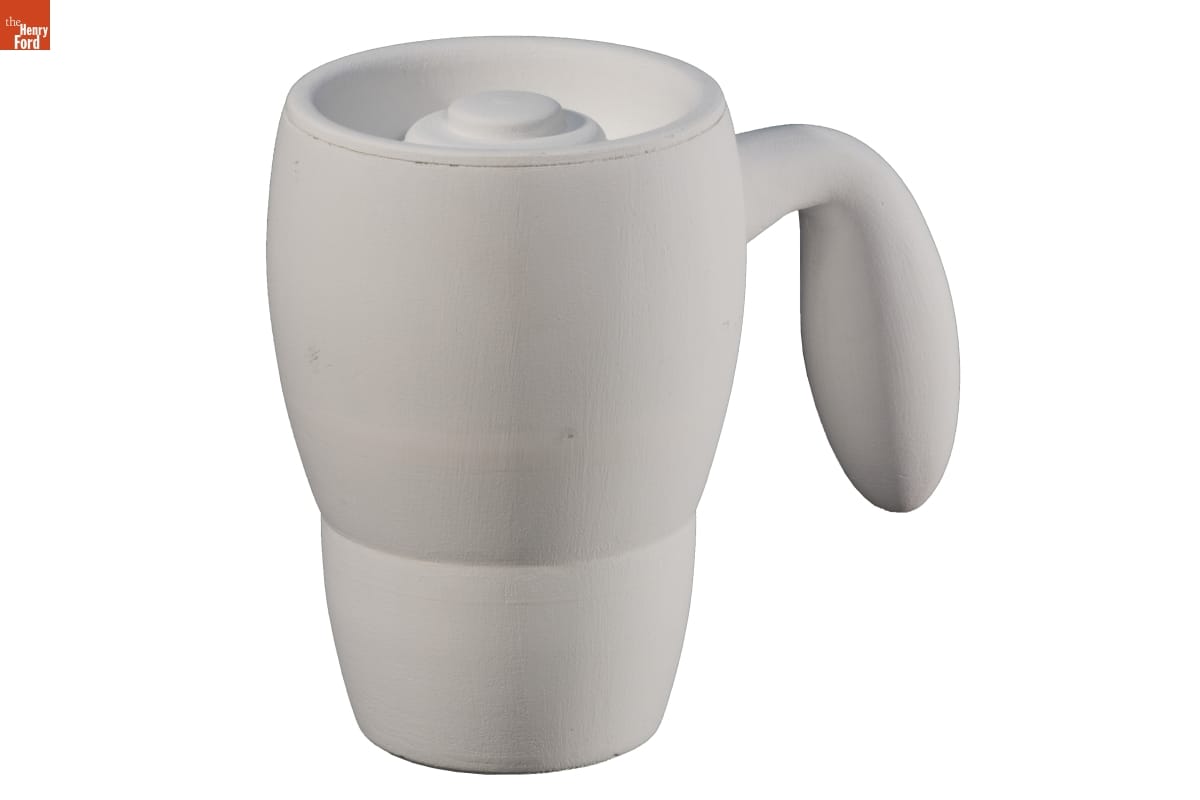
- Travel Mug Model - Starting in the early 1980s--and already established as an internationally recognized architect--Michael Graves began to pursue a parallel career as a product designer. Over the following three and a half decades he and his collaborators designed everything from humble household goods to limited edition luxury items for clients as diverse as Steuben, Alessi, Target, J. C. Penney, and Disney.
- Collections - Artifact
Travel Mug Model
Starting in the early 1980s--and already established as an internationally recognized architect--Michael Graves began to pursue a parallel career as a product designer. Over the following three and a half decades he and his collaborators designed everything from humble household goods to limited edition luxury items for clients as diverse as Steuben, Alessi, Target, J. C. Penney, and Disney.
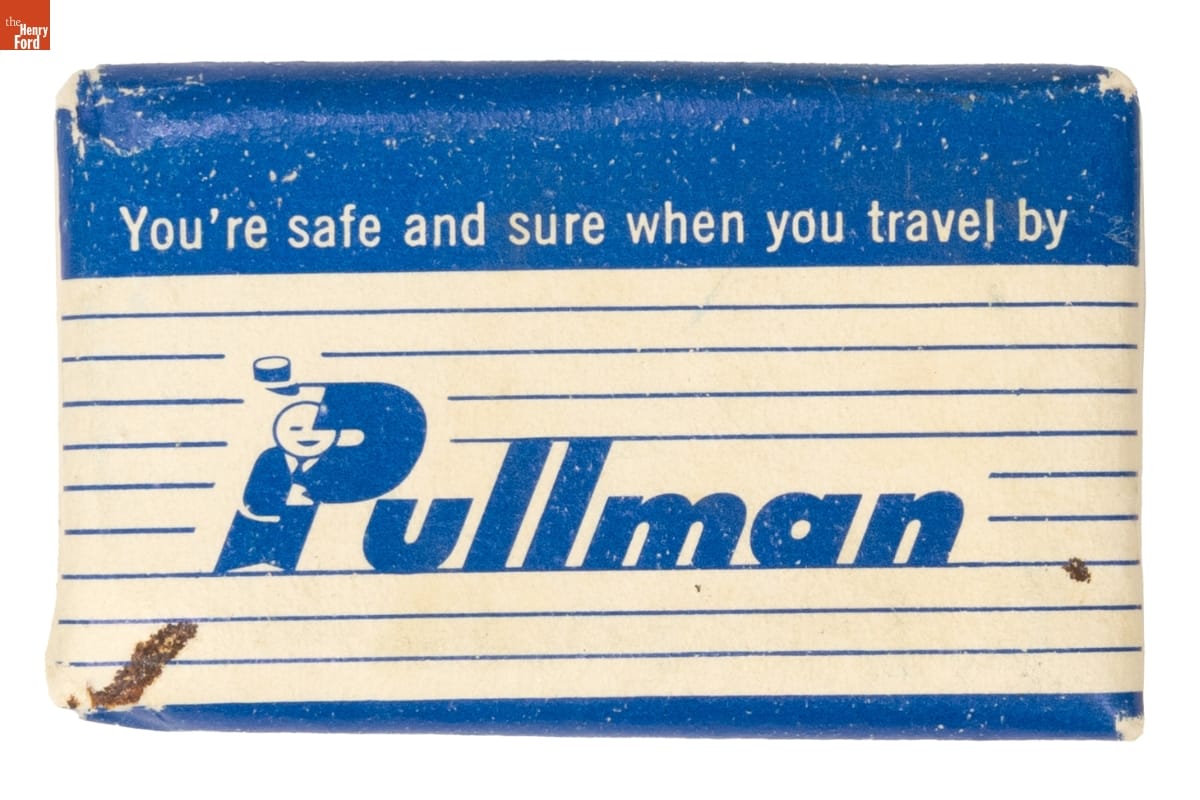
- Pullman Travel Soap - From its founding in 1867 until its demise a century later, the Pullman Company's name was synonymous with first-class travel on American railroads. Pullman not only built sleeping cars, it also operated them under contract with host railroads to ensure quality service. But Pullman's well-heeled passengers were the first to embrace air travel once it became a viable alternative.
- Collections - Artifact
Pullman Travel Soap
From its founding in 1867 until its demise a century later, the Pullman Company's name was synonymous with first-class travel on American railroads. Pullman not only built sleeping cars, it also operated them under contract with host railroads to ensure quality service. But Pullman's well-heeled passengers were the first to embrace air travel once it became a viable alternative.
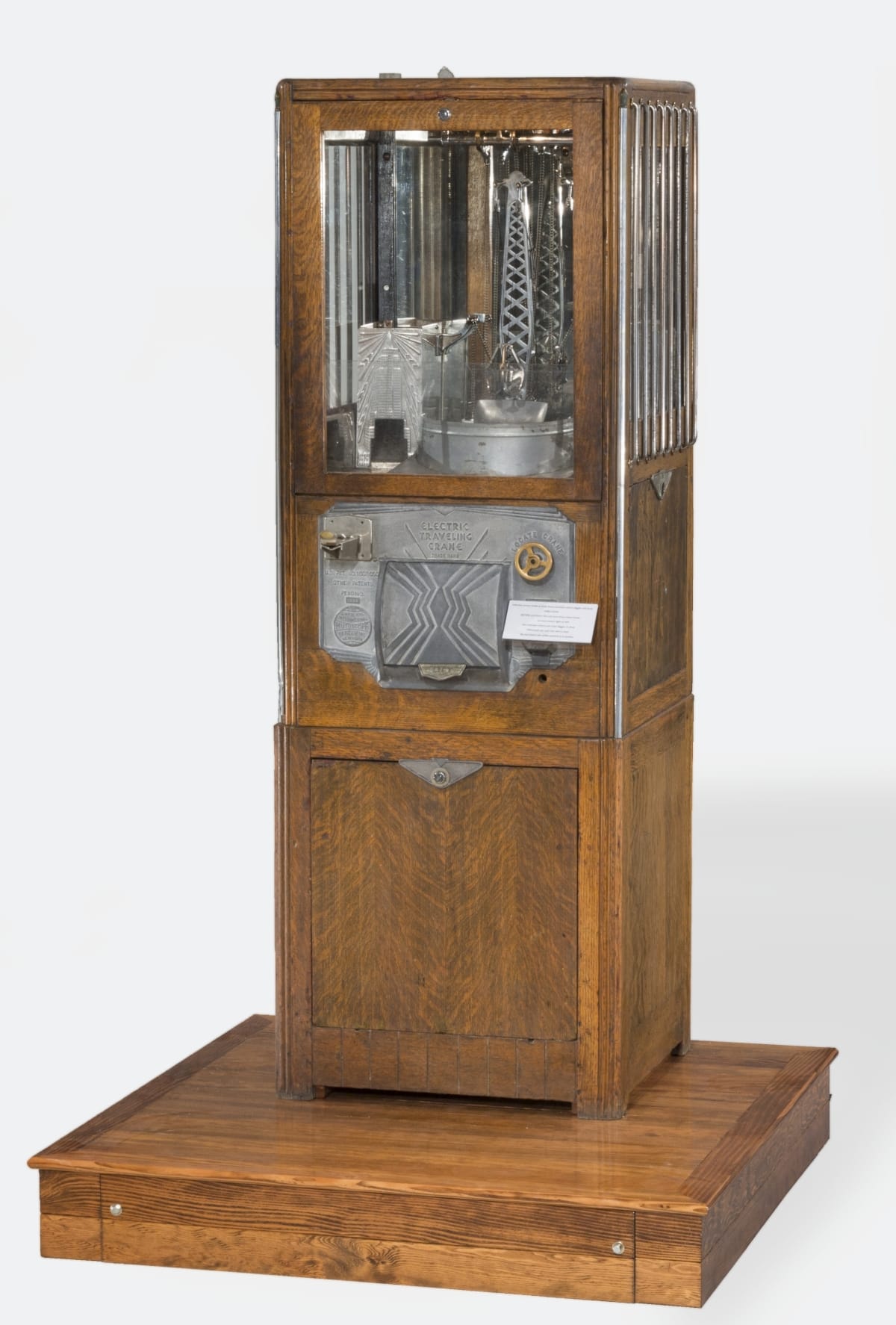
- "Electric Traveling Crane" Arcade Game, circa 1933 - In the 1930s, skill games, like this art deco Electric Traveling Crane, were extremely popular. International Mutoscope Reel Company owner, William Rabkin, patented this machine. Rabkin was an innovator in marketing and designing arcade machines. He falsely claimed to have invented crane games; in reality, Erie Manufacturing Company developed the first patented crane game, the Erie Digger, in 1926.
- circa 1933
- Collections - Artifact
"Electric Traveling Crane" Arcade Game, circa 1933
In the 1930s, skill games, like this art deco Electric Traveling Crane, were extremely popular. International Mutoscope Reel Company owner, William Rabkin, patented this machine. Rabkin was an innovator in marketing and designing arcade machines. He falsely claimed to have invented crane games; in reality, Erie Manufacturing Company developed the first patented crane game, the Erie Digger, in 1926.
- Schoolroom Progress U.S.A. Traveling Exhibit, circa 1955 - The Henry Ford produced <em>Schoolroom Progress, U.S.A.</em>, a traveling exhibition housed in two railroad cars, in 1955-1956. The exhibit featured re-creations of American classrooms from different periods in history to that point. <em>Schoolroom Progress, U.S.A.</em> included artifacts from The Henry Ford's holdings, and it increased national recognition of the museum and its collections.
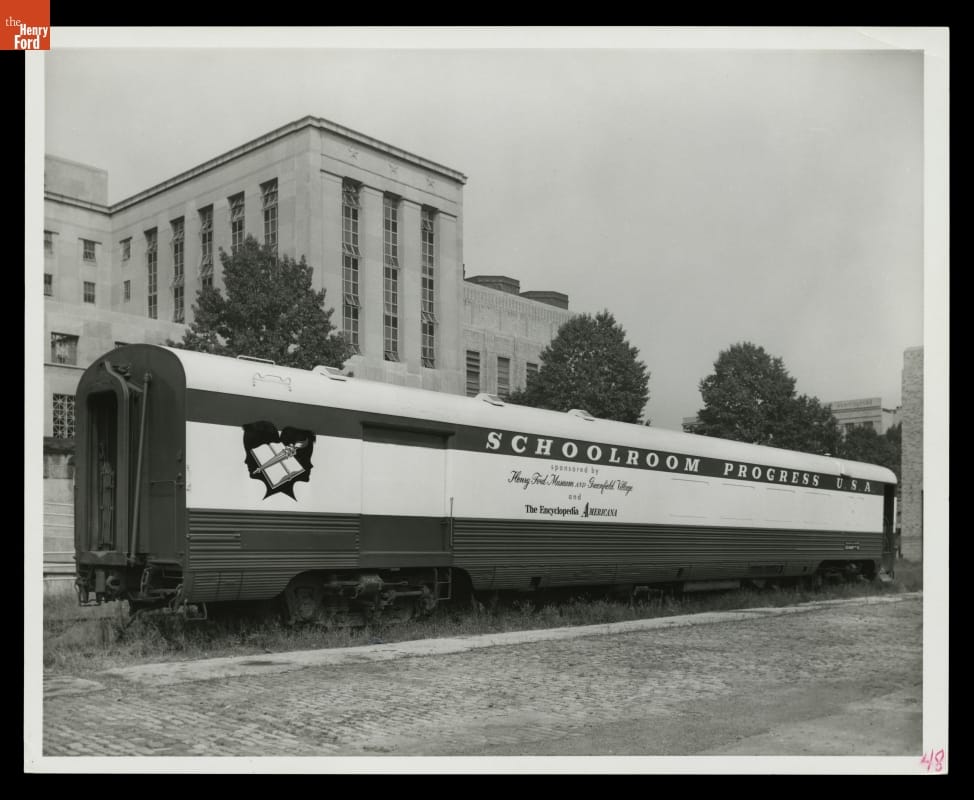
- circa 1955
- Collections - Artifact
Schoolroom Progress U.S.A. Traveling Exhibit, circa 1955
The Henry Ford produced Schoolroom Progress, U.S.A., a traveling exhibition housed in two railroad cars, in 1955-1956. The exhibit featured re-creations of American classrooms from different periods in history to that point. Schoolroom Progress, U.S.A. included artifacts from The Henry Ford's holdings, and it increased national recognition of the museum and its collections.
- 1949 Kaiser Traveler Sedan - Henry Kaiser, who had become famous building ships during World War II, and Joseph Frazer, an experienced auto executive, combined in 1945 to form a new car company. Kaisers were stylish and well built, but competing against established car companies proved too big a task. American Kaiser production ceased in 1955, although cars were made in Argentina between 1958 and 1962.
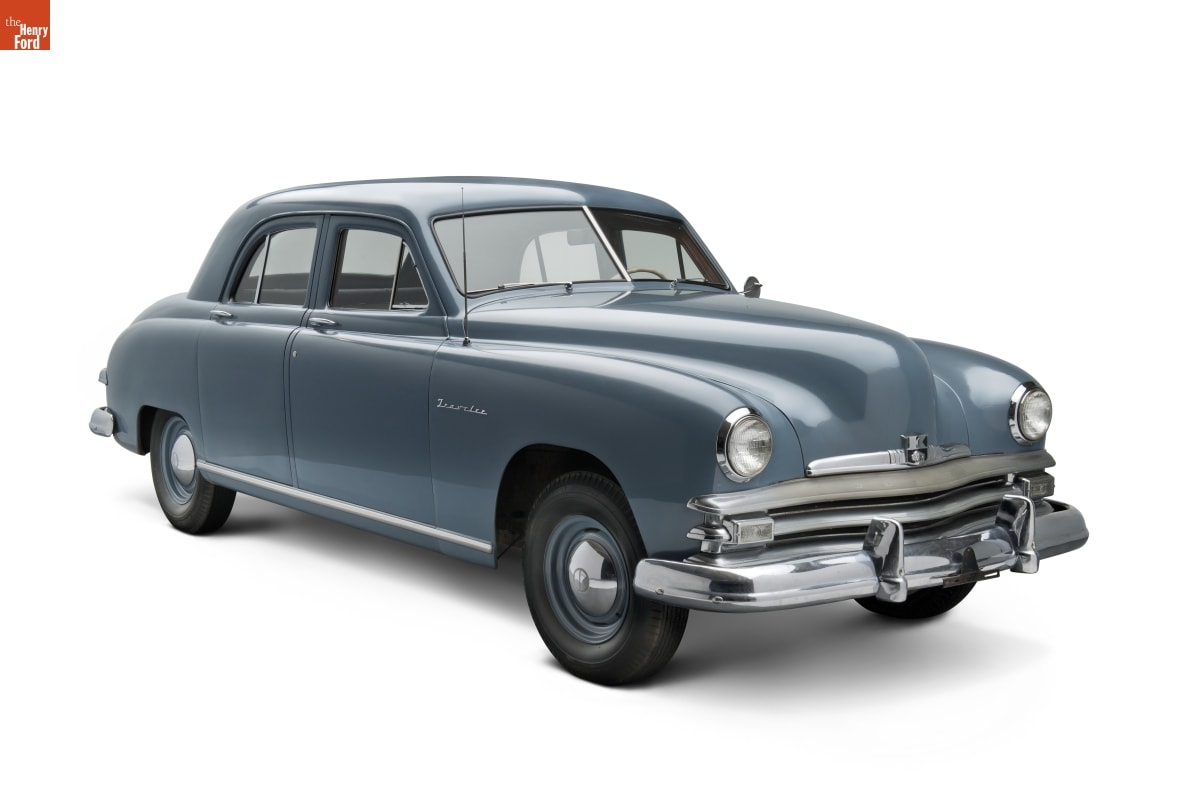
- 1949
- Collections - Artifact
1949 Kaiser Traveler Sedan
Henry Kaiser, who had become famous building ships during World War II, and Joseph Frazer, an experienced auto executive, combined in 1945 to form a new car company. Kaisers were stylish and well built, but competing against established car companies proved too big a task. American Kaiser production ceased in 1955, although cars were made in Argentina between 1958 and 1962.