
Search
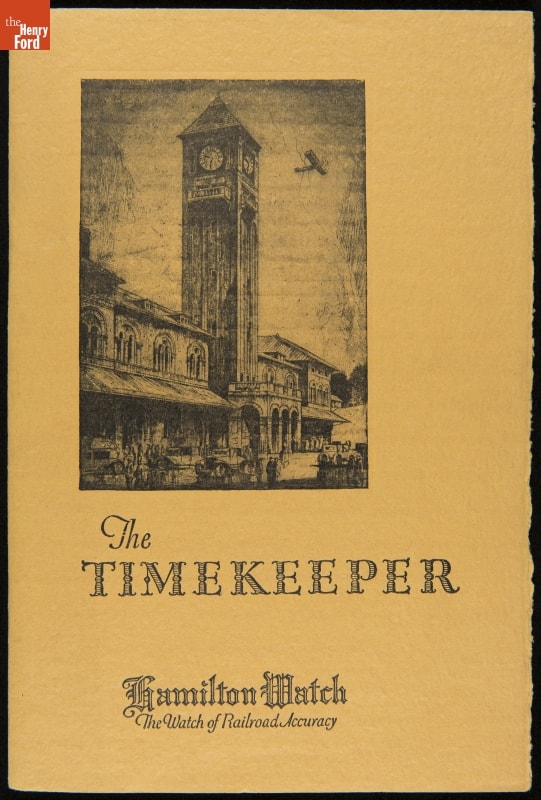
- Catalog for Hamilton Watch Company, "Hamilton Watch The Watch of Railroad Accuracy," 1928 -
- 1906
- Collections - Artifact
Catalog for Hamilton Watch Company, "Hamilton Watch The Watch of Railroad Accuracy," 1928
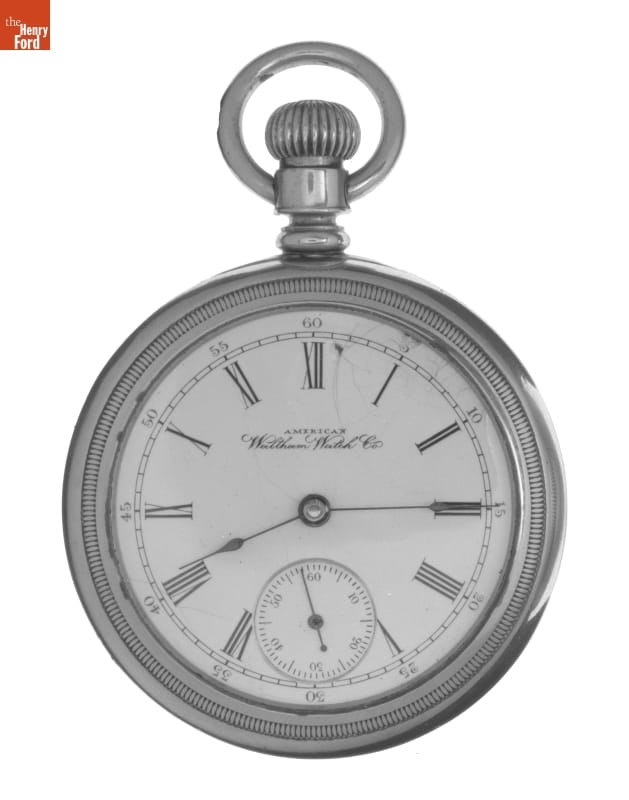
- American Waltham Watch Company Pocket Watch, 1896-1897 -
- 1896-1897
- Collections - Artifact
American Waltham Watch Company Pocket Watch, 1896-1897
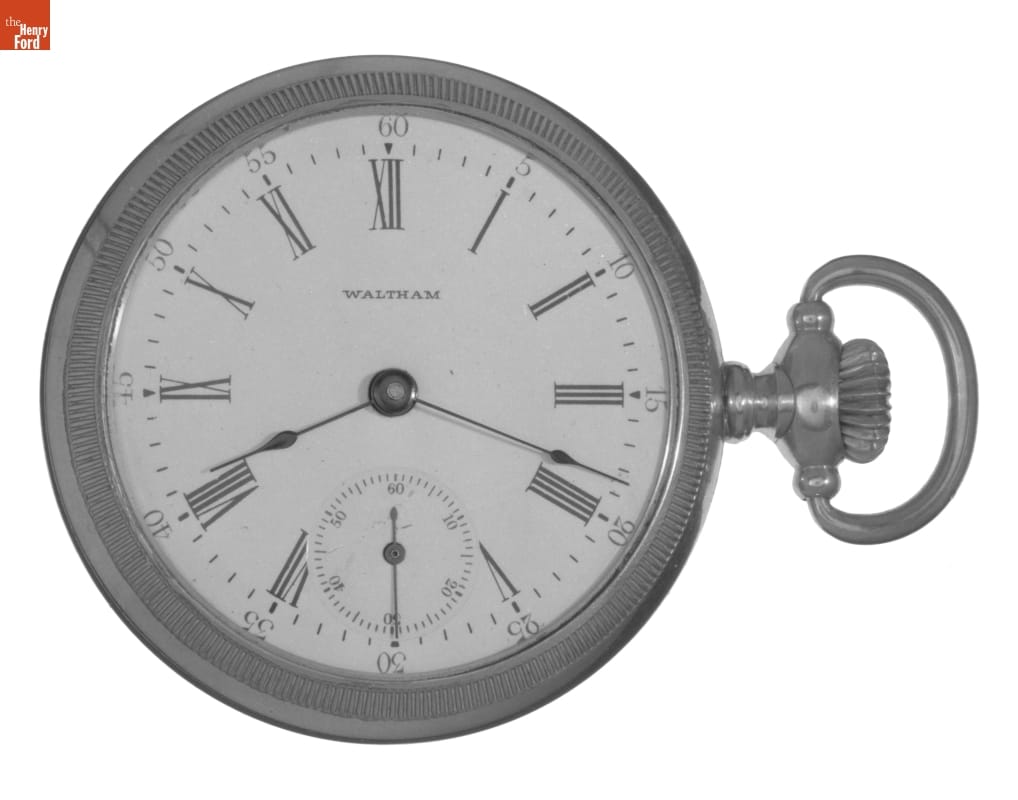
- American Waltham Watch Company Pocket Watch, 1899-1901 -
- 1899-1901
- Collections - Artifact
American Waltham Watch Company Pocket Watch, 1899-1901
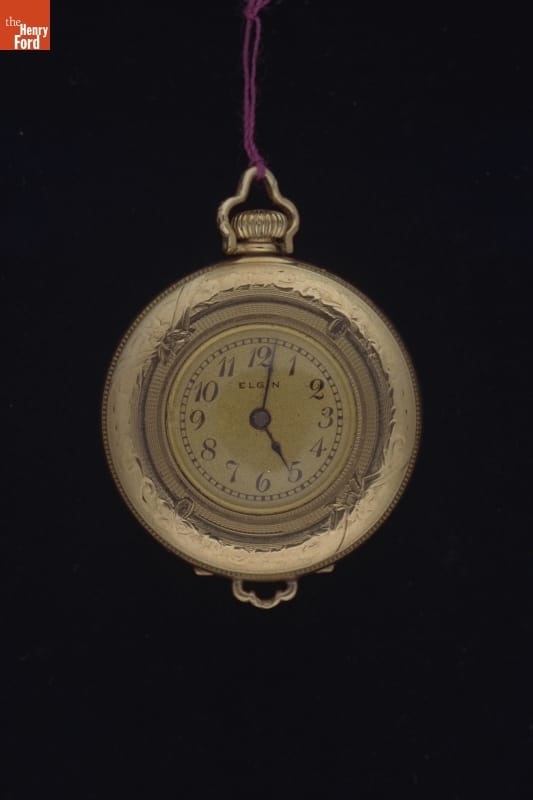
- Pendant Watch, 1916 -
- June 23, 1916
- Collections - Artifact
Pendant Watch, 1916
- Swatch Watch, 1984 - In the 1980s, adolescent and teen consumers across the world became attracted to a new type of watch called the "Swatch." First-marketed in the U.S. in 1983 the Swatch helped reestablish the Swiss as the world's major watchmaker. This watch was introduced as Generation X began to mature and acquire personal accessories. Swatch watches proliferated because of their aesthetic appeal rather than their functionality.
- 1984
- Collections - Artifact
Swatch Watch, 1984
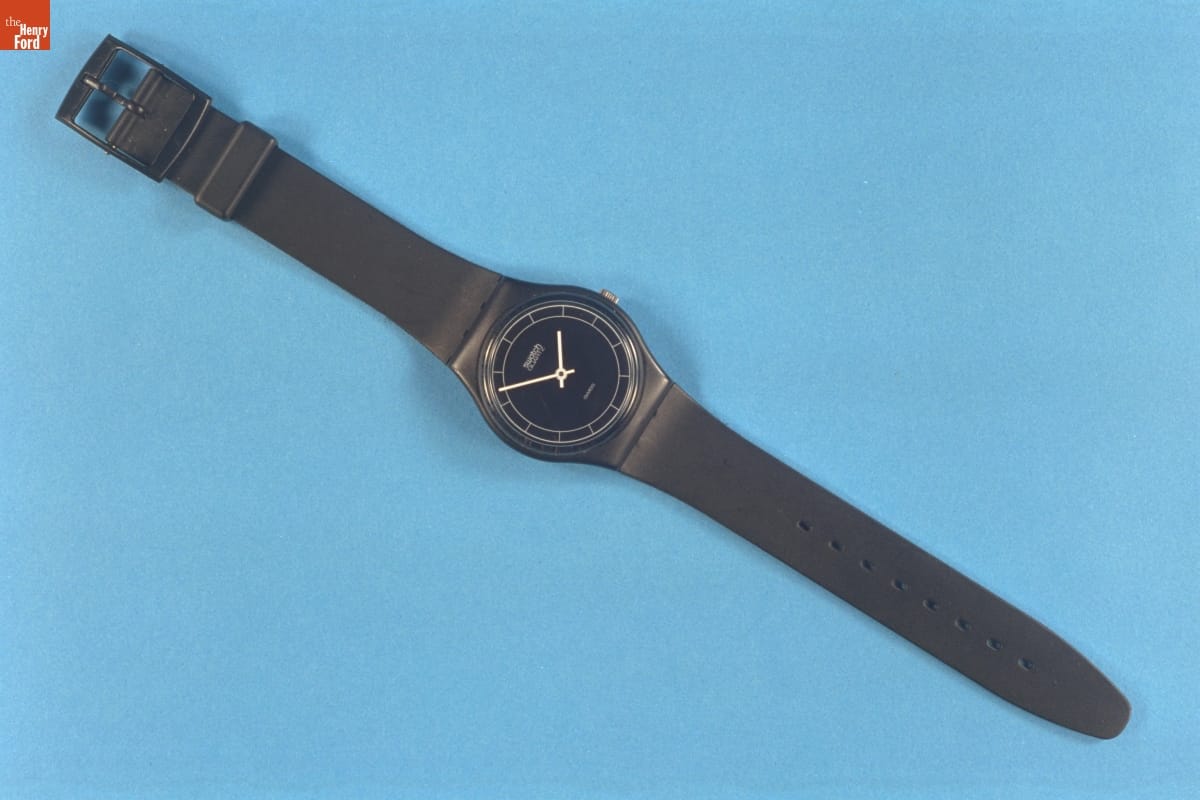
In the 1980s, adolescent and teen consumers across the world became attracted to a new type of watch called the "Swatch." First-marketed in the U.S. in 1983 the Swatch helped reestablish the Swiss as the world's major watchmaker. This watch was introduced as Generation X began to mature and acquire personal accessories. Swatch watches proliferated because of their aesthetic appeal rather than their functionality.
- Wrist Watch, 1928 -
- 1928
- Collections - Artifact
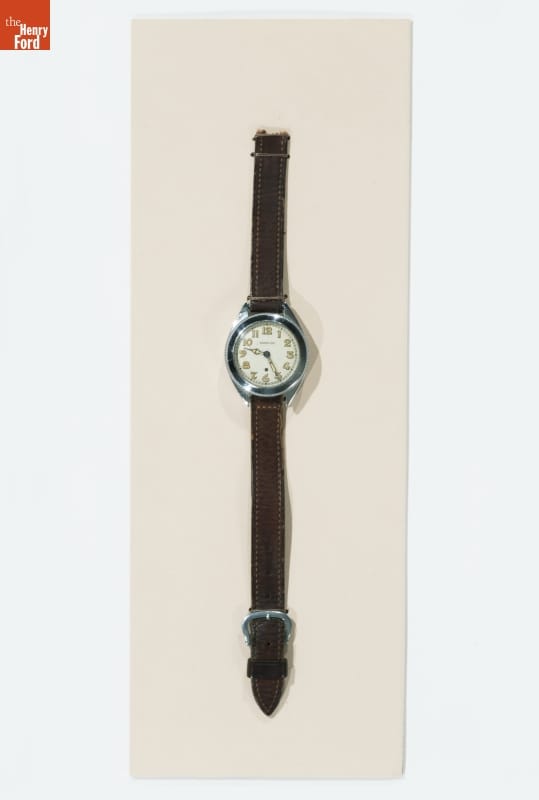
Wrist Watch, 1928
- Swatch Watch, 1986 - In the 1980s, adolescent and teen consumers across the world became attracted to a new type of watch called the "Swatch." First-marketed in the U.S. in 1983 the Swatch helped reestablish the Swiss as the world's major watchmaker. This watch was introduced as Generation X began to mature and acquire personal accessories. Swatch watches proliferated because of their aesthetic appeal rather than their functionality.
- 1986
- Collections - Artifact
Swatch Watch, 1986
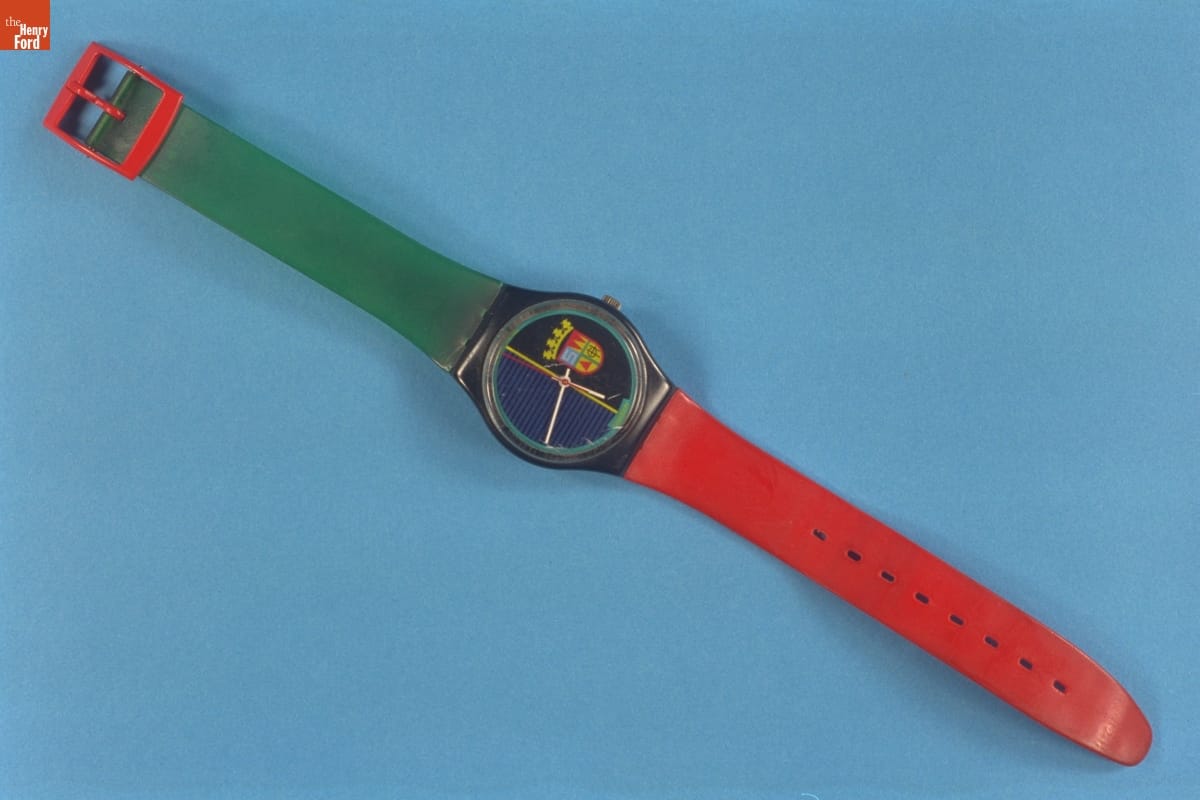
In the 1980s, adolescent and teen consumers across the world became attracted to a new type of watch called the "Swatch." First-marketed in the U.S. in 1983 the Swatch helped reestablish the Swiss as the world's major watchmaker. This watch was introduced as Generation X began to mature and acquire personal accessories. Swatch watches proliferated because of their aesthetic appeal rather than their functionality.
- Wrist Watch, 1933 - At the beginning of the Great Depression, watch manufacturers looked for ways to create inexpensive, yet fashionable, watches to appeal to the mass market. This E. Ingraham Company watch features a pierced nickel bracelet that appears to shimmer, echoing the effect of rhinestones. The lozenge-shaped face, with its Art Deco-inspired decoration, reinforces the look of elegance in an affordable watch.
- January 01, 1933
- Collections - Artifact
Wrist Watch, 1933
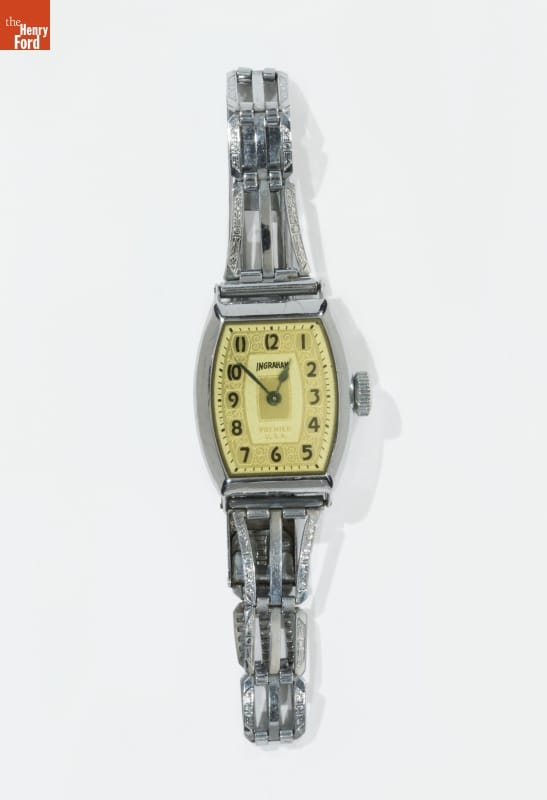
At the beginning of the Great Depression, watch manufacturers looked for ways to create inexpensive, yet fashionable, watches to appeal to the mass market. This E. Ingraham Company watch features a pierced nickel bracelet that appears to shimmer, echoing the effect of rhinestones. The lozenge-shaped face, with its Art Deco-inspired decoration, reinforces the look of elegance in an affordable watch.
- Wrist Watch, 1973 -
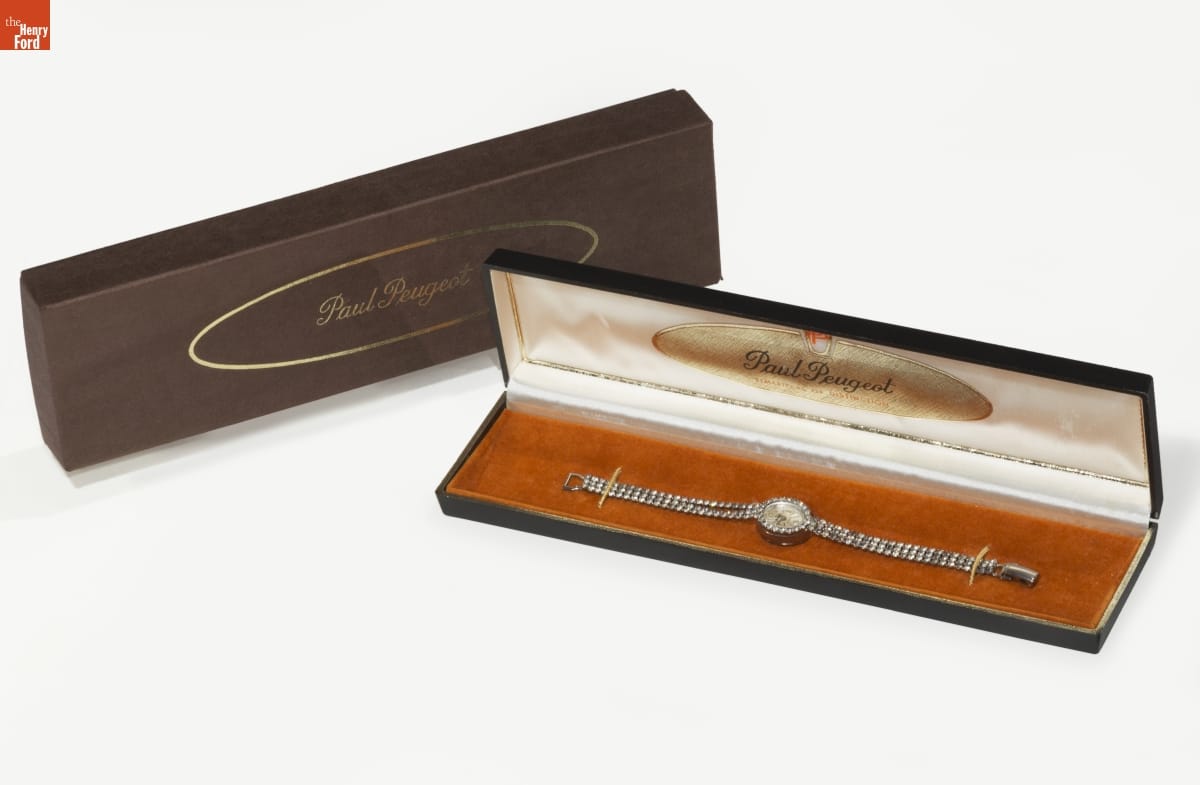
- 1973
- Collections - Artifact
Wrist Watch, 1973
- Swatch Watch, 1984 - In the 1980s, adolescent and teen consumers across the world became attracted to a new type of watch called the "Swatch." First-marketed in the U.S. in 1983 the Swatch helped reestablish the Swiss as the world's major watchmaker. This watch was introduced as Generation X began to mature and acquire personal accessories. Swatch watches proliferated because of their aesthetic appeal rather than their functionality.
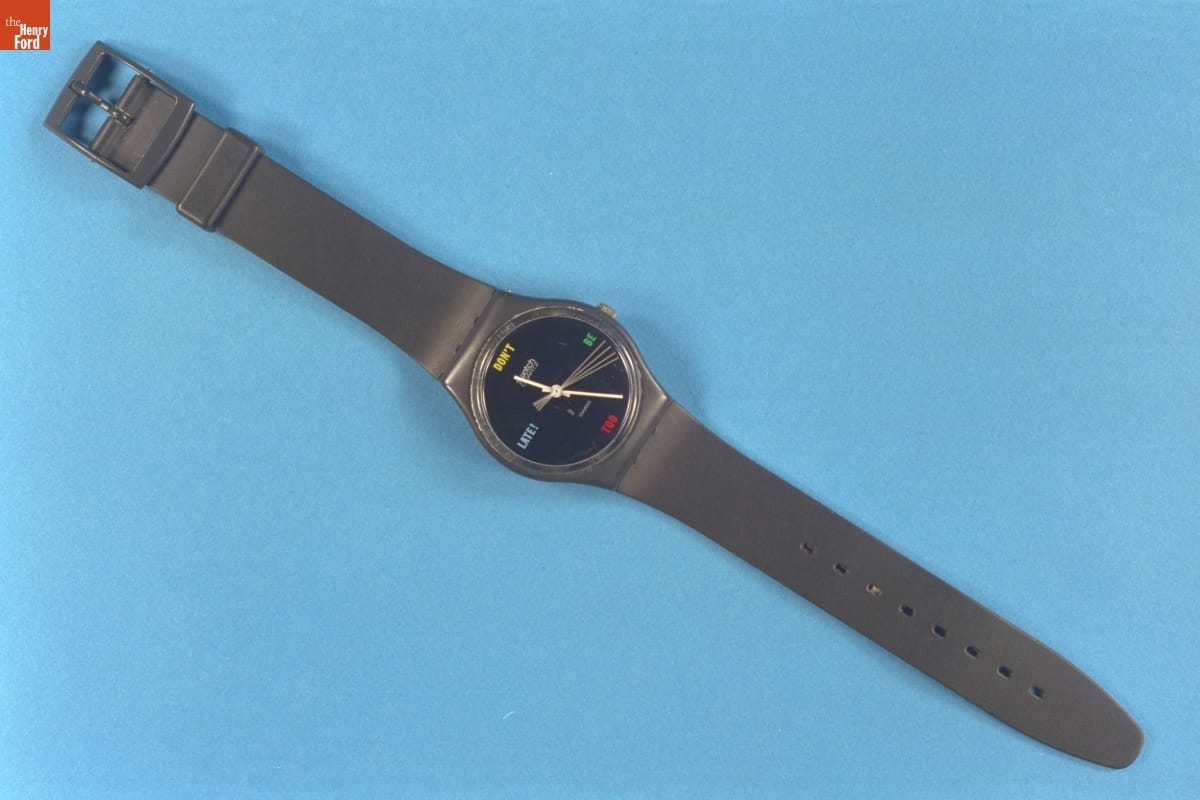
- 1984
- Collections - Artifact
Swatch Watch, 1984
In the 1980s, adolescent and teen consumers across the world became attracted to a new type of watch called the "Swatch." First-marketed in the U.S. in 1983 the Swatch helped reestablish the Swiss as the world's major watchmaker. This watch was introduced as Generation X began to mature and acquire personal accessories. Swatch watches proliferated because of their aesthetic appeal rather than their functionality.