
Search
- Brochure, "$25 a Month Buys Any New Ford V-8," 1935-1936 - In 1928, Ford Motor Company established Universal Credit Company (UCC) to allow customers to finance their cars. UCC loaned money that buyers paid back over time. Like the all-new Model A, introduced for the same year, UCC helped Ford and its dealers in an increasingly competitive marketplace. Financing became even more important during the Great Depression, when this brochure was printed.

- 1935-1936
- Collections - Artifact
Brochure, "$25 a Month Buys Any New Ford V-8," 1935-1936
In 1928, Ford Motor Company established Universal Credit Company (UCC) to allow customers to finance their cars. UCC loaned money that buyers paid back over time. Like the all-new Model A, introduced for the same year, UCC helped Ford and its dealers in an increasingly competitive marketplace. Financing became even more important during the Great Depression, when this brochure was printed.
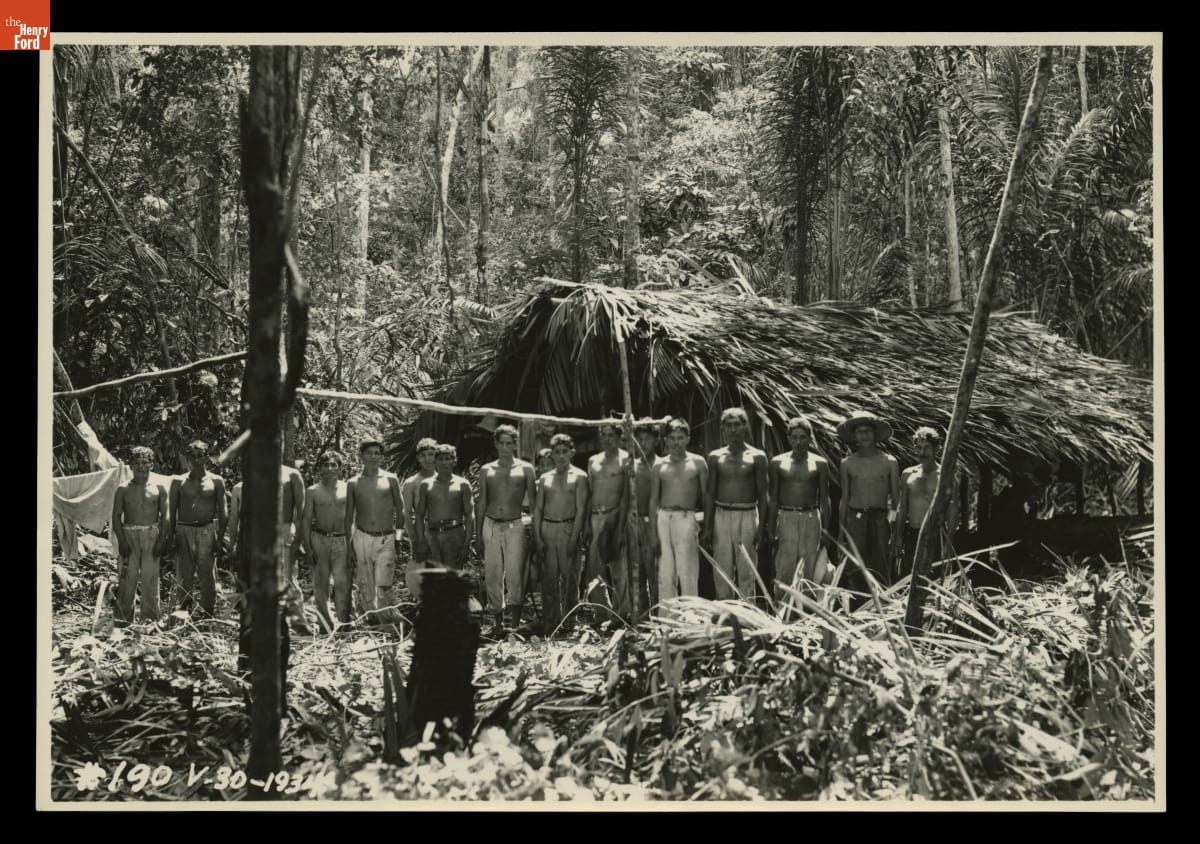
- Workers Clearing the Jungle at Fordlandia, June 18, 1934 - Henry Ford established Fordlandia and Belterra in the Brazilian rainforest to supply rubber for automobile production. He began shipping machinery and supplies to the Amazon in 1928. Ford paid the indigenous workers good wages and supplied various amenities -- he also imposed foreign work traditions and behavioral restrictions which the workers resented. The plantations failed and Ford Motor Company disposed of the project in 1945.
- June 18, 1934
- Collections - Artifact
Workers Clearing the Jungle at Fordlandia, June 18, 1934
Henry Ford established Fordlandia and Belterra in the Brazilian rainforest to supply rubber for automobile production. He began shipping machinery and supplies to the Amazon in 1928. Ford paid the indigenous workers good wages and supplied various amenities -- he also imposed foreign work traditions and behavioral restrictions which the workers resented. The plantations failed and Ford Motor Company disposed of the project in 1945.
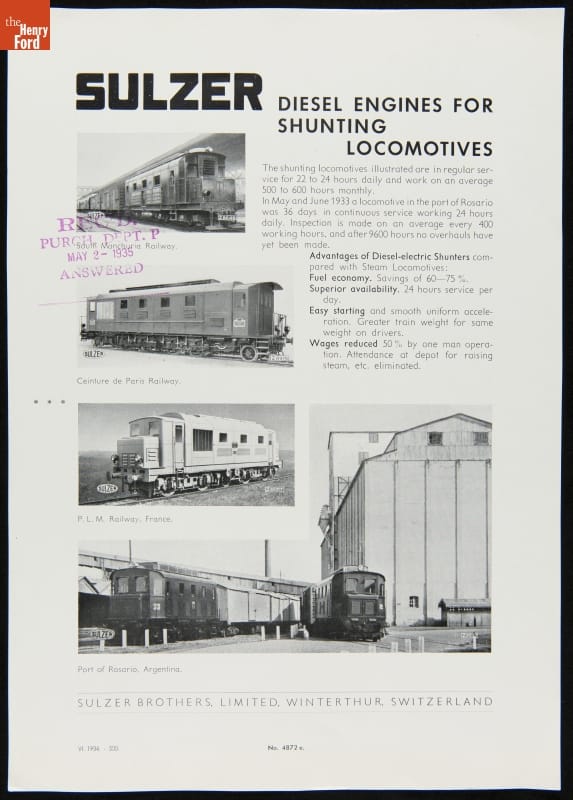
- Sulzer Brothers Limited Advertising Flier, 1934, "Sulzer Diesel Engines For Shunting Locomotives" - Swiss manufacturer Sulzer Brothers praised the diesel-electric locomotive's advantages in this 1934 advertisement. In addition to the listed benefits, diesel-electrics were gentler on railroad track because they lacked the reciprocating pistons and rods used on steam locomotives. Also, multiple diesel-electric units could be hooked together and operated by a single crew, making it easy to add horsepower to a heavy train.
- 1934
- Collections - Artifact
Sulzer Brothers Limited Advertising Flier, 1934, "Sulzer Diesel Engines For Shunting Locomotives"
Swiss manufacturer Sulzer Brothers praised the diesel-electric locomotive's advantages in this 1934 advertisement. In addition to the listed benefits, diesel-electrics were gentler on railroad track because they lacked the reciprocating pistons and rods used on steam locomotives. Also, multiple diesel-electric units could be hooked together and operated by a single crew, making it easy to add horsepower to a heavy train.
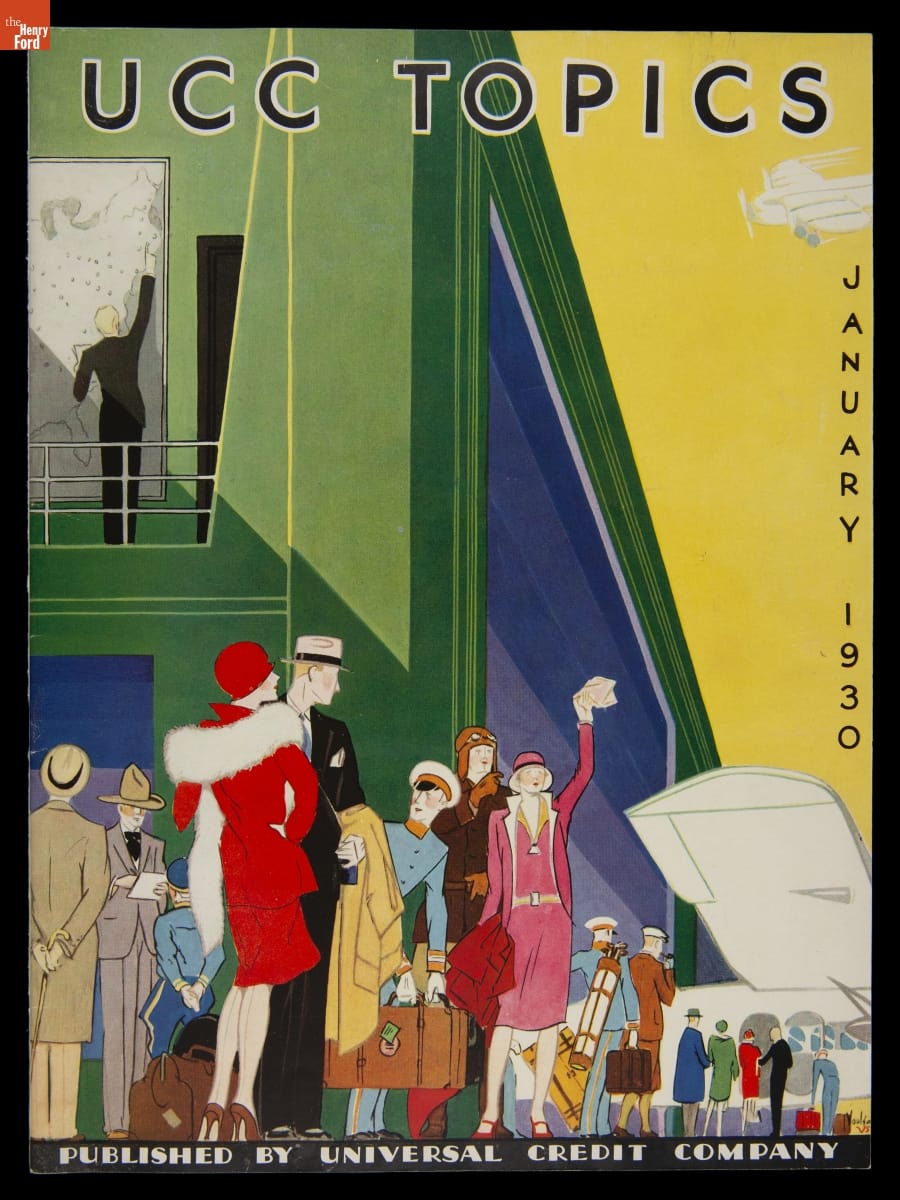
- "UCC Topics," January 1930 - In 1928, Ford Motor Company established Universal Credit Company (UCC) to allow customers to finance their cars. UCC loaned money that buyers paid back over time, and it helped Ford and its dealers in an increasingly competitive marketplace. Ford sold the company five years later, but UCC remained a primary financer for buyers of Ford vehicles.
- January 01, 1930
- Collections - Artifact
"UCC Topics," January 1930
In 1928, Ford Motor Company established Universal Credit Company (UCC) to allow customers to finance their cars. UCC loaned money that buyers paid back over time, and it helped Ford and its dealers in an increasingly competitive marketplace. Ford sold the company five years later, but UCC remained a primary financer for buyers of Ford vehicles.
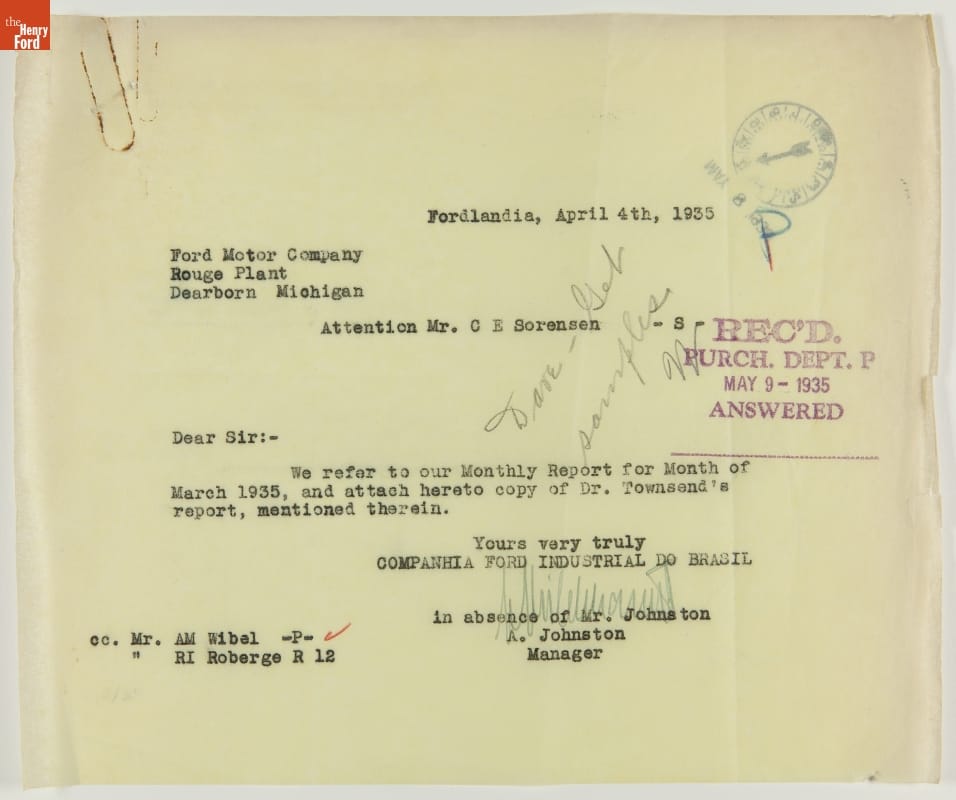
- Report, "Insect Census of Fordlandia Including Control Measures," March 29, 1935 - From 1928 to 1945 Henry Ford tried, unsuccessfully, to establish productive rubber plantations at his Brazilian settlements of Fordlandia and Belterra. Set in the Amazon jungle, the plantations of trees were under constant threat from a multitude of tropical pests and diseases. Charles Townsend, an entomologist well-versed in the insects of Brazil, was brought in by Ford to address the pest problem.
- March 29, 1935
- Collections - Artifact
Report, "Insect Census of Fordlandia Including Control Measures," March 29, 1935
From 1928 to 1945 Henry Ford tried, unsuccessfully, to establish productive rubber plantations at his Brazilian settlements of Fordlandia and Belterra. Set in the Amazon jungle, the plantations of trees were under constant threat from a multitude of tropical pests and diseases. Charles Townsend, an entomologist well-versed in the insects of Brazil, was brought in by Ford to address the pest problem.
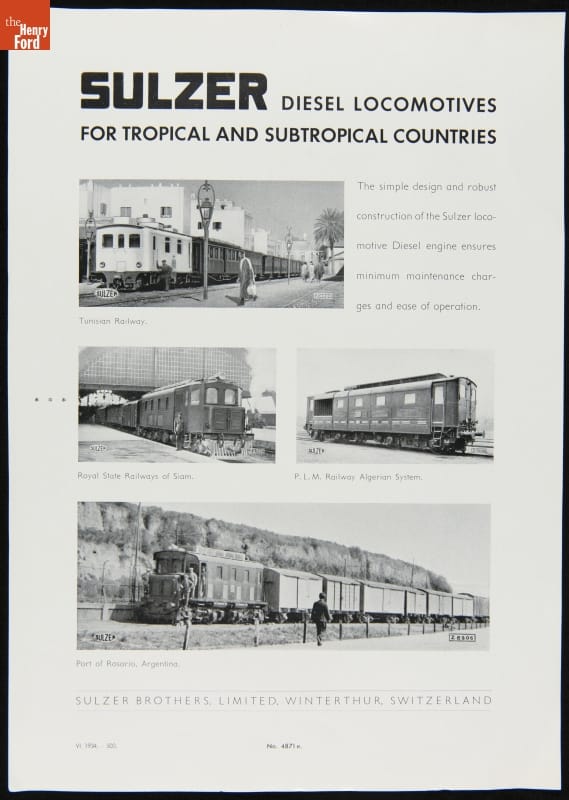
- Sulzer Brothers Limited Advertising Flier, 1934, "Sulzer Diesel Locomotives For Tropical And Subtropical Countries" - This flier, from Swiss manufacturer Sulzer Brothers, promoted the diesel-electric locomotive's advantages to railroads operating in tropical and subtropical climates. Diesel-electrics used only a small fraction of the water required by steam locomotives -- a distinct benefit in countries like Tunisia, Algeria, and Argentina with their large arid regions.
- 1934
- Collections - Artifact
Sulzer Brothers Limited Advertising Flier, 1934, "Sulzer Diesel Locomotives For Tropical And Subtropical Countries"
This flier, from Swiss manufacturer Sulzer Brothers, promoted the diesel-electric locomotive's advantages to railroads operating in tropical and subtropical climates. Diesel-electrics used only a small fraction of the water required by steam locomotives -- a distinct benefit in countries like Tunisia, Algeria, and Argentina with their large arid regions.
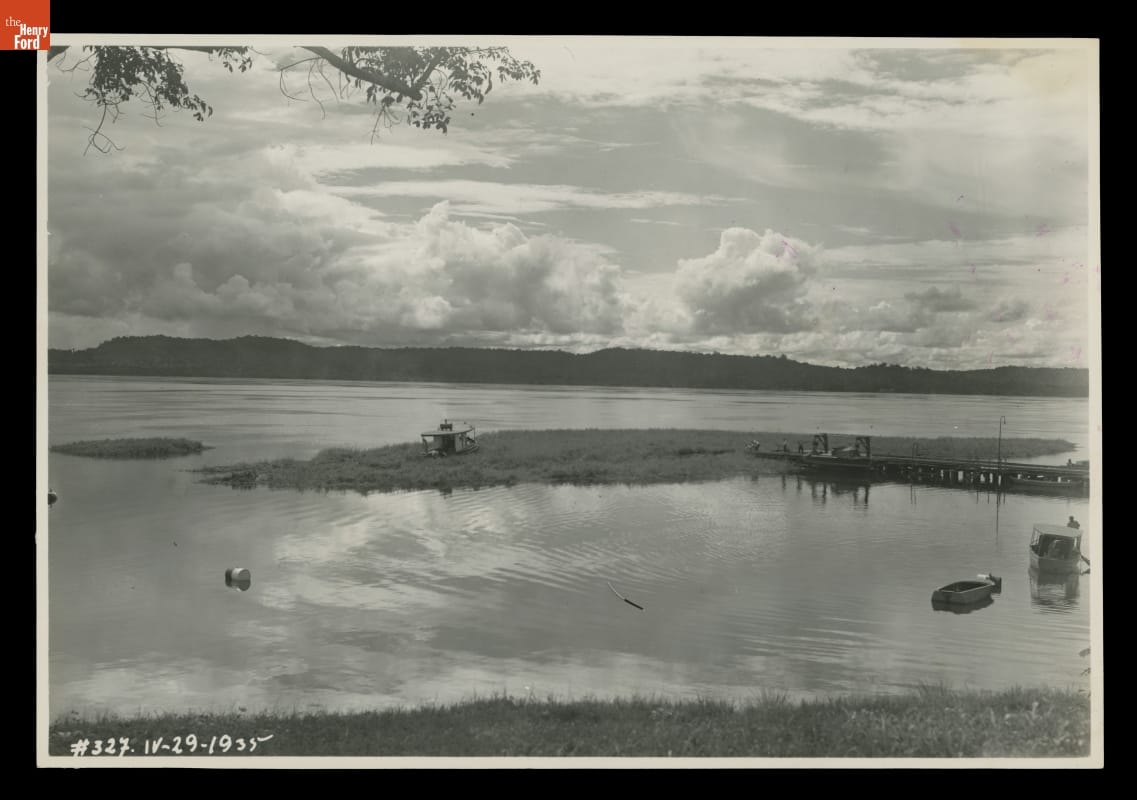
- Stranded Tug "Santarem" Caught in Floating River-Grass Island, Fordlandia, 1935 - Henry Ford established Fordlandia and Belterra in the Brazilian rainforest to supply rubber for automobile production. He began shipping machinery and supplies to the Amazon in 1928. Ford paid the indigenous workers good wages and supplied various amenities -- he also imposed foreign work traditions and behavioral restrictions which the workers resented. The plantations failed and Ford Motor Company disposed of the project in 1945.
- April 29, 1935
- Collections - Artifact
Stranded Tug "Santarem" Caught in Floating River-Grass Island, Fordlandia, 1935
Henry Ford established Fordlandia and Belterra in the Brazilian rainforest to supply rubber for automobile production. He began shipping machinery and supplies to the Amazon in 1928. Ford paid the indigenous workers good wages and supplied various amenities -- he also imposed foreign work traditions and behavioral restrictions which the workers resented. The plantations failed and Ford Motor Company disposed of the project in 1945.
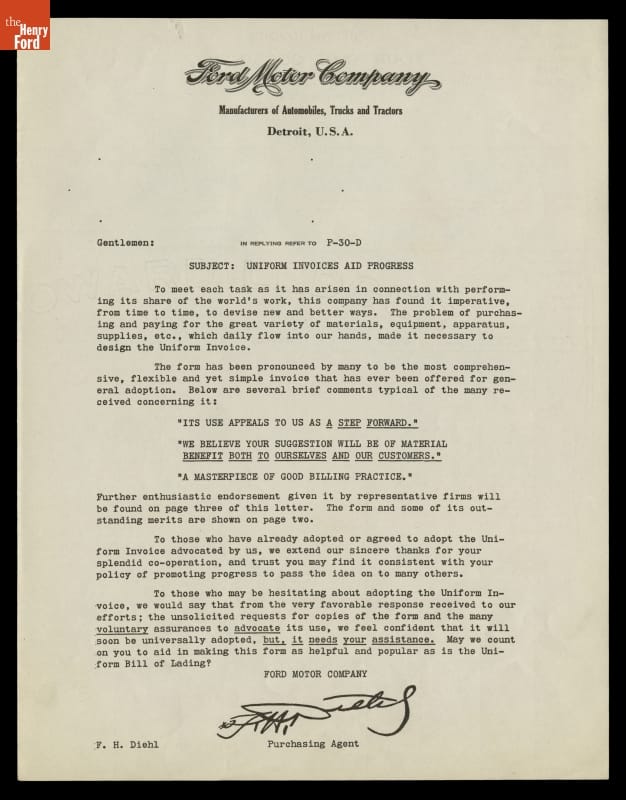
- Cover Letter and Document Template, "Uniform Invoices Aid Progress," 1925 -
- 1925
- Collections - Artifact
Cover Letter and Document Template, "Uniform Invoices Aid Progress," 1925
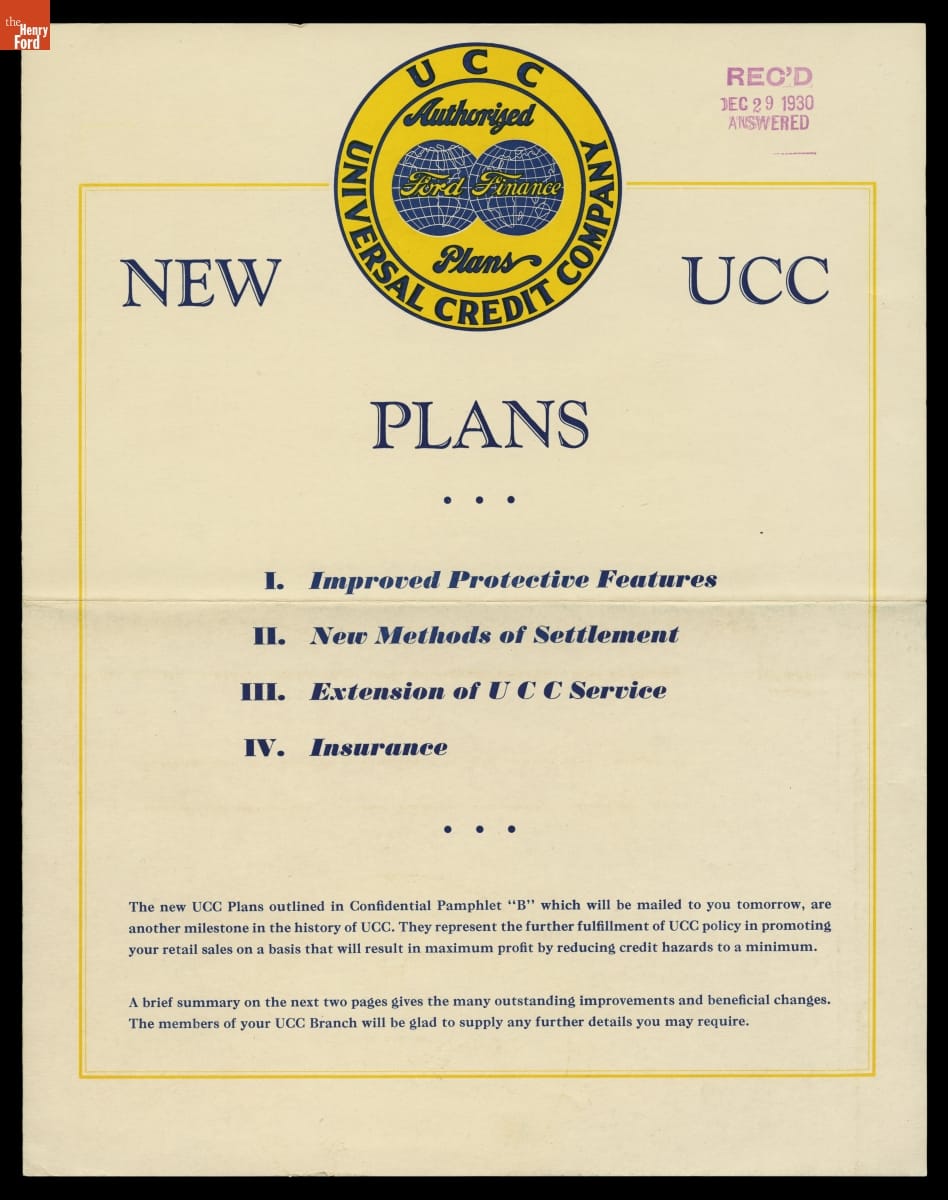
- "New UCC Plans: Universal Credit Company Authorized Ford Finance Plans," 1930 - In 1928, Ford Motor Company established Universal Credit Company (UCC) to allow customers to finance their cars. UCC loaned money that buyers paid back over time, and it helped Ford and its dealers in an increasingly competitive marketplace. Ford sold the company five years later, but UCC remained a primary financer for buyers of Ford vehicles.
- December 26, 1930
- Collections - Artifact
"New UCC Plans: Universal Credit Company Authorized Ford Finance Plans," 1930
In 1928, Ford Motor Company established Universal Credit Company (UCC) to allow customers to finance their cars. UCC loaned money that buyers paid back over time, and it helped Ford and its dealers in an increasingly competitive marketplace. Ford sold the company five years later, but UCC remained a primary financer for buyers of Ford vehicles.
- Fields Cleared of Trees, Fordlandia, Brazil, 1934 - Henry Ford established Fordlandia and Belterra in the Brazilian rainforest to supply rubber for automobile production. He began shipping machinery and supplies to the Amazon in 1928. Ford paid the indigenous workers good wages and supplied various amenities -- he also imposed foreign work traditions and behavioral restrictions which the workers resented. The plantations failed and Ford Motor Company disposed of the project in 1945.

- 1934
- Collections - Artifact
Fields Cleared of Trees, Fordlandia, Brazil, 1934
Henry Ford established Fordlandia and Belterra in the Brazilian rainforest to supply rubber for automobile production. He began shipping machinery and supplies to the Amazon in 1928. Ford paid the indigenous workers good wages and supplied various amenities -- he also imposed foreign work traditions and behavioral restrictions which the workers resented. The plantations failed and Ford Motor Company disposed of the project in 1945.