
Search
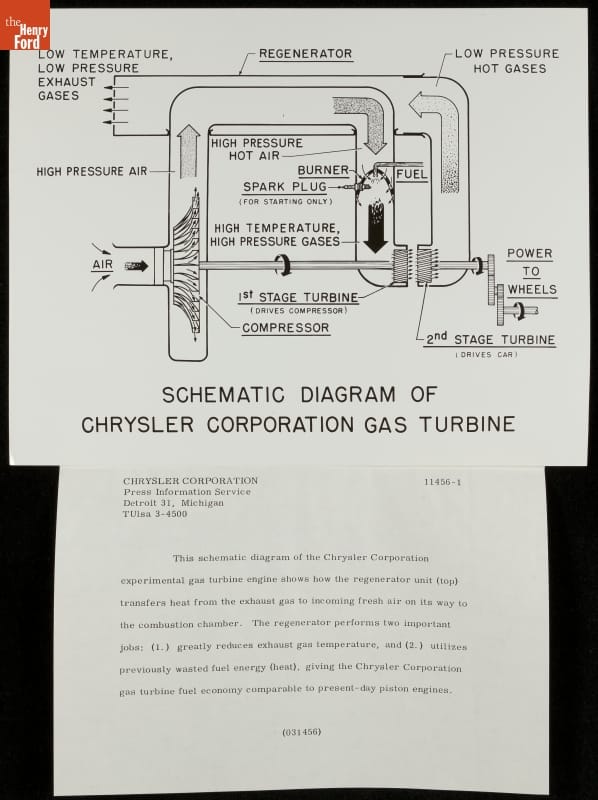
- Schematic Diagram of Chrysler Corporation Gas Turbine, 1950-1959 - In 1963, Chrysler lent 50 cars with gas turbine engines to potential customers. The engine's regenerator, shown in this diagram, was designed to increase fuel economy. Chrysler claimed its gas turbine engine would get comparable miles-per-gallon to a piston engine, but users complained about poor fuel economy. Rising gasoline prices ultimately killed the turbine dream.
- March 14, 1956
- Collections - Artifact
Schematic Diagram of Chrysler Corporation Gas Turbine, 1950-1959
In 1963, Chrysler lent 50 cars with gas turbine engines to potential customers. The engine's regenerator, shown in this diagram, was designed to increase fuel economy. Chrysler claimed its gas turbine engine would get comparable miles-per-gallon to a piston engine, but users complained about poor fuel economy. Rising gasoline prices ultimately killed the turbine dream.
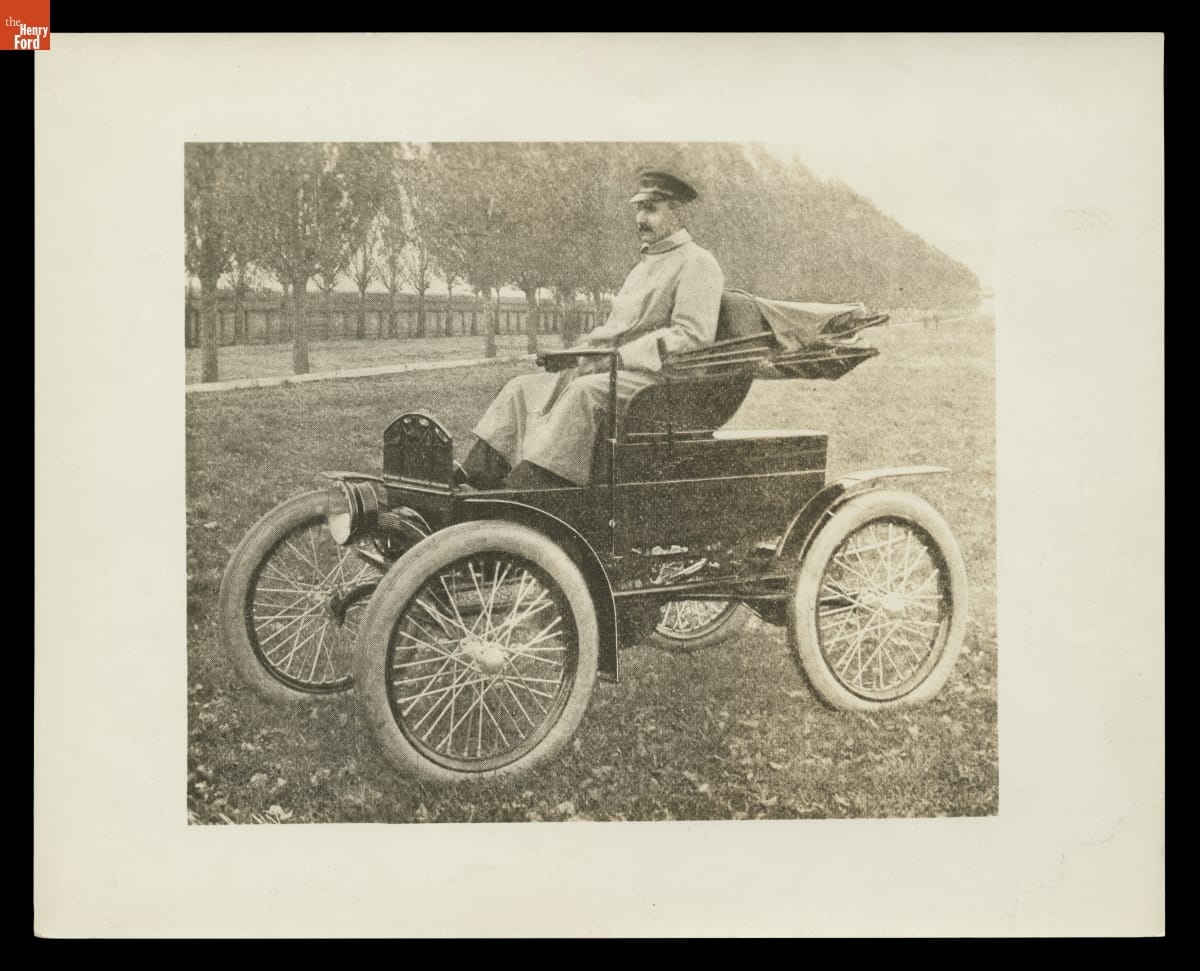
- Baker Electric Automobile, 1900 - Walter C. Baker and F. Philip Dorn co-founded Baker Motor Vehicle Company in Cleveland, Ohio, in 1899. From the start, the company specialized in electric vehicles. The electric runabout in this photo was priced at $850. Baker production continued until 1916, by which time gasoline-powered vehicles with internal combustion engines were dominating the market.
- circa 1901
- Collections - Artifact
Baker Electric Automobile, 1900
Walter C. Baker and F. Philip Dorn co-founded Baker Motor Vehicle Company in Cleveland, Ohio, in 1899. From the start, the company specialized in electric vehicles. The electric runabout in this photo was priced at $850. Baker production continued until 1916, by which time gasoline-powered vehicles with internal combustion engines were dominating the market.
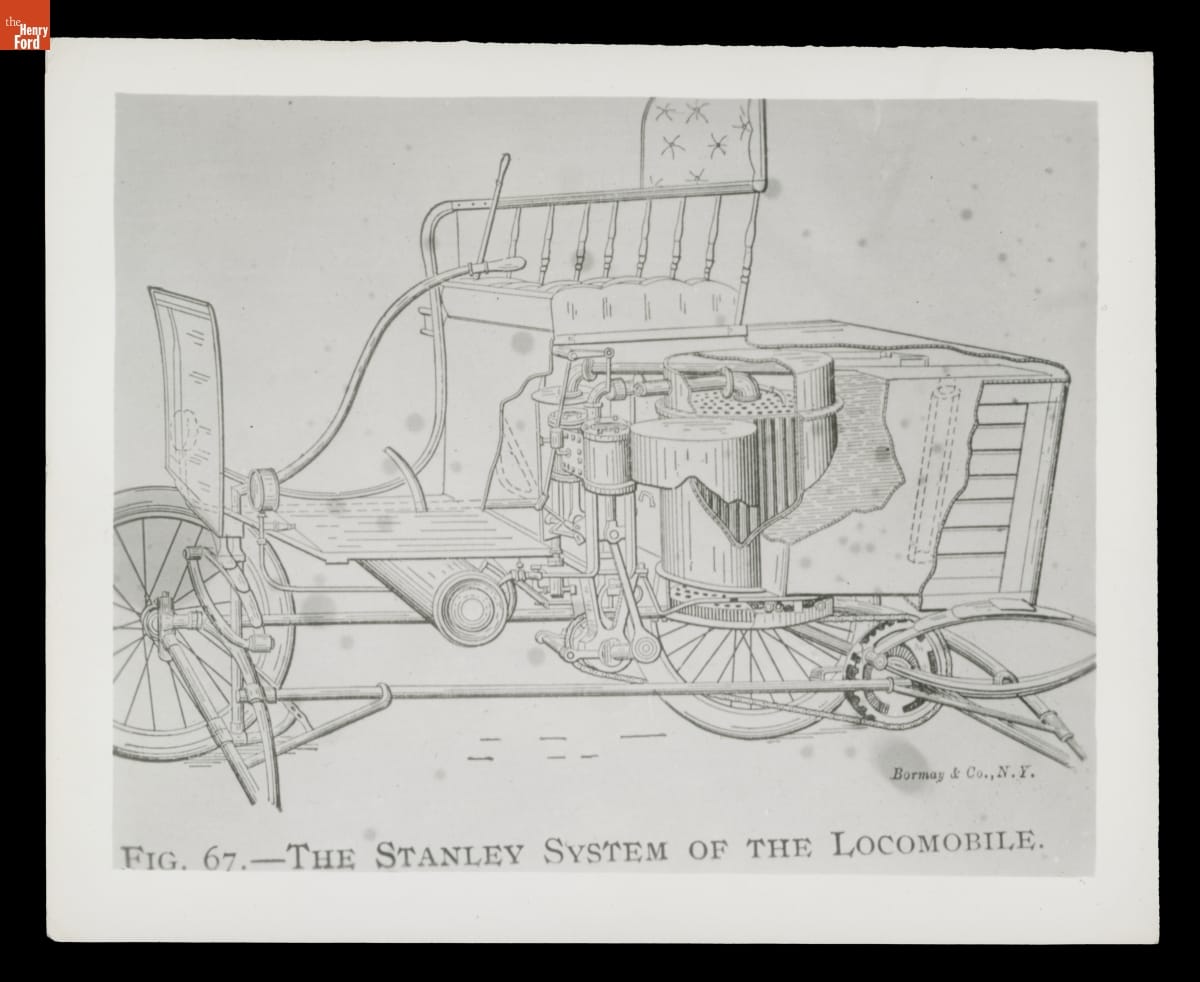
- "The Stanley System of the Locomobile" circa 1900 - This cutaway diagram reveals the inner workings of an early steam-powered Locomobile. The vehicle packed a water tank, boiler, two-cylinder steam engine, and fuel supply under the seat of the automobile.
- circa 1900
- Collections - Artifact
"The Stanley System of the Locomobile" circa 1900
This cutaway diagram reveals the inner workings of an early steam-powered Locomobile. The vehicle packed a water tank, boiler, two-cylinder steam engine, and fuel supply under the seat of the automobile.
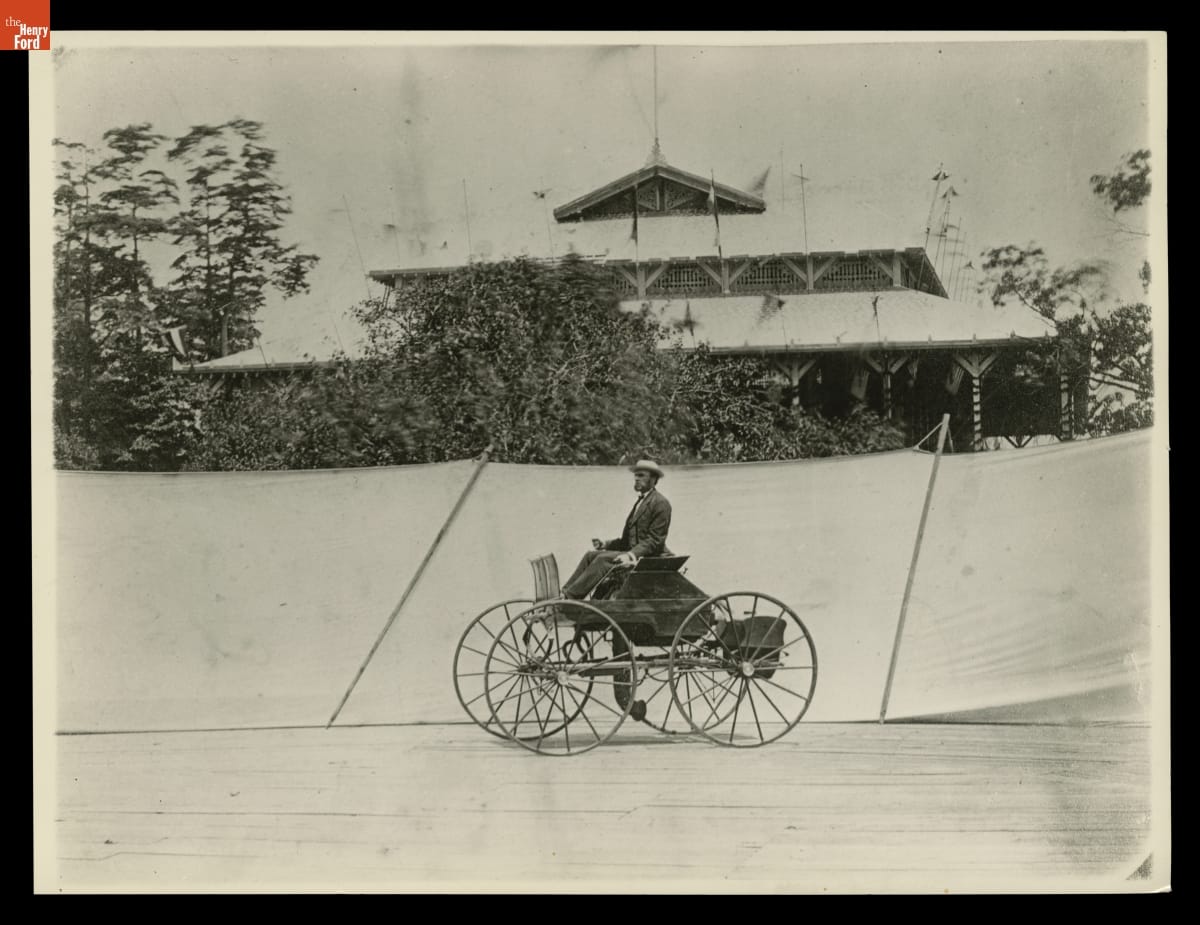
- Driving a Roper Steam Carriage, circa 1863 - Massachusetts machinist Sylvester Roper built several steam-powered carriages and motorcycles years before automobiles -- as we know them -- appeared. Roper never produced his vehicles commercially. Instead, they were exhibited at circuses and fairs, where crowds marveled at the self-propelled contraptions. Steamboats and steam locomotives were common, but steam-powered carriages were genuine novelties.
- circa 1863
- Collections - Artifact
Driving a Roper Steam Carriage, circa 1863
Massachusetts machinist Sylvester Roper built several steam-powered carriages and motorcycles years before automobiles -- as we know them -- appeared. Roper never produced his vehicles commercially. Instead, they were exhibited at circuses and fairs, where crowds marveled at the self-propelled contraptions. Steamboats and steam locomotives were common, but steam-powered carriages were genuine novelties.
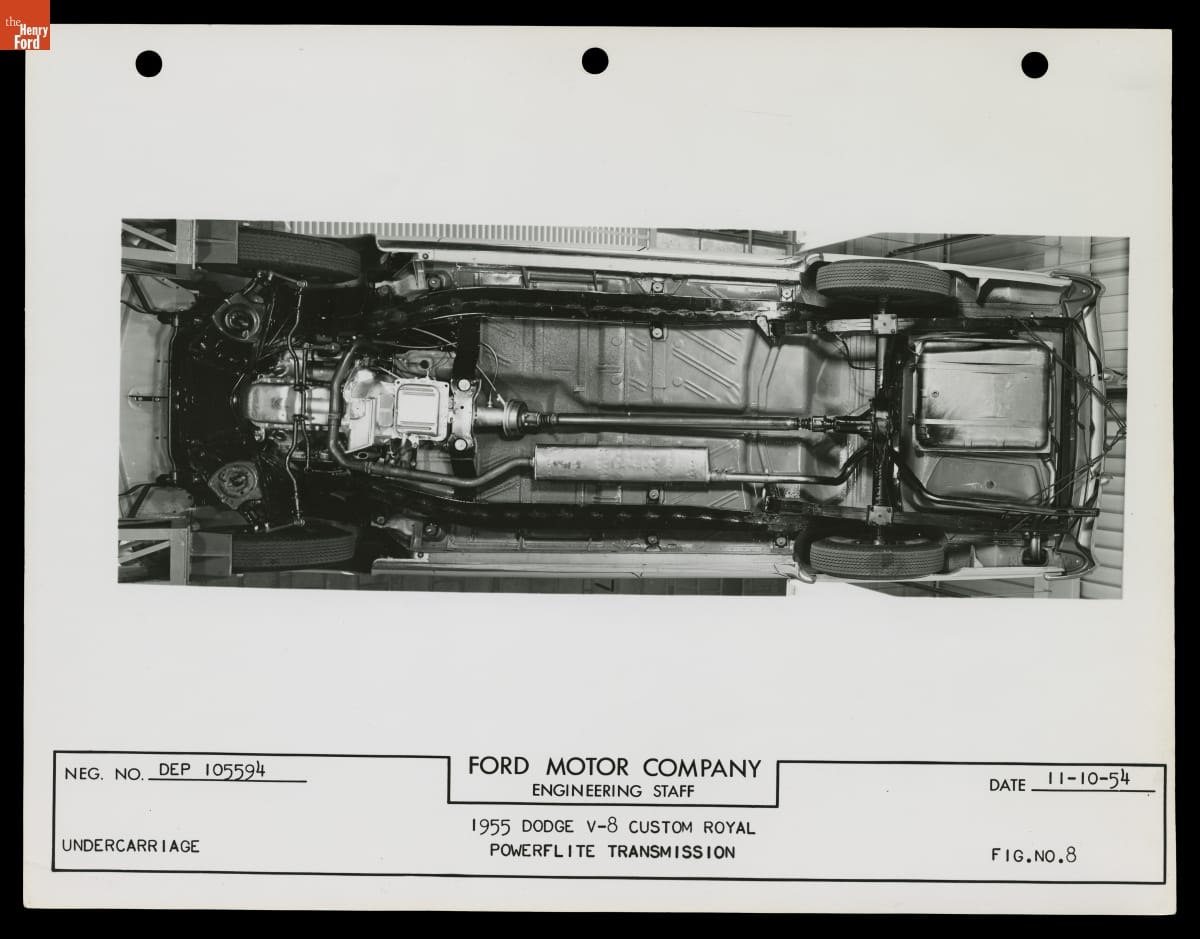
- 1955 Dodge V-8 Custom Royal Powerflite Transmission, November 1954 - Automakers routinely purchased samples of their competitors' vehicles to evaluate features and technologies. Ford Motor Company bought this 1955 Dodge Custom Royal in part to study its two-speed PowerFlite automatic transmission, introduced the previous model year. Chrysler brands replaced the PowerFlite with the three-speed TorqueFlite automatic transmission starting in the 1957 model year.
- November 10, 1954
- Collections - Artifact
1955 Dodge V-8 Custom Royal Powerflite Transmission, November 1954
Automakers routinely purchased samples of their competitors' vehicles to evaluate features and technologies. Ford Motor Company bought this 1955 Dodge Custom Royal in part to study its two-speed PowerFlite automatic transmission, introduced the previous model year. Chrysler brands replaced the PowerFlite with the three-speed TorqueFlite automatic transmission starting in the 1957 model year.
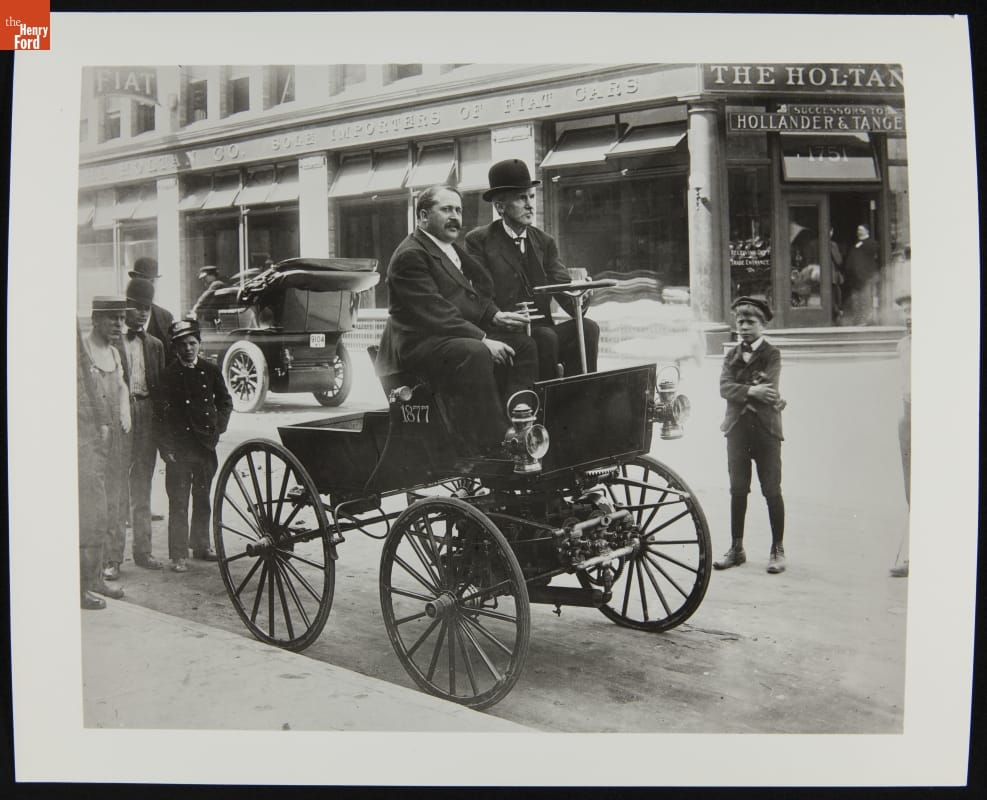
- George Selden with the 1907 Selden Motor Buggy during the Selden Patent Suit - George Selden conceived -- but didn't build -- a self-propelled gasoline-powered vehicle in 1877 and patented the idea in 1895. The Association of Licensed Automobile Manufacturers enforced Selden's patent, but Henry Ford fought ALAM in court. This car was completed for Selden in 1907 as evidence for the legal battle. Ford ultimately won, freeing himself and other automakers from paying royalties to ALAM.
- 1907-1911
- Collections - Artifact
George Selden with the 1907 Selden Motor Buggy during the Selden Patent Suit
George Selden conceived -- but didn't build -- a self-propelled gasoline-powered vehicle in 1877 and patented the idea in 1895. The Association of Licensed Automobile Manufacturers enforced Selden's patent, but Henry Ford fought ALAM in court. This car was completed for Selden in 1907 as evidence for the legal battle. Ford ultimately won, freeing himself and other automakers from paying royalties to ALAM.
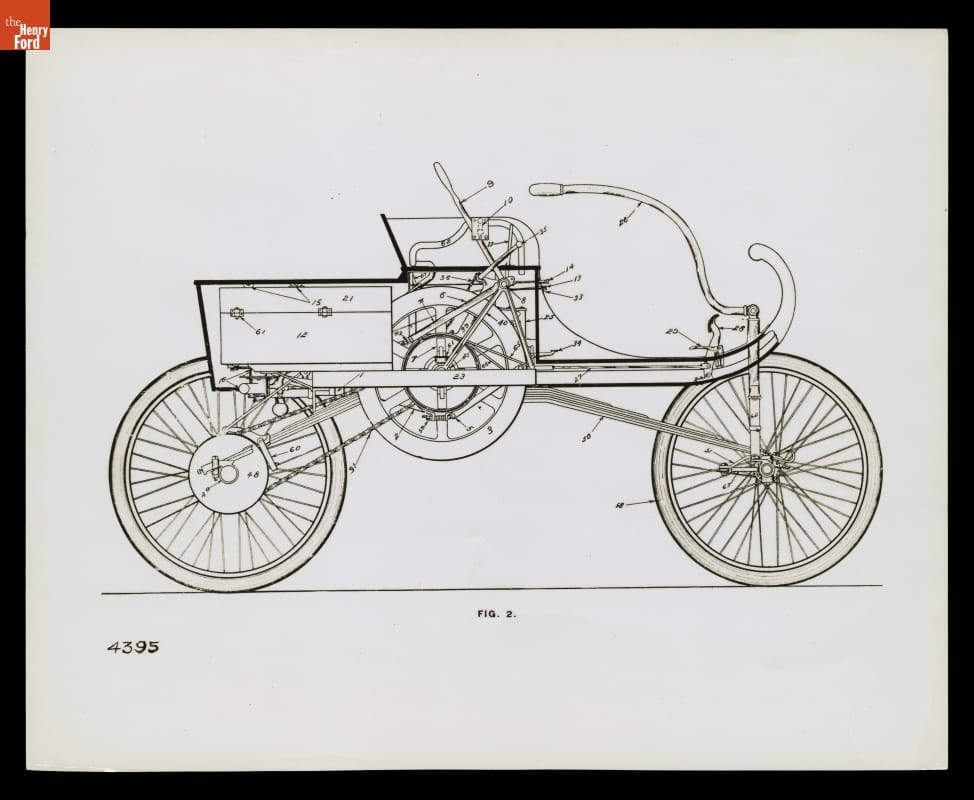
- Diagram of a 1902 Curved-Dash Oldsmobile - Shortly after the company moved to Detroit, a fire destroyed the Olds Motor Works factory in 1901. Several prototype automobiles were lost and only the Curved Dash survived. Left with no other options, Olds put the small, inexpensive car into production. The little runabout became the bestselling car in the United States, and that fire became the happiest of accidents.
- circa 1902
- Collections - Artifact
Diagram of a 1902 Curved-Dash Oldsmobile
Shortly after the company moved to Detroit, a fire destroyed the Olds Motor Works factory in 1901. Several prototype automobiles were lost and only the Curved Dash survived. Left with no other options, Olds put the small, inexpensive car into production. The little runabout became the bestselling car in the United States, and that fire became the happiest of accidents.
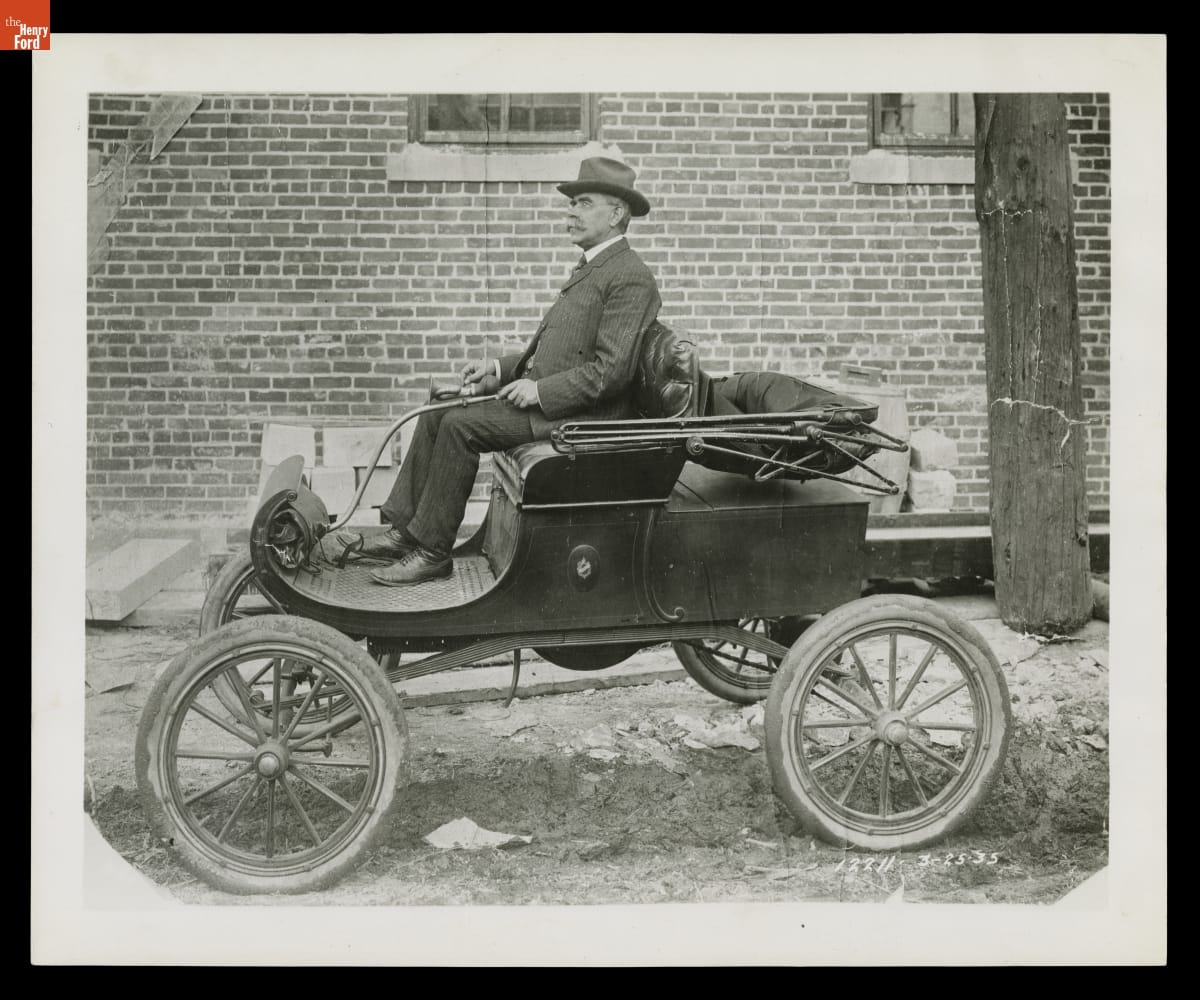
- Building Contractor Albert A. Albrecht Seated in 1902 Curved-Dash Oldsmobile, circa 1920 - Detroit contractor Albert Albrecht posed in a 1902 Oldsmobile circa 1920. Twenty years after its debut, the Curved Dash Olds was an antique with its tiller steering, chain drive and 4.5-horsepower engine hopelessly out of date. But the affordable Curved Dash had pointed toward a day when automobile ownership would be commonplace -- a day that had arrived by 1920.
- circa 1920-1925
- Collections - Artifact
Building Contractor Albert A. Albrecht Seated in 1902 Curved-Dash Oldsmobile, circa 1920
Detroit contractor Albert Albrecht posed in a 1902 Oldsmobile circa 1920. Twenty years after its debut, the Curved Dash Olds was an antique with its tiller steering, chain drive and 4.5-horsepower engine hopelessly out of date. But the affordable Curved Dash had pointed toward a day when automobile ownership would be commonplace -- a day that had arrived by 1920.
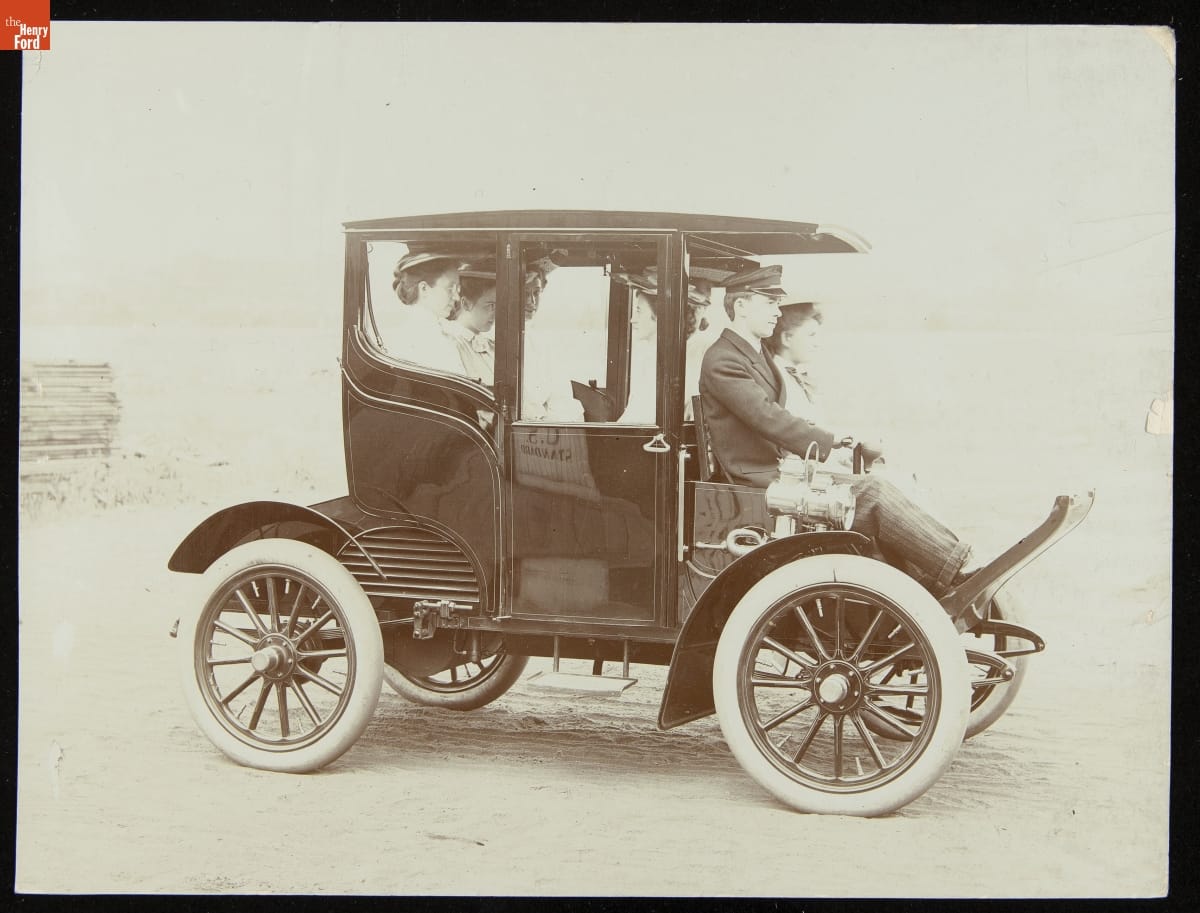
- Passengers Being Driven in an Adams-Farwell Taxicab, circa 1905 - Built in Dubuque, Iowa, from 1905 to 1912, Adams-Farwell automobiles were distinguished by rear-mounted rotary engines. The cylinders and crankcase revolved around a fixed vertical shaft, and power was sent to the gearbox via bevel gears. "It spins like a top," according to the company's slogan. Despite -- or perhaps because of -- its novelty, the Adams-Farwell was never a strong seller.
- circa 1905
- Collections - Artifact
Passengers Being Driven in an Adams-Farwell Taxicab, circa 1905
Built in Dubuque, Iowa, from 1905 to 1912, Adams-Farwell automobiles were distinguished by rear-mounted rotary engines. The cylinders and crankcase revolved around a fixed vertical shaft, and power was sent to the gearbox via bevel gears. "It spins like a top," according to the company's slogan. Despite -- or perhaps because of -- its novelty, the Adams-Farwell was never a strong seller.
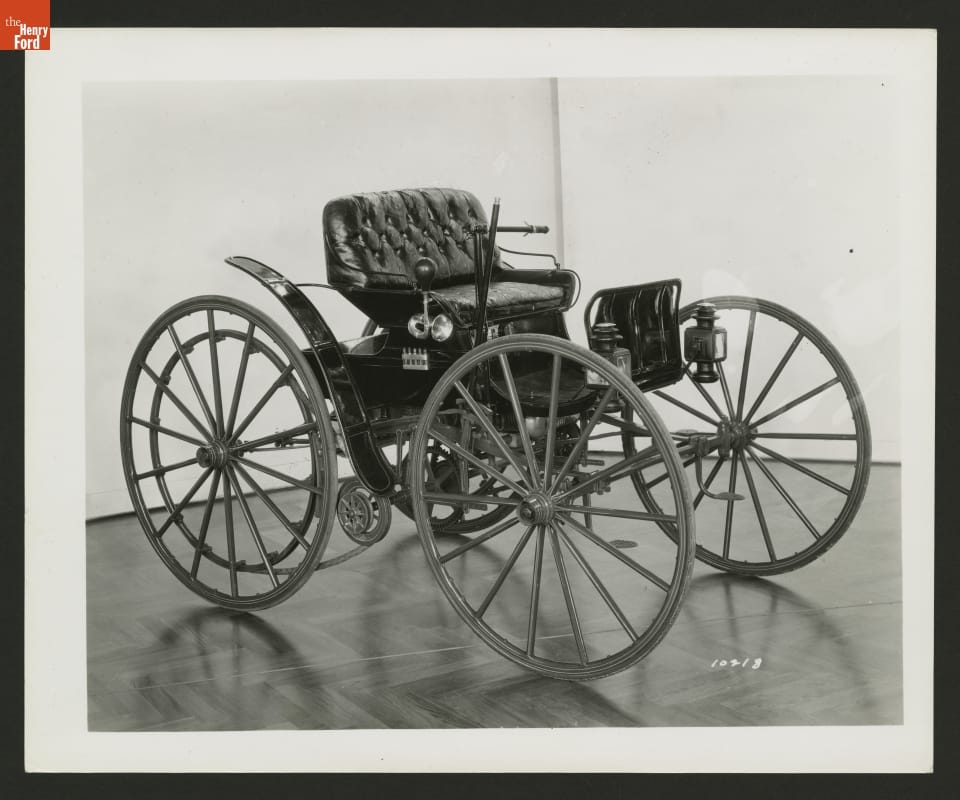
- 1903 Holsman Runabout Automobile inside Henry Ford Museum, 1934 - Architect Henry K. Holsman formed the Holsman Automobile Company in Chicago in 1901. The company built basic but serviceable high-wheel cars whose height easily cleared bumps and ruts on the poor roads of the time. Prices started around $650, but sales slackened after 1908. Holsman ended production in 1910 having built about 2,460 total vehicles.
- April 20, 1934
- Collections - Artifact
1903 Holsman Runabout Automobile inside Henry Ford Museum, 1934
Architect Henry K. Holsman formed the Holsman Automobile Company in Chicago in 1901. The company built basic but serviceable high-wheel cars whose height easily cleared bumps and ruts on the poor roads of the time. Prices started around $650, but sales slackened after 1908. Holsman ended production in 1910 having built about 2,460 total vehicles.