
Search
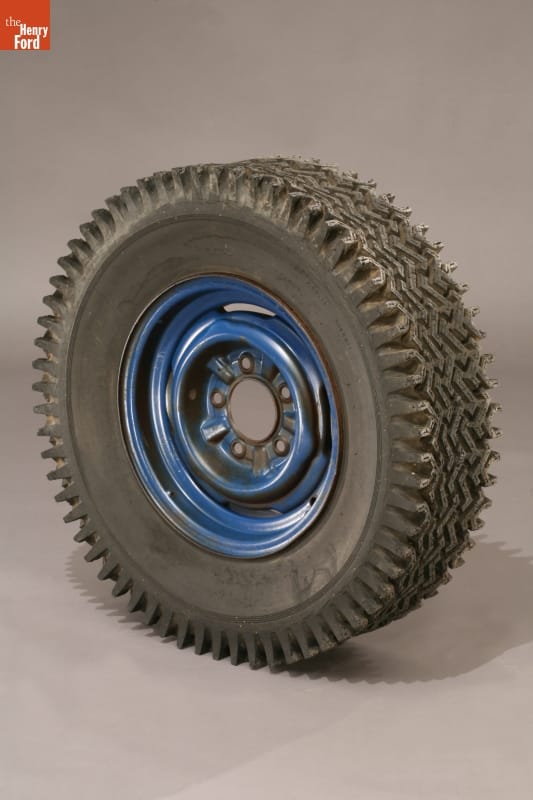
- Prototype Racing Tire, circa 1960 - Bobby Unser made his reputation in the Pikes Peak International Hill Climb. The course had a dirt surface when Unser raced it, so he searched for ways to improve tire traction. Unser tried grinding up various substances and mixing the results into rubber to produce a tire with more grip. The most effective material turned out to be ground walnut shells.
- circa 1960
- Collections - Artifact
Prototype Racing Tire, circa 1960
Bobby Unser made his reputation in the Pikes Peak International Hill Climb. The course had a dirt surface when Unser raced it, so he searched for ways to improve tire traction. Unser tried grinding up various substances and mixing the results into rubber to produce a tire with more grip. The most effective material turned out to be ground walnut shells.
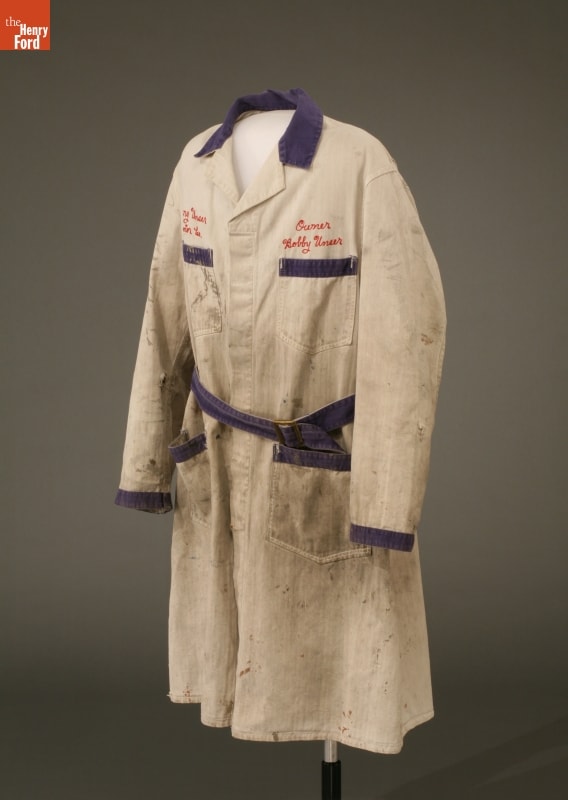
- Jerry Unser Motor Company Lab Coat Worn by Bobby Unser, circa 1960 - Jerry Unser established his auto repair garage in Albuquerque, New Mexico, in 1936. All four of his sons -- Jerry Jr., Louie, Bobby, and Al -- worked in the business at some point. Bobby Unser used this shop coat while running the garage around 1960, before his racing success allowed him to make driving a full-time career.
- circa 1960
- Collections - Artifact
Jerry Unser Motor Company Lab Coat Worn by Bobby Unser, circa 1960
Jerry Unser established his auto repair garage in Albuquerque, New Mexico, in 1936. All four of his sons -- Jerry Jr., Louie, Bobby, and Al -- worked in the business at some point. Bobby Unser used this shop coat while running the garage around 1960, before his racing success allowed him to make driving a full-time career.
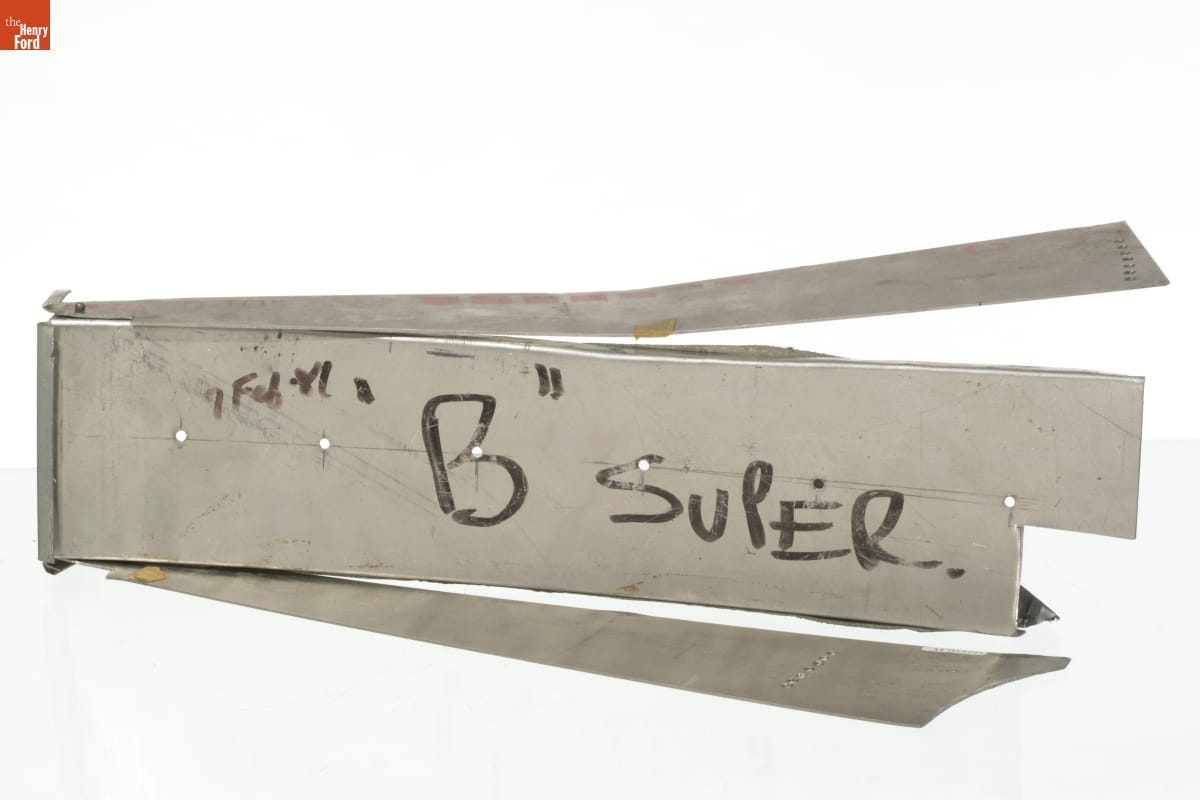
- Scale Model of Indy Car Side Pod Tunnel Used for Airflow Testing, 1981 - Bobby Unser tested scale model body parts, like this one, to design a better race car. He used a flow bench -- typically used to analyze engine parts -- to determine which design would most effectively push a car closer to the racing surface. This downward force provides greater traction for higher cornering speed. Unser's innovative approach allowed for more development while reducing the amount of full-scale wind tunnel and track testing.
- February 07, 1981
- Collections - Artifact
Scale Model of Indy Car Side Pod Tunnel Used for Airflow Testing, 1981
Bobby Unser tested scale model body parts, like this one, to design a better race car. He used a flow bench -- typically used to analyze engine parts -- to determine which design would most effectively push a car closer to the racing surface. This downward force provides greater traction for higher cornering speed. Unser's innovative approach allowed for more development while reducing the amount of full-scale wind tunnel and track testing.
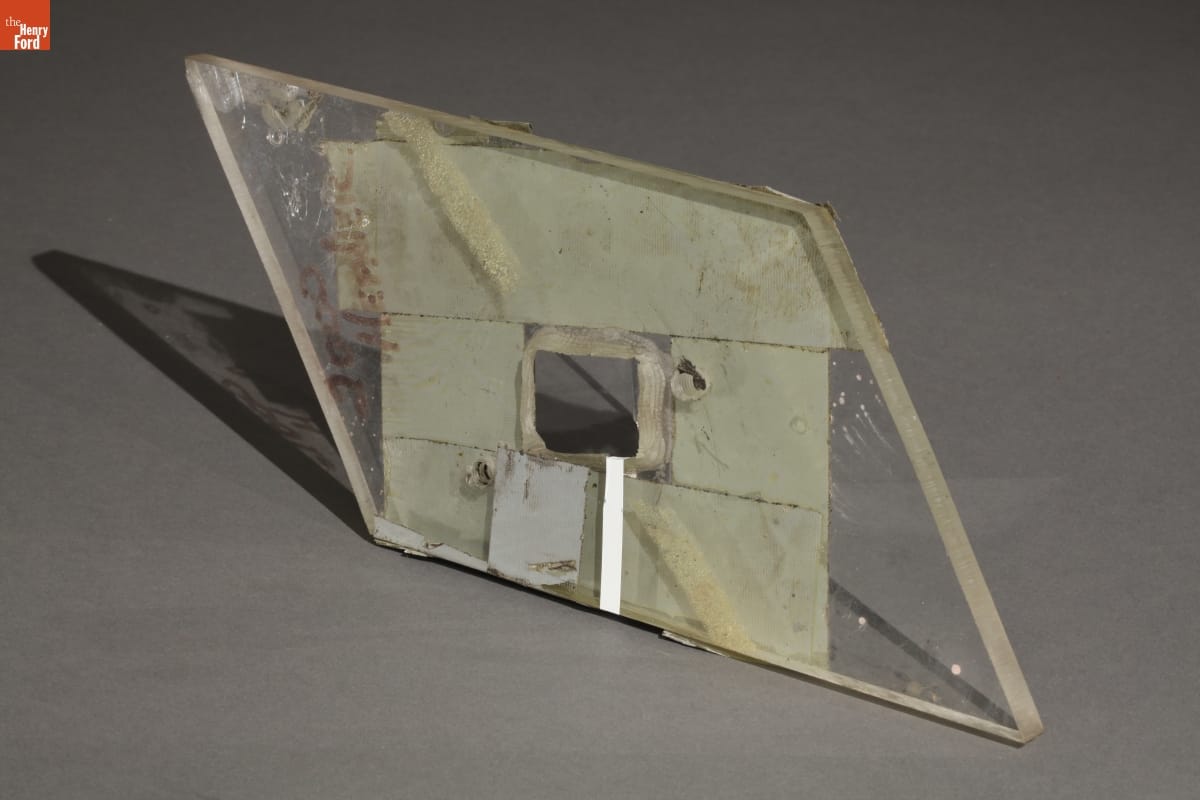
- Orifice Plate for Cylinder Head Exhaust Airflow Testing, 1978-1982 - Bobby Unser used this clear plastic part on his flow bench to help test race car engine parts. A flow bench is typically used to test the airflow through engine parts such as carburetors, cylinder heads and air filters. Testing led to better designs and engine performance -- and better race results.
- 1978-1982
- Collections - Artifact
Orifice Plate for Cylinder Head Exhaust Airflow Testing, 1978-1982
Bobby Unser used this clear plastic part on his flow bench to help test race car engine parts. A flow bench is typically used to test the airflow through engine parts such as carburetors, cylinder heads and air filters. Testing led to better designs and engine performance -- and better race results.
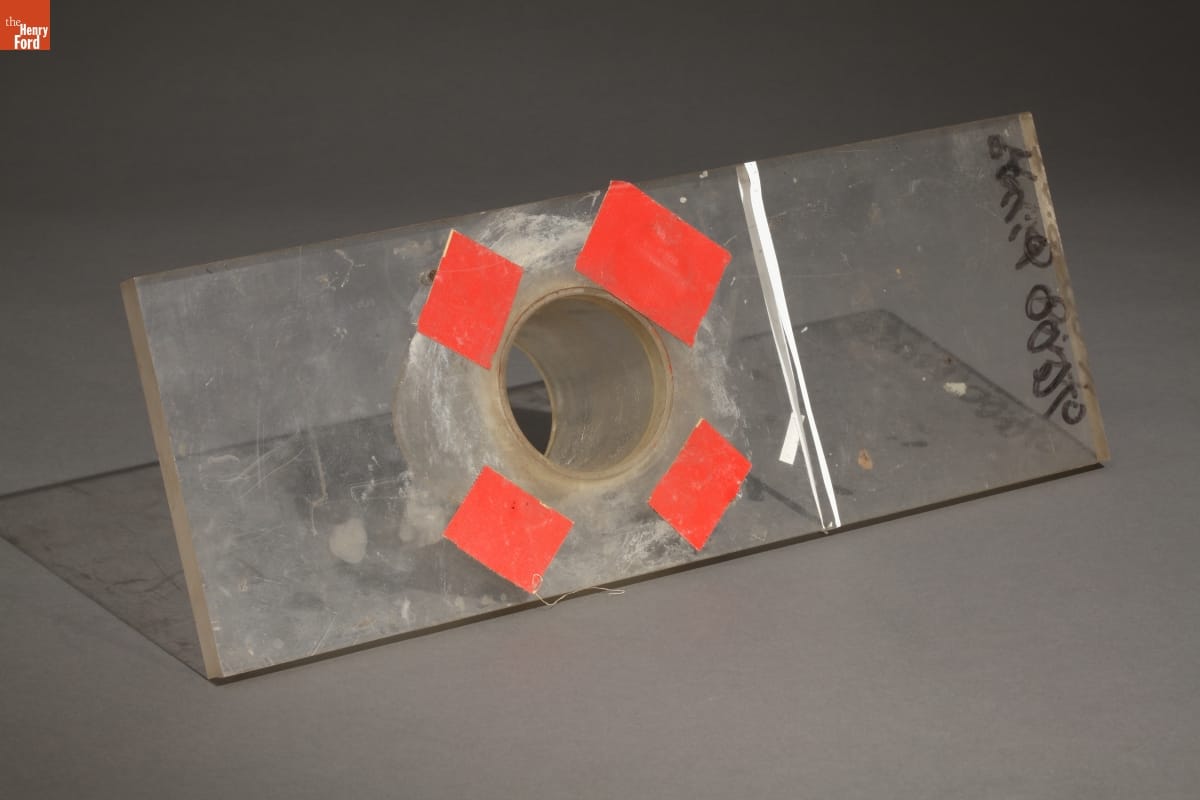
- Cylinder Bore Adapter Plate for Cylinder Head Airflow Testing, 1978-1982 - Bobby Unser used this clear plastic part on his flow bench to help test race car engine parts. A flow bench is typically used to test the airflow through engine parts such as carburetors, cylinder heads and air filters. Testing led to better designs and engine performance -- and better race results.
- 1978-1982
- Collections - Artifact
Cylinder Bore Adapter Plate for Cylinder Head Airflow Testing, 1978-1982
Bobby Unser used this clear plastic part on his flow bench to help test race car engine parts. A flow bench is typically used to test the airflow through engine parts such as carburetors, cylinder heads and air filters. Testing led to better designs and engine performance -- and better race results.
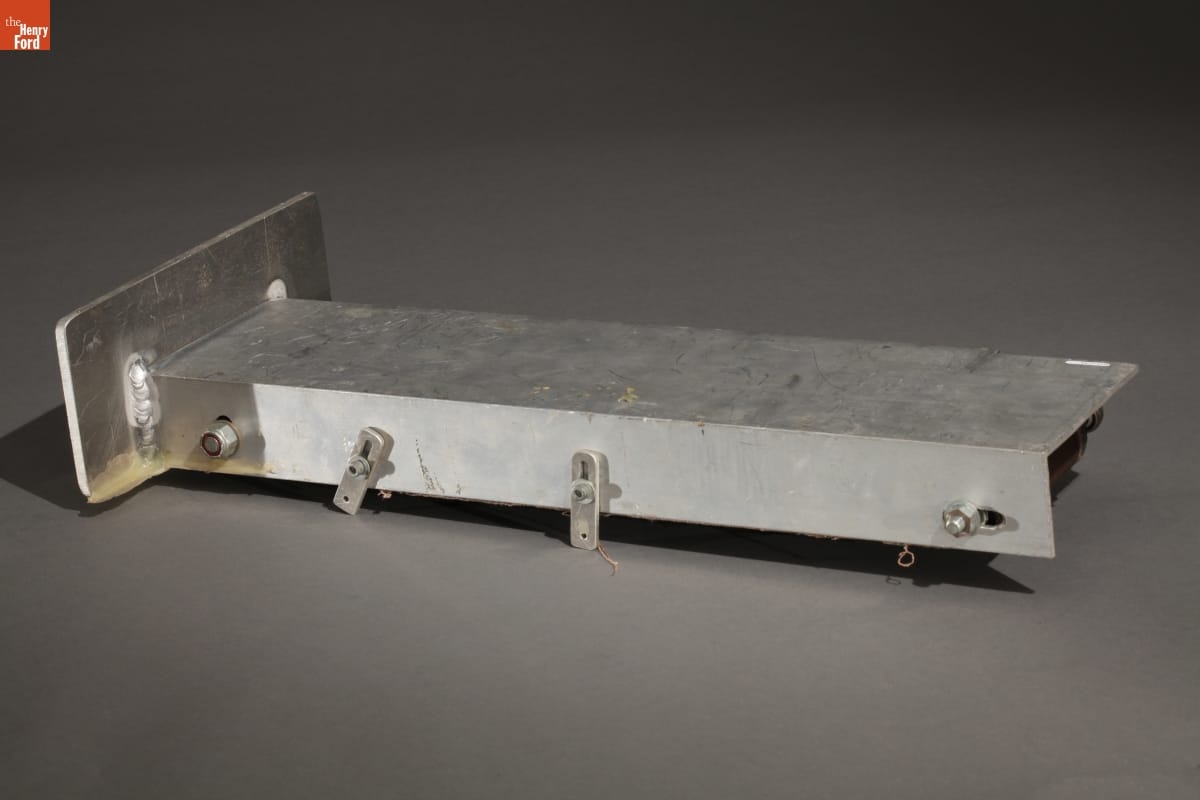
- Moveable Assembly Used for Testing with Superflow Bench, 1978-1982 - Bobby Unser used this metal part on his flow bench to help test race car engine parts. A flow bench is typically used to test the airflow through engine parts such as carburetors, cylinder heads and air filters. Testing led to better designs and engine performance -- and better race results.
- 1978-1982
- Collections - Artifact
Moveable Assembly Used for Testing with Superflow Bench, 1978-1982
Bobby Unser used this metal part on his flow bench to help test race car engine parts. A flow bench is typically used to test the airflow through engine parts such as carburetors, cylinder heads and air filters. Testing led to better designs and engine performance -- and better race results.
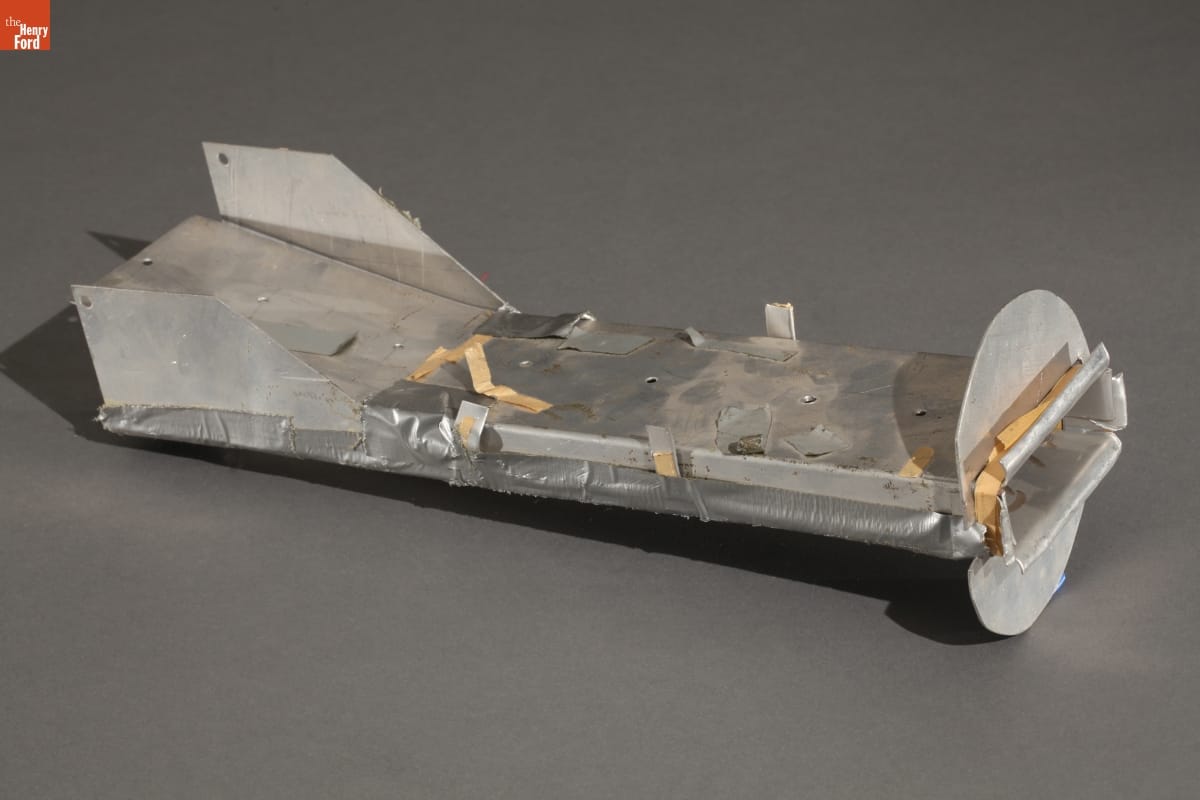
- Scale Model of Race Car Bodywork Used for Airflow Testing, 1978-1982 - Bobby Unser tested scale model body parts, like this one, to design a better race car. He used a flow bench -- typically used to analyze engine parts -- to determine which design would most effectively push a car closer to the racing surface. This downward force provides greater traction for higher cornering speed. Unser's innovative approach allowed for more development while reducing the amount of full-scale wind tunnel and track testing.
- 1978-1982
- Collections - Artifact
Scale Model of Race Car Bodywork Used for Airflow Testing, 1978-1982
Bobby Unser tested scale model body parts, like this one, to design a better race car. He used a flow bench -- typically used to analyze engine parts -- to determine which design would most effectively push a car closer to the racing surface. This downward force provides greater traction for higher cornering speed. Unser's innovative approach allowed for more development while reducing the amount of full-scale wind tunnel and track testing.
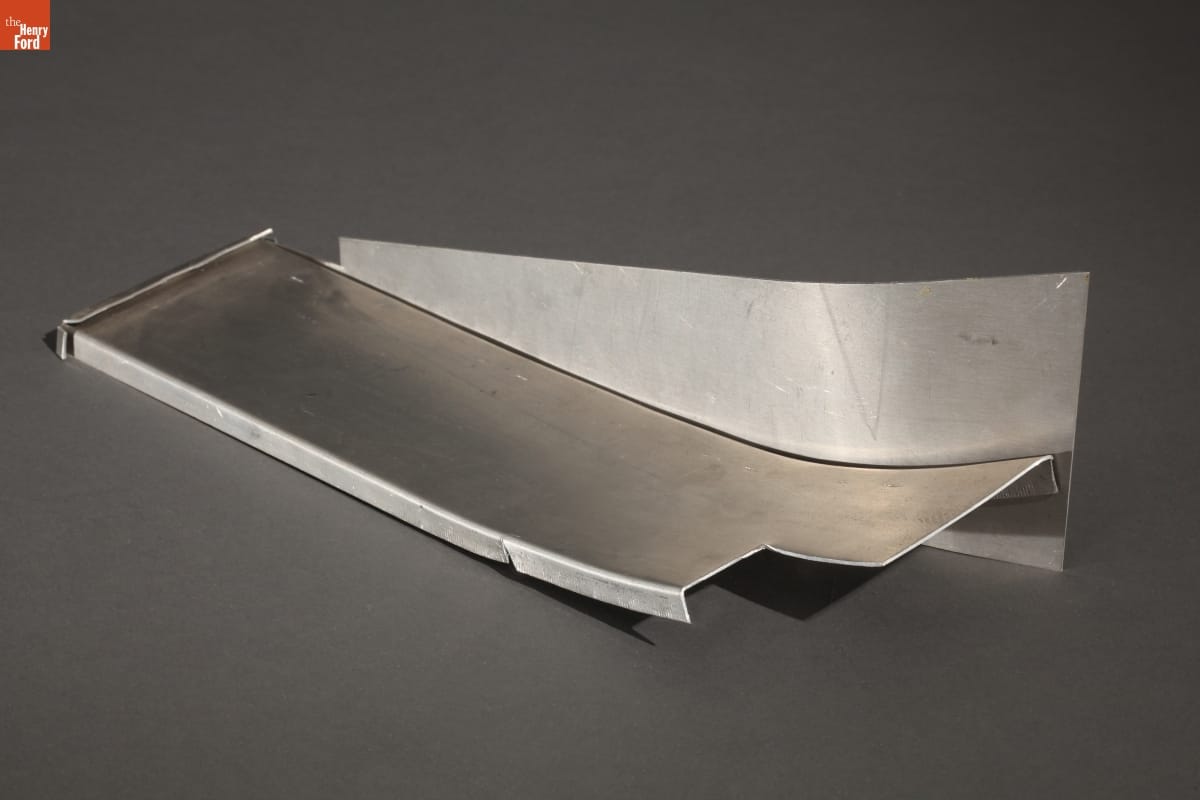
- Scale Model of Race Car Bodywork Used for Airflow Testing, 1978-1982 - Bobby Unser tested scale model body parts, like this one, to design a better race car. He used a flow bench -- typically used to analyze engine parts -- to determine which design would most effectively push a car closer to the racing surface. This downward force provides greater traction for higher cornering speed. Unser's innovative approach allowed for more development while reducing the amount of full-scale wind tunnel and track testing.
- 1978-1982
- Collections - Artifact
Scale Model of Race Car Bodywork Used for Airflow Testing, 1978-1982
Bobby Unser tested scale model body parts, like this one, to design a better race car. He used a flow bench -- typically used to analyze engine parts -- to determine which design would most effectively push a car closer to the racing surface. This downward force provides greater traction for higher cornering speed. Unser's innovative approach allowed for more development while reducing the amount of full-scale wind tunnel and track testing.
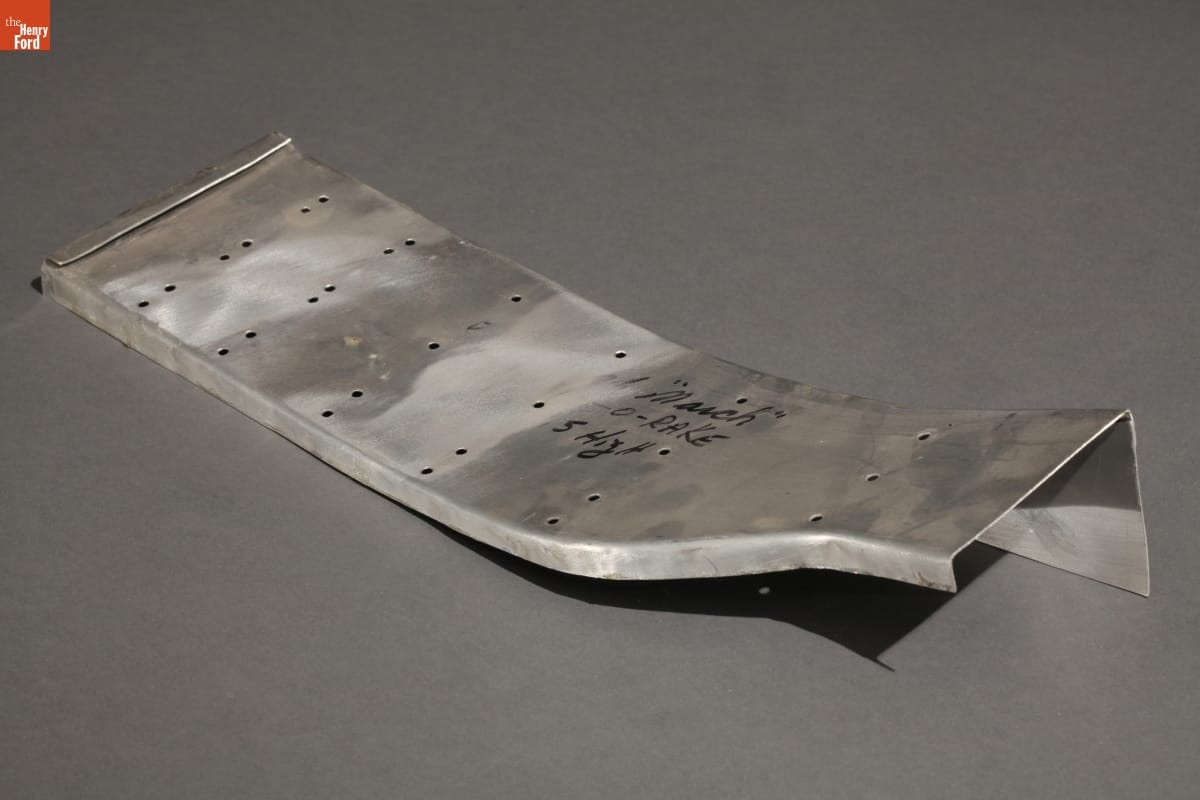
- Scale Model of March Indy Car Side Pod Tunnel Used for Airflow Testing, 1978-1982 - Bobby Unser tested scale model body parts, like this one, to design a better race car. He used a flow bench -- typically used to analyze engine parts -- to determine which design would most effectively push a car closer to the racing surface. This downward force provides greater traction for higher cornering speed. Unser's innovative approach allowed for more development while reducing the amount of full-scale wind tunnel and track testing.
- 1978-1982
- Collections - Artifact
Scale Model of March Indy Car Side Pod Tunnel Used for Airflow Testing, 1978-1982
Bobby Unser tested scale model body parts, like this one, to design a better race car. He used a flow bench -- typically used to analyze engine parts -- to determine which design would most effectively push a car closer to the racing surface. This downward force provides greater traction for higher cornering speed. Unser's innovative approach allowed for more development while reducing the amount of full-scale wind tunnel and track testing.
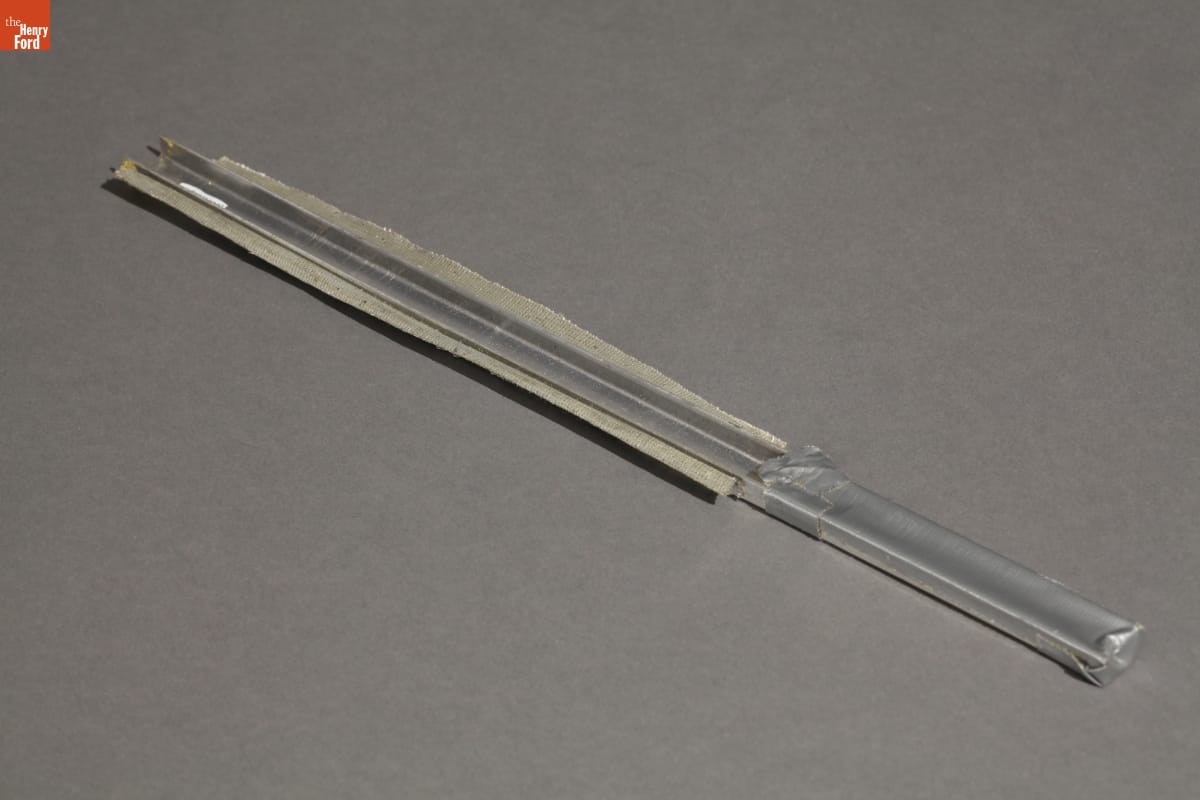
- Fabricated Metal Component Used for Testing with Superflow Bench, 1978-1982 - Bobby Unser tested scale model body parts, like this one, to design a better race car. He used a flow bench -- typically used to analyze engine parts -- to determine which design would most effectively push a car closer to the racing surface. This downward force provides greater traction for higher cornering speed. Unser's innovative approach allowed for more development while reducing the amount of full-scale wind tunnel and track testing.
- 1978-1982
- Collections - Artifact
Fabricated Metal Component Used for Testing with Superflow Bench, 1978-1982
Bobby Unser tested scale model body parts, like this one, to design a better race car. He used a flow bench -- typically used to analyze engine parts -- to determine which design would most effectively push a car closer to the racing surface. This downward force provides greater traction for higher cornering speed. Unser's innovative approach allowed for more development while reducing the amount of full-scale wind tunnel and track testing.