
Search
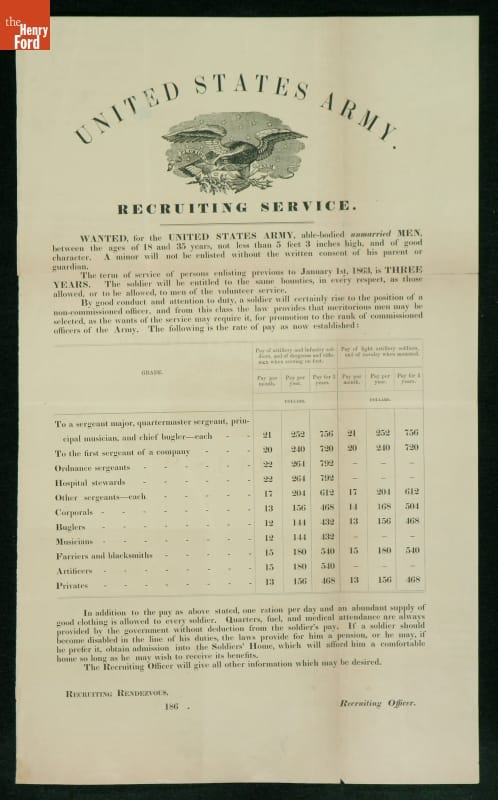
- United States Army Recruiting Service Broadside, circa 1863 - At the outbreak of the Civil War, President Lincoln called for soldiers -- both regular and volunteer -- to help save the Union. Recruiters could use this 1863 poster to enlist men into the regular United States army. This broadside listed pay grades and other benefits available to those who signed up.
- circa 1863
- Collections - Artifact
United States Army Recruiting Service Broadside, circa 1863
At the outbreak of the Civil War, President Lincoln called for soldiers -- both regular and volunteer -- to help save the Union. Recruiters could use this 1863 poster to enlist men into the regular United States army. This broadside listed pay grades and other benefits available to those who signed up.
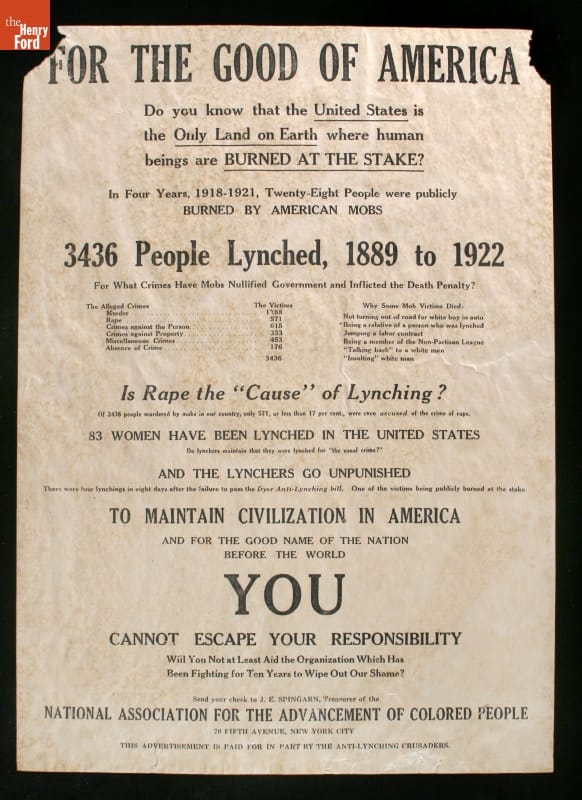
- "For the Good of America... You Cannot Escape Your Responsibility," 1923 - In 1912, the NAACP began a formal campaign to ban lynching. This 1923 broadside informed Americans about the numbers, causes and brutality of lynching. An anti-lynching bill was first introduced in Congress in 1918. A later version -- and others that followed -- failed to pass in the United States Senate. In June 2005, the Senate finally issued a formal apology for never having outlawed lynching.
- 1923
- Collections - Artifact
"For the Good of America... You Cannot Escape Your Responsibility," 1923
In 1912, the NAACP began a formal campaign to ban lynching. This 1923 broadside informed Americans about the numbers, causes and brutality of lynching. An anti-lynching bill was first introduced in Congress in 1918. A later version -- and others that followed -- failed to pass in the United States Senate. In June 2005, the Senate finally issued a formal apology for never having outlawed lynching.
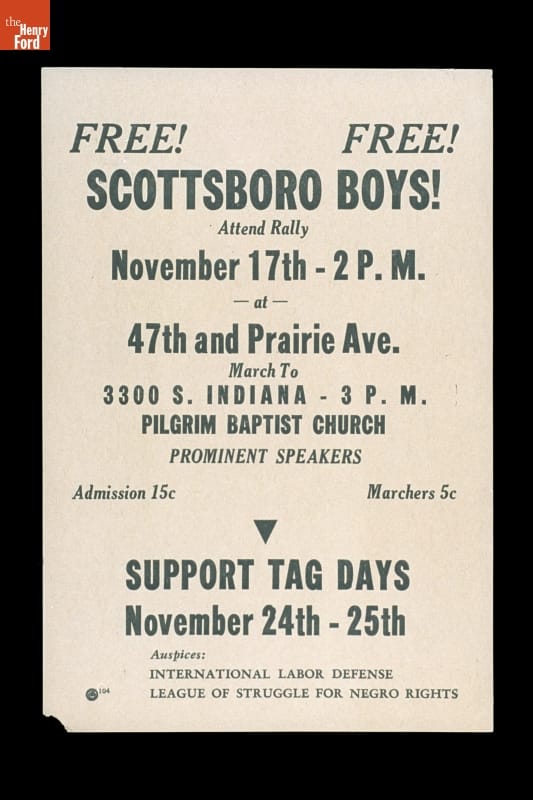
- Handbill for a Rally in Support of the Scottsboro Boys, Pilgrim Baptist Church, Chicago, Illinois, November 17, 1933 - In 1931, nine black youths were unjustly accused of raping two white women in Alabama. White juries quickly convicted and sentenced eight of the defendants to death. The International Labor Defense, the legal arm of the Communist Party of the United States, issued this handbill to rally public support to combat this injustice and to free the "Scottsboro Boys."
- November 17, 1933
- Collections - Artifact
Handbill for a Rally in Support of the Scottsboro Boys, Pilgrim Baptist Church, Chicago, Illinois, November 17, 1933
In 1931, nine black youths were unjustly accused of raping two white women in Alabama. White juries quickly convicted and sentenced eight of the defendants to death. The International Labor Defense, the legal arm of the Communist Party of the United States, issued this handbill to rally public support to combat this injustice and to free the "Scottsboro Boys."
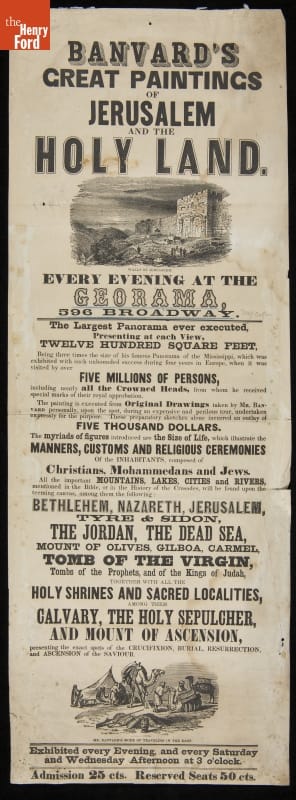
- "Banvard's Great Paintings of Jerusalem and the Holy Land," 1853-1854 - John Banvard entertained hundreds of thousands of mid-nineteenth-century Americans with his panorama of the Holy Land. This massive mural -- painted after his trip to the Near East -- depicted historic and religious scenes of Jerusalem and Palestine. For two years, from 1852-1854, audiences in New York City's Georama Theater marveled as each tableau on the canvas scrolled past.
- 1853-1854
- Collections - Artifact
"Banvard's Great Paintings of Jerusalem and the Holy Land," 1853-1854
John Banvard entertained hundreds of thousands of mid-nineteenth-century Americans with his panorama of the Holy Land. This massive mural -- painted after his trip to the Near East -- depicted historic and religious scenes of Jerusalem and Palestine. For two years, from 1852-1854, audiences in New York City's Georama Theater marveled as each tableau on the canvas scrolled past.
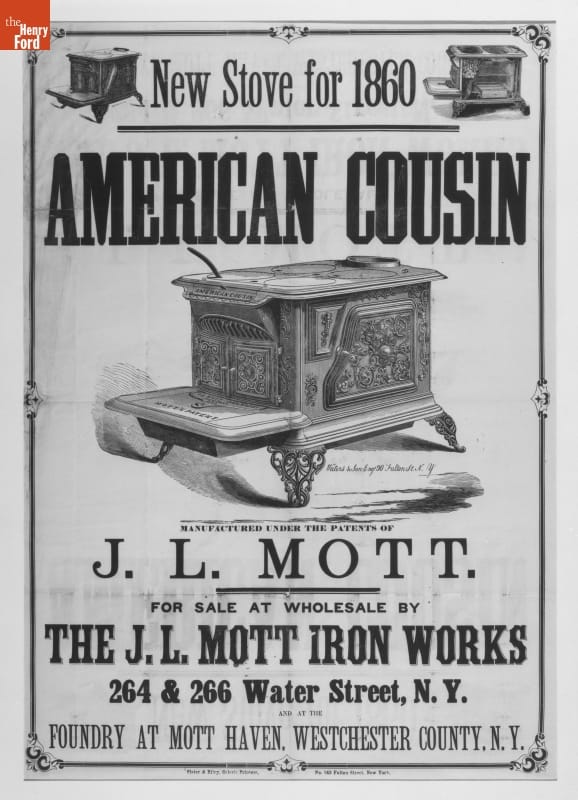
- Advertising Broadside, "New Stove For 1860 American Cousin" -
- 1860
- Collections - Artifact
Advertising Broadside, "New Stove For 1860 American Cousin"
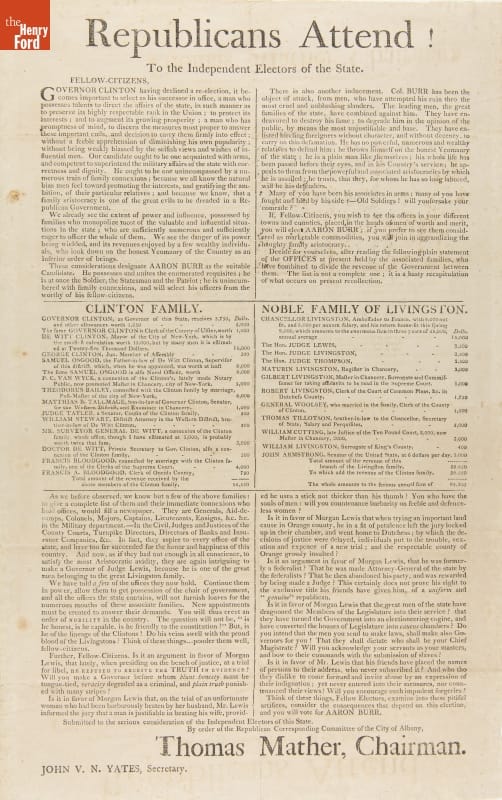
- "Republicans Attend! To the Independent Electors of the State," 1804 -
- 1804
- Collections - Artifact
"Republicans Attend! To the Independent Electors of the State," 1804
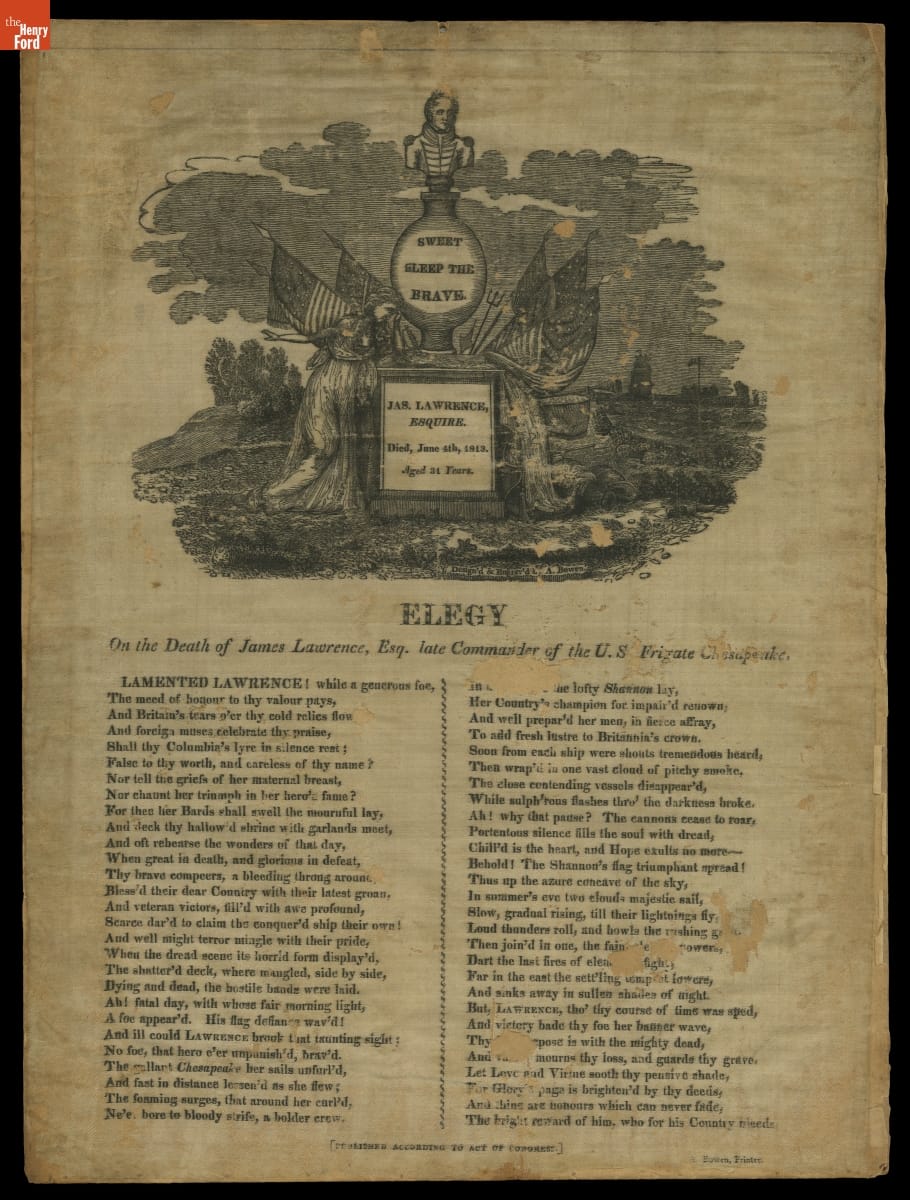
- Elegy: On the Death of James Lawrence, Esq. late Commander of the U.S. Frigate Chesapeake, 1813 - Captain James Lawrence took command of the USS <em>Chesapeake</em> in May 1813 during the War of 1812. On June 1, the seasoned crew of the British frigate HMS <em>Shannon</em> disabled and captured the <em>Chesapeake</em> after a short but intense battle--during which the mortally wounded Captain Lawrence issued a last command: "Don't give up the ship!" This elegy honors the fallen captain.
- 1813
- Collections - Artifact
Elegy: On the Death of James Lawrence, Esq. late Commander of the U.S. Frigate Chesapeake, 1813
Captain James Lawrence took command of the USS Chesapeake in May 1813 during the War of 1812. On June 1, the seasoned crew of the British frigate HMS Shannon disabled and captured the Chesapeake after a short but intense battle--during which the mortally wounded Captain Lawrence issued a last command: "Don't give up the ship!" This elegy honors the fallen captain.
- Congress of Racial Equality Handbill, "Don't Buy at Woolworth," 1960 - In 1960, four African-American students sat down at a Woolworth lunch counter in Greensboro, North Carolina, and were refused service. This poster, produced by the Congress on Racial Equality (CORE), urged Americans to boycott the national five-and-dime chain. It was hoped that the loss of customer dollars would spur company officials to end the segregationist policies found in its southern stores.

- 1960
- Collections - Artifact
Congress of Racial Equality Handbill, "Don't Buy at Woolworth," 1960
In 1960, four African-American students sat down at a Woolworth lunch counter in Greensboro, North Carolina, and were refused service. This poster, produced by the Congress on Racial Equality (CORE), urged Americans to boycott the national five-and-dime chain. It was hoped that the loss of customer dollars would spur company officials to end the segregationist policies found in its southern stores.
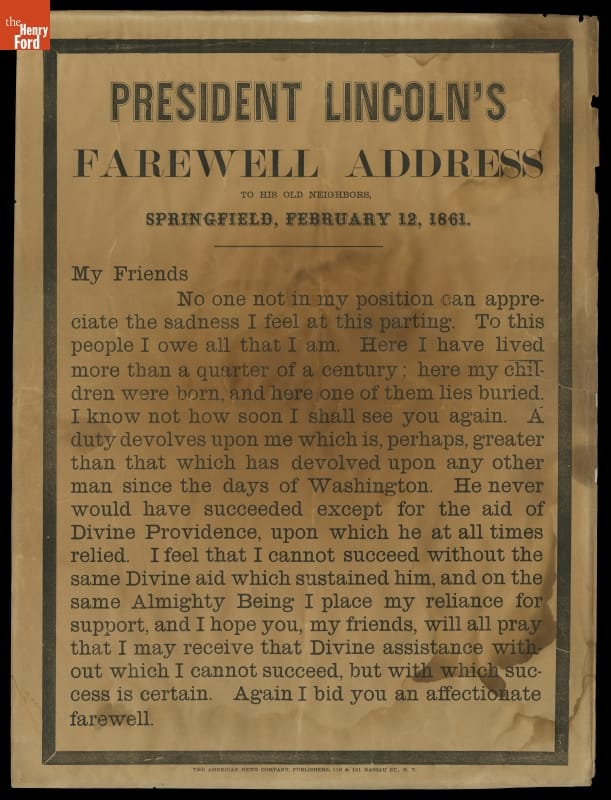
- Broadside, "President Lincoln's Farewell Address to His Old Neighbors, Springfield, February 12, 1861" - One of the most memorable and emotional of Abraham Lincoln's speeches was his extemporaneous farewell to the citizens of Springfield, Illinois, on his departure to Washington. The speech was made on the train platform during a driving rainstorm. Three variations exist, one quickly penned by the President-elect as the train pulled out of the station; this version, published in <EM>Harper's Weekly</EM> on February 23, 1861, and printed as a memorial broadside in 1865; and a longer version published in the <EM>Illinois State Journal</EM> on February 12, 1861.
- February 12, 1861
- Collections - Artifact
Broadside, "President Lincoln's Farewell Address to His Old Neighbors, Springfield, February 12, 1861"
One of the most memorable and emotional of Abraham Lincoln's speeches was his extemporaneous farewell to the citizens of Springfield, Illinois, on his departure to Washington. The speech was made on the train platform during a driving rainstorm. Three variations exist, one quickly penned by the President-elect as the train pulled out of the station; this version, published in Harper's Weekly on February 23, 1861, and printed as a memorial broadside in 1865; and a longer version published in the Illinois State Journal on February 12, 1861.
- Advertising Notice for "Lithgow's Patent Gas-Heating Smoothing Iron," circa 1860 -
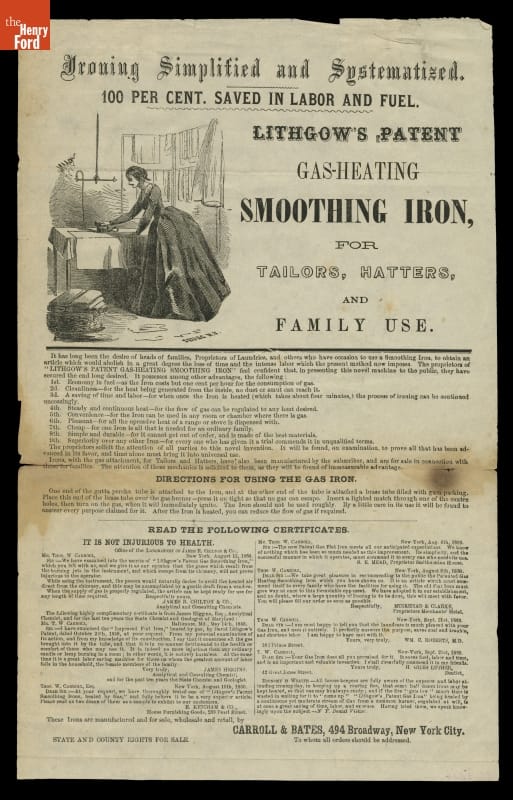
- circa 1860
- Collections - Artifact
Advertising Notice for "Lithgow's Patent Gas-Heating Smoothing Iron," circa 1860