
Search
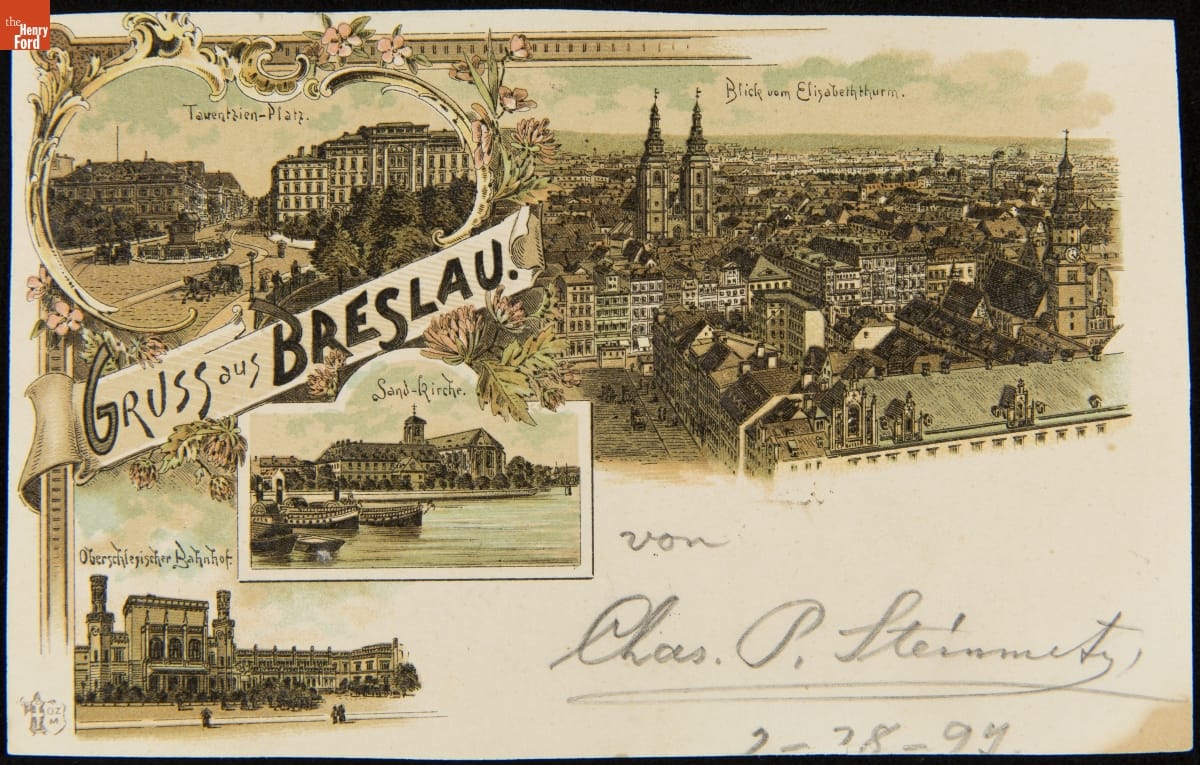
- Postcard Sent by Charles Steinmetz to Clara Steinmetz, February 28, 1897, "Gruss aus Breslau" - Charles Steinmetz moved to the United States in 1889 and began an influential career in electrical engineering. His sister Clara, a poet and painter, followed sometime around 1897. The siblings remained close, visiting one another and corresponding regularly until Charles' death in 1923. On a business trip in 1897, Charles mailed Clara this postcard with "greetings from Breslau," their German hometown.
- February 28, 1897
- Collections - Artifact
Postcard Sent by Charles Steinmetz to Clara Steinmetz, February 28, 1897, "Gruss aus Breslau"
Charles Steinmetz moved to the United States in 1889 and began an influential career in electrical engineering. His sister Clara, a poet and painter, followed sometime around 1897. The siblings remained close, visiting one another and corresponding regularly until Charles' death in 1923. On a business trip in 1897, Charles mailed Clara this postcard with "greetings from Breslau," their German hometown.
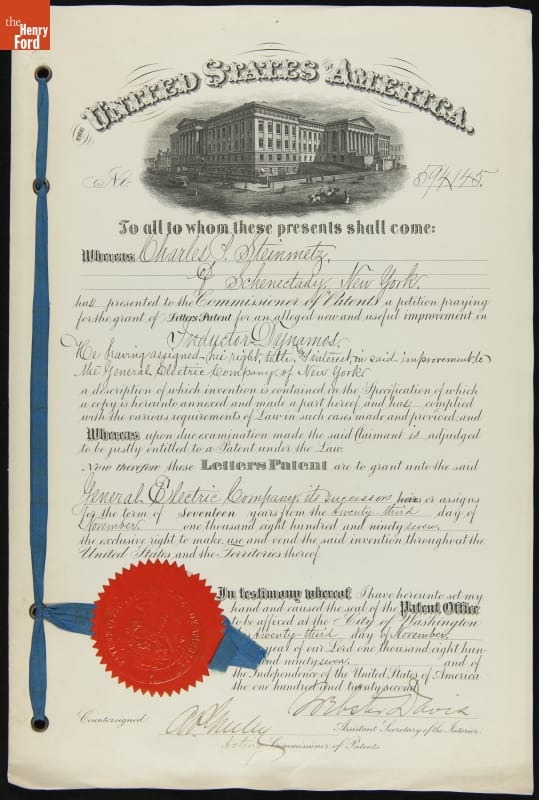
- United States Patent No. 594,145 for Induction Dynamos, November 23, 1897 - Charles Steinmetz excelled at applying mathematical theory and scientific methods to practical engineering, helping define the role of "scientist-engineer" in the American electrical industry. Working at General Electric in the 1890s, Steinmetz developed influential theories on alternating currents and conducted breakthrough experiments on power loss. His innovations improved the efficiency of electrical power distribution over long distances.
- November 23, 1897
- Collections - Artifact
United States Patent No. 594,145 for Induction Dynamos, November 23, 1897
Charles Steinmetz excelled at applying mathematical theory and scientific methods to practical engineering, helping define the role of "scientist-engineer" in the American electrical industry. Working at General Electric in the 1890s, Steinmetz developed influential theories on alternating currents and conducted breakthrough experiments on power loss. His innovations improved the efficiency of electrical power distribution over long distances.
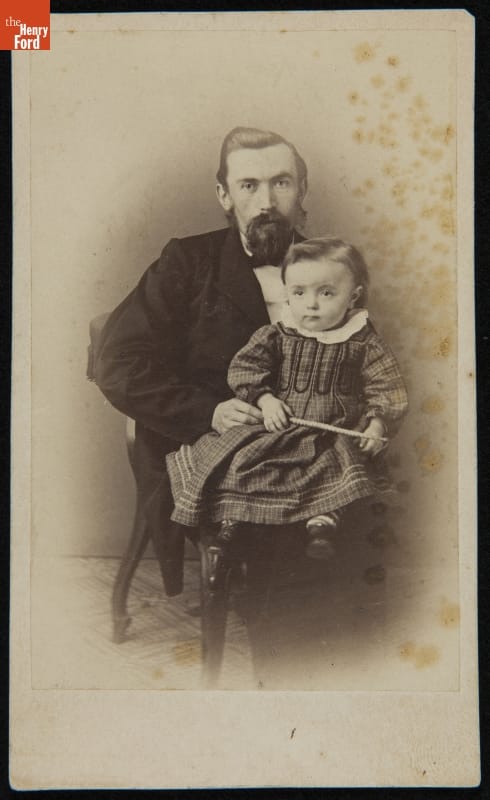
- Charles Steinmetz at 14 Months, with His Father, Karl Steinmetz, June 1866 - Charles Steinmetz was born in 1865 in Breslau, Germany (now Wroclaw, Poland). He excelled in mathematics and science at an early age. In 1889, Steinmetz moved to the United States to pursue a career in electrical engineering. His influential experiments, theories, and publications helped define the electrical engineering profession and improved and expanded electrical distribution systems.
- June 01, 1866
- Collections - Artifact
Charles Steinmetz at 14 Months, with His Father, Karl Steinmetz, June 1866
Charles Steinmetz was born in 1865 in Breslau, Germany (now Wroclaw, Poland). He excelled in mathematics and science at an early age. In 1889, Steinmetz moved to the United States to pursue a career in electrical engineering. His influential experiments, theories, and publications helped define the electrical engineering profession and improved and expanded electrical distribution systems.
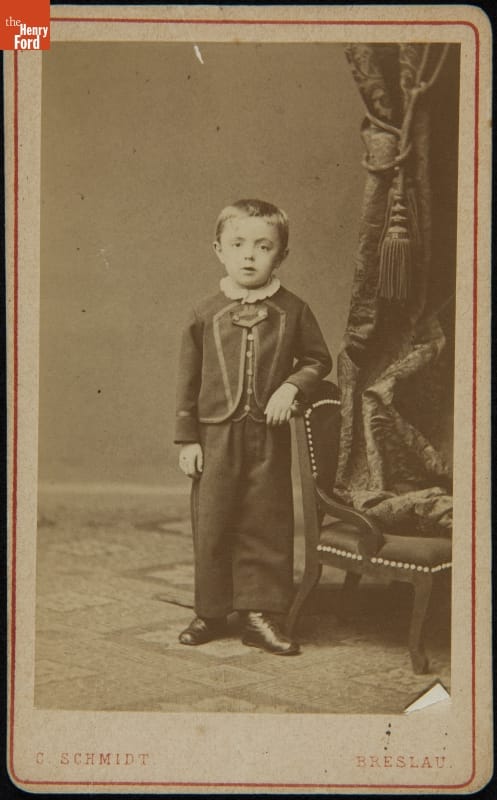
- Charles Steinmetz at Age 6, 1871 - Charles Steinmetz was born in 1865 in Breslau, Germany (now Wroclaw, Poland). He excelled in mathematics and science at an early age. In 1889, Steinmetz moved to the United States to pursue a career in electrical engineering. His influential experiments, theories, and publications helped define the electrical engineering profession and improved and expanded electrical distribution systems.
- 1871
- Collections - Artifact
Charles Steinmetz at Age 6, 1871
Charles Steinmetz was born in 1865 in Breslau, Germany (now Wroclaw, Poland). He excelled in mathematics and science at an early age. In 1889, Steinmetz moved to the United States to pursue a career in electrical engineering. His influential experiments, theories, and publications helped define the electrical engineering profession and improved and expanded electrical distribution systems.
- Charles Steinmetz at Age 12, 1877 - Charles Steinmetz was born in 1865 in Breslau, Germany (now Wroclaw, Poland). He excelled in mathematics and science at an early age. In 1889, Steinmetz moved to the United States to pursue a career in electrical engineering. His influential experiments, theories, and publications helped define the electrical engineering profession and improved and expanded electrical distribution systems.
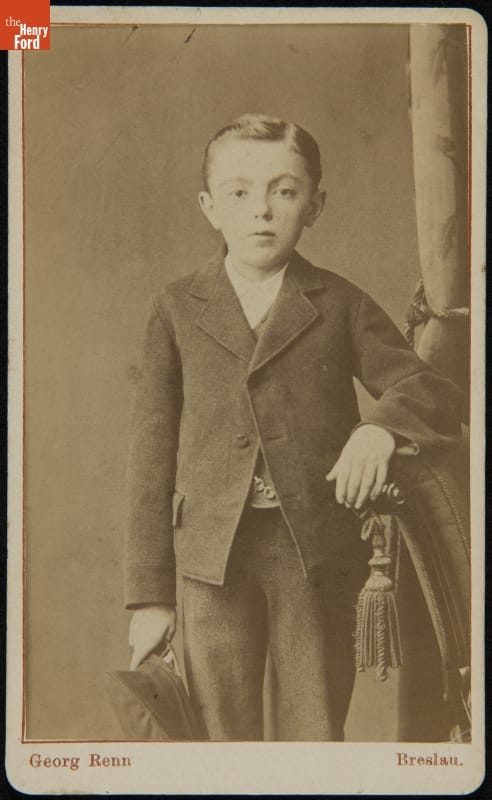
- 1877
- Collections - Artifact
Charles Steinmetz at Age 12, 1877
Charles Steinmetz was born in 1865 in Breslau, Germany (now Wroclaw, Poland). He excelled in mathematics and science at an early age. In 1889, Steinmetz moved to the United States to pursue a career in electrical engineering. His influential experiments, theories, and publications helped define the electrical engineering profession and improved and expanded electrical distribution systems.
- Charles Steinmetz, circa 1900 - Charles Steinmetz excelled at applying mathematical theory and scientific methods to practical engineering, helping define the role of "scientist-engineer" in the American electrical industry. Steinmetz developed important theories on alternating currents, conducted breakthrough experiments on power loss, and authored a number of influential textbooks. His innovations shaped the electrical engineering profession and improved and expanded electrical distribution systems.
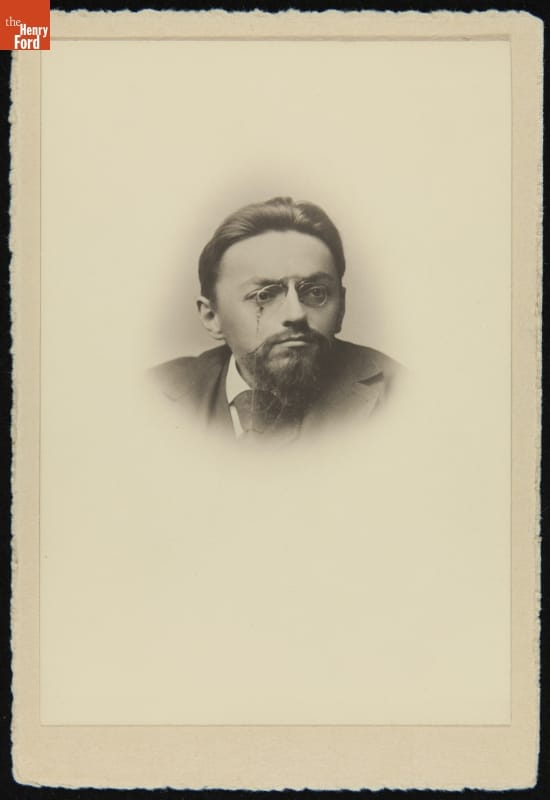
- circa 1900
- Collections - Artifact
Charles Steinmetz, circa 1900
Charles Steinmetz excelled at applying mathematical theory and scientific methods to practical engineering, helping define the role of "scientist-engineer" in the American electrical industry. Steinmetz developed important theories on alternating currents, conducted breakthrough experiments on power loss, and authored a number of influential textbooks. His innovations shaped the electrical engineering profession and improved and expanded electrical distribution systems.
- United States Patent No. 533,244 for Systems of Distribution by Alternating Currents, January 29, 1895 - Charles Steinmetz excelled at applying mathematical theory and scientific methods to practical engineering, helping define the role of "scientist-engineer" in the American electrical industry. Working at General Electric in the 1890s, Steinmetz developed influential theories on alternating currents and conducted breakthrough experiments on power loss. His innovations improved the efficiency of electrical power distribution over long distances.
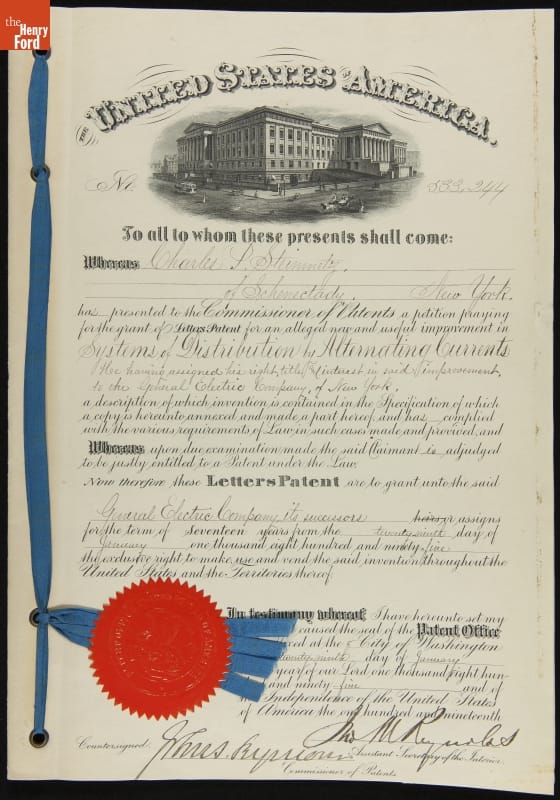
- January 29, 1895
- Collections - Artifact
United States Patent No. 533,244 for Systems of Distribution by Alternating Currents, January 29, 1895
Charles Steinmetz excelled at applying mathematical theory and scientific methods to practical engineering, helping define the role of "scientist-engineer" in the American electrical industry. Working at General Electric in the 1890s, Steinmetz developed influential theories on alternating currents and conducted breakthrough experiments on power loss. His innovations improved the efficiency of electrical power distribution over long distances.
- Charles Steinmetz at Age 3, with His Grandmother, 1868 - Charles Steinmetz was born in 1865 in Breslau, Germany (now Wroclaw, Poland). He excelled in mathematics and science at an early age. In 1889, Steinmetz moved to the United States to pursue a career in electrical engineering. His influential experiments, theories, and publications helped define the electrical engineering profession and improved and expanded electrical distribution systems.
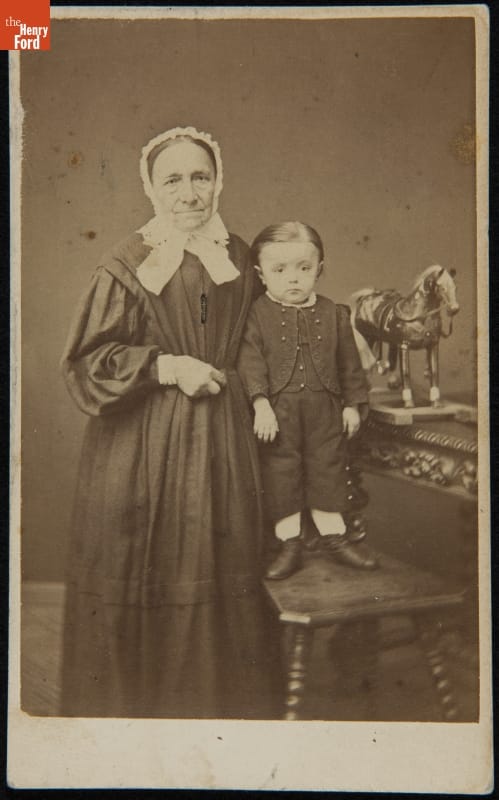
- 1868
- Collections - Artifact
Charles Steinmetz at Age 3, with His Grandmother, 1868
Charles Steinmetz was born in 1865 in Breslau, Germany (now Wroclaw, Poland). He excelled in mathematics and science at an early age. In 1889, Steinmetz moved to the United States to pursue a career in electrical engineering. His influential experiments, theories, and publications helped define the electrical engineering profession and improved and expanded electrical distribution systems.
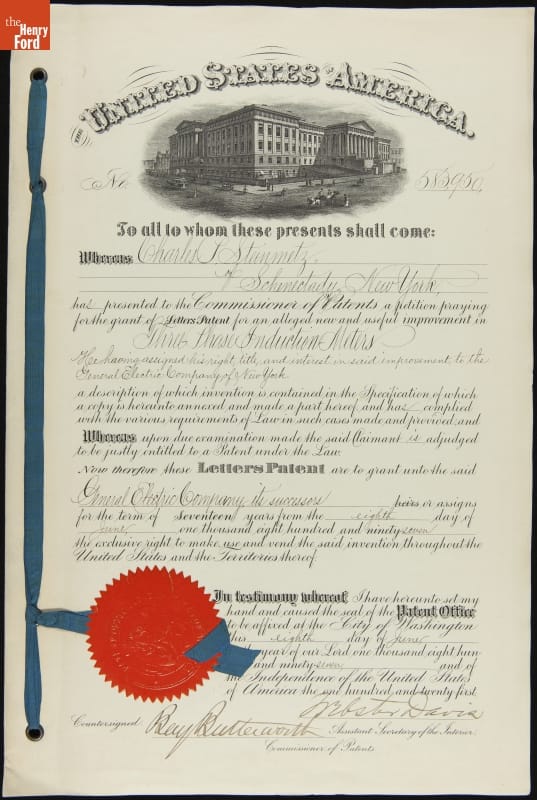
- United States Patent No. 583,950 for Three Phase Induction Meters, June 8, 1897 - Charles Steinmetz excelled at applying mathematical theory and scientific methods to practical engineering, helping define the role of "scientist-engineer" in the American electrical industry. Working at General Electric in the 1890s, Steinmetz developed influential theories on alternating currents and conducted breakthrough experiments on power loss. His innovations improved the efficiency of electrical power distribution over long distances.
- June 08, 1897
- Collections - Artifact
United States Patent No. 583,950 for Three Phase Induction Meters, June 8, 1897
Charles Steinmetz excelled at applying mathematical theory and scientific methods to practical engineering, helping define the role of "scientist-engineer" in the American electrical industry. Working at General Electric in the 1890s, Steinmetz developed influential theories on alternating currents and conducted breakthrough experiments on power loss. His innovations improved the efficiency of electrical power distribution over long distances.
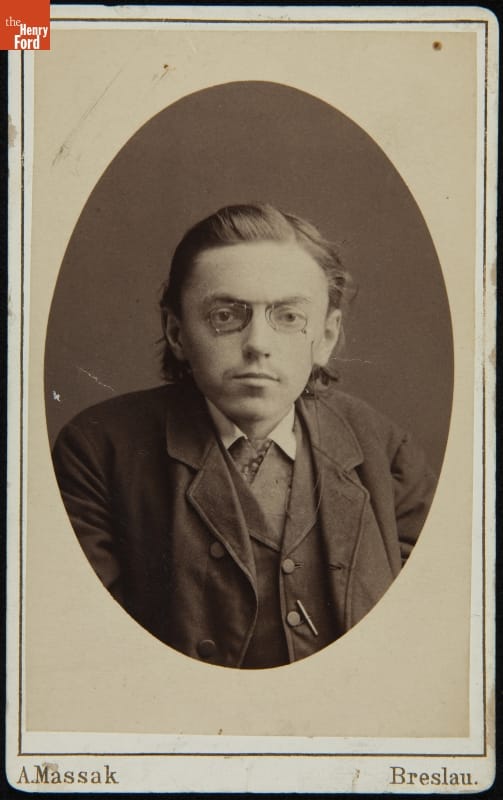
- Charles Steinmetz at Age 22, June 1, 1887 - As a student at the University of Breslau, Charles Steinmetz specialized in mathematical physics. He enjoyed an active social life as part of the mathematics club and a socialist political group. Under investigation for the latter, Steinmetz fled Germany for Zurich in 1888. The following year, he left Europe for the United States, where he began an influential career in electrical engineering.
- June 01, 1887
- Collections - Artifact
Charles Steinmetz at Age 22, June 1, 1887
As a student at the University of Breslau, Charles Steinmetz specialized in mathematical physics. He enjoyed an active social life as part of the mathematics club and a socialist political group. Under investigation for the latter, Steinmetz fled Germany for Zurich in 1888. The following year, he left Europe for the United States, where he began an influential career in electrical engineering.