
Search
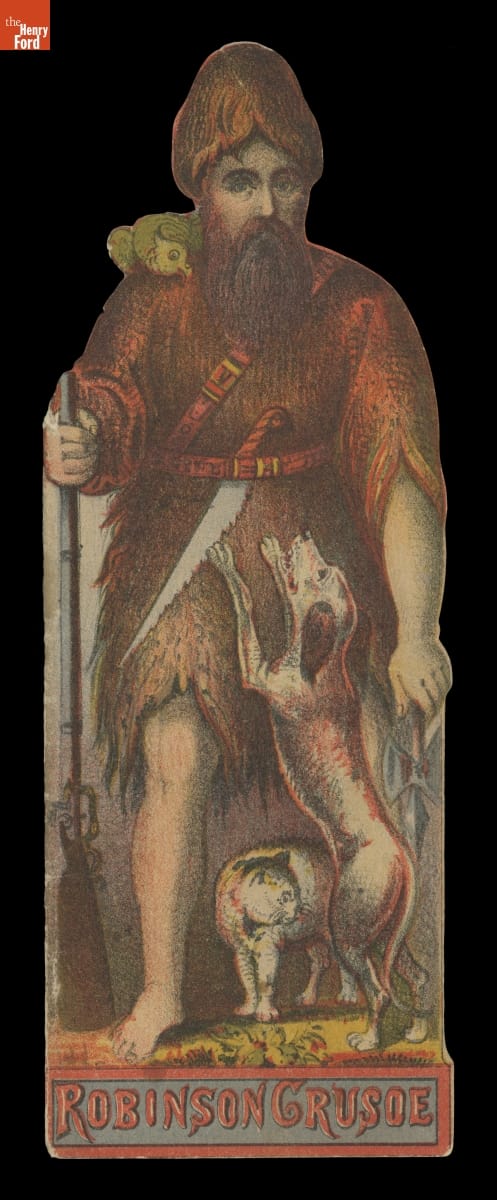
- "Robinson Crusoe," 1864 - Die-cut shape books are not like traditional rectangular books -- they take on the outline of a person, object, or other form. Boston printmaker and publisher Louis Prang claimed the idea originated with him in the early 1860s. This issue of Robinson Crusoe, published in 1864, was one of his first shape books. Lydia Very adapted the 18th-century Daniel Defoe novel and designed the book.
- 1864
- Collections - Artifact
"Robinson Crusoe," 1864
Die-cut shape books are not like traditional rectangular books -- they take on the outline of a person, object, or other form. Boston printmaker and publisher Louis Prang claimed the idea originated with him in the early 1860s. This issue of Robinson Crusoe, published in 1864, was one of his first shape books. Lydia Very adapted the 18th-century Daniel Defoe novel and designed the book.
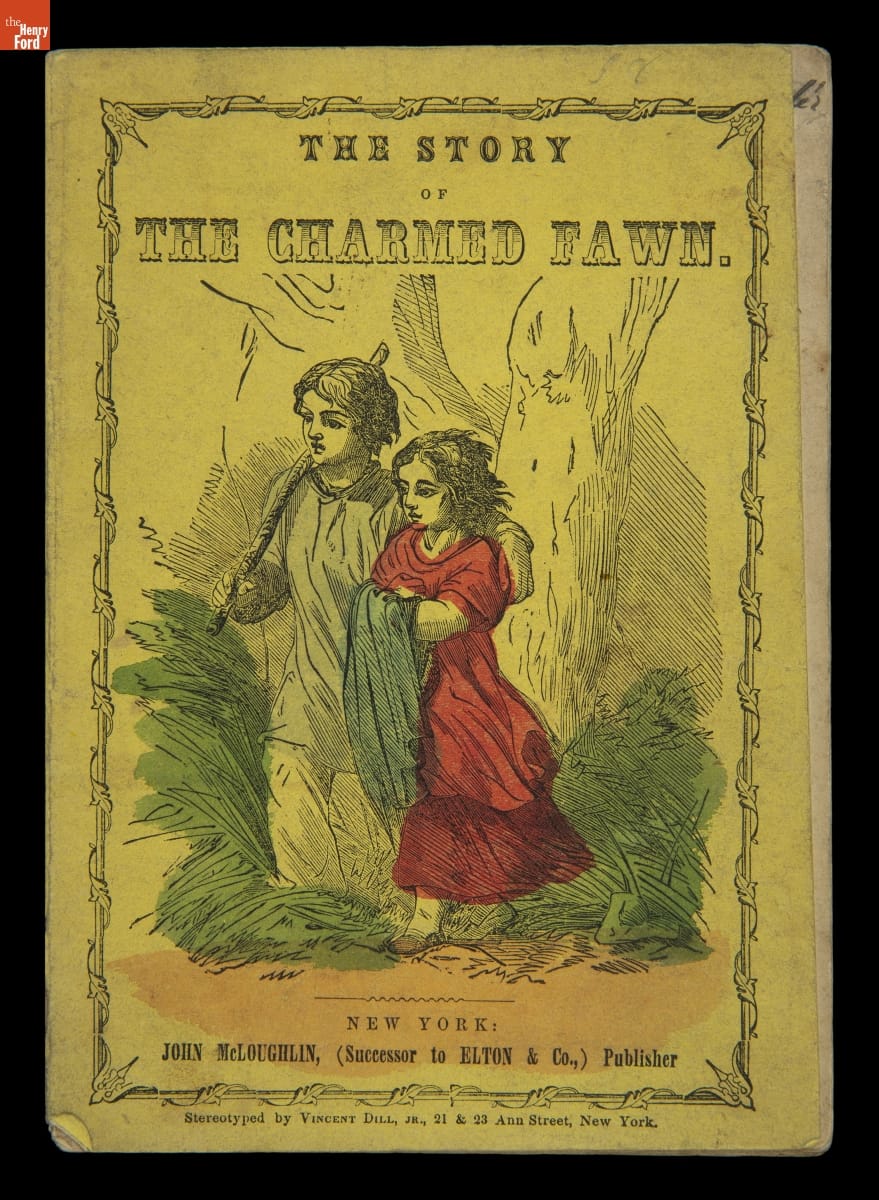
- "The Story of the Charmed Fawn," 1850-1858 - As a teenager, John McLoughlin, Jr. (1827-1905) learned wood engraving and printing at his father's New York publishing firm. Around 1850, he took over the business and capitalized on an emerging children's market with "toy books" like this one. Its cover image is hand-colored, but McLoughlin would soon become well-known for his skillful use of new color printing techniques.
- 1850-1858
- Collections - Artifact
"The Story of the Charmed Fawn," 1850-1858
As a teenager, John McLoughlin, Jr. (1827-1905) learned wood engraving and printing at his father's New York publishing firm. Around 1850, he took over the business and capitalized on an emerging children's market with "toy books" like this one. Its cover image is hand-colored, but McLoughlin would soon become well-known for his skillful use of new color printing techniques.
- "A Day in Mary Carrow's School," 1848 -
- 1848
- Collections - Artifact
"A Day in Mary Carrow's School," 1848
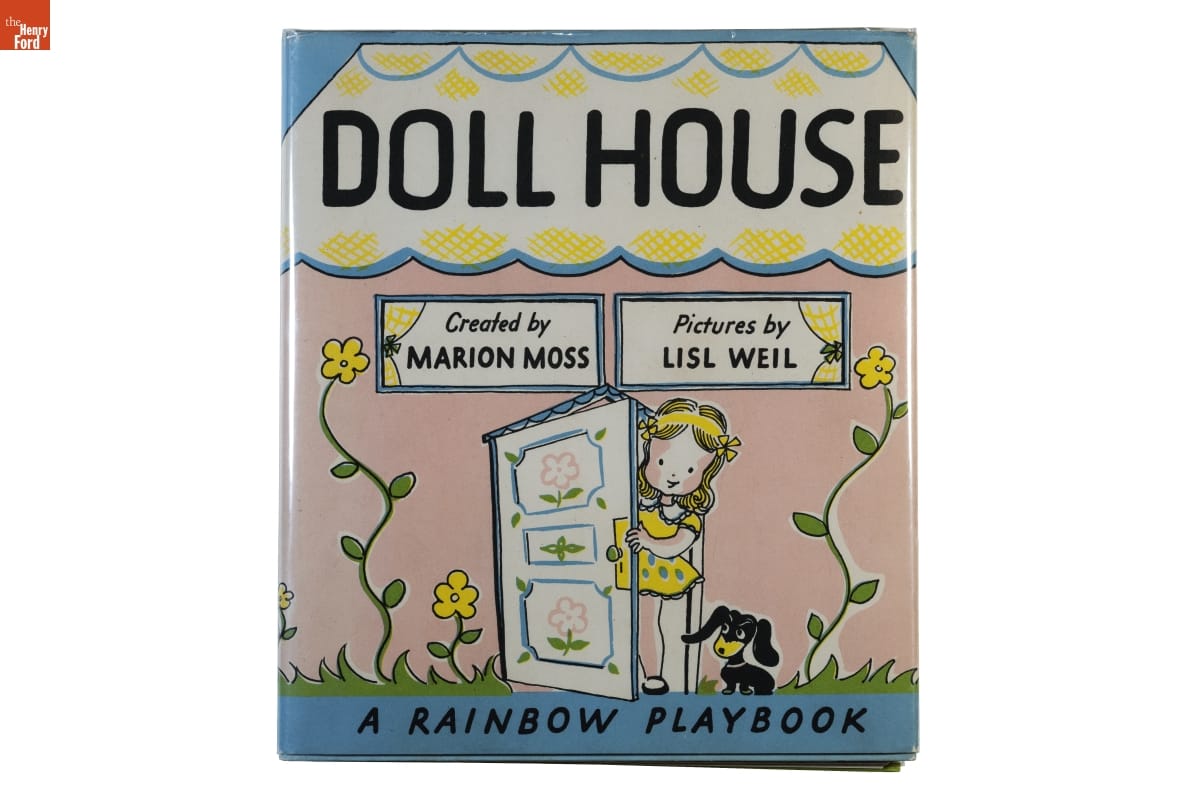
- Childrens Pop-Up Book, "Doll House," 1946 - <em>Doll House</em>, published soon after World War II, let children--mainly young middle-class girls--pretend to be homemakers just like their moms. The pages fold out to create different rooms of a house. Punchout paper dolls, furniture, and other household objects fill the remaining pages. Girls could decorate rooms, pretend to plan parties, and imagine what it was like to run a home.
- 1946
- Collections - Artifact
Childrens Pop-Up Book, "Doll House," 1946
Doll House, published soon after World War II, let children--mainly young middle-class girls--pretend to be homemakers just like their moms. The pages fold out to create different rooms of a house. Punchout paper dolls, furniture, and other household objects fill the remaining pages. Girls could decorate rooms, pretend to plan parties, and imagine what it was like to run a home.
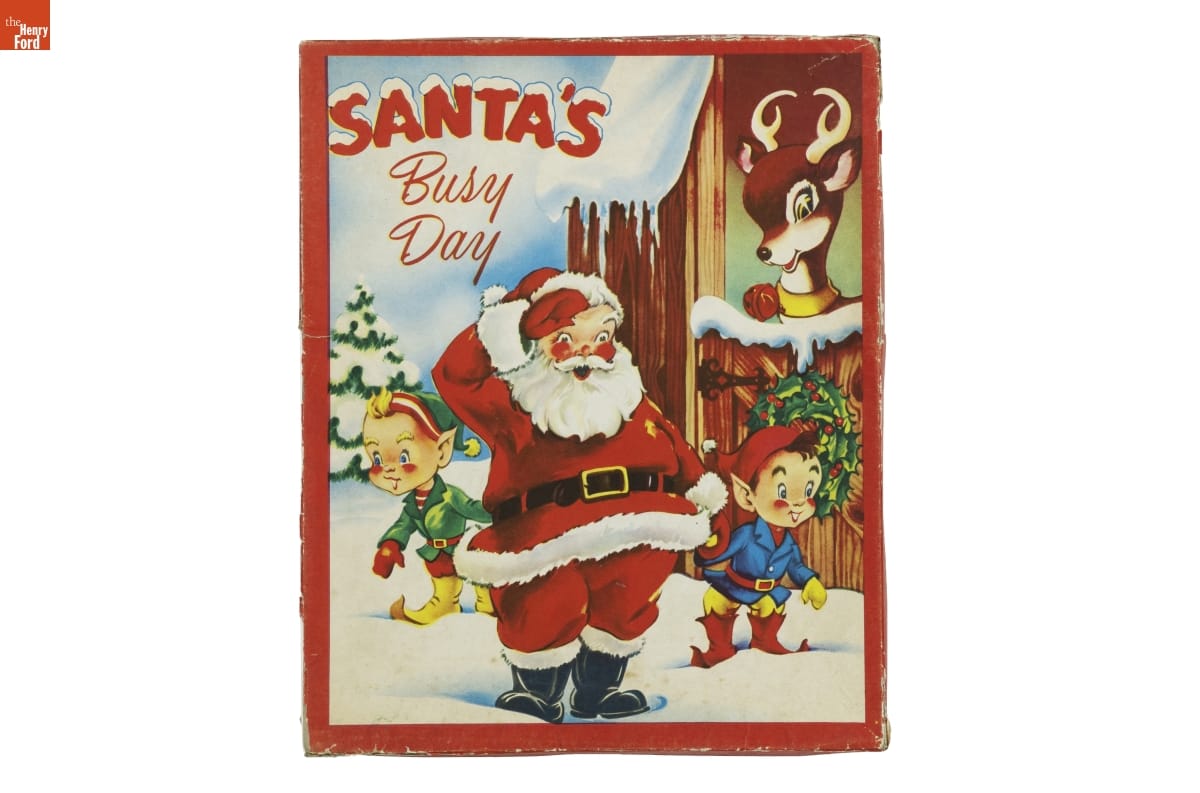
- Children's Pop-Up Book, "Santa's Busy Day," 1953 - <em>Santa's Busy Day</em> follows jolly St. Nick as he looks for Blitzen, a lost reindeer. The book asks children to help Santa with his search. Readers turn pages to discover images that move and pop up; or find things to do--move cutouts of Santa's reindeer or color a picture of Blitzen. Books like this entertained young kids and encouraged them to enjoy reading.
- 1953
- Collections - Artifact
Children's Pop-Up Book, "Santa's Busy Day," 1953
Santa's Busy Day follows jolly St. Nick as he looks for Blitzen, a lost reindeer. The book asks children to help Santa with his search. Readers turn pages to discover images that move and pop up; or find things to do--move cutouts of Santa's reindeer or color a picture of Blitzen. Books like this entertained young kids and encouraged them to enjoy reading.
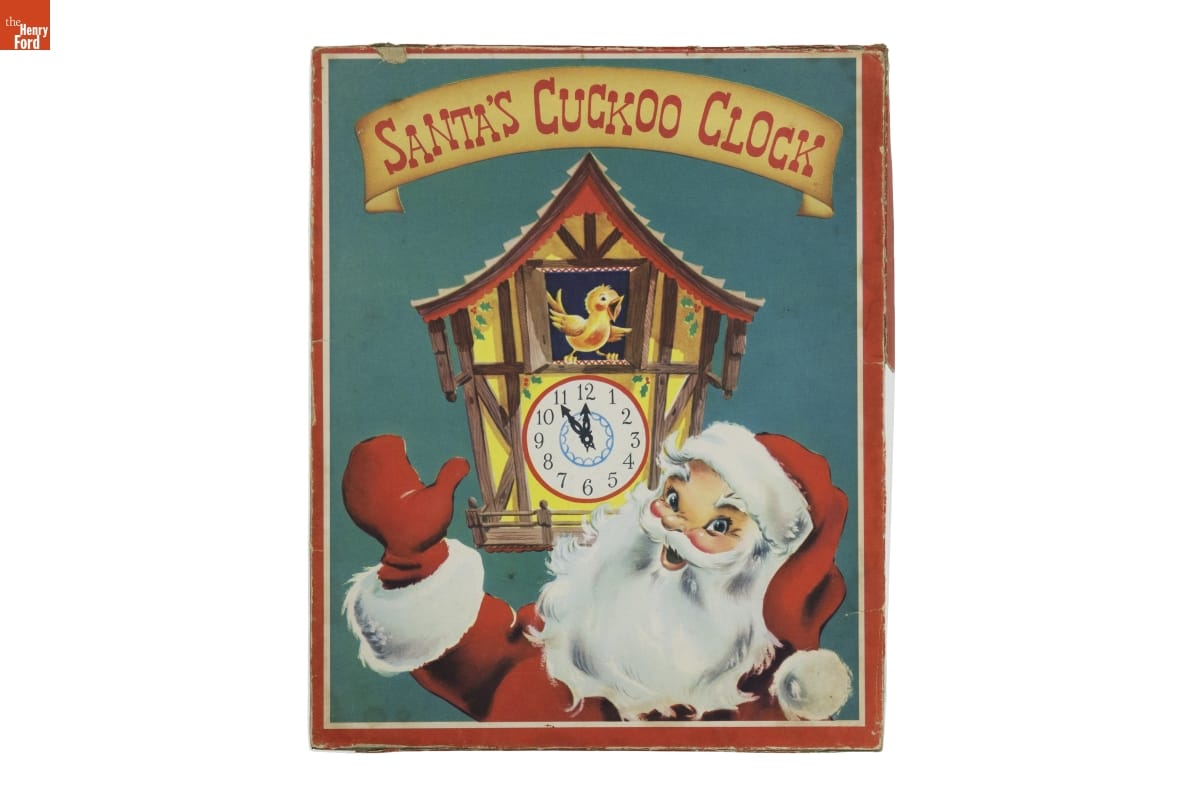
- Children's Pop-Up Book, "Santa's Cuckoo Clock," 1954 - <em>Santa's Cuckoo Clock</em> follows St. Nick as he searches for someone to fix a broken cuckoo clock. Santa finally learns that his elf Tickey-Tock can repair this special Christmas present. Readers turn pages to discover images that move and pop up; or find things to do--paint animals or learn how to tell time. Books like this entertained young kids and encouraged them to enjoy reading.
- 1954
- Collections - Artifact
Children's Pop-Up Book, "Santa's Cuckoo Clock," 1954
Santa's Cuckoo Clock follows St. Nick as he searches for someone to fix a broken cuckoo clock. Santa finally learns that his elf Tickey-Tock can repair this special Christmas present. Readers turn pages to discover images that move and pop up; or find things to do--paint animals or learn how to tell time. Books like this entertained young kids and encouraged them to enjoy reading.