
Search
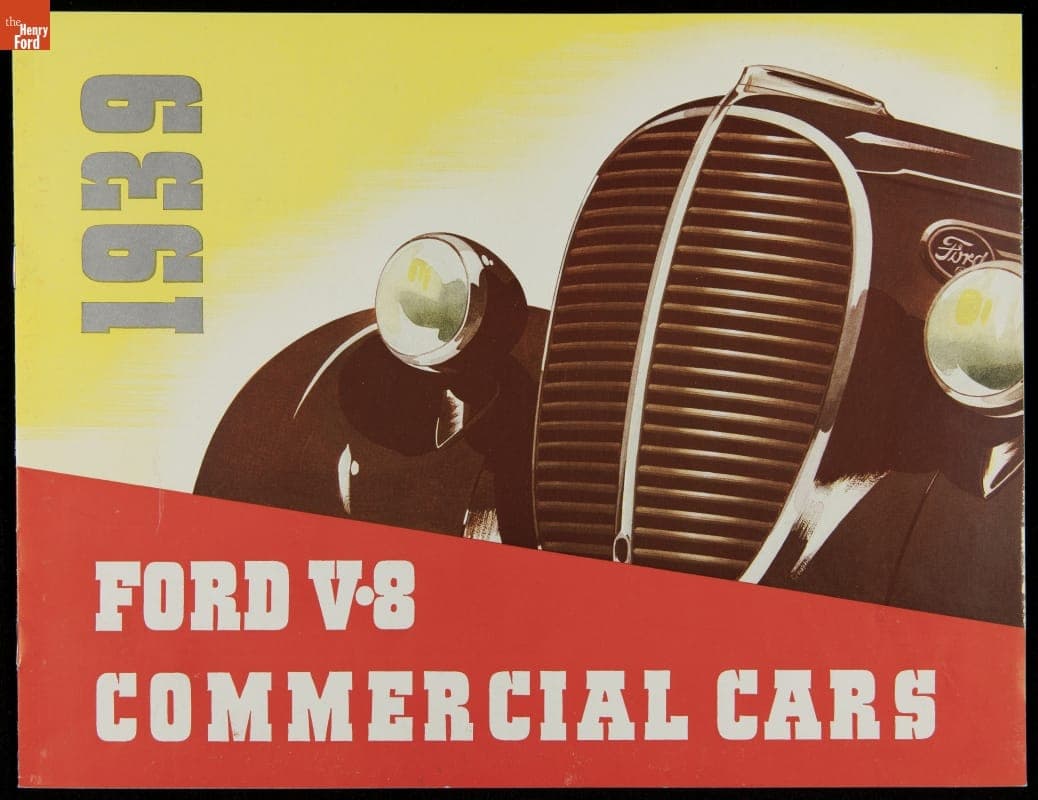
- Sales Brochure, "1939 Ford V-8 Commercial Cars" - Ford Motor Company's truck lineup for 1939 included pickups, panel trucks, stake body and platform models, and sedan delivery vehicles. Larger commercial models were available in dump truck and cab-over-engine configurations. Power came from V-8 engines available with displacements of 136 or 221 cubic inches.
- 1939
- Collections - Artifact
Sales Brochure, "1939 Ford V-8 Commercial Cars"
Ford Motor Company's truck lineup for 1939 included pickups, panel trucks, stake body and platform models, and sedan delivery vehicles. Larger commercial models were available in dump truck and cab-over-engine configurations. Power came from V-8 engines available with displacements of 136 or 221 cubic inches.
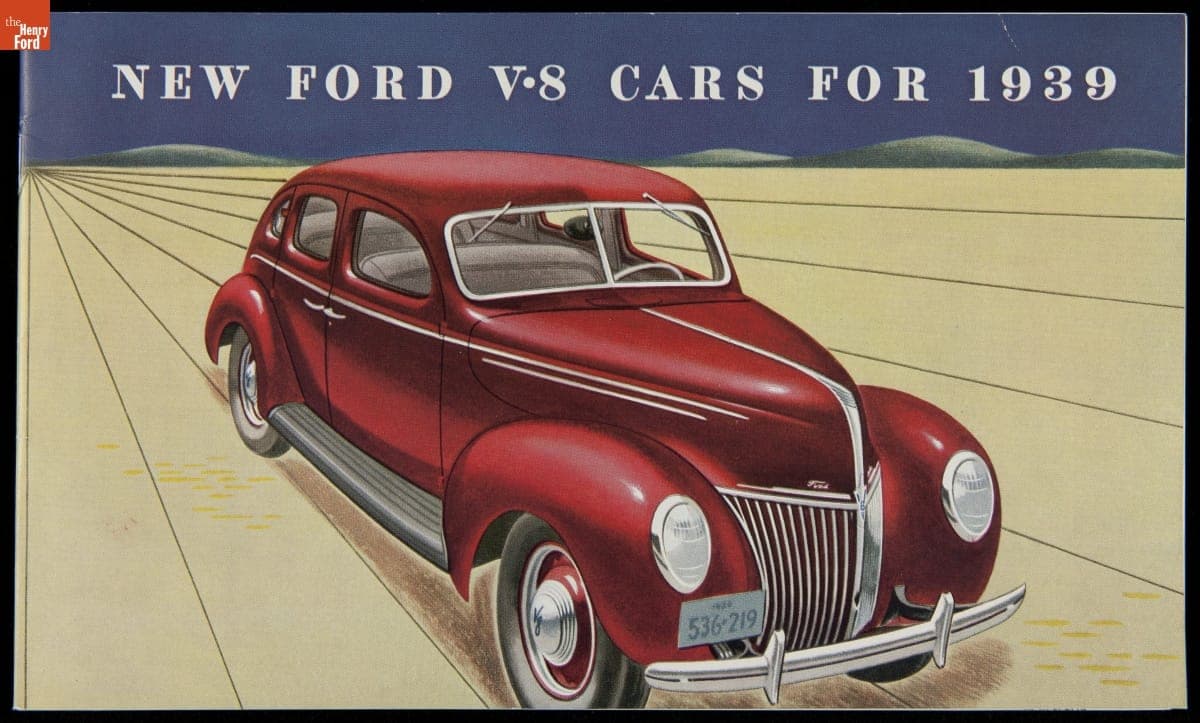
- Sales Brochure, "New Ford V-8 Cars for 1939" - Ford offered models in Standard and DeLuxe series for 1939. The fancier DeLuxe models featured a refreshed, modern appearance with teardrop headlights and a low-set grille. The big news for 1939 was that, for the first time, all Ford cars came equipped with hydraulic brakes.
- 1939
- Collections - Artifact
Sales Brochure, "New Ford V-8 Cars for 1939"
Ford offered models in Standard and DeLuxe series for 1939. The fancier DeLuxe models featured a refreshed, modern appearance with teardrop headlights and a low-set grille. The big news for 1939 was that, for the first time, all Ford cars came equipped with hydraulic brakes.
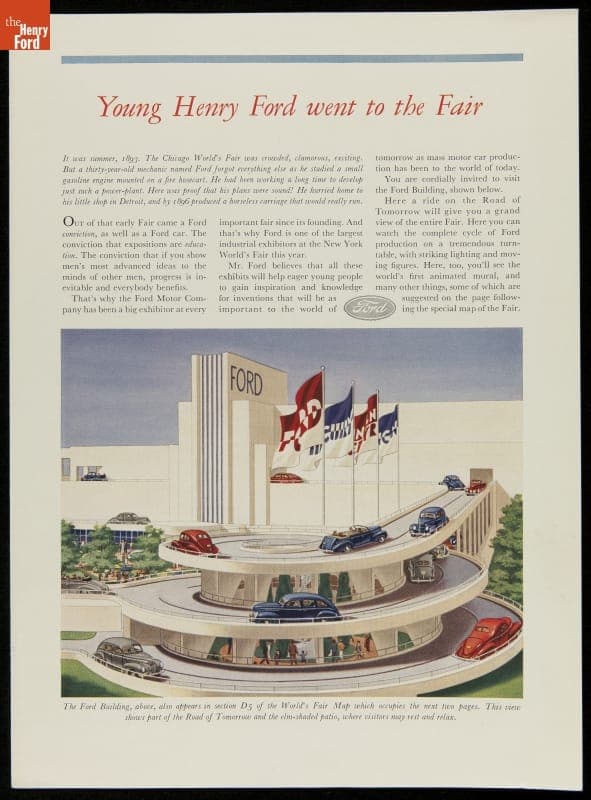
- Brochure and Map of Ford Exhibition Building and "The World of Tomorrow," New York World's Fair, 1939-1940 - In 1893, three years before constructing his first automobile, Henry Ford was inspired by an internal combustion engine at Chicago's World's Columbian Exposition. Within a few decades, Ford Motor Company would become a leading exhibitor in expositions throughout the country. This magazine ad highlights the company's historic relationship with world's fairs and advertises Ford's 1939-40 New York World's Fair building.
- 1939-1940
- Collections - Artifact
Brochure and Map of Ford Exhibition Building and "The World of Tomorrow," New York World's Fair, 1939-1940
In 1893, three years before constructing his first automobile, Henry Ford was inspired by an internal combustion engine at Chicago's World's Columbian Exposition. Within a few decades, Ford Motor Company would become a leading exhibitor in expositions throughout the country. This magazine ad highlights the company's historic relationship with world's fairs and advertises Ford's 1939-40 New York World's Fair building.
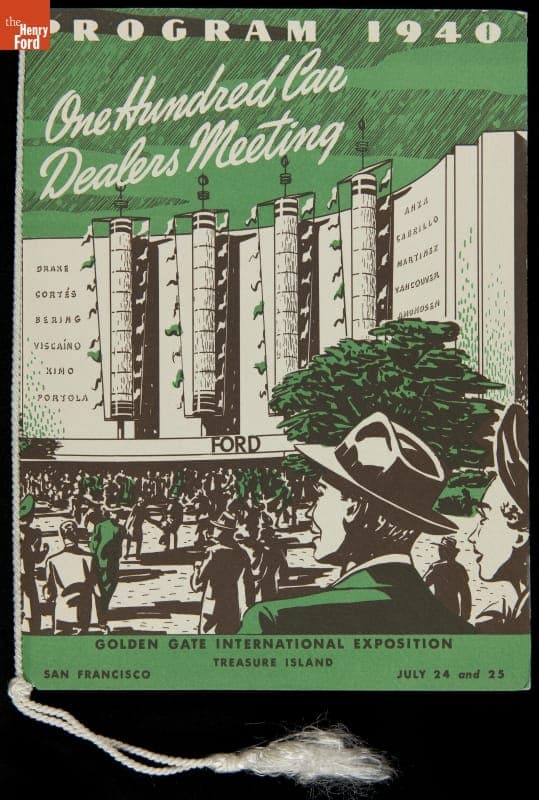
- Program of Events, "One Hundred Car Dealers Meeting" at the Golden Gate International Exposition, San Francisco, 1940 - The 1939 Golden Gate International Exposition reflected American aspirations at the end of the Great Depression. Held on Treasure Island -- a manmade island in San Francisco Bay -- the fair celebrated the completion of the San Francisco-Oakland Bay and Golden Gate bridges. This program contains the menu for a Ford dealers' meeting at the "beautiful Ford exhibit" on Treasure Island.
- 24 July 1940-25 July 1940
- Collections - Artifact
Program of Events, "One Hundred Car Dealers Meeting" at the Golden Gate International Exposition, San Francisco, 1940
The 1939 Golden Gate International Exposition reflected American aspirations at the end of the Great Depression. Held on Treasure Island -- a manmade island in San Francisco Bay -- the fair celebrated the completion of the San Francisco-Oakland Bay and Golden Gate bridges. This program contains the menu for a Ford dealers' meeting at the "beautiful Ford exhibit" on Treasure Island.
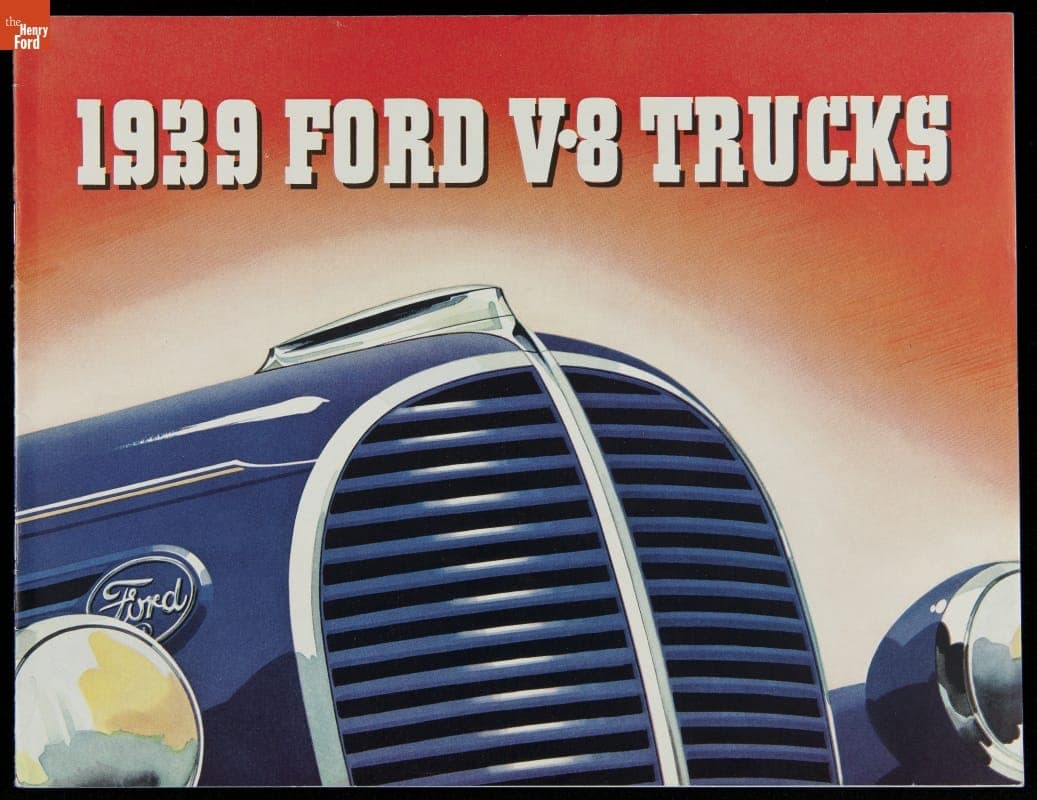
- Sales Brochure, "1939 Ford V-8 Trucks" - Ford Motor Company's truck lineup for 1939 included pickups, panel trucks, stake body and platform models, and sedan delivery vehicles. Larger commercial models were available in dump truck and cab-over-engine configurations. Power came from V-8 engines available with displacements of 136 or 221 cubic inches.
- 1939
- Collections - Artifact
Sales Brochure, "1939 Ford V-8 Trucks"
Ford Motor Company's truck lineup for 1939 included pickups, panel trucks, stake body and platform models, and sedan delivery vehicles. Larger commercial models were available in dump truck and cab-over-engine configurations. Power came from V-8 engines available with displacements of 136 or 221 cubic inches.
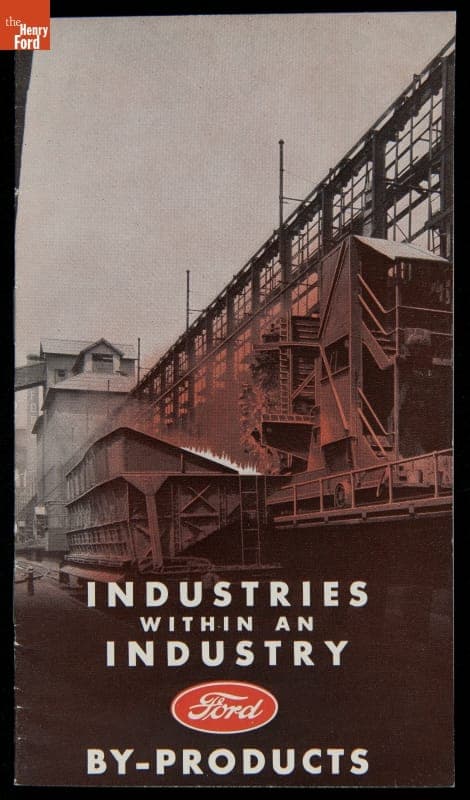
- "Industries Within an Industry, Ford By-Products," Ford Motor Company, 1939 - Henry Ford was careful about reducing and reusing waste products from his factories. Wasted materials meant wasted money, which led to higher prices for the customer. Illuminating gas was taken from coke ovens. Portland cement was made from blast furnace slag. Most famously, wood scraps from Ford's Kingsford, Michigan, sawmills were converted into charcoal briquettes.
- 1939
- Collections - Artifact
"Industries Within an Industry, Ford By-Products," Ford Motor Company, 1939
Henry Ford was careful about reducing and reusing waste products from his factories. Wasted materials meant wasted money, which led to higher prices for the customer. Illuminating gas was taken from coke ovens. Portland cement was made from blast furnace slag. Most famously, wood scraps from Ford's Kingsford, Michigan, sawmills were converted into charcoal briquettes.
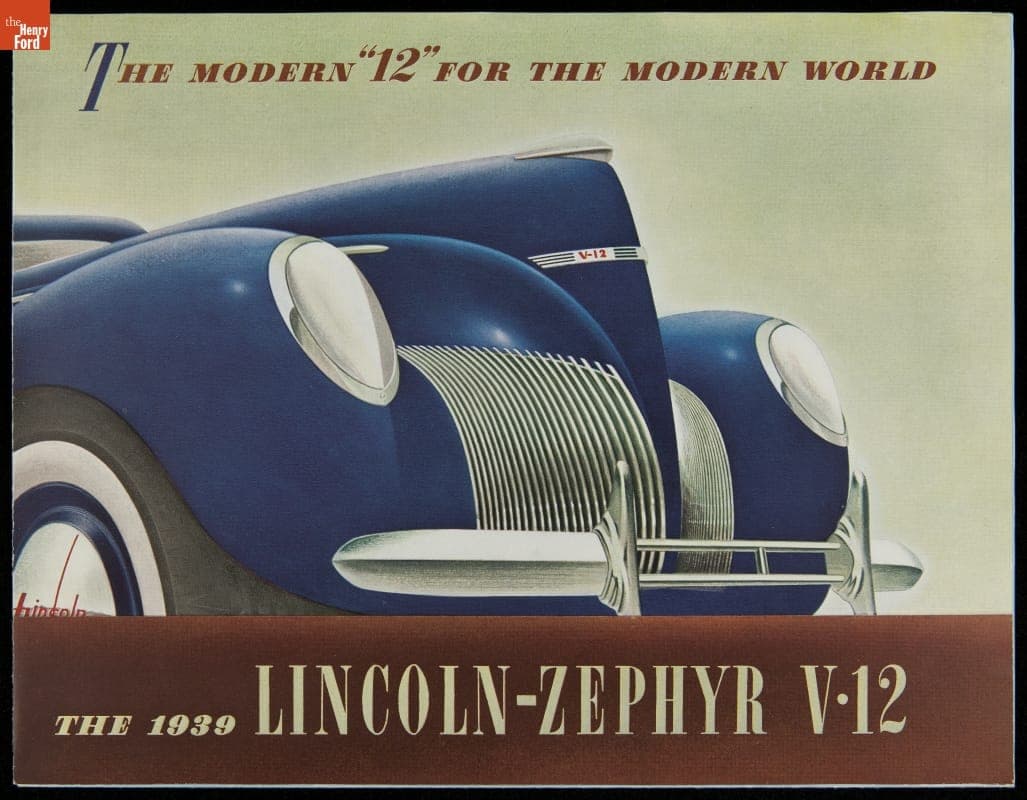
- Sales Brochure for the 1939 Lincoln Zephyr V-12, "The Modern "12" for the Modern World" - The Lincoln Zephyr's V-12 engine was adapted from Ford's successful flathead V-8. Engineers added four cylinders, narrowed the angle of the V, and made other modifications. Unfortunately, the engine suffered from inadequate ventilation and poor oil flow, which led to overheating and excessive wear. Nevertheless, with 200,000 units sold, the Zephyr engine was the most successful American-built V-12.
- 1939
- Collections - Artifact
Sales Brochure for the 1939 Lincoln Zephyr V-12, "The Modern "12" for the Modern World"
The Lincoln Zephyr's V-12 engine was adapted from Ford's successful flathead V-8. Engineers added four cylinders, narrowed the angle of the V, and made other modifications. Unfortunately, the engine suffered from inadequate ventilation and poor oil flow, which led to overheating and excessive wear. Nevertheless, with 200,000 units sold, the Zephyr engine was the most successful American-built V-12.
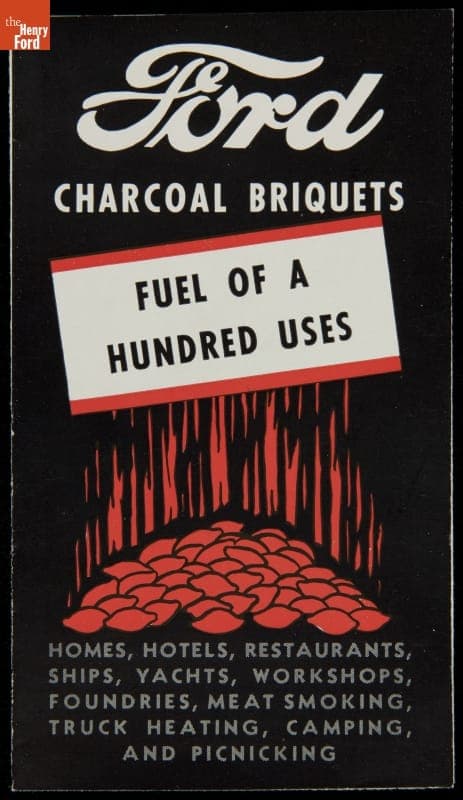
- Brochure, "Ford Charcoal Briquets, Fuel of a Hundred Uses," 1935-1941 - Ford Motor Company sawmills created heaps of wood wastes. Some was used to produce steam for factory operations. The rest was carbonized and compressed into charcoal. Workers mixed charred hardwood chips with starch, forming nearly 100 tons of charcoal briquettes each day. This 1930s brochure suggests the many uses for this Ford byproduct.
- 1935-1941
- Collections - Artifact
Brochure, "Ford Charcoal Briquets, Fuel of a Hundred Uses," 1935-1941
Ford Motor Company sawmills created heaps of wood wastes. Some was used to produce steam for factory operations. The rest was carbonized and compressed into charcoal. Workers mixed charred hardwood chips with starch, forming nearly 100 tons of charcoal briquettes each day. This 1930s brochure suggests the many uses for this Ford byproduct.
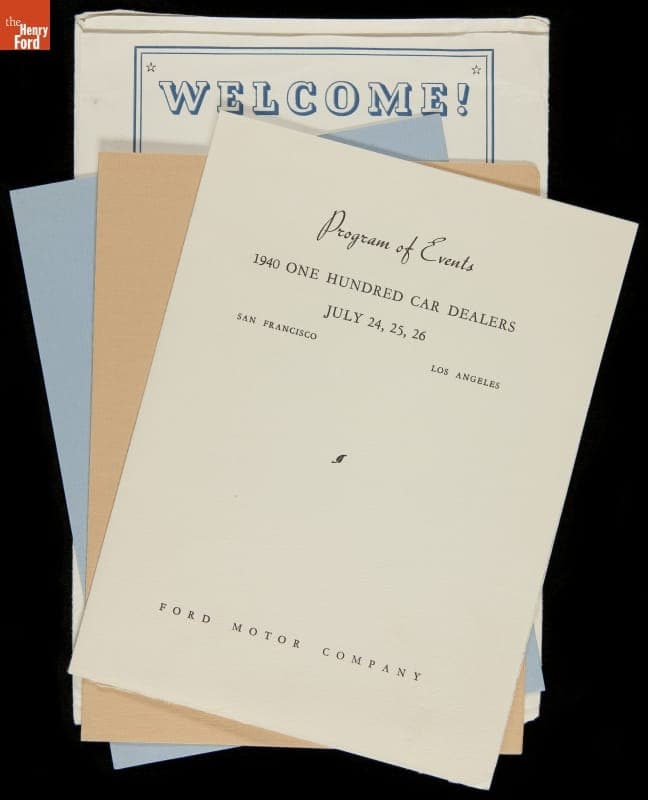
- Information Packet, "Welcome to the 1940 One Hundred Car Dealers Meeting," Golden Gate International Exposition -
- 24 July 1940-26 July 1940
- Collections - Artifact
Information Packet, "Welcome to the 1940 One Hundred Car Dealers Meeting," Golden Gate International Exposition
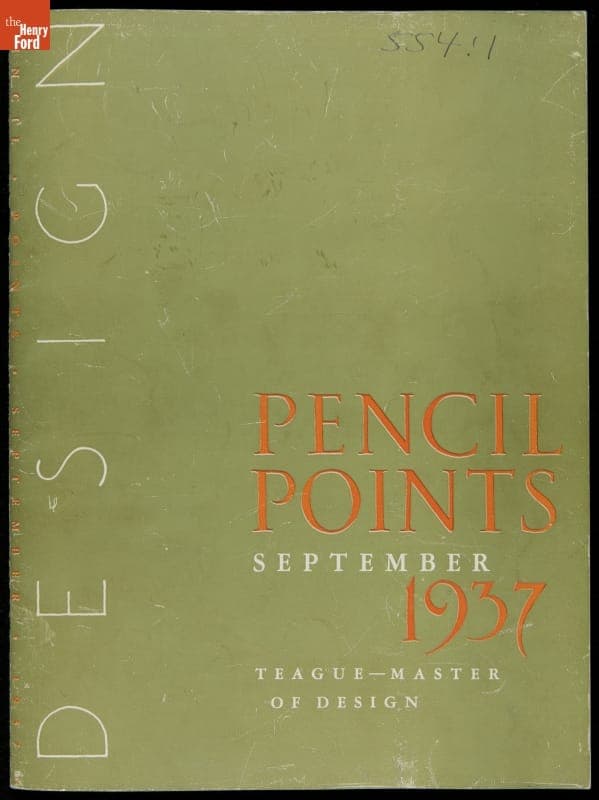
- Pencil Points Magazine, "Teague--Master of Design," September 1937 -
- September 01, 1937
- Collections - Artifact
Pencil Points Magazine, "Teague--Master of Design," September 1937