
Search
- Certification of the Edison Institute Articles of Association by the Michigan Secretary of State, December 23, 1929 - The Edison Institute--now known as The Henry Ford--was incorporated as a non-profit, educational institution in December 1929. Its Articles of Association named Henry, Clara, and Edsel Ford as officers and trustees. Ford believed the everyday objects he loved to collect reflected American progress not recorded in written histories. Ford's intent? To use the best of the ordinary and extraordinary works of America's people to teach and inspire.
- December 23, 1929
- Collections - Artifact
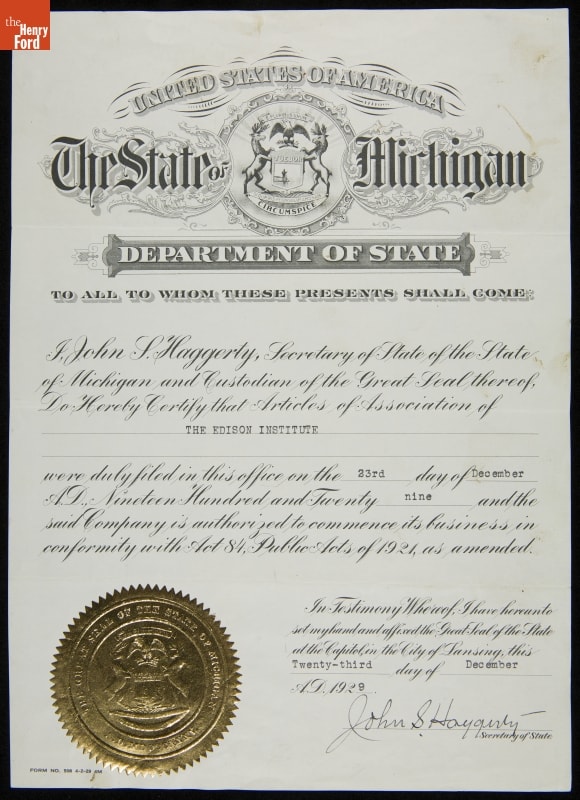
Certification of the Edison Institute Articles of Association by the Michigan Secretary of State, December 23, 1929
The Edison Institute--now known as The Henry Ford--was incorporated as a non-profit, educational institution in December 1929. Its Articles of Association named Henry, Clara, and Edsel Ford as officers and trustees. Ford believed the everyday objects he loved to collect reflected American progress not recorded in written histories. Ford's intent? To use the best of the ordinary and extraordinary works of America's people to teach and inspire.
- Articles of Association of The Edison Institute, December 19, 1929 - The Edison Institute--now known as The Henry Ford--was incorporated as a non-profit, educational institution in December 1929. Its Articles of Association named Henry, Clara, and Edsel Ford as officers and trustees. Ford believed the everyday objects he loved to collect reflected American progress not recorded in written histories. Ford's intent? To use the best of the ordinary and extraordinary works of America's people to teach and inspire.
- December 19, 1929
- Collections - Artifact
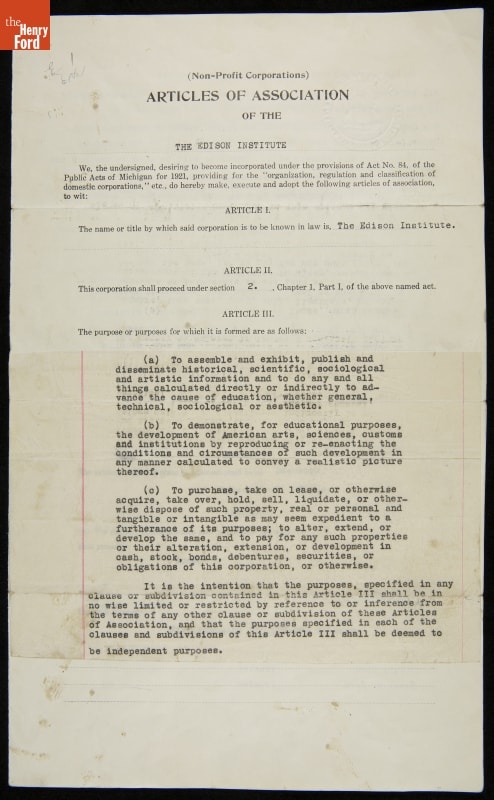
Articles of Association of The Edison Institute, December 19, 1929
The Edison Institute--now known as The Henry Ford--was incorporated as a non-profit, educational institution in December 1929. Its Articles of Association named Henry, Clara, and Edsel Ford as officers and trustees. Ford believed the everyday objects he loved to collect reflected American progress not recorded in written histories. Ford's intent? To use the best of the ordinary and extraordinary works of America's people to teach and inspire.