
Search
- Letter Congratulating Edsel Ford for Involving Ford Dealers with Airmarking Buildings in Their Towns, January 15, 1926 - Edsel Ford championed the development of commercial aviation in the United States. As an aid to aerial navigation, he wrote letters to Ford dealers encouraging them to paint two things on each dealer's roof: the name of the city and an arrow pointing due north. More than 4,000 communities had aerial markings of some sort by 1929.
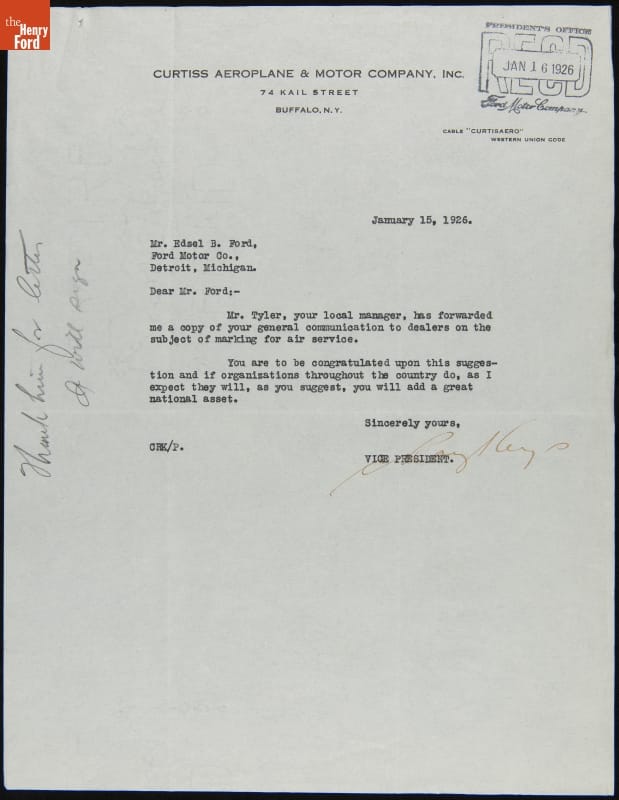
- January 15, 1926
- Collections - Artifact
Letter Congratulating Edsel Ford for Involving Ford Dealers with Airmarking Buildings in Their Towns, January 15, 1926
Edsel Ford championed the development of commercial aviation in the United States. As an aid to aerial navigation, he wrote letters to Ford dealers encouraging them to paint two things on each dealer's roof: the name of the city and an arrow pointing due north. More than 4,000 communities had aerial markings of some sort by 1929.
- Letter from Henry A. Colgate, The Seeing Eye Guide Dog School, to Edsel and Eleanor Ford, December 15, 1941 -
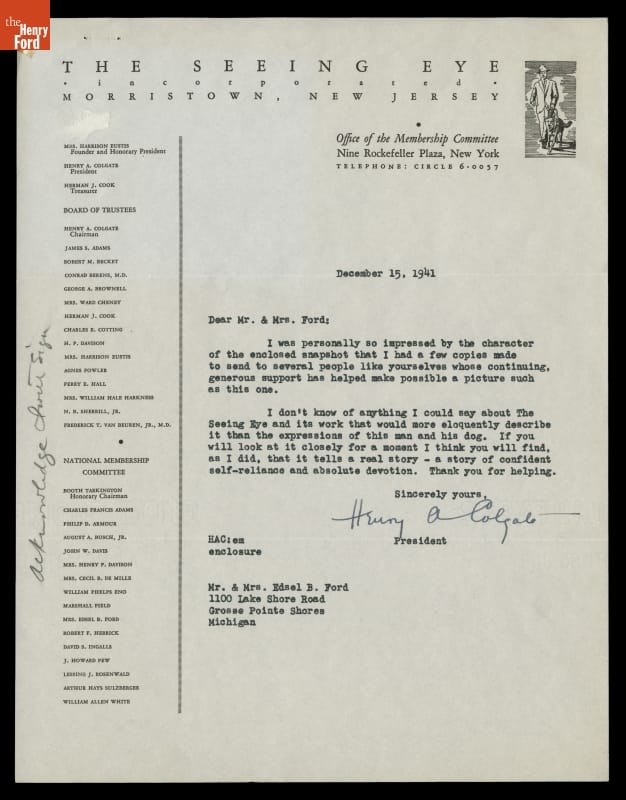
- December 15, 1941
- Collections - Artifact
Letter from Henry A. Colgate, The Seeing Eye Guide Dog School, to Edsel and Eleanor Ford, December 15, 1941
- Frontier Nursing Service, "The Nurse on Her Rounds," 1931 - Mary Breckinridge, the daughter of a prominent Southern family, established the Frontier Nursing Service (FNS) in 1925. Breckinridge initially backed the enterprise with her own money, but soon cultivated wealthy individuals, including Clara Ford and her son Edsel, to help support the FNS. Through her philanthropic efforts, Breckinridge brought qualified nurse-midwives and modern, life-saving healthcare to many inaccessible areas of eastern Kentucky.
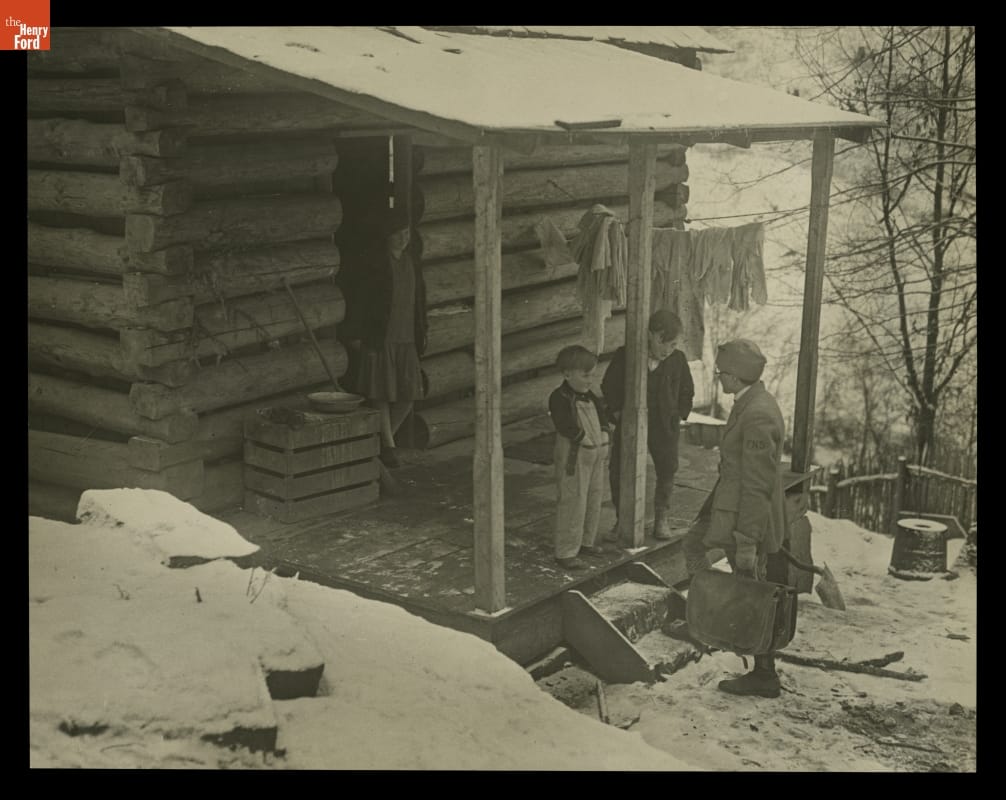
- 1931
- Collections - Artifact
Frontier Nursing Service, "The Nurse on Her Rounds," 1931
Mary Breckinridge, the daughter of a prominent Southern family, established the Frontier Nursing Service (FNS) in 1925. Breckinridge initially backed the enterprise with her own money, but soon cultivated wealthy individuals, including Clara Ford and her son Edsel, to help support the FNS. Through her philanthropic efforts, Breckinridge brought qualified nurse-midwives and modern, life-saving healthcare to many inaccessible areas of eastern Kentucky.
- Telegram from John Wriston to A. J. Lepine (for Edsel Ford) Arranging Meeting to Discuss Dearborn Inn Colonial Village, April 5, 1937 - By the mid-1930s, the Dearborn Inn, a popular luxury hotel, required additional accommodations to service travelers and visitors to the Edison Institute (later renamed The Henry Ford). The L.G. Treadway Service Corporation consulted with Edsel Ford about proposed upgrades that included a swimming pool, pool house, landscaping, and a "Colonial Village" of guest houses (replicas of homes famous in American history).
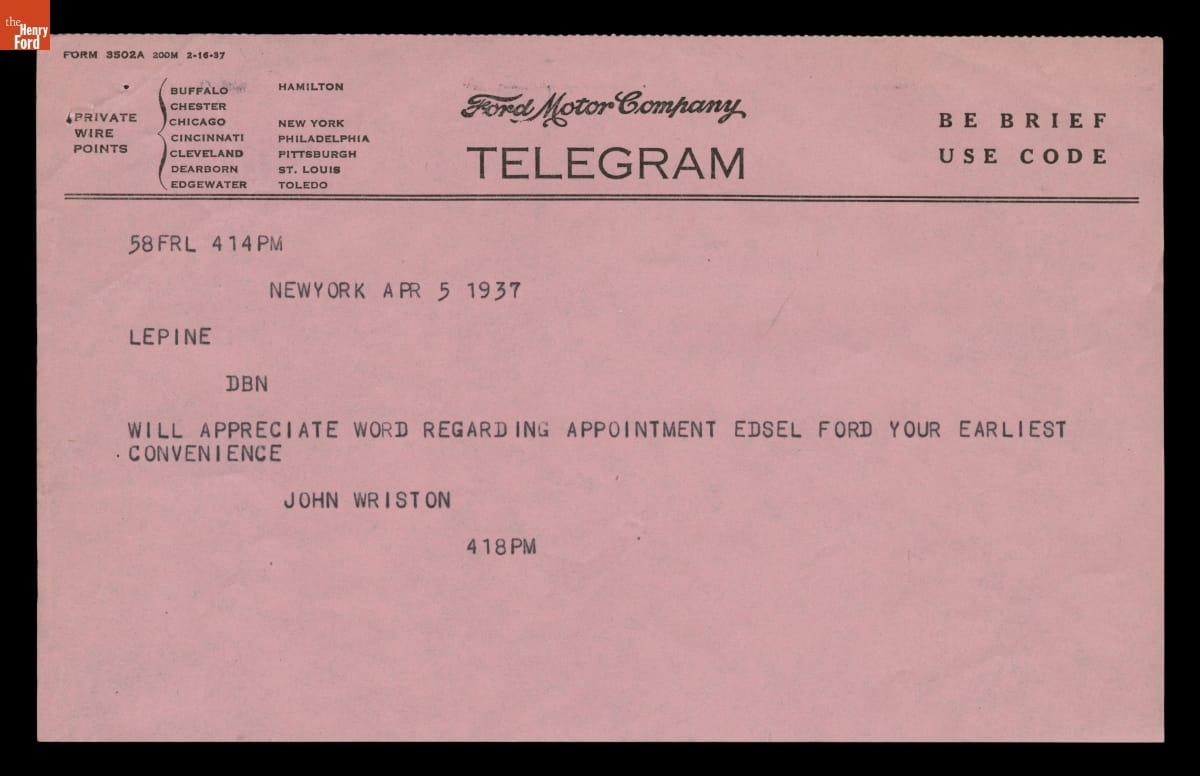
- April 05, 1937
- Collections - Artifact
Telegram from John Wriston to A. J. Lepine (for Edsel Ford) Arranging Meeting to Discuss Dearborn Inn Colonial Village, April 5, 1937
By the mid-1930s, the Dearborn Inn, a popular luxury hotel, required additional accommodations to service travelers and visitors to the Edison Institute (later renamed The Henry Ford). The L.G. Treadway Service Corporation consulted with Edsel Ford about proposed upgrades that included a swimming pool, pool house, landscaping, and a "Colonial Village" of guest houses (replicas of homes famous in American history).
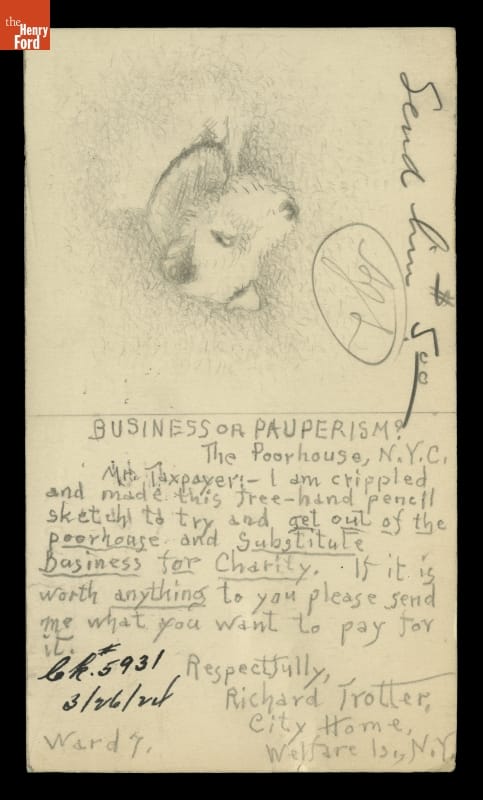
- Letter from Richard Trotter to Edsel Ford, Offering to Sell Drawings, March 20, 1924 -
- March 20, 1924
- Collections - Artifact
Letter from Richard Trotter to Edsel Ford, Offering to Sell Drawings, March 20, 1924
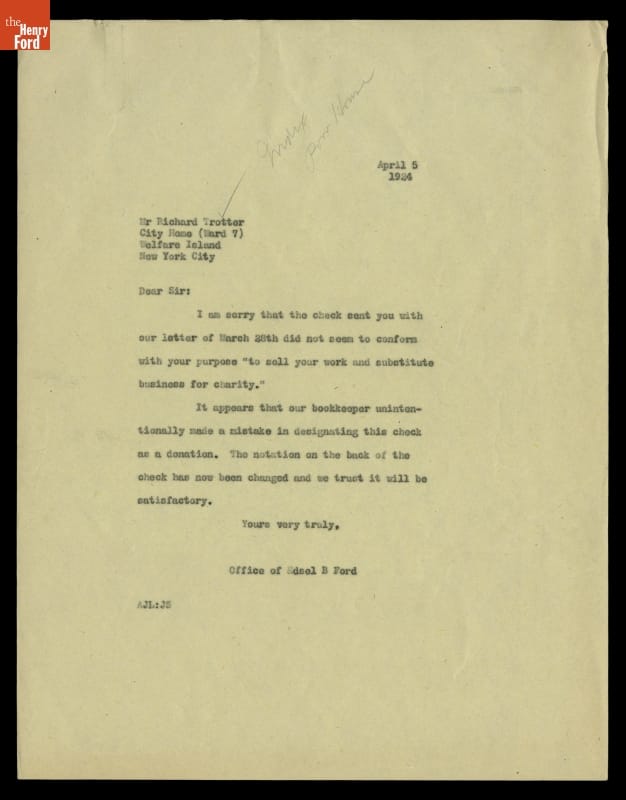
- Letter of Apology from the Office of Edsel Ford to Richard Trotter, April 5, 1924 -
- April 05, 1924
- Collections - Artifact
Letter of Apology from the Office of Edsel Ford to Richard Trotter, April 5, 1924
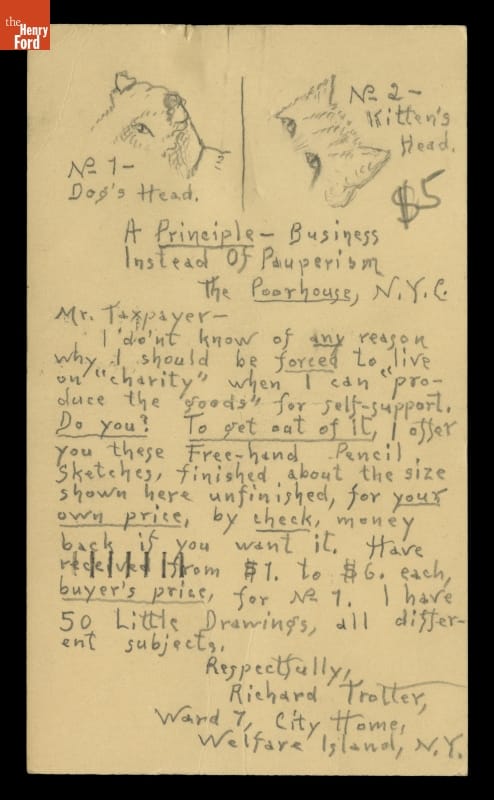
- Letter from Richard Trotter to Edsel Ford, Offering to Sell Drawings, December 18, 1924 -
- December 18, 1924
- Collections - Artifact
Letter from Richard Trotter to Edsel Ford, Offering to Sell Drawings, December 18, 1924
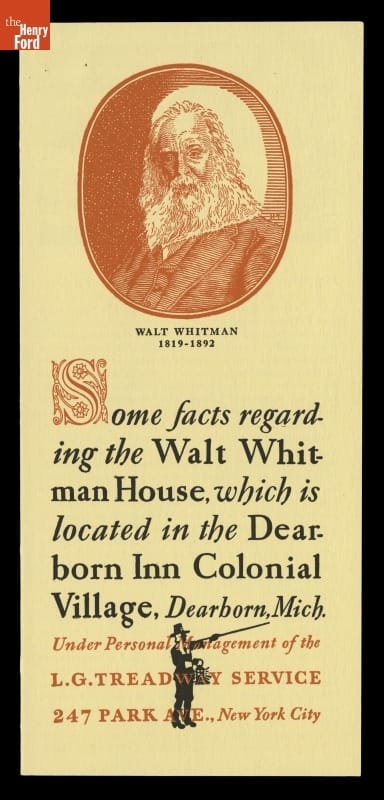
- Brochure, "Some Facts regarding the Walt Whitman House," Dearborn Inn Colonial Village, 1937 - By the mid-1930s, the Dearborn Inn, a popular luxury hotel, required additional accommodations to service travelers and visitors to the Edison Institute (later renamed The Henry Ford). The L.G. Treadway Service Corporation consulted with Edsel Ford and had five reproduction houses constructed behind the Inn. The exteriors were exact replicas of homes famous in American history, but guests found modern amenities inside.
- 1937
- Collections - Artifact
Brochure, "Some Facts regarding the Walt Whitman House," Dearborn Inn Colonial Village, 1937
By the mid-1930s, the Dearborn Inn, a popular luxury hotel, required additional accommodations to service travelers and visitors to the Edison Institute (later renamed The Henry Ford). The L.G. Treadway Service Corporation consulted with Edsel Ford and had five reproduction houses constructed behind the Inn. The exteriors were exact replicas of homes famous in American history, but guests found modern amenities inside.
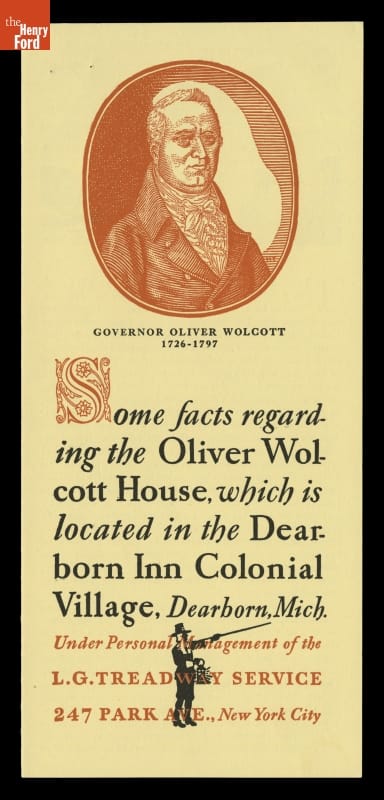
- Brochure, "Some Facts regarding the Oliver Wolcott House," Dearborn Inn Colonial Village, 1937 - By the mid-1930s, the Dearborn Inn, a popular luxury hotel, required additional accommodations to service travelers and visitors to the Edison Institute (later renamed The Henry Ford). The L.G. Treadway Service Corporation consulted with Edsel Ford and had five reproduction houses constructed behind the Inn. The exteriors were exact replicas of homes famous in American history, but guests found modern amenities inside.
- 1937
- Collections - Artifact
Brochure, "Some Facts regarding the Oliver Wolcott House," Dearborn Inn Colonial Village, 1937
By the mid-1930s, the Dearborn Inn, a popular luxury hotel, required additional accommodations to service travelers and visitors to the Edison Institute (later renamed The Henry Ford). The L.G. Treadway Service Corporation consulted with Edsel Ford and had five reproduction houses constructed behind the Inn. The exteriors were exact replicas of homes famous in American history, but guests found modern amenities inside.
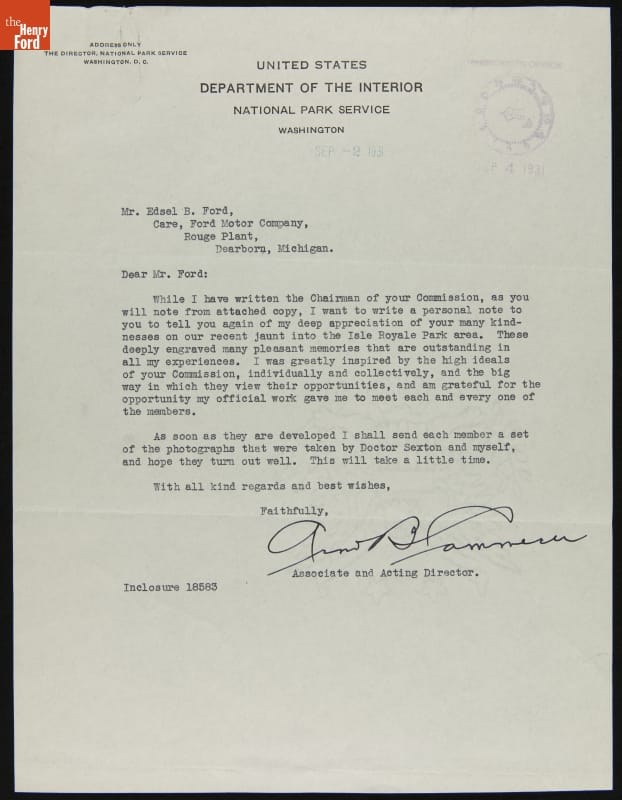
- Letter from Arno Cammerer to Edsel Ford after a Visit to Isle Royale, Michigan, September 2, 1931 - Congress authorized the creation of Isle Royale National Park in 1931. In order to establish the park, the Governor of Michigan appointed the Isle Royale National Park Commission, which included Edsel Ford, to handle land acquisition. By 1940, the Commission had acquired a majority of the island for the state who then transferred it over to the National Park Service.
- September 02, 1931
- Collections - Artifact
Letter from Arno Cammerer to Edsel Ford after a Visit to Isle Royale, Michigan, September 2, 1931
Congress authorized the creation of Isle Royale National Park in 1931. In order to establish the park, the Governor of Michigan appointed the Isle Royale National Park Commission, which included Edsel Ford, to handle land acquisition. By 1940, the Commission had acquired a majority of the island for the state who then transferred it over to the National Park Service.