
Search
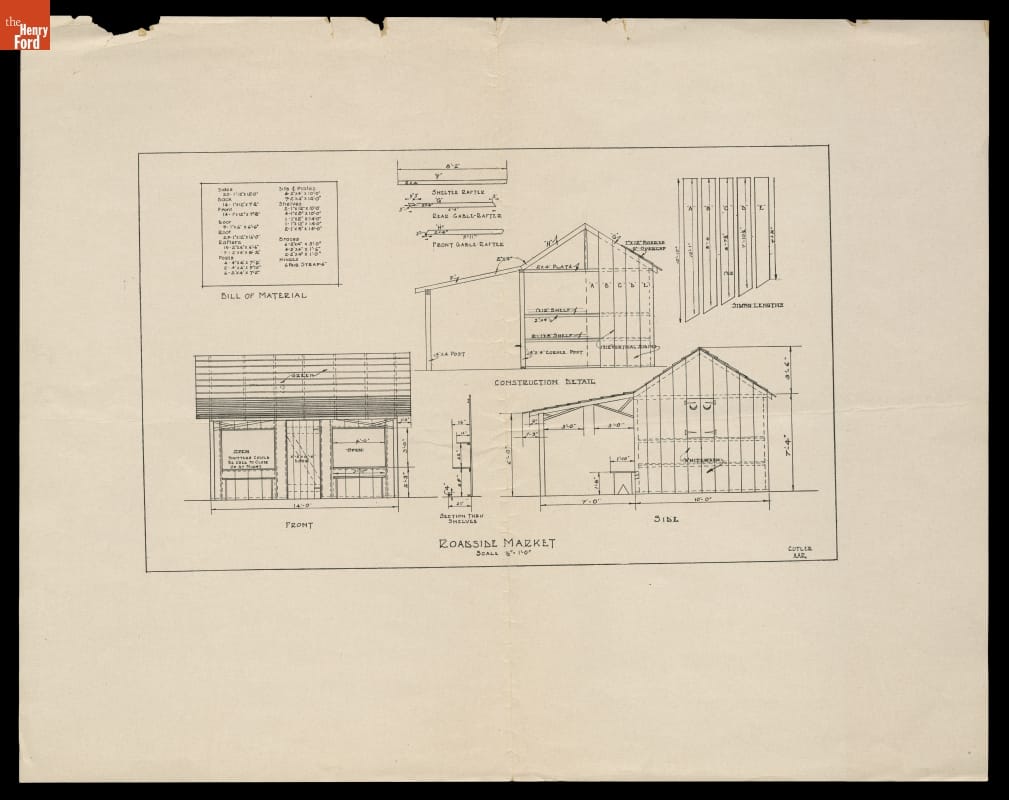
- Building Plans for a Roadside Market, for Selling Produce Grown by Greenfield Village School Students, 1930 - Clara Ford tried to help rural farm women during her presidency of the National Women's Farm & Garden Association. She developed a design for a neat but inexpensive roadside market building that could show off fresh farm produce. She had Edward Cutler, the Historical Architect of Greenfield Village, draw up these plans for the building.
- 1930
- Collections - Artifact
Building Plans for a Roadside Market, for Selling Produce Grown by Greenfield Village School Students, 1930
Clara Ford tried to help rural farm women during her presidency of the National Women's Farm & Garden Association. She developed a design for a neat but inexpensive roadside market building that could show off fresh farm produce. She had Edward Cutler, the Historical Architect of Greenfield Village, draw up these plans for the building.
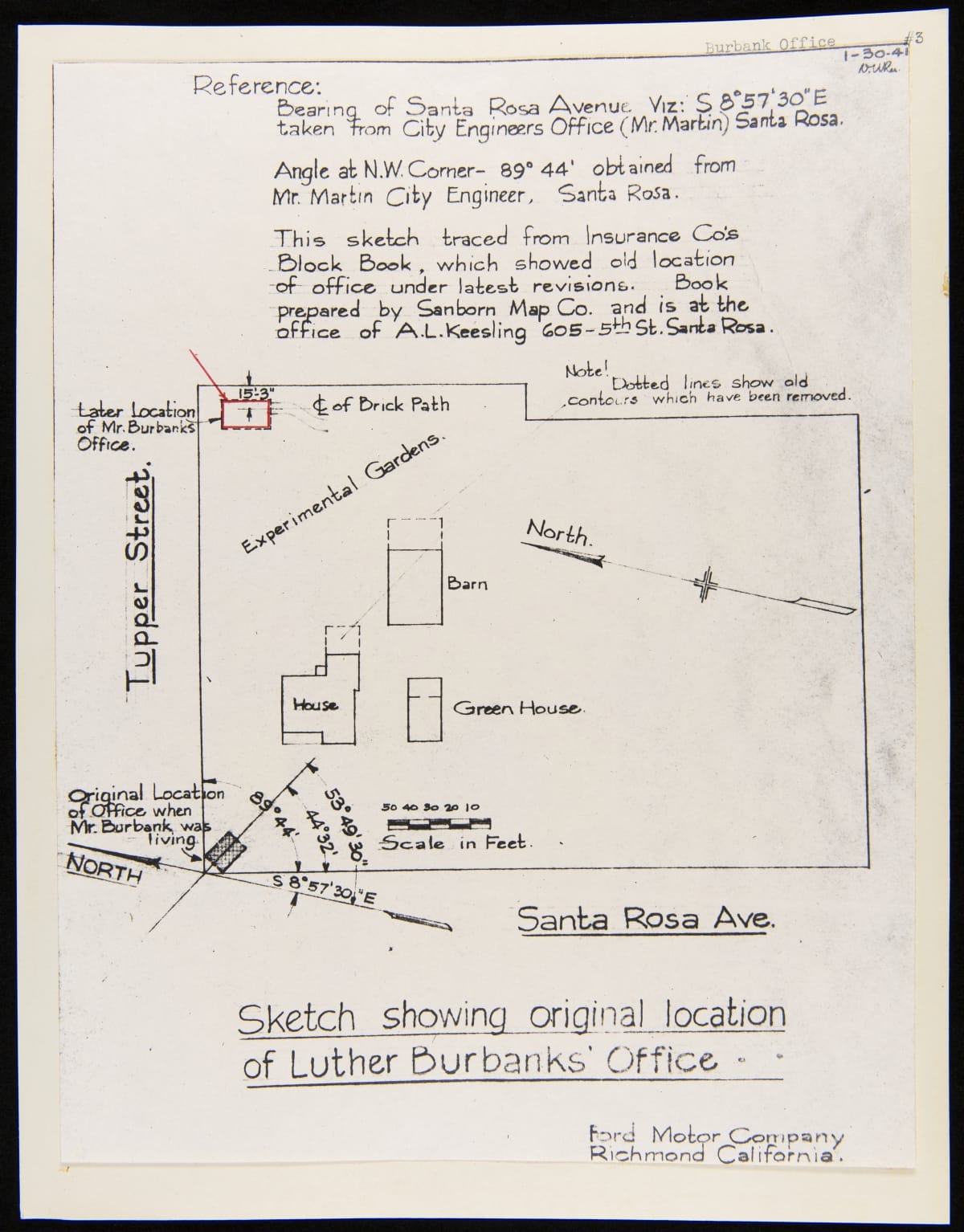
- Sketch Showing Original Location of Luther Burbank Garden Office, Santa Rosa, California, January 30, 1941 - Luther Burbank (1849-1926), a much-heralded American horticulturalist, gained a reputation for selectively breeding more than 800 new fruits, vegetables, flowers, and other plants. He opened a "Bureau of Information" in 1910 to sell seeds and souvenirs. Burbank's widow described it as the "little office" when she offered it to Henry Ford in 1928. This map documents its original locations in Santa Rosa, California.
- January 30, 1941
- Collections - Artifact
Sketch Showing Original Location of Luther Burbank Garden Office, Santa Rosa, California, January 30, 1941
Luther Burbank (1849-1926), a much-heralded American horticulturalist, gained a reputation for selectively breeding more than 800 new fruits, vegetables, flowers, and other plants. He opened a "Bureau of Information" in 1910 to sell seeds and souvenirs. Burbank's widow described it as the "little office" when she offered it to Henry Ford in 1928. This map documents its original locations in Santa Rosa, California.
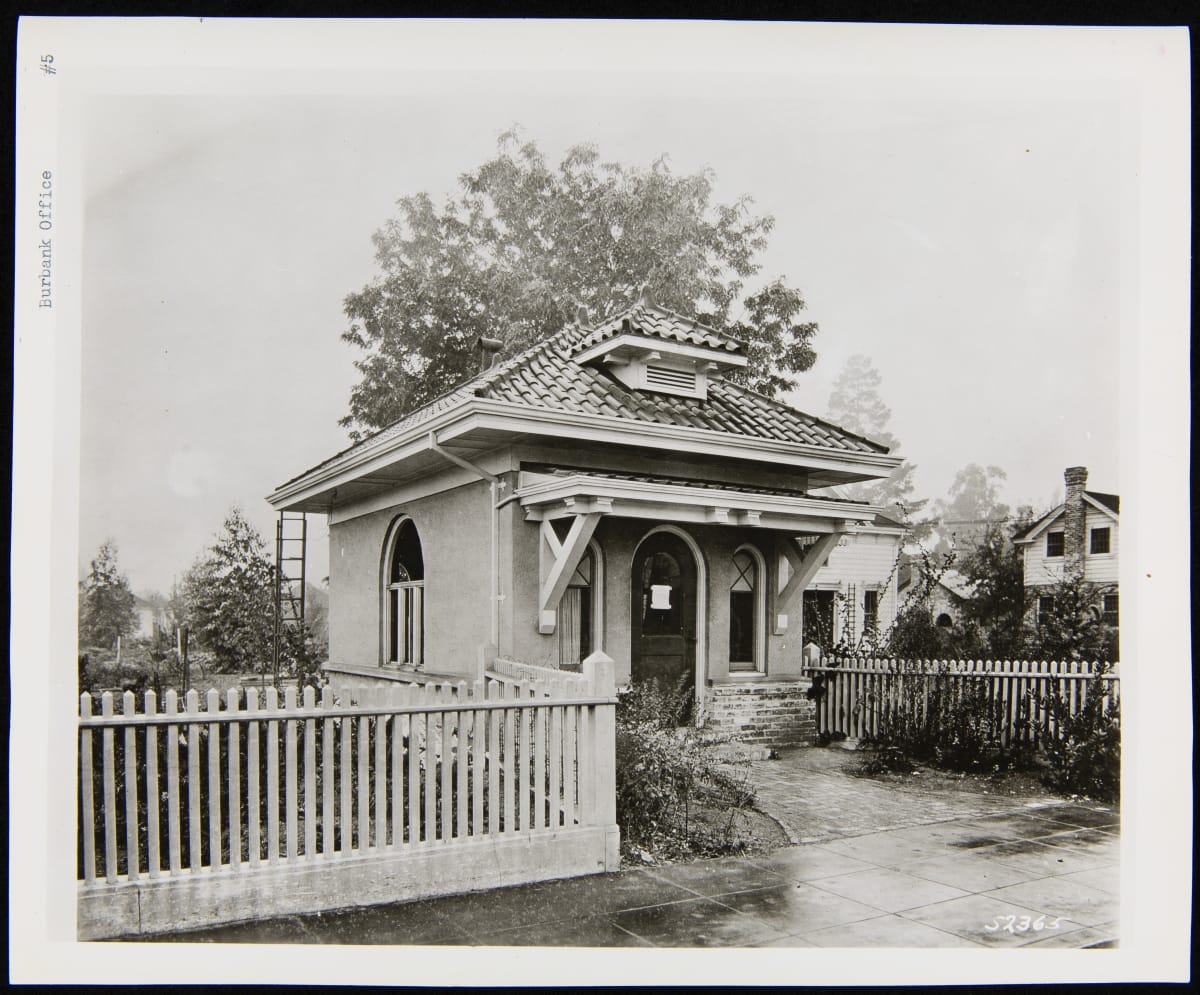
- Burbank Experimental Gardens Information Office, 1928 - Luther Burbank (1849-1926), a much-heralded American horticulturalist, gained a reputation for selectively breeding more than 800 new fruits, vegetables, flowers, and other plants. He opened this building in 1910 to sell seeds and souvenirs to inquisitive patrons. It served many purposes over the years and was moved once before Burbank's widow sent it to Henry Ford in 1928 for inclusion in Greenfield Village.
- 1928
- Collections - Artifact
Burbank Experimental Gardens Information Office, 1928
Luther Burbank (1849-1926), a much-heralded American horticulturalist, gained a reputation for selectively breeding more than 800 new fruits, vegetables, flowers, and other plants. He opened this building in 1910 to sell seeds and souvenirs to inquisitive patrons. It served many purposes over the years and was moved once before Burbank's widow sent it to Henry Ford in 1928 for inclusion in Greenfield Village.
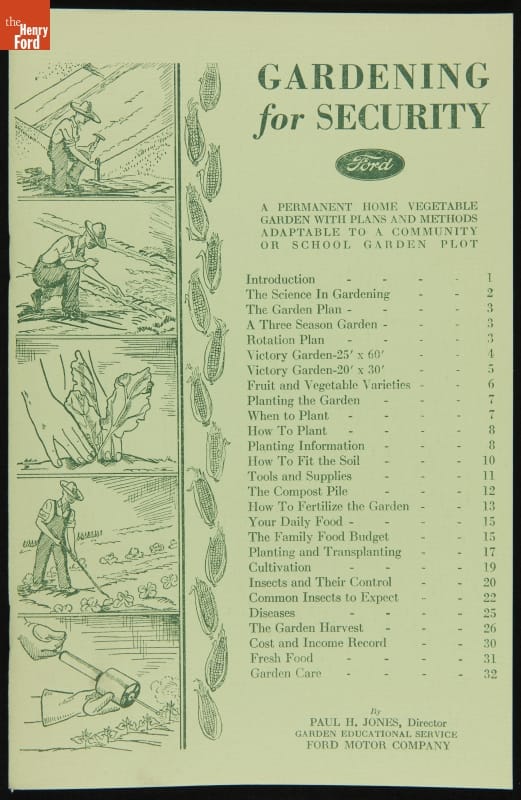
- Gardening for Security: A Permanent Home Vegetable Garden with Plans and Methods Adaptable to a Community or School Garden Plot, 1944 -
- 1944
- Collections - Artifact
Gardening for Security: A Permanent Home Vegetable Garden with Plans and Methods Adaptable to a Community or School Garden Plot, 1944
- Letter from Luther Burbank to Mary Ethel McAuley of the Pittsburgh Dispatch, July 1, 1921 -
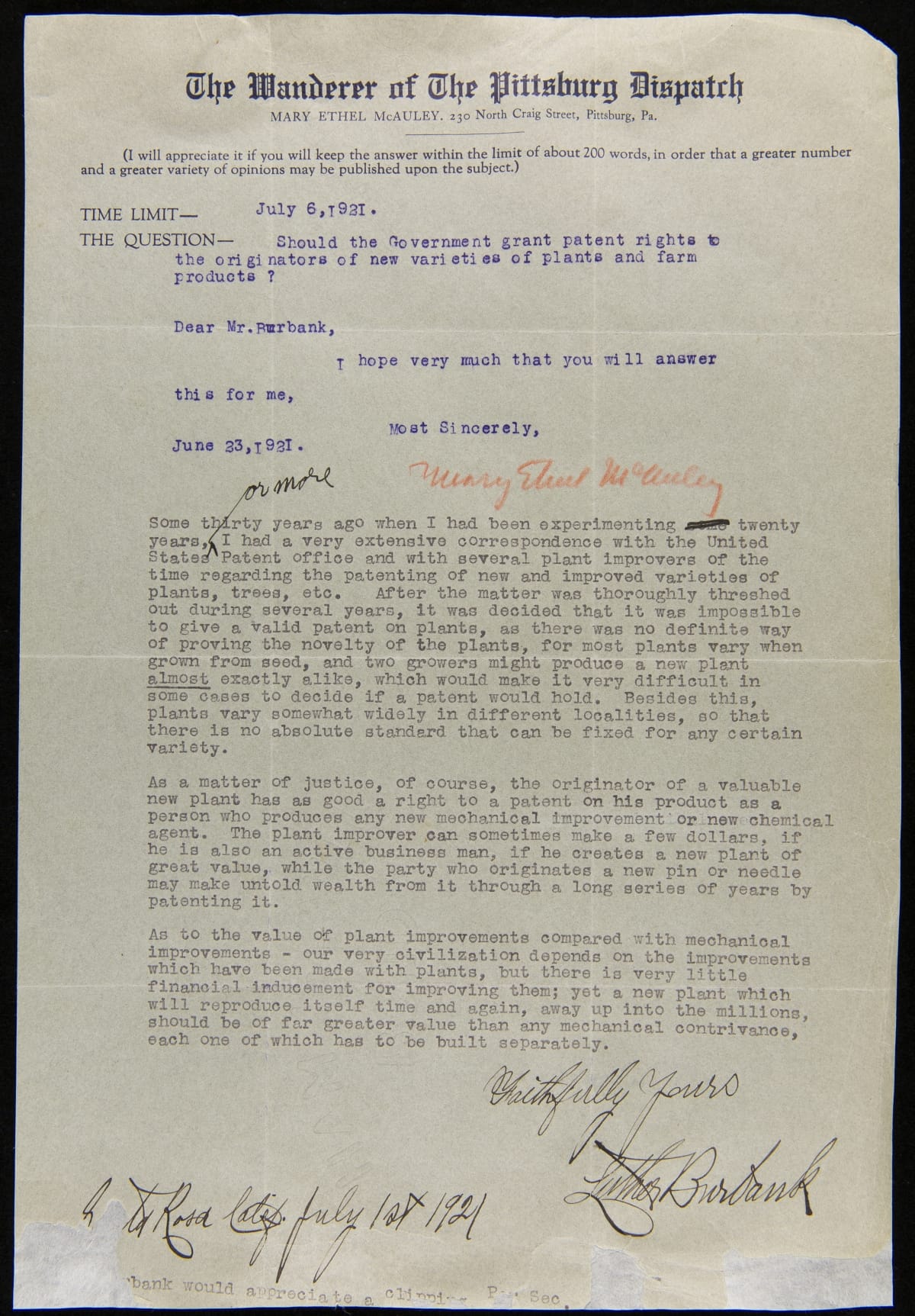
- July 01, 1921
- Collections - Artifact
Letter from Luther Burbank to Mary Ethel McAuley of the Pittsburgh Dispatch, July 1, 1921
- Letter from Elizabeth Burbank to E.G. Liebold regarding Donation of the "Little Office," March 23, 1928 - Luther Burbank (1849-1926), a much-heralded American horticulturalist, gained a reputation for selectively breeding more than 800 new fruits, vegetables, flowers, and other plants. He opened a "Bureau of Information" in 1910 to sell seeds and souvenirs, but it served other purposes over the years. Burbank's widow called the building the "little office" when she offered it to Henry Ford in 1928 for inclusion in Greenfield Village.
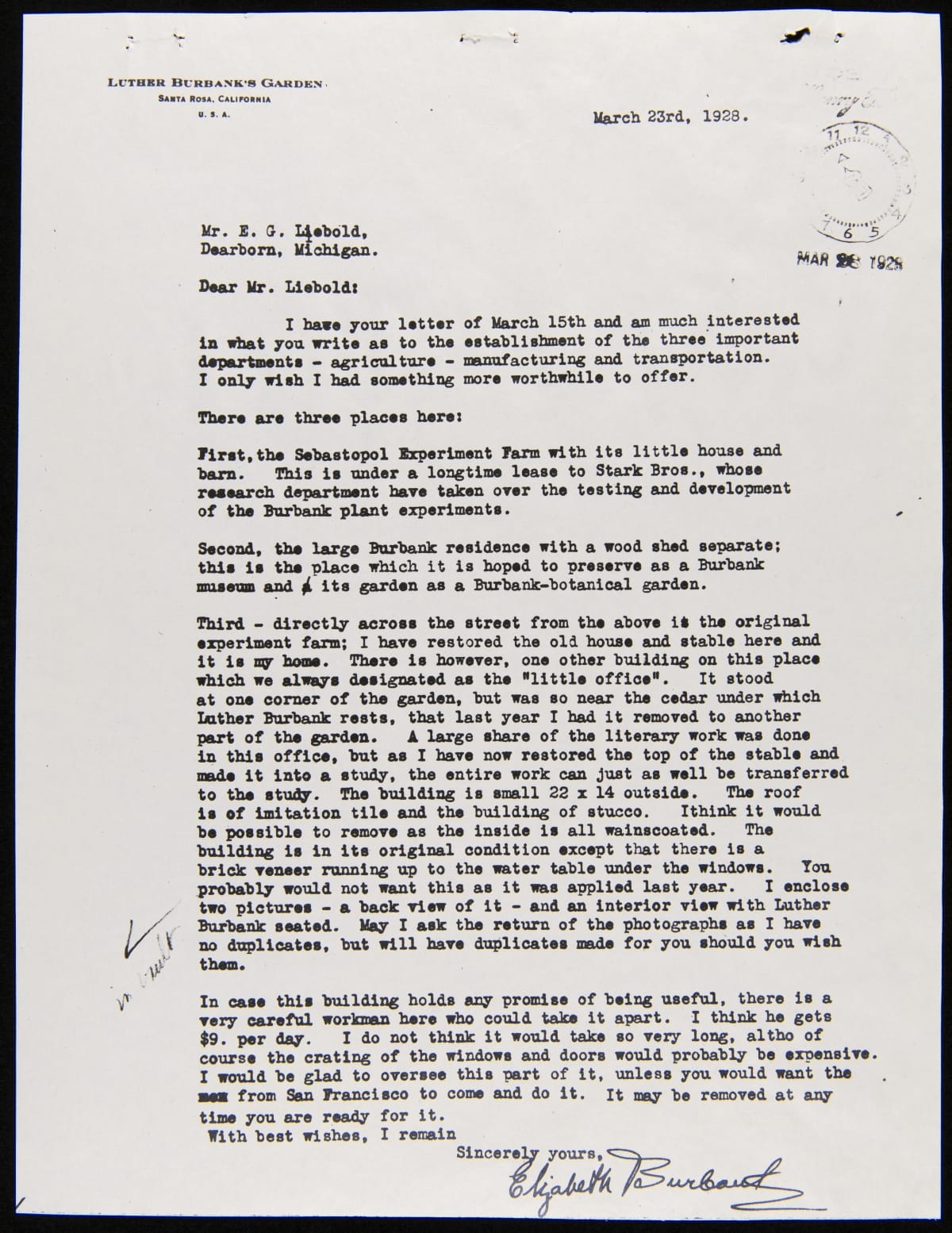
- March 23, 1928
- Collections - Artifact
Letter from Elizabeth Burbank to E.G. Liebold regarding Donation of the "Little Office," March 23, 1928
Luther Burbank (1849-1926), a much-heralded American horticulturalist, gained a reputation for selectively breeding more than 800 new fruits, vegetables, flowers, and other plants. He opened a "Bureau of Information" in 1910 to sell seeds and souvenirs, but it served other purposes over the years. Burbank's widow called the building the "little office" when she offered it to Henry Ford in 1928 for inclusion in Greenfield Village.
- "Victory Gardening in the Opera" Press Release, April 1943 -
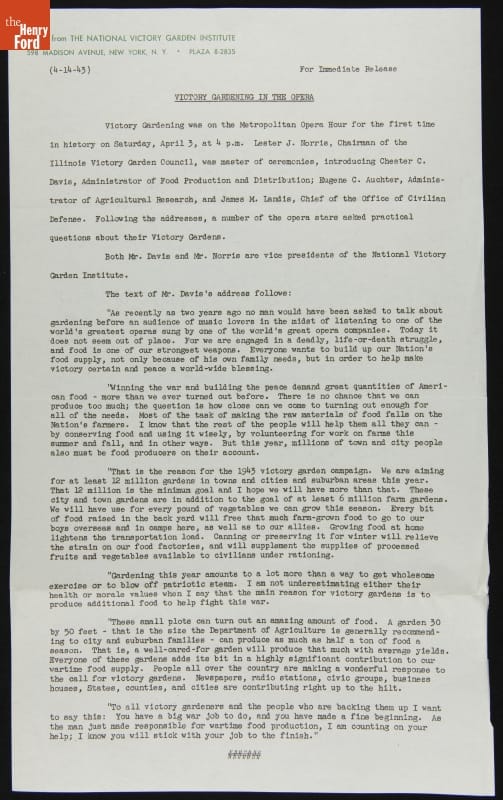
- April 14, 1943
- Collections - Artifact
"Victory Gardening in the Opera" Press Release, April 1943
- "Canning Sugar to be Plentiful," National Victory Garden Institute Press Release, April 1943 -
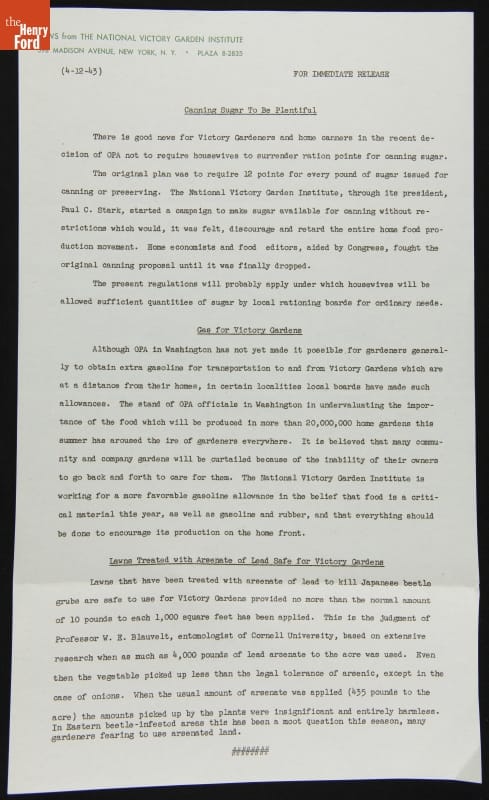
- April 12, 1943
- Collections - Artifact
"Canning Sugar to be Plentiful," National Victory Garden Institute Press Release, April 1943
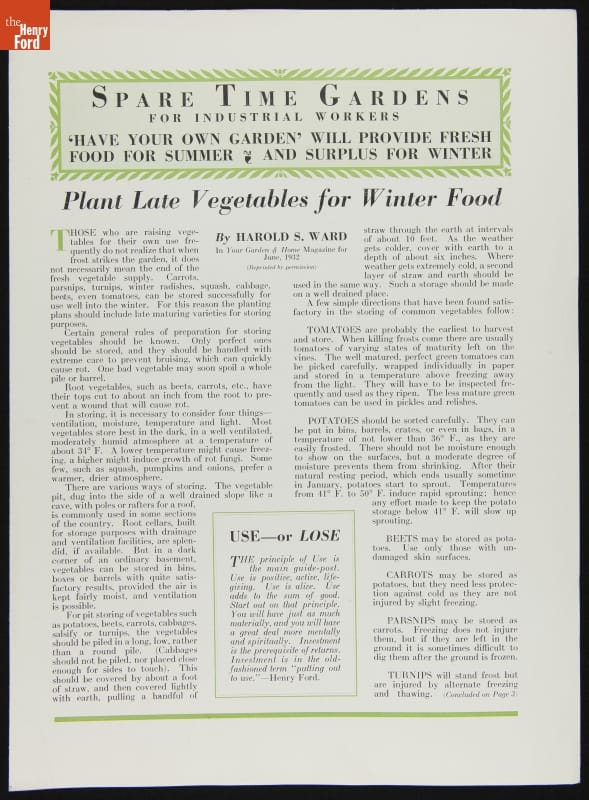
- "Spare Time Gardens for Industrial Workers," Reprinted from June 1932 Your Garden & Home Magazine -
- June 01, 1932
- Collections - Artifact
"Spare Time Gardens for Industrial Workers," Reprinted from June 1932 Your Garden & Home Magazine
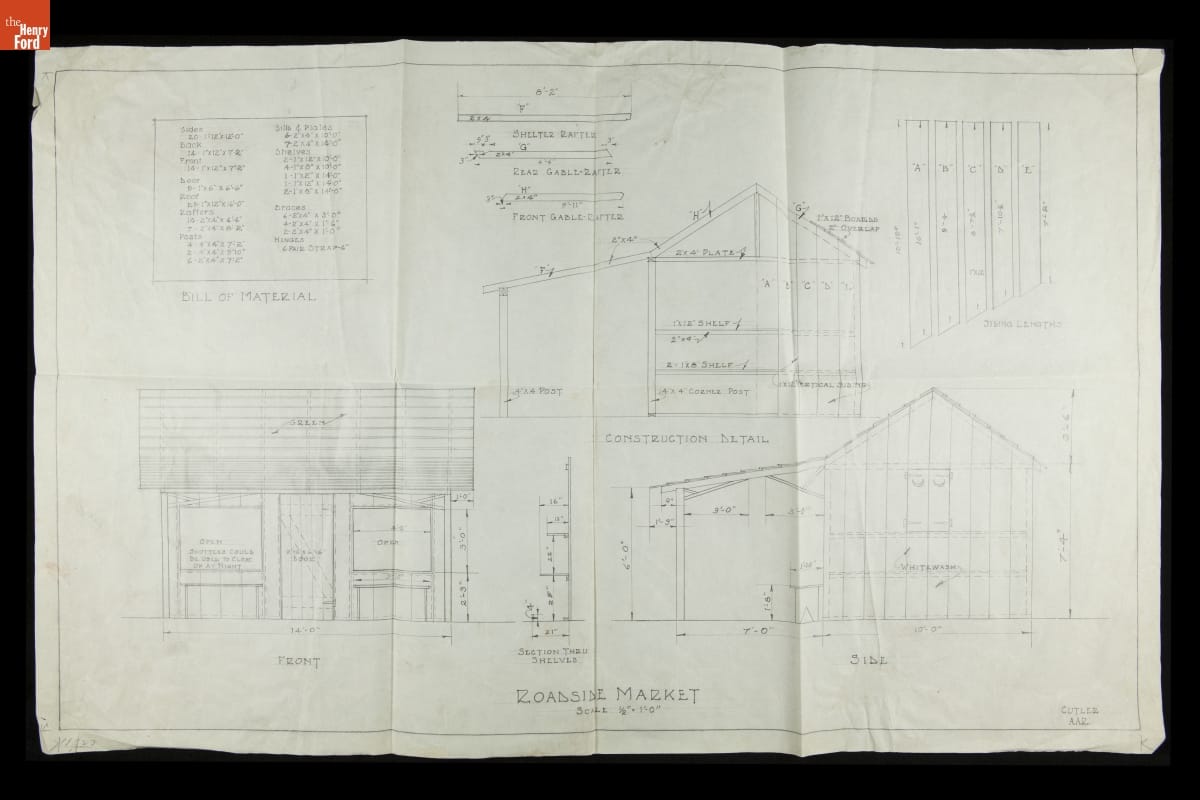
- Building Plans for a Roadside Market, for Selling Produce Grown by Greenfield Village School Students, 1930 - Clara Ford tried to help rural farm women during her presidency of the National Women's Farm & Garden Association. She developed a design for a neat but inexpensive roadside market building that could show off fresh farm produce. She had Edward Cutler, the Historical Architect of Greenfield Village, draw up these plans for the building.
- 1930
- Collections - Artifact
Building Plans for a Roadside Market, for Selling Produce Grown by Greenfield Village School Students, 1930
Clara Ford tried to help rural farm women during her presidency of the National Women's Farm & Garden Association. She developed a design for a neat but inexpensive roadside market building that could show off fresh farm produce. She had Edward Cutler, the Historical Architect of Greenfield Village, draw up these plans for the building.