
Search
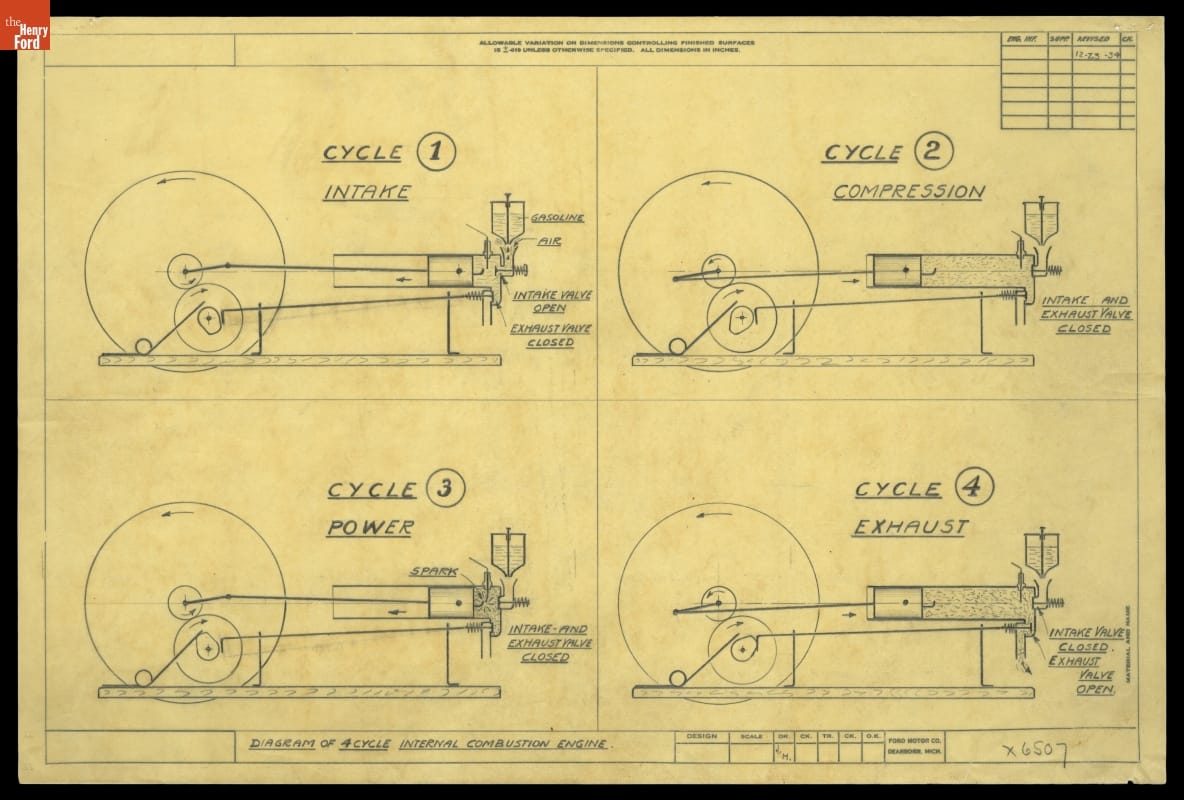
- Drawing of the 1893 Kitchen Sink Engine, "Diagram of 4 Cycle Internal Combustion Engine" - This 1934 diagram uses Henry Ford's experimental 1893 Kitchen Sink Engine to illustrate the operation of a four-stroke internal combustion engine. Stroke one draws air and fuel into the cylinder. Stroke two compresses the air-fuel mixture. In the power stroke, a spark ignites the mixture which forces the piston down, turning the crankshaft. Stroke four pushes exhaust from the cylinder.
- December 23, 1934
- Collections - Artifact
Drawing of the 1893 Kitchen Sink Engine, "Diagram of 4 Cycle Internal Combustion Engine"
This 1934 diagram uses Henry Ford's experimental 1893 Kitchen Sink Engine to illustrate the operation of a four-stroke internal combustion engine. Stroke one draws air and fuel into the cylinder. Stroke two compresses the air-fuel mixture. In the power stroke, a spark ignites the mixture which forces the piston down, turning the crankshaft. Stroke four pushes exhaust from the cylinder.
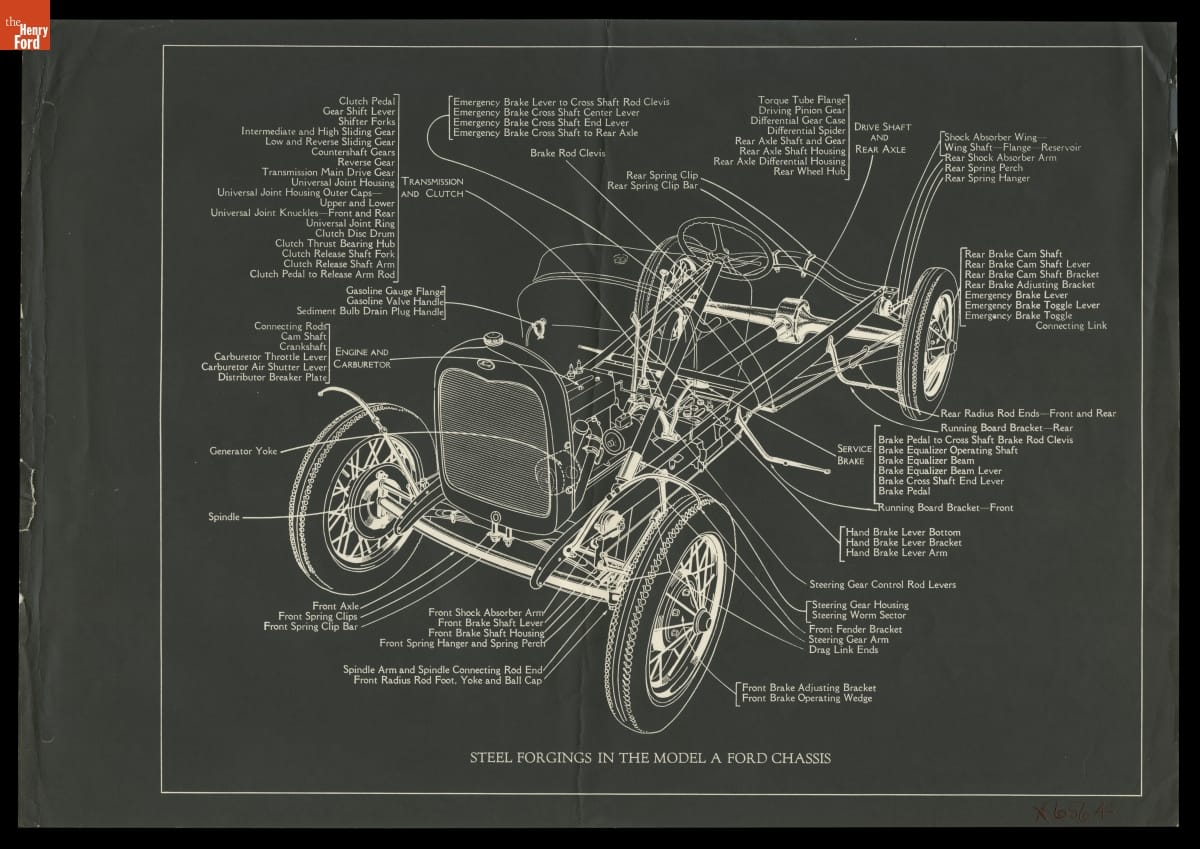
- Drawing, "Steel Forgings in the Model A Ford Chassis," 1928-1929 -
- 1928-1929
- Collections - Artifact
Drawing, "Steel Forgings in the Model A Ford Chassis," 1928-1929
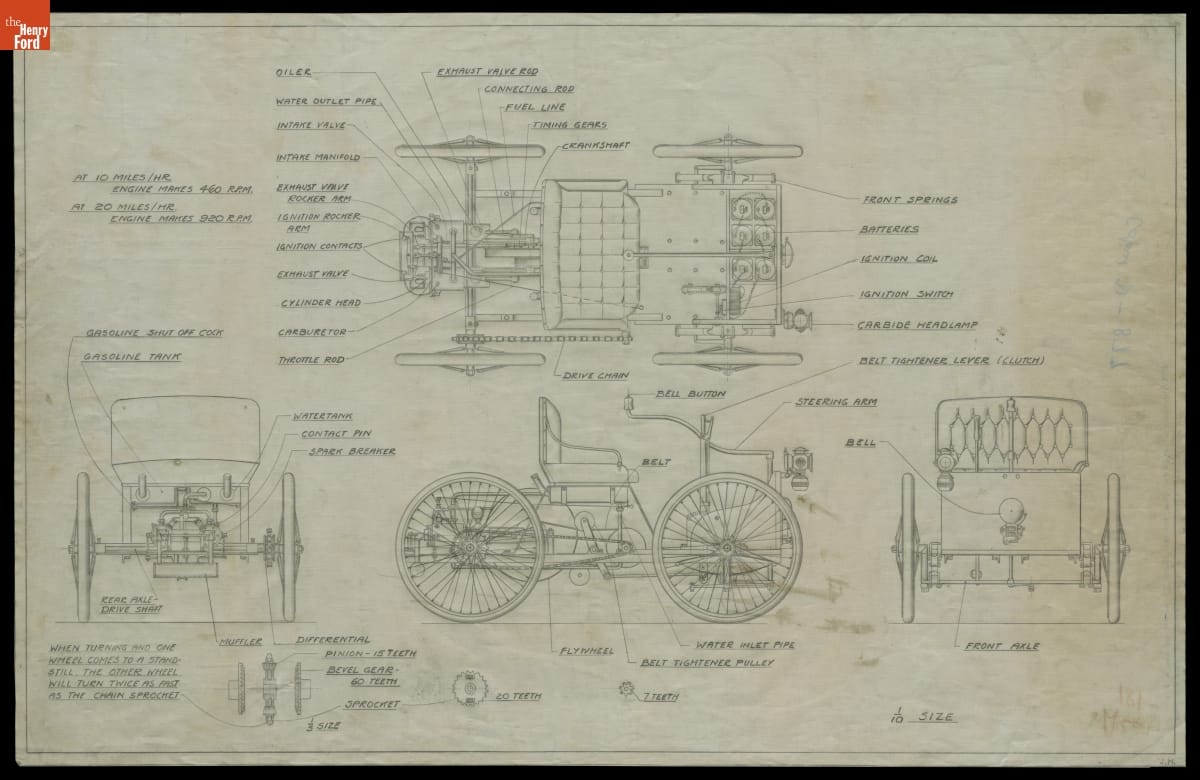
- Scale Drawing for a Model of the 1896 Ford Quadricycle - Henry Ford built his first automobile, the Quadricycle, from whatever parts he could find. Its two cylinders were made from a steam engine's exhaust pipe, the seat came from a buggy, and its wheels were from bicycles. Ford read about other automotive experiments, but he learned much through trial and error. He took his first drive on June 4, 1896.
- 1925-1935
- Collections - Artifact
Scale Drawing for a Model of the 1896 Ford Quadricycle
Henry Ford built his first automobile, the Quadricycle, from whatever parts he could find. Its two cylinders were made from a steam engine's exhaust pipe, the seat came from a buggy, and its wheels were from bicycles. Ford read about other automotive experiments, but he learned much through trial and error. He took his first drive on June 4, 1896.
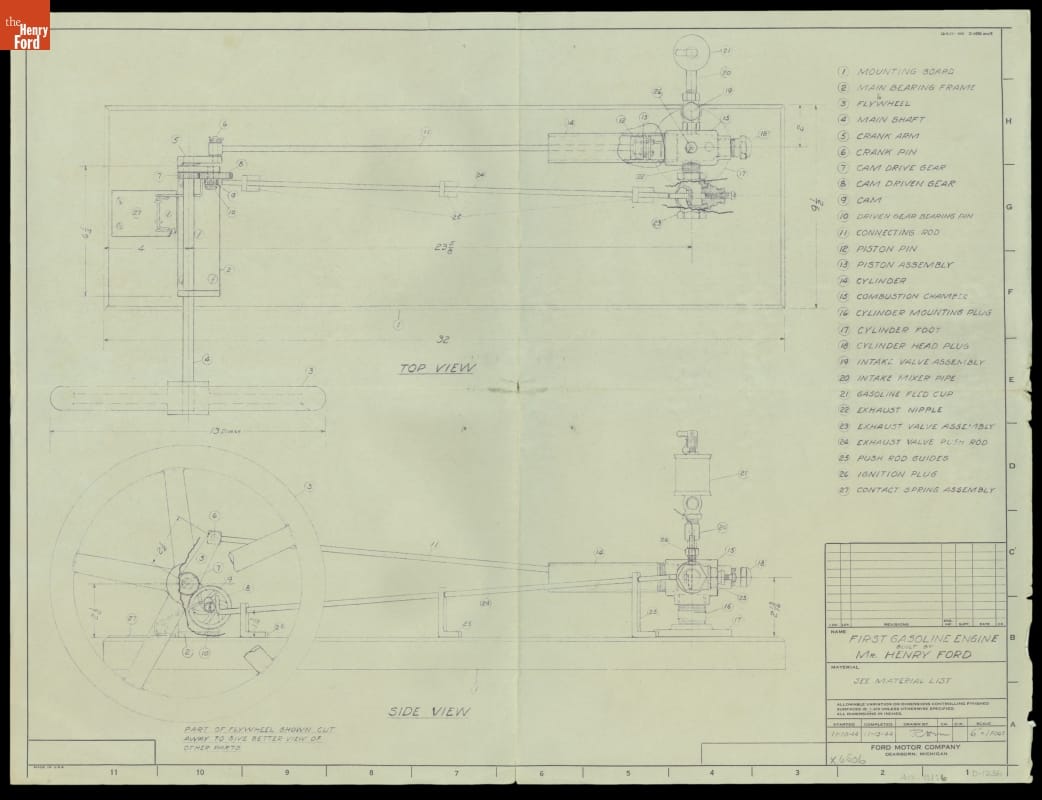
- Drawing of the 1893 Kitchen Sink Engine, "First Gasoline Engine by Mr. Henry Ford" - Henry Ford built his first experimental engine using scrap metal for parts. He tested it on the kitchen sink after supper on December 24, 1893. For ignition he ran a wire from the ceiling's light bulb. His wife Clara hand-fed gasoline to the intake valve while Henry spun the flywheel. The engine roared into action, shaking the sink.
- November 13, 1944
- Collections - Artifact
Drawing of the 1893 Kitchen Sink Engine, "First Gasoline Engine by Mr. Henry Ford"
Henry Ford built his first experimental engine using scrap metal for parts. He tested it on the kitchen sink after supper on December 24, 1893. For ignition he ran a wire from the ceiling's light bulb. His wife Clara hand-fed gasoline to the intake valve while Henry spun the flywheel. The engine roared into action, shaking the sink.
- Drawing of the 1893 Kitchen Sink Engine, "Ignition System of First Ford Engine" - Henry Ford built his first experimental engine using scrap metal for parts. He tested it on the kitchen sink after supper on December 24, 1893. For ignition he ran a wire from the ceiling's light bulb. His wife Clara hand-fed gasoline to the intake valve while Henry spun the flywheel. The engine roared into action, shaking the sink.
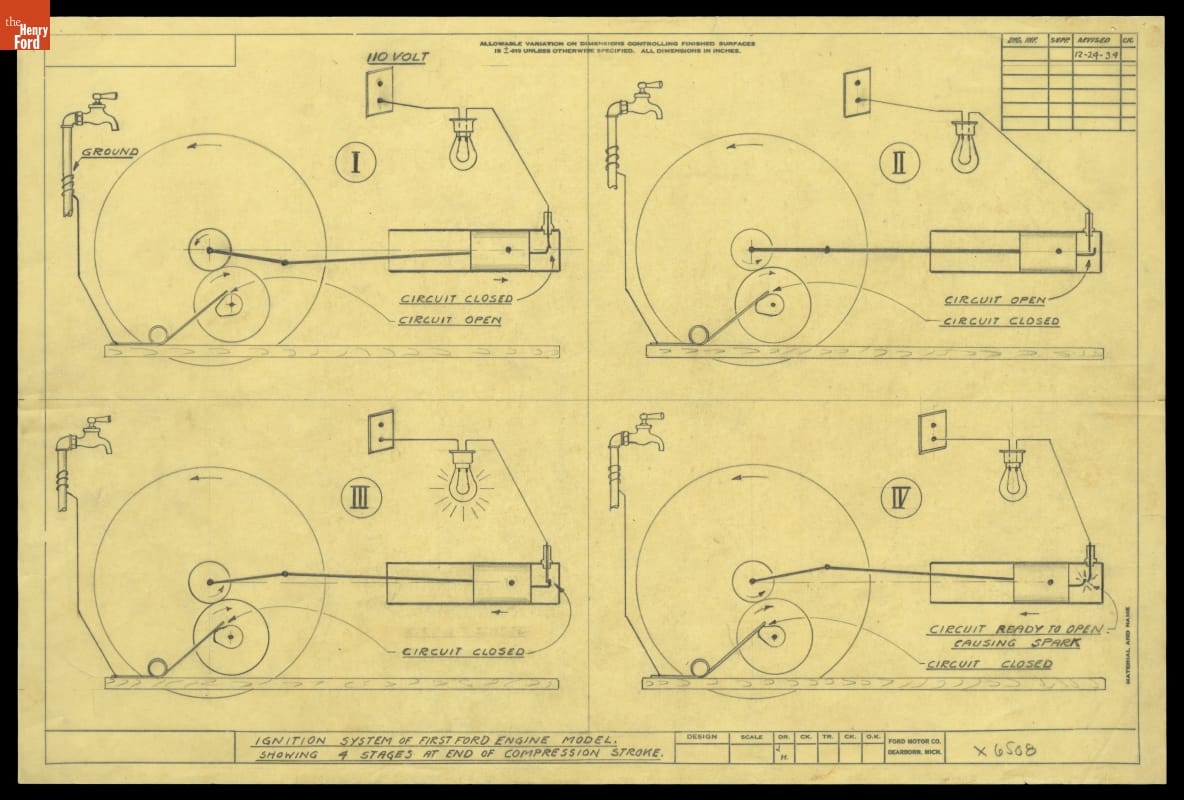
- December 24, 1934
- Collections - Artifact
Drawing of the 1893 Kitchen Sink Engine, "Ignition System of First Ford Engine"
Henry Ford built his first experimental engine using scrap metal for parts. He tested it on the kitchen sink after supper on December 24, 1893. For ignition he ran a wire from the ceiling's light bulb. His wife Clara hand-fed gasoline to the intake valve while Henry spun the flywheel. The engine roared into action, shaking the sink.
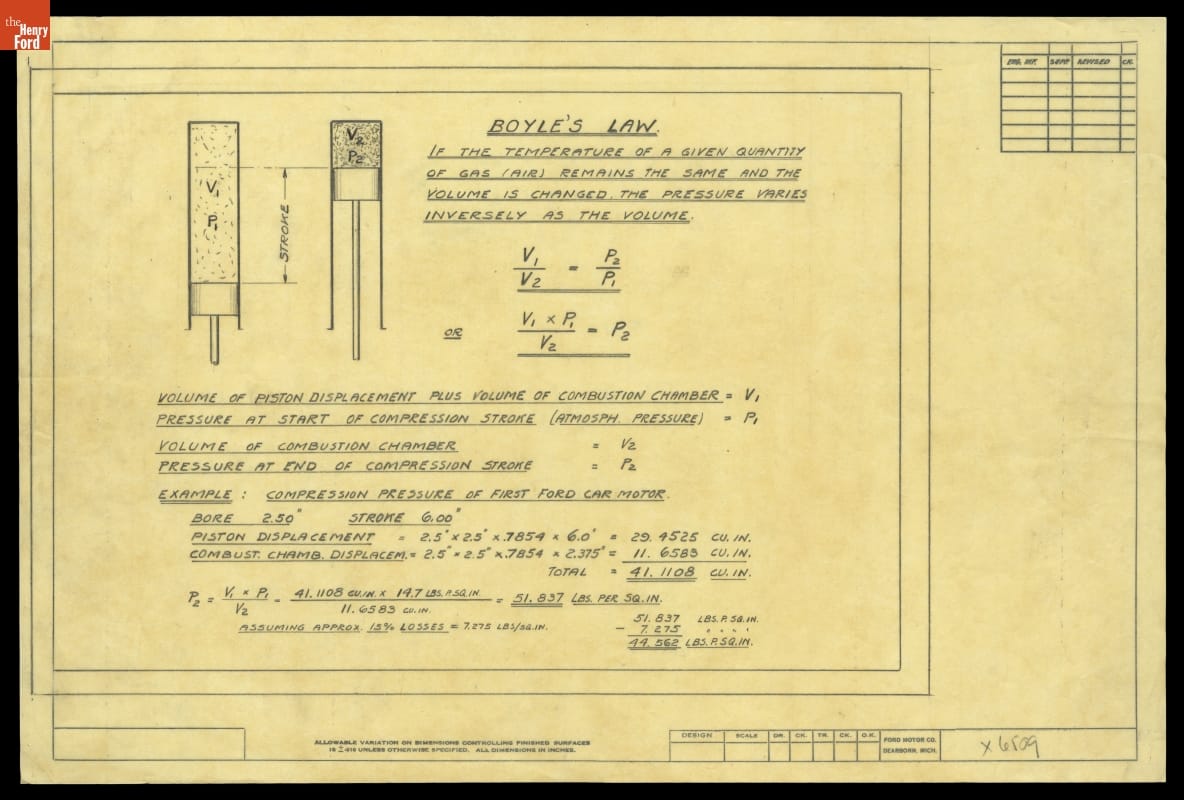
- Drawing and Explanation of Boyle's Law Applied to the 1893 Kitchen Sink Engine, Henry Ford's First Gasoline Engine - Boyle's Law states that the pressure of a gas tends to increase as the volume of the container surrounding it decreases. In an internal combustion engine, this means that the air in the cylinder increases in pressure as the piston pushes against it during the compression stroke.
- circa 1934
- Collections - Artifact
Drawing and Explanation of Boyle's Law Applied to the 1893 Kitchen Sink Engine, Henry Ford's First Gasoline Engine
Boyle's Law states that the pressure of a gas tends to increase as the volume of the container surrounding it decreases. In an internal combustion engine, this means that the air in the cylinder increases in pressure as the piston pushes against it during the compression stroke.
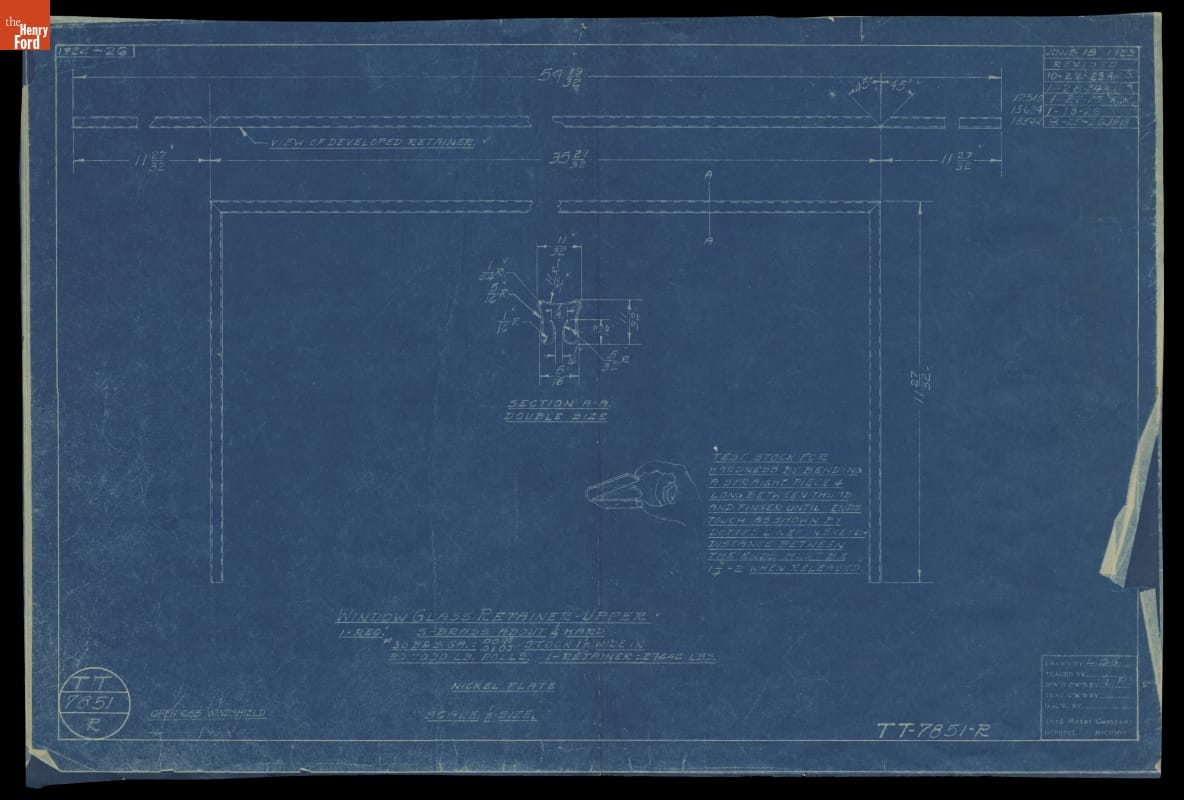
- Drawing, "Window Glass Retainer - Upper," Ford Model TT Truck, August 25, 1926 - The Ford Motor Company created over a million parts drawings from 1903 to 1957. Many of these drawings specify engineering requirements for the components of Ford-made vehicles--including automobiles, trucks, tractors, military vehicles, and Tri-motor airplanes. Others provided information about assembly components, stages of casting and forging, or experimental designs. Beginning in the 1940s, Ford transferred the drawings and associated documents to microfilm.
- August 25, 1926
- Collections - Artifact
Drawing, "Window Glass Retainer - Upper," Ford Model TT Truck, August 25, 1926
The Ford Motor Company created over a million parts drawings from 1903 to 1957. Many of these drawings specify engineering requirements for the components of Ford-made vehicles--including automobiles, trucks, tractors, military vehicles, and Tri-motor airplanes. Others provided information about assembly components, stages of casting and forging, or experimental designs. Beginning in the 1940s, Ford transferred the drawings and associated documents to microfilm.
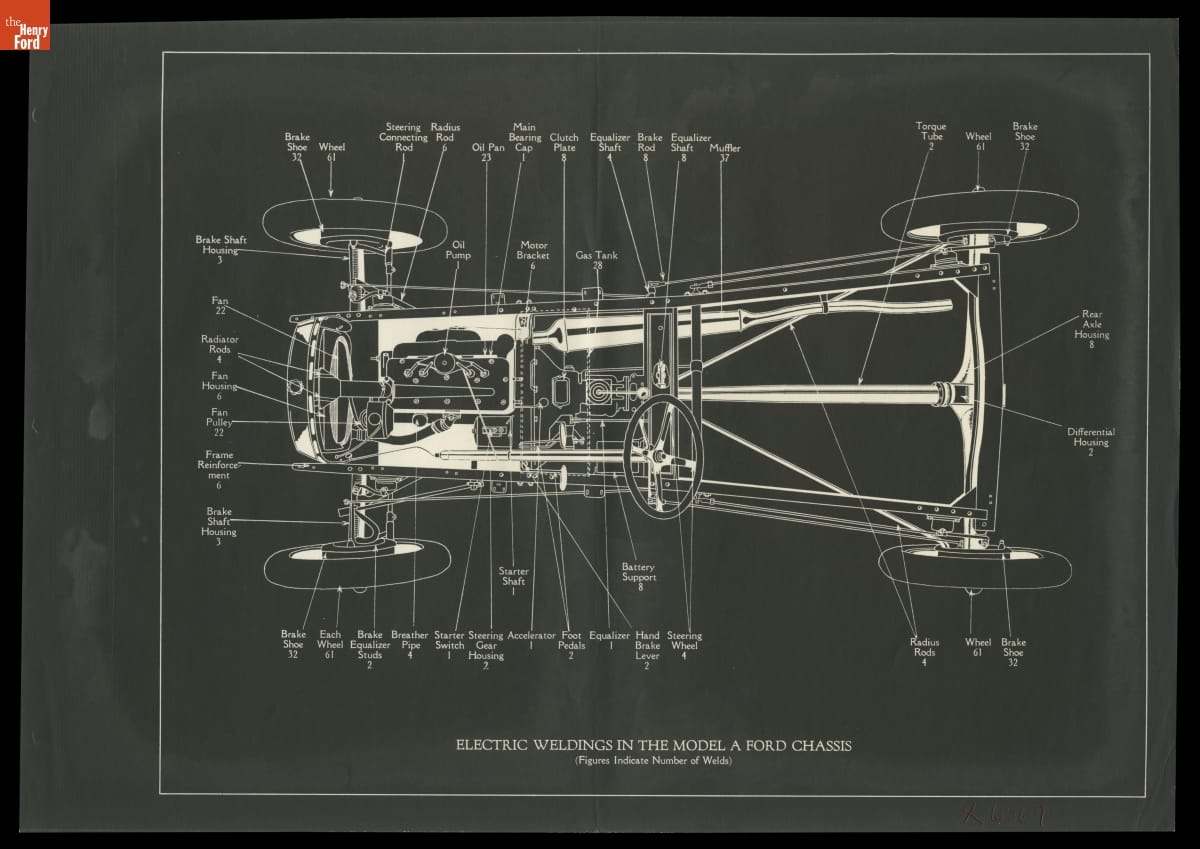
- Drawing, "Electric Weldings in the Model A Ford Chassis," 1928-1929 -
- 1928-1929
- Collections - Artifact
Drawing, "Electric Weldings in the Model A Ford Chassis," 1928-1929
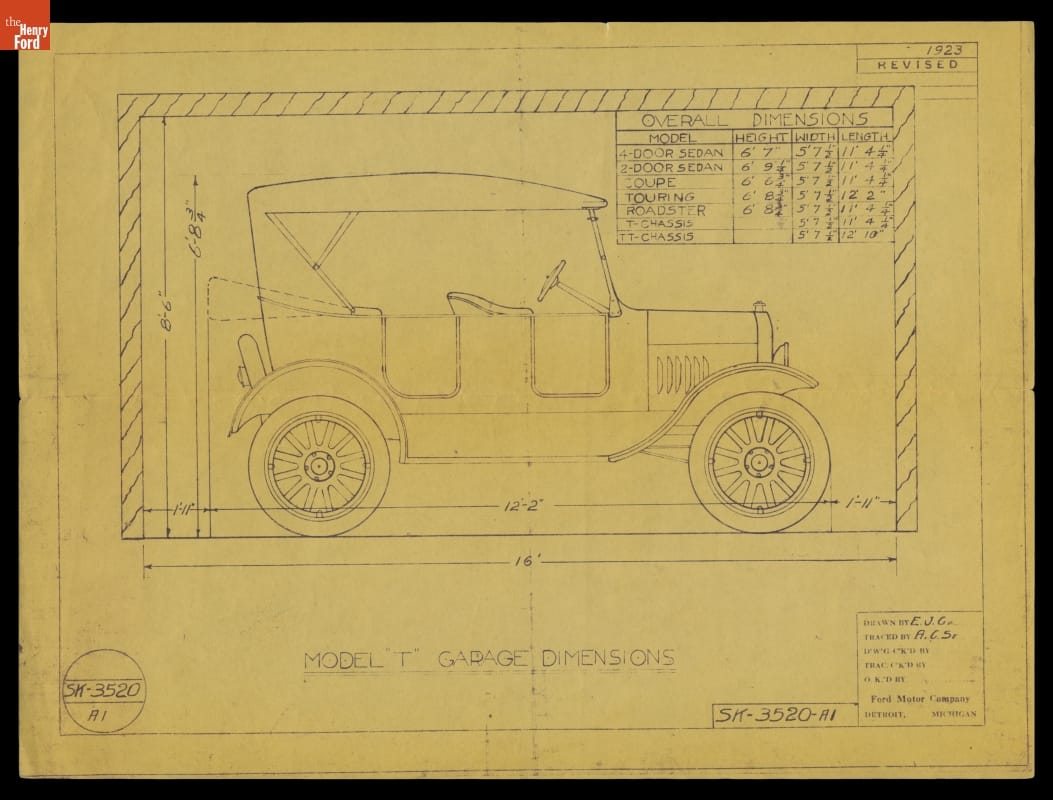
- Drawing, "Model T Garage Dimensions," 1923 - Ford Motor Company gave the Model T a styling update for 1923. Bodies were lowered, radiators were made taller, and windshields on open cars were slanted further back. It was also the first year that Ford offered both two- and four-door sedan bodies. Total Model T production topped two million cars, and the popular touring car sold for $393.
- 1923
- Collections - Artifact
Drawing, "Model T Garage Dimensions," 1923
Ford Motor Company gave the Model T a styling update for 1923. Bodies were lowered, radiators were made taller, and windshields on open cars were slanted further back. It was also the first year that Ford offered both two- and four-door sedan bodies. Total Model T production topped two million cars, and the popular touring car sold for $393.