
Search
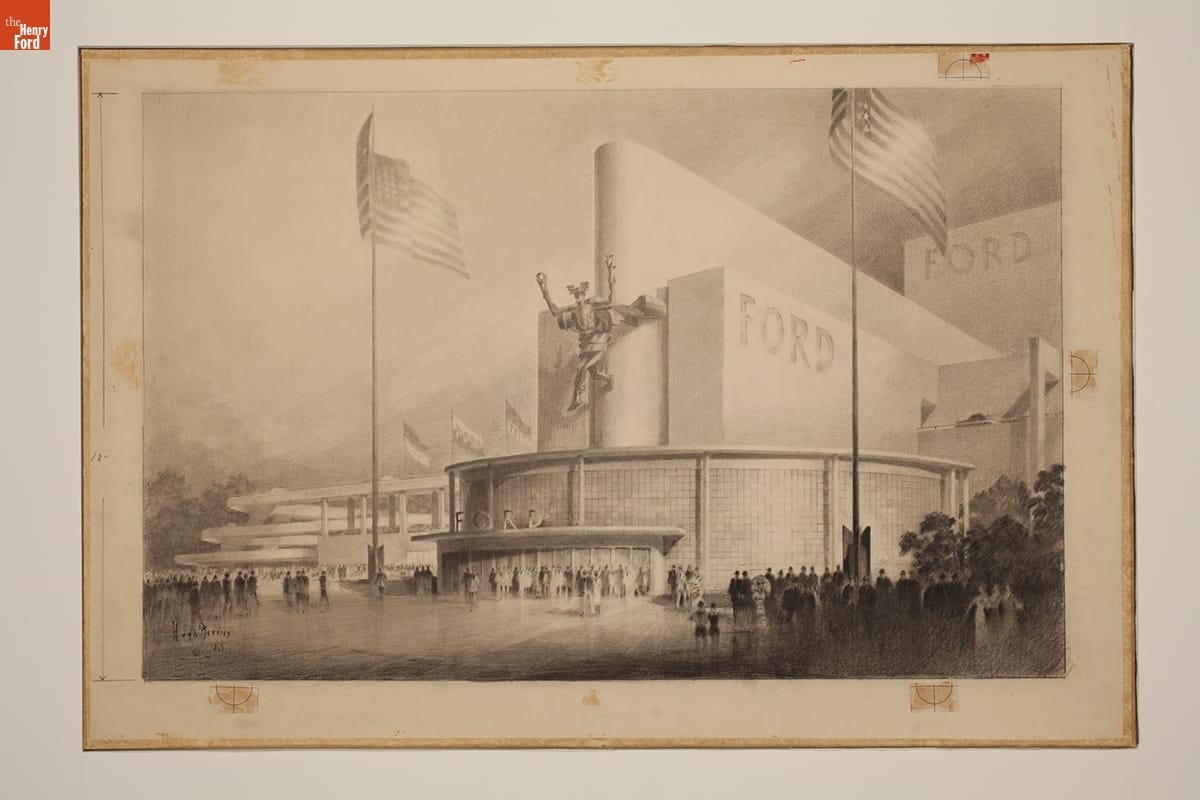
- Conceptual Drawing of the Ford Exhibition Building for the New York World's Fair, 1939 - Ford Motor Company, a major participant in the 1939-40 New York World's Fair, hired industrial designer Walter Dorwin Teague to create its exhibition building in New York City's Flushing Meadows-Corona Park. This conceptual rendering shows the entrance to Teague's Ford Building. It features a stainless steel sculpture depicting Mercury, whose mythological speed symbolized the swift progress of modern transportation.
- 1939-1940
- Collections - Artifact
Conceptual Drawing of the Ford Exhibition Building for the New York World's Fair, 1939
Ford Motor Company, a major participant in the 1939-40 New York World's Fair, hired industrial designer Walter Dorwin Teague to create its exhibition building in New York City's Flushing Meadows-Corona Park. This conceptual rendering shows the entrance to Teague's Ford Building. It features a stainless steel sculpture depicting Mercury, whose mythological speed symbolized the swift progress of modern transportation.
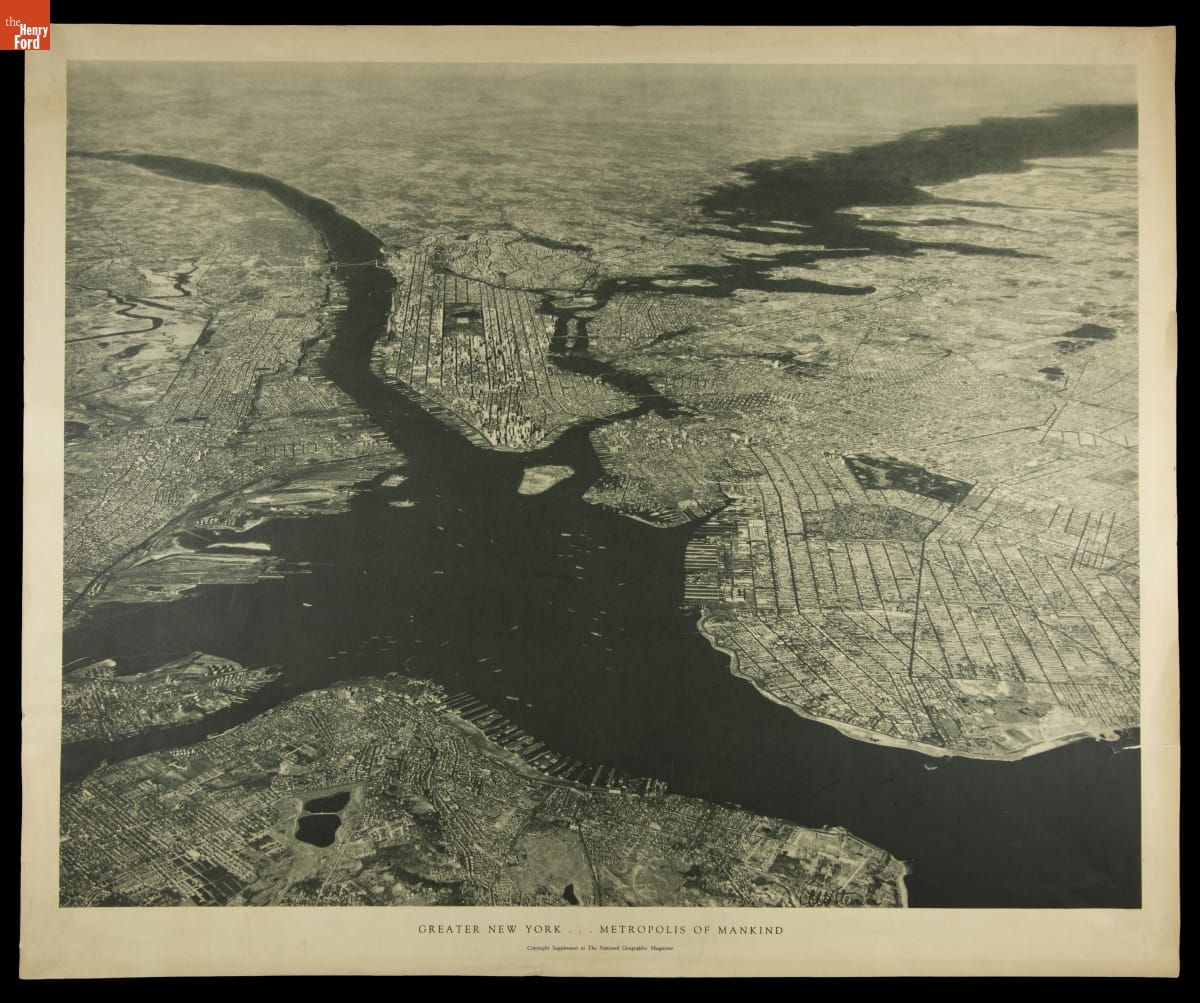
- Greater New York... Metropolis of Mankind, 1933 - Aerial photography offered a fresh perspective on familiar places. <em>National Geographic</em> published this photo of the greater New York City area in 1933. Manhattan is at center-left, framed by the Hudson River to the west and the East River to the east. New Jersey is at left, Brooklyn and Long Island are at right, and Staten Island sits at the bottom.
- 1933-1937
- Collections - Artifact
Greater New York... Metropolis of Mankind, 1933
Aerial photography offered a fresh perspective on familiar places. National Geographic published this photo of the greater New York City area in 1933. Manhattan is at center-left, framed by the Hudson River to the west and the East River to the east. New Jersey is at left, Brooklyn and Long Island are at right, and Staten Island sits at the bottom.
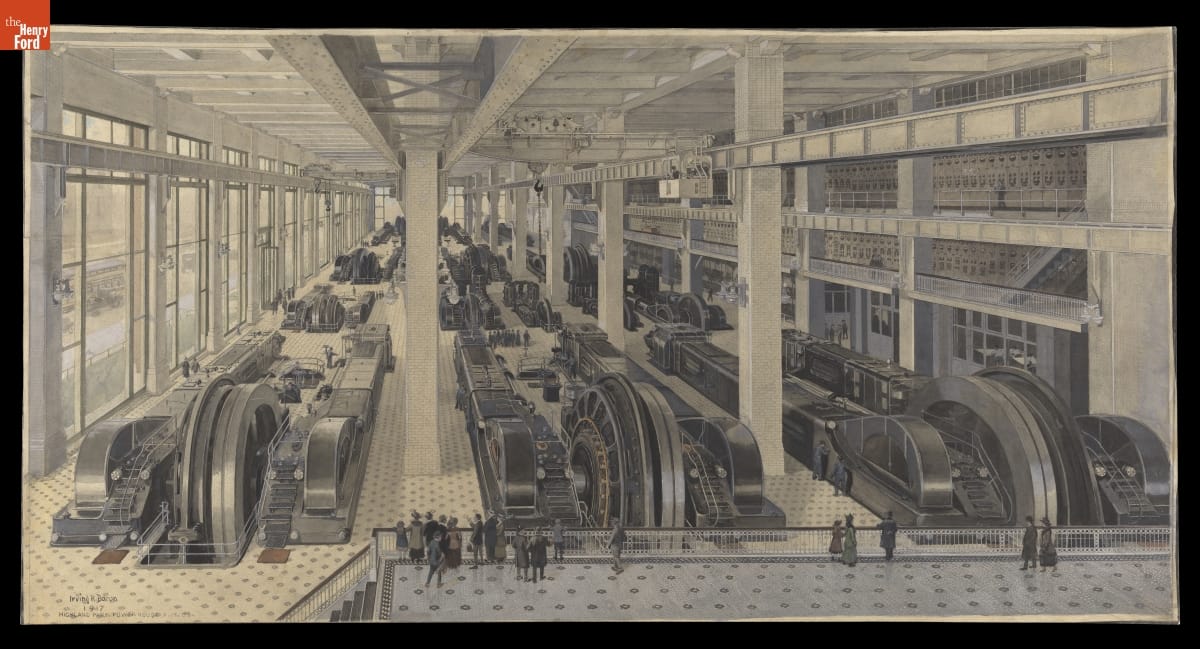
- Interior View of the Ford Motor Company Highland Park Plant Power House, Rendering by Irving R. Bacon, 1917 - Electricity for Ford Motor Company's Highland Park plant was supplied by an on-site powerhouse with generators connected to nine gas-steam hybrid engines. Together, the nine engines produced 53,000 horsepower. This illustration, created by Irving R. Bacon for a 1917 Ford visitor guide, amplified the powerhouse's cavernous size by including smaller-scaled people in the foreground.
- 1917
- Collections - Artifact
Interior View of the Ford Motor Company Highland Park Plant Power House, Rendering by Irving R. Bacon, 1917
Electricity for Ford Motor Company's Highland Park plant was supplied by an on-site powerhouse with generators connected to nine gas-steam hybrid engines. Together, the nine engines produced 53,000 horsepower. This illustration, created by Irving R. Bacon for a 1917 Ford visitor guide, amplified the powerhouse's cavernous size by including smaller-scaled people in the foreground.
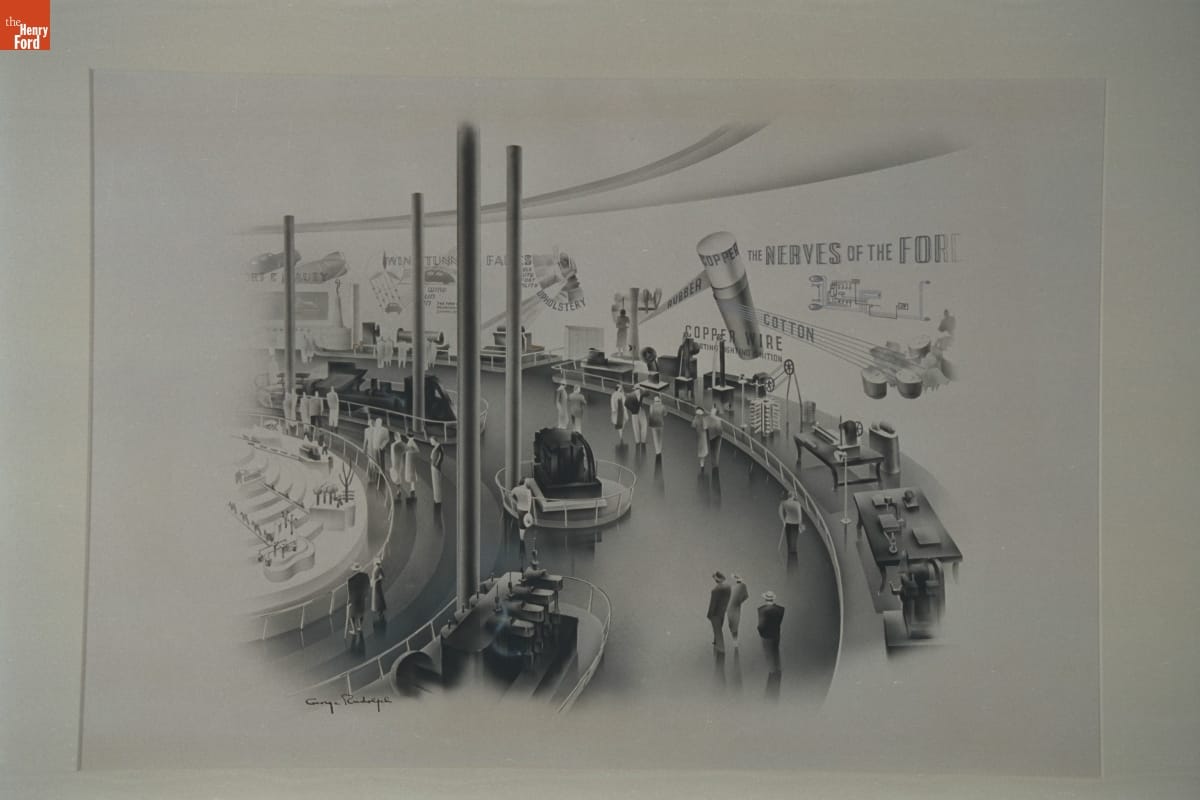
- Ford Building, Industrial Hall, New York World's Fair - Ford Motor Company, a major participant in the 1939-40 New York World's Fair, hired industrial designer Walter Dorwin Teague to create its exhibition building in New York City's Flushing Meadows-Corona Park. This conceptual rendering shows the interior of Teague's modern Ford Building, where fairgoers could peruse industrial demonstrations and informative displays.
- 1939-1940
- Collections - Artifact
Ford Building, Industrial Hall, New York World's Fair
Ford Motor Company, a major participant in the 1939-40 New York World's Fair, hired industrial designer Walter Dorwin Teague to create its exhibition building in New York City's Flushing Meadows-Corona Park. This conceptual rendering shows the interior of Teague's modern Ford Building, where fairgoers could peruse industrial demonstrations and informative displays.
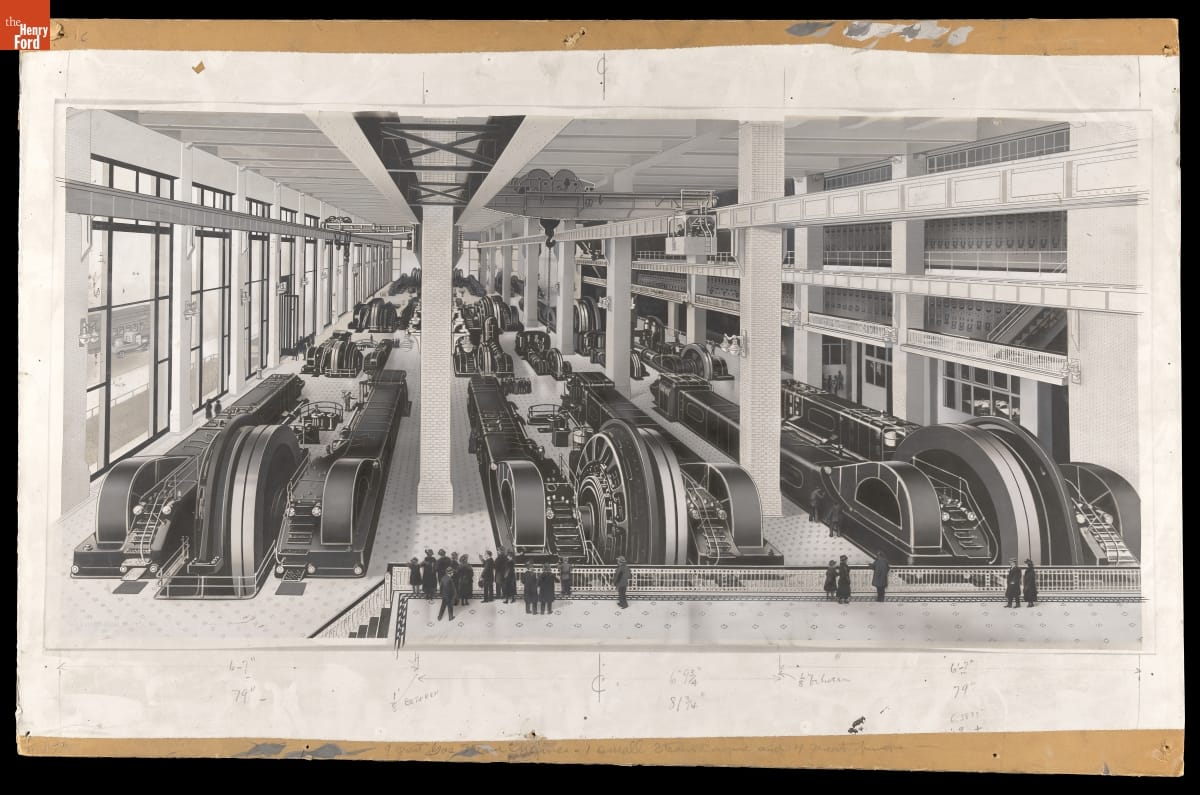
- Interior View of the Ford Motor Company Highland Park Plant Power House, Photograph of a Rendering by Irving R. Bacon, 1917 - Electricity for Ford Motor Company's Highland Park plant was supplied by an on-site powerhouse with generators connected to nine gas-steam hybrid engines. Together, the nine engines produced 53,000 horsepower. This illustration, created by Irving R. Bacon for a 1917 Ford visitor guide, amplified the powerhouse's cavernous size by including smaller-scaled people in the foreground.
- 1917
- Collections - Artifact
Interior View of the Ford Motor Company Highland Park Plant Power House, Photograph of a Rendering by Irving R. Bacon, 1917
Electricity for Ford Motor Company's Highland Park plant was supplied by an on-site powerhouse with generators connected to nine gas-steam hybrid engines. Together, the nine engines produced 53,000 horsepower. This illustration, created by Irving R. Bacon for a 1917 Ford visitor guide, amplified the powerhouse's cavernous size by including smaller-scaled people in the foreground.
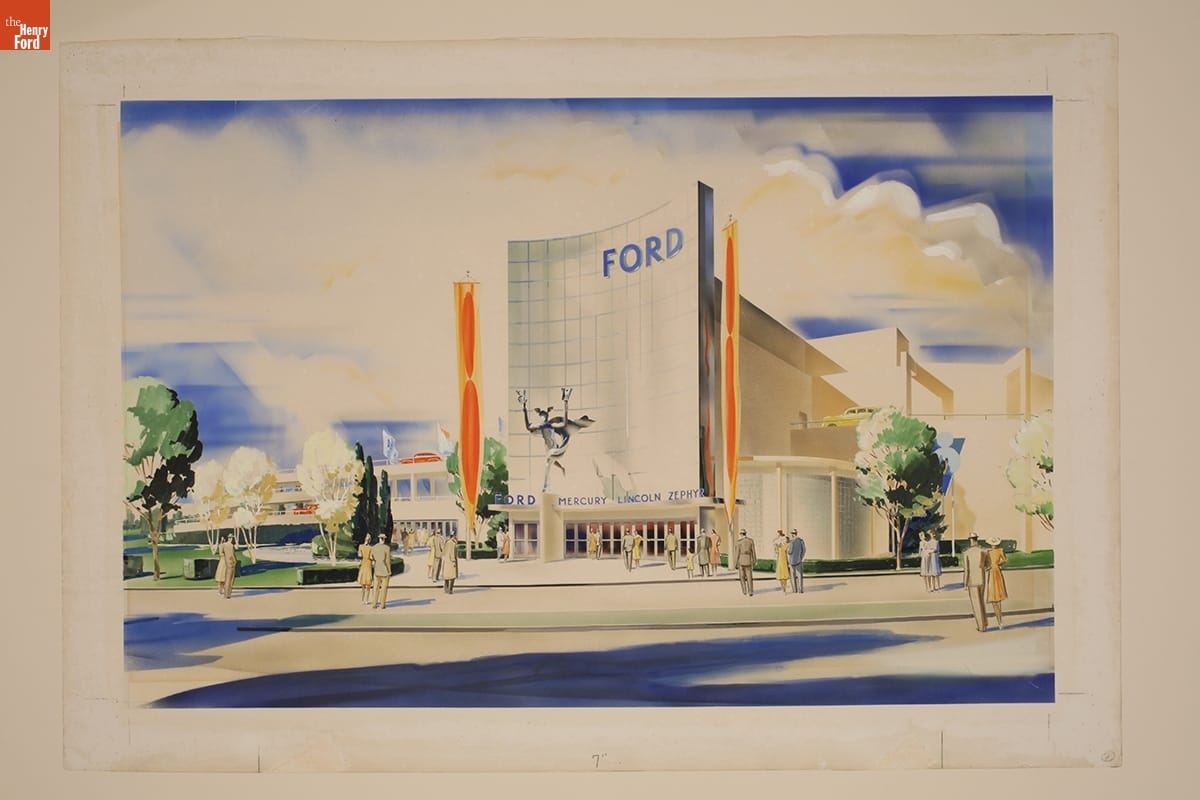
- Conceptual Drawing of the Ford Exhibition Building's Main Entrance and "The Road of Tomorrow," New York World's Fair, 1939 - Ford Motor Company, a major participant in the 1939-40 New York World's Fair, hired industrial designer Walter Dorwin Teague to create its exhibition building in New York City's Flushing Meadows-Corona Park. This conceptual rendering shows the entrance to Teague's Ford Building. It features a stainless steel sculpture depicting Mercury, whose mythological speed symbolized the swift progress of modern transportation.
- 1939-1940
- Collections - Artifact
Conceptual Drawing of the Ford Exhibition Building's Main Entrance and "The Road of Tomorrow," New York World's Fair, 1939
Ford Motor Company, a major participant in the 1939-40 New York World's Fair, hired industrial designer Walter Dorwin Teague to create its exhibition building in New York City's Flushing Meadows-Corona Park. This conceptual rendering shows the entrance to Teague's Ford Building. It features a stainless steel sculpture depicting Mercury, whose mythological speed symbolized the swift progress of modern transportation.