
Search
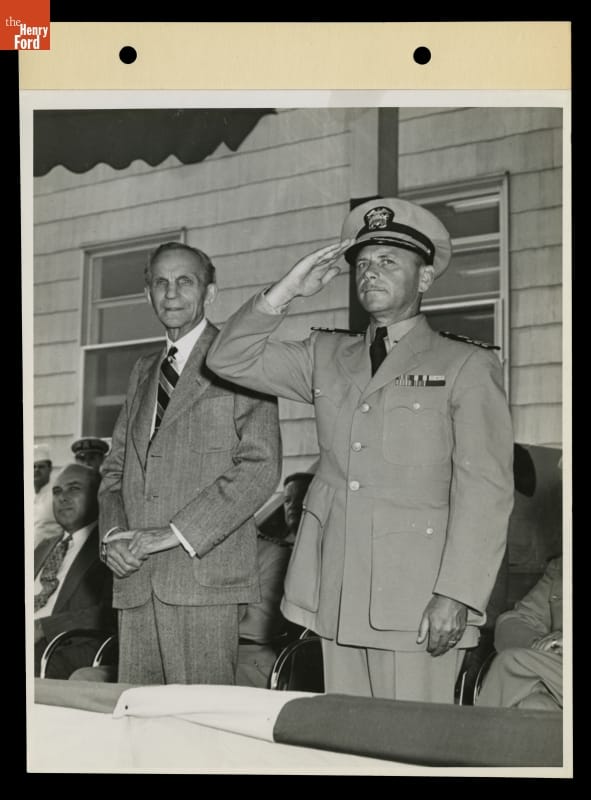
- Henry Ford on His 80th Birthday, U. S. Naval Training School at the Ford Rouge Plant, July 1943 - Personnel at the United States Naval Training School in Dearborn, Michigan, invited Henry Ford to celebrate his 80th birthday at the base. Ford was feted with gifts, a military drill, and a large cake modeled after the school buildings. The school -- built on land at Ford's Rouge Plant and leased to the Navy -- trained thousands of recruits in various skilled trades during World War II.
- July 28, 1943
- Collections - Artifact
Henry Ford on His 80th Birthday, U. S. Naval Training School at the Ford Rouge Plant, July 1943
Personnel at the United States Naval Training School in Dearborn, Michigan, invited Henry Ford to celebrate his 80th birthday at the base. Ford was feted with gifts, a military drill, and a large cake modeled after the school buildings. The school -- built on land at Ford's Rouge Plant and leased to the Navy -- trained thousands of recruits in various skilled trades during World War II.
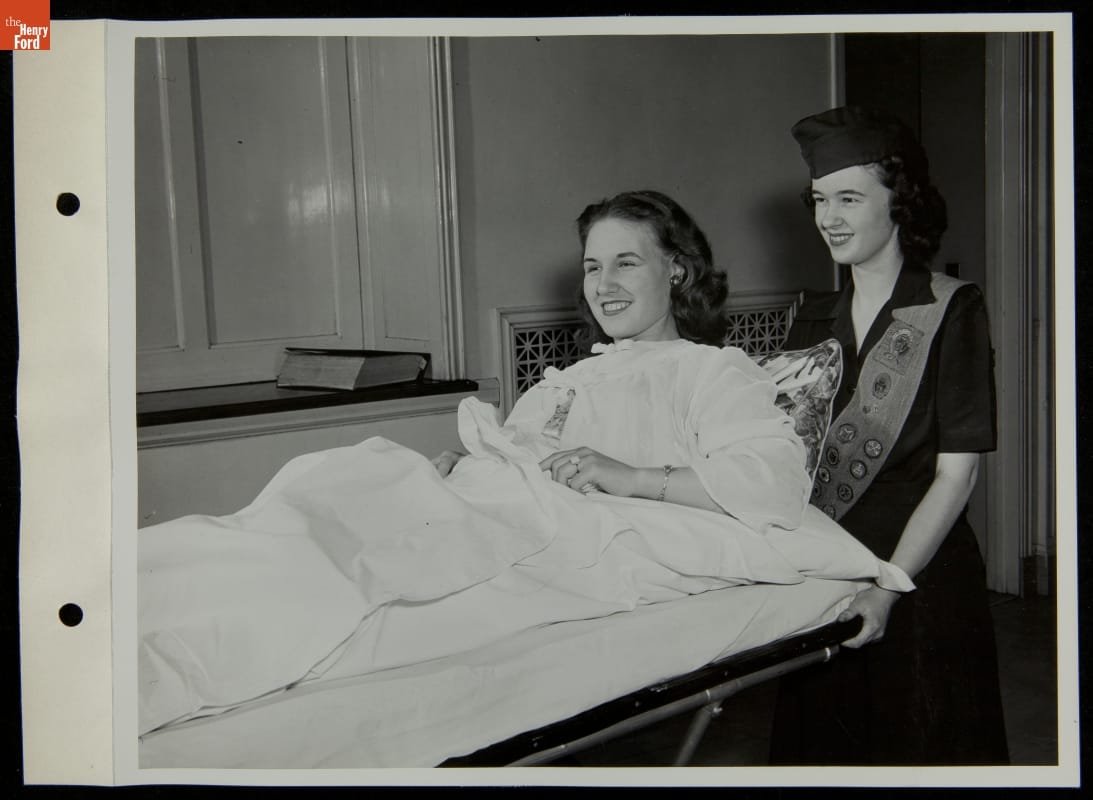
- Girl Scout Aiding a Patient While Doing Community Service at Henry Ford Hospital, Detroit, Michigan, 1946 - Since their organization was founded in 1912, American Girl Scouts have volunteered in local communities. A group of Senior Girl Scouts (ages 14-17) donated service in 1946 at Henry Ford Hospital in Detroit, Michigan. Here, a Girl Scout wearing a sash displaying official patches and badges transports a hospital patient on a gurney.
- February 28, 1946
- Collections - Artifact
Girl Scout Aiding a Patient While Doing Community Service at Henry Ford Hospital, Detroit, Michigan, 1946
Since their organization was founded in 1912, American Girl Scouts have volunteered in local communities. A group of Senior Girl Scouts (ages 14-17) donated service in 1946 at Henry Ford Hospital in Detroit, Michigan. Here, a Girl Scout wearing a sash displaying official patches and badges transports a hospital patient on a gurney.
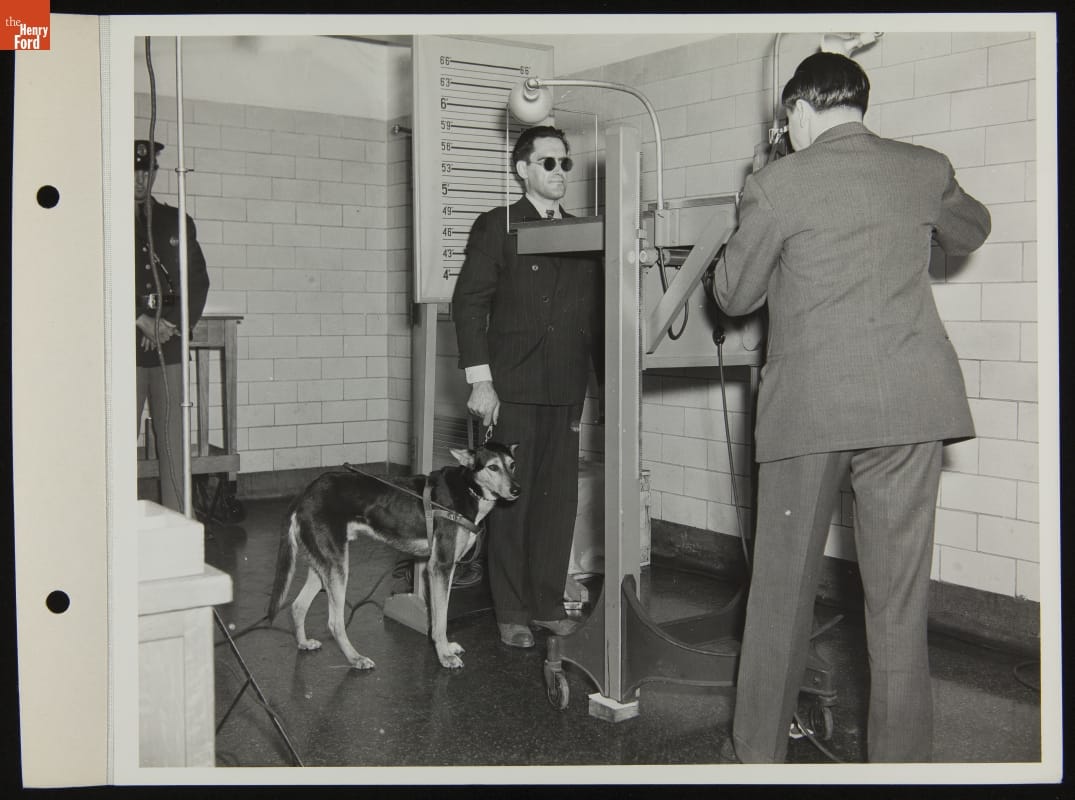
- Ford Employee Sylvester Rypkowski with Service Dog "Blackie," Being Photographed for ID Badge, October 1942 - Henry Ford believed in providing equal employment opportunities to people with disabilities -- a practice he began in the early years of his company. During World War II, Ford employed thousands of workers with disabilities. In October 1942, Ford Motor Company photographed Sylvester Rypkowski and his service dog, Blackie, as they became members of the Rouge plant's workforce.
- October 05, 1942
- Collections - Artifact
Ford Employee Sylvester Rypkowski with Service Dog "Blackie," Being Photographed for ID Badge, October 1942
Henry Ford believed in providing equal employment opportunities to people with disabilities -- a practice he began in the early years of his company. During World War II, Ford employed thousands of workers with disabilities. In October 1942, Ford Motor Company photographed Sylvester Rypkowski and his service dog, Blackie, as they became members of the Rouge plant's workforce.
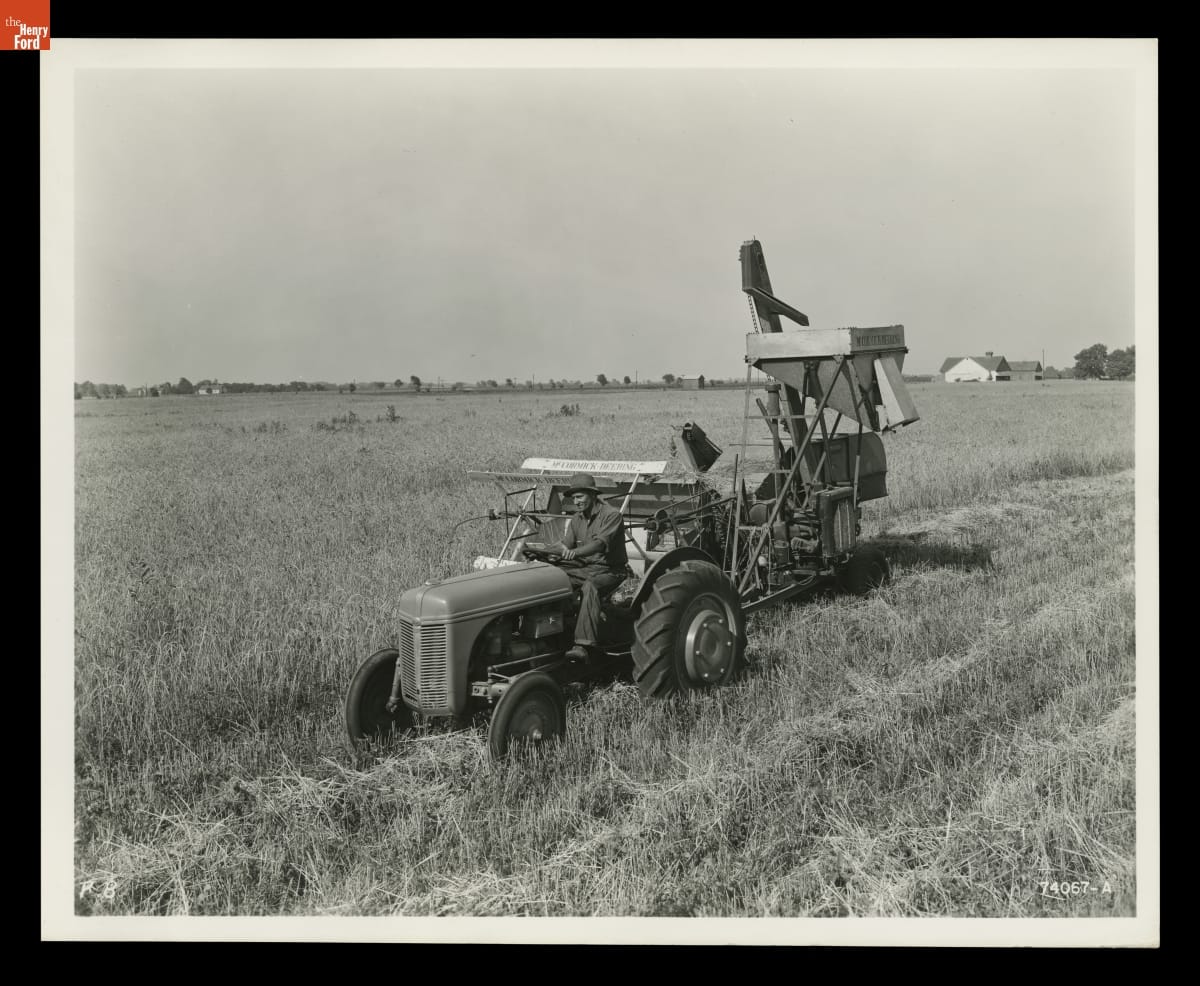
- Man Harvesting Wheat Using a Ford-Ferguson Tractor with Combine Attached, Indiana, August 1940 - Ford Motor Company introduced the 9N tractor in 1939. It featured the "Ferguson System:" a 3-point hydraulic hitch-and-lift system invented by Irishman Harry Ferguson. Ferguson's revolutionary hitch kept agricultural implements, like the combine seen here, in line with the tractor. It also provided stability. By 1940, nearly 8 percent of tractors sold in the U.S. were 9Ns.
- August 05, 1940
- Collections - Artifact
Man Harvesting Wheat Using a Ford-Ferguson Tractor with Combine Attached, Indiana, August 1940
Ford Motor Company introduced the 9N tractor in 1939. It featured the "Ferguson System:" a 3-point hydraulic hitch-and-lift system invented by Irishman Harry Ferguson. Ferguson's revolutionary hitch kept agricultural implements, like the combine seen here, in line with the tractor. It also provided stability. By 1940, nearly 8 percent of tractors sold in the U.S. were 9Ns.
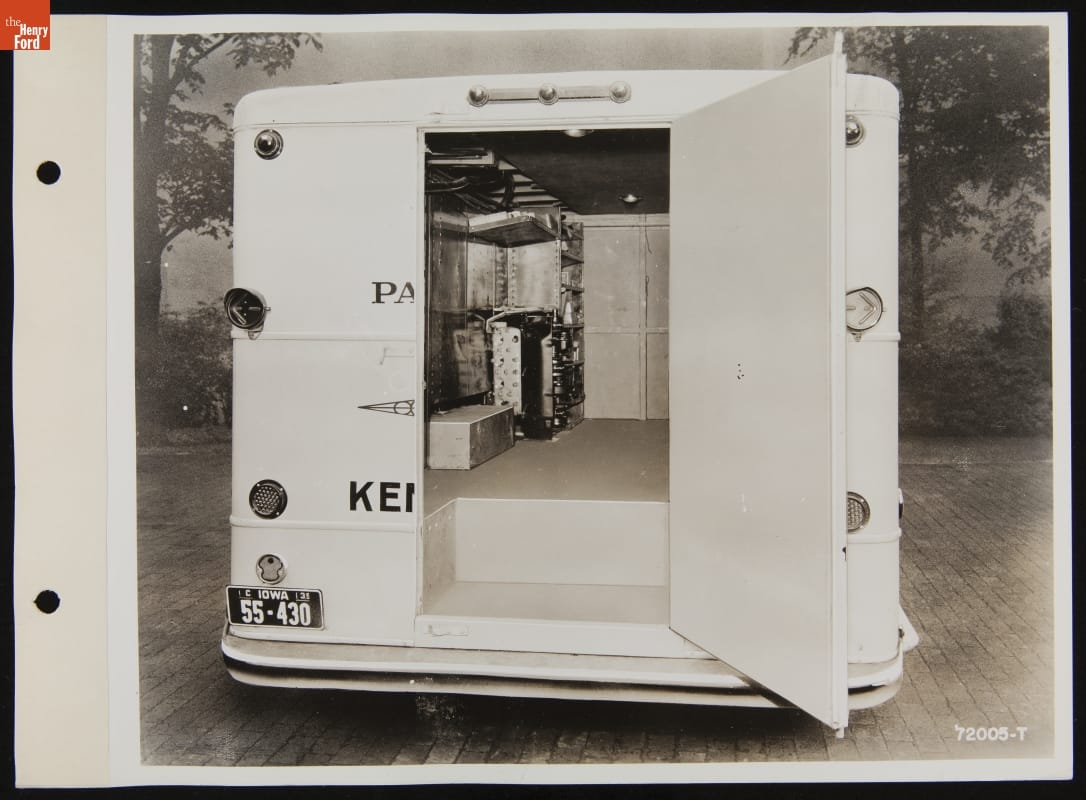
- Interior of Kent Motor Company Parts Delivery Truck, Alogona, Iowa, June 1939 - Ford Motor Company's truck lineup for 1939 included pickups, panel trucks, stake body and platform models, and sedan delivery vehicles. Larger commercial models were available in dump truck and cab-over-engine configurations. Power came from V-8 engines available with displacements of 136 or 221 cubic inches.
- June 23, 1939
- Collections - Artifact
Interior of Kent Motor Company Parts Delivery Truck, Alogona, Iowa, June 1939
Ford Motor Company's truck lineup for 1939 included pickups, panel trucks, stake body and platform models, and sedan delivery vehicles. Larger commercial models were available in dump truck and cab-over-engine configurations. Power came from V-8 engines available with displacements of 136 or 221 cubic inches.
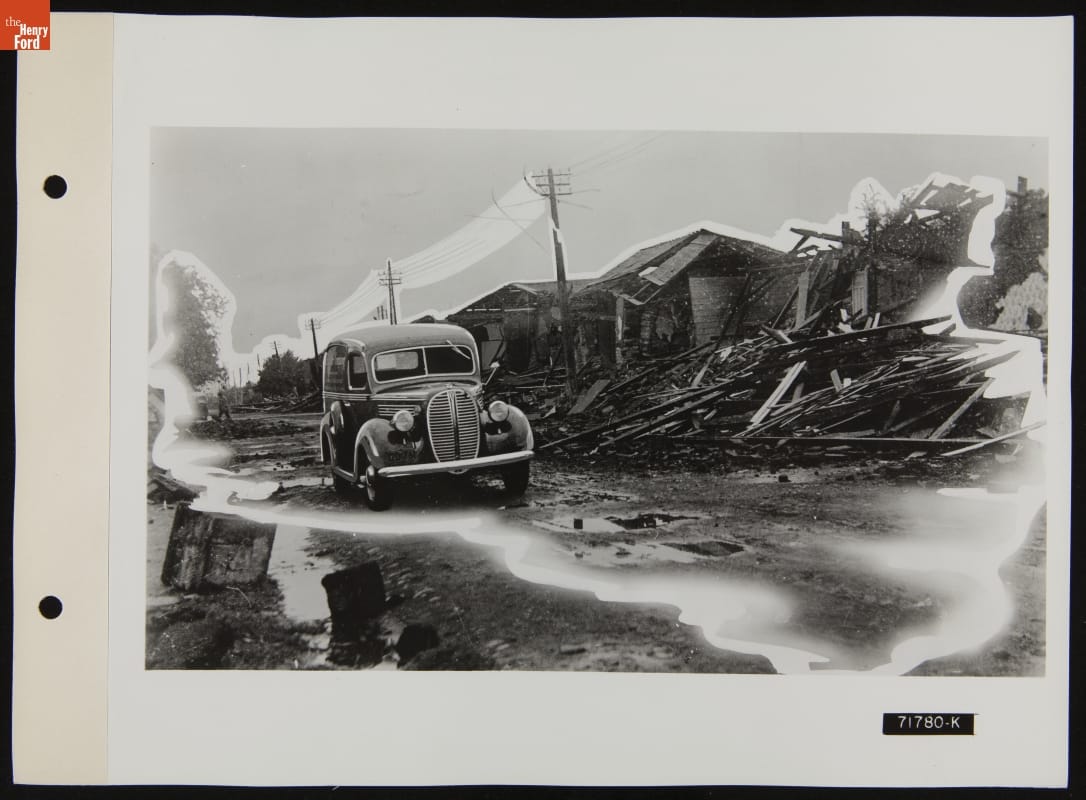
- Parts Delivery Car with Broken Down Buildings, Illustration in April 1939 Ford Merchandising Bulletin - Ford Motor Company's truck lineup for 1939 included pickups, panel trucks, stake body and platform models, and sedan delivery vehicles. Larger commercial models were available in dump truck and cab-over-engine configurations. Power came from V-8 engines available with displacements of 136 or 221 cubic inches.
- May 05, 1939
- Collections - Artifact
Parts Delivery Car with Broken Down Buildings, Illustration in April 1939 Ford Merchandising Bulletin
Ford Motor Company's truck lineup for 1939 included pickups, panel trucks, stake body and platform models, and sedan delivery vehicles. Larger commercial models were available in dump truck and cab-over-engine configurations. Power came from V-8 engines available with displacements of 136 or 221 cubic inches.
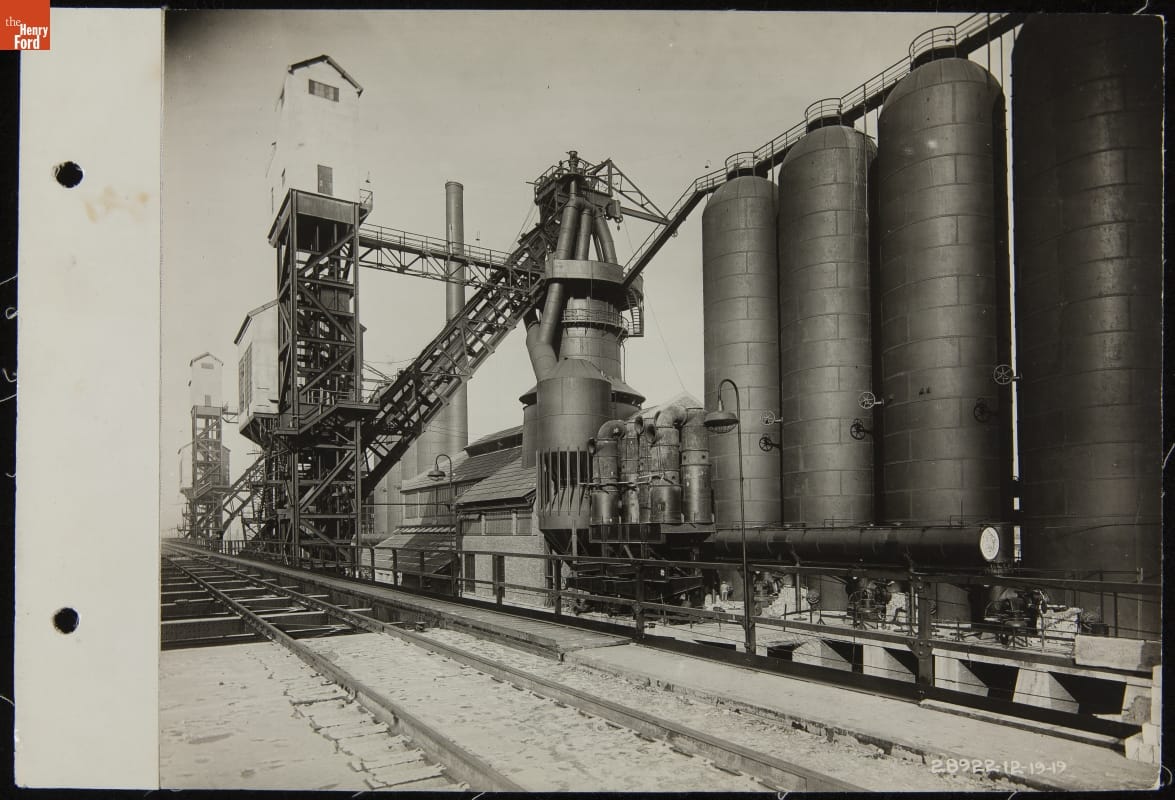
- Ford Motor Company Rouge Plant, December 1919 - Three blast furnaces at Ford's Rouge plant converted raw iron oxide ore into metallic iron. The furnaces were named for Henry Ford's grandsons. Blast Furnace A, the "Henry Ford II," opened in May 1920, while the identical Blast Furnace B, the "Benson Ford," followed in October 1922. The larger Blast Furnace C, the "William Clay Ford," opened in November 1948.
- December 19, 2019
- Collections - Artifact
Ford Motor Company Rouge Plant, December 1919
Three blast furnaces at Ford's Rouge plant converted raw iron oxide ore into metallic iron. The furnaces were named for Henry Ford's grandsons. Blast Furnace A, the "Henry Ford II," opened in May 1920, while the identical Blast Furnace B, the "Benson Ford," followed in October 1922. The larger Blast Furnace C, the "William Clay Ford," opened in November 1948.
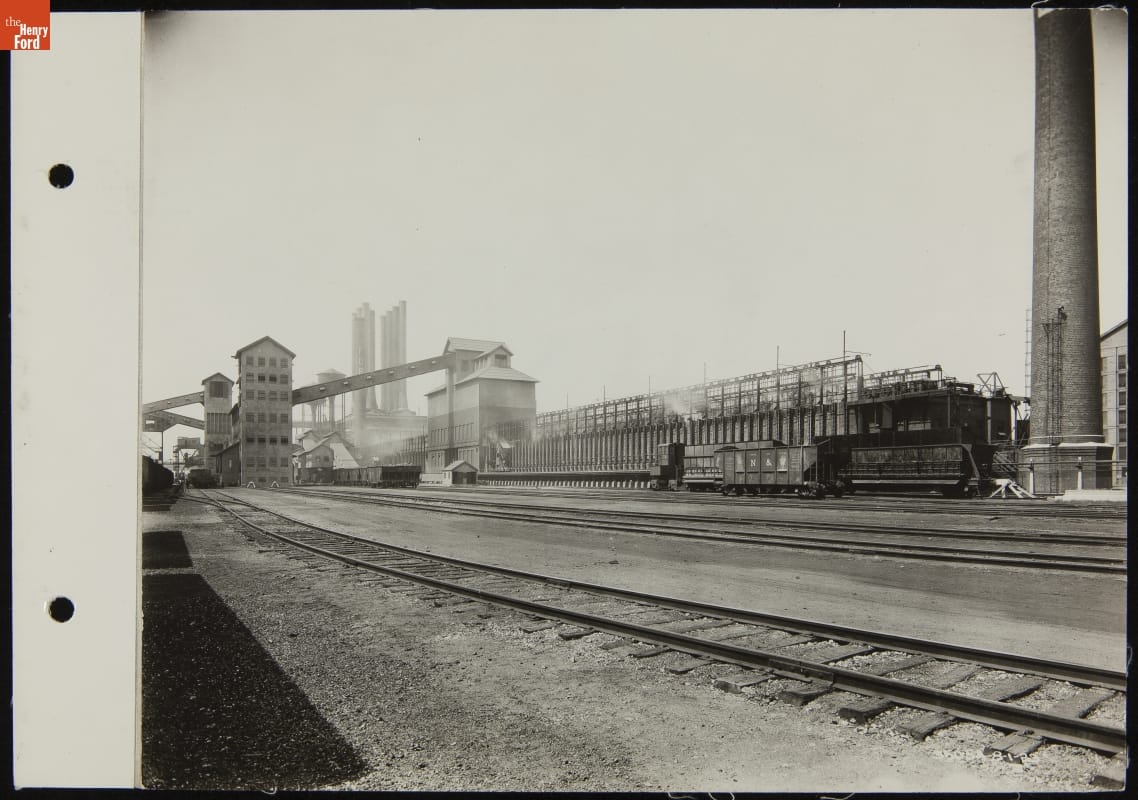
- Ford Motor Company Rouge Plant Coke Ovens from Southwest Corner, August 1923 - Coke ovens at Ford Motor Company's Rouge plant converted coal into high-carbon coke, used in the factory's blast furnaces to produce iron. In 1921, the Rouge's ovens could produce up to 3,600 tons of coke daily. New, more efficient coke ovens opened in 1937. The coking process also produced gas used to heat some of the factory's other furnaces.
- August 01, 1923
- Collections - Artifact
Ford Motor Company Rouge Plant Coke Ovens from Southwest Corner, August 1923
Coke ovens at Ford Motor Company's Rouge plant converted coal into high-carbon coke, used in the factory's blast furnaces to produce iron. In 1921, the Rouge's ovens could produce up to 3,600 tons of coke daily. New, more efficient coke ovens opened in 1937. The coking process also produced gas used to heat some of the factory's other furnaces.
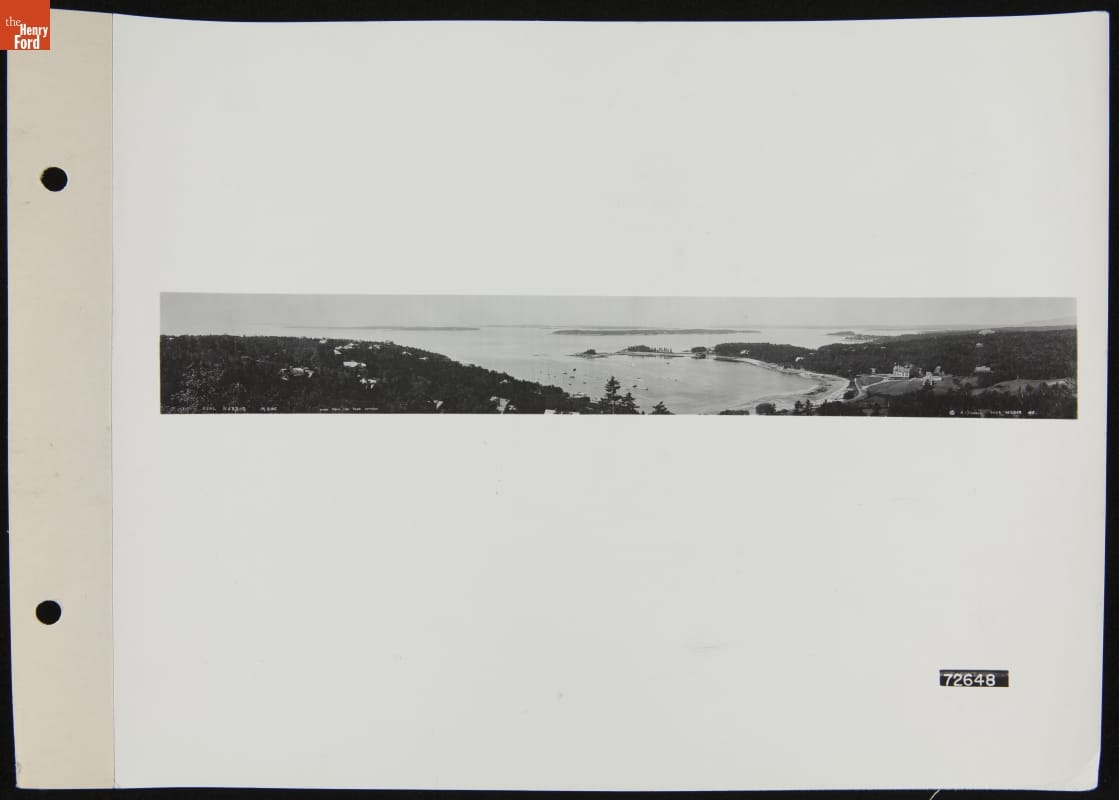
- Panoramic View of Seal Harbor, Maine, 1927 - In 1922, Edsel Ford purchased property in Seal Harbor, Maine, and began building his family's summer home. Philanthropist John D. Rockefeller, Jr., a fellow resident of the area, wrote congratulating Edsel on his selection -- the property offered the Fords splendid scenic views of the Maine coast. The letter initiated a friendship between the two that led to partnerships on various charitable causes.
- 1927
- Collections - Artifact
Panoramic View of Seal Harbor, Maine, 1927
In 1922, Edsel Ford purchased property in Seal Harbor, Maine, and began building his family's summer home. Philanthropist John D. Rockefeller, Jr., a fellow resident of the area, wrote congratulating Edsel on his selection -- the property offered the Fords splendid scenic views of the Maine coast. The letter initiated a friendship between the two that led to partnerships on various charitable causes.
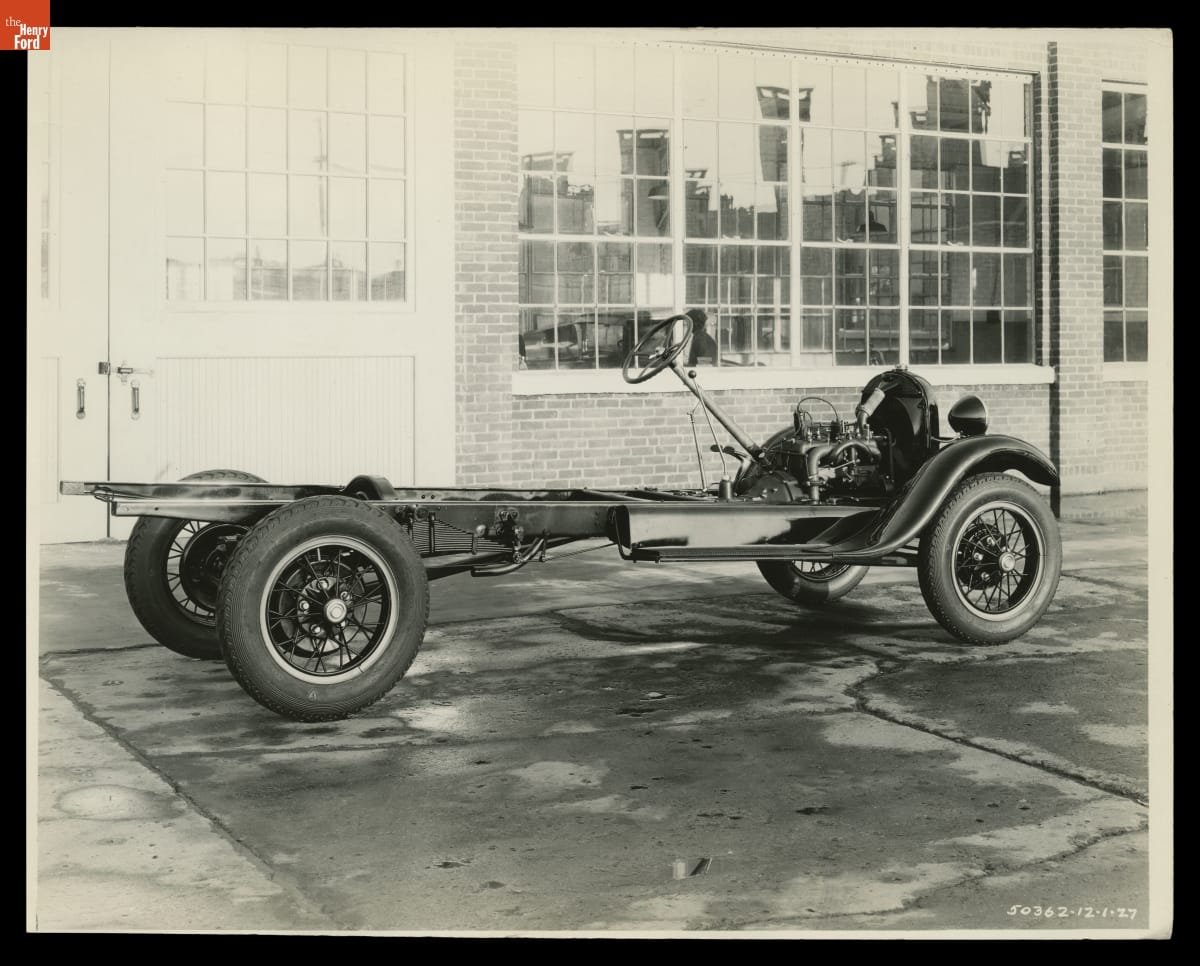
- 1928 Ford Model AA Truck Chassis, December 1927 - Ford Motor Company's Model AA truck was based on its Model A automobile platform, but with a longer wheelbase, a stronger frame, and generally sturdier chassis components. The Model AA was available in several body styles to permit its use as a panel truck, an express delivery truck, a garbage truck, a bus, or an ambulance, among other options.
- December 01, 1927
- Collections - Artifact
1928 Ford Model AA Truck Chassis, December 1927
Ford Motor Company's Model AA truck was based on its Model A automobile platform, but with a longer wheelbase, a stronger frame, and generally sturdier chassis components. The Model AA was available in several body styles to permit its use as a panel truck, an express delivery truck, a garbage truck, a bus, or an ambulance, among other options.