
Search
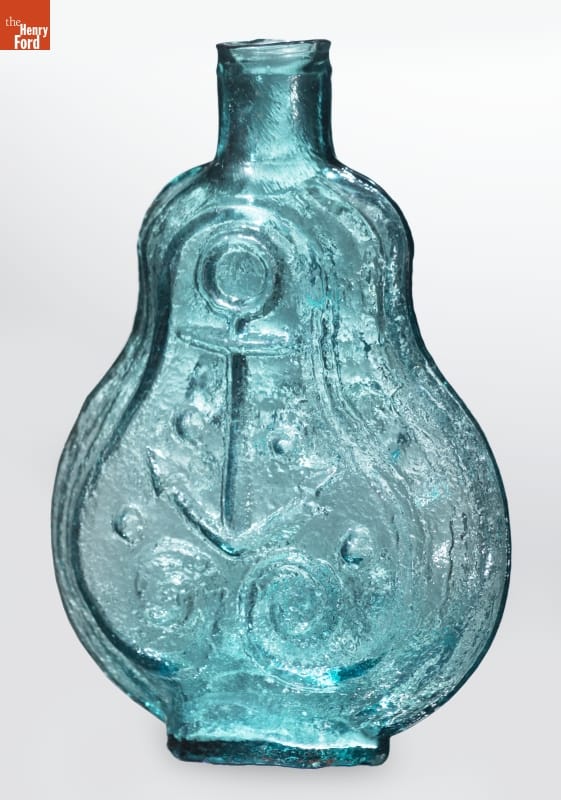
- Flask, 1830-1834 - Glass factories in America began producing inexpensive, mold-formed flasks in the early 1800s. These figured flasks appealed to America's common man. Many of these flasks contained symbols of national pride or political or cultural affiliation. Embellishments on other flasks, like this one, were purely decorative, though you will find an anchor -- a symbol of hope -- on the reverse.
- 1830-1834
- Collections - Artifact
Flask, 1830-1834
Glass factories in America began producing inexpensive, mold-formed flasks in the early 1800s. These figured flasks appealed to America's common man. Many of these flasks contained symbols of national pride or political or cultural affiliation. Embellishments on other flasks, like this one, were purely decorative, though you will find an anchor -- a symbol of hope -- on the reverse.
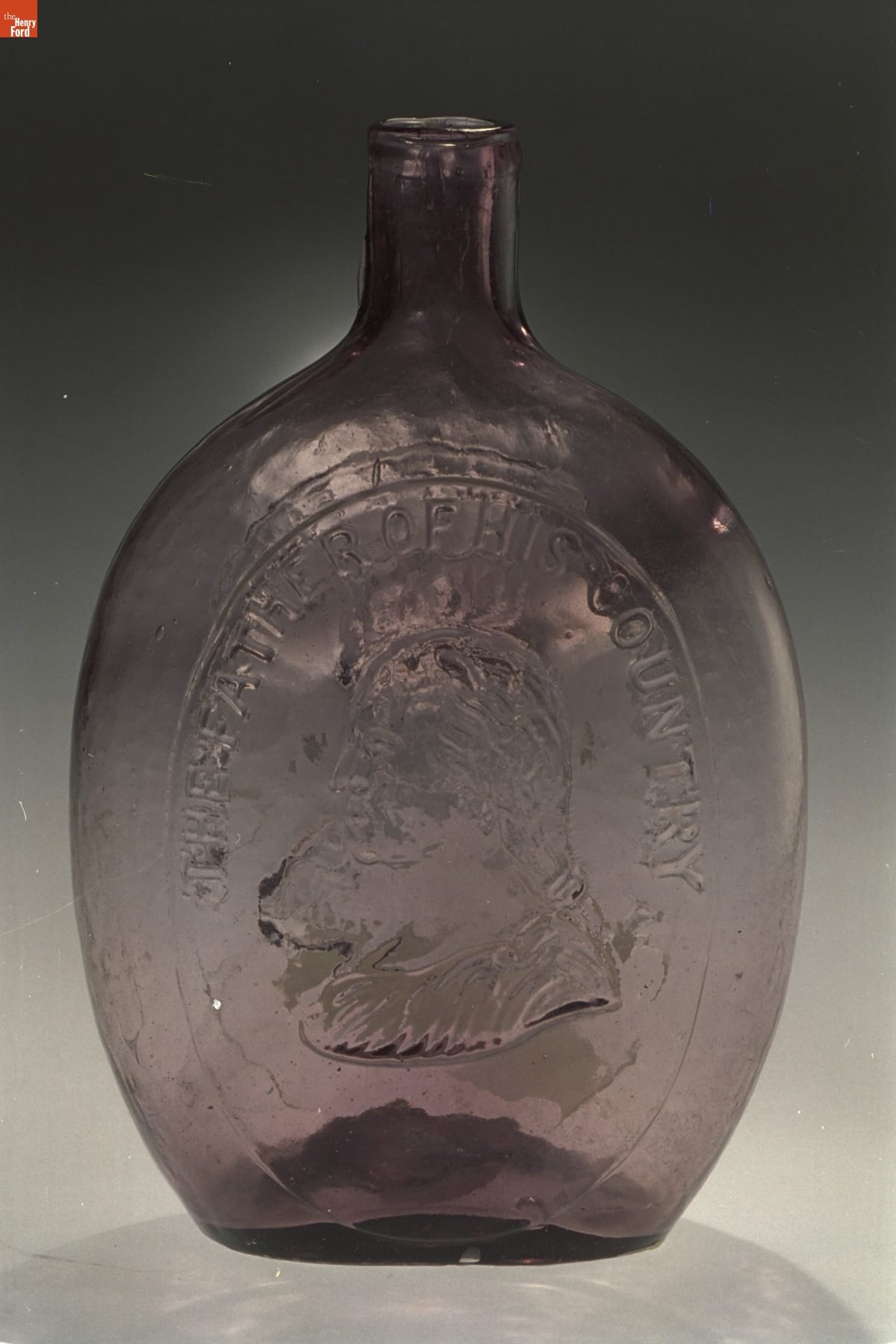
- Flask, 1846-1850 - Whether depicted as commander-in-chief, the first president of the United States, or a symbol of the republic, George Washington is a common likeness on early American flasks. Washington appears on 72 recorded flask designs--more than any other person. This example depicts Washington as a classical statesman with major general Zachary Taylor, who became the 12th United States president in 1849.
- 1846-1850
- Collections - Artifact
Flask, 1846-1850
Whether depicted as commander-in-chief, the first president of the United States, or a symbol of the republic, George Washington is a common likeness on early American flasks. Washington appears on 72 recorded flask designs--more than any other person. This example depicts Washington as a classical statesman with major general Zachary Taylor, who became the 12th United States president in 1849.
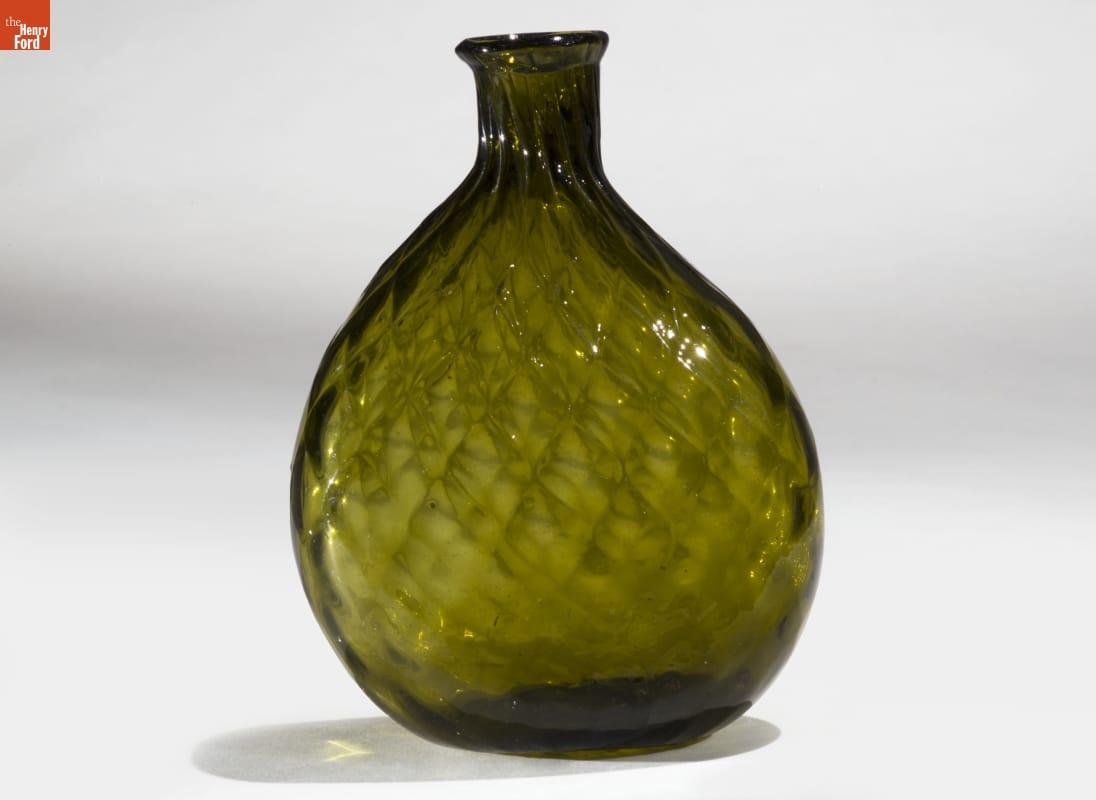
- Flask, 1821-1829 - American glass factories produced flasks, like this one, from the late 1700s well into the mid-1800s. The pint-sized flask could hold water but more likely contained alcoholic beverages. Its textured decorative exterior -- formed when the hot glass was dipped into a pattern mold before it was blown -- made the flask easier to grasp. And its flattened shape fit nicely into pockets providing ready access to the liquid refreshment.
- 1821-1829
- Collections - Artifact
Flask, 1821-1829
American glass factories produced flasks, like this one, from the late 1700s well into the mid-1800s. The pint-sized flask could hold water but more likely contained alcoholic beverages. Its textured decorative exterior -- formed when the hot glass was dipped into a pattern mold before it was blown -- made the flask easier to grasp. And its flattened shape fit nicely into pockets providing ready access to the liquid refreshment.
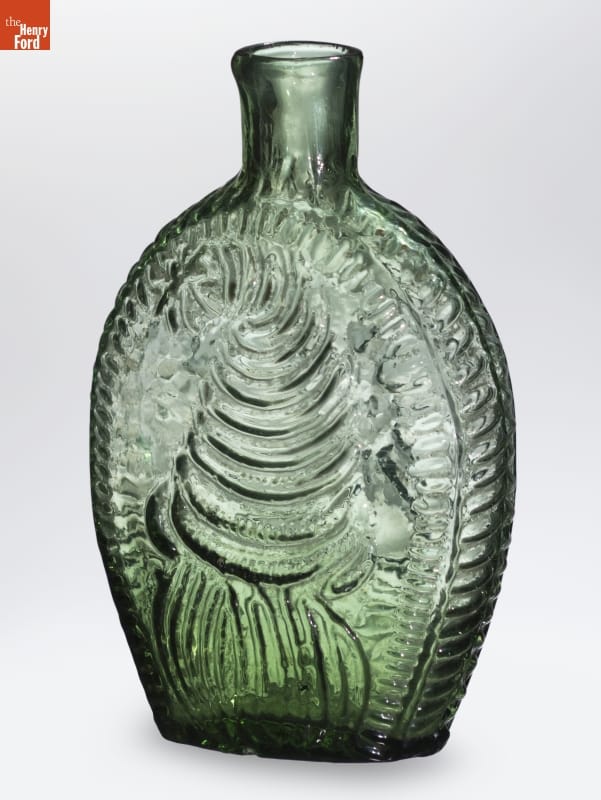
- Flask, 1825-1835 - Glass factories in America began producing inexpensive, mold-formed flasks in the early 1800s. These figured flasks, often decorated with symbols of national pride or political or cultural affiliation, appealed to America's common man. The inverted cornucopia found on the front of this flask alludes to America's bounty. The other side has a decorative star-shape design.
- 1825-1835
- Collections - Artifact
Flask, 1825-1835
Glass factories in America began producing inexpensive, mold-formed flasks in the early 1800s. These figured flasks, often decorated with symbols of national pride or political or cultural affiliation, appealed to America's common man. The inverted cornucopia found on the front of this flask alludes to America's bounty. The other side has a decorative star-shape design.
- Flask, 1859-1875 - Glass factories in America began producing inexpensive, mold-formed flasks in the early 1800s. These figured flasks, often decorated with symbols of national pride or political or cultural affiliation, appealed to America's common man. This flask contains images of an eagle and a prospector. This "prospector" however appears to be more interested in drinking from his bottle than in striking it rich.
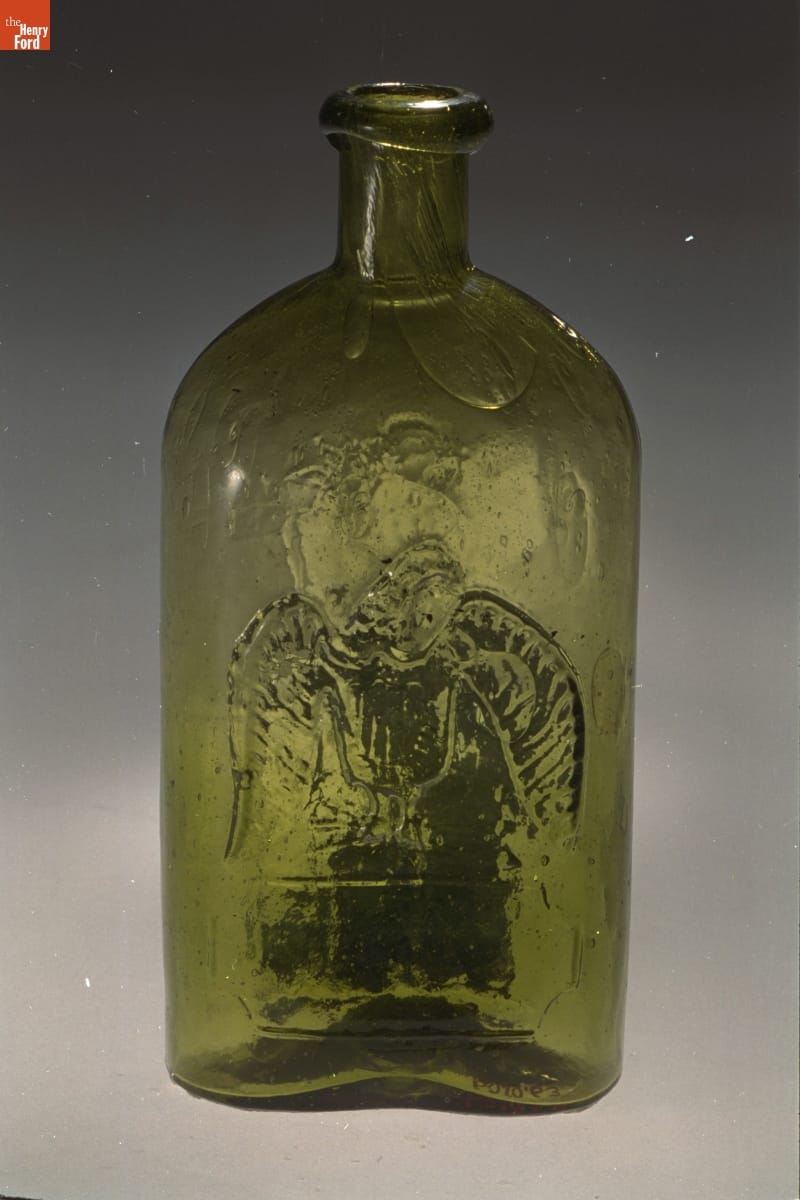
- 1859-1875
- Collections - Artifact
Flask, 1859-1875
Glass factories in America began producing inexpensive, mold-formed flasks in the early 1800s. These figured flasks, often decorated with symbols of national pride or political or cultural affiliation, appealed to America's common man. This flask contains images of an eagle and a prospector. This "prospector" however appears to be more interested in drinking from his bottle than in striking it rich.
- Flask, 1870-1890 - Glass factories in America began producing inexpensive, mold-formed flasks in the early 1800s. These figured flasks often were decorated with symbols of national pride or political or cultural affiliation. This late-century flask with its image of a hunting dog on the reverse may have appealed to hunters and sportsmen.
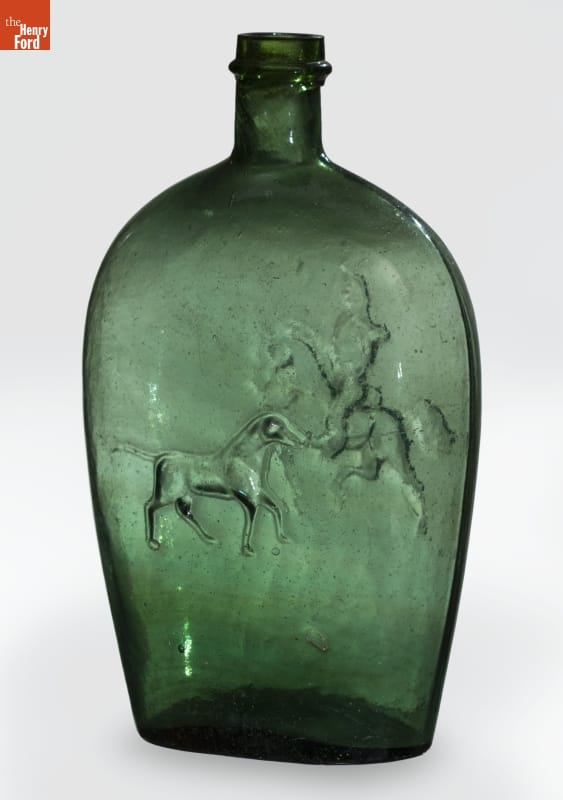
- 1870-1890
- Collections - Artifact
Flask, 1870-1890
Glass factories in America began producing inexpensive, mold-formed flasks in the early 1800s. These figured flasks often were decorated with symbols of national pride or political or cultural affiliation. This late-century flask with its image of a hunting dog on the reverse may have appealed to hunters and sportsmen.
- Flask, 1840-1855 - Glass factories in America began producing inexpensive, mold-formed flasks in the early 1800s. These figured flasks appealed to America's common man. Many of these flasks contained symbols of national pride or political or cultural affiliation. Embellishments on other flasks, like this one, were purely decorative.
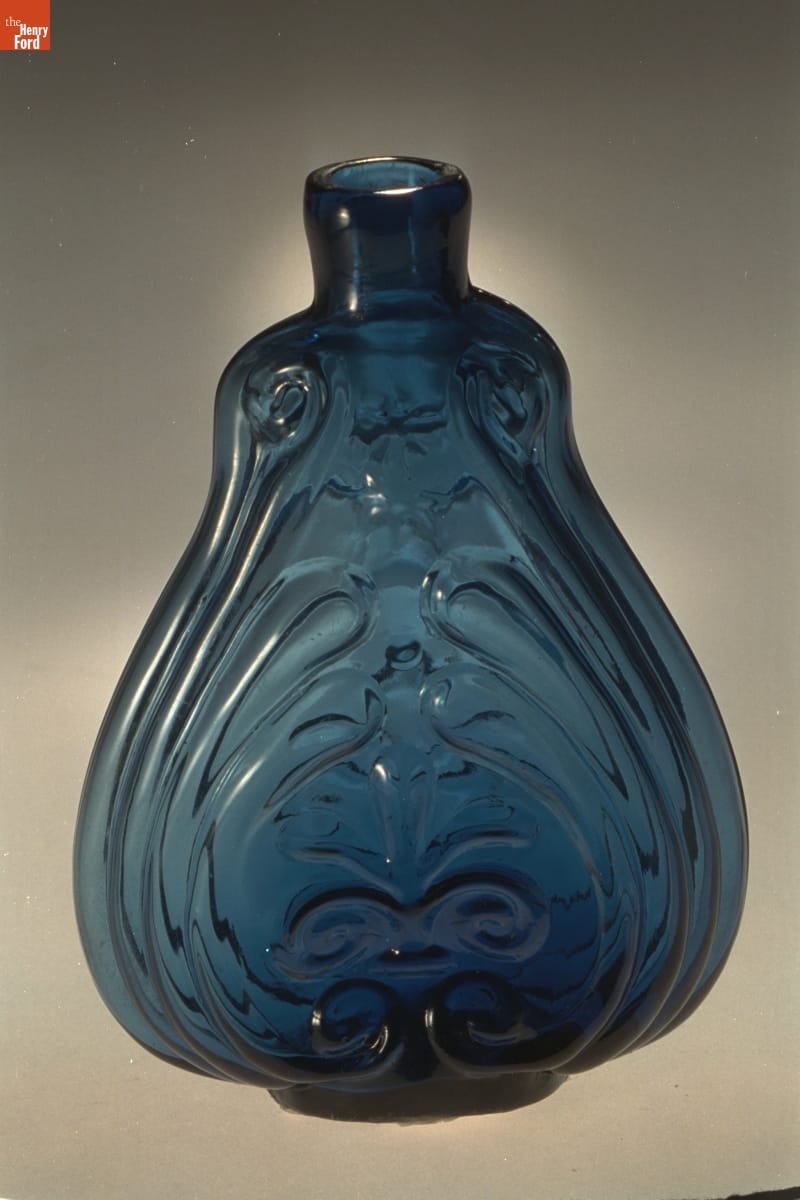
- 1840-1855
- Collections - Artifact
Flask, 1840-1855
Glass factories in America began producing inexpensive, mold-formed flasks in the early 1800s. These figured flasks appealed to America's common man. Many of these flasks contained symbols of national pride or political or cultural affiliation. Embellishments on other flasks, like this one, were purely decorative.
- Bottle, 1815-1840 -
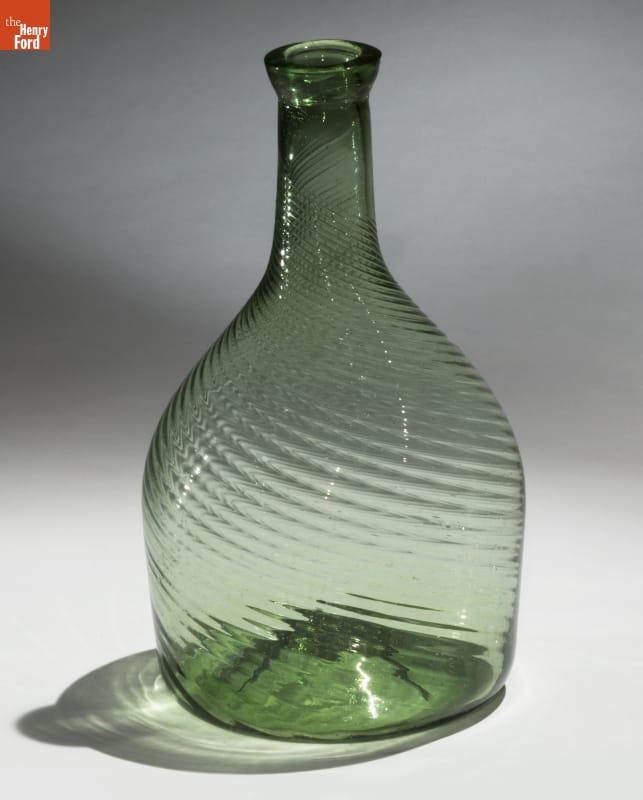
- 1815-1840
- Collections - Artifact
Bottle, 1815-1840
- Flask, 1800-1840 - American glass factories produced flasks, like this one, from the late 1700s well into the mid-1800s. The pint-sized flask could hold water but more likely contained alcoholic beverages. Its textured decorative exterior -- formed when the hot glass was dipped into a pattern mold before it was blown -- made the flask easier to grasp. And its flattened shape fit nicely into pockets providing ready access to the liquid refreshment.
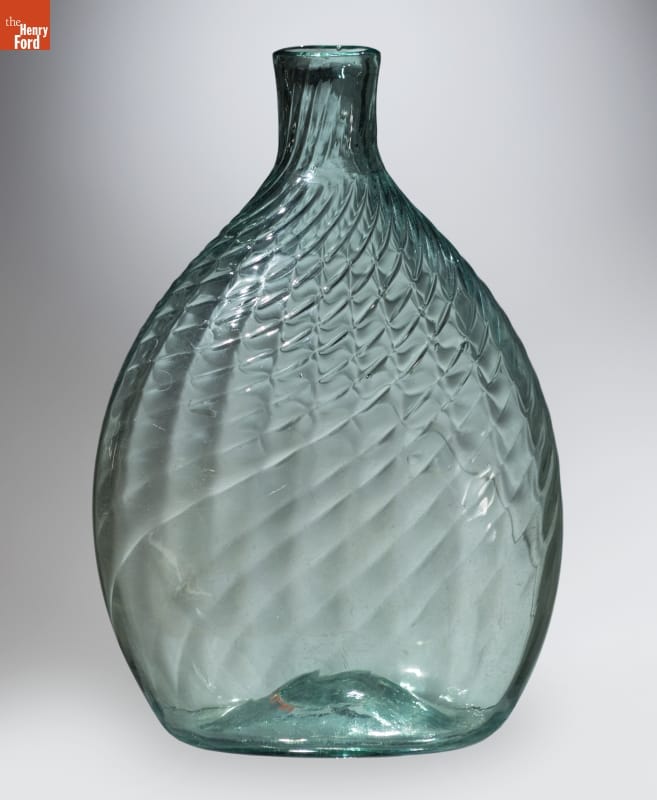
- 1800-1840
- Collections - Artifact
Flask, 1800-1840
American glass factories produced flasks, like this one, from the late 1700s well into the mid-1800s. The pint-sized flask could hold water but more likely contained alcoholic beverages. Its textured decorative exterior -- formed when the hot glass was dipped into a pattern mold before it was blown -- made the flask easier to grasp. And its flattened shape fit nicely into pockets providing ready access to the liquid refreshment.
- Pocket Bottle, 1800-1840 -
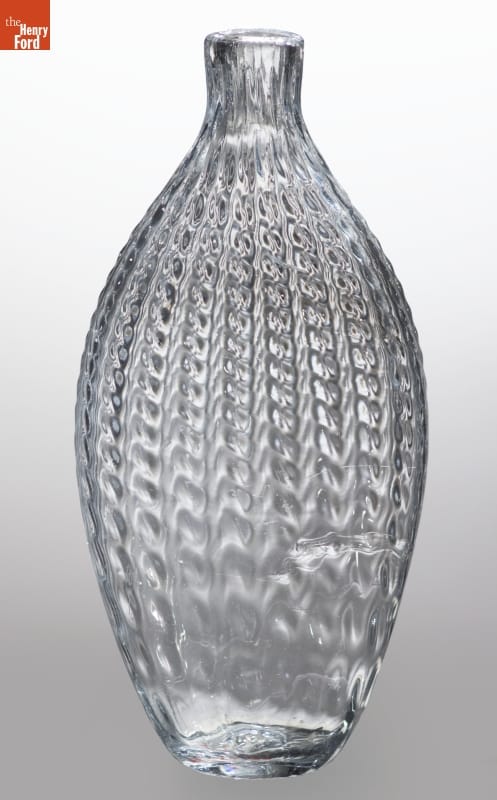
- 1800-1840
- Collections - Artifact
Pocket Bottle, 1800-1840