
Search
- "Hi! - and a Happy Birthday to You!," circa 1980 - Gwen Frostic (1906-2001) was an artist, author, poet, entrepreneur, and nature lover. In the 1940s, Frostic bought a printing press and started a printing business doing commercial jobs, but most notably, she carefully carved linoleum blocks to create nature-inspired works of art. Frostic created block prints for the next fifty years that graced her books, note cards, and greeting cards.
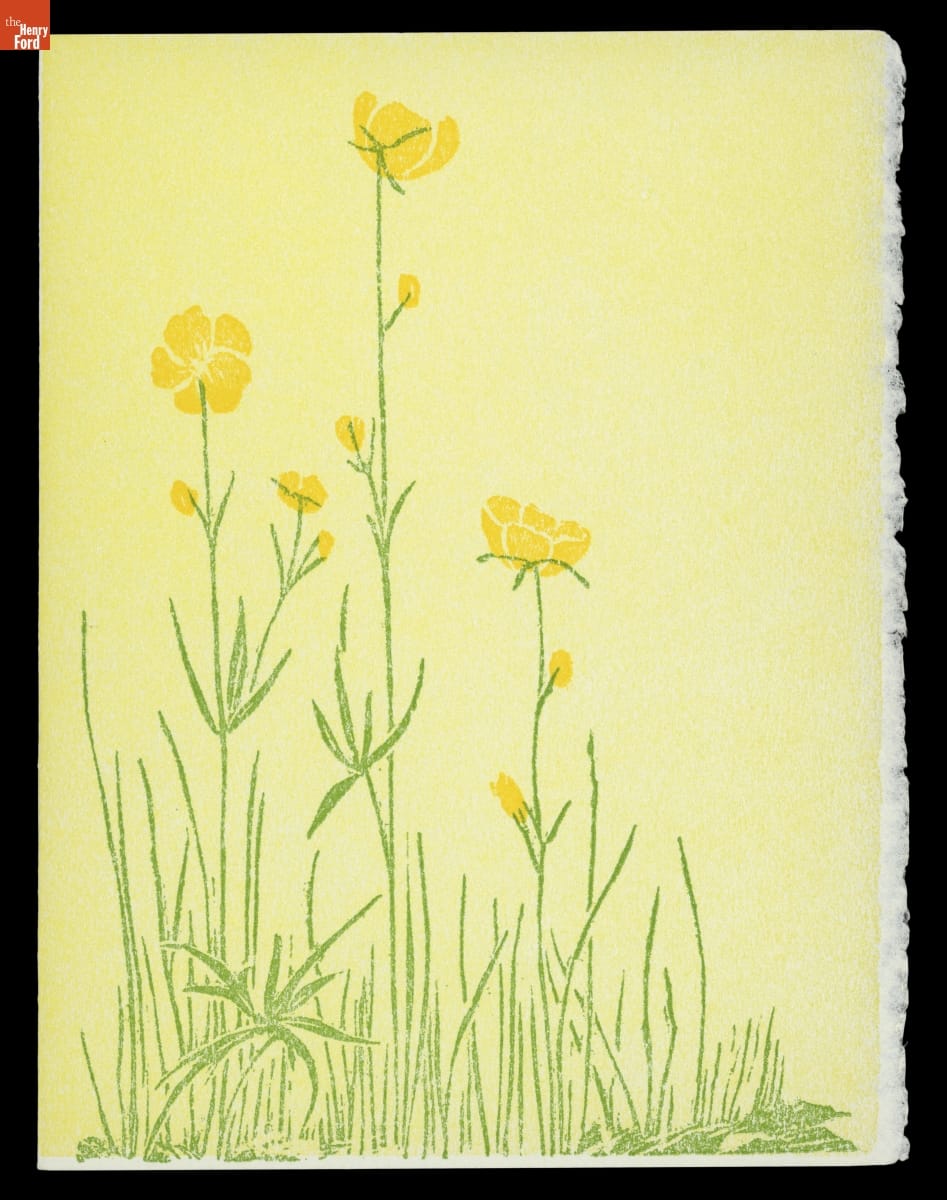
- circa 1980
- Collections - Artifact
"Hi! - and a Happy Birthday to You!," circa 1980
Gwen Frostic (1906-2001) was an artist, author, poet, entrepreneur, and nature lover. In the 1940s, Frostic bought a printing press and started a printing business doing commercial jobs, but most notably, she carefully carved linoleum blocks to create nature-inspired works of art. Frostic created block prints for the next fifty years that graced her books, note cards, and greeting cards.
- Easter Greeting Card, "Sweet Peace Within Your Heart Remain Till Sunny Easter Comes Again," 1905 - Sending greeting cards and postcards for the Easter holiday became popular in the United States by the 1880s. Publishers made cards with themes of a religious nature as well as secular decorations to celebrate the arrival of spring. Artists working for these publishers illustrated the cards with images symbolic of the season, such as crosses, angels, flowers, eggs, children, birds, and rabbits.
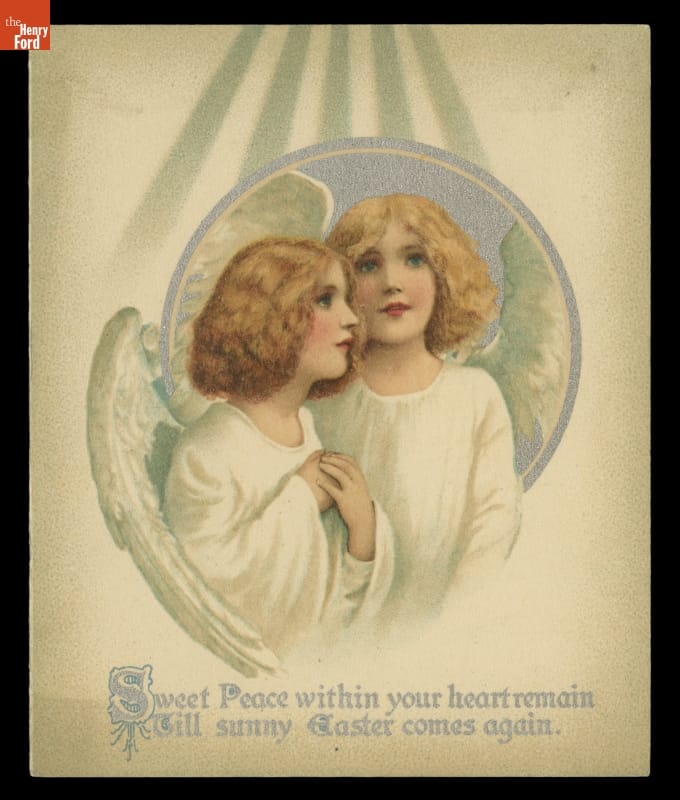
- circa 1905
- Collections - Artifact
Easter Greeting Card, "Sweet Peace Within Your Heart Remain Till Sunny Easter Comes Again," 1905
Sending greeting cards and postcards for the Easter holiday became popular in the United States by the 1880s. Publishers made cards with themes of a religious nature as well as secular decorations to celebrate the arrival of spring. Artists working for these publishers illustrated the cards with images symbolic of the season, such as crosses, angels, flowers, eggs, children, birds, and rabbits.
- Easter Telegram, "Easter Greeting by Western Union," 1938 - Telegraph companies in the early 20th century wanted people to send more telegrams, but many average Americans were wary of them -- the few these customers received (or sent) usually relayed urgent, sometimes tragic, news. Telegraph companies created colorful telegrams with matching envelopes to convey good wishes especially for holidays. These designs helped allay the recipient's fear of receiving bad news.
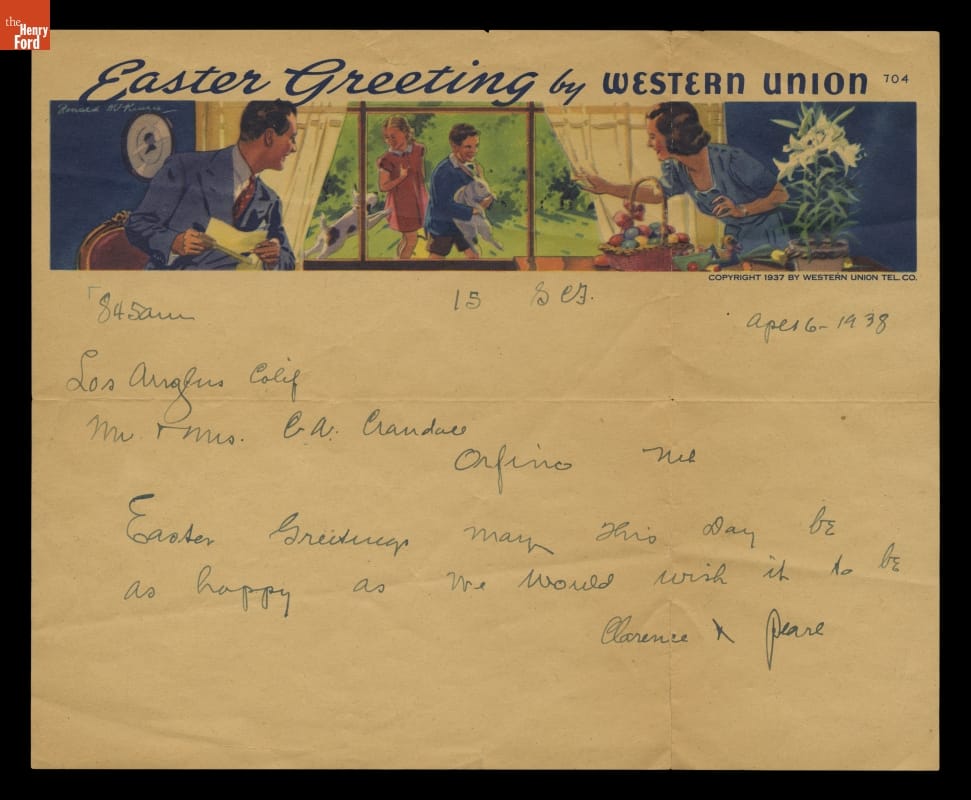
- April 08, 1938
- Collections - Artifact
Easter Telegram, "Easter Greeting by Western Union," 1938
Telegraph companies in the early 20th century wanted people to send more telegrams, but many average Americans were wary of them -- the few these customers received (or sent) usually relayed urgent, sometimes tragic, news. Telegraph companies created colorful telegrams with matching envelopes to convey good wishes especially for holidays. These designs helped allay the recipient's fear of receiving bad news.
- "Somebody's Birthday," 1925-1935 -
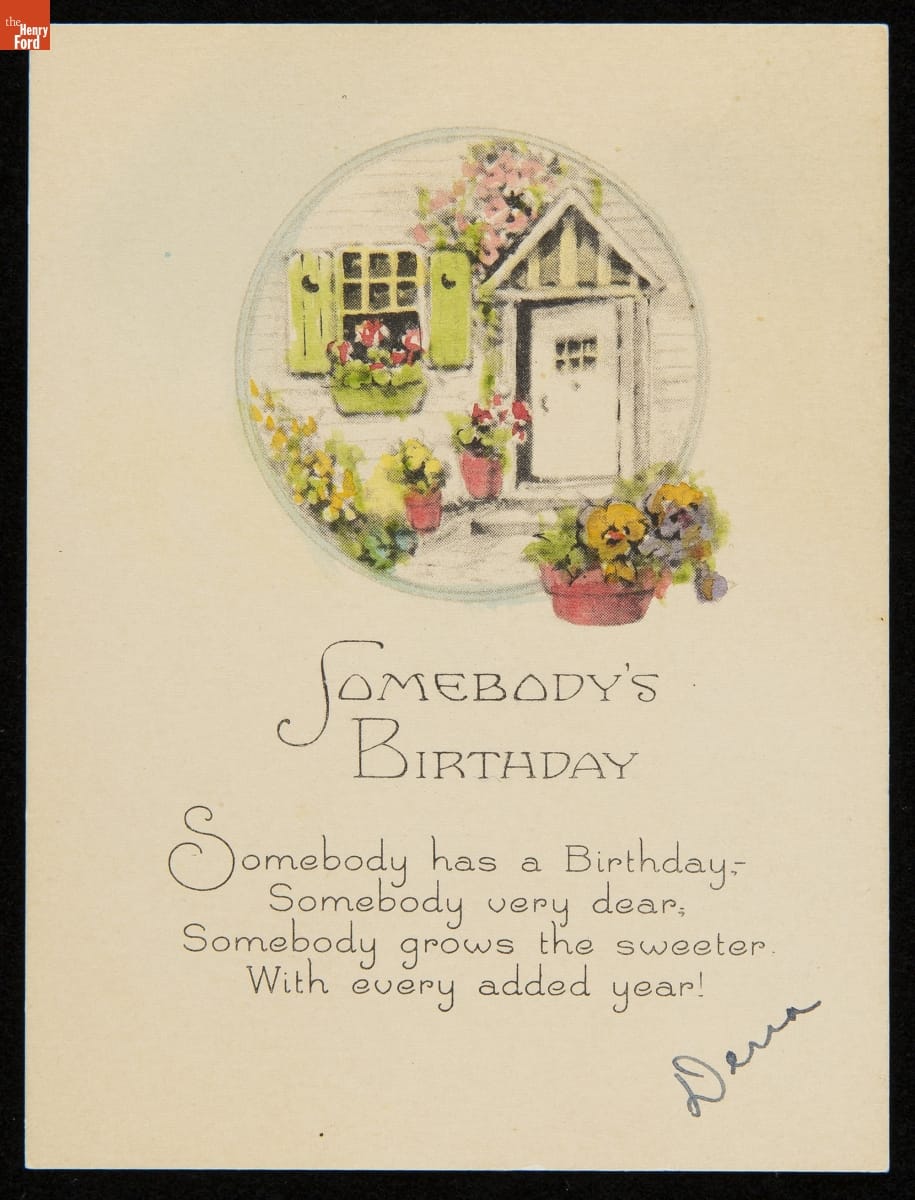
- 1925-1935
- Collections - Artifact
"Somebody's Birthday," 1925-1935
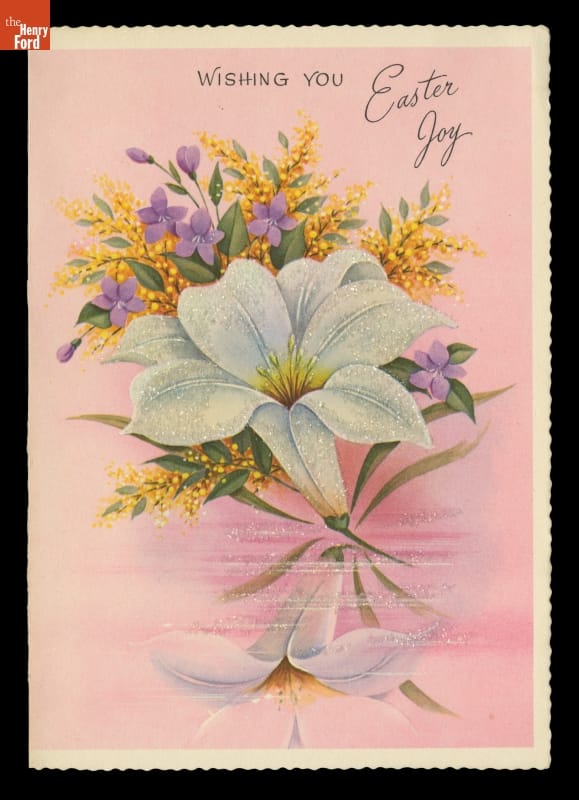
- Easter Greeting Card, "Wishing You Easter Joy," circa 1960 - Sending greeting cards and postcards for the Easter holiday became popular in the United States by the 1880s. Publishers made cards with themes of a religious nature as well as secular decorations to celebrate the arrival of spring. Artists working for these publishers illustrated the cards with images symbolic of the season, such as crosses, angels, flowers, eggs, children, birds, and rabbits.
- circa 1960
- Collections - Artifact
Easter Greeting Card, "Wishing You Easter Joy," circa 1960
Sending greeting cards and postcards for the Easter holiday became popular in the United States by the 1880s. Publishers made cards with themes of a religious nature as well as secular decorations to celebrate the arrival of spring. Artists working for these publishers illustrated the cards with images symbolic of the season, such as crosses, angels, flowers, eggs, children, birds, and rabbits.
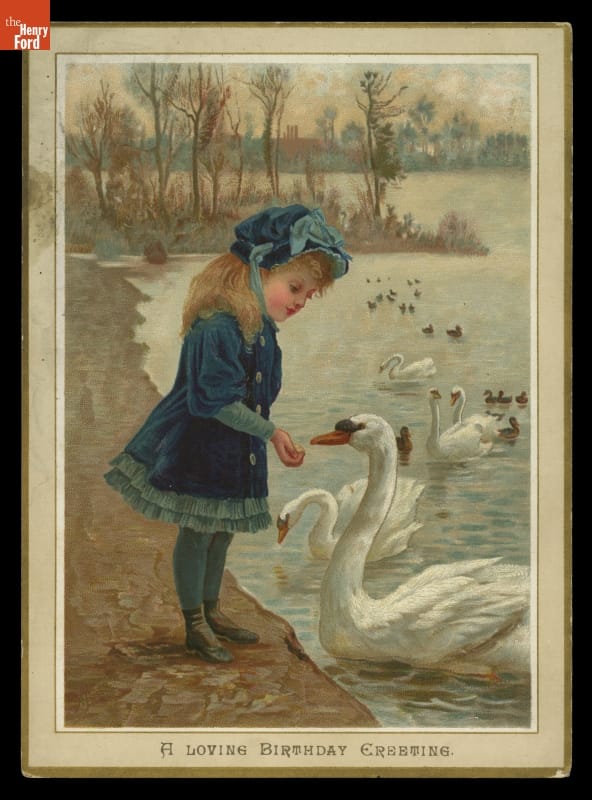
- Birthday Card, "A Loving Birthday Greeting," circa 1885 -
- circa 1885
- Collections - Artifact
Birthday Card, "A Loving Birthday Greeting," circa 1885
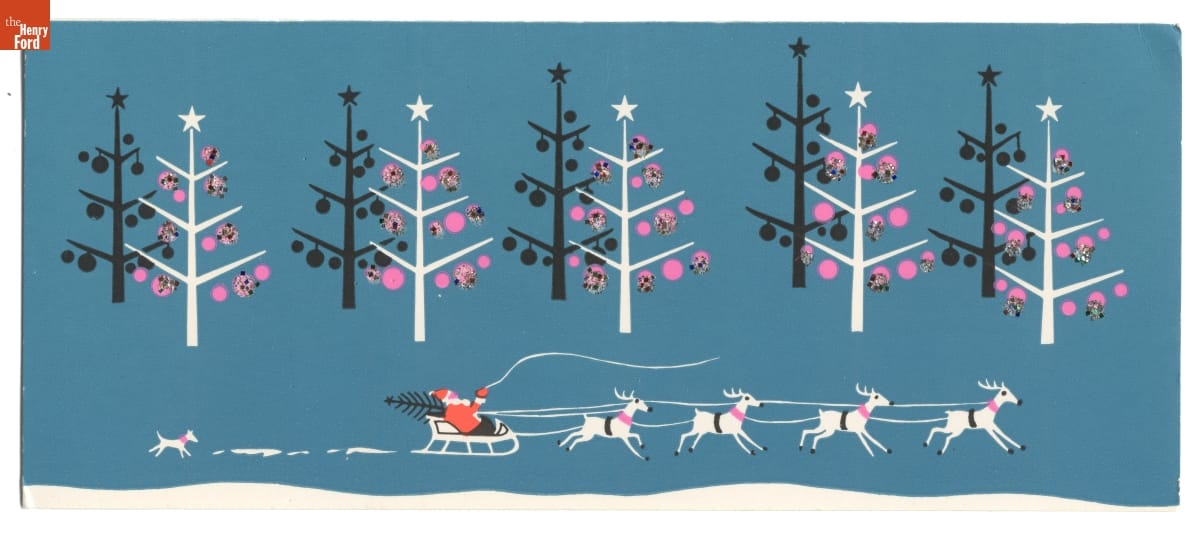
- Christmas Card, 1956 - Mailing colorful, commercially designed greeting cards was a 20th-century American tradition. During the holidays, friends and neighbors commonly exchanged cards wishing one another a Merry Christmas or Happy New Year. The use of pink - a non-traditional holiday color - in this 1950s example reflects popular tastes of the time.
- 1956
- Collections - Artifact
Christmas Card, 1956
Mailing colorful, commercially designed greeting cards was a 20th-century American tradition. During the holidays, friends and neighbors commonly exchanged cards wishing one another a Merry Christmas or Happy New Year. The use of pink - a non-traditional holiday color - in this 1950s example reflects popular tastes of the time.
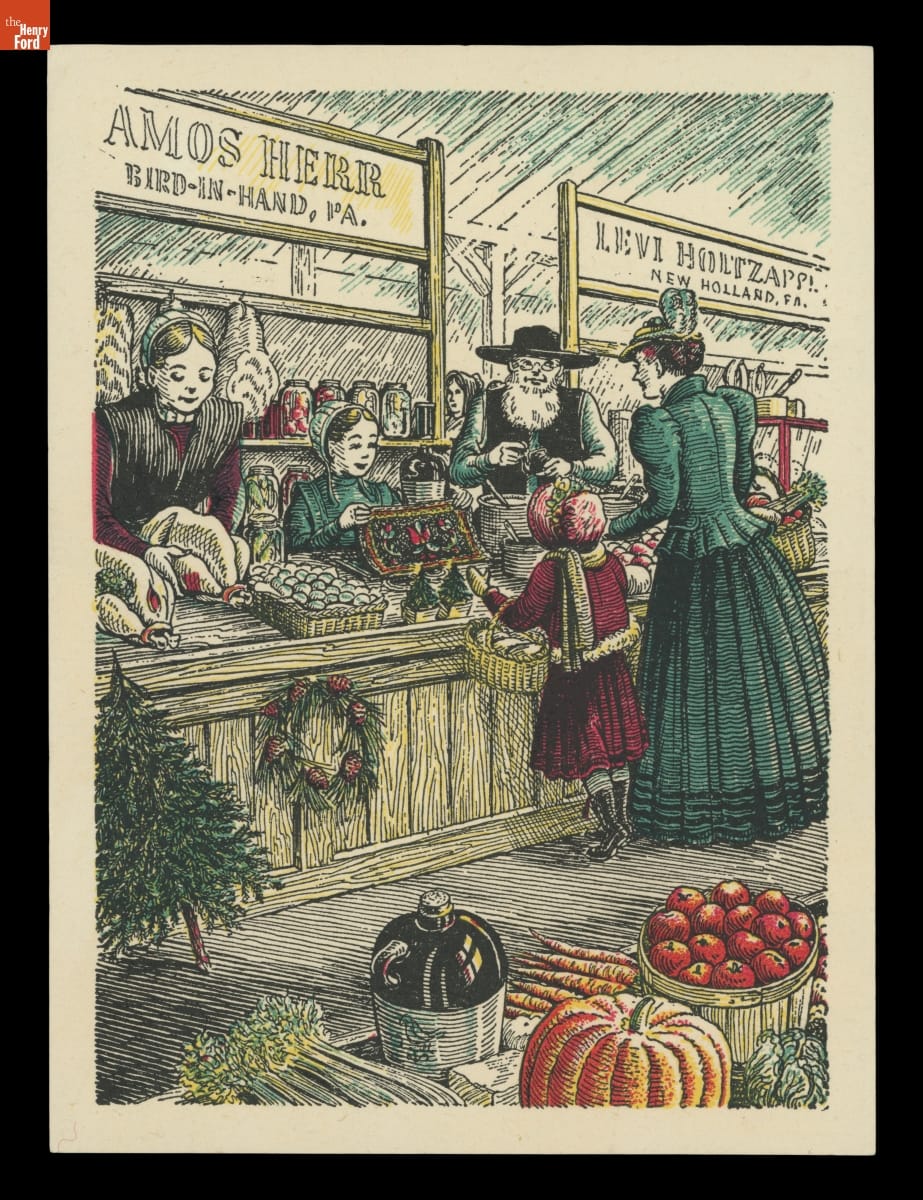
- Christmas Shopping at a General Store, Christmas Card, circa 1950 -
- circa 1950
- Collections - Artifact
Christmas Shopping at a General Store, Christmas Card, circa 1950
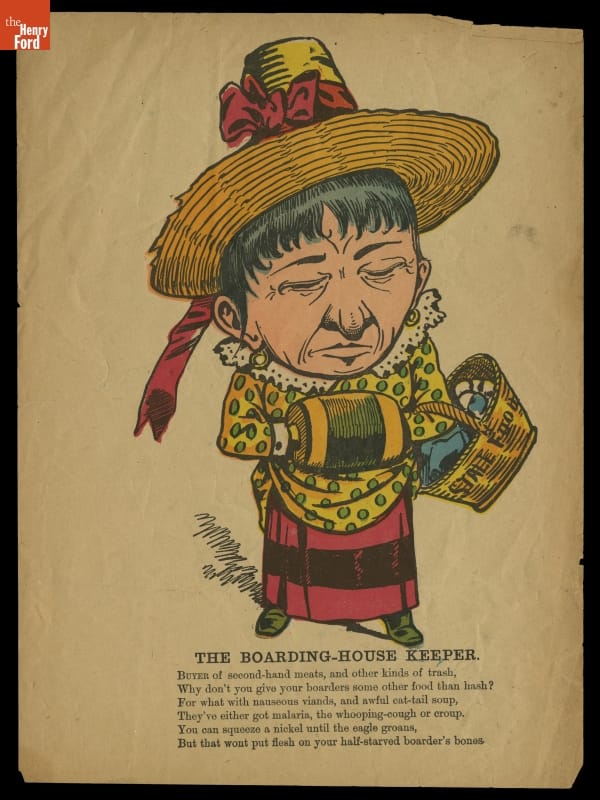
- Comic Valentine, "The Boarding-House Keeper," circa 1885 - From the 1840s into the early 1900s, some people sent inexpensive Valentine's Day greetings that chided, warned, or insulted the recipient. An exaggerated, often garish cartoon and short verse described and dismissed someone's looks, intelligence, personality, or behavior. Within the atmosphere of a festive holiday, under the cover of humor, these "vinegar valentines" were acceptable critiques of behaviors that deviated from social norms.
- circa 1885
- Collections - Artifact
Comic Valentine, "The Boarding-House Keeper," circa 1885
From the 1840s into the early 1900s, some people sent inexpensive Valentine's Day greetings that chided, warned, or insulted the recipient. An exaggerated, often garish cartoon and short verse described and dismissed someone's looks, intelligence, personality, or behavior. Within the atmosphere of a festive holiday, under the cover of humor, these "vinegar valentines" were acceptable critiques of behaviors that deviated from social norms.
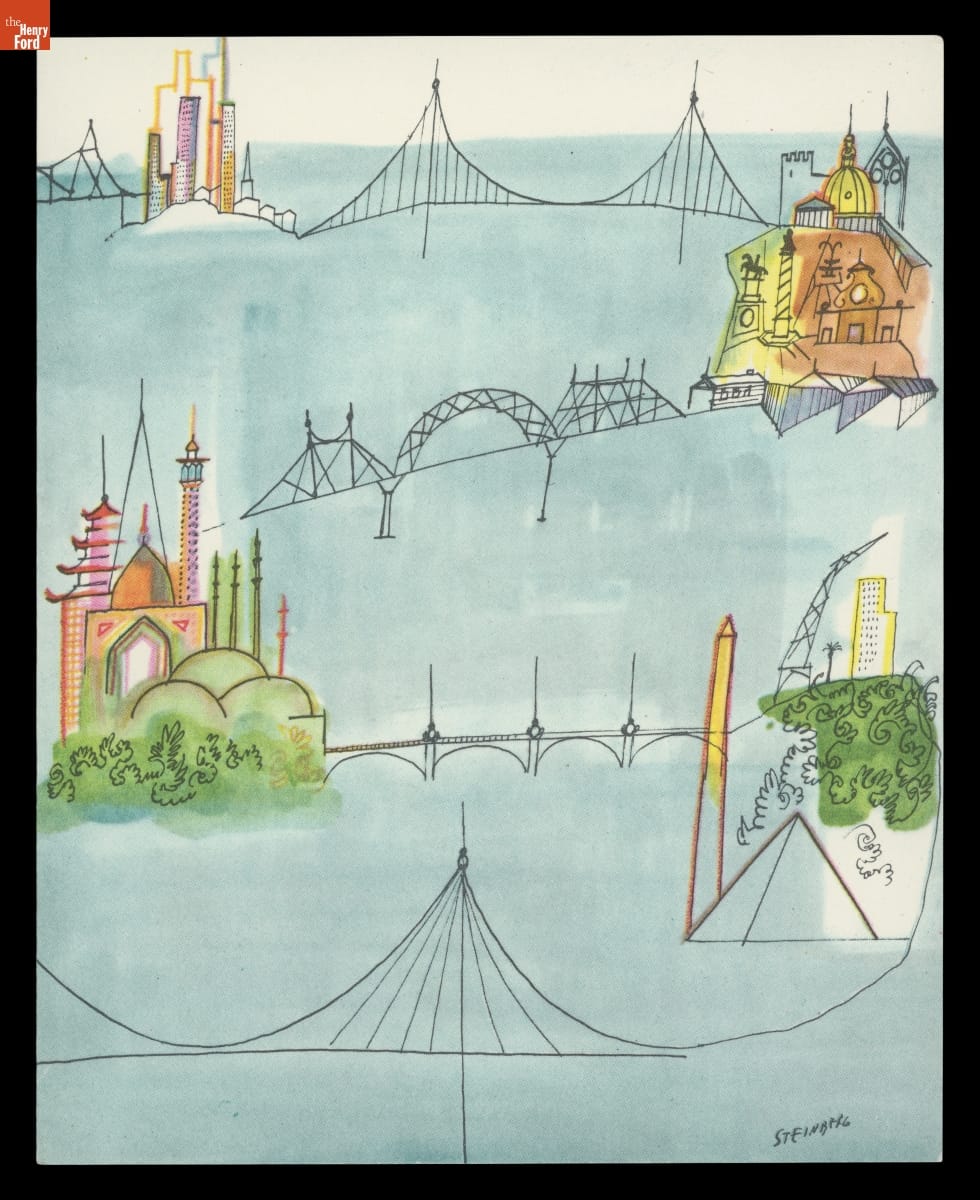
- The United Nations "Bridge to Peace" Christmas Card, 1956 - Saul Steinberg (1914-1999), a Romanian-born US immigrant, had a multifaceted artistic career, exhibiting his works in museums and galleries nationally and internationally. He is best remembered for his humorous, whimsical line drawings created for the New Yorker magazine over more than six decades beginning in the 1940s. Steinberg was equally adept at design, producing advertisements and designing textiles and Christmas cards.
- 1956
- Collections - Artifact
The United Nations "Bridge to Peace" Christmas Card, 1956
Saul Steinberg (1914-1999), a Romanian-born US immigrant, had a multifaceted artistic career, exhibiting his works in museums and galleries nationally and internationally. He is best remembered for his humorous, whimsical line drawings created for the New Yorker magazine over more than six decades beginning in the 1940s. Steinberg was equally adept at design, producing advertisements and designing textiles and Christmas cards.