
Search
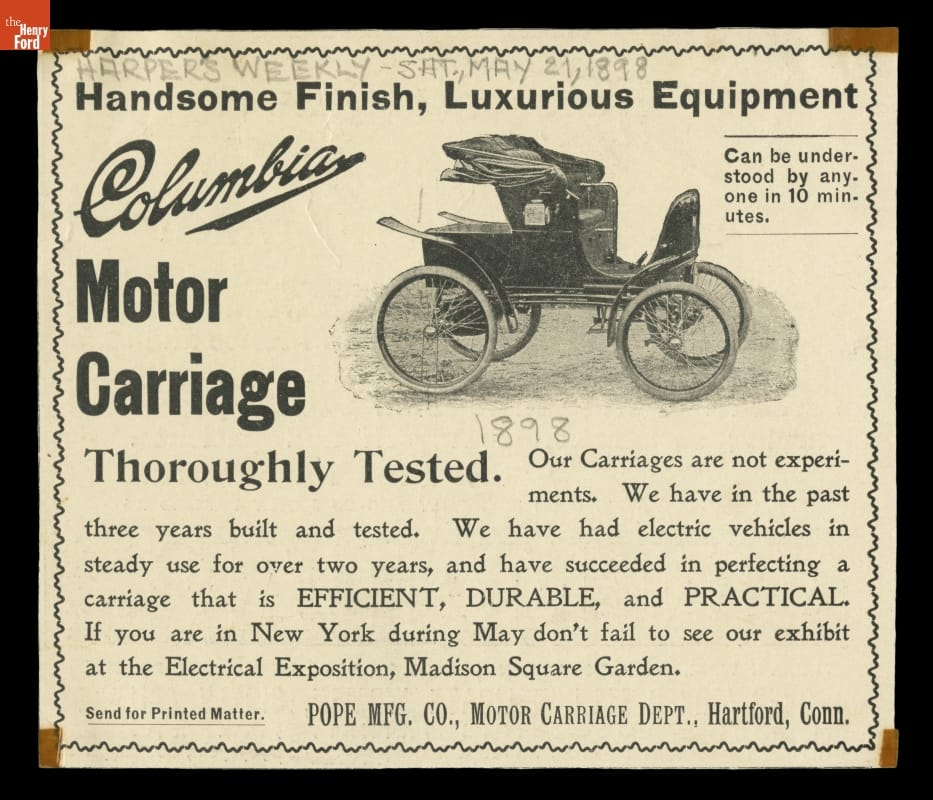
- Advertisement for Pope Manufacturing Company's Columbia Motor Carriage, 1898 - Albert Augustus Pope formed Pope Manufacturing Company in 1876. Two years later, it began producing bicycles. Pope kept up with the times, introducing electric automobiles in 1897 and motorcycles in 1902. When electric-car sales declined, so too did Pope's fortunes. The company filed for bankruptcy in 1915.
- May 21, 1898
- Collections - Artifact
Advertisement for Pope Manufacturing Company's Columbia Motor Carriage, 1898
Albert Augustus Pope formed Pope Manufacturing Company in 1876. Two years later, it began producing bicycles. Pope kept up with the times, introducing electric automobiles in 1897 and motorcycles in 1902. When electric-car sales declined, so too did Pope's fortunes. The company filed for bankruptcy in 1915.
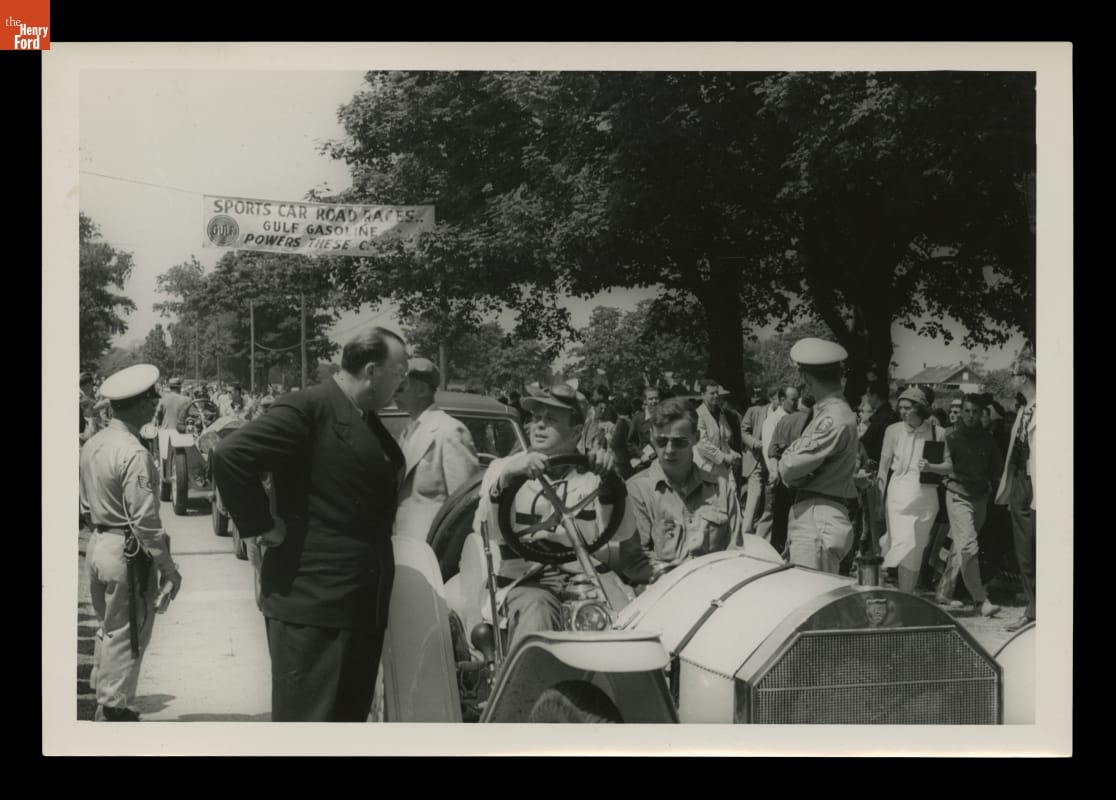
- Henry Austin Clark, Jr. Driving 1911 Mercer Raceabout in Bridgehampton Exhibition Run, June 1951 - Henry Austin Clark, Jr., purchased his first vintage automobile while in college. By the late 1970s he'd collected more than 200 cars, trucks and firefighting vehicles. Many were displayed in the Long Island Automotive Museum, which Clark operated from 1948 to 1980. Clark also collected hundreds of thousands of photographs, publications and advertisements related to automotive history.
- June 09, 1951
- Collections - Artifact
Henry Austin Clark, Jr. Driving 1911 Mercer Raceabout in Bridgehampton Exhibition Run, June 1951
Henry Austin Clark, Jr., purchased his first vintage automobile while in college. By the late 1970s he'd collected more than 200 cars, trucks and firefighting vehicles. Many were displayed in the Long Island Automotive Museum, which Clark operated from 1948 to 1980. Clark also collected hundreds of thousands of photographs, publications and advertisements related to automotive history.
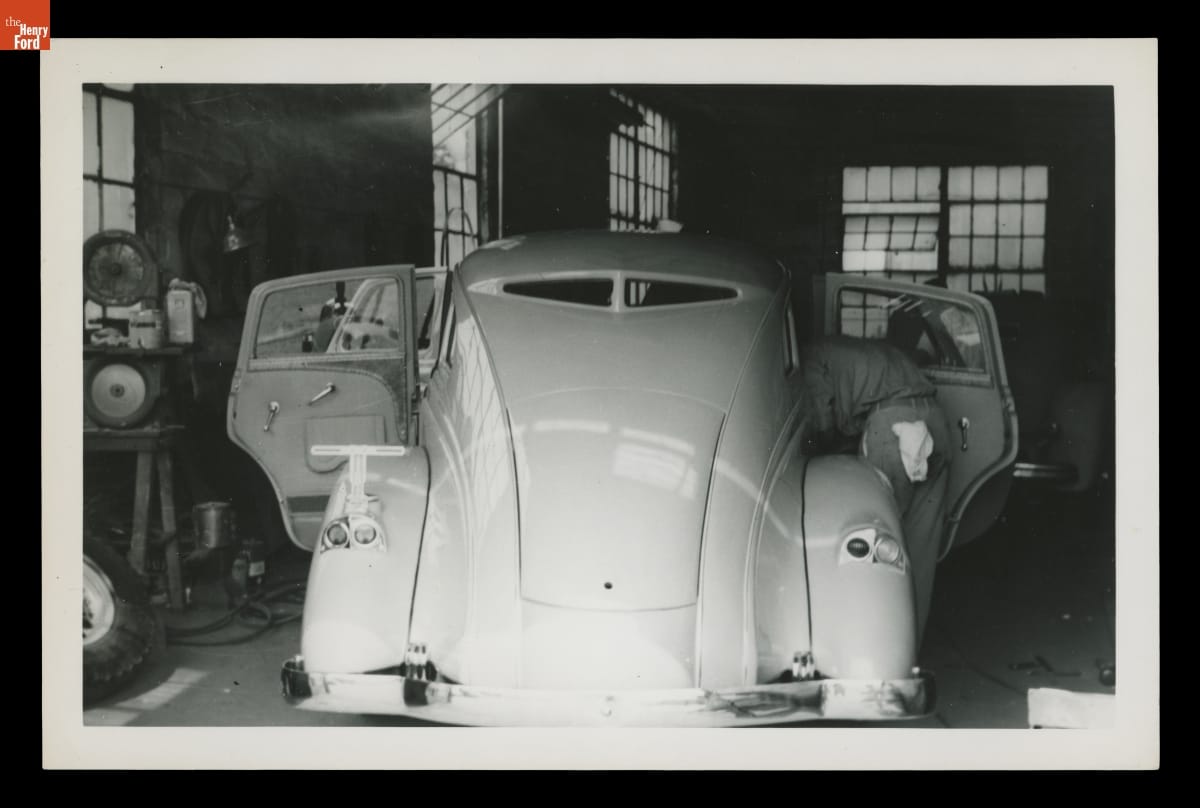
- 1933 Pierce-Arrow Silver Arrow in the Long Island Automotive Museum, August 1950 - Henry Austin Clark, Jr., collected more than 200 cars, trucks and firefighting vehicles throughout his lifetime, including a 1933 Pierce-Arrow Silver Arrow. The model wowed crowds at the 1933 Chicago World's Fair. Clark displayed many vehicles in his Long Island Automotive Museum, operated from 1948 to 1980. He also assembled an impressive library of books, journals, trade literature, and photographs.
- August 01, 1950
- Collections - Artifact
1933 Pierce-Arrow Silver Arrow in the Long Island Automotive Museum, August 1950
Henry Austin Clark, Jr., collected more than 200 cars, trucks and firefighting vehicles throughout his lifetime, including a 1933 Pierce-Arrow Silver Arrow. The model wowed crowds at the 1933 Chicago World's Fair. Clark displayed many vehicles in his Long Island Automotive Museum, operated from 1948 to 1980. He also assembled an impressive library of books, journals, trade literature, and photographs.
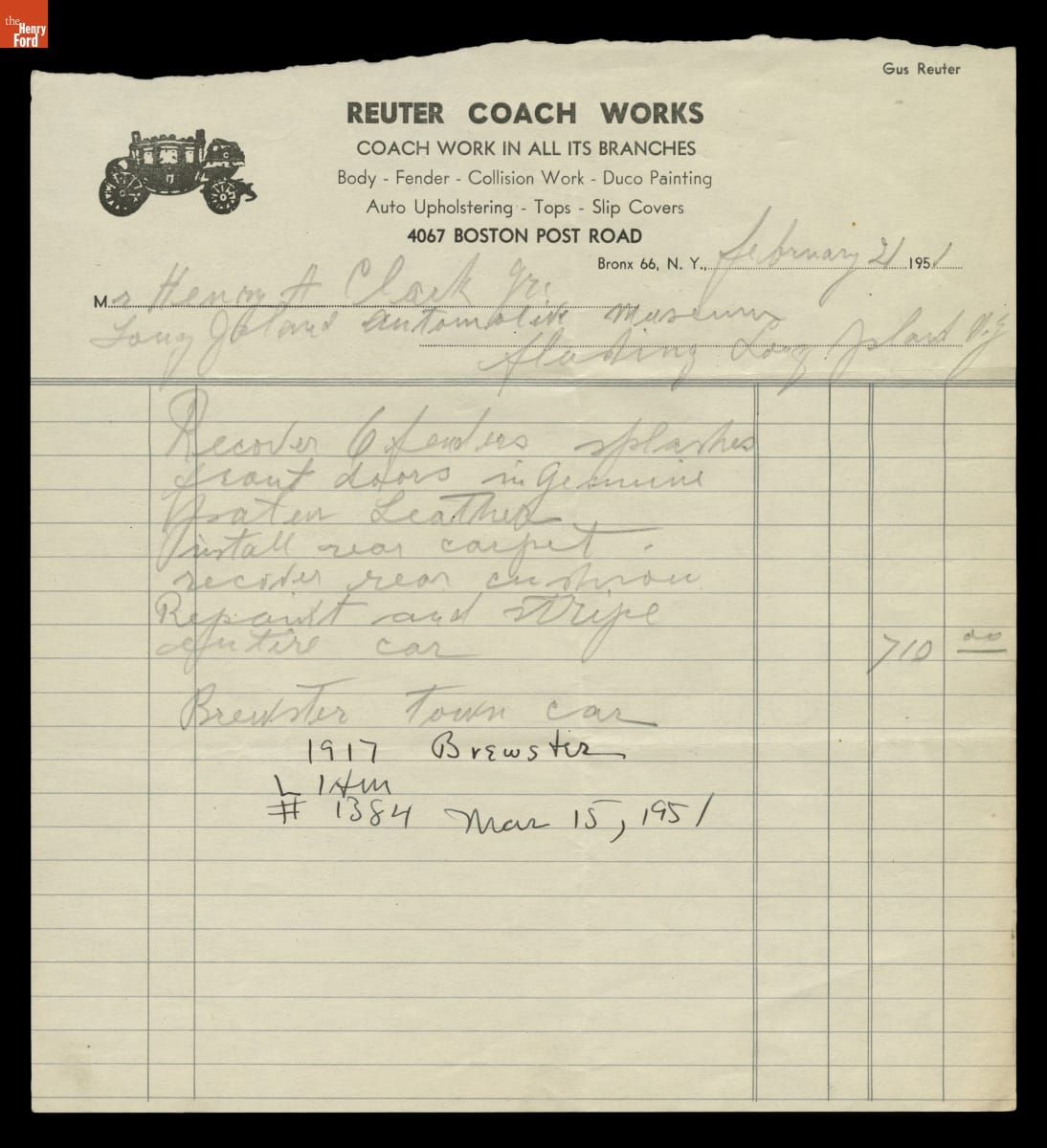
- Invoice for Restoration Work on a 1917 Brewster Town Car, 1951 - Henry Austin Clark, Jr., collected more than 200 cars, trucks and firefighting vehicles throughout his lifetime. He also assembled an impressive library of books, journals, trade literature, and photographs. Clark's vehicle collection included a 1917 Brewster Town Car. Brewster & Company had built elegant horse-drawn carriages since the early 1800s. The firm produced its first automobiles in 1915.
- 04 February 1951-15 March 1951
- Collections - Artifact
Invoice for Restoration Work on a 1917 Brewster Town Car, 1951
Henry Austin Clark, Jr., collected more than 200 cars, trucks and firefighting vehicles throughout his lifetime. He also assembled an impressive library of books, journals, trade literature, and photographs. Clark's vehicle collection included a 1917 Brewster Town Car. Brewster & Company had built elegant horse-drawn carriages since the early 1800s. The firm produced its first automobiles in 1915.
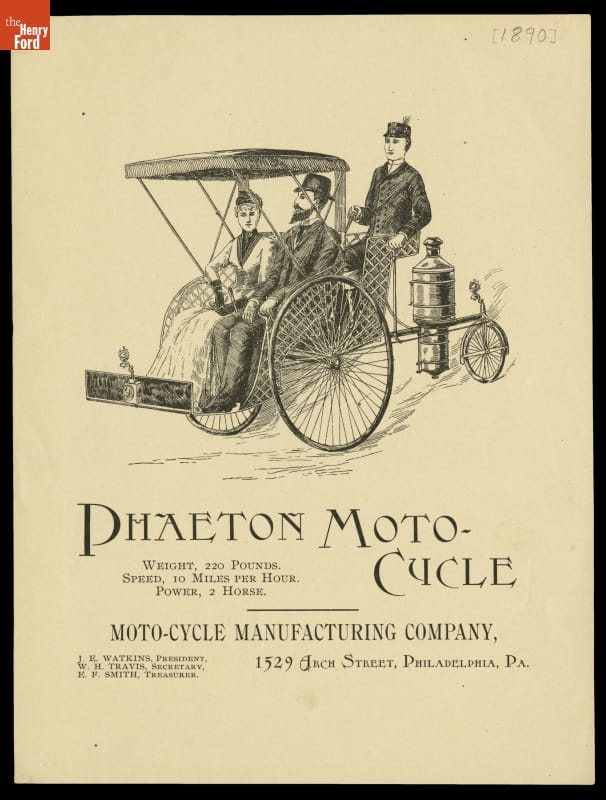
- Advertisement for the "Phaeton Moto-Cycle," 1890 - Lucius D. Copeland patented a three-wheeled, steam-powered vehicle in 1887. He built a working prototype, and the Moto-Cycle Manufacturing Company -- formed in Philadelphia in 1890 -- acquired the rights to Copeland's patent. The short-lived Moto-Cycle company existed for no more than a year, and it did not manage to sell any vehicles.
- 1890
- Collections - Artifact
Advertisement for the "Phaeton Moto-Cycle," 1890
Lucius D. Copeland patented a three-wheeled, steam-powered vehicle in 1887. He built a working prototype, and the Moto-Cycle Manufacturing Company -- formed in Philadelphia in 1890 -- acquired the rights to Copeland's patent. The short-lived Moto-Cycle company existed for no more than a year, and it did not manage to sell any vehicles.
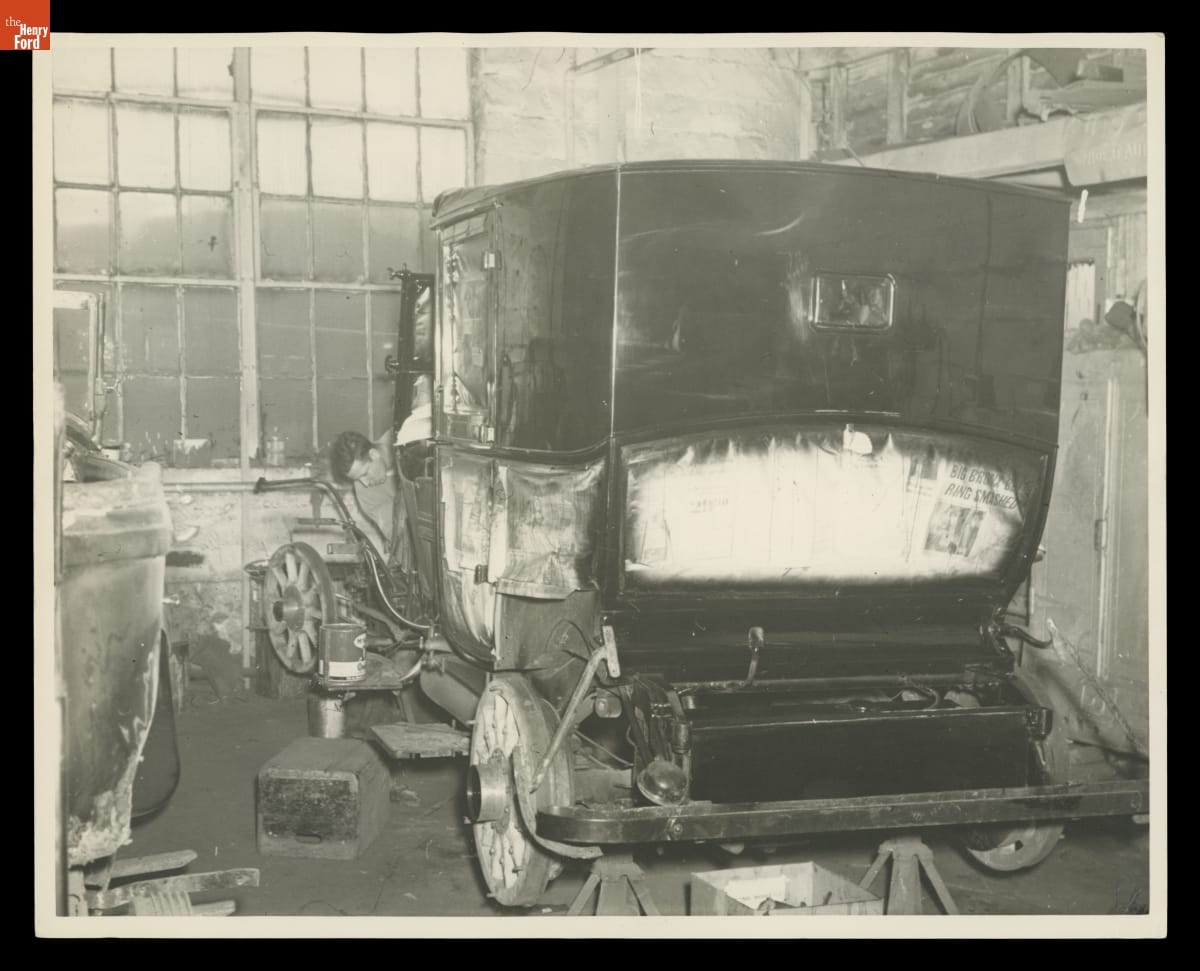
- 1917 Brewster Town Car, circa 1951 - Henry Austin Clark, Jr., collected more than 200 cars, trucks and firefighting vehicles throughout his lifetime. He also assembled an impressive library of books, journals, trade literature, and photographs. Clark's vehicle collection included a 1917 Brewster Town Car. Brewster & Company had built elegant horse-drawn carriages since the early 1800s. The firm produced its first automobiles in 1915.
- circa 1951
- Collections - Artifact
1917 Brewster Town Car, circa 1951
Henry Austin Clark, Jr., collected more than 200 cars, trucks and firefighting vehicles throughout his lifetime. He also assembled an impressive library of books, journals, trade literature, and photographs. Clark's vehicle collection included a 1917 Brewster Town Car. Brewster & Company had built elegant horse-drawn carriages since the early 1800s. The firm produced its first automobiles in 1915.
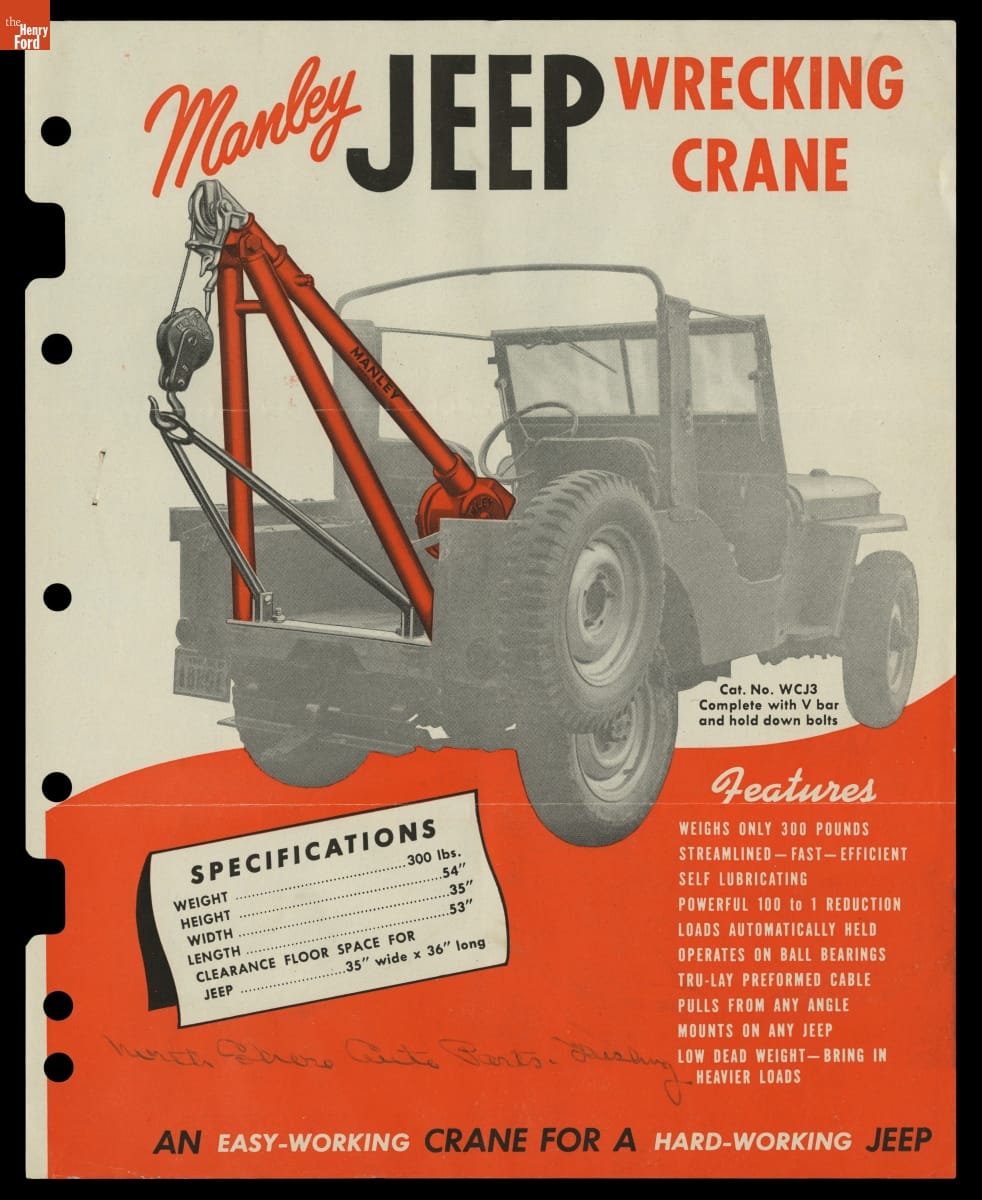
- Manley Jeep Wrecking Crane Trade Literature, 1946 - Willys-Overland built more than half of the 650,000 jeeps manufactured for the Allies during World War II. Afterward, Willys sold civilian versions. The company marketed its civilian Jeep as a functional, versatile vehicle suitable for many different jobs. Aftermarket suppliers sold Jeep accessories for plowing snow, towing vehicles, and operating farm equipment, among other uses.
- 1946
- Collections - Artifact
Manley Jeep Wrecking Crane Trade Literature, 1946
Willys-Overland built more than half of the 650,000 jeeps manufactured for the Allies during World War II. Afterward, Willys sold civilian versions. The company marketed its civilian Jeep as a functional, versatile vehicle suitable for many different jobs. Aftermarket suppliers sold Jeep accessories for plowing snow, towing vehicles, and operating farm equipment, among other uses.
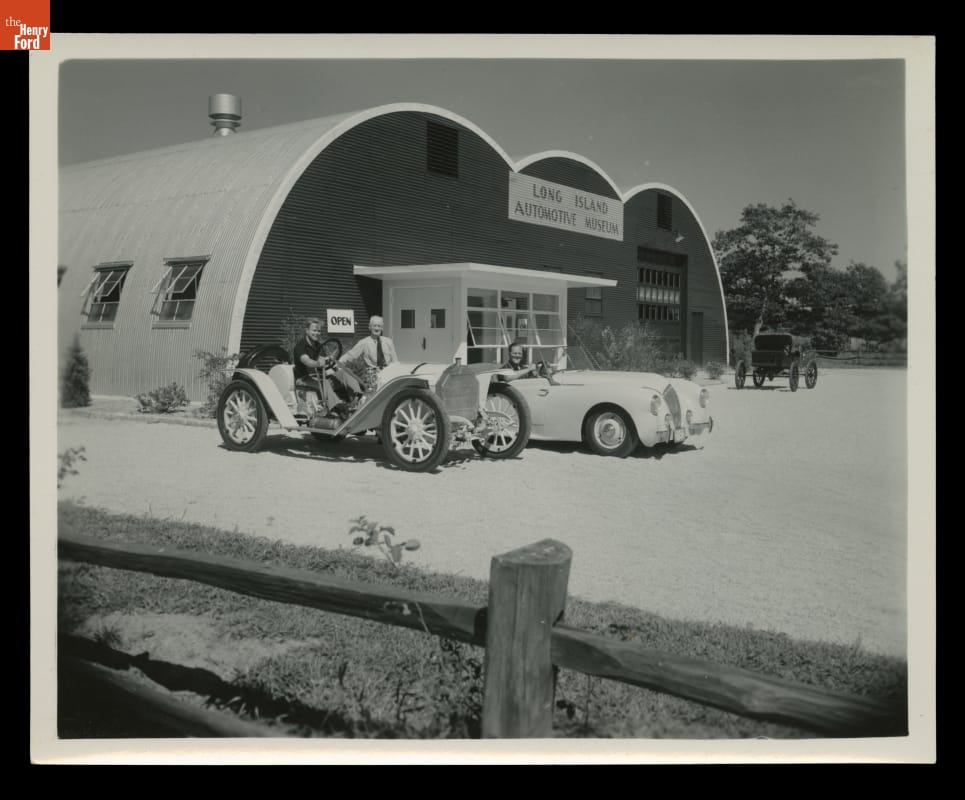
- Henry Austin Clark, Jr. in 1911 Mercer Raceabout at Long Island Automotive Museum, Southampton, New York, circa 1968 - The Mercer Type 35 Raceabout, designed by Finley R. Porter, was the high-performance sports car of its day. It could top 90 miles per hour. This 1911 example belonged to Henry Austin Clark, Jr., the foremost automotive collector and historian of his day. Clark acquired the Raceabout in 1949, and it remained in his family for the next 65 years.
- circa 1968
- Collections - Artifact
Henry Austin Clark, Jr. in 1911 Mercer Raceabout at Long Island Automotive Museum, Southampton, New York, circa 1968
The Mercer Type 35 Raceabout, designed by Finley R. Porter, was the high-performance sports car of its day. It could top 90 miles per hour. This 1911 example belonged to Henry Austin Clark, Jr., the foremost automotive collector and historian of his day. Clark acquired the Raceabout in 1949, and it remained in his family for the next 65 years.
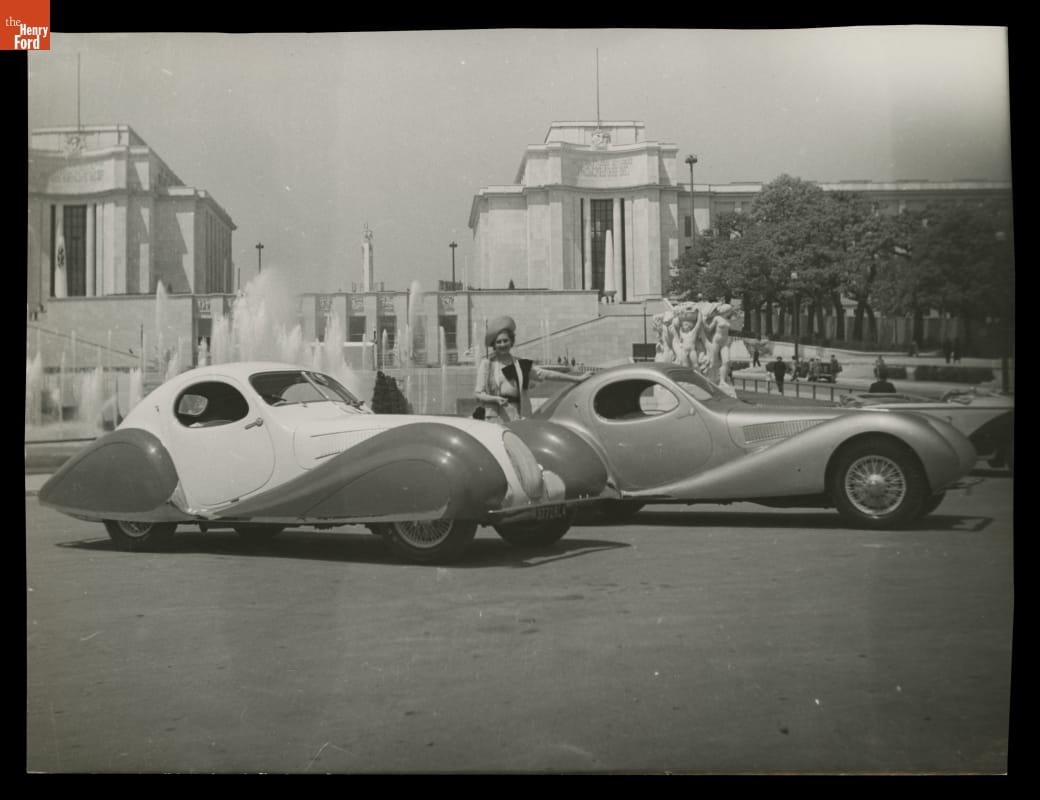
- Talbot-Lago Automobiles, Paris, France, circa 1938 - Italian engineer Antonio Lago acquired the assets of Talbot France, following its receivership, in 1936. He renamed the firm Talbot-Lago and continued building elegant luxury cars and high-performance race cars in the Talbot tradition. Talbot-Lago's production numbers were never high, but they fell steeply after World War II. Antonio Lago was forced to sell the company in 1959.
- circa 1938
- Collections - Artifact
Talbot-Lago Automobiles, Paris, France, circa 1938
Italian engineer Antonio Lago acquired the assets of Talbot France, following its receivership, in 1936. He renamed the firm Talbot-Lago and continued building elegant luxury cars and high-performance race cars in the Talbot tradition. Talbot-Lago's production numbers were never high, but they fell steeply after World War II. Antonio Lago was forced to sell the company in 1959.
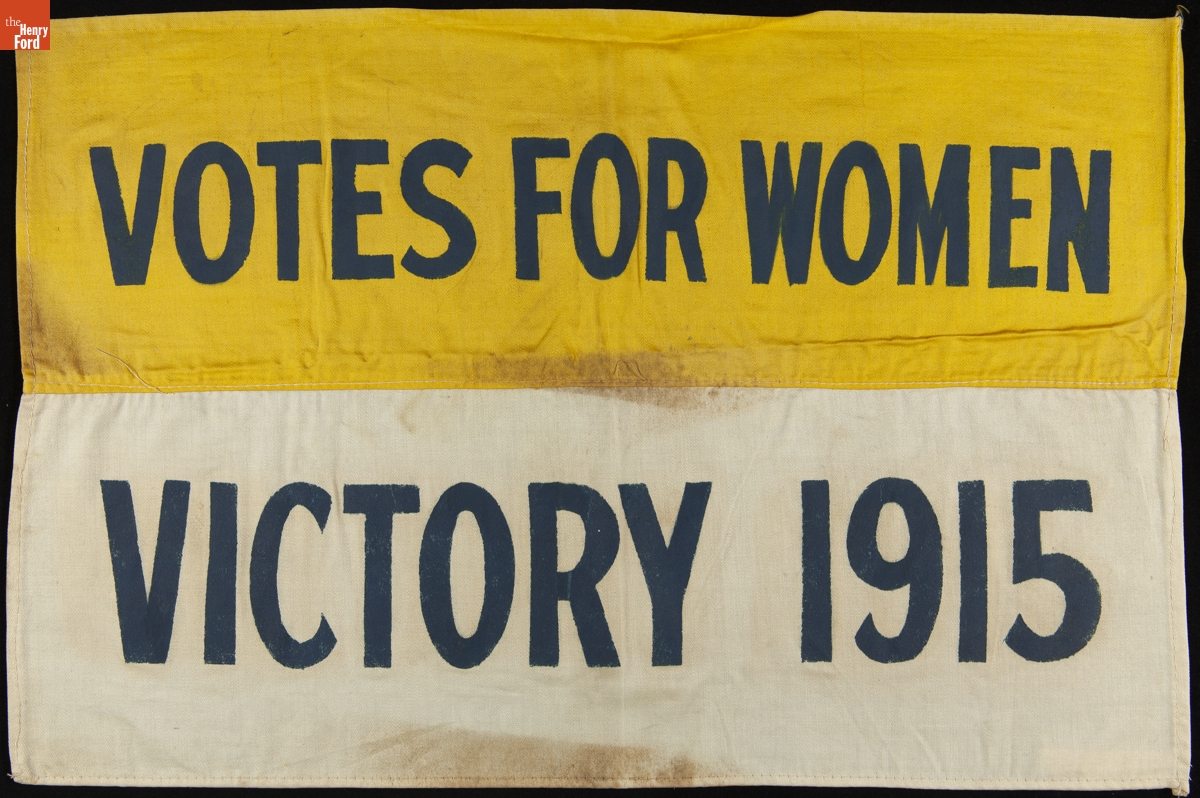
- Votes for Women, Victory 1915 - In the early 20th century, people joined the already decades-long fight for women's suffrage, or equal voting rights. Suffragists staged parades and organized public demonstrations calling for action. This banner urged the U.S. House of Representatives to vote in 1915 for a constitutional amendment guaranteeing women's suffrage. The amendment was defeated that year, but the House passed it in 1919.
- 1915
- Collections - Artifact
Votes for Women, Victory 1915
In the early 20th century, people joined the already decades-long fight for women's suffrage, or equal voting rights. Suffragists staged parades and organized public demonstrations calling for action. This banner urged the U.S. House of Representatives to vote in 1915 for a constitutional amendment guaranteeing women's suffrage. The amendment was defeated that year, but the House passed it in 1919.