
Search
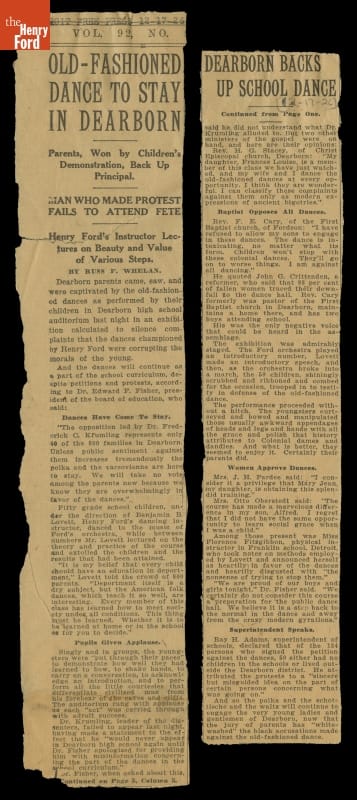
- Newspaper Article, "Old-Fashioned Dance to Stay in Dearborn...Dearborn Backs Up School Dance," 1926 - As Henry Ford extended his traditional American dance classes to local Dearborn schoolchildren, some parents grew alarmed--they weren't sure they approved of boys and girls dancing together. A dance demonstration by the children soon set most of the parents' minds at ease. They quickly realized the benefit of having their children learn these old-time dances--and the good manners that went along with them.
- December 17, 1926
- Collections - Artifact
Newspaper Article, "Old-Fashioned Dance to Stay in Dearborn...Dearborn Backs Up School Dance," 1926
As Henry Ford extended his traditional American dance classes to local Dearborn schoolchildren, some parents grew alarmed--they weren't sure they approved of boys and girls dancing together. A dance demonstration by the children soon set most of the parents' minds at ease. They quickly realized the benefit of having their children learn these old-time dances--and the good manners that went along with them.
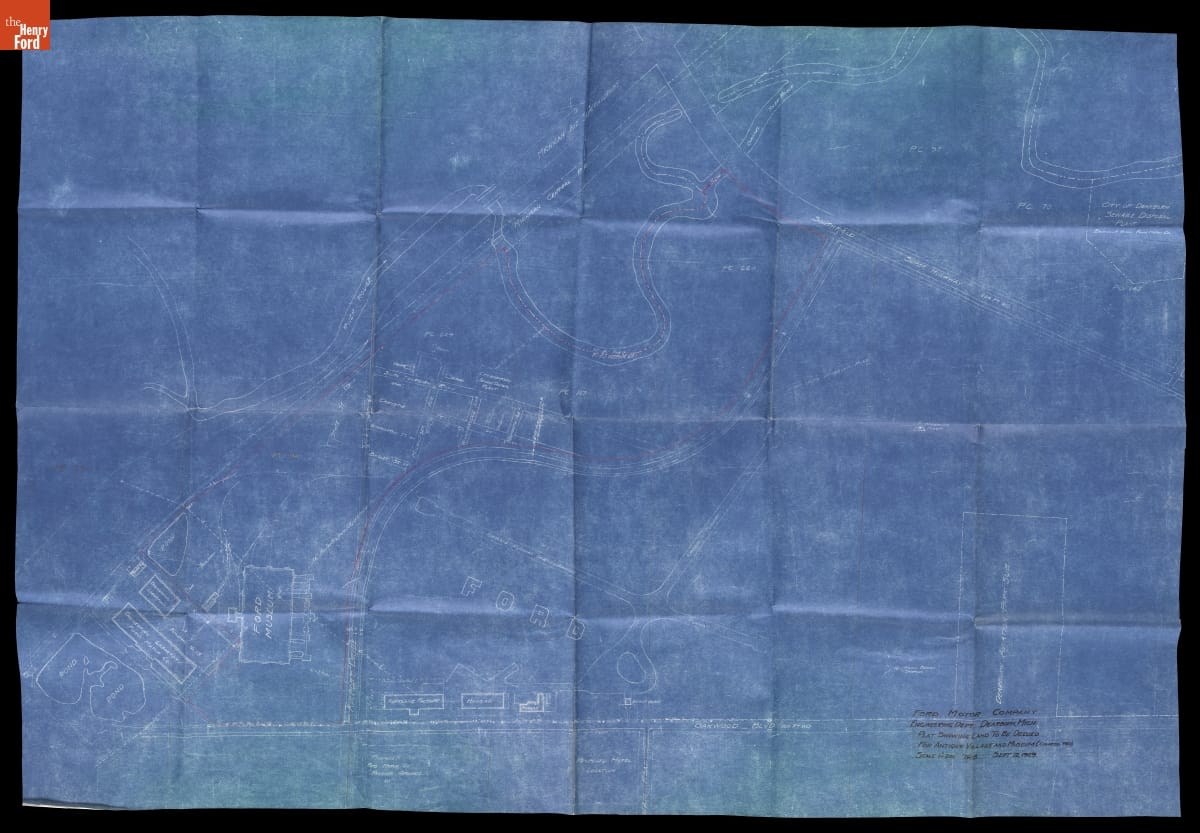
- Plat Showing Land to be Deeded for Antique Village and Museum, September 12, 1929 -
- September 12, 1929
- Collections - Artifact
Plat Showing Land to be Deeded for Antique Village and Museum, September 12, 1929
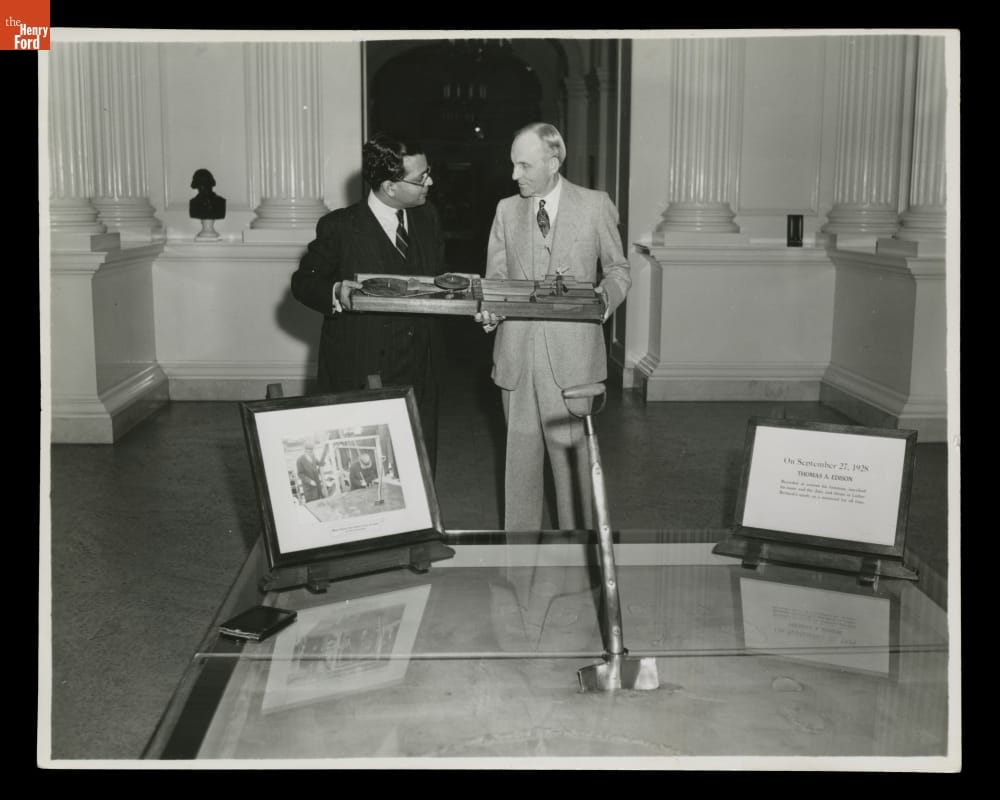
- Mr. T. A. Raman Presents a Portable Spinning Wheel to Henry Ford, a Gift from Mahatma Gandhi, 1942 - In response to a letter of good wishes from Henry Ford, Mahatma Gandhi sent a portable spinning wheel to the industrialist as a gift. Gandhi used the spinning wheel as a symbol in his struggle for India's independence and economic self-sufficiency. Gandhi and Ford shared a mutual admiration for one another because of their longstanding commitments to peace.
- December 01, 1942
- Collections - Artifact
Mr. T. A. Raman Presents a Portable Spinning Wheel to Henry Ford, a Gift from Mahatma Gandhi, 1942
In response to a letter of good wishes from Henry Ford, Mahatma Gandhi sent a portable spinning wheel to the industrialist as a gift. Gandhi used the spinning wheel as a symbol in his struggle for India's independence and economic self-sufficiency. Gandhi and Ford shared a mutual admiration for one another because of their longstanding commitments to peace.
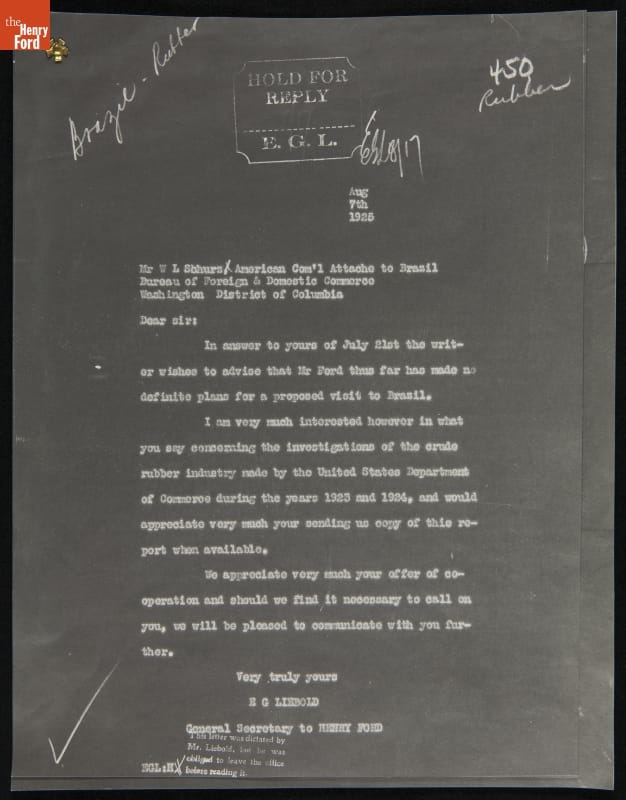
- Correspondence between W.L. Schurz and the Office of Henry Ford regarding Brazil Expedition, July - August, 1925 -
- 21 July 1925-07 August 1925
- Collections - Artifact
Correspondence between W.L. Schurz and the Office of Henry Ford regarding Brazil Expedition, July - August, 1925
- How to Grow the Peanut and 105 Ways of Preparing it for Human Consumption, May 1917 - George Washington Carver directed the agricultural Experiment Station at Tuskegee Institute in Alabama. As part of his work, Carver wrote what he called "threefold" agricultural bulletins: they included information for the farmer, for the teacher, and for the housewife. This bulletin on growing and cooking peanuts, along with Carver's other advocacy work, helped popularize the peanut as a useful and nutritious crop for Southern farmers.

- May 01, 1917
- Collections - Artifact
How to Grow the Peanut and 105 Ways of Preparing it for Human Consumption, May 1917
George Washington Carver directed the agricultural Experiment Station at Tuskegee Institute in Alabama. As part of his work, Carver wrote what he called "threefold" agricultural bulletins: they included information for the farmer, for the teacher, and for the housewife. This bulletin on growing and cooking peanuts, along with Carver's other advocacy work, helped popularize the peanut as a useful and nutritious crop for Southern farmers.
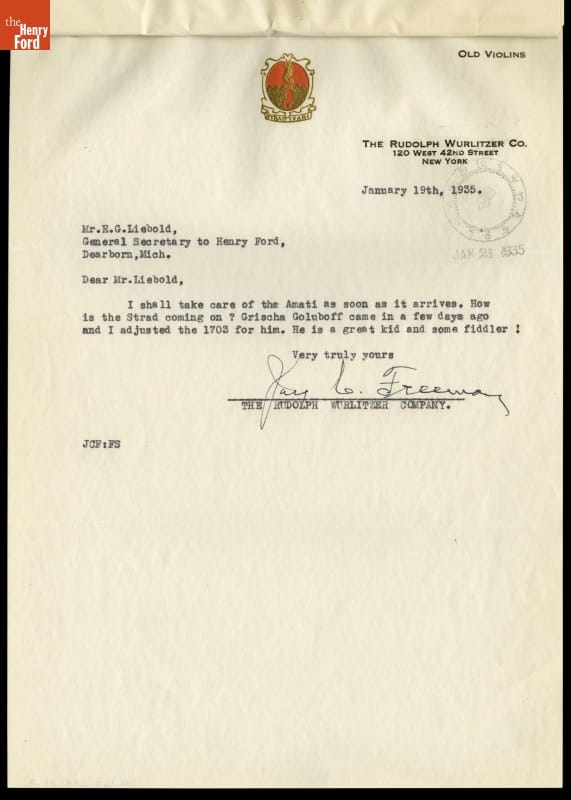
- Letter from J. C. Freeman to E. G. Liebold Concerning Repair of Henry Ford's Amati Violin, January 19, 1935 - Rudolph Wurlitzer, a violin dealer and musical instrument manufacturer, had helped Ford acquire his Italian-made classical violins during the 1920s and kept them in good repair for the industrialist. Jay C. Freeman was the Wurlitzer Company's violin expert who handled the repairs. In this letter, Freeman mentions Grisha Goluboff, a young violinist to whom Ford had lent his 1703 Stradivari violin.
- January 19, 1935
- Collections - Artifact
Letter from J. C. Freeman to E. G. Liebold Concerning Repair of Henry Ford's Amati Violin, January 19, 1935
Rudolph Wurlitzer, a violin dealer and musical instrument manufacturer, had helped Ford acquire his Italian-made classical violins during the 1920s and kept them in good repair for the industrialist. Jay C. Freeman was the Wurlitzer Company's violin expert who handled the repairs. In this letter, Freeman mentions Grisha Goluboff, a young violinist to whom Ford had lent his 1703 Stradivari violin.
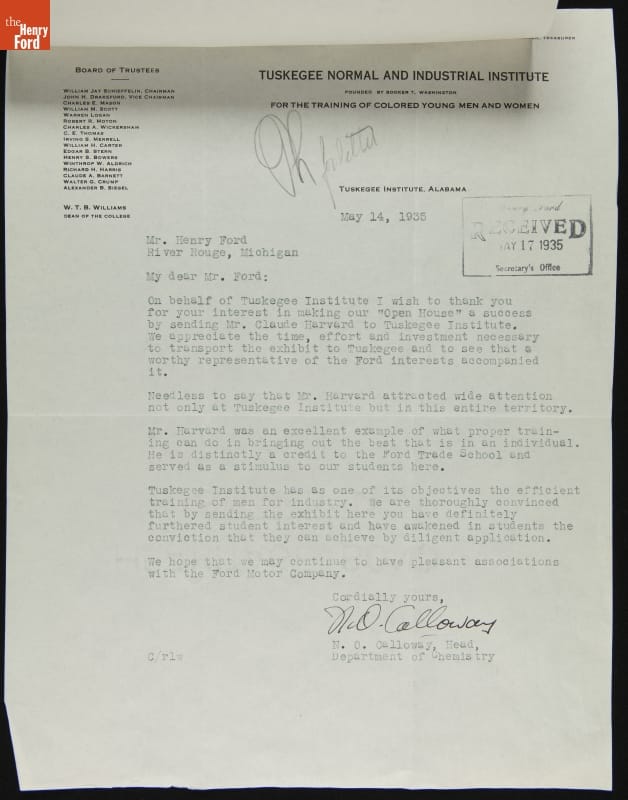
- Correspondence between Frank Campsall (for Henry Ford) and N. O. Calloway regarding Claude Harvard's Visit to Tuskegee Institute, May 1935 -
- 14 May 1935-27 May 1935
- Collections - Artifact
Correspondence between Frank Campsall (for Henry Ford) and N. O. Calloway regarding Claude Harvard's Visit to Tuskegee Institute, May 1935
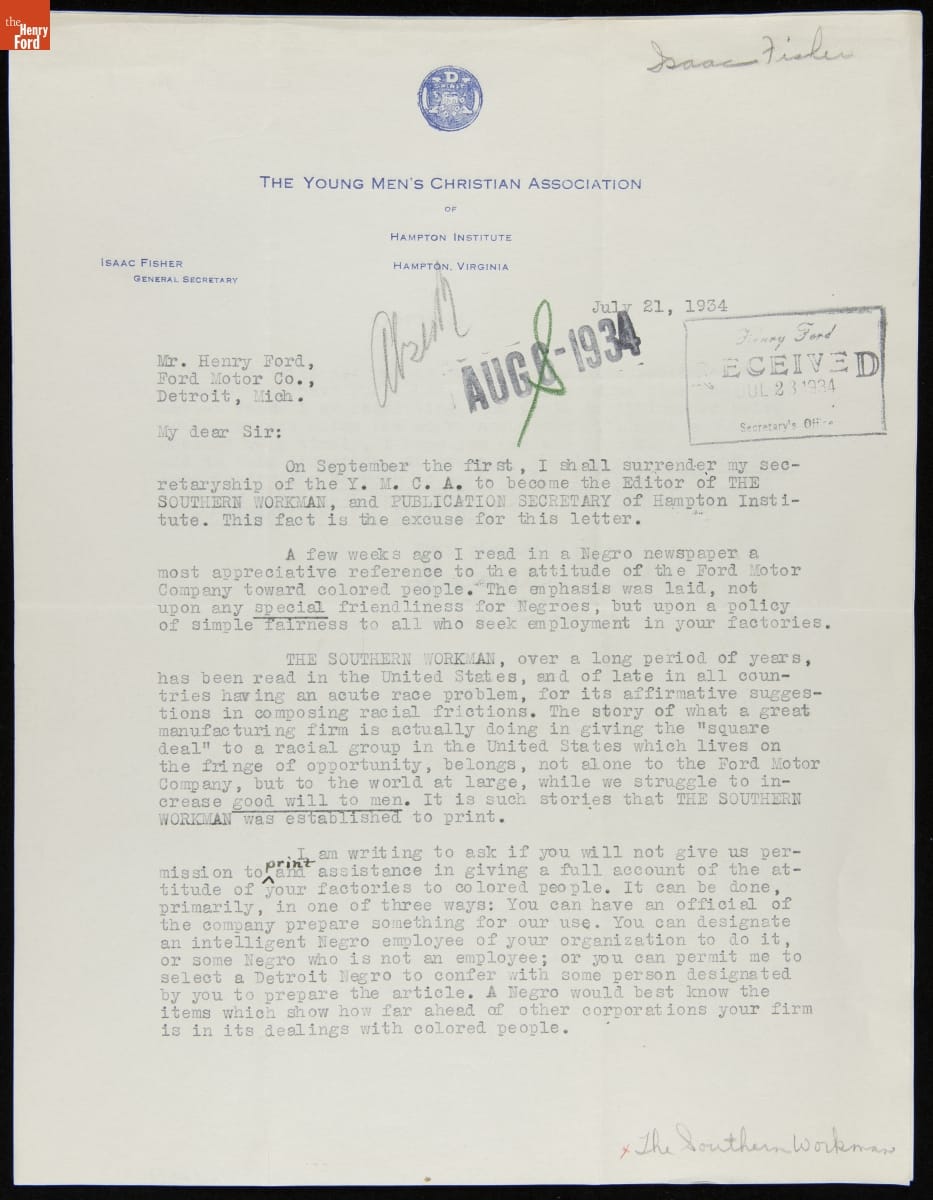
- Letter from Isaac Fisher to Henry Ford, July 21, 1934 -
- July 21, 1934
- Collections - Artifact
Letter from Isaac Fisher to Henry Ford, July 21, 1934
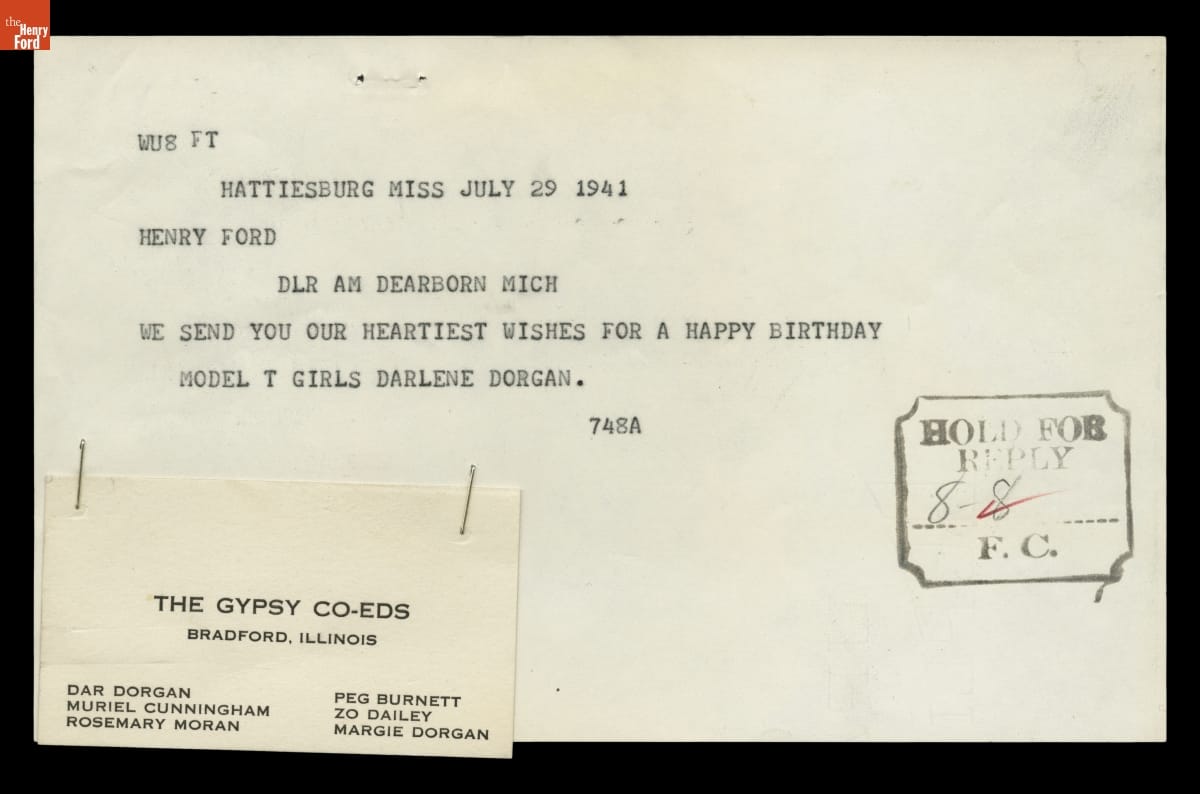
- Birthday Greeting Telegram to Henry Ford from Darlene Dorgan and the "Model T Girls," July 29, 1941 - Darlene Dorgan, accompanied by four or five young women, spent summer vacations during the 1930s and early 1940s traveling in her 1926 Model T. The carefree troupes from Bradford, Illinois, roamed the United States and Canada in the self-painted silver "T". After driving to Dearborn, Michigan, to wish Henry Ford a happy birthday in 1938, the group kept in touch with the famed automaker.
- July 29, 1941
- Collections - Artifact
Birthday Greeting Telegram to Henry Ford from Darlene Dorgan and the "Model T Girls," July 29, 1941
Darlene Dorgan, accompanied by four or five young women, spent summer vacations during the 1930s and early 1940s traveling in her 1926 Model T. The carefree troupes from Bradford, Illinois, roamed the United States and Canada in the self-painted silver "T". After driving to Dearborn, Michigan, to wish Henry Ford a happy birthday in 1938, the group kept in touch with the famed automaker.
- Correspondence between Darlene and Marge Dorgan and the Office of Henry Ford, December 1940 - Darlene Dorgan, accompanied by four or five young women, spent summer vacations during the 1930s and early 1940s traveling in her 1926 Model T. The carefree troupes from Bradford, Illinois, roamed the United States and Canada in the self-painted silver "T". After driving to Dearborn, Michigan, to wish Henry Ford a happy birthday in 1938, the group kept in touch with the famed automaker.
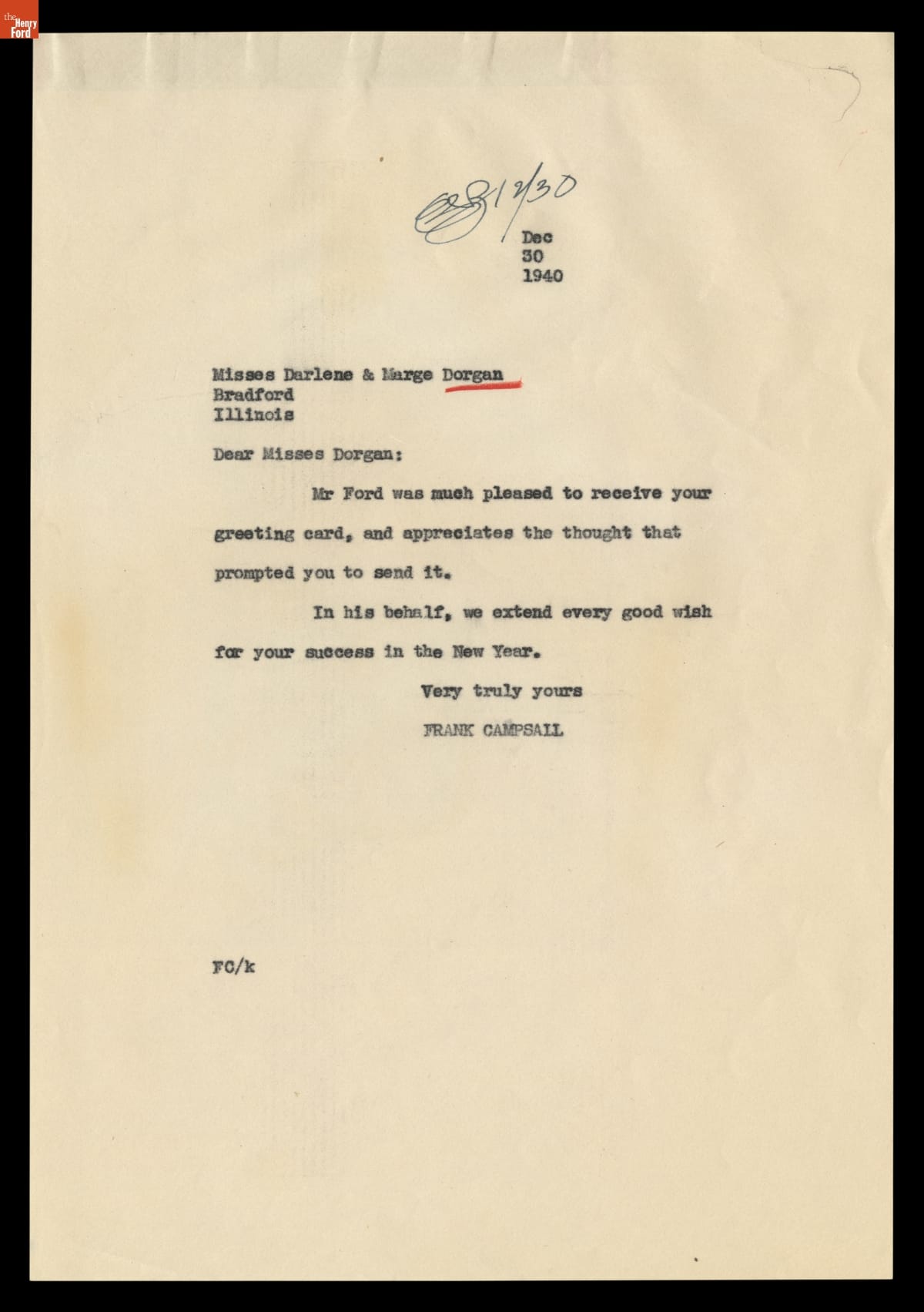
- December 01, 1940
- Collections - Artifact
Correspondence between Darlene and Marge Dorgan and the Office of Henry Ford, December 1940
Darlene Dorgan, accompanied by four or five young women, spent summer vacations during the 1930s and early 1940s traveling in her 1926 Model T. The carefree troupes from Bradford, Illinois, roamed the United States and Canada in the self-painted silver "T". After driving to Dearborn, Michigan, to wish Henry Ford a happy birthday in 1938, the group kept in touch with the famed automaker.