
Search
- Rubber Trees Growing on a Terraced Hillside at Fordlandia in Brazil, circa 1937 - Henry Ford established Fordlandia and Belterra in the Brazilian rainforest to supply rubber for automobile production. He began shipping machinery and supplies to the Amazon in 1928. Ford paid the indigenous workers good wages and supplied various amenities -- he also imposed foreign work traditions and behavioral restrictions which the workers resented. The plantations failed and Ford Motor Company disposed of the project in 1945.
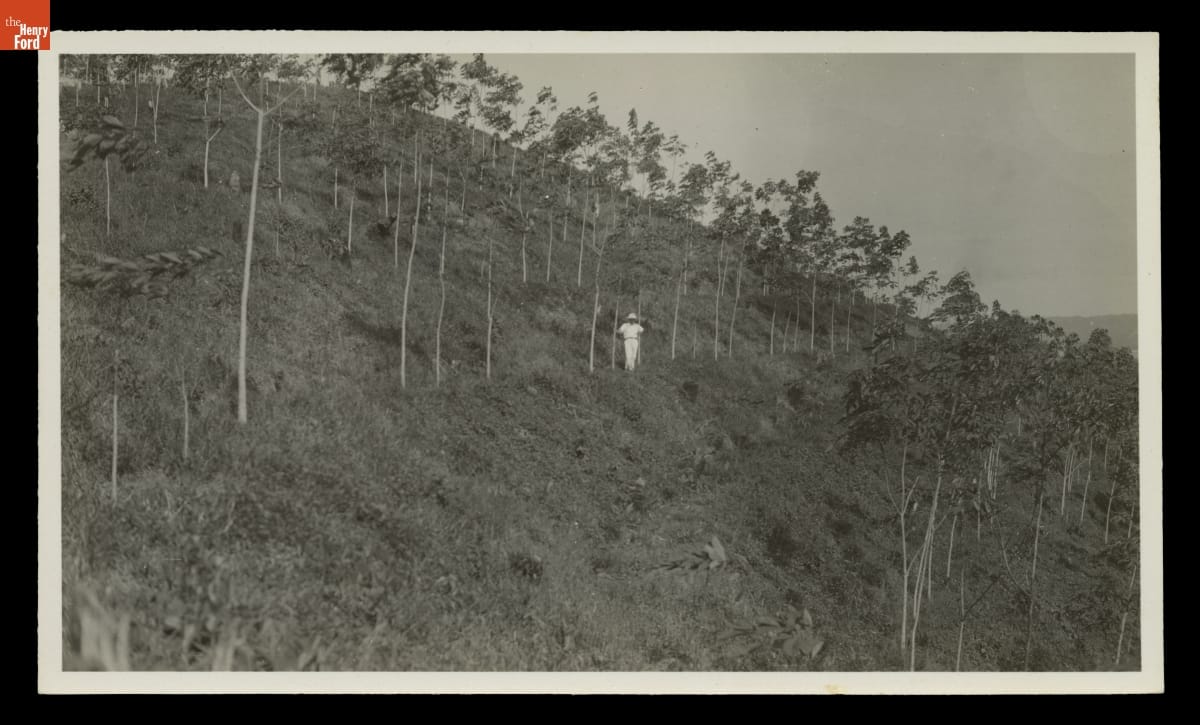
- 1937-1938
- Collections - Artifact
Rubber Trees Growing on a Terraced Hillside at Fordlandia in Brazil, circa 1937
Henry Ford established Fordlandia and Belterra in the Brazilian rainforest to supply rubber for automobile production. He began shipping machinery and supplies to the Amazon in 1928. Ford paid the indigenous workers good wages and supplied various amenities -- he also imposed foreign work traditions and behavioral restrictions which the workers resented. The plantations failed and Ford Motor Company disposed of the project in 1945.
- Clearing Trees at Fordlandia Rubber Plantation, 1933 - Henry Ford established Fordlandia and Belterra in the Brazilian rainforest to supply rubber for automobile production. He began shipping machinery and supplies to the Amazon in 1928. Ford paid the indigenous workers good wages and supplied various amenities -- he also imposed foreign work traditions and behavioral restrictions which the workers resented. The plantations failed and Ford Motor Company disposed of the project in 1945.
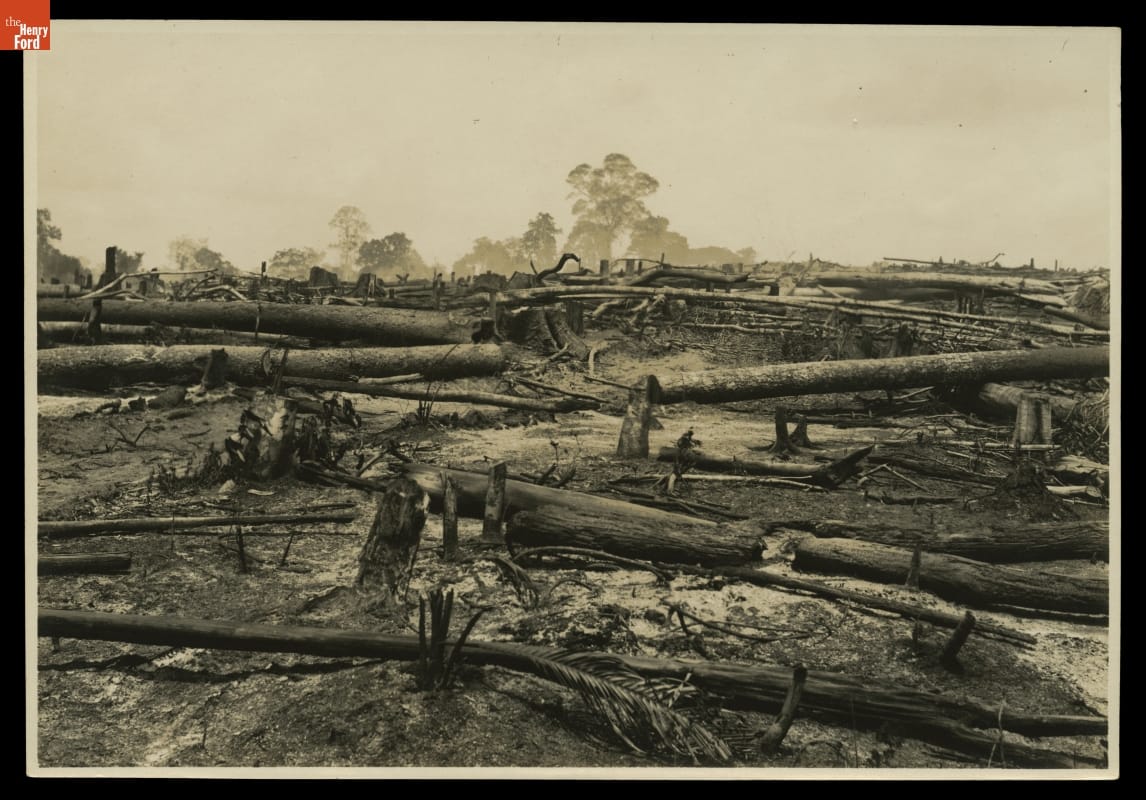
- August 28, 1933
- Collections - Artifact
Clearing Trees at Fordlandia Rubber Plantation, 1933
Henry Ford established Fordlandia and Belterra in the Brazilian rainforest to supply rubber for automobile production. He began shipping machinery and supplies to the Amazon in 1928. Ford paid the indigenous workers good wages and supplied various amenities -- he also imposed foreign work traditions and behavioral restrictions which the workers resented. The plantations failed and Ford Motor Company disposed of the project in 1945.
- General Electric Generator in Fordlandia's Powerhouse, Brazil, 1933 - Henry Ford established Fordlandia and Belterra in the Brazilian rainforest to supply rubber for automobile production. He began shipping machinery and supplies to the Amazon in 1928. Ford paid the indigenous workers good wages and supplied various amenities -- he also imposed foreign work traditions and behavioral restrictions which the workers resented. The plantations failed and Ford Motor Company disposed of the project in 1945.
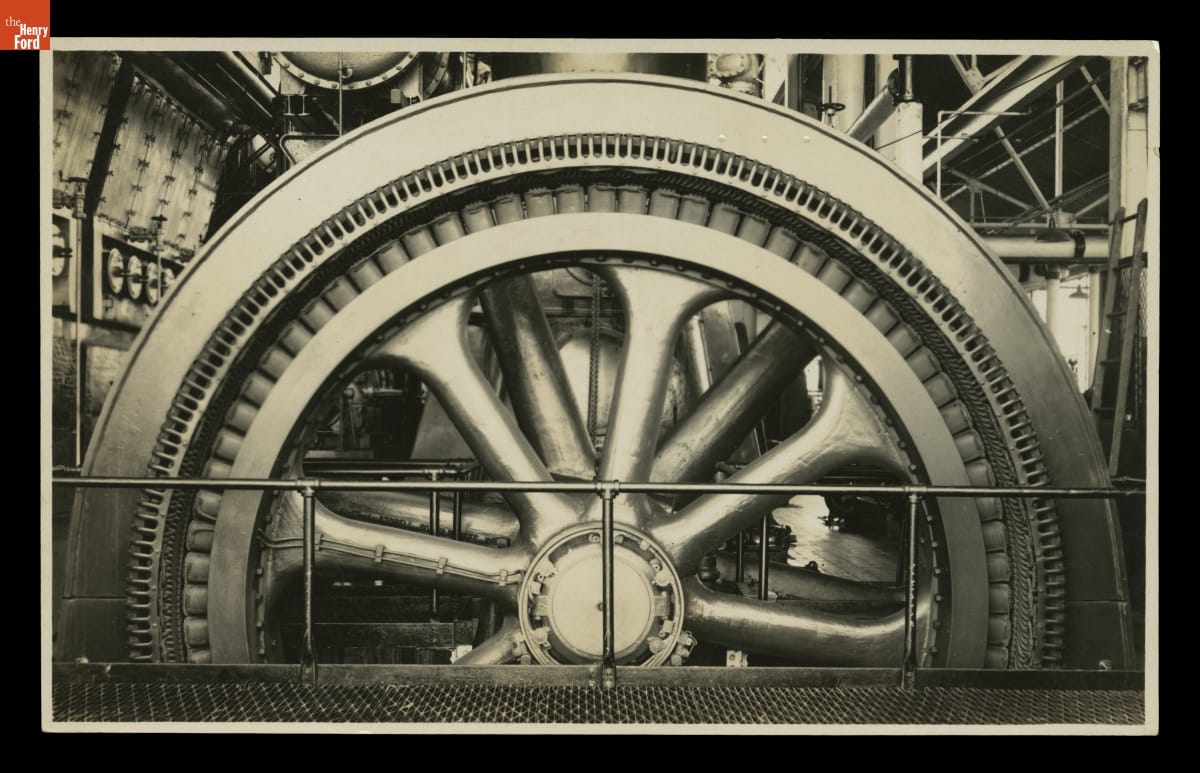
- February 01, 1933
- Collections - Artifact
General Electric Generator in Fordlandia's Powerhouse, Brazil, 1933
Henry Ford established Fordlandia and Belterra in the Brazilian rainforest to supply rubber for automobile production. He began shipping machinery and supplies to the Amazon in 1928. Ford paid the indigenous workers good wages and supplied various amenities -- he also imposed foreign work traditions and behavioral restrictions which the workers resented. The plantations failed and Ford Motor Company disposed of the project in 1945.
- Men Dusting Nursery Plants Growing at Belterra, Brazil, circa 1935 - Henry Ford established Fordlandia and Belterra in the Brazilian rainforest to supply rubber for automobile production. He began shipping machinery and supplies to the Amazon in 1928. Ford paid the indigenous workers good wages and supplied various amenities -- he also imposed foreign work traditions and behavioral restrictions which the workers resented. The plantations failed and Ford Motor Company disposed of the project in 1945.
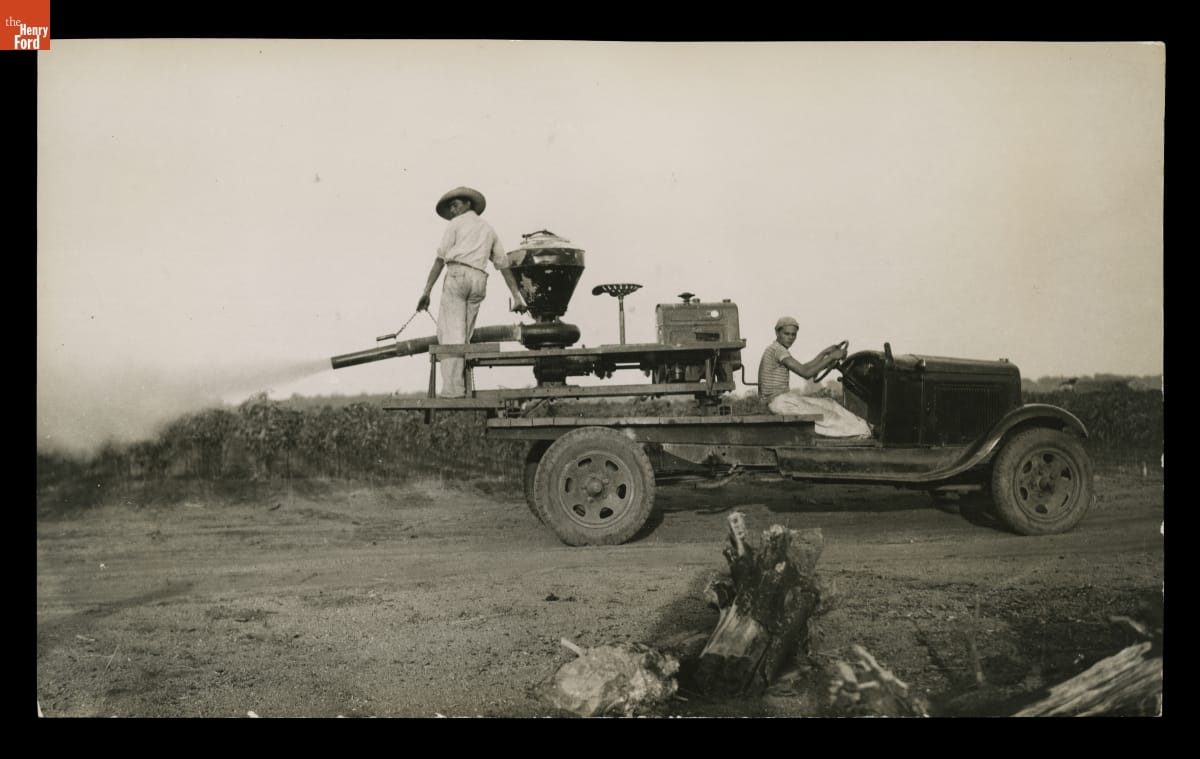
- circa 1935
- Collections - Artifact
Men Dusting Nursery Plants Growing at Belterra, Brazil, circa 1935
Henry Ford established Fordlandia and Belterra in the Brazilian rainforest to supply rubber for automobile production. He began shipping machinery and supplies to the Amazon in 1928. Ford paid the indigenous workers good wages and supplied various amenities -- he also imposed foreign work traditions and behavioral restrictions which the workers resented. The plantations failed and Ford Motor Company disposed of the project in 1945.
- Fordlandia Houses on Riverside Avenue, Boa Vista, Brazil, 1933 - Henry Ford established Fordlandia and Belterra in the Brazilian rainforest to supply rubber for automobile production. He began shipping machinery and supplies to the Amazon in 1928. Ford paid the indigenous workers good wages and supplied various amenities -- he also imposed foreign work traditions and behavioral restrictions which the workers resented. The plantations failed and Ford Motor Company disposed of the project in 1945.
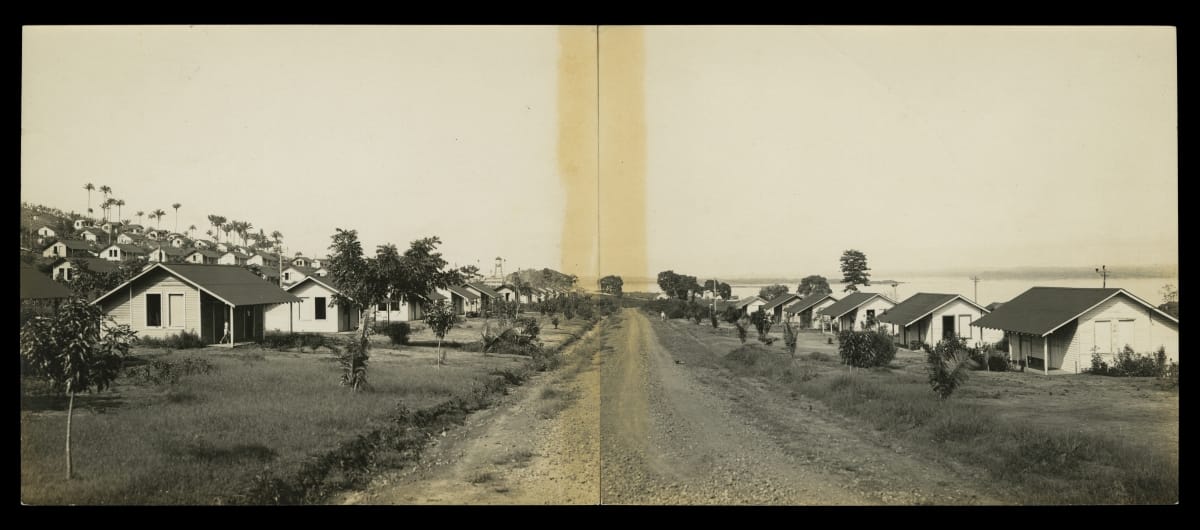
- May 01, 1933
- Collections - Artifact
Fordlandia Houses on Riverside Avenue, Boa Vista, Brazil, 1933
Henry Ford established Fordlandia and Belterra in the Brazilian rainforest to supply rubber for automobile production. He began shipping machinery and supplies to the Amazon in 1928. Ford paid the indigenous workers good wages and supplied various amenities -- he also imposed foreign work traditions and behavioral restrictions which the workers resented. The plantations failed and Ford Motor Company disposed of the project in 1945.
- James Weir in Brazil on an Expedition for the U.S. Department of Agriculture, 1923 - In 1923, threatened by a rising English rubber monopoly, President Herbert Hoover ordered an expedition to study the possibility of growing rubber in the Amazon. As a member of the original trip, plant pathologist James Weir became one of few Americans with experience studying South American rubber trees. Edsel Ford would hire Weir in 1933 to help with Ford's Brazilian rubber tree plantations.
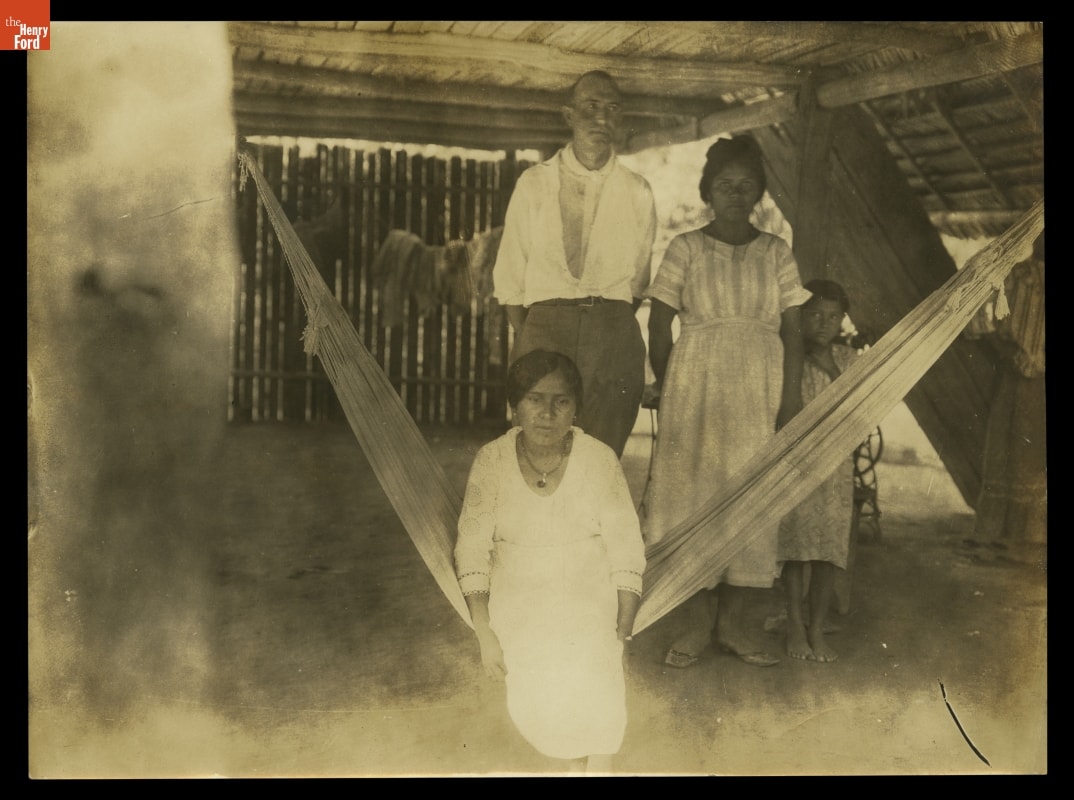
- September 02, 1923
- Collections - Artifact
James Weir in Brazil on an Expedition for the U.S. Department of Agriculture, 1923
In 1923, threatened by a rising English rubber monopoly, President Herbert Hoover ordered an expedition to study the possibility of growing rubber in the Amazon. As a member of the original trip, plant pathologist James Weir became one of few Americans with experience studying South American rubber trees. Edsel Ford would hire Weir in 1933 to help with Ford's Brazilian rubber tree plantations.
- Burning 1000 Acres, Boa Vista, Brazil, 1933 - Henry Ford established Fordlandia and Belterra in the Brazilian rainforest to supply rubber for automobile production. He began shipping machinery and supplies to the Amazon in 1928. Ford paid the indigenous workers good wages and supplied various amenities -- he also imposed foreign work traditions and behavioral restrictions which the workers resented. The plantations failed and Ford Motor Company disposed of the project in 1945.
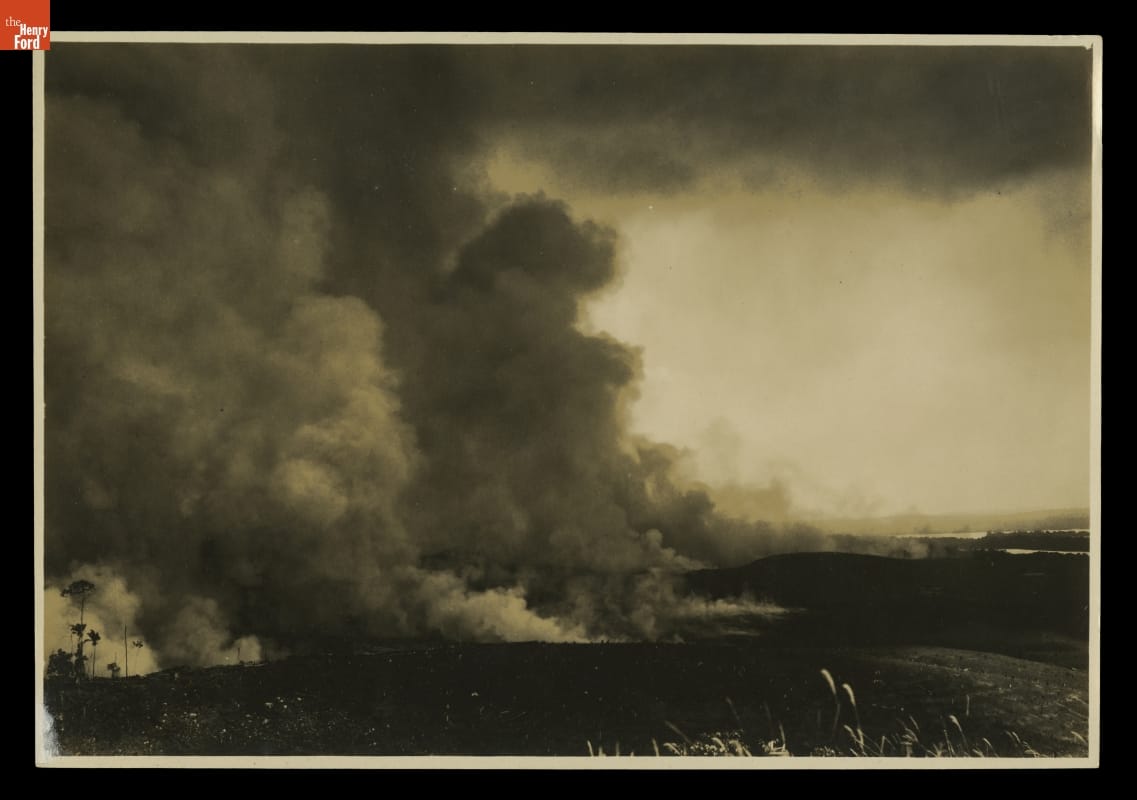
- August 26, 1933
- Collections - Artifact
Burning 1000 Acres, Boa Vista, Brazil, 1933
Henry Ford established Fordlandia and Belterra in the Brazilian rainforest to supply rubber for automobile production. He began shipping machinery and supplies to the Amazon in 1928. Ford paid the indigenous workers good wages and supplied various amenities -- he also imposed foreign work traditions and behavioral restrictions which the workers resented. The plantations failed and Ford Motor Company disposed of the project in 1945.
- Two Year Old Rubber Trees Growing at Fordlandia, Brazil, May 1933 - Henry Ford established Fordlandia and Belterra in the Brazilian rainforest to supply rubber for automobile production. He began shipping machinery and supplies to the Amazon in 1928. Ford paid the indigenous workers good wages and supplied various amenities -- he also imposed foreign work traditions and behavioral restrictions which the workers resented. The plantations failed and Ford Motor Company disposed of the project in 1945.
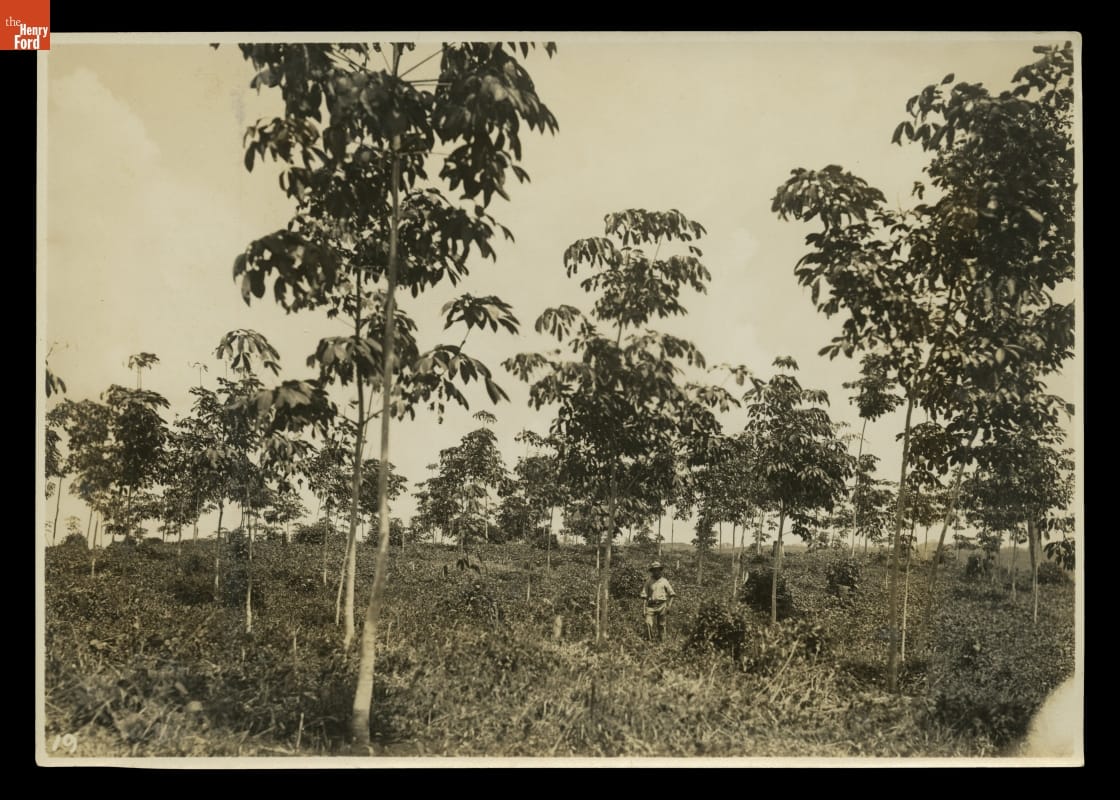
- May 01, 1933
- Collections - Artifact
Two Year Old Rubber Trees Growing at Fordlandia, Brazil, May 1933
Henry Ford established Fordlandia and Belterra in the Brazilian rainforest to supply rubber for automobile production. He began shipping machinery and supplies to the Amazon in 1928. Ford paid the indigenous workers good wages and supplied various amenities -- he also imposed foreign work traditions and behavioral restrictions which the workers resented. The plantations failed and Ford Motor Company disposed of the project in 1945.
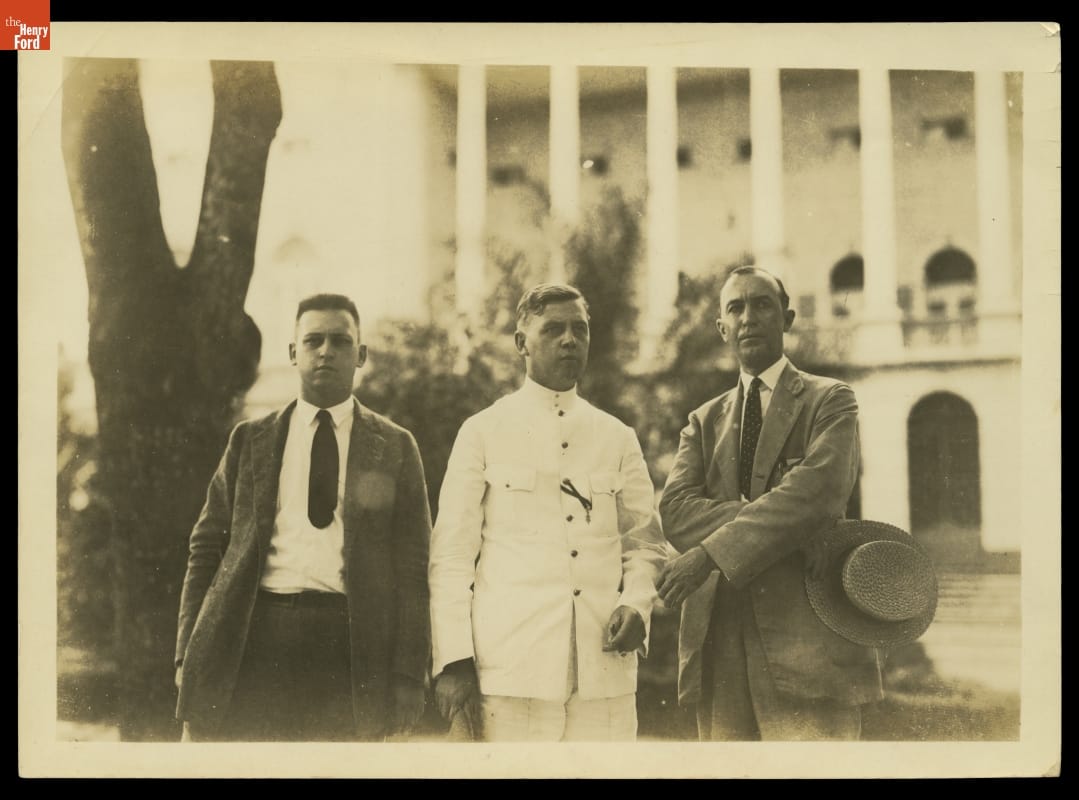
- M. K. Jessup, Carl La Rue, and James Weir in Brazil on an Expedition for the U.S. Department of Agriculture, 1923 - In 1923, threatened by a rising English rubber monopoly, President Herbert Hoover ordered an expedition to study the possibility of growing rubber in the Amazon. Members of the trip included photographer Morris K. Jessup, University of Michigan botanist Carl D. LaRue, and plant pathologist James Weir. Henry Ford would later draw on the expedition's findings when planning his rubber plantations in the Amazon.
- August 05, 1923
- Collections - Artifact
M. K. Jessup, Carl La Rue, and James Weir in Brazil on an Expedition for the U.S. Department of Agriculture, 1923
In 1923, threatened by a rising English rubber monopoly, President Herbert Hoover ordered an expedition to study the possibility of growing rubber in the Amazon. Members of the trip included photographer Morris K. Jessup, University of Michigan botanist Carl D. LaRue, and plant pathologist James Weir. Henry Ford would later draw on the expedition's findings when planning his rubber plantations in the Amazon.