
Search
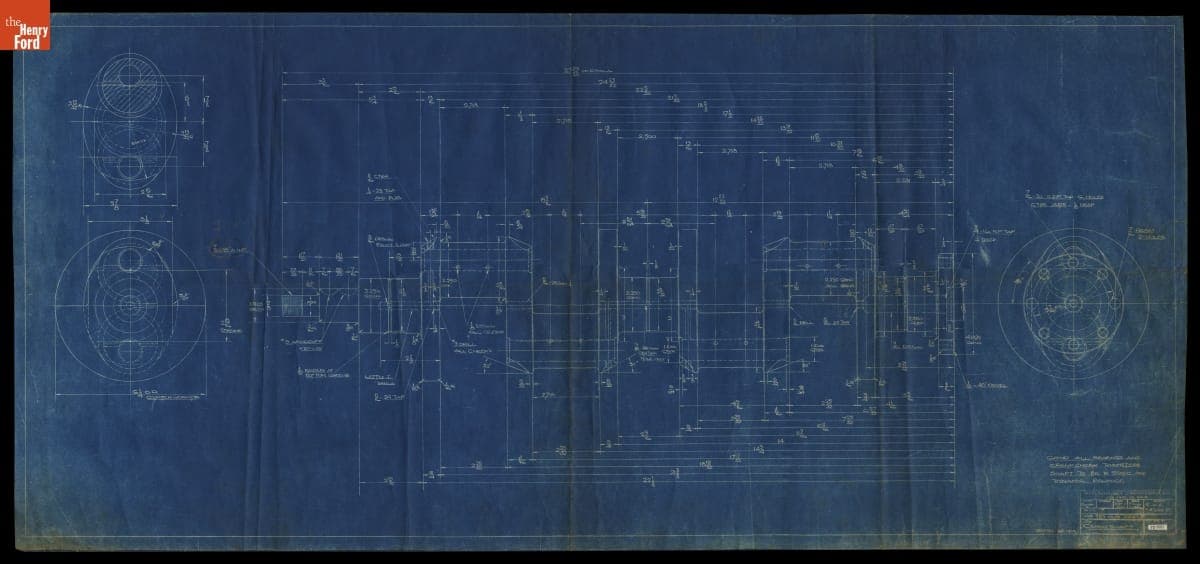
- Drawing, "Crankshaft," Offenhauser Engineering Co., Los Angeles, California, September 4, 1940 - This is one of countless technical drawings produced by Leo Goossen during his 55-year career. Goossen remains one of the most influential engine designers in American auto racing history. Goossen engines, built first with Harry Miller and then with Fred Offenhauser, dominated the Indianapolis 500 from the 1920s into the 1970s.
- September 04, 1940
- Collections - Artifact
Drawing, "Crankshaft," Offenhauser Engineering Co., Los Angeles, California, September 4, 1940
This is one of countless technical drawings produced by Leo Goossen during his 55-year career. Goossen remains one of the most influential engine designers in American auto racing history. Goossen engines, built first with Harry Miller and then with Fred Offenhauser, dominated the Indianapolis 500 from the 1920s into the 1970s.
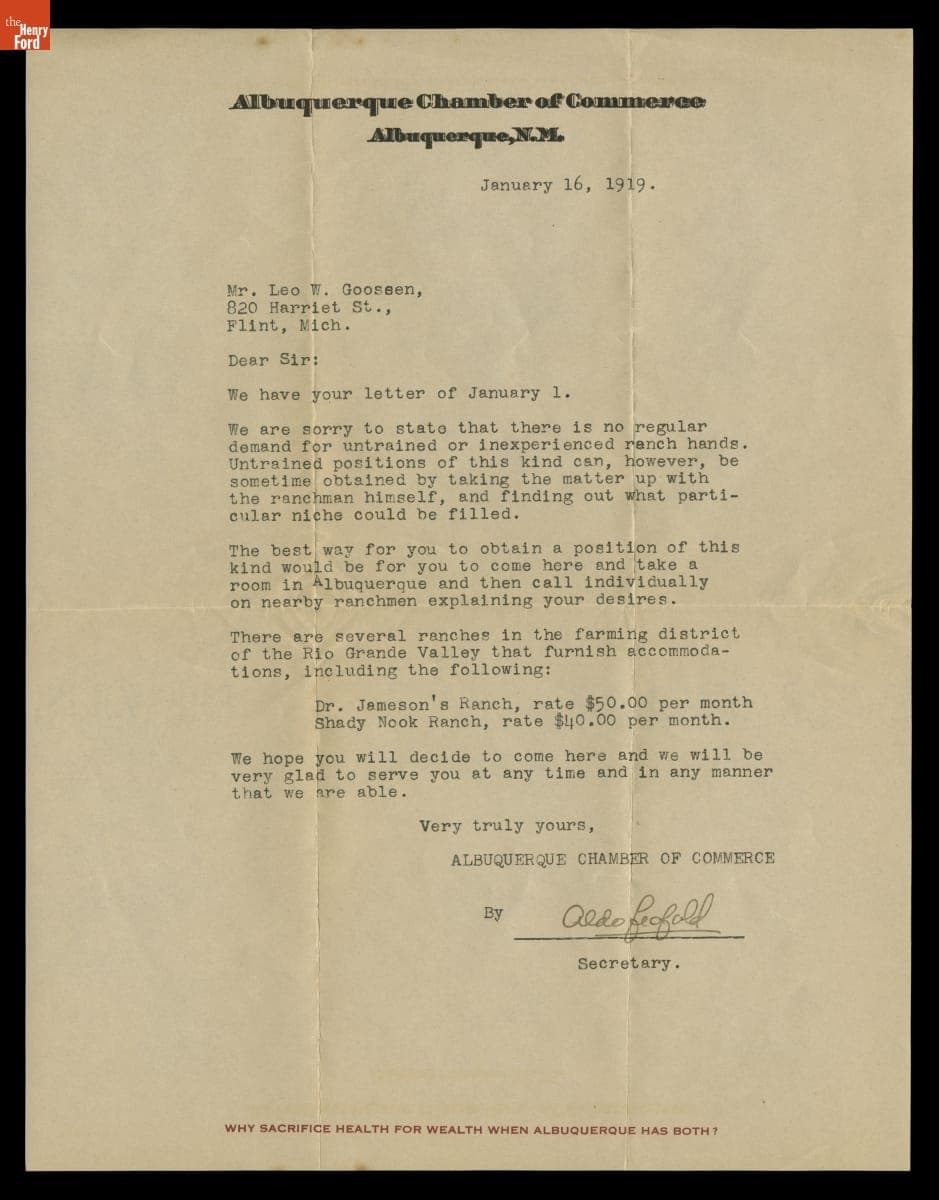
- Letter from the Albuquerque Chamber of Commerce to Leo Goossen, January 16, 1919 - Leo Goossen relocated from Detroit to New Mexico for health reasons in 1919. It was a fortunate move. While west, he connected with race car designer Harry Miller in Los Angeles. The two became a formidable team, with Goossen's technical training complementing Miller's bold thinking. Goossen later partnered with Fred Offenhauser, another Miller associate, to design the successful Offenhauser racing engine.
- January 16, 1919
- Collections - Artifact
Letter from the Albuquerque Chamber of Commerce to Leo Goossen, January 16, 1919
Leo Goossen relocated from Detroit to New Mexico for health reasons in 1919. It was a fortunate move. While west, he connected with race car designer Harry Miller in Los Angeles. The two became a formidable team, with Goossen's technical training complementing Miller's bold thinking. Goossen later partnered with Fred Offenhauser, another Miller associate, to design the successful Offenhauser racing engine.
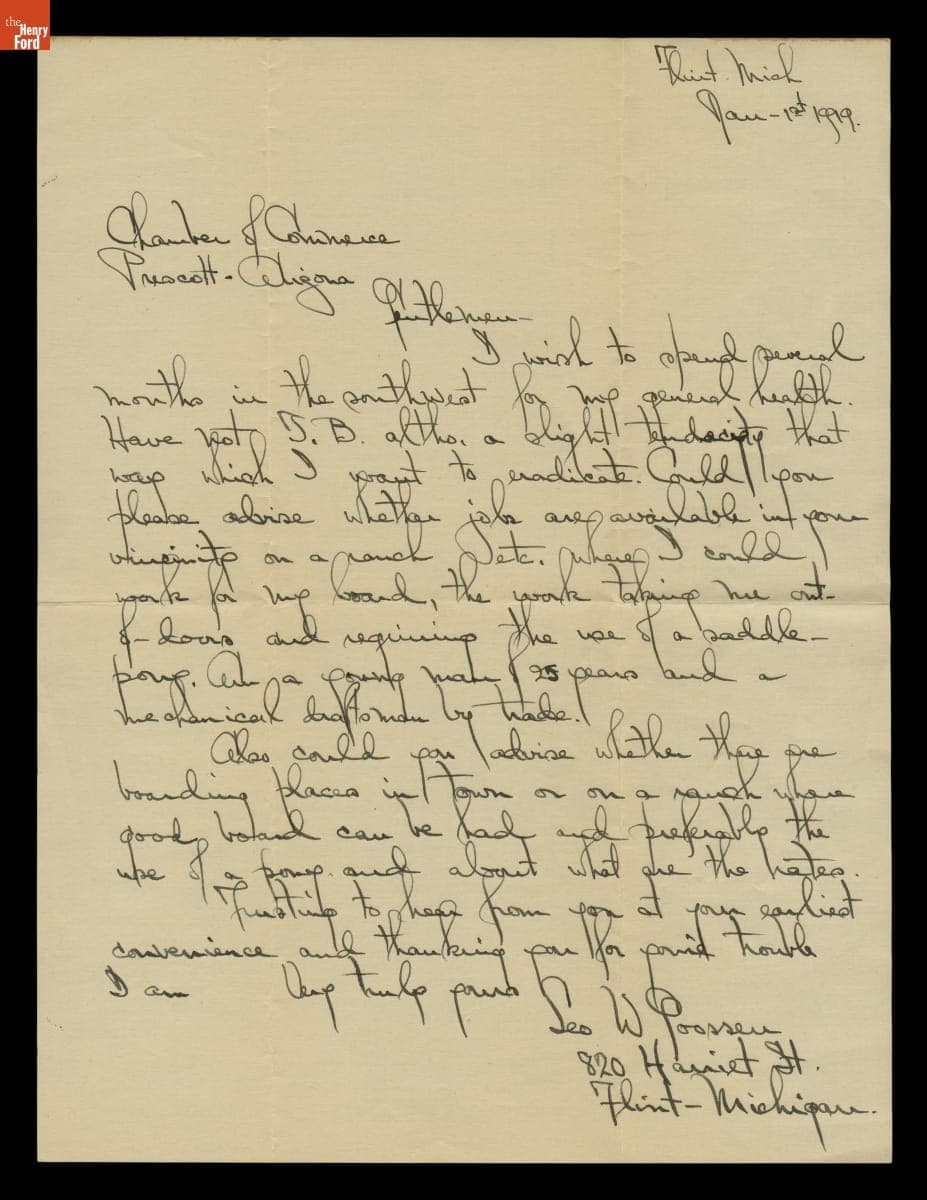
- Letter from Leo Goossen to the Prescott, Arizona Chamber of Commerce, January 1, 1919 - Leo Goossen relocated from Detroit to New Mexico for health reasons in 1919. It was a fortunate move. While west, he connected with race car designer Harry Miller in Los Angeles. The two became a formidable team, with Goossen's technical training complementing Miller's bold thinking. Goossen later partnered with Fred Offenhauser, another Miller associate, to design the successful Offenhauser racing engine.
- January 01, 1919
- Collections - Artifact
Letter from Leo Goossen to the Prescott, Arizona Chamber of Commerce, January 1, 1919
Leo Goossen relocated from Detroit to New Mexico for health reasons in 1919. It was a fortunate move. While west, he connected with race car designer Harry Miller in Los Angeles. The two became a formidable team, with Goossen's technical training complementing Miller's bold thinking. Goossen later partnered with Fred Offenhauser, another Miller associate, to design the successful Offenhauser racing engine.
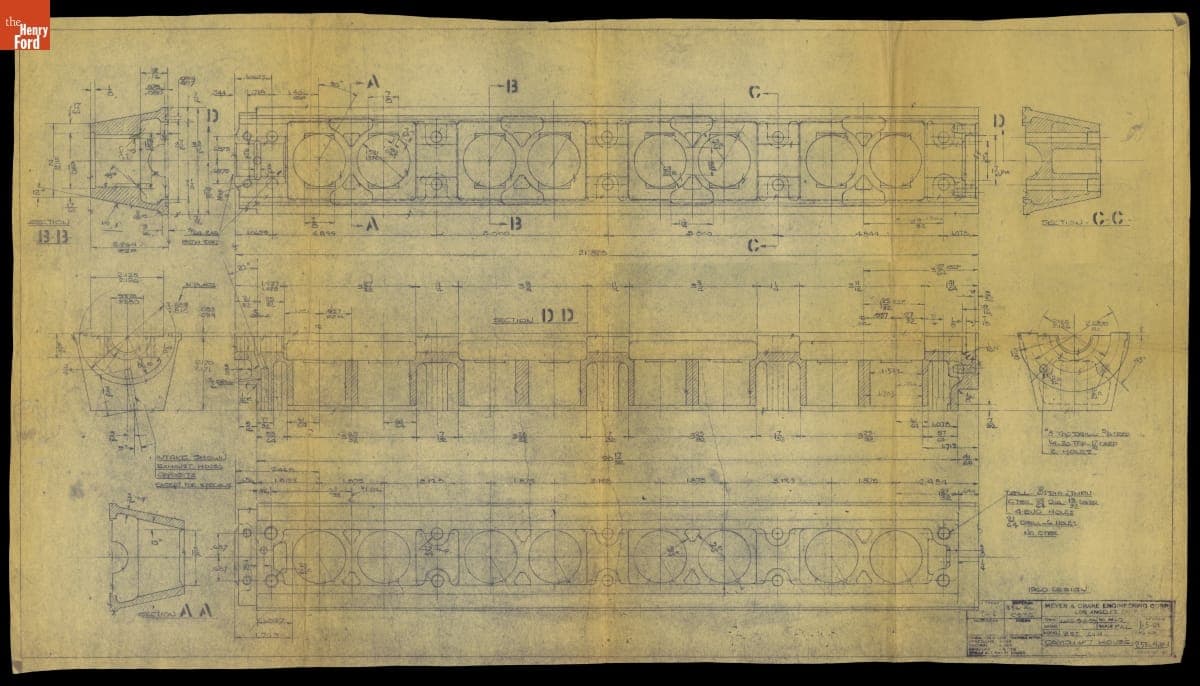
- Drawing "Camshaft Hous'g," Meyer & Drake Engineering Corp., Los Angeles, California, January 5, 1960 - This is one of countless technical drawings produced by Leo Goossen during his 55-year career. Goossen remains one of the most influential engine designers in American auto racing history. Goossen engines, built first with Harry Miller and then with Fred Offenhauser, dominated the Indianapolis 500 from the 1920s into the 1970s.
- 02 September 1959-05 January 1960
- Collections - Artifact
Drawing "Camshaft Hous'g," Meyer & Drake Engineering Corp., Los Angeles, California, January 5, 1960
This is one of countless technical drawings produced by Leo Goossen during his 55-year career. Goossen remains one of the most influential engine designers in American auto racing history. Goossen engines, built first with Harry Miller and then with Fred Offenhauser, dominated the Indianapolis 500 from the 1920s into the 1970s.
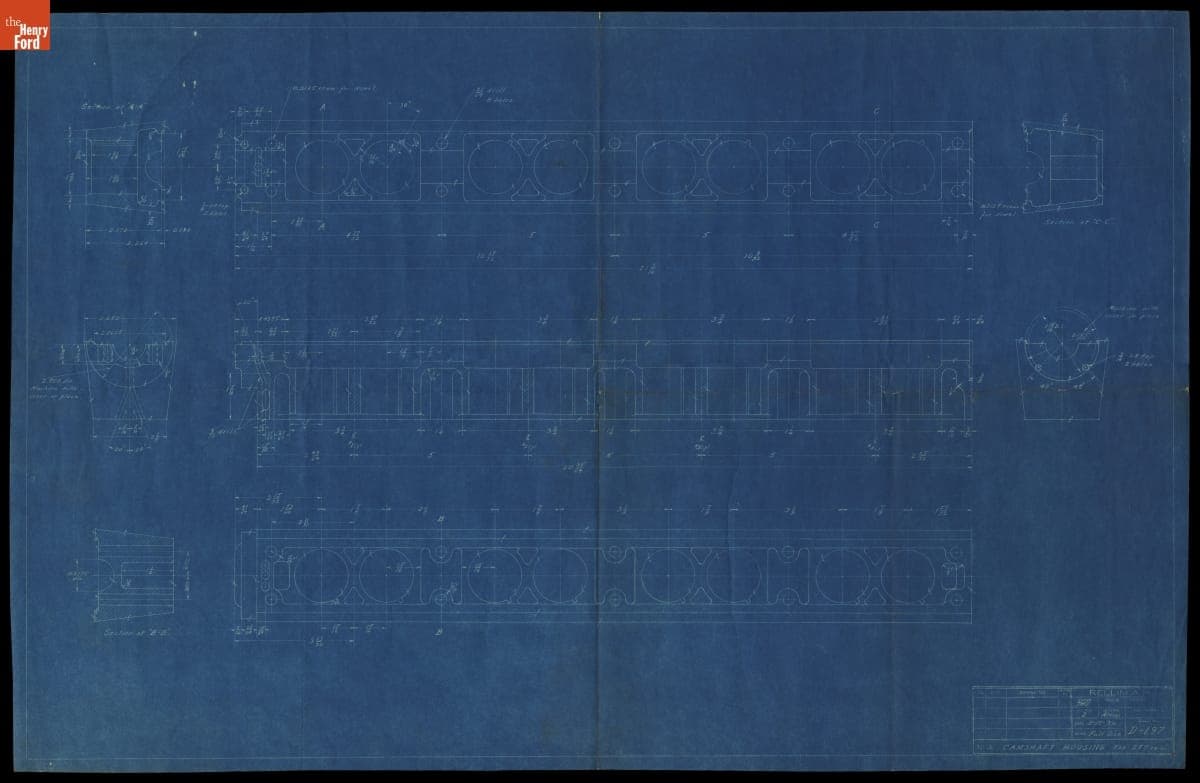
- Drawing "Camshaft Housing for 255 cu. in.," August 15, 1932 - This is one of countless technical drawings produced by Leo Goossen during his 55-year career. Goossen remains one of the most influential engine designers in American auto racing history. Goossen engines, built first with Harry Miller and then with Fred Offenhauser, dominated the Indianapolis 500 from the 1920s into the 1970s.
- August 15, 1932
- Collections - Artifact
Drawing "Camshaft Housing for 255 cu. in.," August 15, 1932
This is one of countless technical drawings produced by Leo Goossen during his 55-year career. Goossen remains one of the most influential engine designers in American auto racing history. Goossen engines, built first with Harry Miller and then with Fred Offenhauser, dominated the Indianapolis 500 from the 1920s into the 1970s.