
Search
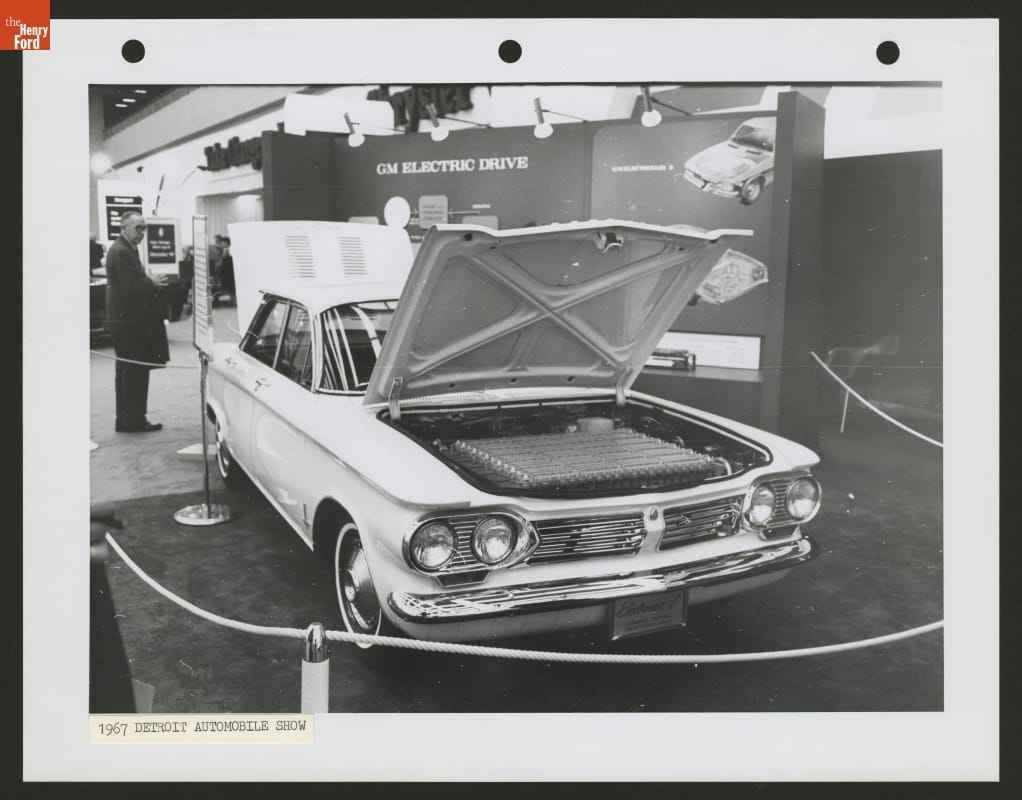
- Electric Corvair at Detroit Automobile Show, 1967 - This photograph shows a Chevrolet Corvair with something new under the hood. General Motors exhibited this experimental fuel-cell-powered vehicle at the 1967 Detroit Auto Show. Fuel cells produce electricity through a chemical reaction. They don't rely on petroleum, and water -- not toxic emissions -- is their byproduct.
- 1967
- Collections - Artifact
Electric Corvair at Detroit Automobile Show, 1967
This photograph shows a Chevrolet Corvair with something new under the hood. General Motors exhibited this experimental fuel-cell-powered vehicle at the 1967 Detroit Auto Show. Fuel cells produce electricity through a chemical reaction. They don't rely on petroleum, and water -- not toxic emissions -- is their byproduct.
- Sunroof on a Station Wagon at the New York International Auto Show, 1959 - Station wagons were low-production specialty vehicles until the 1950s, when parents embraced them as ideal vehicles for transporting growing families. This highly stylized station wagon at a 1959 auto show illustrates their rise from utility vehicles to fashion-forward, family-friendly haulers. Until the 1980s (with the introduction of minivans) packed station wagons were the very symbol of the family car.
- 1959
- Collections - Artifact
Sunroof on a Station Wagon at the New York International Auto Show, 1959
Station wagons were low-production specialty vehicles until the 1950s, when parents embraced them as ideal vehicles for transporting growing families. This highly stylized station wagon at a 1959 auto show illustrates their rise from utility vehicles to fashion-forward, family-friendly haulers. Until the 1980s (with the introduction of minivans) packed station wagons were the very symbol of the family car.
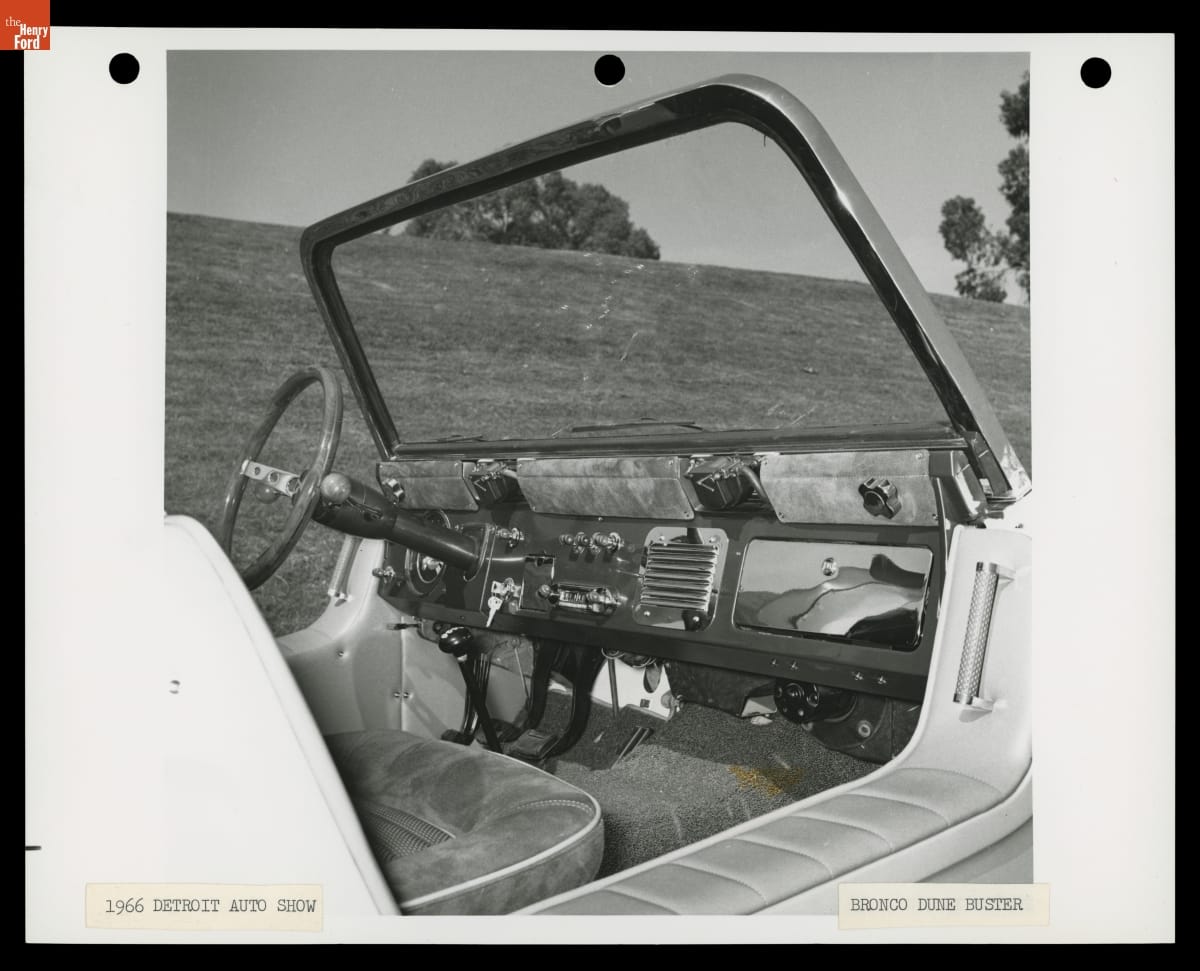
- Interior of the Bronco Dune Buster at the Detroit Auto Show, 1966 - Ford introduced the Bronco for 1966. It competed against similar compact four-wheel-drive models like the Jeep CJ-5 and the International Harvester Scout. Ford had "King of Kustomizers" George Barris build the Bronco Dune Buster for the auto show circuit. Though Barris's Bronco featured luxury appointments well beyond the spartan production version, it helped promote Ford's new off-roader.
- 1966
- Collections - Artifact
Interior of the Bronco Dune Buster at the Detroit Auto Show, 1966
Ford introduced the Bronco for 1966. It competed against similar compact four-wheel-drive models like the Jeep CJ-5 and the International Harvester Scout. Ford had "King of Kustomizers" George Barris build the Bronco Dune Buster for the auto show circuit. Though Barris's Bronco featured luxury appointments well beyond the spartan production version, it helped promote Ford's new off-roader.
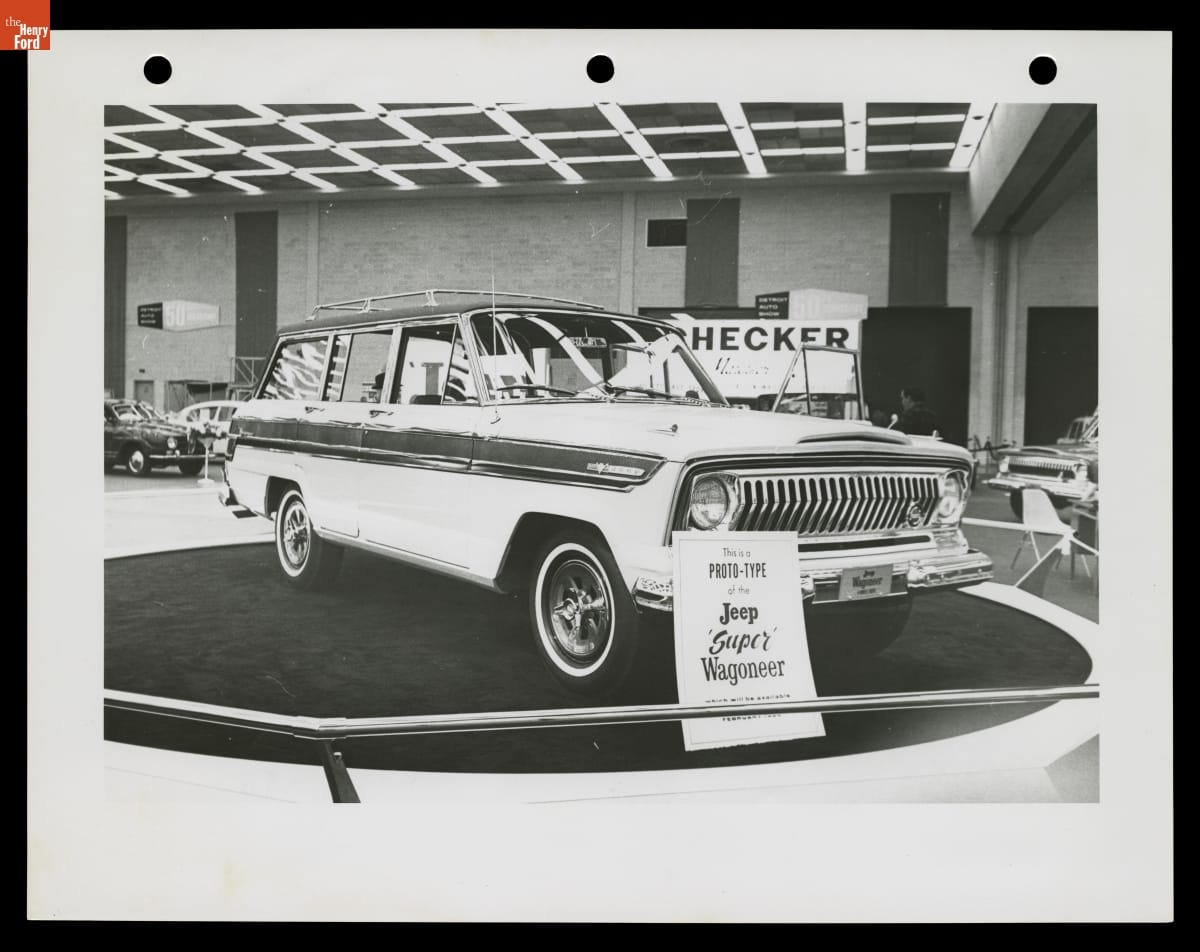
- Prototype of the Jeep Super Wagoneer at the Detroit Auto Show, 1966 - Kaiser Motors purchased Willys-Overland, including its successful Jeep brand, in 1953. Kaiser ended passenger car production to focus on Jeep runabout, truck, and van models. The company introduced the Jeep Wagoneer for 1963. It was the first four-door, four-wheel-drive family wagon. The luxury Super Wagoneer joined Jeep's lineup for 1966. The first-generation Wagoneer remained in production for 20 years.
- 1966
- Collections - Artifact
Prototype of the Jeep Super Wagoneer at the Detroit Auto Show, 1966
Kaiser Motors purchased Willys-Overland, including its successful Jeep brand, in 1953. Kaiser ended passenger car production to focus on Jeep runabout, truck, and van models. The company introduced the Jeep Wagoneer for 1963. It was the first four-door, four-wheel-drive family wagon. The luxury Super Wagoneer joined Jeep's lineup for 1966. The first-generation Wagoneer remained in production for 20 years.
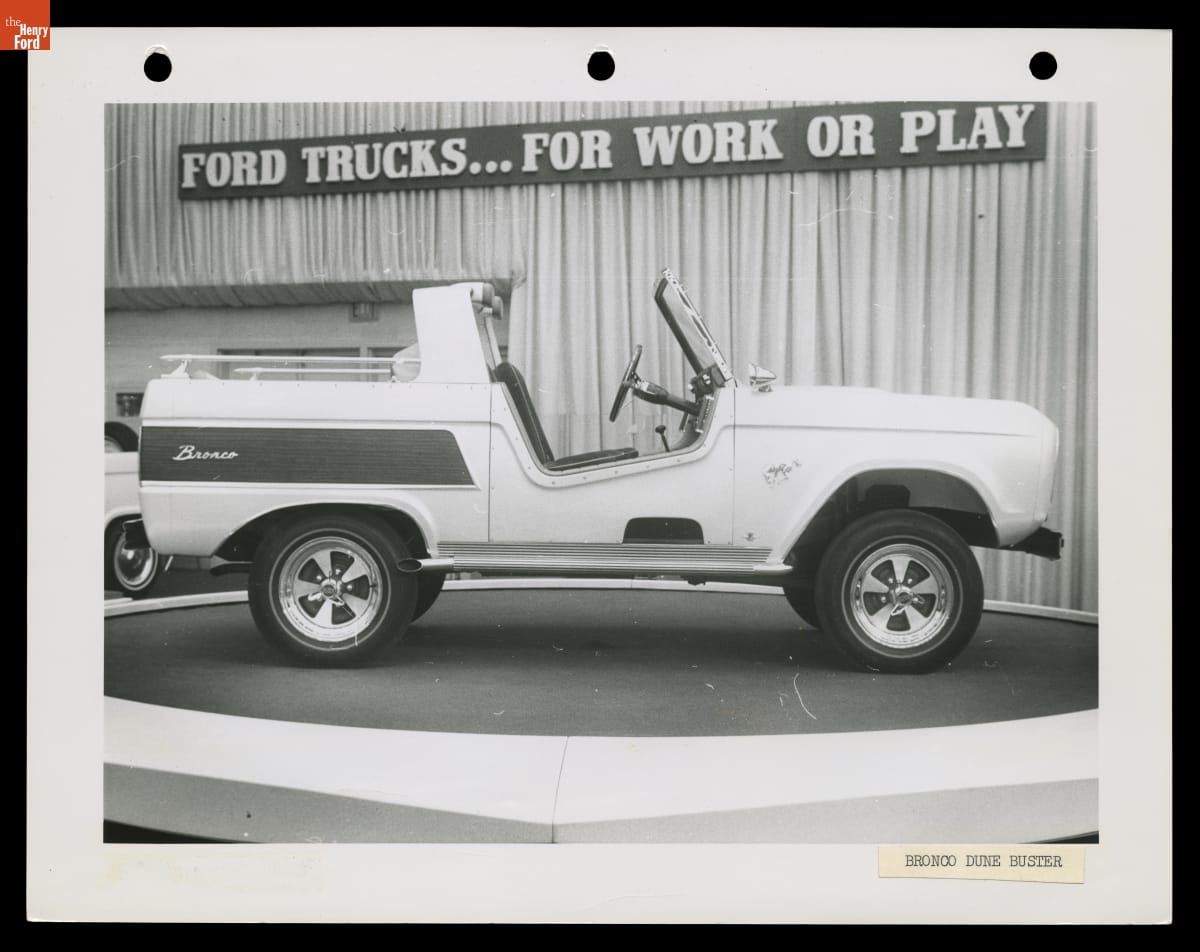
- Bronco Dune Buster at the Detroit Auto Show, 1966 - Ford introduced the Bronco for 1966. It competed against similar compact four-wheel-drive models like the Jeep CJ-5 and the International Harvester Scout. Ford had "King of Kustomizers" George Barris build the Bronco Dune Buster for the auto show circuit. Though Barris's Bronco featured luxury appointments well beyond the spartan production version, it helped promote Ford's new off-roader.
- 1966
- Collections - Artifact
Bronco Dune Buster at the Detroit Auto Show, 1966
Ford introduced the Bronco for 1966. It competed against similar compact four-wheel-drive models like the Jeep CJ-5 and the International Harvester Scout. Ford had "King of Kustomizers" George Barris build the Bronco Dune Buster for the auto show circuit. Though Barris's Bronco featured luxury appointments well beyond the spartan production version, it helped promote Ford's new off-roader.
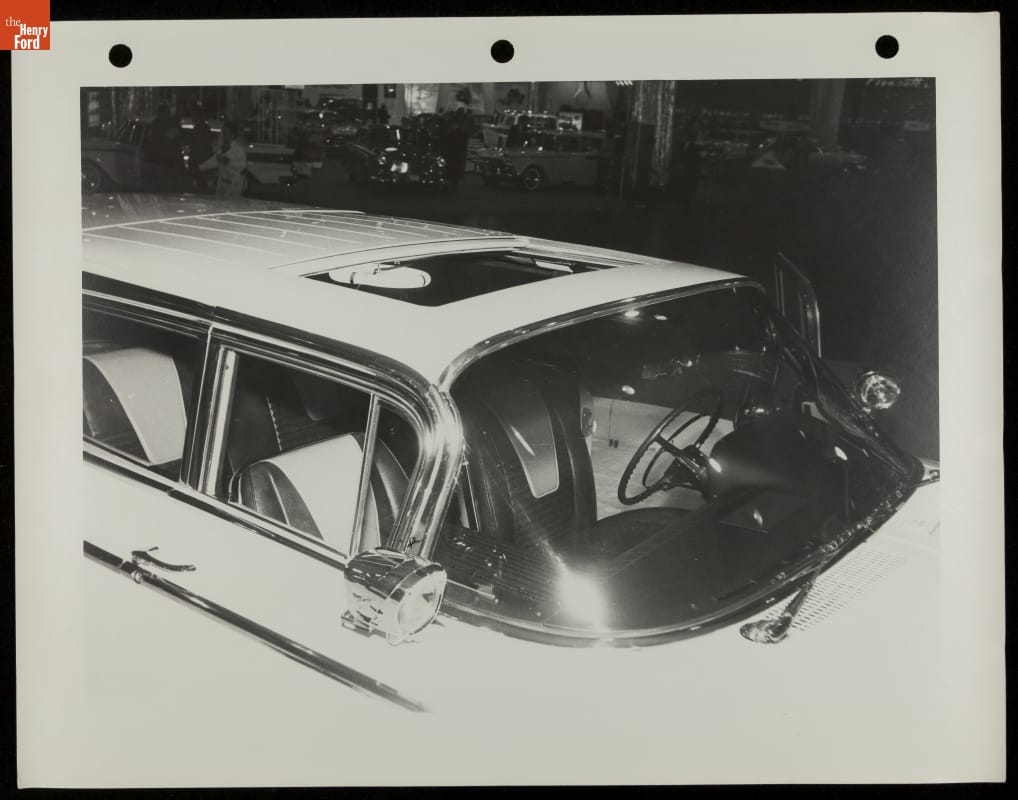
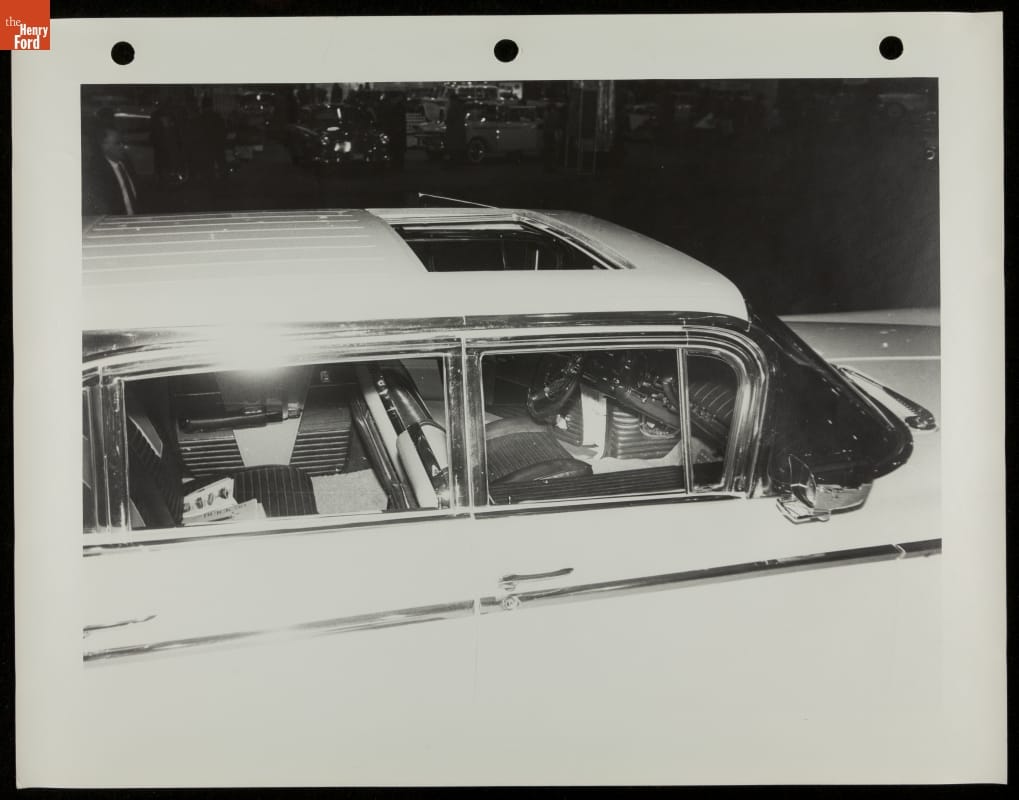
- Sunroof and Interior of a Station Wagon, New York International Auto Show, 1959 - Station wagons were low-production specialty vehicles until the 1950s, when parents embraced them as ideal vehicles for transporting growing families. This highly stylized station wagon at a 1959 auto show illustrates their rise from utility vehicles to fashion-forward, family-friendly haulers. Until the 1980s (with the introduction of minivans) packed station wagons were the very symbol of the family car.
- 1959
- Collections - Artifact
Sunroof and Interior of a Station Wagon, New York International Auto Show, 1959
Station wagons were low-production specialty vehicles until the 1950s, when parents embraced them as ideal vehicles for transporting growing families. This highly stylized station wagon at a 1959 auto show illustrates their rise from utility vehicles to fashion-forward, family-friendly haulers. Until the 1980s (with the introduction of minivans) packed station wagons were the very symbol of the family car.
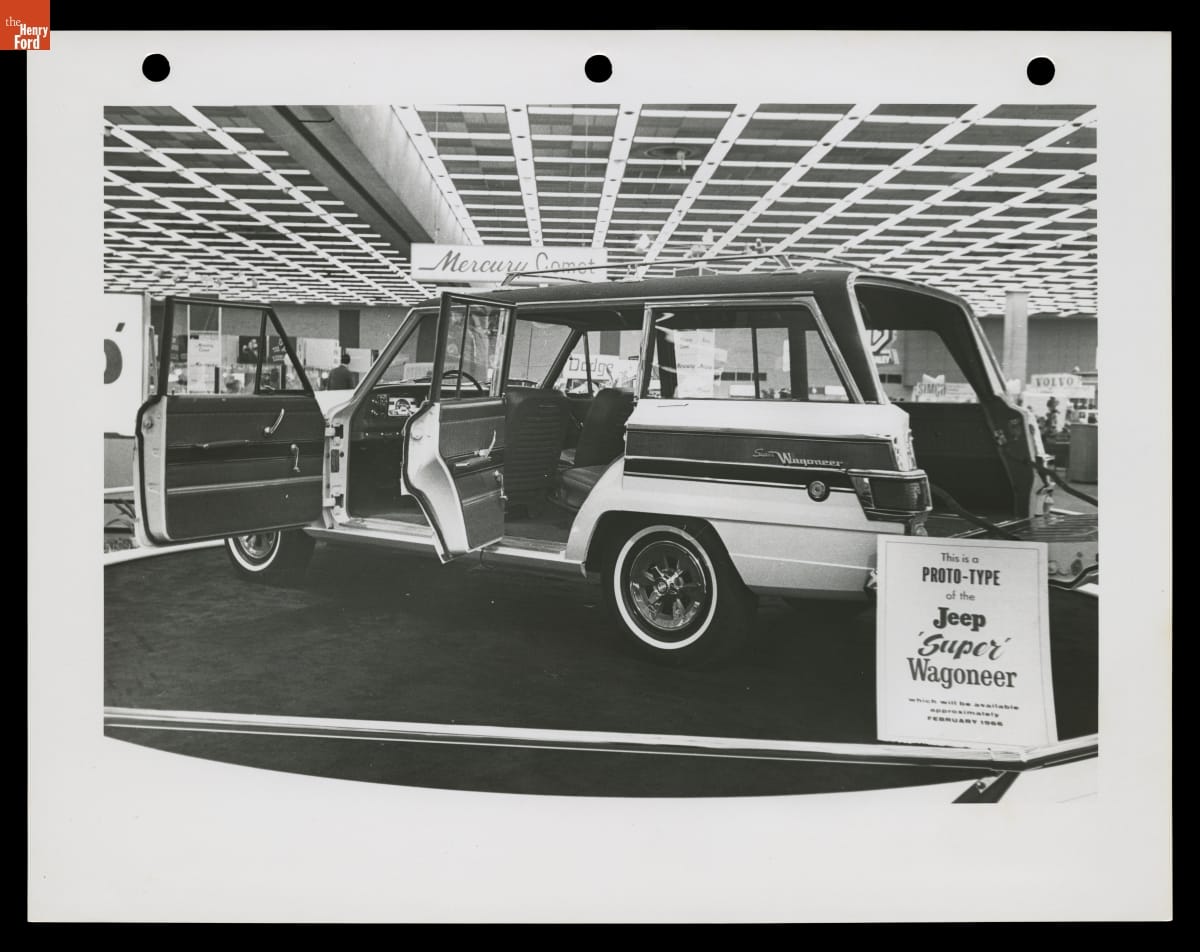
- Prototype of the Jeep Super Wagoneer at the Detroit Auto Show, 1966 - Kaiser Motors purchased Willys-Overland, including its successful Jeep brand, in 1953. Kaiser ended passenger car production to focus on Jeep runabout, truck, and van models. The company introduced the Jeep Wagoneer for 1963. It was the first four-door, four-wheel-drive family wagon. The luxury Super Wagoneer joined Jeep's lineup for 1966. The first-generation Wagoneer remained in production for 20 years.
- 1966
- Collections - Artifact
Prototype of the Jeep Super Wagoneer at the Detroit Auto Show, 1966
Kaiser Motors purchased Willys-Overland, including its successful Jeep brand, in 1953. Kaiser ended passenger car production to focus on Jeep runabout, truck, and van models. The company introduced the Jeep Wagoneer for 1963. It was the first four-door, four-wheel-drive family wagon. The luxury Super Wagoneer joined Jeep's lineup for 1966. The first-generation Wagoneer remained in production for 20 years.
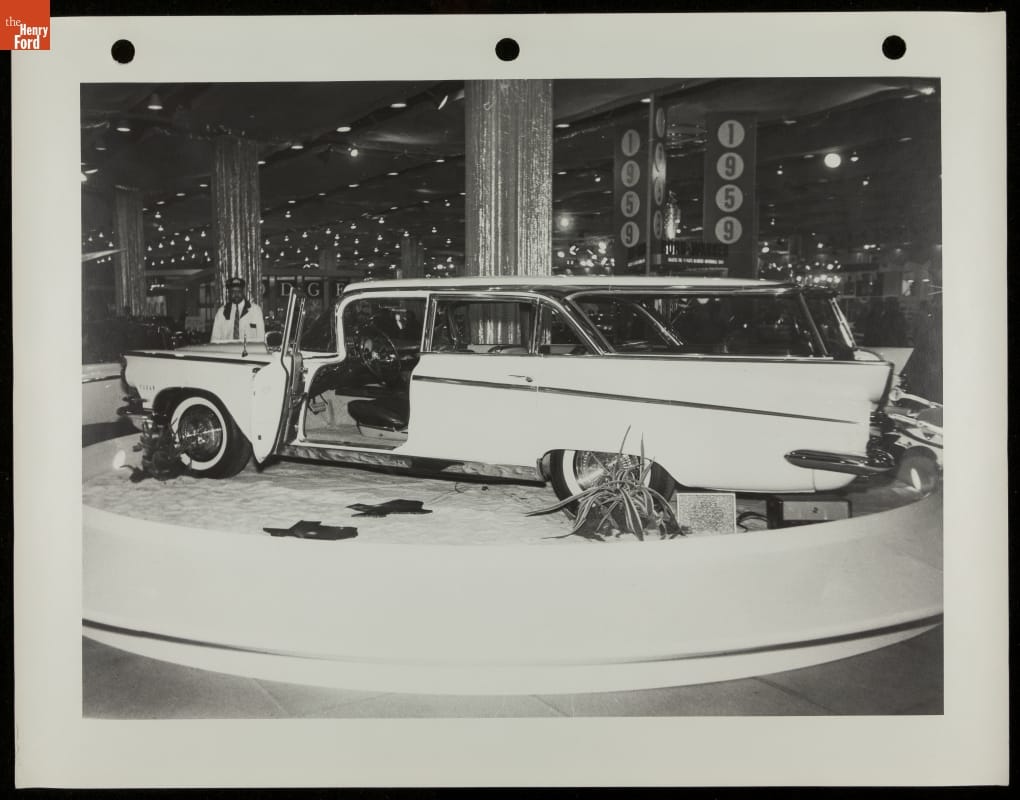
- Station Wagon at the New York International Auto Show, 1959 - Station wagons were low-production specialty vehicles until the 1950s, when parents embraced them as ideal vehicles for transporting growing families. This highly stylized station wagon at a 1959 auto show illustrates their rise from utility vehicles to fashion-forward, family-friendly haulers. Until the 1980s (with the introduction of minivans) packed station wagons were the very symbol of the family car.
- 1959
- Collections - Artifact
Station Wagon at the New York International Auto Show, 1959
Station wagons were low-production specialty vehicles until the 1950s, when parents embraced them as ideal vehicles for transporting growing families. This highly stylized station wagon at a 1959 auto show illustrates their rise from utility vehicles to fashion-forward, family-friendly haulers. Until the 1980s (with the introduction of minivans) packed station wagons were the very symbol of the family car.