
Search
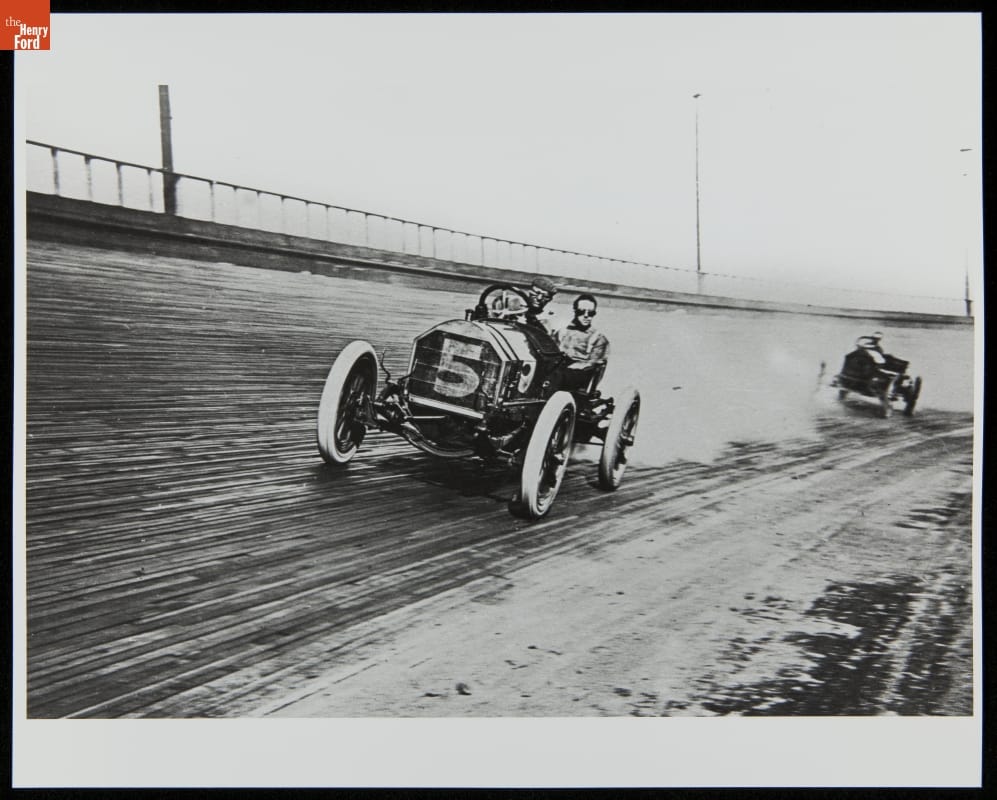
- Board Track, Playa Del Rey, California - Faster race cars prompted promoters to build board tracks in the 1910s. Wooden boards provided a smooth road surface and were less expensive than bricks or concrete. But rotting wood required frequent replacement. Improvements in concrete and asphalt made board tracks obsolete in the 1930s. The one-mile Los Angeles Motordrome at Playa del Rey, California, operated from 1910-1913.
- circa 1911
- Collections - Artifact
Board Track, Playa Del Rey, California
Faster race cars prompted promoters to build board tracks in the 1910s. Wooden boards provided a smooth road surface and were less expensive than bricks or concrete. But rotting wood required frequent replacement. Improvements in concrete and asphalt made board tracks obsolete in the 1930s. The one-mile Los Angeles Motordrome at Playa del Rey, California, operated from 1910-1913.
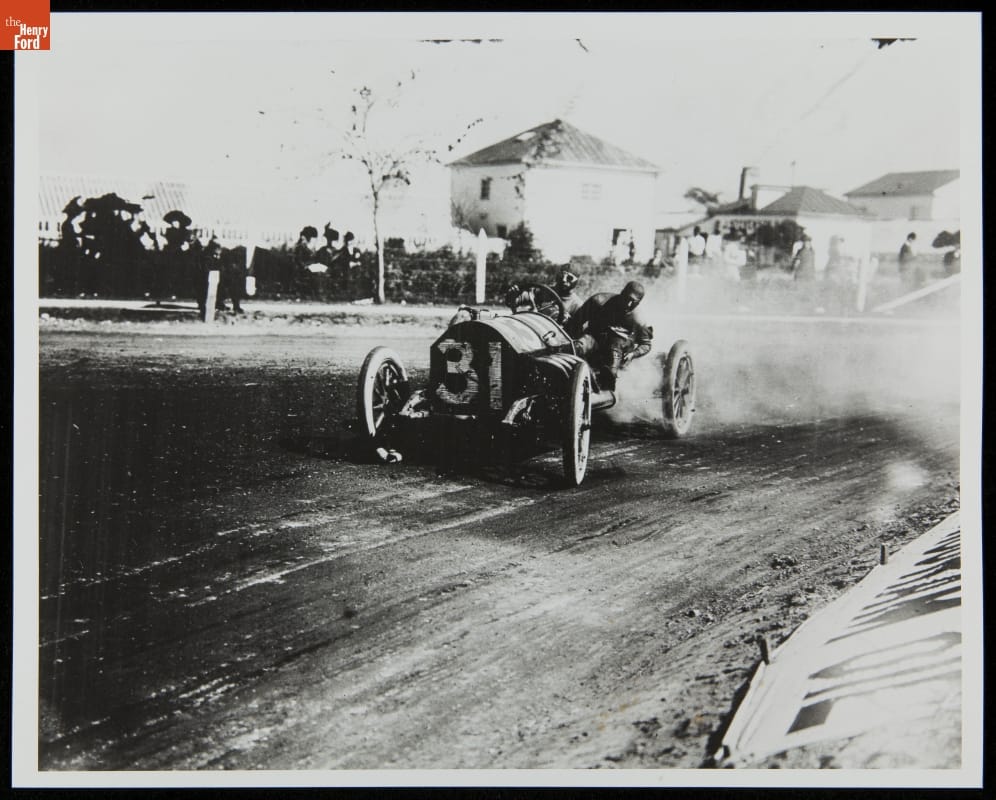
- Mortimer Roberts, #31 Abbott-Detroit, Tiedman Trophy Race - Charles Abbott formed Abbott Motor Company in Detroit in 1909. The firm offered multiple models under the Abbott-Detroit brand, all priced from about $1,200 up to $3,500. Abbott-Detroit cars competed successfully in early circuit races and hill climbs. The company overreached itself by relocating to a larger factory in Cleveland in 1916. Bankruptcy ended operations in early 1918.
- November 27, 1911
- Collections - Artifact
Mortimer Roberts, #31 Abbott-Detroit, Tiedman Trophy Race
Charles Abbott formed Abbott Motor Company in Detroit in 1909. The firm offered multiple models under the Abbott-Detroit brand, all priced from about $1,200 up to $3,500. Abbott-Detroit cars competed successfully in early circuit races and hill climbs. The company overreached itself by relocating to a larger factory in Cleveland in 1916. Bankruptcy ended operations in early 1918.
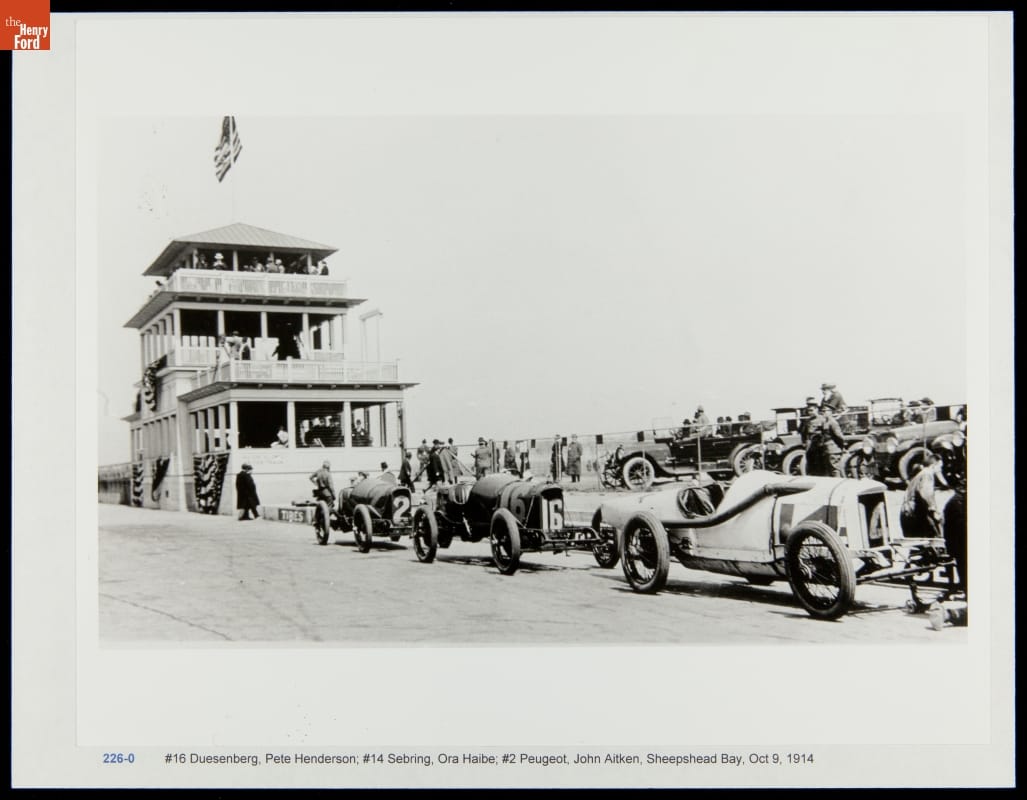
- Pete Henderson, #16 Dusenberg, Ora Haibe, #14 Sebring, John Aitken, #2 Peugeot, Sheepshead Bay, 1914 -
- 1914
- Collections - Artifact
Pete Henderson, #16 Dusenberg, Ora Haibe, #14 Sebring, John Aitken, #2 Peugeot, Sheepshead Bay, 1914
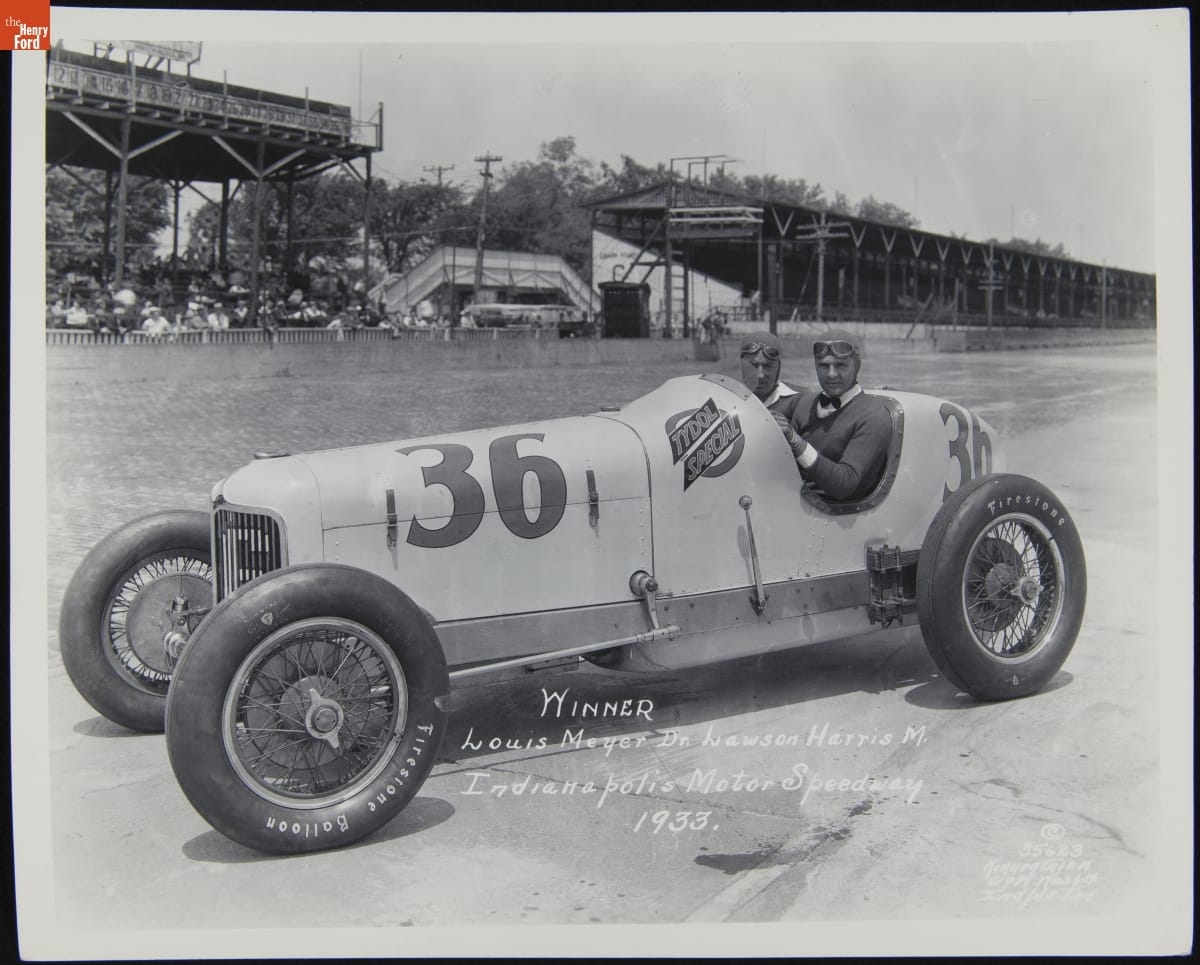
- Winners of the 1933 Indianapolis 500, Driver Louis Meyer and Mechanic Lawson Harris, in #36 Tydol Special - Driver Louis Meyer and riding mechanic Lawson Harris won the Indianapolis 500 in 1933, averaging 104.162 mph. Their Miller-built car was sponsored by Tydol gasoline. It was the second of Meyer's three Indy 500 victories. Meyer is also credited with starting the Indy tradition of drinking milk in Victory Lane -- he downed a glass of buttermilk after his 1936 win.
- 1933
- Collections - Artifact
Winners of the 1933 Indianapolis 500, Driver Louis Meyer and Mechanic Lawson Harris, in #36 Tydol Special
Driver Louis Meyer and riding mechanic Lawson Harris won the Indianapolis 500 in 1933, averaging 104.162 mph. Their Miller-built car was sponsored by Tydol gasoline. It was the second of Meyer's three Indy 500 victories. Meyer is also credited with starting the Indy tradition of drinking milk in Victory Lane -- he downed a glass of buttermilk after his 1936 win.
- Barney Oldfield Driving a Christie Race Car at Ascot Speedway, March 5, 1916 -
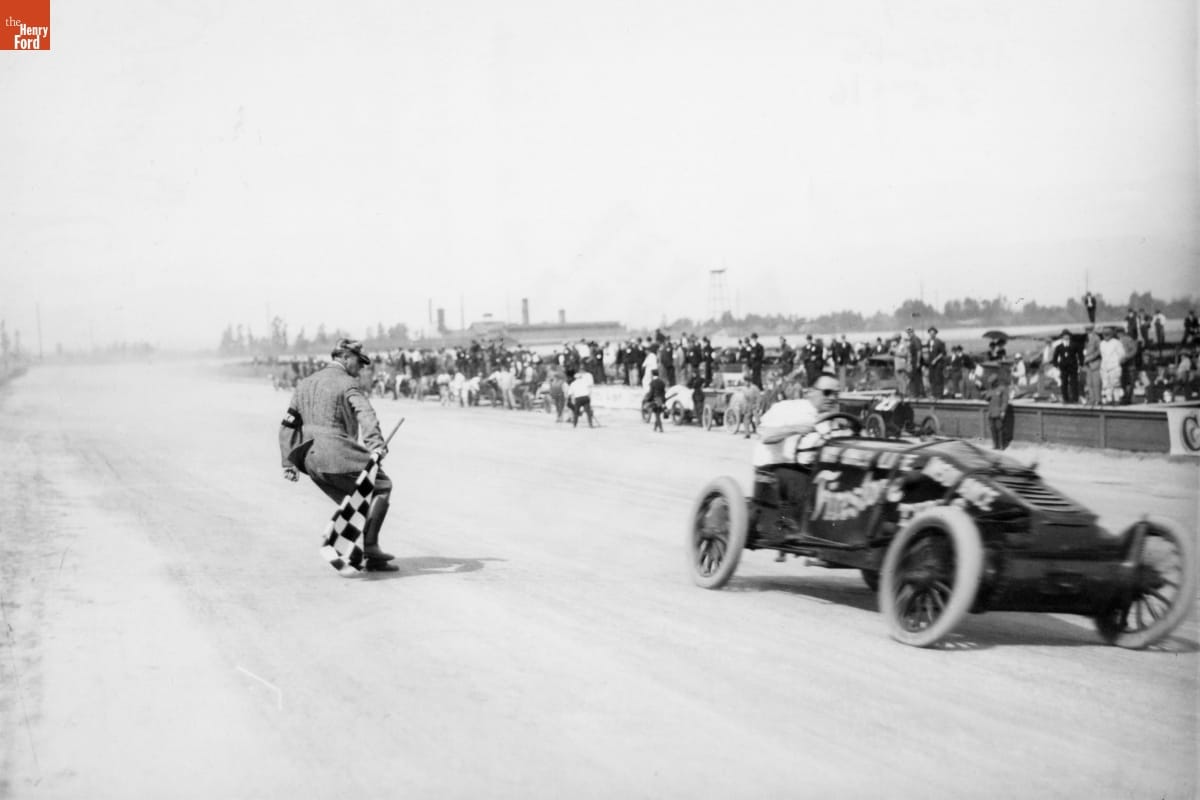
- March 05, 1916
- Collections - Artifact
Barney Oldfield Driving a Christie Race Car at Ascot Speedway, March 5, 1916
- Three Men Working on Car, Indianapolis Speedway, 1913 - The third annual Indianapolis 500 took place on May 30, 1913. Twenty-seven drivers qualified for the event, including six drivers from Europe. French racer Jules Goux took the checkered flag in the #16 Peugeot after completing the race's 500 miles in 6 hours, 35 minutes, 5 seconds.
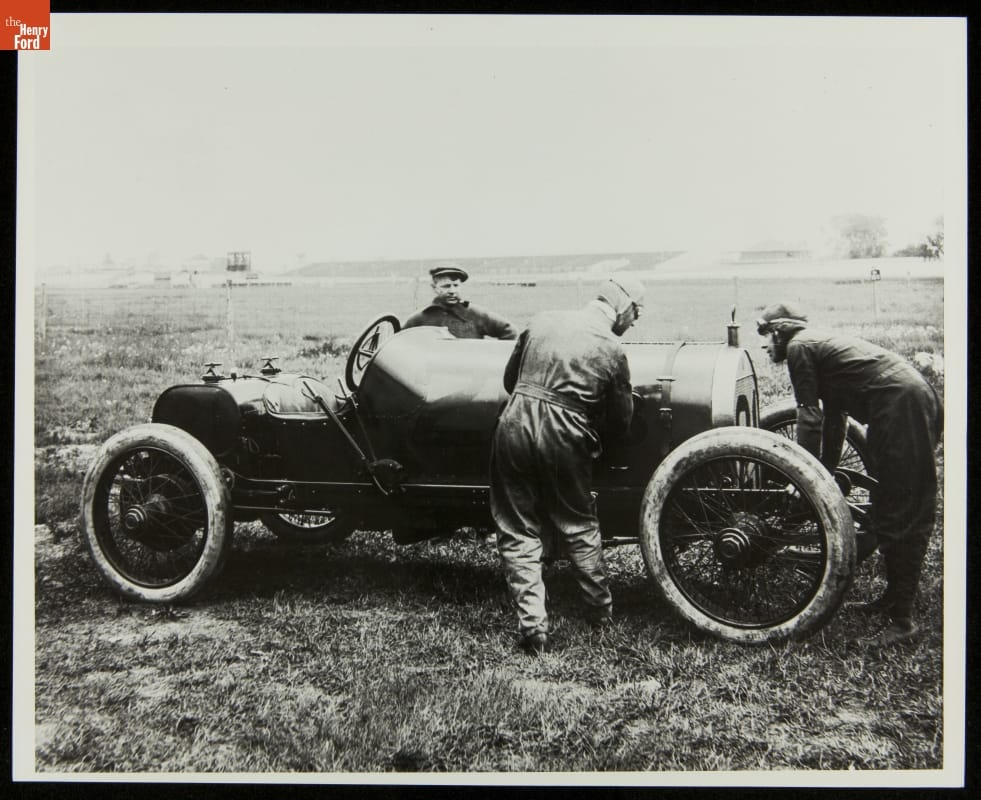
- 1913
- Collections - Artifact
Three Men Working on Car, Indianapolis Speedway, 1913
The third annual Indianapolis 500 took place on May 30, 1913. Twenty-seven drivers qualified for the event, including six drivers from Europe. French racer Jules Goux took the checkered flag in the #16 Peugeot after completing the race's 500 miles in 6 hours, 35 minutes, 5 seconds.
- Hughey Hughes, #21 Mercer, Indianapolis - British-born racer Hugh Hughes competed in the first two Indianapolis 500 races in 1911 and 1912. He scored his personal-best Indy finish in 1912, when he earned the third-place position with the #21 Mercer car. Hughes died in an accident at Pennsylvania's Uniontown Speedway in December 1916.
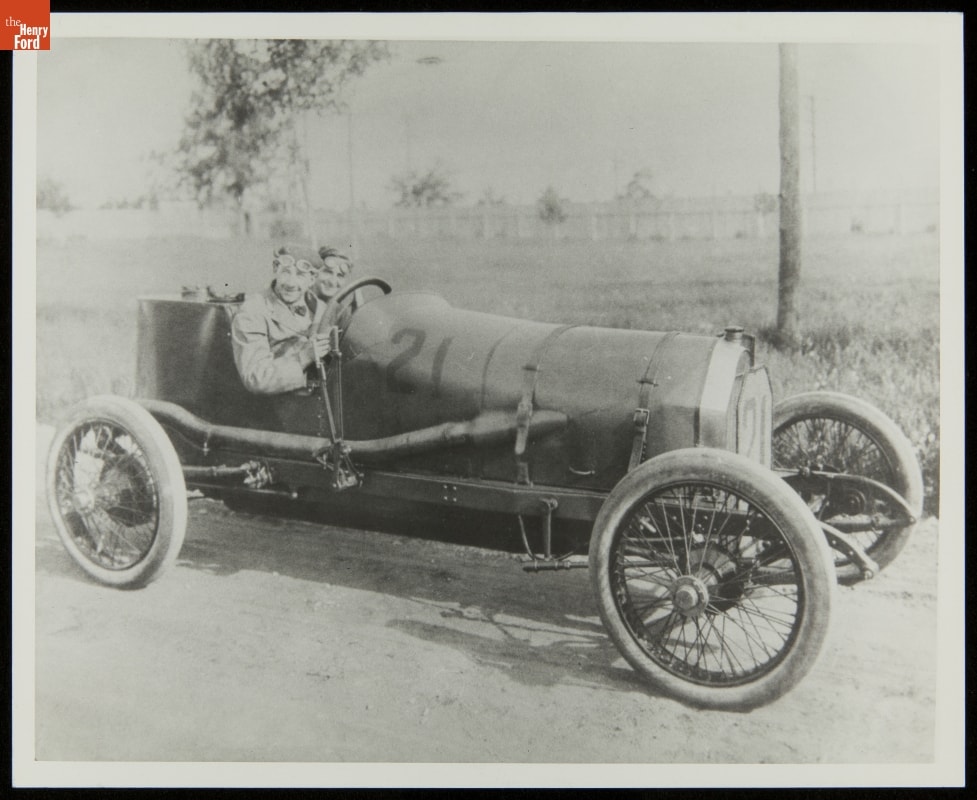
- 1912
- Collections - Artifact
Hughey Hughes, #21 Mercer, Indianapolis
British-born racer Hugh Hughes competed in the first two Indianapolis 500 races in 1911 and 1912. He scored his personal-best Indy finish in 1912, when he earned the third-place position with the #21 Mercer car. Hughes died in an accident at Pennsylvania's Uniontown Speedway in December 1916.
- Rene Thomas, #16 Delage, and the Checkered Flag, Indianapolis Speedway, 1914 - French driver Rene Thomas won the fourth running of the Indianapolis 500, held on May 30, 1914. Thomas and riding mechanic Robert Laly took the checkered flag in the French-built #16 Delage. Thomas led 102 of the race's 200 laps, and he completed the 500-mile contest in 6 hours, 3 minutes, 45.99 seconds.
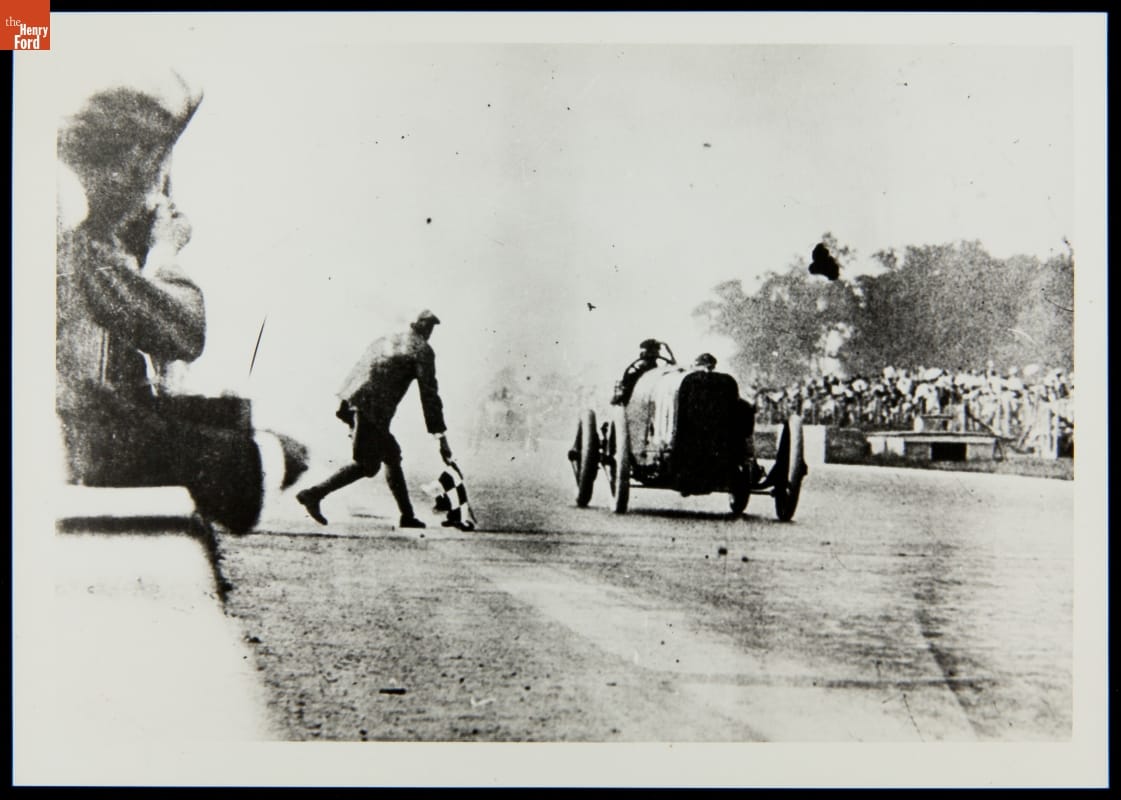
- 1914
- Collections - Artifact
Rene Thomas, #16 Delage, and the Checkered Flag, Indianapolis Speedway, 1914
French driver Rene Thomas won the fourth running of the Indianapolis 500, held on May 30, 1914. Thomas and riding mechanic Robert Laly took the checkered flag in the French-built #16 Delage. Thomas led 102 of the race's 200 laps, and he completed the 500-mile contest in 6 hours, 3 minutes, 45.99 seconds.
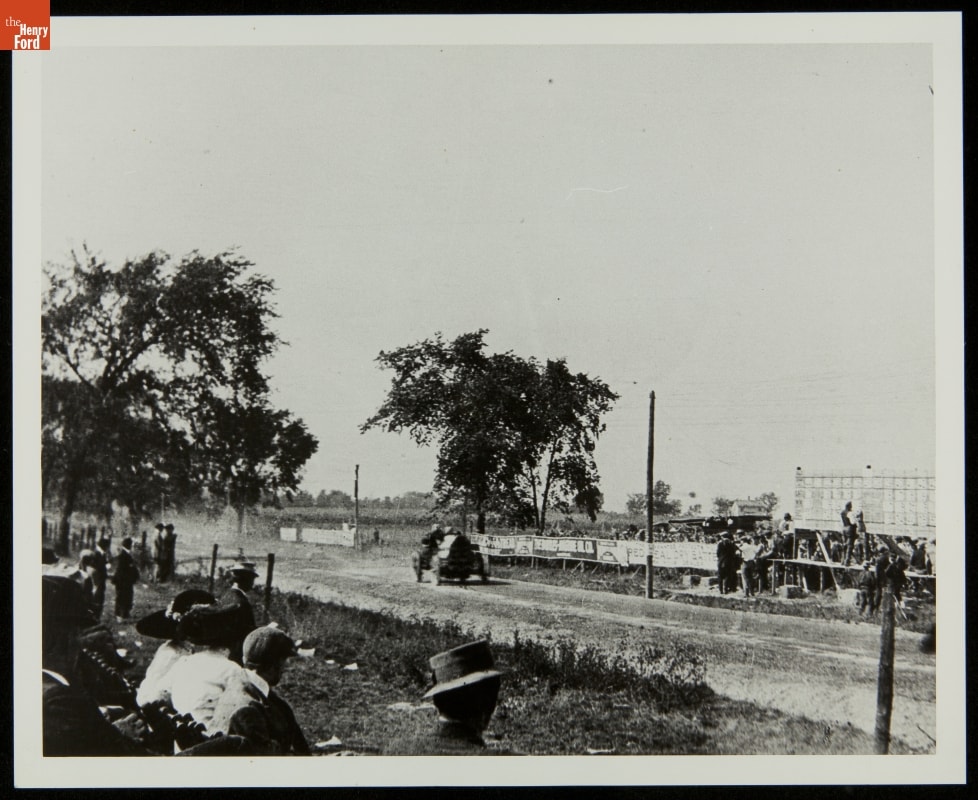
- Ted Tetzlaff, #33 Fiat, Milwaukee - Ted Tetzlaff competed four times in the Indianapolis 500 from 1911 to 1914. He earned his best finish in 1912, piloting the #3 Fiat to second place. Tetzlaff was rough on his race cars and received the nickname "Terrible Teddy." His "go all out all the time" strategy grew less effective as competitors became more nuanced behind the wheel.
- 1912
- Collections - Artifact
Ted Tetzlaff, #33 Fiat, Milwaukee
Ted Tetzlaff competed four times in the Indianapolis 500 from 1911 to 1914. He earned his best finish in 1912, piloting the #3 Fiat to second place. Tetzlaff was rough on his race cars and received the nickname "Terrible Teddy." His "go all out all the time" strategy grew less effective as competitors became more nuanced behind the wheel.
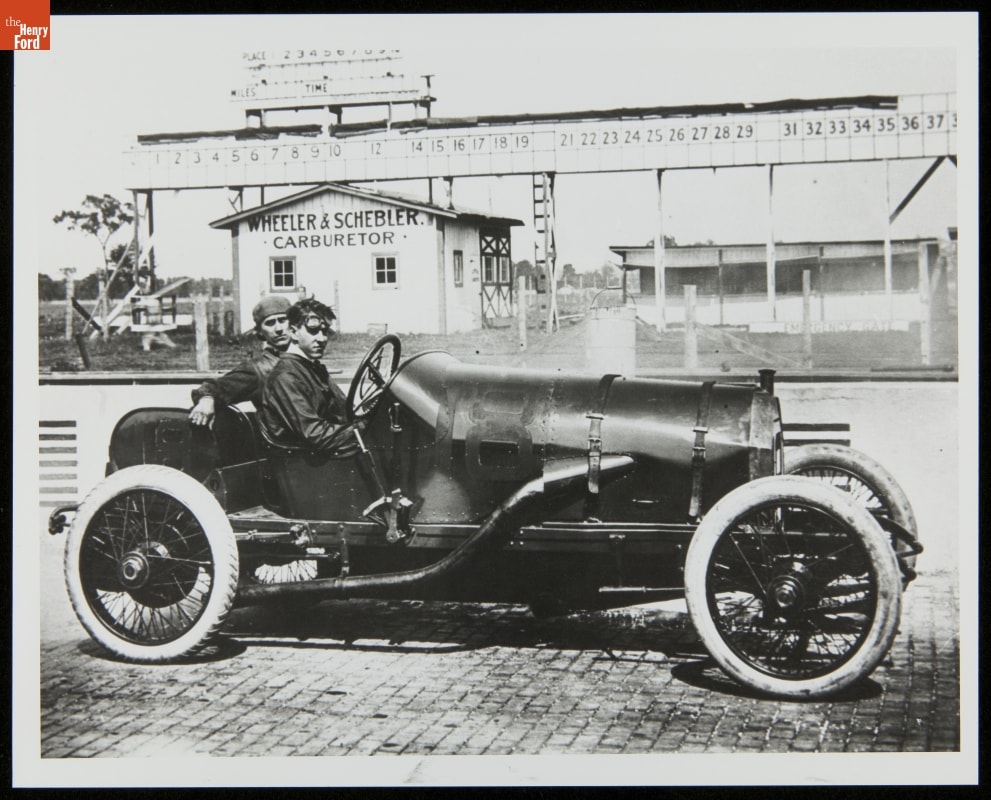
- Spencer Wishart, Indianapolis - Philadelphia native Spencer Wishart competed in each of the first four Indianapolis 500 races from 1911 to 1914. He earned his personal-best Indy finish in 1913, scoring a second-place position with the #22 Mercer car. Wishart was killed after a collision in a race at Elgin, Illinois, in August 1914.
- 1912
- Collections - Artifact
Spencer Wishart, Indianapolis
Philadelphia native Spencer Wishart competed in each of the first four Indianapolis 500 races from 1911 to 1914. He earned his personal-best Indy finish in 1913, scoring a second-place position with the #22 Mercer car. Wishart was killed after a collision in a race at Elgin, Illinois, in August 1914.