
Search
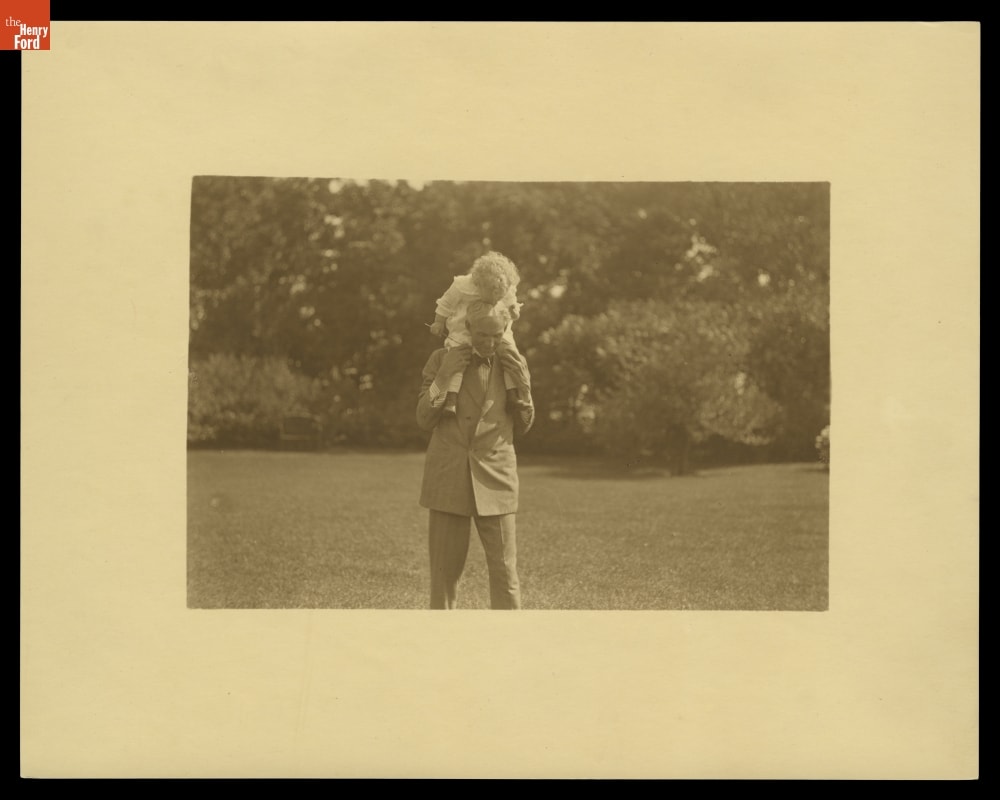
- Henry Ford Carrying Grandson Henry Ford II at Fair Lane, Dearborn, Michigan, 1919 - In the early 1910s, Henry and Clara Ford selected 1300 acres of farmland in Dearborn, Michigan, as the site for a new home. They called the estate Fair Lane. Surrounded by woods, meadows, gardens, and the nature they loved, Henry and Clara found this home a peaceful respite. Here they could wander the landscaped grounds, entertain guests, and play with grandchildren.
- 1919
- Collections - Artifact
Henry Ford Carrying Grandson Henry Ford II at Fair Lane, Dearborn, Michigan, 1919
In the early 1910s, Henry and Clara Ford selected 1300 acres of farmland in Dearborn, Michigan, as the site for a new home. They called the estate Fair Lane. Surrounded by woods, meadows, gardens, and the nature they loved, Henry and Clara found this home a peaceful respite. Here they could wander the landscaped grounds, entertain guests, and play with grandchildren.
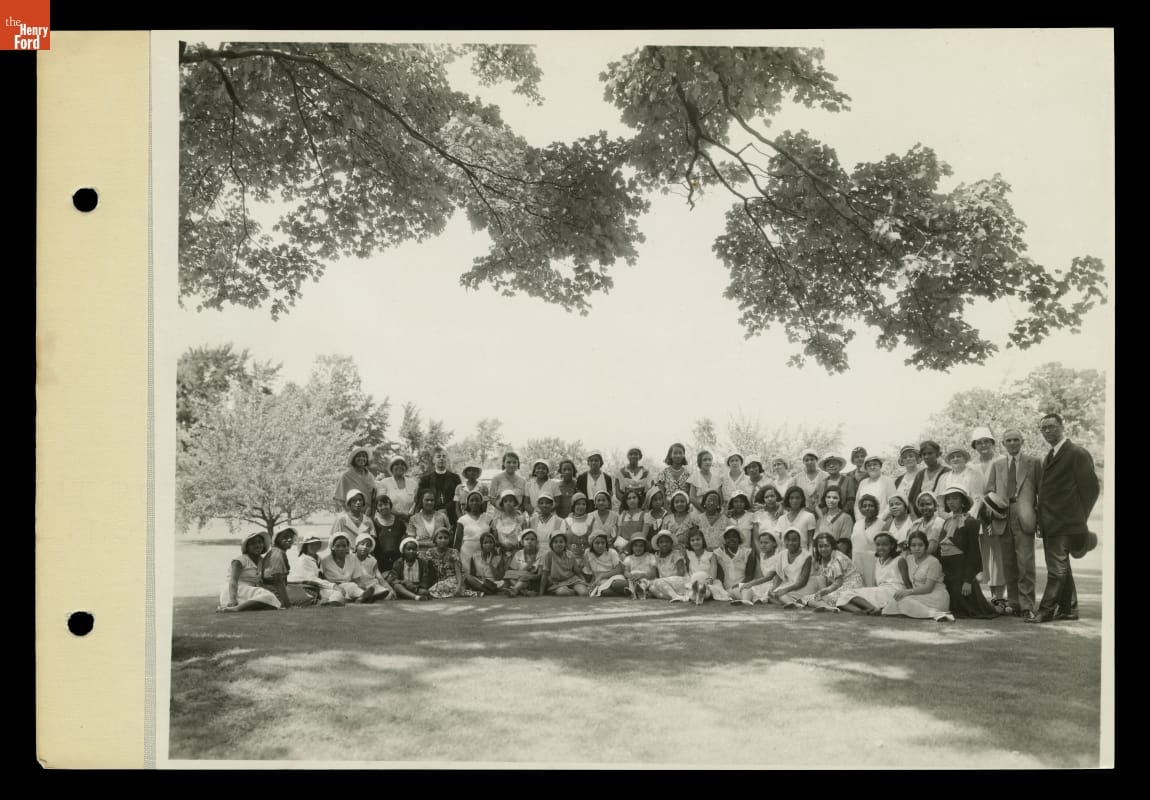
- Henry Ford and Clara Ford with Group on the Grounds of Fair Lane, 1932 - In the early 1910s, Henry and Clara Ford selected 1300 acres of farmland in Dearborn, Michigan, as the site for a new home. They called the estate Fair Lane. Surrounded by woods, meadows, gardens, and the nature they loved, Henry and Clara found this home a peaceful respite. Here they could wander the landscaped grounds, entertain guests, and play with grandchildren.
- July 09, 1932
- Collections - Artifact
Henry Ford and Clara Ford with Group on the Grounds of Fair Lane, 1932
In the early 1910s, Henry and Clara Ford selected 1300 acres of farmland in Dearborn, Michigan, as the site for a new home. They called the estate Fair Lane. Surrounded by woods, meadows, gardens, and the nature they loved, Henry and Clara found this home a peaceful respite. Here they could wander the landscaped grounds, entertain guests, and play with grandchildren.
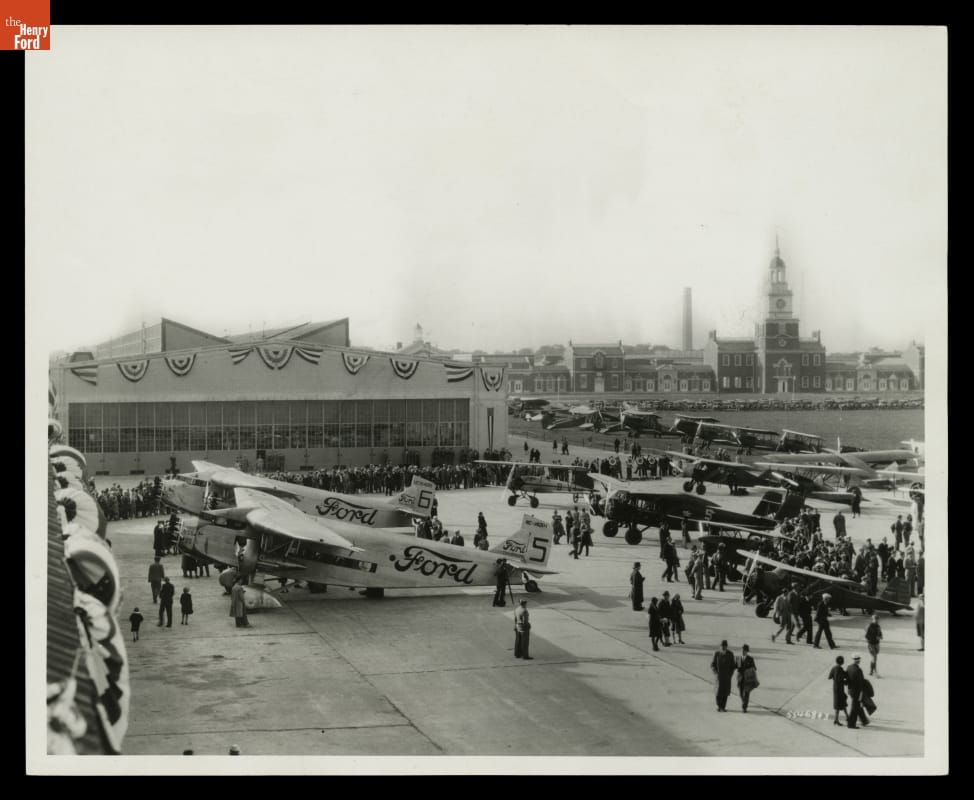
- Ford Reliability Tour at Ford Airport, Dearborn, Michigan, 1930 - From 1925-1931, Ford Motor Company sponsored annual air tours to promote reliability and safety in commercial aircraft. Pilots flew to pre-determined cities, and their airplanes were rated on the ability to take off and land quickly and maintain consistent speeds. The 1930 tour included 18 entries and visited 29 cities in the United States and Canada.
- September 27, 1930
- Collections - Artifact
Ford Reliability Tour at Ford Airport, Dearborn, Michigan, 1930
From 1925-1931, Ford Motor Company sponsored annual air tours to promote reliability and safety in commercial aircraft. Pilots flew to pre-determined cities, and their airplanes were rated on the ability to take off and land quickly and maintain consistent speeds. The 1930 tour included 18 entries and visited 29 cities in the United States and Canada.
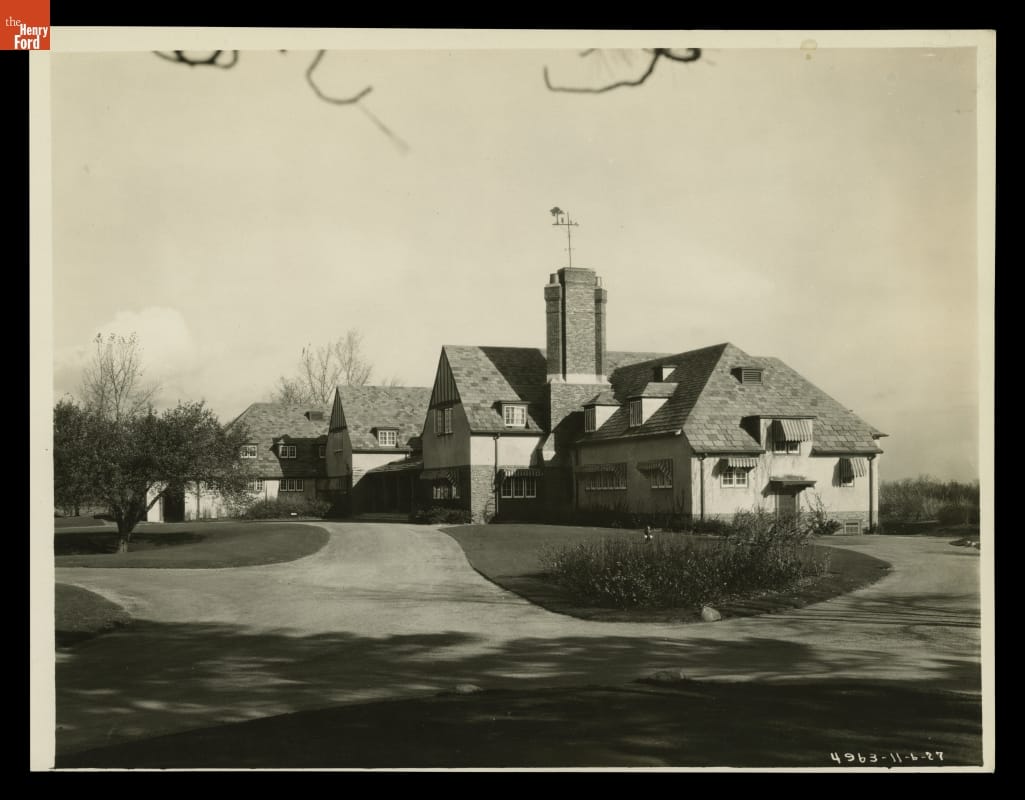
- Dearborn Country Club, Dearborn, Michigan, 1927 - Henry Ford established the Dearborn Country Club, with an 18-hole golf course and a clubhouse designed by Albert Kahn, in 1925. Ford himself was not a golfer, but the club helped attract and keep executive talent at Ford Motor Company's Dearborn, Michigan, offices. Club members purchased the facility from Ford interests in 1952.
- November 06, 1927
- Collections - Artifact
Dearborn Country Club, Dearborn, Michigan, 1927
Henry Ford established the Dearborn Country Club, with an 18-hole golf course and a clubhouse designed by Albert Kahn, in 1925. Ford himself was not a golfer, but the club helped attract and keep executive talent at Ford Motor Company's Dearborn, Michigan, offices. Club members purchased the facility from Ford interests in 1952.
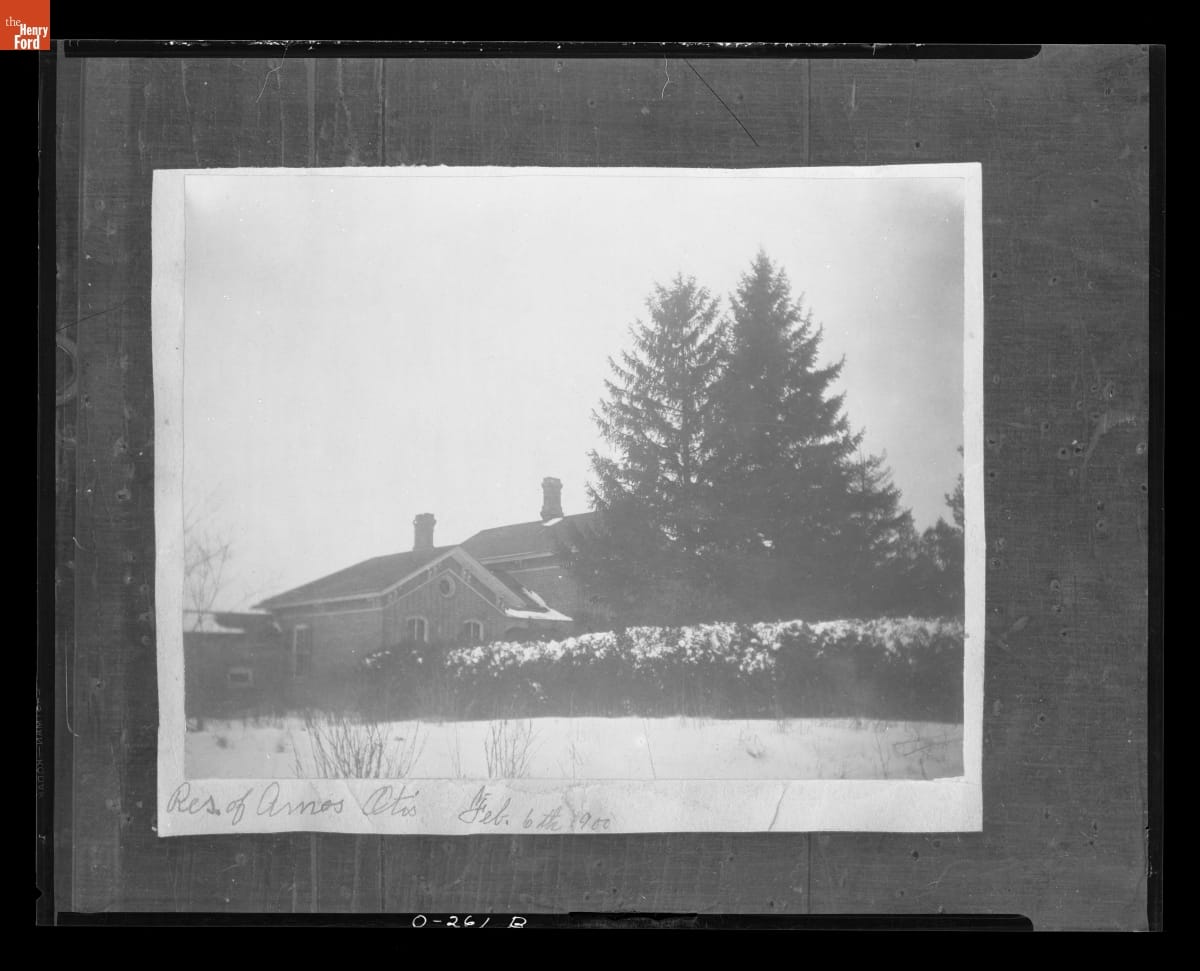
- Amos Otis Residence, Dearborn, Michigan, February 1900 -
- February 06, 1900
- Collections - Artifact
Amos Otis Residence, Dearborn, Michigan, February 1900
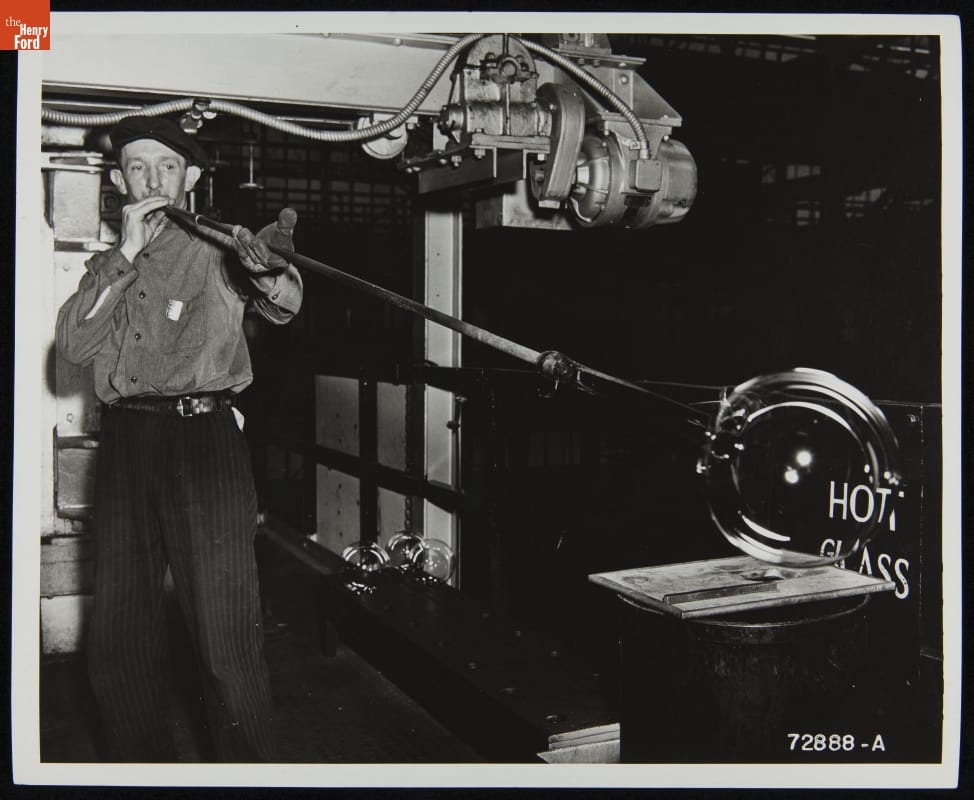
- Testing Batches of Glass at the Ford Rouge Glass Plant, 1940 - Unsatisfied with glass from outside suppliers, Ford Motor Company established its own glass plant at the Rouge in 1923. Furnaces produced molten glass, while overhead grinders and polishers worked the material to a perfectly smooth and clear finish. Two other Ford glass plants, in Pennsylvania and Minnesota, combined with the Rouge to manufacture 20 million feet of glass each year.
- January 03, 1940
- Collections - Artifact
Testing Batches of Glass at the Ford Rouge Glass Plant, 1940
Unsatisfied with glass from outside suppliers, Ford Motor Company established its own glass plant at the Rouge in 1923. Furnaces produced molten glass, while overhead grinders and polishers worked the material to a perfectly smooth and clear finish. Two other Ford glass plants, in Pennsylvania and Minnesota, combined with the Rouge to manufacture 20 million feet of glass each year.
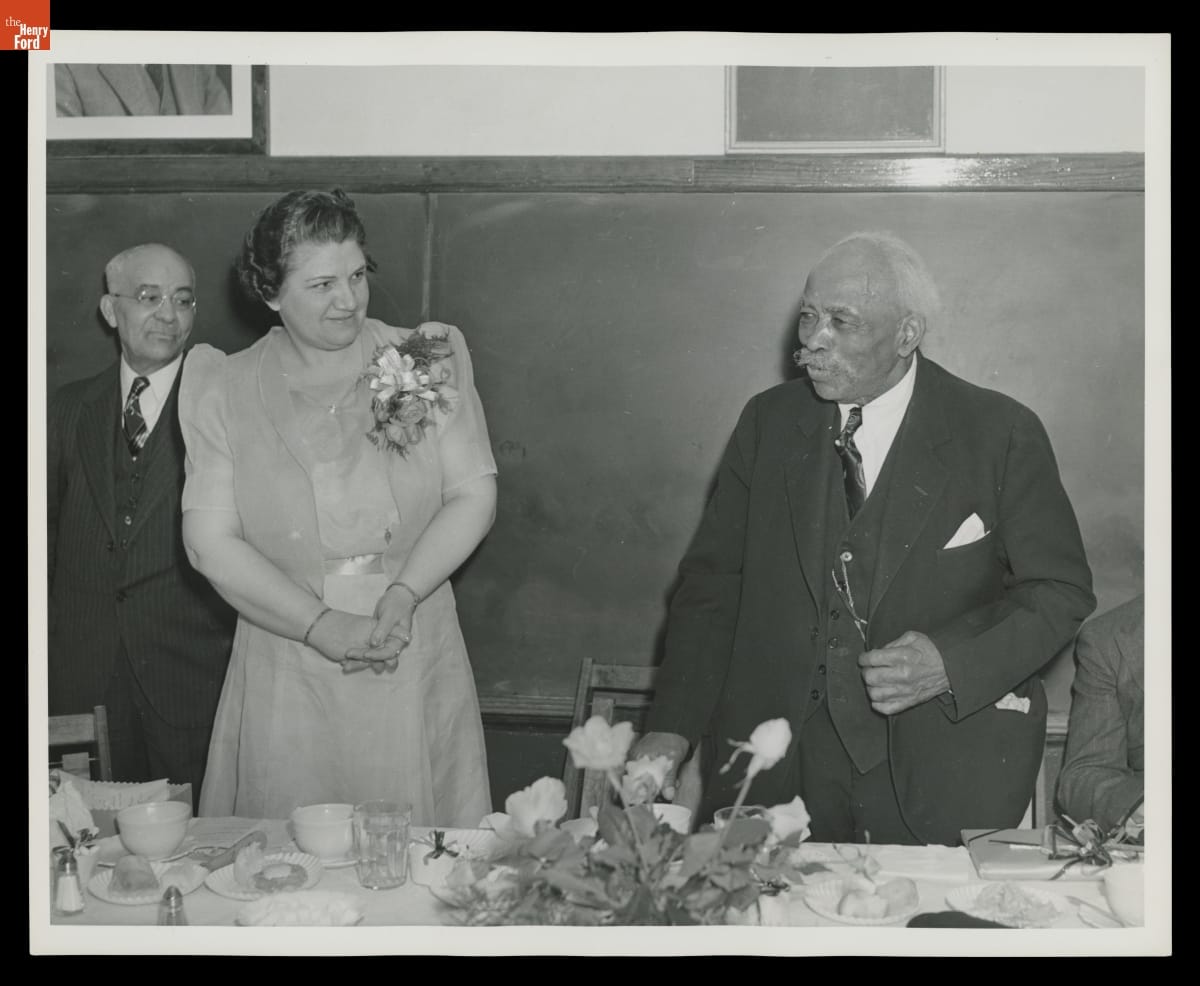
- Inkster High School Senior Banquet, May 2, 1940 - During the Great Depression, Ford Motor Company made efforts to improve living conditions in Inkster, Michigan, a primarily Black community hit especially hard by the economic crisis. Ford built a high school, repaired homes, established a medical clinic, and opened a low-price commissary. Improvements were funded through involuntary paycheck deductions from Inkster residents employed at Ford's nearby Rouge plant.
- May 02, 1940
- Collections - Artifact
Inkster High School Senior Banquet, May 2, 1940
During the Great Depression, Ford Motor Company made efforts to improve living conditions in Inkster, Michigan, a primarily Black community hit especially hard by the economic crisis. Ford built a high school, repaired homes, established a medical clinic, and opened a low-price commissary. Improvements were funded through involuntary paycheck deductions from Inkster residents employed at Ford's nearby Rouge plant.
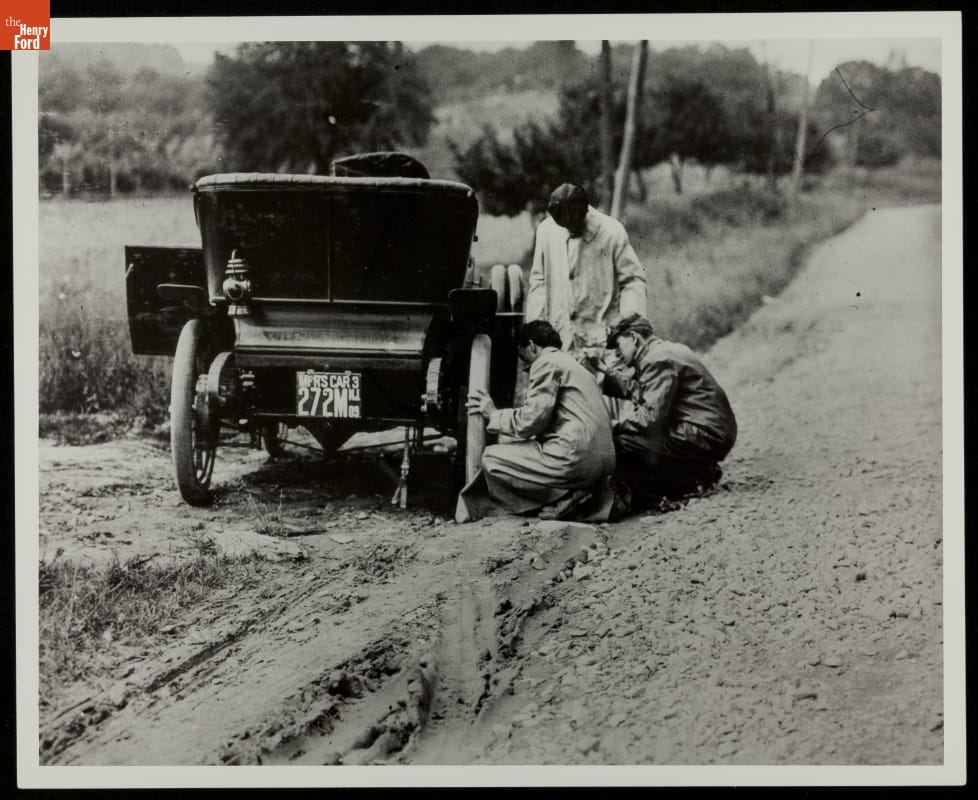
- Three Men Examining Tire on Ford Model T Car, 1909 - Early automobiles required a lot of maintenance. Drivers like these, dressed for motoring and examining their Model T by the side of the road, had to be ready to perform mobile repairs.
- 1909
- Collections - Artifact
Three Men Examining Tire on Ford Model T Car, 1909
Early automobiles required a lot of maintenance. Drivers like these, dressed for motoring and examining their Model T by the side of the road, had to be ready to perform mobile repairs.
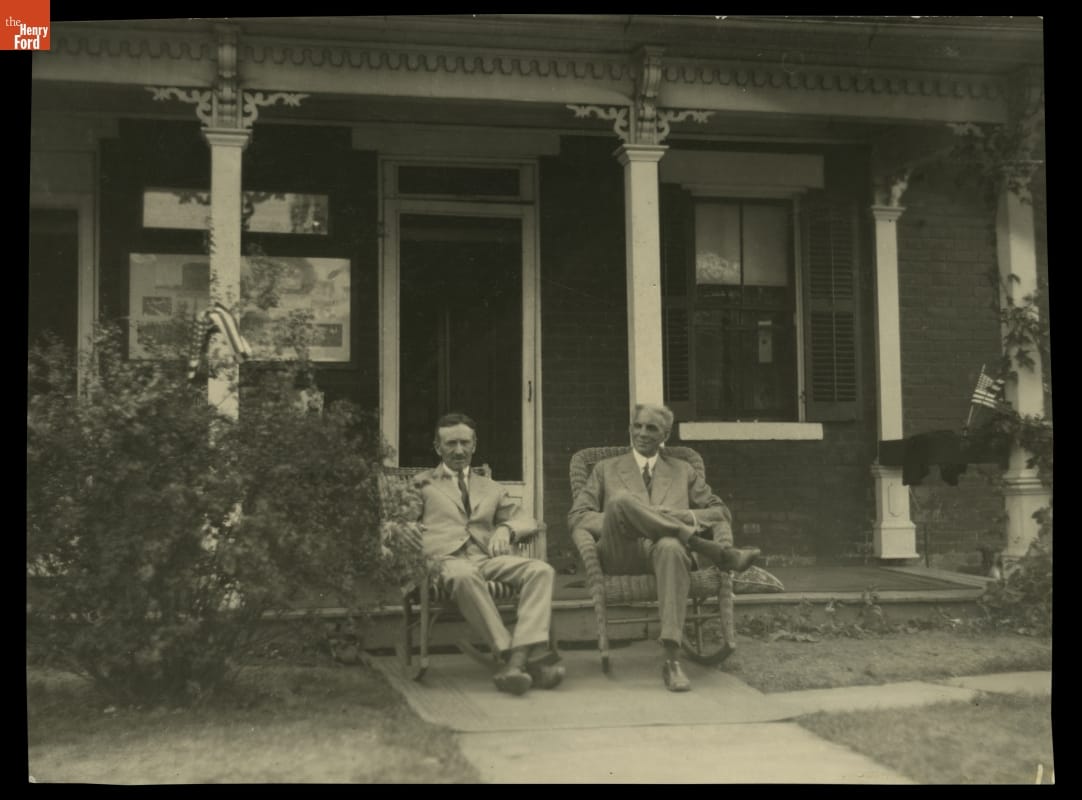
- Harvey Firestone and Henry Ford at Firestone Farm, Columbiana County, Ohio, 1918 - Henry Ford and Harvey Firestone went on several camping trips as "vagabonds," a group that also included Thomas Edison and naturalist John Burroughs. In August 1918, Ford met Firestone at his old homestead near Columbiana, Ohio, (now in Greenfield Village) before joining Edison and Burroughs in Pittsburgh. The foursome then traveled through Appalachian Mountains for the next couple weeks.
- 1918
- Collections - Artifact
Harvey Firestone and Henry Ford at Firestone Farm, Columbiana County, Ohio, 1918
Henry Ford and Harvey Firestone went on several camping trips as "vagabonds," a group that also included Thomas Edison and naturalist John Burroughs. In August 1918, Ford met Firestone at his old homestead near Columbiana, Ohio, (now in Greenfield Village) before joining Edison and Burroughs in Pittsburgh. The foursome then traveled through Appalachian Mountains for the next couple weeks.
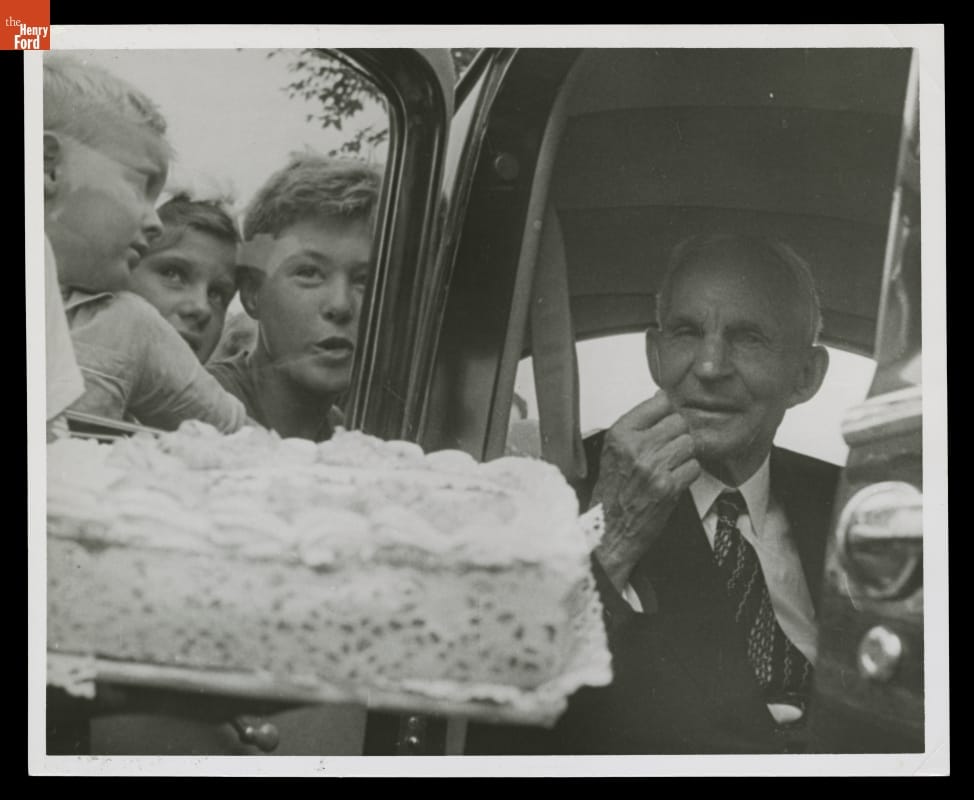
- Henry Ford Being Offered a Cake on His 83rd Birthday, Levagood Park, Dearborn, Michigan, July 30, 1946 - Henry Ford celebrated his 83rd birthday on July 30, 1946. This photograph shows the automaker and his wife, Clara, being greeted by local children and residents at Levagood Park in Dearborn, Michigan. During the stop, Ford was presented with a birthday cake.
- July 30, 1946
- Collections - Artifact
Henry Ford Being Offered a Cake on His 83rd Birthday, Levagood Park, Dearborn, Michigan, July 30, 1946
Henry Ford celebrated his 83rd birthday on July 30, 1946. This photograph shows the automaker and his wife, Clara, being greeted by local children and residents at Levagood Park in Dearborn, Michigan. During the stop, Ford was presented with a birthday cake.