
Search
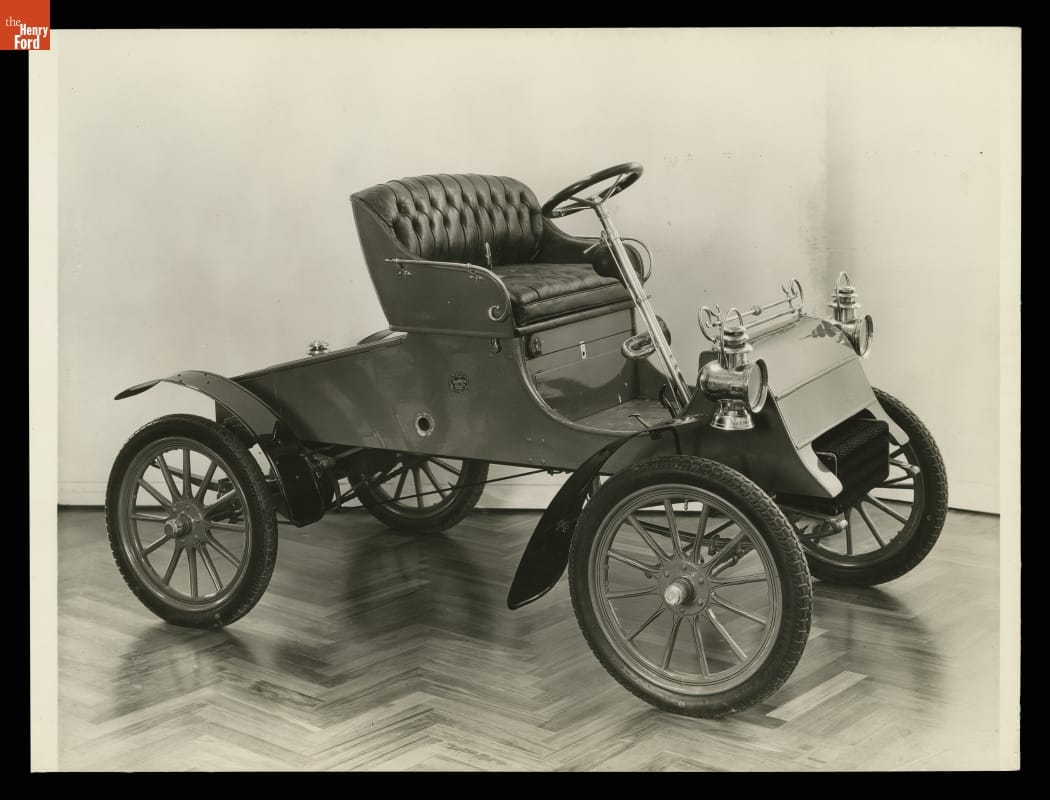
- 1903 Ford Model A Roadster in Henry Ford Museum, circa 1934 - A 1934 exhibition at Henry Ford's museum in Dearborn, Michigan, featured this Model A roadster, the first automobile produced and sold by the fledgling Ford Motor Company. In many ways, the original Ford was typical -- it looked like a carriage without the horse. But unlike other early autos, the 1903 Model A had a steering wheel rather than a tiller.
- April 20, 1934
- Collections - Artifact
1903 Ford Model A Roadster in Henry Ford Museum, circa 1934
A 1934 exhibition at Henry Ford's museum in Dearborn, Michigan, featured this Model A roadster, the first automobile produced and sold by the fledgling Ford Motor Company. In many ways, the original Ford was typical -- it looked like a carriage without the horse. But unlike other early autos, the 1903 Model A had a steering wheel rather than a tiller.
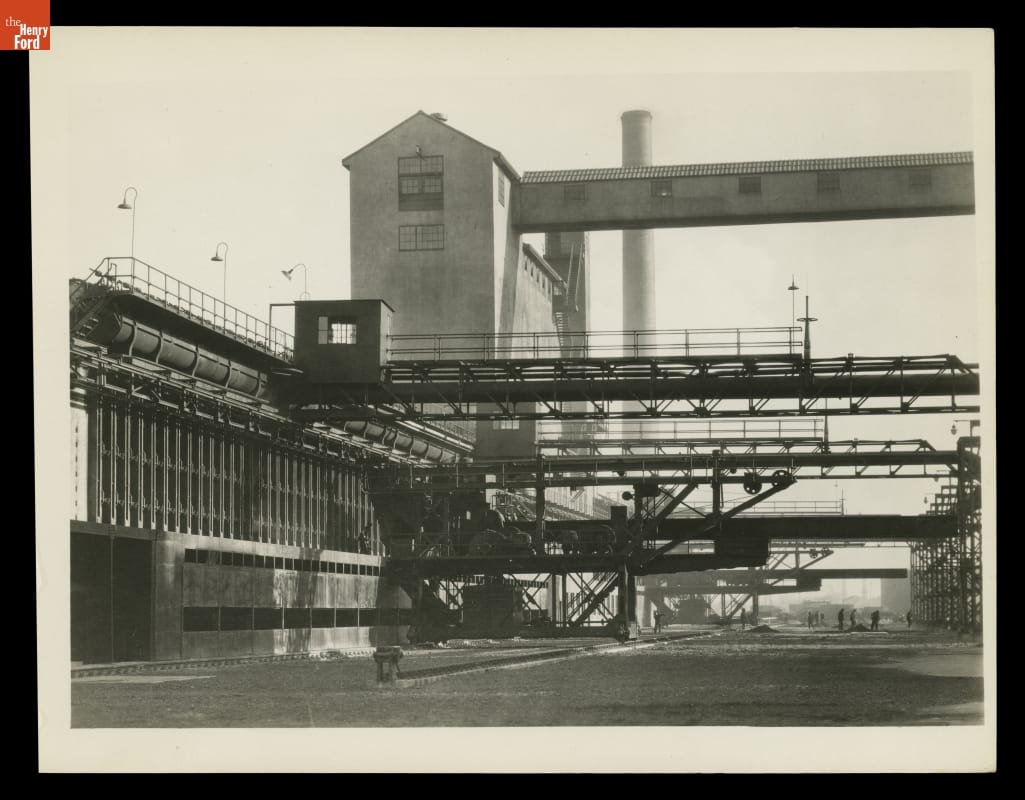
- Ford Motor Company Rouge Plant Coke Ovens, 1927 - Coke ovens at Ford Motor Company's Rouge plant converted coal into high-carbon coke, used in the factory's blast furnaces to produce iron. In 1921, the Rouge's ovens could produce up to 3,600 tons of coke daily. New, more efficient coke ovens opened in 1937. The coking process also produced gas used to heat some of the factory's other furnaces.
- 1927
- Collections - Artifact
Ford Motor Company Rouge Plant Coke Ovens, 1927
Coke ovens at Ford Motor Company's Rouge plant converted coal into high-carbon coke, used in the factory's blast furnaces to produce iron. In 1921, the Rouge's ovens could produce up to 3,600 tons of coke daily. New, more efficient coke ovens opened in 1937. The coking process also produced gas used to heat some of the factory's other furnaces.
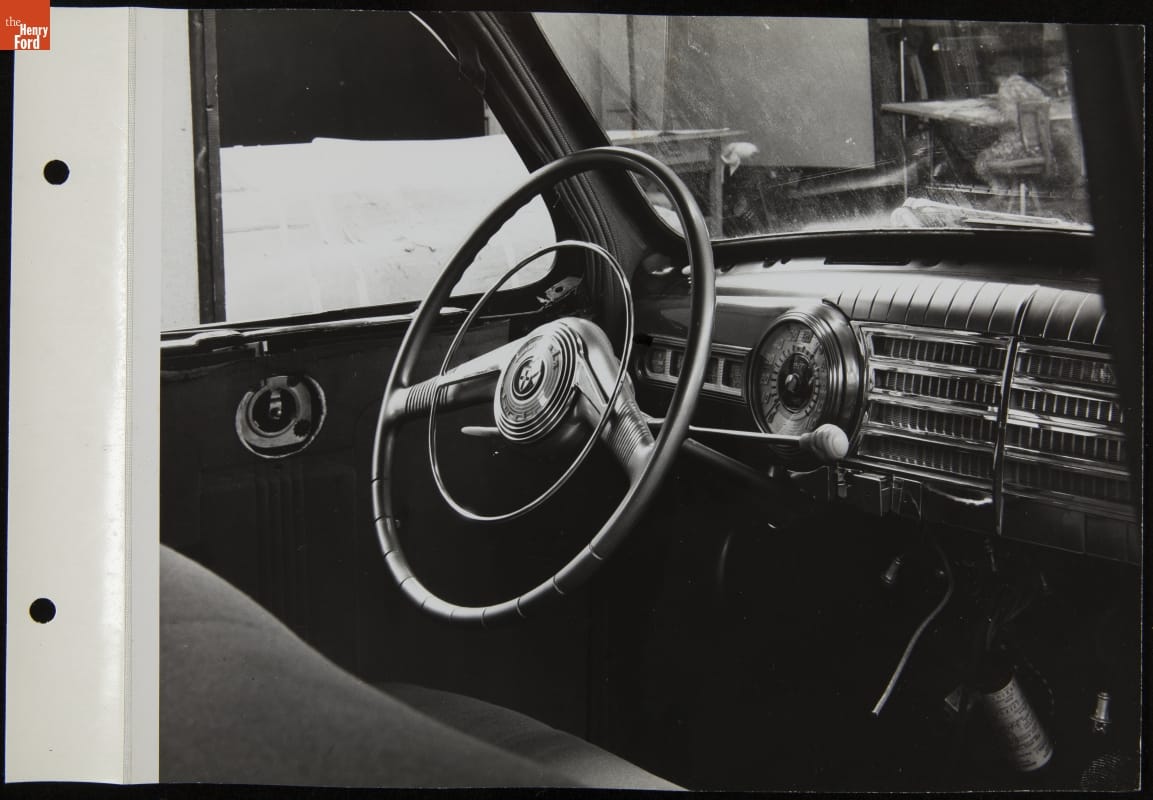
- Interior of Lincoln Zephyr Car in Design Department, Woman Designer in Background, October 1944 - With World War II moving toward a close, Lincoln designers began work on new civilian models. It was anticipated that the Lincoln Zephyr would return, so designers set about refreshing the 1942 model. However, the Zephyr name was dropped before the 1946 models -- the company's first postwar cars -- debuted.
- October 14, 1944
- Collections - Artifact
Interior of Lincoln Zephyr Car in Design Department, Woman Designer in Background, October 1944
With World War II moving toward a close, Lincoln designers began work on new civilian models. It was anticipated that the Lincoln Zephyr would return, so designers set about refreshing the 1942 model. However, the Zephyr name was dropped before the 1946 models -- the company's first postwar cars -- debuted.
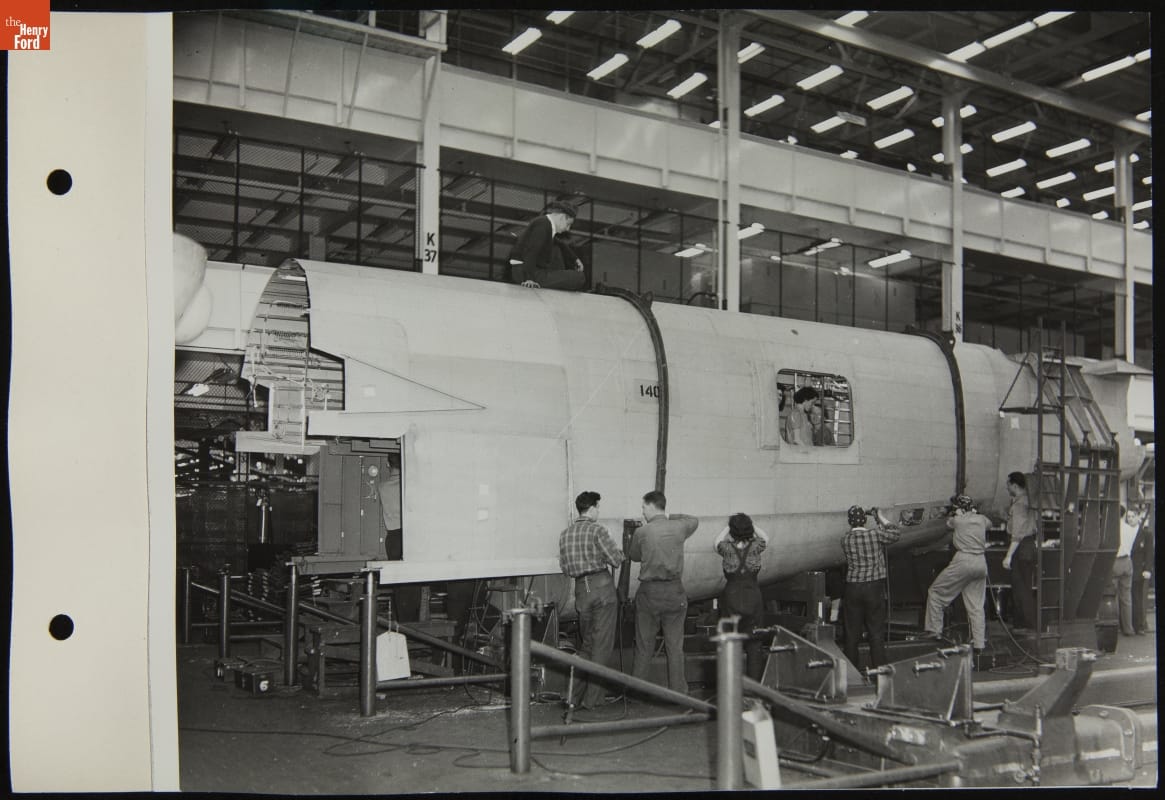
- Employees at Willow Run Assembling Bomber Frame, February 1943 - At Willow Run, Ford Motor Company built B-24 bomber planes for World War II using automobile mass production techniques. Airplanes were much more complex than cars. They required constant design changes poorly suited to a standardized assembly line. Ford overcame these difficulties and, at the plant's peak, Willow Run crews produced an average of one bomber every 63 minutes.
- February 04, 1943
- Collections - Artifact
Employees at Willow Run Assembling Bomber Frame, February 1943
At Willow Run, Ford Motor Company built B-24 bomber planes for World War II using automobile mass production techniques. Airplanes were much more complex than cars. They required constant design changes poorly suited to a standardized assembly line. Ford overcame these difficulties and, at the plant's peak, Willow Run crews produced an average of one bomber every 63 minutes.
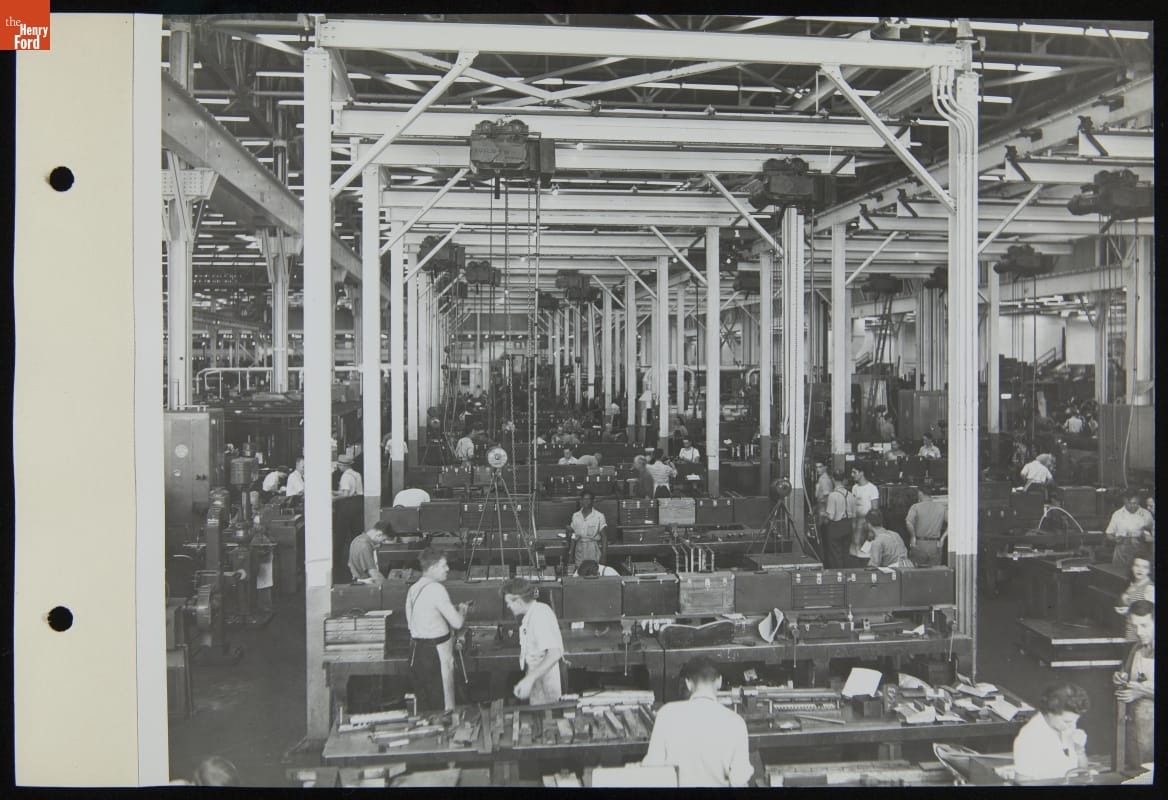
- Overhead View of Tool and Die Department, Willow Run Bomber Plant, August 1943 - At Willow Run, Ford Motor Company built B-24 bomber planes for World War II using automobile mass production techniques. Airplanes were much more complex than cars. They required constant design changes poorly suited to a standardized assembly line. Ford overcame these difficulties and, at the plant's peak, Willow Run crews produced an average of one bomber every 63 minutes.
- August 27, 1943
- Collections - Artifact
Overhead View of Tool and Die Department, Willow Run Bomber Plant, August 1943
At Willow Run, Ford Motor Company built B-24 bomber planes for World War II using automobile mass production techniques. Airplanes were much more complex than cars. They required constant design changes poorly suited to a standardized assembly line. Ford overcame these difficulties and, at the plant's peak, Willow Run crews produced an average of one bomber every 63 minutes.
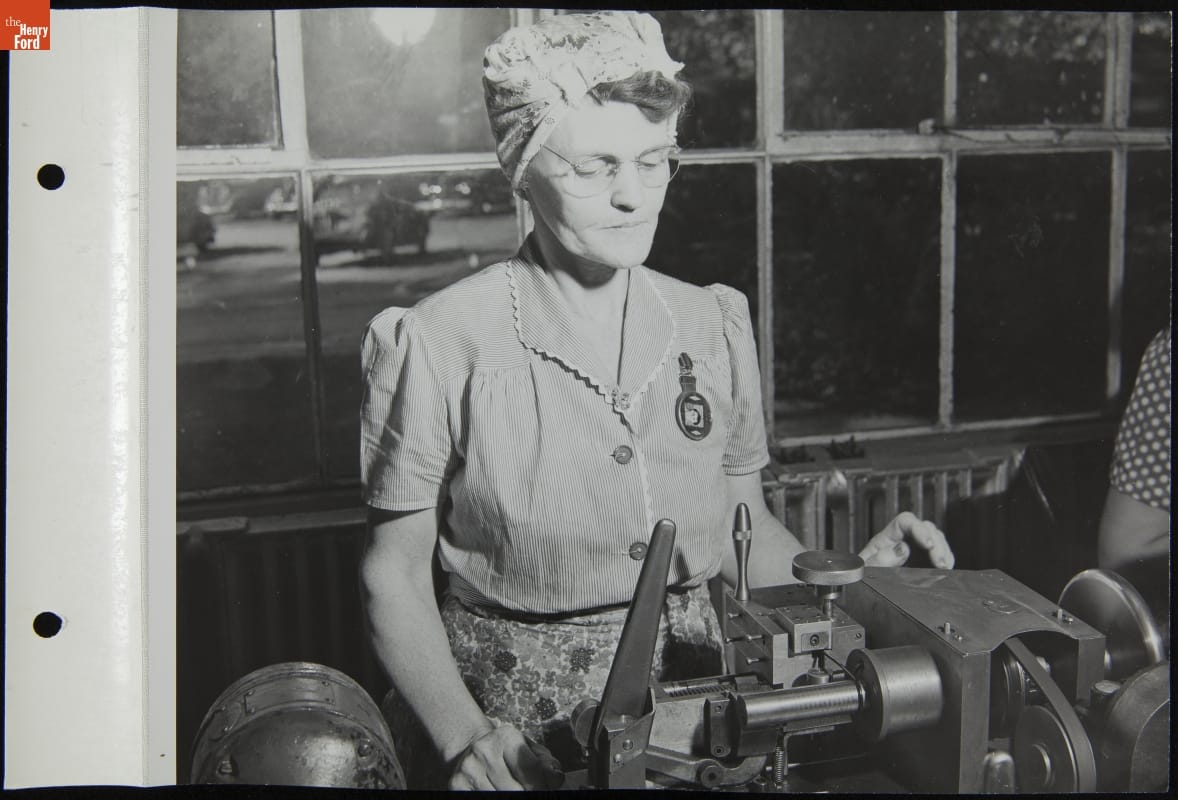
- Women Making Electric Harnesses for B-24 Bombers at Phoenix Mills, September 1944 - In the early 1920s, Henry Ford began locating small hydroelectrically powered plants in rural southeast Michigan. These "Village Industries" employed local people who could maintain farms while working at the factory. Women represented most of the workforce at Phoenix Mill. During World War II, they manufactured electrical harnesses for B-24 bomber airplanes assembled at Ford's nearby Willow Run plant.
- September 25, 1944
- Collections - Artifact
Women Making Electric Harnesses for B-24 Bombers at Phoenix Mills, September 1944
In the early 1920s, Henry Ford began locating small hydroelectrically powered plants in rural southeast Michigan. These "Village Industries" employed local people who could maintain farms while working at the factory. Women represented most of the workforce at Phoenix Mill. During World War II, they manufactured electrical harnesses for B-24 bomber airplanes assembled at Ford's nearby Willow Run plant.
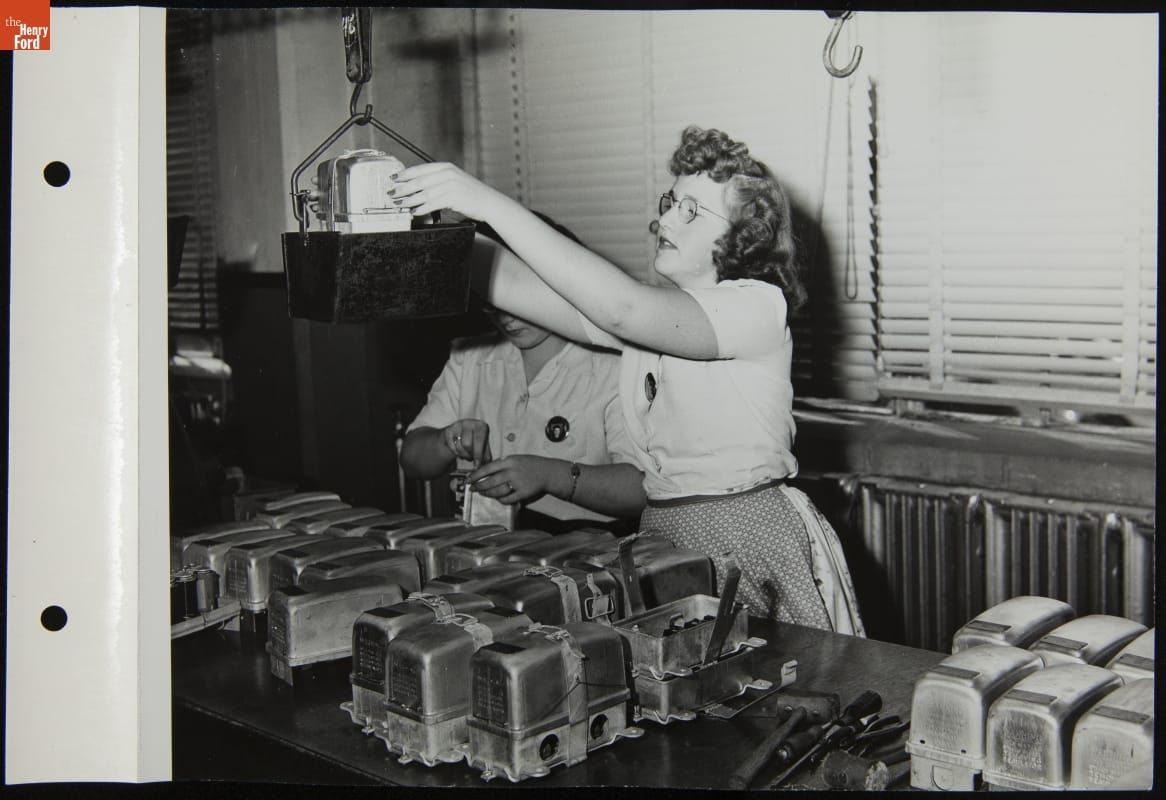
- Women Making Electric Harnesses for B-24 Bombers at Phoenix Mills, September 1944 - In the early 1920s, Henry Ford began locating small hydroelectrically powered plants in rural southeast Michigan. These "Village Industries" employed local people who could maintain farms while working at the factory. Women represented most of the workforce at Phoenix Mill. During World War II, they manufactured electrical harnesses for B-24 bomber airplanes assembled at Ford's nearby Willow Run plant.
- September 25, 1944
- Collections - Artifact
Women Making Electric Harnesses for B-24 Bombers at Phoenix Mills, September 1944
In the early 1920s, Henry Ford began locating small hydroelectrically powered plants in rural southeast Michigan. These "Village Industries" employed local people who could maintain farms while working at the factory. Women represented most of the workforce at Phoenix Mill. During World War II, they manufactured electrical harnesses for B-24 bomber airplanes assembled at Ford's nearby Willow Run plant.
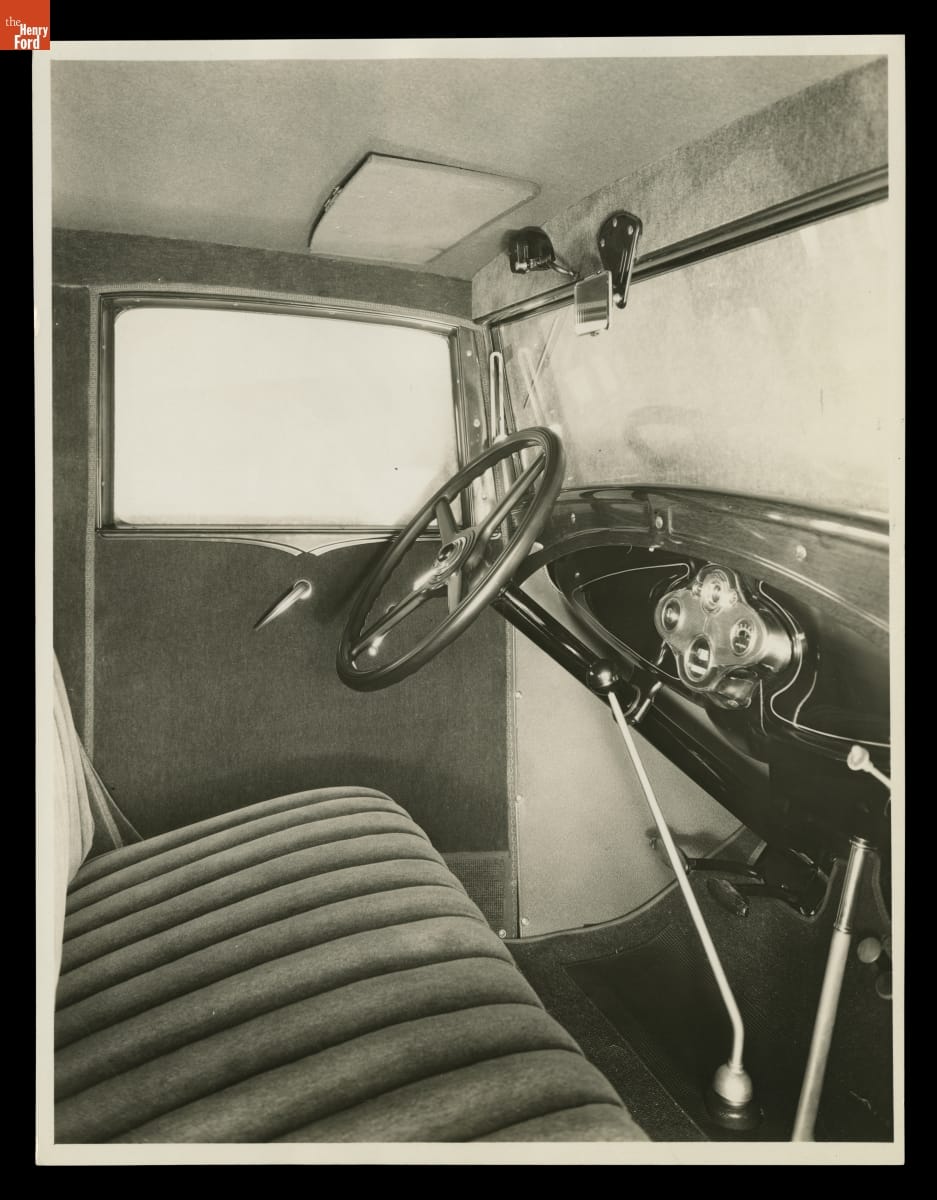
- Interior of a Ford Model A, March 1931 - The 1931 model year was the last for Ford's Model A. The final cars featured new radiator shells and, starting mid-year, optional laminated safety glass. Prices ranged from $490 for the standard coupe to $630 for the town sedan. The Great Depression halved Ford's annual production to 541,000 cars -- enough for total 1928-1931 Model A production to approach 5 million.
- March 18, 1931
- Collections - Artifact
Interior of a Ford Model A, March 1931
The 1931 model year was the last for Ford's Model A. The final cars featured new radiator shells and, starting mid-year, optional laminated safety glass. Prices ranged from $490 for the standard coupe to $630 for the town sedan. The Great Depression halved Ford's annual production to 541,000 cars -- enough for total 1928-1931 Model A production to approach 5 million.
- Pan American Road Race Review, December 1953 - Lincoln Motor Company went racing in the early 1950s at the Carrera Panamericana, a 2,000-mile road race through Mexico. American and European drivers rallied across mountains and plains in stock cars, sports cars, and touring cars. Lincoln Capri cars won their class in 1952, 1953, and 1954. Officials canceled the race after just five years, though it's occasionally been revived.
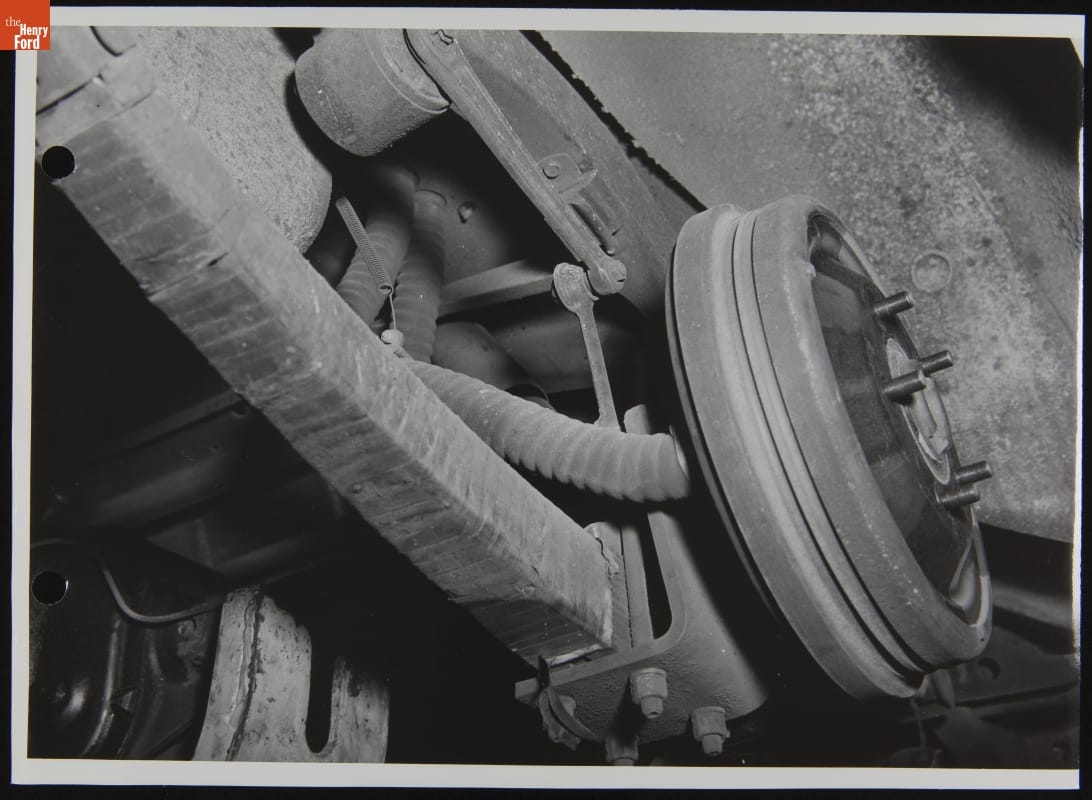
- December 28, 1953
- Collections - Artifact
Pan American Road Race Review, December 1953
Lincoln Motor Company went racing in the early 1950s at the Carrera Panamericana, a 2,000-mile road race through Mexico. American and European drivers rallied across mountains and plains in stock cars, sports cars, and touring cars. Lincoln Capri cars won their class in 1952, 1953, and 1954. Officials canceled the race after just five years, though it's occasionally been revived.
- Pan American Road Race Review, December 1953 - Lincoln Motor Company went racing in the early 1950s at the Carrera Panamericana, a 2,000-mile road race through Mexico. American and European drivers rallied across mountains and plains in stock cars, sports cars, and touring cars. Lincoln Capri cars won their class in 1952, 1953, and 1954. Officials canceled the race after just five years, though it's occasionally been revived.
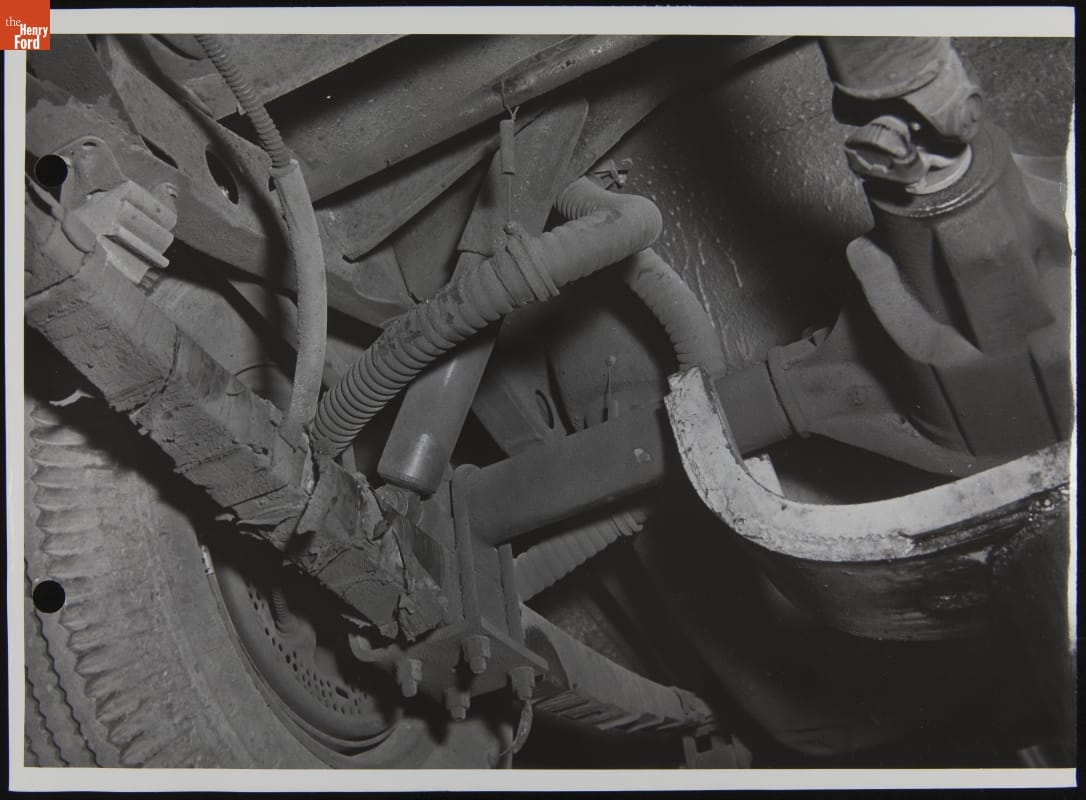
- December 28, 1953
- Collections - Artifact
Pan American Road Race Review, December 1953
Lincoln Motor Company went racing in the early 1950s at the Carrera Panamericana, a 2,000-mile road race through Mexico. American and European drivers rallied across mountains and plains in stock cars, sports cars, and touring cars. Lincoln Capri cars won their class in 1952, 1953, and 1954. Officials canceled the race after just five years, though it's occasionally been revived.