
Search
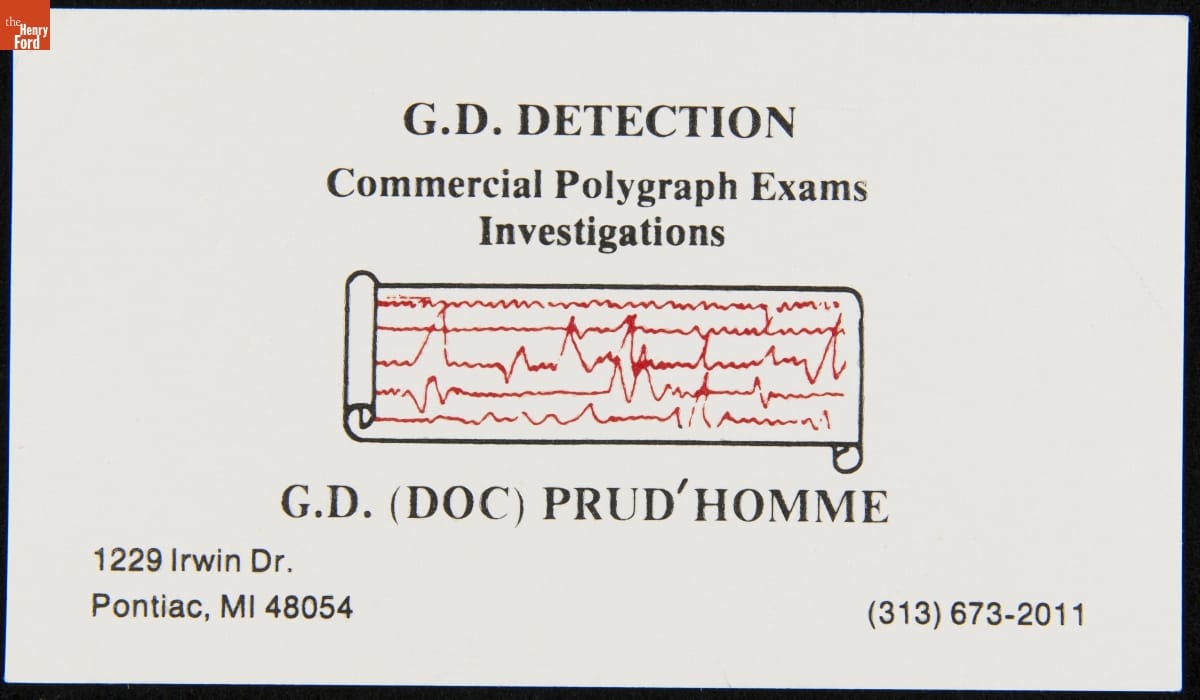
- Business Card for "G.D. Detection," 1974-1990 - "Doc" Prud'homme is the former owner and chief examiner of Polygraph Specialists Company. Polygraphs are more popularly known as "lie detector" machines. Prud'homme trained to use these devices while stationed in Vietnam. Upon returning to Michigan, he established his own business. The mobility of the polygraph machine allowed him to administer tests throughout the Metro-Detroit area.
- 1974-1990
- Collections - Artifact
Business Card for "G.D. Detection," 1974-1990
"Doc" Prud'homme is the former owner and chief examiner of Polygraph Specialists Company. Polygraphs are more popularly known as "lie detector" machines. Prud'homme trained to use these devices while stationed in Vietnam. Upon returning to Michigan, he established his own business. The mobility of the polygraph machine allowed him to administer tests throughout the Metro-Detroit area.
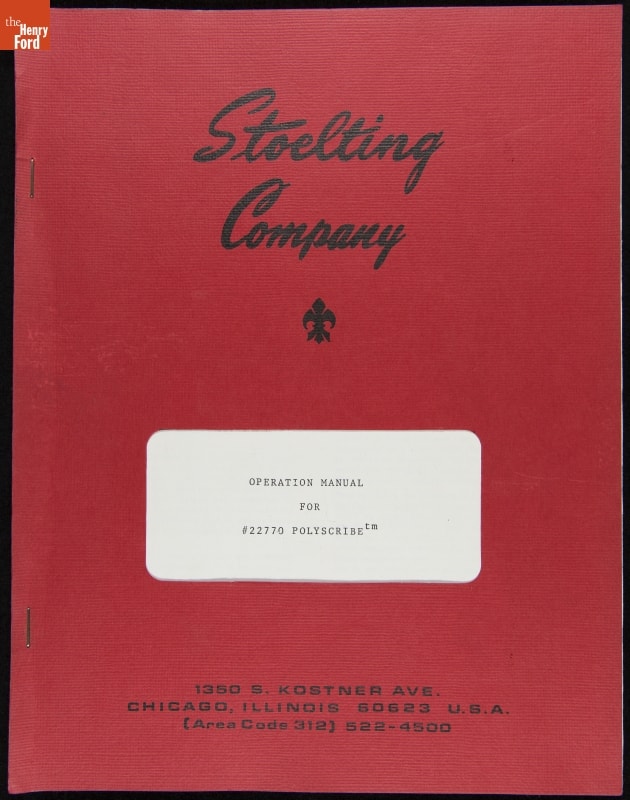
- Stoelting Company Operating Manual for the Polyscribe Model 22770, circa 1976 - Polygraphs are more popularly known as "lie detector" machines. They measure a person's pulse, breathing rate, perspiration, and blood pressure. Polygraphs convert this data into electronic signals; inking arms output this information onto paper charts. Trained examiners interpret the results, to determine guilt or innocence. The polygraph has been called out as unethical and legally inadmissible in some cases.
- circa 1976
- Collections - Artifact
Stoelting Company Operating Manual for the Polyscribe Model 22770, circa 1976
Polygraphs are more popularly known as "lie detector" machines. They measure a person's pulse, breathing rate, perspiration, and blood pressure. Polygraphs convert this data into electronic signals; inking arms output this information onto paper charts. Trained examiners interpret the results, to determine guilt or innocence. The polygraph has been called out as unethical and legally inadmissible in some cases.
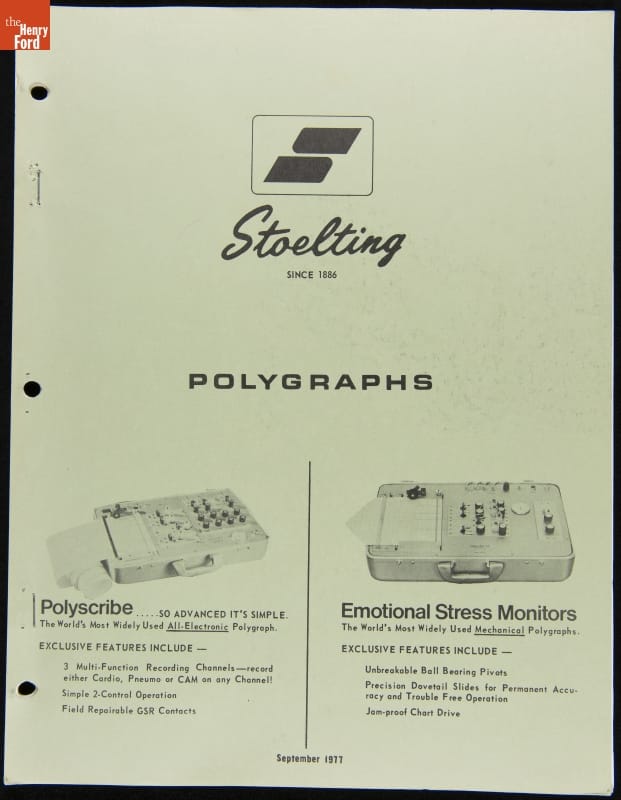
- Stoelting Company Polygraph Catalog, September 1977 - Polygraphs are more popularly known as "lie detector" machines. They measure a person's pulse, breathing rate, perspiration, and blood pressure. Polygraphs convert this data into electronic signals; inking arms output this information onto paper charts. Trained examiners interpret the results, to determine guilt or innocence. The polygraph has been called out as unethical and legally inadmissible in some cases.
- September 01, 1977
- Collections - Artifact
Stoelting Company Polygraph Catalog, September 1977
Polygraphs are more popularly known as "lie detector" machines. They measure a person's pulse, breathing rate, perspiration, and blood pressure. Polygraphs convert this data into electronic signals; inking arms output this information onto paper charts. Trained examiners interpret the results, to determine guilt or innocence. The polygraph has been called out as unethical and legally inadmissible in some cases.
- "The Polygraph Story: Dedicated to Man's Right to Verify the Truth," circa 1974 - Polygraphs are more popularly known as "lie detector" machines. They measure a person's pulse, breathing rate, perspiration, and blood pressure. Polygraphs convert this data into electronic signals; inking arms output this information onto paper charts. Trained examiners interpret the results, to determine guilt or innocence. The polygraph has been called out as unethical and legally inadmissible in some cases.
- circa 1974
- Collections - Artifact
"The Polygraph Story: Dedicated to Man's Right to Verify the Truth," circa 1974
Polygraphs are more popularly known as "lie detector" machines. They measure a person's pulse, breathing rate, perspiration, and blood pressure. Polygraphs convert this data into electronic signals; inking arms output this information onto paper charts. Trained examiners interpret the results, to determine guilt or innocence. The polygraph has been called out as unethical and legally inadmissible in some cases.