
Search
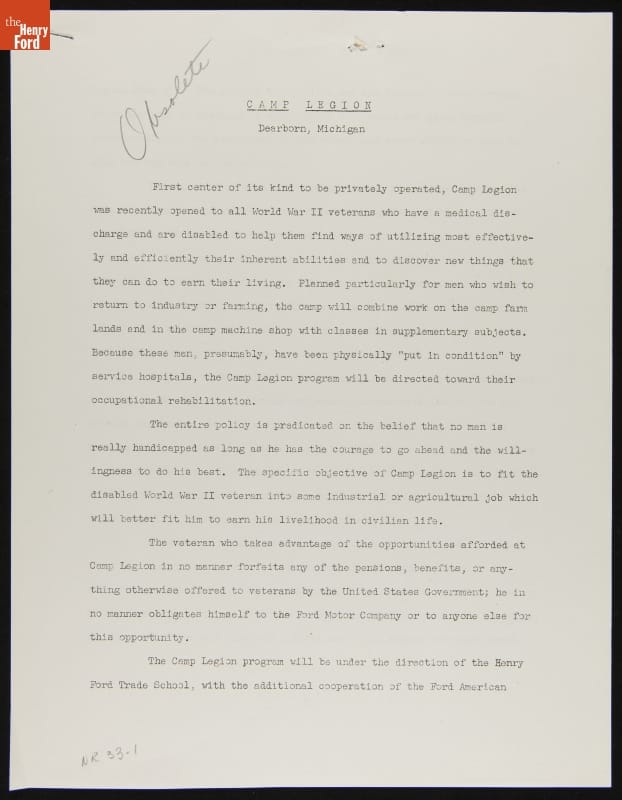
- Camp Legion Opened to Give Occupational Rehabilitation to Disabled Veterans, Ford Press Release, 1944 - Henry Ford opened Camp Legion, near Dearborn, Michigan, in 1938 for sons of dead or disabled World War I veterans. The young men earned steady wages working there seasonally from April-November. The camp's mission was modified in 1944 to include rehabilitation of World War II veterans with disabilities. Veterans learned new skills to help them reenter the workforce.
- 1944
- Collections - Artifact
Camp Legion Opened to Give Occupational Rehabilitation to Disabled Veterans, Ford Press Release, 1944
Henry Ford opened Camp Legion, near Dearborn, Michigan, in 1938 for sons of dead or disabled World War I veterans. The young men earned steady wages working there seasonally from April-November. The camp's mission was modified in 1944 to include rehabilitation of World War II veterans with disabilities. Veterans learned new skills to help them reenter the workforce.
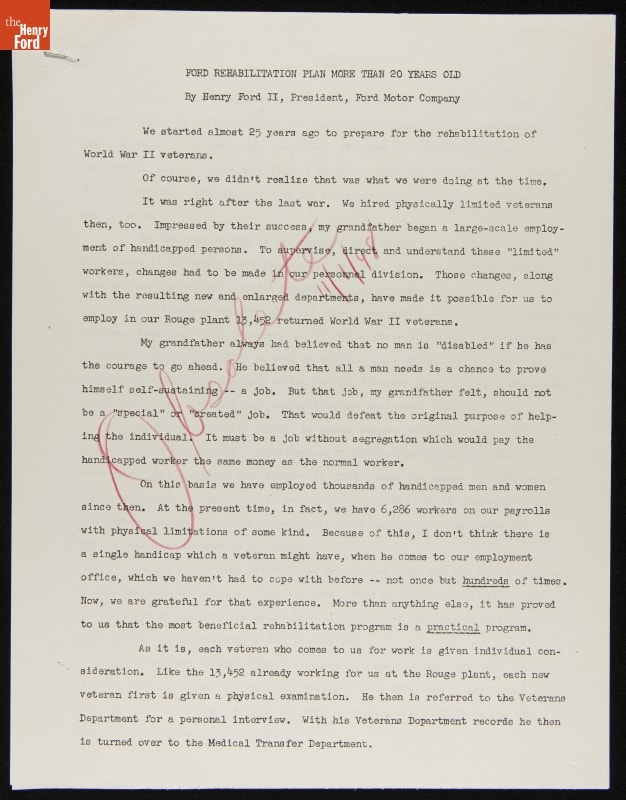
- "Ford Rehabilitation Plan More than 25 Years Old," Ford Press Release, July 1946 -
- July 30, 1946
- Collections - Artifact
"Ford Rehabilitation Plan More than 25 Years Old," Ford Press Release, July 1946
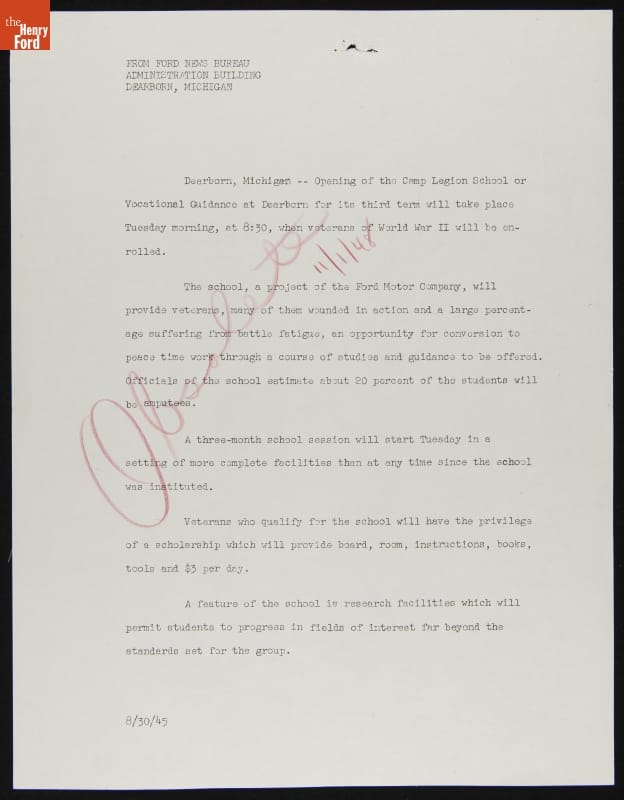
- Camp Legion School Third Term Begins, Ford Press Release, Auguat 1945 - Henry Ford opened Camp Legion, near Dearborn, Michigan, in 1938 for sons of dead or disabled World War I veterans. The young men earned steady wages working there seasonally from April-November. The camp's mission was modified in 1944 to include rehabilitation of World War II veterans with disabilities. Veterans learned new skills to help them reenter the workforce.
- August 30, 1945
- Collections - Artifact
Camp Legion School Third Term Begins, Ford Press Release, Auguat 1945
Henry Ford opened Camp Legion, near Dearborn, Michigan, in 1938 for sons of dead or disabled World War I veterans. The young men earned steady wages working there seasonally from April-November. The camp's mission was modified in 1944 to include rehabilitation of World War II veterans with disabilities. Veterans learned new skills to help them reenter the workforce.
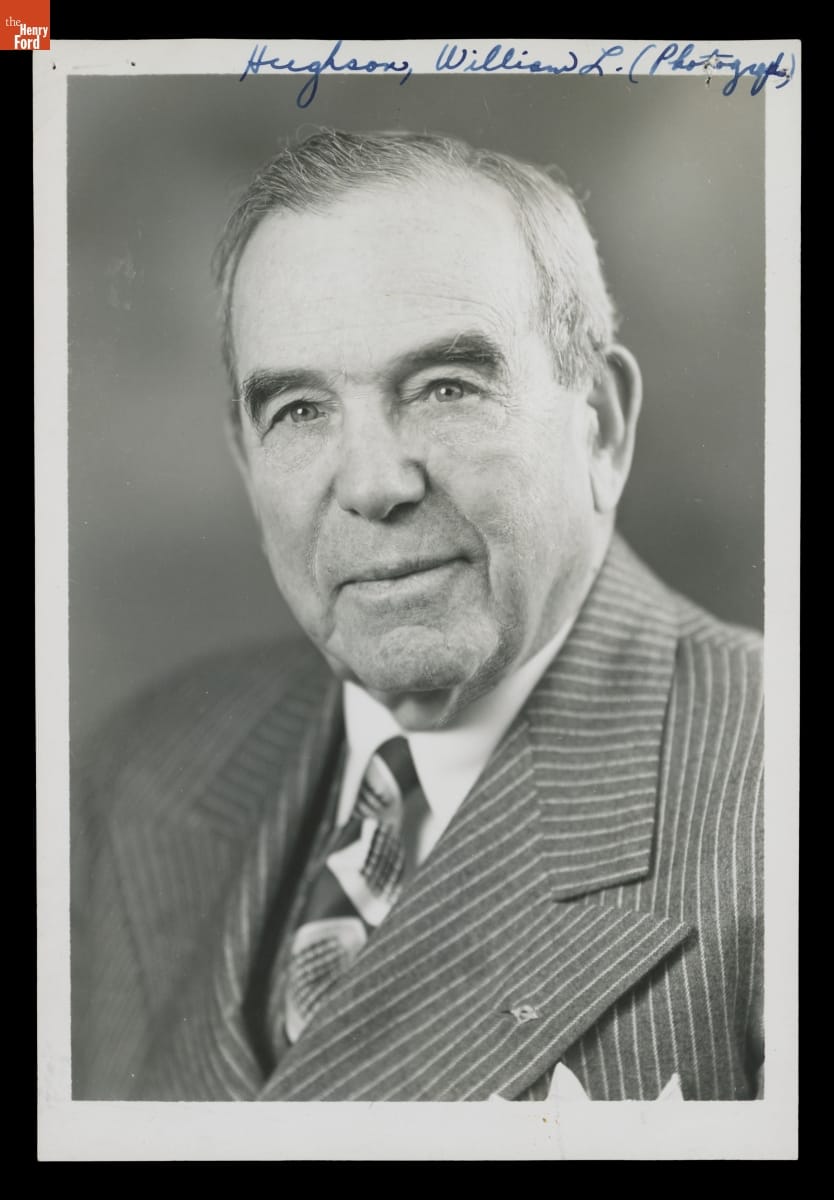
- Portrait of William L. Hughson, circa 1952 -
- circa 1952
- Collections - Artifact
Portrait of William L. Hughson, circa 1952
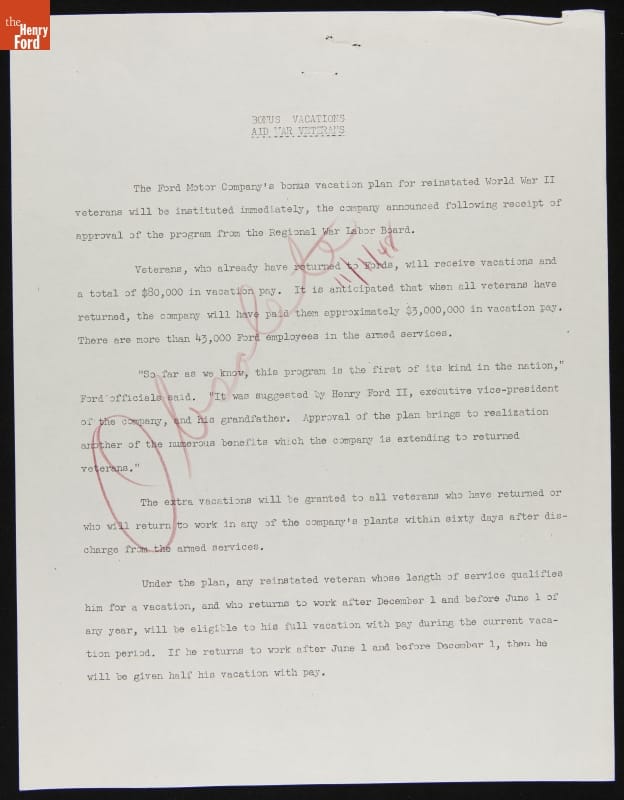
- "Bonus Vacations Aid War Veterans," Ford Press Release, 1945-1948 - Tens of thousands of Ford Motor Company employees stepped away from their jobs to enlist during World War II. When they returned at war's end, the automaker thanked its veterans for their service in part by offering them bonus vacations with pay. The idea reportedly originated with Henry Ford II, who had recently joined the company's executive ranks.
- 1945-1948
- Collections - Artifact
"Bonus Vacations Aid War Veterans," Ford Press Release, 1945-1948
Tens of thousands of Ford Motor Company employees stepped away from their jobs to enlist during World War II. When they returned at war's end, the automaker thanked its veterans for their service in part by offering them bonus vacations with pay. The idea reportedly originated with Henry Ford II, who had recently joined the company's executive ranks.
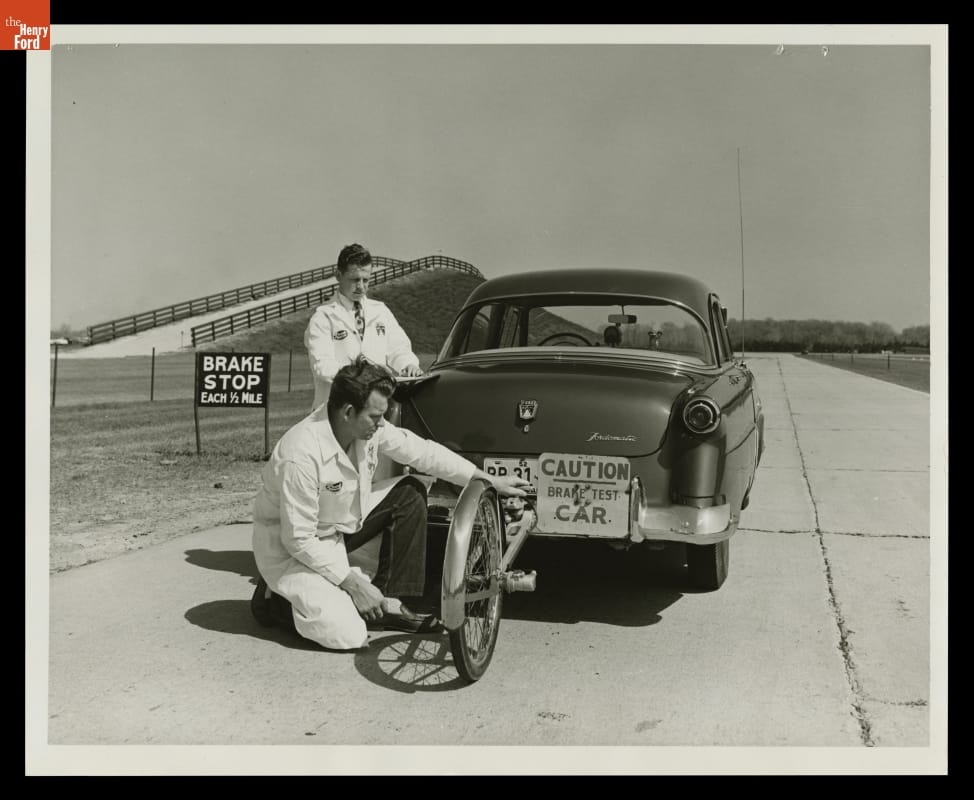
- Attaching "Fifth Wheel" Testing Device at Ford Test Track, Dearborn, Michigan, 1952 - Ford Motor Company opened a formal proving ground, located on the former site of Ford Airport in Dearborn, Michigan, in the late 1930s. By the early 1950s, the facility included a water pit, a steep hill, and 11 miles of roadways with varying surfaces of concrete, cobblestone, macadam, gravel, and brick -- complete with potholes and simulated railroad crossings.
- 29 April 1952 - 04 June 1952
- Collections - Artifact
Attaching "Fifth Wheel" Testing Device at Ford Test Track, Dearborn, Michigan, 1952
Ford Motor Company opened a formal proving ground, located on the former site of Ford Airport in Dearborn, Michigan, in the late 1930s. By the early 1950s, the facility included a water pit, a steep hill, and 11 miles of roadways with varying surfaces of concrete, cobblestone, macadam, gravel, and brick -- complete with potholes and simulated railroad crossings.
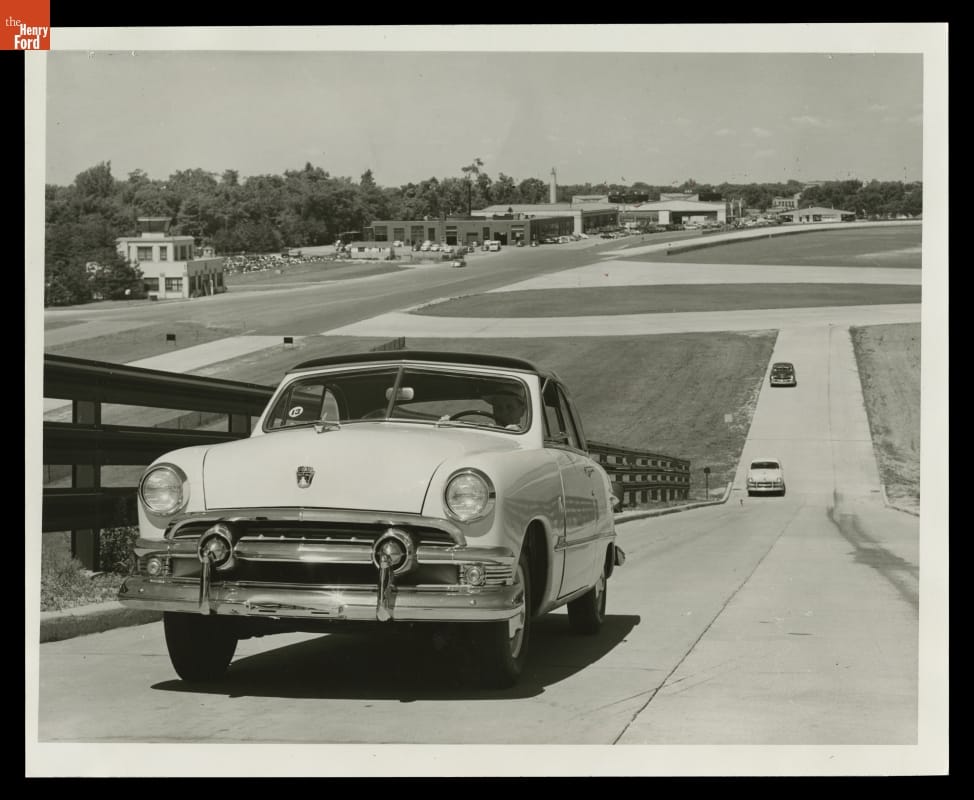
- 1952 Ford Automobiles on Ford Test Track, Dearborn, Michigan, 1951 - Ford Motor Company opened a formal proving ground, located on the former site of Ford Airport in Dearborn, Michigan, in the late 1930s. By the early 1950s, the facility included a water pit, a steep hill, and 11 miles of roadways with varying surfaces of concrete, cobblestone, macadam, gravel, and brick -- complete with potholes and simulated railroad crossings.
- 15 June 1951 - 10 January 1952
- Collections - Artifact
1952 Ford Automobiles on Ford Test Track, Dearborn, Michigan, 1951
Ford Motor Company opened a formal proving ground, located on the former site of Ford Airport in Dearborn, Michigan, in the late 1930s. By the early 1950s, the facility included a water pit, a steep hill, and 11 miles of roadways with varying surfaces of concrete, cobblestone, macadam, gravel, and brick -- complete with potholes and simulated railroad crossings.
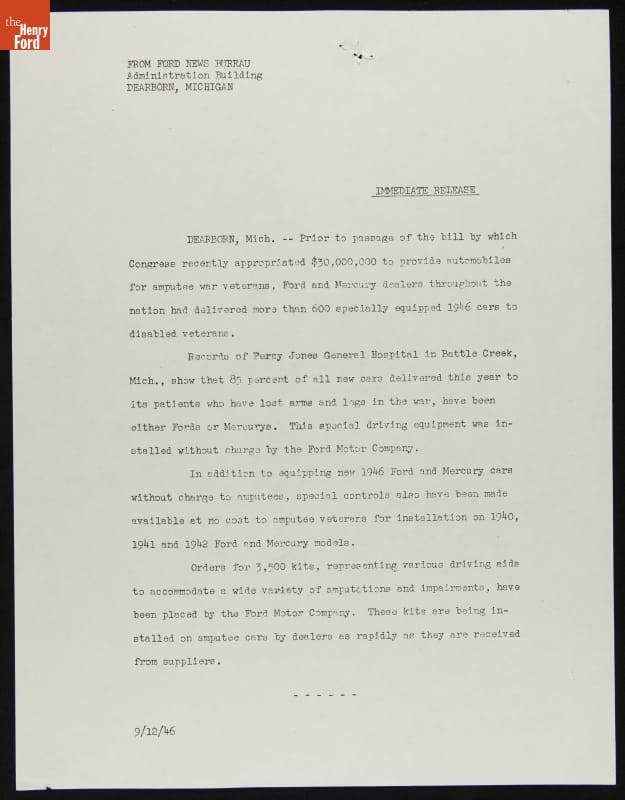
- Specially Equipped Ford Cars for Disabled Veteran Drivers, Ford Press Release, September 1946 - More than 670,000 American soldiers were wounded in World War II. Many of them returned home with lasting injuries. This press release described Ford Motor Company's efforts to create and distribute special automobile controls that could be operated by veterans with disabilities.
- September 12, 1946
- Collections - Artifact
Specially Equipped Ford Cars for Disabled Veteran Drivers, Ford Press Release, September 1946
More than 670,000 American soldiers were wounded in World War II. Many of them returned home with lasting injuries. This press release described Ford Motor Company's efforts to create and distribute special automobile controls that could be operated by veterans with disabilities.
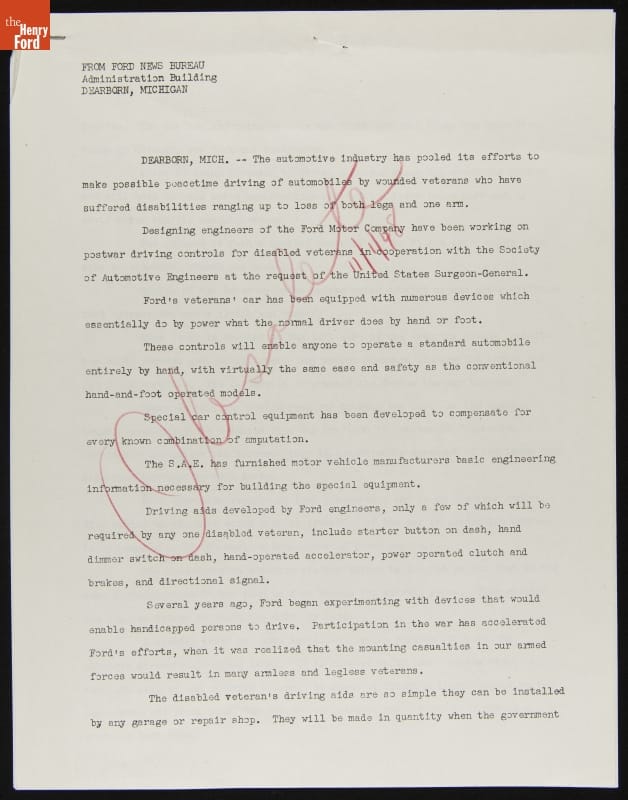
- Ford Cars Designed with Driving Aids for Disabled Veterans, Ford Press Release, 1946-1948 - More than 670,000 American soldiers were wounded in World War II. Many of them returned home with lasting injuries. This press release described Ford Motor Company's efforts to create and distribute special automobile controls that could be operated by veterans with disabilities.
- 1946-1948
- Collections - Artifact
Ford Cars Designed with Driving Aids for Disabled Veterans, Ford Press Release, 1946-1948
More than 670,000 American soldiers were wounded in World War II. Many of them returned home with lasting injuries. This press release described Ford Motor Company's efforts to create and distribute special automobile controls that could be operated by veterans with disabilities.
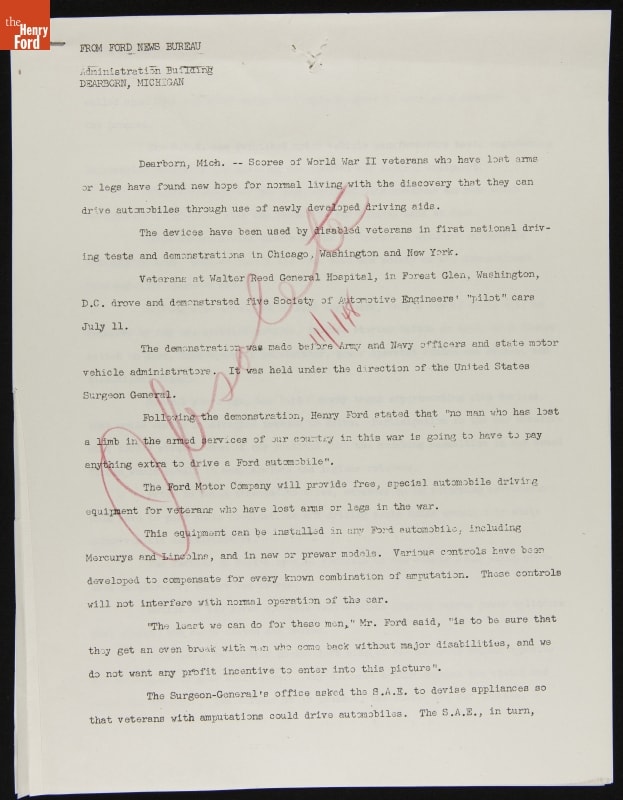
- Diabled Veterans Find New Hope Driving Specially Equipped Cars, Ford Press Release, July 1945 - More than 670,000 American soldiers were wounded in World War II. Many of them returned home with lasting injuries. This press release described Ford Motor Company's efforts to create and distribute special automobile controls that could be operated by veterans with disabilities.
- July 18, 1945
- Collections - Artifact
Diabled Veterans Find New Hope Driving Specially Equipped Cars, Ford Press Release, July 1945
More than 670,000 American soldiers were wounded in World War II. Many of them returned home with lasting injuries. This press release described Ford Motor Company's efforts to create and distribute special automobile controls that could be operated by veterans with disabilities.