
Search
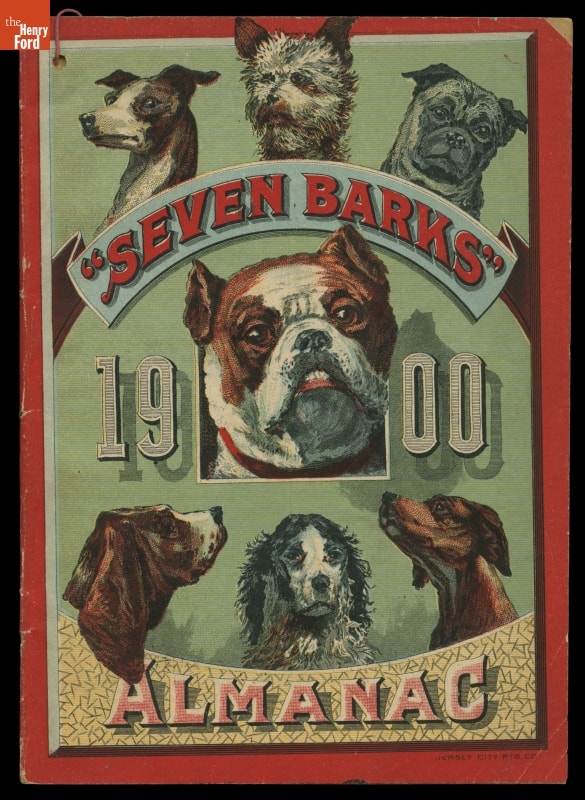
- Lyman Brown's Seven Barks Almanac, 1900 - Almanacs contained practical information about the coming year. Readers normally found a calendar, weather predictions, tide schedules, and information related to astronomical events, agriculture, health, politics and other matters. Interspersed were jokes and witty sayings. In the late 1800s, drug and patent medicine companies published almanacs with colorfully illustrated covers to entice the public to buy their products.
- 1900
- Collections - Artifact
Lyman Brown's Seven Barks Almanac, 1900
Almanacs contained practical information about the coming year. Readers normally found a calendar, weather predictions, tide schedules, and information related to astronomical events, agriculture, health, politics and other matters. Interspersed were jokes and witty sayings. In the late 1800s, drug and patent medicine companies published almanacs with colorfully illustrated covers to entice the public to buy their products.
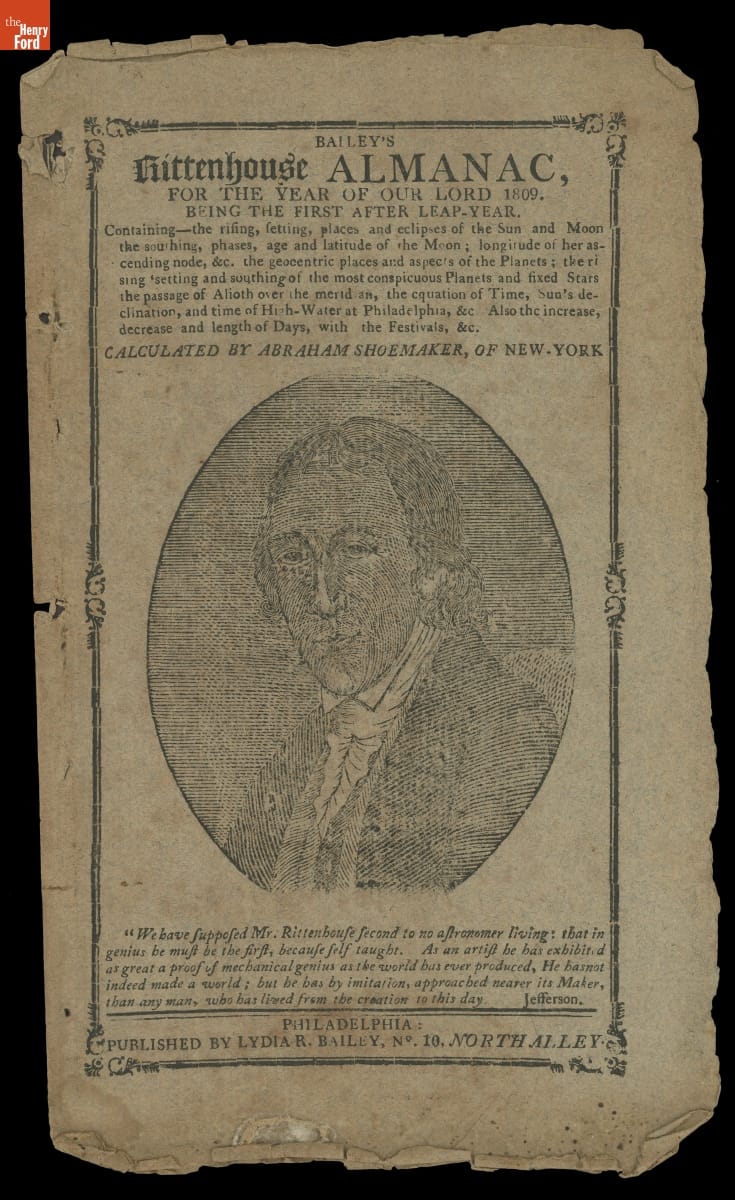
- "Bailey's Rittenhouse Almanac, for the Year of our Lord 1809" - Bailey's Rittenhouse Almanac, named for the noted astronomer David Rittenhouse (1732-1796), was a Philadelphia-focused almanac providing astronomical calculations (times of sunrises and sets, the tides, moon phases, and eclipses, etc.) The almanac also provided remedies, recipes, court schedules, and bits of sage advice among its pages. The almanac's printer, Lydia Bailey, operated one of Philadelphia's largest printing shops.
- 1809
- Collections - Artifact
"Bailey's Rittenhouse Almanac, for the Year of our Lord 1809"
Bailey's Rittenhouse Almanac, named for the noted astronomer David Rittenhouse (1732-1796), was a Philadelphia-focused almanac providing astronomical calculations (times of sunrises and sets, the tides, moon phases, and eclipses, etc.) The almanac also provided remedies, recipes, court schedules, and bits of sage advice among its pages. The almanac's printer, Lydia Bailey, operated one of Philadelphia's largest printing shops.
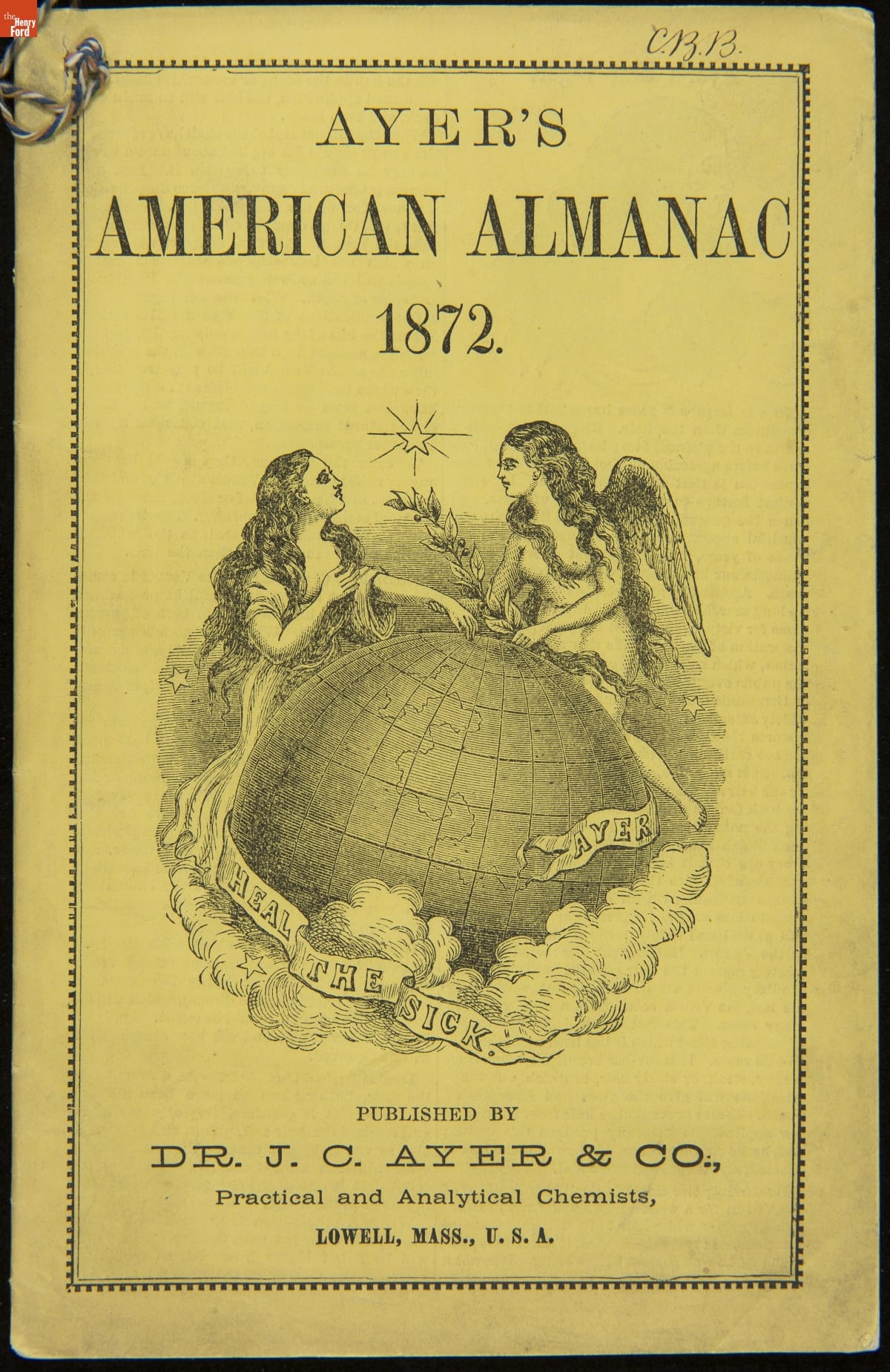
- Ayer's American Almanac, 1872 - Almanacs contained practical information about the coming year. Readers normally found a calendar, weather predictions, tide schedules, and information related to astronomical events, agriculture, health, politics and other matters. Interspersed were jokes and witty sayings. Beginning in the late 1800s, James Cook Ayer, a keen advertiser and successful patent medicine dealer, published almanacs to entice the public to buy his line of products.
- 1872
- Collections - Artifact
Ayer's American Almanac, 1872
Almanacs contained practical information about the coming year. Readers normally found a calendar, weather predictions, tide schedules, and information related to astronomical events, agriculture, health, politics and other matters. Interspersed were jokes and witty sayings. Beginning in the late 1800s, James Cook Ayer, a keen advertiser and successful patent medicine dealer, published almanacs to entice the public to buy his line of products.
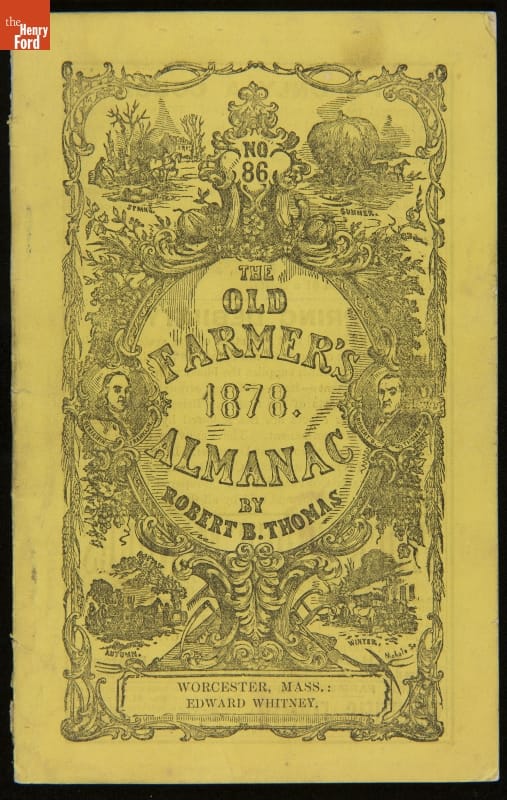
- The Old Farmer's Almanac, 1878 - Almanacs contained practical information about the coming year. Readers normally found a calendar, weather predictions, tide schedules, and information related to astronomical events, agriculture, health, politics and other matters. Interspersed were jokes and witty sayings. The Old Farmer's Almanac was first published in 1792 -- and is the oldest almanac still published in the United States.
- 1878
- Collections - Artifact
The Old Farmer's Almanac, 1878
Almanacs contained practical information about the coming year. Readers normally found a calendar, weather predictions, tide schedules, and information related to astronomical events, agriculture, health, politics and other matters. Interspersed were jokes and witty sayings. The Old Farmer's Almanac was first published in 1792 -- and is the oldest almanac still published in the United States.
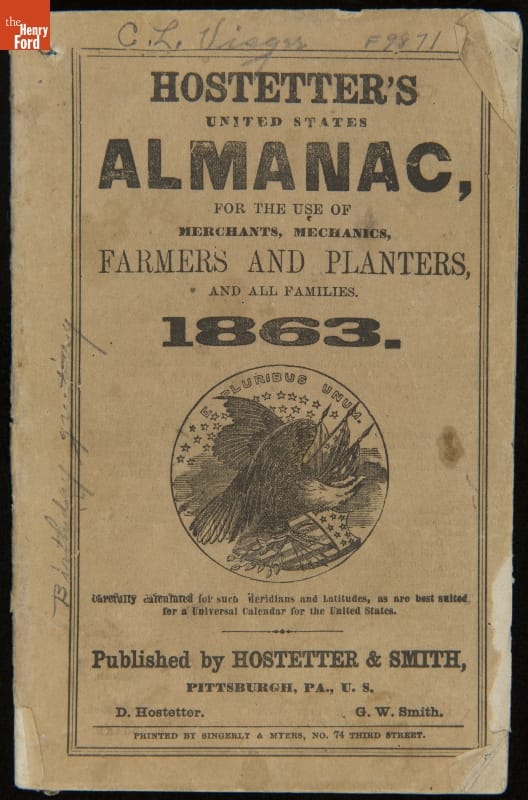
- "Hostetter's United States Almanac, for the Use of Merchants, Mechanics, Farmers and Planters, and All Families," 1863 - Almanacs contained practical information about the coming year. Readers normally found a calendar, weather predictions, tide schedules, and information related to astronomical events, agriculture, health, politics and other matters. Interspersed were jokes and witty sayings. Beginning in the late 1800s, makers of Hostetter's Bitters -- a self-proclaimed cure-all with high alcohol content -- published almanacs to entice the public to buy their products.
- 1863
- Collections - Artifact
"Hostetter's United States Almanac, for the Use of Merchants, Mechanics, Farmers and Planters, and All Families," 1863
Almanacs contained practical information about the coming year. Readers normally found a calendar, weather predictions, tide schedules, and information related to astronomical events, agriculture, health, politics and other matters. Interspersed were jokes and witty sayings. Beginning in the late 1800s, makers of Hostetter's Bitters -- a self-proclaimed cure-all with high alcohol content -- published almanacs to entice the public to buy their products.
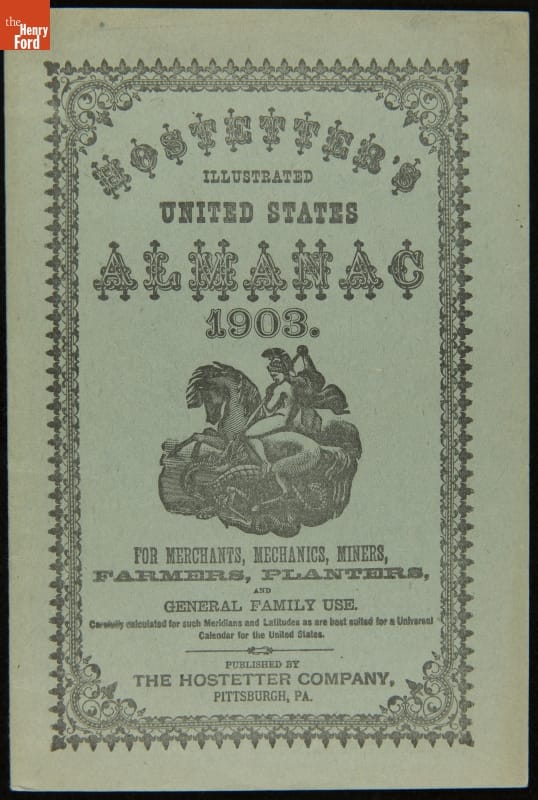
- Hostetter's Illustrated United States Almanac, 1903 - Almanacs contained practical information about the coming year. Readers normally found a calendar, weather predictions, tide schedules, and information related to astronomical events, agriculture, health, politics and other matters. Interspersed were jokes and witty sayings. Beginning in the late 1800s, makers of Hostetter's Bitters -- a self-proclaimed cure-all with high alcohol content -- published almanacs to entice the public to buy their products.
- 1903
- Collections - Artifact
Hostetter's Illustrated United States Almanac, 1903
Almanacs contained practical information about the coming year. Readers normally found a calendar, weather predictions, tide schedules, and information related to astronomical events, agriculture, health, politics and other matters. Interspersed were jokes and witty sayings. Beginning in the late 1800s, makers of Hostetter's Bitters -- a self-proclaimed cure-all with high alcohol content -- published almanacs to entice the public to buy their products.
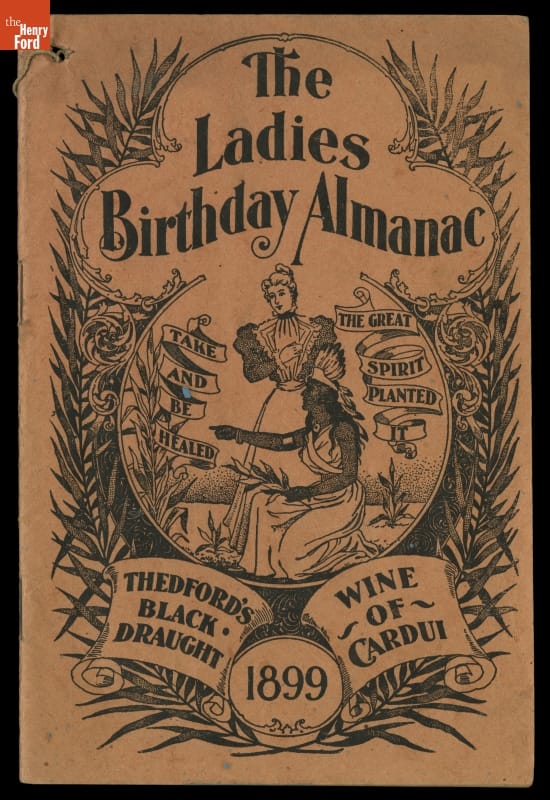
- "The Ladies Birthday Almanac," Chattanooga Medicine Company, 1899 - Almanacs contained practical information about the coming year. Readers normally found a calendar, weather predictions, tide schedules, and information related to astronomical events, agriculture, health, politics and other matters. Interspersed were jokes and witty sayings. The Chattanooga Medicine Company published this almanac as a way to promote and market its products.
- 1899
- Collections - Artifact
"The Ladies Birthday Almanac," Chattanooga Medicine Company, 1899
Almanacs contained practical information about the coming year. Readers normally found a calendar, weather predictions, tide schedules, and information related to astronomical events, agriculture, health, politics and other matters. Interspersed were jokes and witty sayings. The Chattanooga Medicine Company published this almanac as a way to promote and market its products.
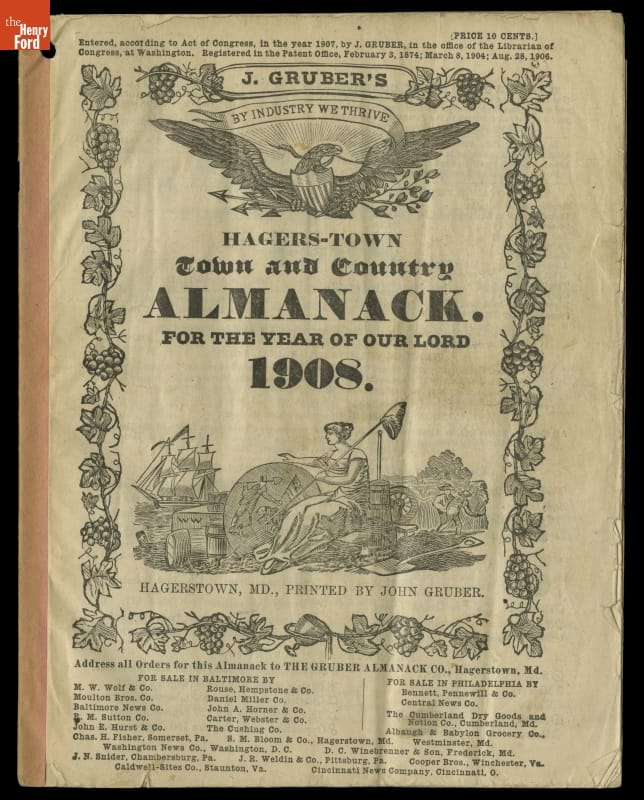
- "J. Gruber's Hagers-Town Town and Country Almanack," 1908 - Almanacs contained practical information about the coming year. Readers normally found a calendar, weather predictions, tide schedules, and information related to astronomical events, agriculture, health, politics and other matters. Interspersed were jokes and witty sayings. John Gruber began publishing the Hagerstown Town and Country Almanack in 1797. It is the second oldest almanac still published in the United States.
- 1908
- Collections - Artifact
"J. Gruber's Hagers-Town Town and Country Almanack," 1908
Almanacs contained practical information about the coming year. Readers normally found a calendar, weather predictions, tide schedules, and information related to astronomical events, agriculture, health, politics and other matters. Interspersed were jokes and witty sayings. John Gruber began publishing the Hagerstown Town and Country Almanack in 1797. It is the second oldest almanac still published in the United States.
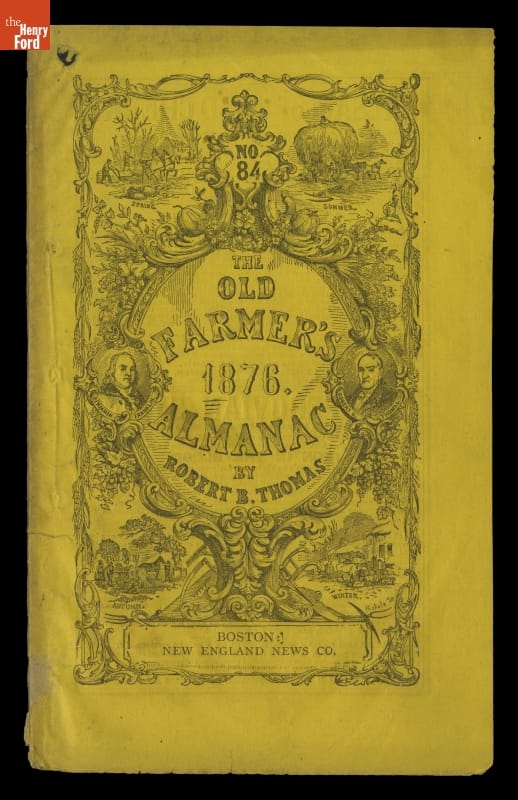
- The Old Farmer's Almanac, Number 84, 1876 - Almanacs contained practical information about the coming year. Readers normally found a calendar, weather predictions, tide schedules, and information related to astronomical events, agriculture, health, politics and other matters. Interspersed were jokes and witty sayings. The Old Farmer's Almanac was first published in 1792 -- and is the oldest almanac still published in the United States.
- 1876
- Collections - Artifact
The Old Farmer's Almanac, Number 84, 1876
Almanacs contained practical information about the coming year. Readers normally found a calendar, weather predictions, tide schedules, and information related to astronomical events, agriculture, health, politics and other matters. Interspersed were jokes and witty sayings. The Old Farmer's Almanac was first published in 1792 -- and is the oldest almanac still published in the United States.
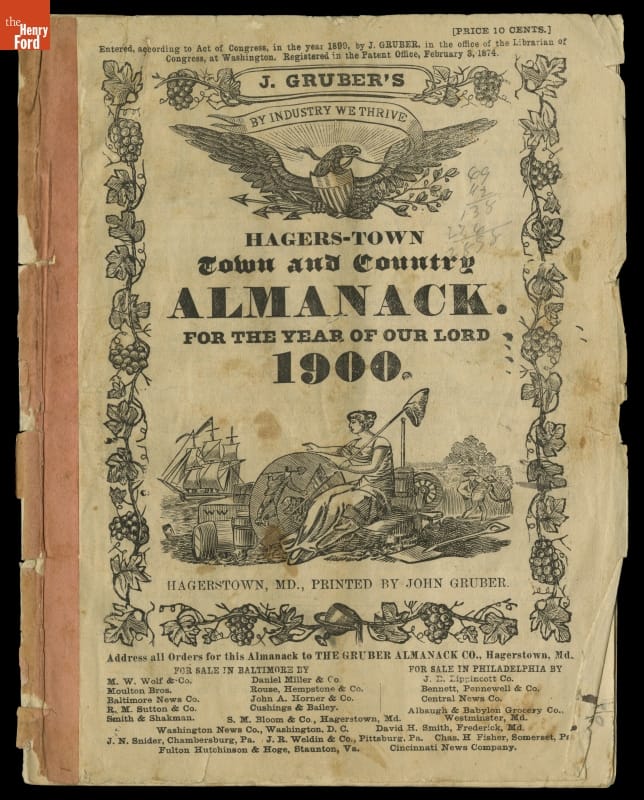
- "J. Gruber's Hagers-Town Town and Country Almanack," 1900 - Almanacs contained practical information about the coming year. Readers normally found a calendar, weather predictions, tide schedules, and information related to astronomical events, agriculture, health, politics and other matters. Interspersed were jokes and witty sayings. John Gruber began publishing the Hagerstown Town and Country Almanack in 1797. It is the second oldest almanac still published in the United States.
- 1900
- Collections - Artifact
"J. Gruber's Hagers-Town Town and Country Almanack," 1900
Almanacs contained practical information about the coming year. Readers normally found a calendar, weather predictions, tide schedules, and information related to astronomical events, agriculture, health, politics and other matters. Interspersed were jokes and witty sayings. John Gruber began publishing the Hagerstown Town and Country Almanack in 1797. It is the second oldest almanac still published in the United States.