
Search
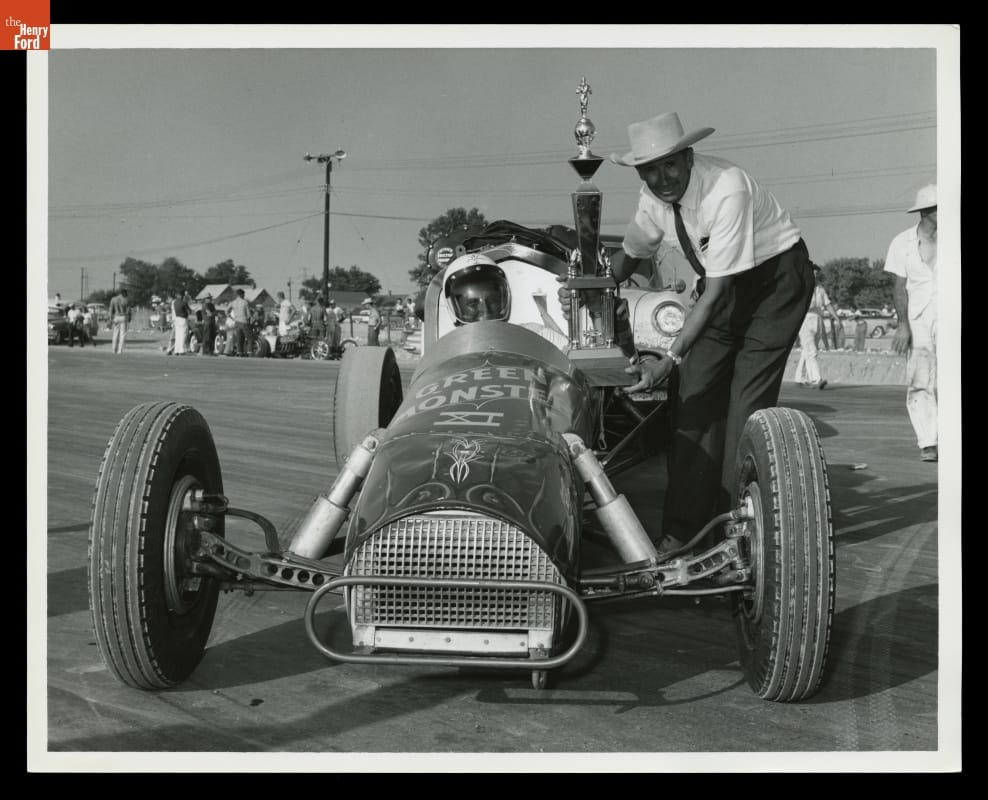
- Art Arfons and Wally Parks with the Trophy for Top Speed, NHRA Nationals, Detroit Dragway, 1959 - Wally Parks organized some of the first hot rod shows, served as the first editor of <EM>Hot Rod</EM> magazine, and in 1951 founded the National Hot Rod Association. Illegal street racers gave hot rodding a bad reputation, but Parks's NHRA legitimized drag racing with competition rules, safety regulations, and off-street drag strips. Parks turned hot rod races into family entertainment.
- 1959
- Collections - Artifact
Art Arfons and Wally Parks with the Trophy for Top Speed, NHRA Nationals, Detroit Dragway, 1959
Wally Parks organized some of the first hot rod shows, served as the first editor of Hot Rod magazine, and in 1951 founded the National Hot Rod Association. Illegal street racers gave hot rodding a bad reputation, but Parks's NHRA legitimized drag racing with competition rules, safety regulations, and off-street drag strips. Parks turned hot rod races into family entertainment.
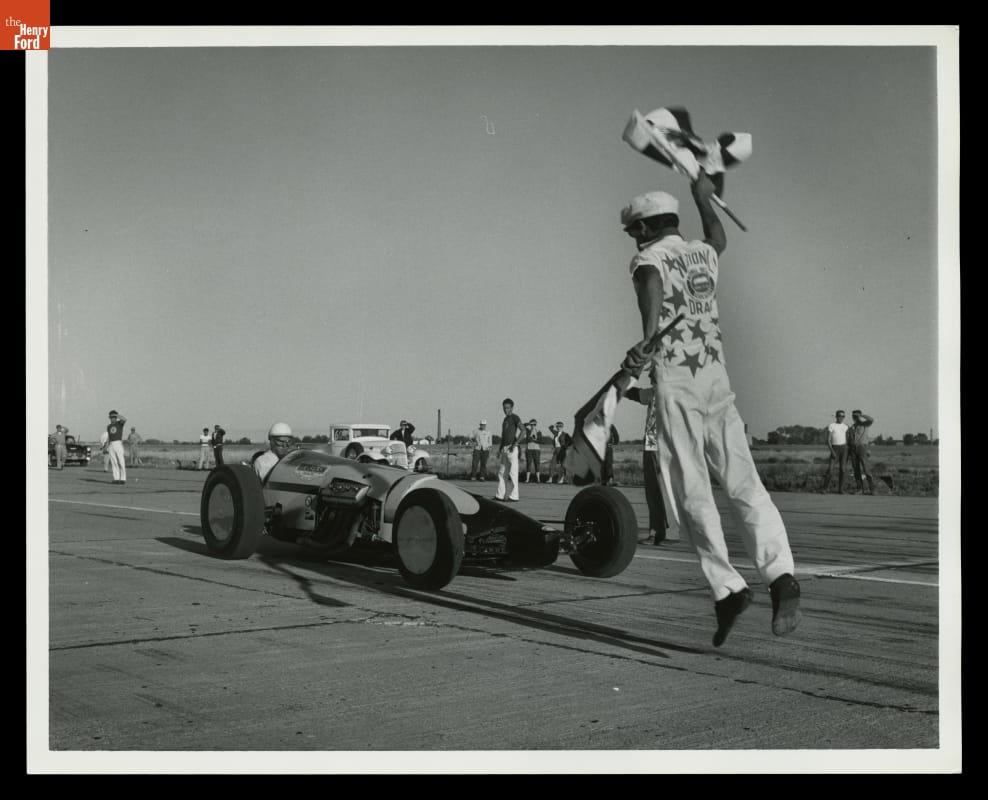
- Official Start of First NHRA Drag Racing Meet, Great Bend, Kansas, 1955 - The National Hot Rod Association, established in 1951 to govern drag racing, held its first national championship meet in 1955. The event took place on an airport runway in Great Bend, Kansas. Drag races run like tournaments. Two cars at a time face off, the winner advances, and the loser is eliminated. The last remaining driver earns the grand prize.
- 1955
- Collections - Artifact
Official Start of First NHRA Drag Racing Meet, Great Bend, Kansas, 1955
The National Hot Rod Association, established in 1951 to govern drag racing, held its first national championship meet in 1955. The event took place on an airport runway in Great Bend, Kansas. Drag races run like tournaments. Two cars at a time face off, the winner advances, and the loser is eliminated. The last remaining driver earns the grand prize.
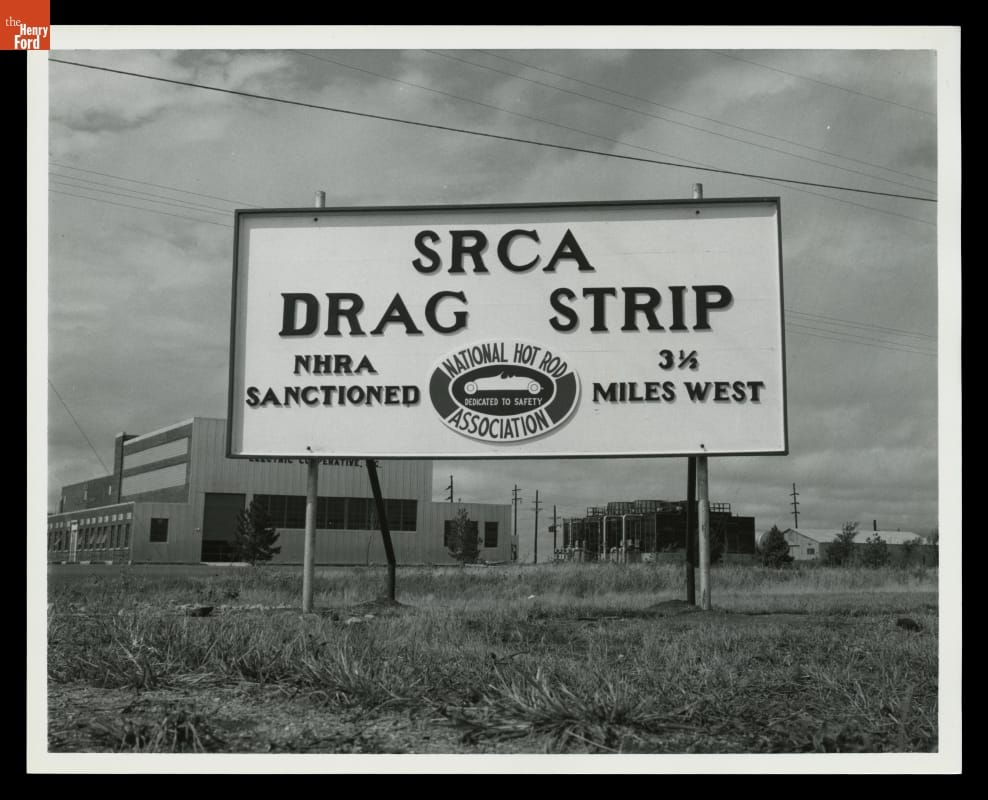
- Sign for the SRCA Drag Strip, Great Bend, Kansas, 1955 - The Sunflower Rod and Custom Association -- named for its home state of Kansas, the Sunflower State -- was formed in 1954 and joined the National Hot Rod Association a year later. NHRA established competition rules and safety regulations for drag racing. It sanctioned races at its member drag strips, like SRCA's facility in Great Bend, Kansas.
- 1955
- Collections - Artifact
Sign for the SRCA Drag Strip, Great Bend, Kansas, 1955
The Sunflower Rod and Custom Association -- named for its home state of Kansas, the Sunflower State -- was formed in 1954 and joined the National Hot Rod Association a year later. NHRA established competition rules and safety regulations for drag racing. It sanctioned races at its member drag strips, like SRCA's facility in Great Bend, Kansas.
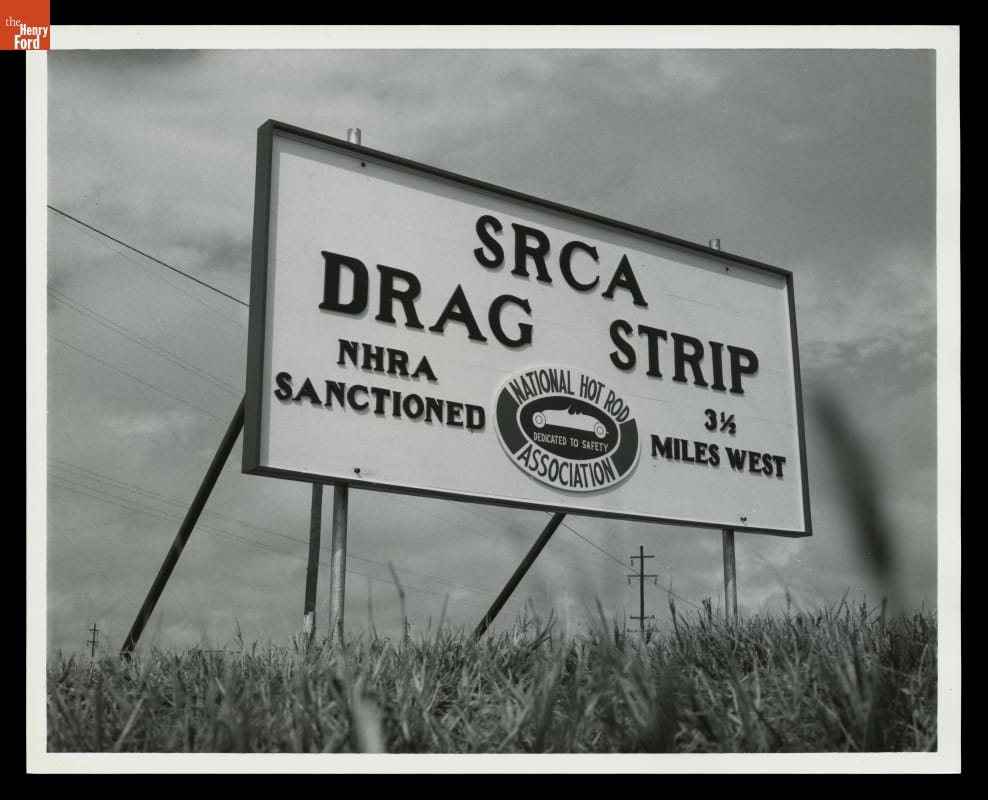
- Sign for the SRCA Drag Strip, Great Bend, Kansas, 1955 - The Sunflower Rod and Custom Association -- named for its home state of Kansas, the Sunflower State -- was formed in 1954 and joined the National Hot Rod Association a year later. NHRA established competition rules and safety regulations for drag racing. It sanctioned races at its member drag strips, like SRCA's facility in Great Bend, Kansas.
- 1955
- Collections - Artifact
Sign for the SRCA Drag Strip, Great Bend, Kansas, 1955
The Sunflower Rod and Custom Association -- named for its home state of Kansas, the Sunflower State -- was formed in 1954 and joined the National Hot Rod Association a year later. NHRA established competition rules and safety regulations for drag racing. It sanctioned races at its member drag strips, like SRCA's facility in Great Bend, Kansas.
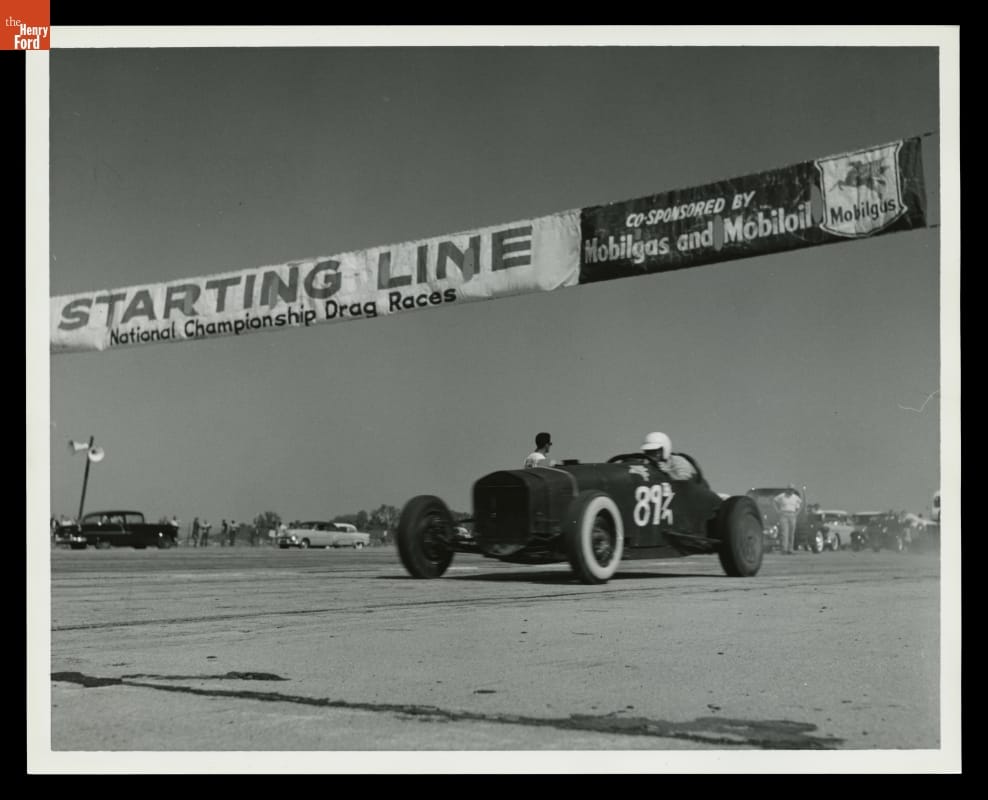
- Car at the Starting Line of the NHRA Nationals, Great Bend, Kansas, 1955 - Drag races are run like tournaments. Two cars face off in each race, with the pairings usually based on the cars' qualifying times. The winner advances to the next round while the loser is eliminated. The driver who wins each of her or his races wins the championship trophy and earns the title of Top Eliminator.
- 1955
- Collections - Artifact
Car at the Starting Line of the NHRA Nationals, Great Bend, Kansas, 1955
Drag races are run like tournaments. Two cars face off in each race, with the pairings usually based on the cars' qualifying times. The winner advances to the next round while the loser is eliminated. The driver who wins each of her or his races wins the championship trophy and earns the title of Top Eliminator.
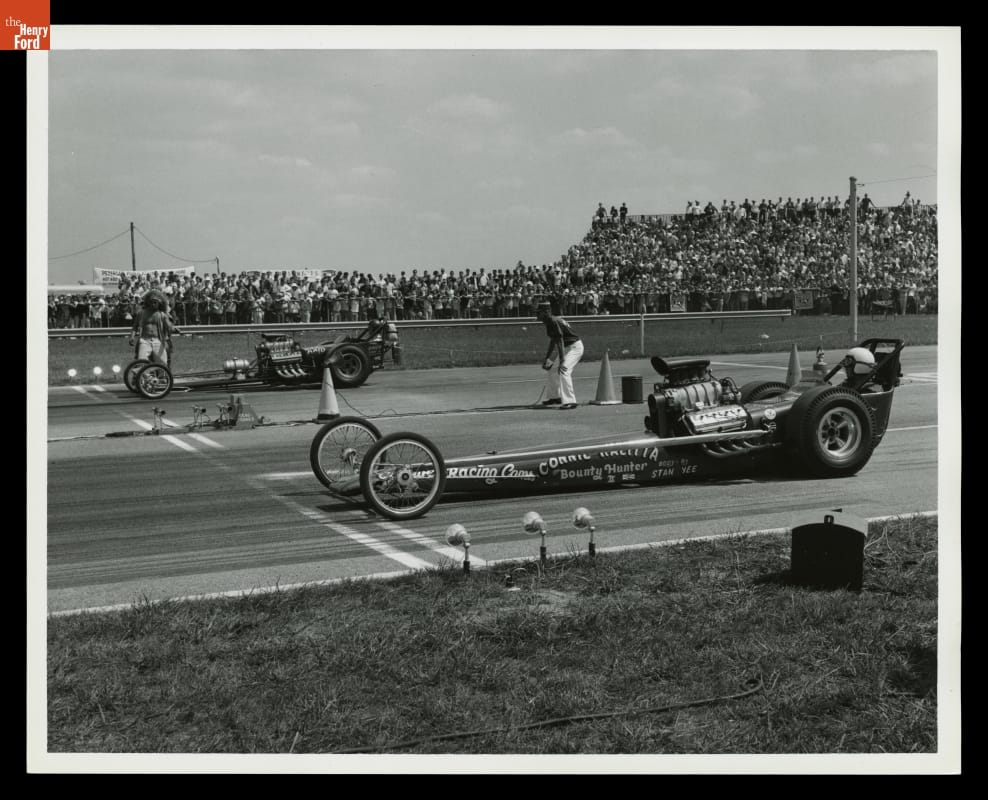
- Connie Kalitta at the NHRA Nationals, Indianapolis, Indiana, 1963 - Michigan native Connie Kalitta started drag racing in the 1950s and, within a decade, he ranked among the sport's best. He kept a "most wanted" list of drivers he intended to beat, and then crossed off their names when he did so. The habit earned Kalitta the nickname "Bounty Hunter." He won ten NHRA national events between 1967 and 1994.
- 1963
- Collections - Artifact
Connie Kalitta at the NHRA Nationals, Indianapolis, Indiana, 1963
Michigan native Connie Kalitta started drag racing in the 1950s and, within a decade, he ranked among the sport's best. He kept a "most wanted" list of drivers he intended to beat, and then crossed off their names when he did so. The habit earned Kalitta the nickname "Bounty Hunter." He won ten NHRA national events between 1967 and 1994.
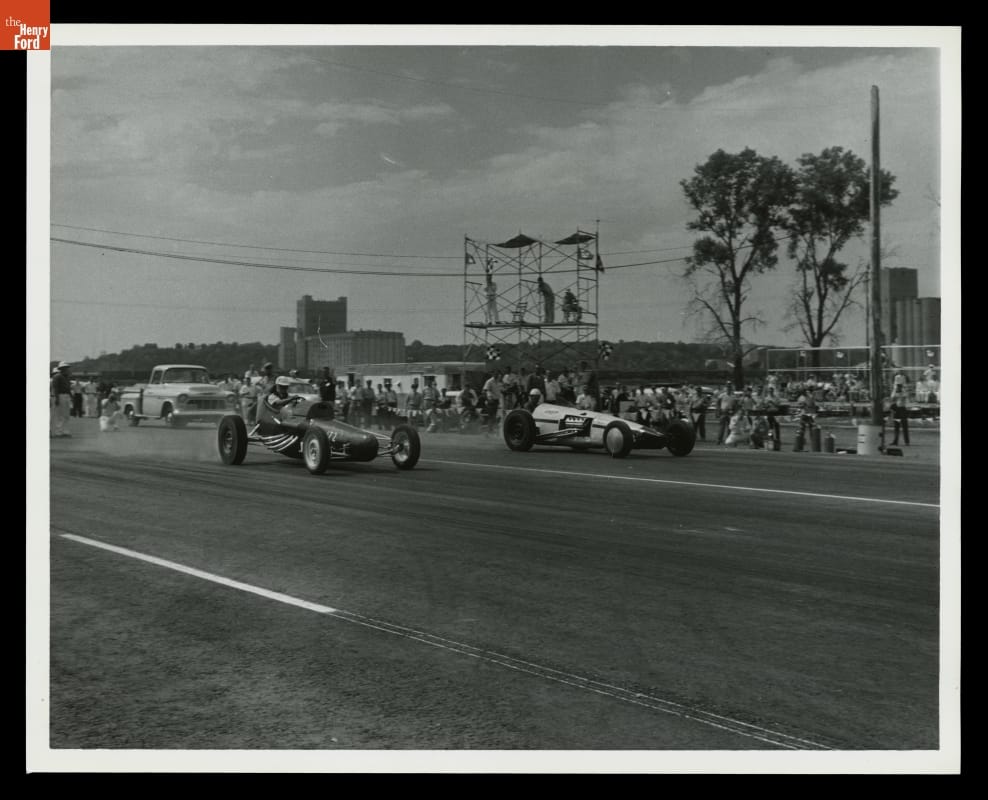
- Calvin Rice at the NHRA Nationals, Kansas City, Missouri, 1956 - Drag races are run like tournaments. Two cars face off in each race, with the pairings usually based on the cars' qualifying times. The winner advances to the next round while the loser is eliminated. The driver who wins each of her or his races wins the championship trophy and earns the title of Top Eliminator.
- 1956
- Collections - Artifact
Calvin Rice at the NHRA Nationals, Kansas City, Missouri, 1956
Drag races are run like tournaments. Two cars face off in each race, with the pairings usually based on the cars' qualifying times. The winner advances to the next round while the loser is eliminated. The driver who wins each of her or his races wins the championship trophy and earns the title of Top Eliminator.
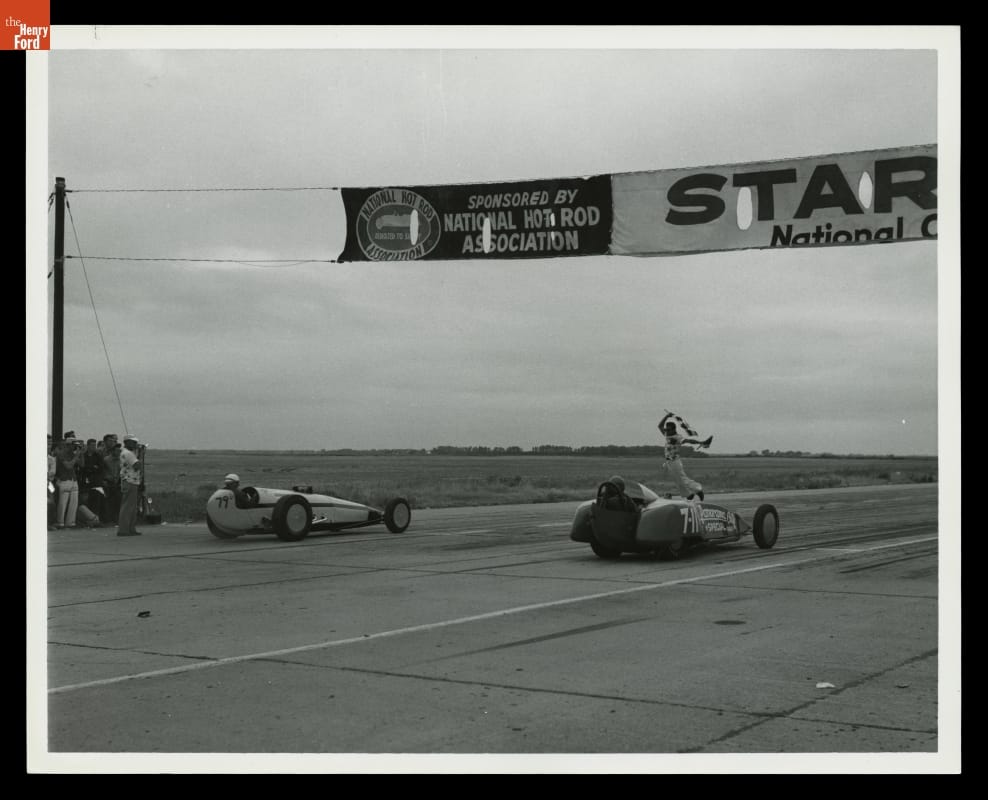
- Cal Rice and Mickey Thompson at the Start of Their Heat, NHRA Nationals, Great Bend, Kansas, 1955 - Drag races are run like tournaments. Two cars face off in each race, with the pairings usually based on the cars' qualifying times. The winner advances to the next round while the loser is eliminated. The driver who wins each of her or his races wins the championship trophy and earns the title of Top Eliminator.
- 29 September 1955 - 02 October 1955
- Collections - Artifact
Cal Rice and Mickey Thompson at the Start of Their Heat, NHRA Nationals, Great Bend, Kansas, 1955
Drag races are run like tournaments. Two cars face off in each race, with the pairings usually based on the cars' qualifying times. The winner advances to the next round while the loser is eliminated. The driver who wins each of her or his races wins the championship trophy and earns the title of Top Eliminator.
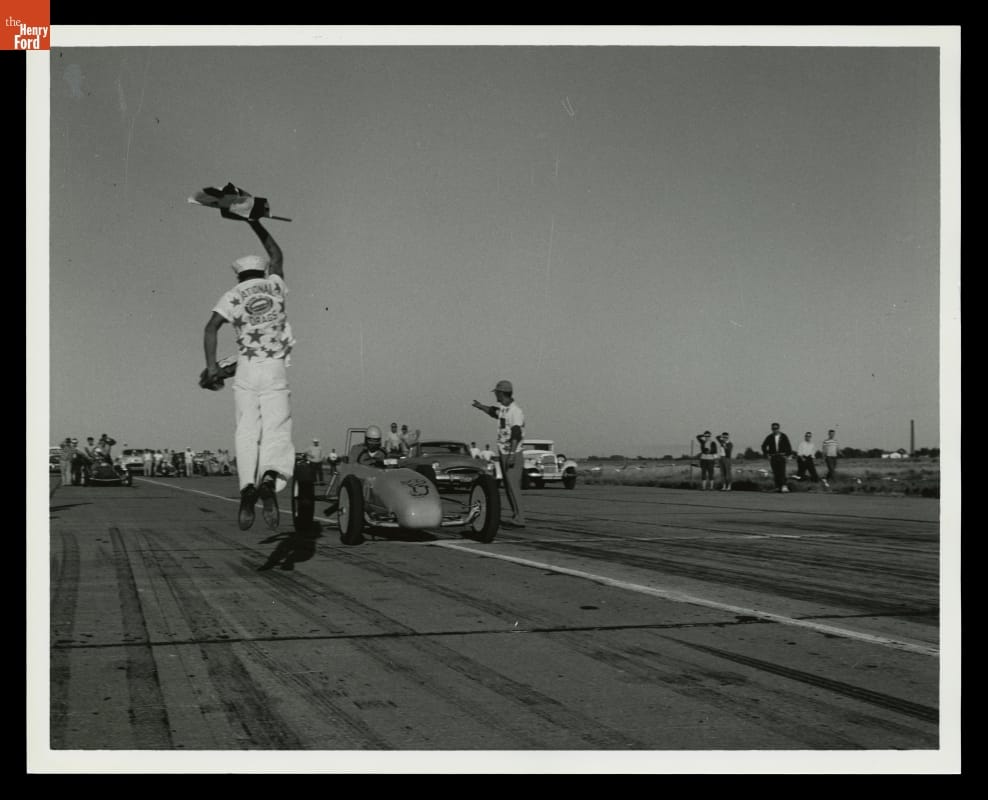
- A "Bean Bandit" Dragster at the NHRA Nationals, Great Bend, Kansas, 1955 - Drag races are run like tournaments. Two cars face off in each race, with the pairings usually based on the cars' qualifying times. The winner advances to the next round while the loser is eliminated. The driver who wins each of her or his races wins the championship trophy and earns the title of Top Eliminator.
- 1955
- Collections - Artifact
A "Bean Bandit" Dragster at the NHRA Nationals, Great Bend, Kansas, 1955
Drag races are run like tournaments. Two cars face off in each race, with the pairings usually based on the cars' qualifying times. The winner advances to the next round while the loser is eliminated. The driver who wins each of her or his races wins the championship trophy and earns the title of Top Eliminator.
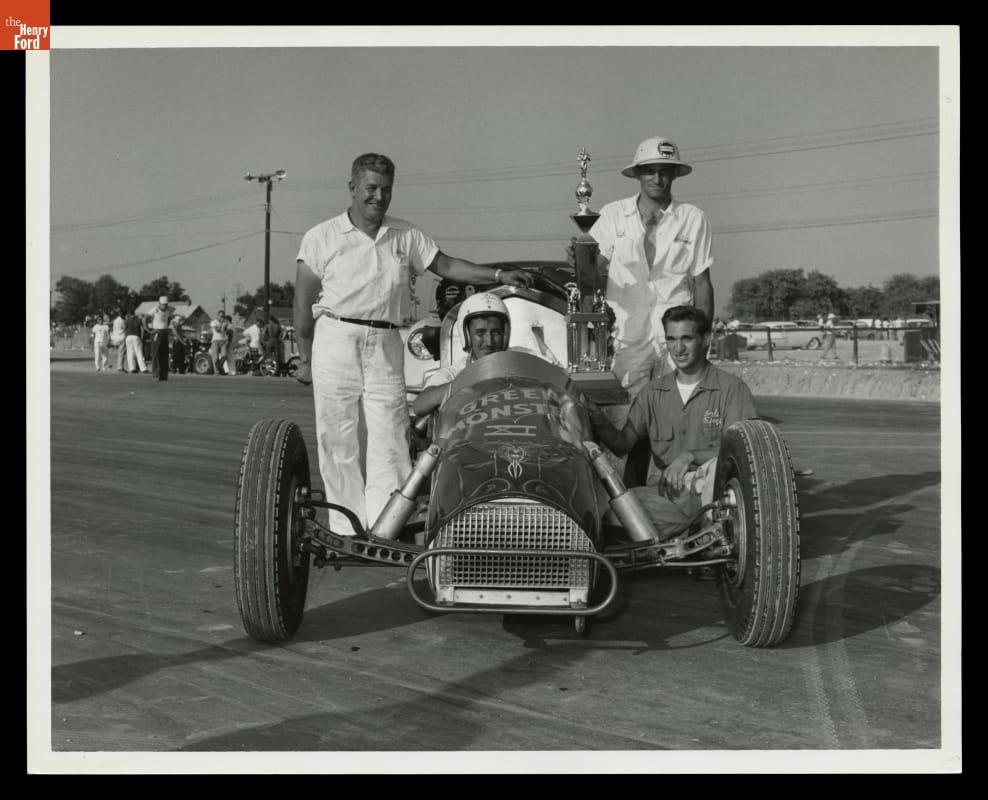
- Art Arfons and Pit Crew with the Trophy for Top Speed, NHRA Nationals, Detroit Dragway, 1959 - Detroit Dragway opened in Brownstone Charter Township, about 20 miles southwest of downtown Detroit, in 1959. The "Dirty D" -- its affectionate nickname -- hosted NHRA's U.S. Nationals in 1959 and 1960. Though it thrived in the 1960s and 1970s, by the 1990s Detroit Dragway suffered from declining crowds and aging facilities. The drag strip closed after the 1996 season.
- 1959
- Collections - Artifact
Art Arfons and Pit Crew with the Trophy for Top Speed, NHRA Nationals, Detroit Dragway, 1959
Detroit Dragway opened in Brownstone Charter Township, about 20 miles southwest of downtown Detroit, in 1959. The "Dirty D" -- its affectionate nickname -- hosted NHRA's U.S. Nationals in 1959 and 1960. Though it thrived in the 1960s and 1970s, by the 1990s Detroit Dragway suffered from declining crowds and aging facilities. The drag strip closed after the 1996 season.